What Top Google Ads Experts Do That Beginners Don’t
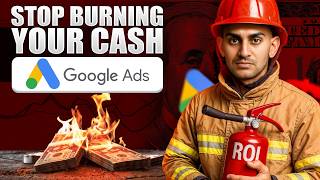
Neil Patel breaks down what separates Google Ads experts from beginners: conversion engineering, customer lifetime value, and systematic implementation of conversion factors. The difference isn't just tactics but how you measure and optimize for actual profit, not just clicks.
Chapters
You're not alone. And look, I know how frustrating it can be. You follow the advice. You did everything by the book. Good targeting, clean creative, strong offer, best practices. But something still isn't clicking. So what happens? You start tweaking the headline, then the image, then the CTA button. You change the offer, lower the price, rewrite the copy, switch the audience. Spend hours inside Google Ads Dashboard trying to optimize, but nothing seems to move the needle. It doesn't mean you're bad at marketing. It just means no one showed you what actually makes ads profitable. Because here's the truth. If you're missing the one foundational piece that actually drives profit, all those surface level tweaks, they're just rearranging the furniture in a burning house. I'm Neil Patel and I run one of the largest digital ad agencies in the world. We have over a thousand employees who manage over a billion in ad spend. We work with everyone from mom and pop shops to Fortune 500 companies. And I can tell you this. The big difference between campaigns at scale and the ones that sync is has nothing to do with your ad settings. The problem isn't your targeting. It's not your keywords. It's not your Bing strategy. The real problem is what happens in the eight seconds after someone clicks your ad. In this video, I'm going to show you the invisible system that separates profitable campaigns from money burning ones and how to engineer it. So Google finally becomes a growth machine instead of a slot machine. Let's get started.
Imagine you own a physical retail store. People walk in, take a quick look around, and walk right back out. Not because they're interested, but because the layout was confusing, the lighting was harsh, and no one greeted them. That's what's happening on your website right now. The average landing page converts at 2.3%. So I want you to think about what that actually means. If you're paying $5 a click and only 2.3% of those visitors convert, you're spending $217 to get one customer. 97.7% of your ad spend is driving traffic that bounces. That's like 97 out of every 100 people are walking off the door without buying. But here's what most do when they see this. My targeting must be wrong. Let me try different keywords. Maybe I need to lower my bids. Wrong, wrong and wrong. Your ads did their job. They got qualified people to click. The problem is what happens in those crucial eight seconds after someone lands on your page. Because we've analyzed landing pages that convert at 8%, 12%, even 15%. Same traffic, same ad, same targeting. The only difference, the website experience. Let me show you the Math. Scenario A, $5 a click, 2.3% conversion, $217 cost per. Scenario B, $5 a click, 10% conversion, $50 cost per customer. Scenario B gets you customers for 77% less money. That's not a small improvement. That's a difference between profitable and bankrupt. Most of our clients who couldn't make Google Ads work had this exact problem. Great targeting, solid ads, relevant traffic. But their landing page was a conversion killer. The traffic was ready to buy. The website just couldn't close the deal.
Your landing page is just one part of the problem. But even if your conversions are okay and your campaigns are still failing, chances are you're getting bad data. Why? Because you're measuring things wrong. And when you make decisions based on bad data, you don't just pause good campaigns. You accidentally sabotage the entire business without realizing it. To put it into perspective, let's say you run an ad. Someone clicks, and they don't buy immediately. So you mark that click as wasted money. But here's what actually happened. That person saw your brand, visited your website, maybe even added something to their cart. Then they left. Three days later, they Google your company name directly and buy. Two weeks after that, they buy again. A month later, they refer you a friend who becomes your biggest customer. But in your Google Ads dashboard, that original click shows you as a loss. We've analyzed thousands of customer journeys across our clients, and here's what we found. The most profitable customers don't buy on their first visit. The average customer touches your brand between six and 20 times before making a purchase. But most marketers only give credit to the last thing that happened. It's like giving the guy who scores the touchdown all the credit While ignoring the 10 plays that got the ball down the field. So what happens? You look at your Google Ads account and think, these ads aren't working. Only 2% of people who click actually buy. But the reality? Those ads might be responsible for a big chunk of your total revenue. You're not just connecting the dots. This is why profitable companies can afford to pay 50, 100, or even $500 per click. It's not because they have deeper pockets. It's because they know the real lifetime value of that click. While you're measuring the sprint, they're measuring the marathon.
Ever walk into a grocery store for one thing and walk out with 10? That's not an accident. The entire customer experience was Engineered to make that happen. Same thing on Amazon. You go in for a phone case and somehow you end up with a charger screen protect and a tripod. That's what I call funnel. Economics in action. The business is actually making money with Google Ads. They're not just paying for clicks, they're designing what happens after the click to multiply customer value. So let's see how that works. Business A, they follow the typical approach. They send ad traffic directly to the product page. They have a basic checkout process. They don't do any follow up for people who don't buy. And they end up converting around 2% of its visitors if they're lucky. But business balance, they have an engineered approach. Visitors are going through a multi step funnel with lead capture. There are email sequences that are sent out to non buyers. Customers are shown upsells and cross sells. They have multiple payment options they can use to make a purchase. They'll convert 8% or more of their visitors. Same traffic costs, same audience, same industry, but completely different economics. Business a is paying five bucks a click and only 2% of those people buy. That means they're spending $250 to get one customer. Now when you look at business B, same five doll click, but their site converts to 8%, so they're only spending $62.50 to get a customer. So Business B can acquire customers for 75% less money. That means Business B can outbid Business A and every auction scale faster with the same budget and reinvest profits into growth. The engineered business doesn't just win, they dominate. Because once you crack the conversion code, advertising becomes easy. You're not fighting for cheaper clicks anymore. You're extracting more value from every click you get. And that's a completely different game.
Now I want to take this even further. Because if conversion engineering is what really actually drives profit, the real question becomes how do you engineer conversions? You can actually predict whether someone's Google Ads will be profitable just by looking at the website for 30 seconds. So we ran a study. We surveyed 13,000 markers running Google Ads. And we didn't just ask them how they spent or what tools they use. We asked them one simple question. Are Google Ads profitable? Then we separated the winners from the losers and dug into exactly what the profitable ones were doing differently. Here's what we uncovered, and it might surprise you. The markers making money aren't using some secret bidding strategy or magical keyword tool. They're systematically implementing specific conversion factors on their websites. And there's a clear hierarchy number one, 59.9% of profitable marketers use funnels, not just a landing page with a buy button. Actual multi step systems that increase customer value. If someone buys dog clothes, they get offered dog shoes. If someone buys face masks, they see vitamin C serum. Why does this work? Because it increases the lifetime value of each customer. Which means you can afford to pay more to acquire them. Number two, 58.2% use multiple payment options. For example, I run a software company called Ubersuggest. When we added PayPal to the checkout, conversions jumped 18% overnight. Then when we added Google Pay and Apple Pay, we saw even more gains. Why? Because every payment friction you remove converts more people. Number three, 47.9% have email sequences for non buyers. Most people won't buy from you on their first visit. But if you can capture their email, you can nurture them over time. The profitable markers don't just hope people come back, they systematically bring them back. Number four, 42.5% use multi step checkouts. This one surprises me. You think fewer steps equals better conversions? Wrong. When people take multiple small actions, they're more likely to compete the full process. It's called commitment escalation and it works. Number five, 35.6% optimized copy for specific Personas. They don't just target everyone interested in marketing. They create separate landing Pages for startups versus enterprises. Different copy, different offers, different social proof. Number six, 33.4% use remarketing for abandoned carts. This isn't just about showing the same ad again. Smart marketers segment people by behavior. Like people who added to a cart but didn't buy and show them more relevant messages that pull them back in. Number seven, 26.8% use video on their landing page. Video builds trust faster. It helps people understand your product quicker and adds personality that static images just can't match. Especially for mobile users. Number eight, 21.5% use long descriptive landing pages. Not everyone buys right away. Some people need details, benefits and comparisons. These longer pages give curious buyers everything they need to make a confident decision. 9.17.7% use influencer content or testimonials. This one's simple. People trust people more than brats. Even if it's a micro influencer or just a customer video borrower trust can move the needle. The second, especially in a crowded market. Now, taking all these nine factors into account, here's what's interesting. Most failed campaigns we analyzed had implemented zero to two of these factors. Most profitable campaigns had implemented five to seven. It's not about Perfecting one thing. It's about systematically removing friction and increasing value at every step. Now look, knowing what profitable markers do is one thing, but understanding why those strategies work is another. That's how you make this click.
There's a science to why people buy from a website and most businesses are doing it completely wrong. This is the stuff that actually moves the needle. Because once you understand the psychology behind conversion, you're not just copying tactics, you're building systems that work across any product, any offer, any industry. Let's break it down. Number one, funnels work because they increase customer value. But the psychology behind it, it's called value anchoring. When someone buys a $20 product and gets offered a $40 upgrade, their brain is still anchored to the first price. So the upsell feels reasonable, sometimes even like a deal. Add an impulse momentum and now you're stacking extra revenue with every order almost effortlessly. Number two, multiple payment options are all about choice architecture. When you only offer one payment method, you create friction. Their brain starts asking, what if I don't want to use this card? Is this site even secure? But when you offer Apple Pay, PayPal, Google Pay, you remove those doubts before they form and that increases conversions. Number three, email sequences for non buyers is the mere exposure effect. Research shows people need six to 20 brand touch points before they trust you. That first ad was touch. Number one, your email becomes touches. 2, 3, 4. By the time they're ready to buy, you're the default choice because you've built a relationship with them. Number four, multi step checkouts work because of commitment escalation effect. The moment someone fills out one step like a name and email, they've made a micro commitment. Psychologists call this the sunk cost fallacy. Their brain says, well, I already started, might as well finish. Number five, Persona specific copy works because of identity resonance. You're not just selling a product, you're speaking directly to who they believe they are. When a founder reads copy saying for fast growing startups, they instantly feel seen. That's identity based marketing and it's powerful. Number six, smart remarketing with abandoned carts. This one's driven by relevance framing. Generic ads don't work in a world where more and more digital experiences are being personalized for its users. So when someone leaves their cart and sees a follow up, that speaks exactly what they left behind. That specifically makes them feel like you're talking directly to them and that brings them back. Number seven, video testimonials trigger what is called trust transfer mechanism. People don't trust marking copy, but they do trust other people, especially people who look like them, sound like them and share the same problems. Number eight Long detailed landing pages is about cognitive closure. Some buyers are quick, others need more info before they feel safe to purchase. Longer pages give them the closure they need. This includes comparisons, FAQ detailed benefits so they can stop overthinking and just buy. Number nine Influencer content. This plays off social proof bias. We trust people who've been there before us. Even if it's a micro influencer, their words carry more weight than your brand voice. And crowded markets that borrow trust can be the deciding factor. Now here's the big takeaway. These aren't just random best practices. They're grounded in how the human brain actually makes decisions. And when you line them up, you stop guessing about conversions and you start engineering them step by step by step.
All right. You already know what works and why it works. Now let me show you exactly how to implement this so your Google Ads actually start making money. Here's your step by step blueprint. Phase one the Foundation Weeks one and two Step one Implement multiple payment options. This is the easiest win. Most e commerce platforms Let you add PayPal, Apple Pay, Google Pay in under an hour. And crowded markets that borrow trust can be the deciding factor. Now here's the big takeaway. These aren't just random best practices. They're grounded in how the human brain actually makes decisions. And when you line them up, you stop guessing about conversions and you start engineering them step by step.
All right. You already know what works and why it works. Expected results 15 to 25% conversion increase almost immediately. Step 2 Set up email capture for non buyers and add an exit intent pop up or a lead magnet before your main offer. Before you go get our free. You know could be a tool, could be a guide, could be a checklist. It's up to you now. You can follow up with people who don't buy immediately once they opt in for that. Now let me show you exactly how to implement this so your Google Ads actually start making money. Here's your step by step blueprint. Phase 2 the conversion engine weeks 3 to 4 step 3 split out your checkout process. Phase 1 the foundation weeks 1 and 2 step 1 implement multiple payment options. This is the easiest win. Most e commerce platforms let you add PayPal, Apple Pay, Google Pay in under an hour. Expected results 15 to 25% conversion increase almost immediately. Step 2 if you're collecting more than six to eight pieces of information on your first page, break it up into multiple steps. Page 1 maybe name, email and basic info. Page 2 payment and shipping details Add progress indicator so people know how to close they are to finishing. Step 4 Add Social Proof Get 3 to 5 Customer Video Testimonials Even smartphone videos work. Set up email capture for non buyers and add an exit intent pop up or a lead magnet before your main offer. Before you go, get our free. You know could be a tool, could be a guide, could be a checklist. It's up to you now. You can follow up with people who don't buy immediately once they opt in for that. Phase 2 the Conversion Engine Weeks 3 to 4 Step 3 Split out your checkout process. Place them strategically near your headline right before the checkout button on the payment page. But just make sure it's not distracting them. It's placed in a way that just flows with the experience. The Optimization if you're collecting more than six to eight pieces of information on your first page, break it up into multiple steps. Page one Magician Layer this is weeks five through six. Step five Create Persona Specific Landing pages Don't send everyone to the same page. If you serve both small businesses and enterprises, creating separate landing pages with different headlines, testimonials and case studies is important. Name email and basic info. Page 2 payment and shipping details step 6 implement smart remarketing Set up different remarketing campaigns based on behavior. Add progress indicators so people know how close they are to finishing. Step 4 Add Social Proof Get 3 to 5 Customer Video Testimonials Even smartphone videos work. People who visited but didn't engage send them educational content. People who started the checkout but didn't finish show them ads that address specific objections. People who engaged but didn't buy show them social proof and urgency. Place them strategically near your headline right before the checkout button on the payment page. But just make sure. Phase four the Advanced systems this is week seven to eight. Step seven Add upsells and cross sells after someone buys, immediately offer complementary products. It's not distracting them, it's placed in a way that just flows with the experience. Phase 3 the Optimization Layer this is weeks 5 through 6 step 5 create Persona specific landing pages don't send everyone to the same page. If you serve both small businesses and enterprises, creating separate landing pages with different headlines, testimonials and case studies is important. This increases customer lifetime value, which means you can afford higher ad costs. This works for both B2B and B2C. Step 6 Implement smart remarketing Set up different remarketing campaigns based on behavior. People who visited but didn't engage send them educational content. People who started the checkout but didn't finish. Show them ads that address specific objections. People who engage but didn't buy show them social proof and urgency here's what happens when you implement the system before you have a 2% conversion rate and a $250 cost per customer. After, the conversion bumps 8 to 12% and your cost per customer is around 50 to $75. Phase 4 the advanced systems this is week 7 to 8. Step 7 add upsells and cross sells after. Now that's not just better performance, that's a completely different business. If someone buys immediately offer complimentary products, this increases customer lifetime value, which means you can afford higher ad costs. This works for both B2B and B2C. Here's what happens when you implement the system before. You have a 2% conversion rate and a $250 cost per customer after. But here's a critical part. Implement these in order. Don't try to do everything at once. Each phase builds on the previous one.
Now in order for everything we the conversion bumps 8 to 12% and your cost per customer is around 50 to $75. Talked about to really work, this is the most critical piece for the whole system. If you measure success the wrong way, you'll kill profitable campaigns before they have a chance to work. As we discussed before, most marketers rely on last click attribution. Now that's not just better performance, that's a completely different business. That means if a customer saw your ad, visited your site, left, googled you later, and even bought the ad gets zero credit. But here's a critical part. Implement these in order. Don't try to do everything at once. Each phase builds on the previous one that your best performing campaign looks like a loser. So how do you avoid that? By measuring success the right way, starting with the numbers that actually matter. Metric number one Track contribution margin, not just roas. Most people look at return on ad spend. I spent $100. I made 200. That's a 2x raw ads, but that's incomplete. If you made 200 in revenue but your product cost is $80 to fulfill, your actual contribution is $120. Your true ROAS isn't 2x, it's 1.2x. Metric number two extend your customer lifetime value window. Most people measure profitability over 30 days, but your customers might buy again from you. Month two, three or even six we track our client customers for at least one year, if not up to three plus years to see the real value in B2B we track over five plus years. A campaign that looks unprofitable at 30 days often becomes your most profitable campaign at 12 months. Metric number three track brand search Lift how much did your brand search traffic increase after running ads? When people see your ad but don't click, they often google your company name later. That's dark social invisible conversions your ads are driving. Here's what this changes. Instead of killing campaigns that don't convert in seven days, you nurture campaigns that build long term customer value. When you measure correctly, campaigns that look unprofitable often become your best performers. You stop making decisions based on incomplete data. You start making decisions based on total customer value. That's how to build a Google Ads strategy that actually scales. So here's what we cover. 78% of marketers lose money on Google Ads not because their targeting is wrong where their keywords suck, but because they're optimizing the wrong part of the equation. While everyone else is tweaking campaign settings, the profit marketers are engineering what happens after the click. They're implementing systematic conversion factors. Funnels, multiple payment options, email sequences, even multi step checkouts. They're removing psychological barriers and increasing customer lifetime value. And they're measuring success based on total customer value, not just last click conversions. That's the difference between Google Ads as an expense and Google Ads as a profit center. Now you have a roadmap. You know the nine factors. You know the psychology behind them. You have the implementation blueprint, but you need to actually implement it because knowledge without action is just expensive entertainment. Now Google Ads is just one piece of the puzzle. If you want to dominate your market, you need to understand how Google's AI is changing the entire landscape and how smart marketers are positioning themselves to get cited in AI generated results. Watch this next video where I break down the new rules of what I call geo and how to train Google's AI to recognize your brand as a trusted source in your industry. Because while everyone else is fighting for clicks, the smart money is positioning for citations. Click here to watch that video and stay ahead of what's coming next.
More from Tiago






How To Build Momentum With Content: Social Media & AI Best Practices | Tea With GaryVee ep 78
If You’re Serious About Winning, Watch This: The Business Playbook For 2025 | GaryVee w Leap Academy