Asking A $1.1 Million Insurance Agent How To Make $1,000,000
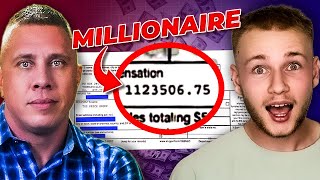
Interview with David Price (insurance agent) about his rise from financial hardship to running a seven-figure insurance business. Key points: licensed May 2018; started selling final expense on 80% commission; early years included low initial pay (~$30k the first partial year) then rapid growth (first full year >$200k, second full year >$500k, subsequent years grew to seven-figure annual income). In 2022 (his fourth full year) he reported $1.1M income. His model: master selling, recruit/duplicate via simple one-carrier/one-product focus (final expense) supported by abundant carrier-branded leads (he cites ~3,000 TV leads/day), move agents from field-selling to telesales, and scale by hiring managers and training leaders. Recurring themes: coachability, work ethic/outworking competition, fully committing to one system for at least a year, and prioritizing revenue and lead acquisition over back-office setup.
Questions this video answers
May 2018.
$1.1 million (reported as his fourth full year).
Approximately $30,000 that year.
80% commission.
About 3,000 TV leads per day (carrier-branded).
Chapters
The moment they've been waiting for. What are the three secrets that you would go back in time and tell yourself to double where you're at today?
The biggest thing is.
All right, what's going on, guys? I have a seven figure insurance agent here live on the channel today. His name is David Price. We're basically just going to ask him a couple questions. You guys threw a bunch of questions in the Facebook group. So I'm going to run through those. And then at the very end, David is going to reveal the three secrets he would tell himself if he could go back in time to when he started insurance to double where he's at now. Granted, he already just made a million dollars last year. He actually posted his W9 into a Facebook group. I'll throw up a screenshot of that right there. And you guys saw it in the thumbnail. But he's going to be showing you guys what he would do to double where he's at now. So be sure to stick around to the end of the video. David, what's going on, man? Welcome to.
How's everything going?
Good, man, good. It's good to have our first seven figure insurance agent on the. On advanced agent marketing.
Am I the first man? That's awesome, man. Thank you. I appreciate you.
Unless somebody's not telling me.
I think they would tell you in this industry. Right?
Right. Yeah, exactly.
I think it's usually the opposite. They say they're making seven figures, but they don't. They don't send the proof.
Exactly. Yeah. That was the, that was the first time I've ever seen a W9 of people saying that. I mean, you hear. I've heard so many like, oh, I made X amount last year, X amount this year. But I've never seen a W9 posted to a Facebook group. That was a first.
The biggest reason I do that is I want people to know that I'm just a regular person. You know, 10 years ago, I sleeping on people's couches, I was unemployed, I didn't have a car. I was dead broke, went through a bankruptcy. I mean, I had absolutely nothing. And you know, to be able to make over $1 million in a single year, my fourth year as a licensed insurance agent is. Is pretty awesome. But I think everyone else has that same opportunity. And since so many people like to lie and exaggerate and make stuff up, I just thought it'd be really appropriate to just, just prove it. Just prove that what I say I do, that I do. And not to. Not to brag or boast but to show other people that they have the same exact opportunity right in front of them, they just have to take advantage of it.
I love that. So you said this year is your fourth year in the business, is that right?
So I'm working on my fifth now. But last year, 2022 is my fourth year, fourth full year as a license agent. I got licensed May of 2018. Actually only made $30,000 that year. And the year before that I was in Puerto Rico doing emergency power restoration and made about quarter million dollars in six months. So it was definitely bumbling putting pants on and, and trying to sell insurance and get paid peanuts for it because I did put a lot of time in. I know a lot of times people don't make a lot of money at first because they don't do what they're supposed to, but. But I was putting a lot of time in. And then over the next two and a half years I made $970,000 making 1 million cumulative income in three years, 36 months really of having my license. And then my fourth full year. I did it 1 million in one year and hoping to double that this year. And so far on pace to do it.
Actually kind of walk me through, I mean you said fourth year in insurance you made a million dollars in take home. I've heard you called, been called the fastest millionaire in the insurance business. But like walk me through, I know you said before insurance you were doing emergency restoration in Puerto Rico. So from then kind of walk me through the progression of four years to where you are now, you know, pulling in seven figures in income in one year.
Honestly, I think, I think it starts really 10 years ago. Like I said 10 years ago I was, I was, you know, I just want to kind of go back a little bit and give some reference to the story. But you know, I lost everything that I had and you know, I was actually battling with addiction. I was in New Jersey and I was just like, dude, I just need to do something different. And I drove out to Louisiana, my father was staying there, actually was staying on a fold out couch at my grandma's house.
Got out there by the girl I was dating, took her, her car, we went out together and went with like two bags. I had nothing. I had nothing at all. But the one thing that I did have is I just realized like, dude, I just needed to do something different. And I got really humbled in life. I've been successful before that and I lost things before that. And I just got to the point where I was just like, dude, I just got to make some drastic changes. And to me, that. That's where the process started. You know, so many people, they come to work with me in insurance, but they come with their ideas, and they want to make some money that they've never made before, but they come with their ideas, right? So they've never made it before with those ideas. They need new ideas. They need new thinking. They need to learn something new. And, you know, I was learning something new about my life. And, you know, I got job after job, getting better, opportunity after opportunity. And I got to the point where I was doing well. You know, I was making six figures. I was doing disaster work. I made, like I said, $250,000 in six months in Puerto Rico, was making money before the hurricane. Maria was in Puerto Rico. But at the same time, I. Now I'm in my mid-30s, and, you know, my life still wasn't what I imagined it to be. I wanted to be able to do what I want, where I want, how I want. And that was something that. That meant a lot to me. And I was living in Louisiana. I grew up by the beach, and I really miss being back by the beach. So even though I was making a lot of money, even though I was a business owner, I still didn't have the freedom that I wanted. So I started looking at different business opportunities that wasn't even looking at insurance, and it wasn't on the radar. And I was thinking about opening up a franchise. I thought that was good, right, because that's a working business model. I was looking at maybe going to Florida and open up a gym, because I like to work out a lot. I thought maybe that would give me the lifestyle that I wanted. And I'm just looking at different things. And one of my friends I was talking to, who also owned multiple businesses, pointed me towards my upline now Doug, and said, man, Doug's making a lot of money selling insurance. And I. I heard insurance was a great business to be in. So I. I went and talked to him. I looked at what he was doing, and there's two things that were really important to me, and what I learned is leads are super important. You know, when there is. When I was in Puerto Rico, it's because there's a hurricane there. There's tons and tons of work that need to be done, right? Those are leads, right? That's a strong demand. So I look at leads like it's a demand. So the I asked was about leads. I didn't know about comp. I didn't know what final expense was. And that's what I was going to be selling, right? It didn't matter. Like, do you sell a good product? Do you have a demand for it that's not being met? And can I do it? And can I teach other people how to do it? And will you have more leads for those people, too? Like, that was the only thing I was worried about. I started on 80% commission, and I'm sure you jump in some Facebook groups and say, oh, yeah, I'm going to start at 80% commission. And they're going to tell you, you're crazy. Well, it worked out pretty good for me.
You're gonna get recruited, right? That's what's gonna happen.
So. But yeah, so I started on 80 not knowing anything different, and I'm glad I did. Right? And.
I knew I had to learn how to sell first. And then my plan was to teach other people. So from day one, I thought about as a business owner, like, day one, I was the Price Group. You know, I was just one employee at the Price Group. That was it. Until I could find more good employees.
And start with the llc. Did you initially, like, get an llc or were you just like, kind of. That was the mindset, or did you actually start as that kind of formation?
I think I might have got the llc. Knowing what I know now, that's not important. So I'm not a tax guy, so I want to give tax advice. But my understanding in an LLC is to protect you from getting sued. Right. I don't have an office that someone's going to come trip and sue me. So, you know, getting the business name and the LLC to me isn't important. To me, the first thing that's most important and what any agent should would focus on is selling insurance, which is creating revenue for your business. I was actually just on a mentorship call. That's why I was a little late for this. And the person was asking about packets to send the client when they sell a policy. I was like, you haven't sold any policies yet. Let's sell some policies first. You know what I mean? That stuff's great. But, dude, you're a business owner whether you want to be or not. If you're 1099, you're a business owner and your business sees revenue and you need to look at the things you're doing. Are they creating revenue? Right. Because people are. They get so focused. I need a CRM. I need to get organized. HE files. I need an assistant. I. I need a welcome Packet. I need the llc. Like, no, you need revenue, you know, yeah. Will solve every other problem you have. Like, then you can help hire help to help you with your. With this stuff. I just opened up some LLCs. I didn't do it myself. I told my assistant, hey, I need three LLCs, and this is what I need. And this is what they're going to be doing. You know, real simple, right?
And then, so, so. But I did think of myself as the price group and just went out, went out learning how to sell insurance. And I was talking to everyone about the opportunity. The whole time I was talking about everyone about the opportunity when I was getting licensed because I was freaking stoked. I. I seen how simple this was. I seen how scalable it was, and I truly believe that I was going to do something amazing with this simple platform. And that was my goal. So I was telling people about it. I didn't need to wait to see my success because I was already. I already talked myself into it. Too many people are like, oh, well, let me see how I can do right? To me, that's seeing that they're not even fully committed. Like, I knew I was going to do great. I just didn't know when. So when somebody's like, oh, I want to see how I do before I tell anyone that you. Well, you're telling me you're not committed. What do you mean? You want to see how you're going to do? Like, why did you join me if you're not fully committed? Why did you join me if you don't think you're going to do great? You know that. That's just telling me they're. They're not. Their mindset is not where it needs to be yet, right? So six months into it, I was thinking to myself, man, I made more money. I would make more money working at McDonald's for time and a half than what I was making. Like, I literally thought that I was getting pissed off, questioning a lot of things. And at that point, I'm, like, looking around at other companies and finding out there's bigger contracts out there and maybe I don't have the right this or right that. And I started looking at a lot of other things. And then Hurricane Michael hit the Panhandle, and I was like, man, all my contractors are calling me up, hey, we're going to work. We're going to work. We going to work. Because tons of money to be made there. And I really thought about it. I thought about it. Matter of fact, I did go over there for three weeks for a short job, I made $30,000 in three weeks, which is the same amount of money I made in the six months of having my insurance license that year. So I doubled my income and just doing three weeks of storm work. And I was really second guessing my decisions. And then I had to get real with myself and I realized that I was only six months into the business. So first of all, why do I think I should be successful six months learning, right? Like I'm brand new, I don't really know what I'm doing. Like, yeah, I'm making sales, but like, you know, I'm not a master at anything in six months, right? I can't learn to play a guitar in six months. I can't learn a language in six months. Why did heck do I think I could be the best in final expense in six months? And then I had to realize that even if I quit then I can't really say I started. You know, too many people, they tell me they quit and that when I say back to, I was like, hold on, did you even start? You know, and every single one, 100 say, you know, I guess I did it right? Like, you know, at least they could be honest with me when I asked these, these questions. Because six months, that's not even starting. You know, at least give yourself a year before you could, you know, make any real decisions on, on what you're going to do. And, and that's a year of following a system. Not a year of hanging around, watching, you know, watching me watching Zoom meetings and studying, right?
So six months in, I realized, you know what's messed up my mindset. And I was looking at too many other things. I wasn't focused. And I realized I just needed to get my mindset right every single morning. And as soon as I would wake up, before I even got a bed, I grabbed my phone and I put a YouTube video on and I was screen it to my TV and it'd be like some kind of motivational YouTube video and that would be playing throughout my apartment. I just had a little apartment at the time and I would just get pumped up all day. So I'm eating breakfast, I'm taking a shower. Like up until I left my house, I was just getting as pumped as possible. And I hired my first agent that produced right around there in December. I hired another committed agent as well. And within the next six months, my agency was doing a hundred thousand dollars a month in production without me. All final expense, all one carrier, all one product. And then at that point, my income was enough to cover my bills. And that's when I stopped producing and I started fully focused on building my business.
This is a year in, right?
Yeah, so. So I only wrote business for one year. And you know, what happened there? I didn't know. I was always wondering when that time would be to make that transition, because that was the goal, to make that transition. Right. Because as long as I'm running business every single day, I'm not truly working on my business.
You're working in your business.
Right. I'm stuck in my business. And what. I got 30 leads. I was a door knocker, so I didn't make appointments. And I went. And I'm driving circles around houses because my agents keep calling me. And for one week, I didn't get in one house. So the next week, I'm like, man, I need 30 more leads. I need to get twice as much work done. So I'm gonna need all 60 leads. This week, I got 30 more leads, and the same exact thing happened. So at that point, I knew it was time that. To mentor, train, and help other agents and hire agents.
I want to touch on that for a second, because I feel like a lot of people will have the question. I mean, maybe they're kind of like starting to build a small team, and they. The question is always like, when do you know it's the right time to get out of the field and focus fully on the agency? And from what you were saying, it sounds like it was literally up until the point where you couldn't even sell anymore. You were so busy with agents.
I was worried about the same thing. And I had someone recently say the same thing to me. And, you know, what I told them is you'll know. Like, it will push you out. You know, when you can't sell anymore because you're. You're helping your agents and that income covers your bills. That's. That's when it's time to go, you know? And don't be. You know, I see. I hear a lot of people that I hire. There's like, yeah, my won't even talk to me and this and that. And there's two things. One, maybe they weren't doing what they're supposed to be doing when the. When the UPLINE did talk to them. You know, I know if someone keeps asking me the same questions over and over again, and then they don't do any of those things, you know, I may probably stop answering the phone for them. So that could be what happened. Or two, that uplines too busy about themselves, that they don't want to help other people. And then what that tells me is they're not thinking about being a business owner. Right. Because at the end of the day, you know, I look at every single person I hire is a business. Right. If you want to work with me like you're a business, I need to help you become profitable. And I get paid off you my entire life, you know, So I look at it like it's a franchise situation, like we're just set up McDonald's restaurants all over the place. But like I got to help you make money or I don't make any money. So why the heck, you know, because it's easier for me to write business and make more money. But you know, if you really want to scale and create a seven figure income, you're not doing it by yourself.
Do you think so do you think it's possible to reach seven figures just personally producing or you think you, you have to transition over to having agents under you?
You definitely can't do it by yourself. And final expense, that's for sure. I can't speak about every line or every situation out there, but yeah, if you're. Yeah, I mean, and then why would you want to. Because the thing is. Okay, cool. Let's just say you made. I don't think you can, but let's say you can make seven figures on your pen right? Now you're used to making a seven figure income, right? And then you get in a car accident and you're out of work for eight months. What just happened? You're screwed. You're great. All your bills are lined up for a seven figure. My seven figures is in my sleep. I could not work out. I don't have to work one day this year and I'll make over a million dollars. Right. It's all passive. So why would you want to put all that, all those eggs in one, one basket?
So that's year one. You start building the team, you start, you know, having the agents, it's paying your bills, you're focusing on agency building. Sounds like at that point maybe things kind of, you know, went up in like a hockey stick almost just. Cause you were able to focus so much on building the business. Is that right?
Yeah. So it's, you know, at first it's a little bit slow, but you know, one thing I can say because of that, my income's basically pretty much growing every single month from there. Right. You know, very rarely would it ever go down or stay the Same. A little bit. But then the next couple months, it. It makes up for it. So, you know, like I said, I made it. I'll give you real numbers. So last year I made $1.1 million. And I looked because I want to Compare this January versus last January. This January, I mean, I think like 110, $110,000. Last January, I made 60,000, right? So when you take a 1.1 million, you don't divide that by 12, and that's what it looks like. It was like 60,000, 65, 70, 75, 80, 90, 100, 105, 107, 112. Something along the lines like that, right? So it's just a constant growth, and if you go backwards, it was the same thing. So that's what happens when you, you build. Because now I'm growing exponentially. So last week we hired 49 agents. So about 25 of them were from my recruitment team, which is my recruiters, my ops manager, you know, some stuff that I've done. But the other 25 is for my managers. Growing babies, right? Them hiring people. So, you know, we get bigger, and I bring on more managers and more leaders, we start growing exponentially. And that's when you start seeing people. When you see. We get advanced statements daily, you start seeing people making money that you. Oh, who's that person? Hold on, let me see who this is. You know, you start seeing you're making money off people you don't even know yet. You know, because you're growing at such a fast rate.
So that is. This is kind of like year, year one transitioning into year two. And then when did you first hit the seven figure income? Was that this year, or had you hit that in years past?
Again, just to be real transparent. So my first, you know, $30,000. My half year.
My first full year was over 200,000. My second full year was over 500. The next year was over 7. And then last year was my fourth full year, which was 1.1 million. Right? So again, it was 50%, 100% growth each year.
And it, you know, it just, it just grew exponentially. So the, the process is learn how to sell, teach people how to sell, then teach people.
How to teach people how to sell, but then ultimately teaching people how to build businesses. Right? So now I have a full leadership team. And basically what I'm doing is I'm teaching them to do exactly what I did. Like, okay, cool, you're at this point now, this is what I think you should do. You're at this point now, your income's here, so I think you should invest a little bit more into this. And I start tweaking their businesses to. To try to get them to duplicate exactly what I did and hope that, you know, the next two, three years, I have 10 people that make a million dollars.
You know, and. And that's, you know, to me, that's when, you know, you. I mean, you built something really, really amazing at that point, right? Because that's just going to grow really fast. I mean, it's already growing fast. But, like, my thing is, if I want to look at how do I grow faster and bigger, it's. I. I got to get more people in. In, like, you know, I call it like my middle class, you know, who are making, you know, two, $300,000 a year. Get those people where they're making six, $700,000 a year, right? Because as that grows, then the rest grows even faster.
So it's basically. It seems like it's kind of just like a game of duplication. Like, so first you duplicate yourself on the bottom level, which is actually producing as an agent and then as somebody who's producing with agents under them, and then as somebody who's only just recruiting and building, and then, you know, somebody who has people like that under them. So you're just continually moving up the ladder and then filling the space of where you used to be with new leaders.
Yeah, that's it, man. Just, you know, finding talent and developing talent, you know? You know, and I think if, you know, people look at the insurance industry and look at recruiting, like, is this bad thing? Right? And, you know, it is. And it's crazy because look at any, like, company. So let's look at, like, Elon Musk and Bezos, like, the rocket companies they have, dude, they're constantly stealing people from each other, right? They're looking for the best talent that they can, you know? Or look at the Navy seals, right? So let's say the Navy's like, all right, cool, we got 30 seals retiring this year, and then with our demand, we might need, like, another 40. So we're going to need to hire. We need a hundred new Navy Seals this year. They don't hire 100 people. They don't recruit a hundred people to go to buds, right? They start the selection process at, like, what, hundreds or thousands of people, and at the end of it, they know what numbers they have to work to get their hundred good Navy SEALs that they expect to graduate from BUDS, right? It's. It's a process that they have the math on, you know, so any company of Walmart is like, hey, you know, we're creating 50 new positions. They don't hire 50 people. They have to hire like 100 people because they know 50 people. They can't just hire 50 people. They're not going to work out. So like that's any company, right? So when you start looking at your business like you're a company and you're the CEO of your company, you know, I want to have the best talented people. How do I find the best talented people? I need to go through a lot of people to find them. You know, there's something people say, oh, you just throw everything against the wall and see what sticks. It's like, no, no, we're throwing everything against the wall to see who's committed. Because unfortunately most people aren't going to commit. You know, if I can get everyone to commit, man, my job will be real freaking easy, you know, because I have someone committed fail. I mean, the people that are committed that I built some trust to, they're the ones that, that I create, you know, become, they become leaders. And I bring them into our recruiting program and help them build agencies. But the problem is people quit before they even get started.
I love that. And I mean, it kind of comes back to the whole like six month story that you're talking about because I feel like there's like, just from talking to agents every day, there's so many people that don't make it past the first six months and maybe the first six months for them is the first like year and a half because they just keep delaying, going all in. You know, it's like they make a phone call or two a week and they hop on the zoom calls to feel like they're doing something, but they never actually like fully commit for an entire year to see what, you know, what can come of the business. And I also, I love the part you said where it's not just throwing spaghetti against the wall to see what sticks, it's throwing spaghetti against the wall to see who's committed. Because at the end of the day like it's such a simple business and I truly believe that anybody can learn to sell. It's just about how willing and dedicated they are to actually learn how to do it. Because like, it's not, it's not rocket science. We're not recruiting people to SpaceX or Tesla like you mentioned. I mean, it's just like, can you make a phone call? Can you talk to Somebody can you close them on a policy? It's very simple.
Yeah, that's it. You know, and it's. It's crazy that more people don't take advantage of it. I mean, I guess it's kind of good too, right? Because that's why they pay us as well as they pay us. I guess if everyone could do it, we just began, you know, getting a little salary or an hourly wage, right? To collect checks. You know, I definitely. It's cool when you see somebody who. Who does see it, and then it's like, oh, okay. Or just says, like, you know what, dude, I'm just going to make this work, right? Or I've seen you did it, so I can do it kind of deal. And they just fully, fully committed, and you see them and you see their income go up. I mean, we just had 1099, right? So it was really cool that, you know, I have all my people send me the 1099, right? And I want to see what they made and what they did. And, you know, it's definitely good to see, like, I have an agent. She was going to school to be a counselor in Louisiana. Never made more than $2,000 a month. Single mom with two babies, and last year was her third full year, and she made $360,000. That's insane, dude. It's insane. Like, it's. It is so cool, like, to be part of that, you know, she sent me a TUI bag for Christmas. You know what I mean? Like, so grateful for it, you know, and it's so cool. I mean, she did the work, I showed the way, and we talk all the time, and I coach and mentor her. But, you know, real simple. She could have been another one, that person that quit. Heck, I. Like I said, I literally almost quit. So just think about what I would have missed, right? So when I see all these people quit, I'm just like, dude, like, look what you missed. Like this, you know, my future could be your future. You could have done more than me, and you didn't have what I did. And you would have been happy, I'm sure. I'm sure there's a lot of people that'd be happy with half a million a year.
All right, so I kind of want to get into some of the questions we have. Facebook group. First one I have is from Nick Redmond. He says, what non business things do you do consistently that contributed the most to your success in business? So, you know, basically, like, what in your personal life that you've done, you know, habits You've built, you think have contributed to your success in business the most.
That's a really good one, man. So, you know, I shared earlier, I was like unemployed and everything. And, you know, when I went to Louisiana, the reason I went there is I heard it was a good place to get a job on an oil rig. And I heard it was like a good place to make a pretty good living. Right. So I wanted to work on oil rigs. And somebody said, I could get your job, but it'd be cleaning toilets and washing dishes for basically minimum. It was minimum wage, right. 7, 25 an hour. I mean, I used to manage people. I worked career. I worked in corporate America. Like, that was nothing. Like, the only time I worked minimum wage is when I was a teenager. I've never did it before, but I wanted to work offshore. So I was like, all right, cool. Like, I just needed to get out there to start meeting people, meet the companies and stuff like that. And I knew that I would move up and I wasn't worried about working for 7. 25 an hour. Even though, you know, my last job before that was 70 grand a year salary. Right. You know what I mean? I went from $70,000 a year salary to 725 an hour. And I was mopping floors and I was washing dishes, and, dude, I just put my earbuds in, I listened to motivational stuff and I mopped those floors and I washed those dishes. And so, like, whatever I did, you know, at that point, dude, I just took pride in it and it didn't matter what it was. You know, every morning I wake up, I make my bed and do whatever I am. I'm just trying to do everything to the best of my ability. And just doing that all the time and every day trying to get better. It just builds a mental toughness in you. Yeah, that mental toughness is going to help you with everything else. So, you know, a lot of times people look at success like it's this big thing that's going to happen, and it's not. It's about doing all these small little habits. And when people ask me, how are you successful? By doing a lot of things I don't want to do. That's what it comes down to. I don't want to make my bed in the morning, but I do. Right? I don't want to do a lot of things that I do, but I do. And to me, that that's what helps you become successful.
Have you ever read the book the Slight Edge? Sounds like you're Quoting it directly?
I haven't, but we wrote it down. I'll check it out.
It's like if you've read Atomic Habits, it's like very similar to that. It kind of goes deeper and like a different angle on it. But like I'm reading that book right now. Like it sounded like you were quoting it. It was, it was kind of weird.
I got it for me.
All right, so next question I have for you, this one is from Julian Polito, is what is your schedule like, like your day to day schedule? Like what is, what is a day in the life of a seven figure producer actually look like?
So today, right? So today I woke up, decided I want to go to Jeep week for in Daytona. So I asked my girl, she could get off to go to Jeep week. She told me what days I booked an Airbnb, right. So the freedom to do that. But then 8:30 I was on a zoom meeting and basically I've been, you know, at my computer working all day. I mentored some agents.
Welcome some new agents that we had. I have a virtual call center that I run. So I jumped on there, made sure that people were talking on there, making sure that it was interactive, said hi to some people, answered a bunch of emails, definitely handle some admin stuff for when agents have some, some issues. Right now it's 5:40 Eastern Time. I'll get off this, you know, whenever it finishes I'll make probably. I just saw a call coming up. I probably make one more call, then I'll work out. And I also ran this morning, so I'll work out with some weights after that. And then I ran about 25 minutes this morning, actually. Close to 30. Yeah, close to 30 minutes this morning. So I try to stay active and busy. I don't turn on the tv. The TV doesn't go on during the week. You know, the only time the TV will ever go on is, is on the weekend. I did spend like a decade of my life sitting, watching tv. So I make a point not to do that, not to have idle time. So I just really want to make most, most of my time productive. But I started off with telling about the Airbnb in Daytona thing because, you know, I could also be like, all right, cool, I'm going to go to Puerto Rico for a week.
Yeah.
You know, just like that. Right. But so I make sure like I'm either really productive or I'm really relaxing. Right. But I don't do this, sit on, watch TV for a whole Saturday kind of deal, you know, and so just you start learning to really, really cherish your time and make sure you take advantage of it. Because at the end of the day, that's the thing we can't get back.
Yeah, that's true. I mean, they print money out of nowhere. It's not.
I got all the money I need, man. I got barely enough time.
Exactly. Okay, that's. That's a great answer. The next one is what is like the number one defect you see in agents that on hold holds them back from hitting a seven figure income?
The biggest thing is that you're not being coachable. So many times I have agents, they reach out to me and they, they want to work with me and they want to be successful, but they still want to do it with their ideas or they, they like, all right, cool. You know, the way I did it, it's not the only way to be successful, but I'm successful. I work with one carrier, I sell one product, right? So I have people like, all right, cool, I'm gonna add your carrier and add your product. Well, no, like, you're missing the point. I do one carrier, one product because it's simple, it's duplicatable. Like, you're welcome to edit, but don't, don't expect to have the same results that I'm having by just adding what I'm doing. Like, I need, you need full laser focus commitment to do what I did. Like, if you know a different way and it works, but, like, find someone to teach you that. You know, I can't teach you that because I haven't done it. So the biggest thing is they're just not coachable. They should one be finding somebody that has the success that they wanted and then literally make sure they have access to them because that's a huge one. And then just be like, all right, cool. Like, what do I do next? Like, that should be it. Like, what do I do next? Like, you know, and, because at the end of the day, like, to me, the most important thing is the ongoing mentorship. You know, let's say, you know, an agent starts with me, they get, they're issuing 10,000amonth with their eyes closed. All right, cool. Let's see what you know, if they want to make some money more and it's a producer, we could turn that up. But it's. All right, cool. You're looking to build a business now. All right, let's start figuring out how are you going to find people, because, you know, selling insurance has a system, but so does building an agency. Has a system, right? Too many people, they'll. They'll invest $1,000 a week on leads to sell insurance, but they won't invest $1,000 a week to build a business, you know, because at the end of the day, you want to start taking that money and putting it over here. At first you're going to kind of match, but, you know, it's all about how much you invest in your business.
I love that. That's awesome. Next question I have is in this, this last one I think you're going to like, because it's one that I get all the time. And you kind of answered it a little bit, But I think we're gonna ask like the full on version of the question. I'm curious to see what you have to say. So the one before that is, what were some of the biggest mistakes you made in the beginning, maybe after that six month period? Because obviously the biggest mistake was just not fully committing. But in the last three and a half years or so, what would you say is the biggest mistake that you've made that you kind of wish you could go back and fix? Or maybe not wish that you could go back and fix, but just something.
You learned from the biggest thing, if I did it all over again is, you know, I learned to sell in the field. I was a door knocker selling final expense, direct mail leads, door knocking. And I believe that's the best way with final expense if you have access to direct mail leads. But if I did it all over again, I would never have left my house 100% on the phone. You know, I have 95% of my production is on the phone. I have a few people that just refused to get on the phone and transfer over. But when Covid happened, luckily the carrier I'm with was already phone friendly. I guess I don't know if that's a thing, but the carrier's been selling the phone for way before COVID You know, I think like 10, 20 years maybe. So when Covid happened, it was as simple as calling everyone up and hey, I know I told you never pick up the phone to make an appointment or call a client. Now don't ever leave your house. You're only allowed to use the phone. And, you know, the month of April was the first full month of COVID And I think a lot of people didn't really do anything that month. We actually had our best month, 100 on the phone. And for that, every month we're having best months being in the field. So it really showed Me what I missed. But the biggest thing is I see the lifestyle style of a telesales agent versus a field agent. Because like I said, I dude, I was first house at 9 o' clock, which means I left my house at like 7 to get there and didn't get home until midnight like most days of the week. But a telesales agent working from home, like they're at home, they're jumping on the phone, they're eating dinner at their house, you know, maybe a little exercise and getting back on the phone and when they're done, they're already home. And that means is freedom and.
That'S anywhere.
I mean dude, I had agents selling in Mexico, I had an agent in the Philippines, I got agents in Costa Rica. So if I did it all over again, the field wouldn't exist, there wouldn't be a way to sell.
People ask me this all the time is like which product should they sell? And this specific question, this is from Jeremy Jaramillo and he says would you recommend focusing on Iuls and annuities exclusively after working simplified issue final expense and mortgage protection after a year. And I'll kind of just throw this in as a follow up question, like how would you structure a business? I think it's kind of obvious based off of how you structure yours. But for all the agents out there watching, how would you structure a business to scale to seven figures as far as like which products to sell?
I love this question because I feel super strongly about it and people are looking at it backwards, right? There's only one reason I sell final expense is because I have an abundance of good funnel expense leads, right? If that disappeared and dried up, well now I would have to switch the product based on the demand, right? So someone that wants to do annuities, simple. Do you have an abundance of lead source of annuities? No. Well, why do you want to sell annuities? People get so caught up on the product instead of solving a problem, right. I went to Puerto Rico because there was a hurricane and they had no power in the whole entire island and I had to provide power to that island. They obviously needed it and they're going to pay me really good to do it because there is a strong demand. I sell final expense because we create 3,000 TV leads a day for final expense of carrier branded leads that are super all like, I mean they're, they're great leads, you know what I mean? They're not from a lead vendor so they're really the good, right? So until I max out that demand. I wouldn't sell another product. Right. Why. Why would I? Oh, I've been selling finance tests for a year. I'm successful. So let me change my product. You know, just something I don't have a lead source for. It means absolutely no sense to me. You know, so the. The thing is, people get so caught up on the product. If I can make a million dollars selling volleyballs, because my friend called me up and said, hey, listen, we got these volleyballs. It's the colors. I don't know. People love them. But the phones are ringing off the hook, and we need, you know, build a sales team to sell these volleyballs. You'll make seven figures doing it. I'd be selling volleyballs. You know, my whole thing is you want to look at a problem and solve that problem. If you don't have a lead, the lead's the problem. Right. It's a demand. It's somebody calling and saying, hey, I need this. I'm interested in this. So they got it backwards. You find the lead source, and then whatever that is, that's what you sell.
I love it. So if someone were to start, you know, at agency.
Say what. What was the last part?
Sorry to be so direct.
No, dude, I freaking love it. That's exactly how. That's how people. They. That's how they need to hear it. That was. That was perfect. So, I mean, if you. Obviously, the way you structure your agency is pretty telling, but for someone who was to start from scratch, keep it as simple as possible. Sell one product, solve one problem, and go where the demand is for a new agent. Would you recommend them to get into final expense or term or mortgage protection or what would you recommend them to do?
Yeah, I mean, I'm a fan of final expense. First off, it's all I know. Right. So I don't want to ever pretend I know everything, but the one thing that I really like about finance expense, especially in the world we're in today, is it's bulletproof.
Yep.
You know, the economy is not going to mess it up. You know, I know a big thing with mortgage protection right now is the cost of mortgage protection. Leads. Leads. And anyone that knows about direct mail dropping. There's no data because there's no mortgages. Right. When the mortgages go down, then the data goes down. When the data goes down, they have less people to mail to. When they have less people to mail to, less people fill it out, and it comes back. Let's come back. Which is increased the cost of that lead. Right. We have that world in final expense. So I like final expense because it's bulletproof, it's fast, it's simple. I could write a policy today. I mean it's later. I could have wrote one today and had an issue today. You know, we're, you know, I bring people in from that, that other world. Like holy. I could get paid right away. I just got paid on something like I wrote a, I had somebody that, you mentioned his name earlier, you know, that got contracted and they, they wrote a policy, they got contracted, wrote a policy that same day and woke up with money in their account the next day. You know, if that's not good for a new agent, you know, I don't know what's better.
It's pretty solid. Awesome. Well, before we get to you unveiling the three sequences that you would go back in time and tell yourself to double your production of where you're at today. I want to ask you if agents have been watching this interview. We'll probably won't cut much out of it because I think you've just been shitting out value for about 40 minutes straight, excuse my French there. But for people that have been watching this, enjoying the value they're getting from you, maybe want to learn if they could hear more from you or possibly work at the Price group, where could they go to get more information on that?
Yeah, I appreciate that. TPG life.com is my website. From there you can find my YouTube channel, my social media, David Price official is most. My social media handles Instagram, Facebook, YouTube. I do have a YouTube channel as well. And yeah, this should be to find me Tick tock too. David Price official as well. So I think hopefully you could google David Price insurance by now and be able to find me within the first two pages. I hope so. That that's, that's the goal. I'm competing with a pitcher, a well known pitcher. So David Price isn't, isn't working out yet, but I'm working on it.
So for everyone that's been watching the moment they've been waiting for, what are the three secrets that you would go back in time and tell yourself to double where you're at today? Even though you just made $1.1 million this year of 2022, how would you double that? What are the three secrets that you would tell yourself?
The biggest thing is, you know, be coachable. Right. Find somebody that can show you the way. You know, I have the roadmap to get where I'm at. I have a lot of knowledge. You Know, and I learned a lot of different things along the way. You know, the person I am today is different than the one a year ago, which is different than one year before that, you know, and I made some mistakes, and I recognize them, and we learned. Right. Just like anyone here that, you know, went through life, you know, when you're a teenager, you thought you had everything figured out, and then you started learning along the way. Like, oh, man, I was so wrong, you know, so find somebody that has that experience that's done it, because I didn't make a million dollars, you know, without learning a lot along the way that I can teach. So being coachable, having a positive attitude, you know, so many people, they look at everything else is wrong. Right. Like, take ownership, you know, take responsibility for your success or lack of success. Right. If somebody is having success with the same exact system that you're in and you're not, you have to look at yourself, you know, don't. Don't look at other people. Don't blame on other people, you know, have that idea that, you know, if they could do it, you can do it.
Yep.
You know, and like I said, you know, there's a really good book, Extreme Ownership, you know, that. That I read, and it just. You just taking full ownership over. Over everything. And then work ethic, man, you know, that's the one thing. When I started, I knew I wasn't the best at selling. I knew I was the most technical. I make a ton of mistakes, but the one thing that I knew I had control of was my work ethic and my goal. Matter of fact, it's on my shirt right now. You will not outwork me.
Did Adam Lindsay design that?
Yes, he designed that for me, actually. So you can buy my website, ppg, life.com. what's that? Said?
He was telling us about that at dinner a couple weeks ago.
So. But that was my thing. Like, when I first started, I was like, all right, cool. I don't have anything on anyone. I don't have any experience. I don't have anything. The only thing I could do better than anyone else at this time is outwork them.
Yeah.
And like I said, I. I worked as a door knocker. So in my head, I'm like, all right, cool. These guys are doing 10 doors a day. I need to do 20. And if that math works out, and if I was right there, I could do two years worth of work in one year. And the same thing now, if I'm selling on the phone, I'm like, all right, cool. The guy next to me is down on the phone 200 times a day. I need to dial the phone 400 times a day, right? Because, you know, over a year's time, that's an extra year in work. You know, same with, when you look at the compounding of hours. If I start at 10 o' clock every day, but then I decide I'm going to start an hour early at 9 o', clock, five days a week, that's five hours a week, that's 20 hours a month, right? You know, that's, you know, months worth of extra work if you compound that over a year, you know, or a couple years. So, you know, understand that though you can control your work, I think, and putting in as much work as you can. Like my whole thing is I wanted to get to where I was successful and I had an option. I could take my time and it would take a long, long time. But I had a six figure income before insurance and I wanted to get back to that. My goal was to get to $20,000 a month as fast as possible. So I just put myself in like pain until I got there. Like, I mean, I worked until I had tears in my eyes because I knew once I got there, I would be saved. So, so definitely.
Make sure that you're giving it 100% every single day, you know, and people like, oh, well, I'm tired. Listen, I've laid on the couch and watched TV all day and still been tired. It's okay to be tired and work, right? There's nothing wrong with that. You're not gonna, you're not gonna die from being tired at working. And you know, the other thing too is like, once you figured out who you're going to work with, what you're going to do, you're fully committed, you got your lead situation settled. That's it. Now fully commit, you know, and don't talk to anyone else about working with them. Don't say, you know, don't look around, stop shopping. Like, fully commit, fully commit for a year. Because as long as you're looking at other people's grass, you're not ordering your own. And that's one thing where I made a mistake because I got to a point where I started looking at other things and I realized that was killing me. That's why I don't even, like, you know, a lot of people like, like heavily recruiting people at other companies. I don't like doing it. If someone comes to me, I'll let them work with me, but I don't like, hounding people, like, hey, I could do it better for you. I gave you a better contract. I don't like doing that because to me, it's not fair to that individual because they're not going to be able to be successful where they're at if I got them looking at me. So I want to give that person the best chance so I leave them alone. So I think that was more than three. I think that was four. But I had to add that last one in there because it's super important to me. That was probably the. One of the biggest mistakes I made is letting myself start looking at other opportunities and talking to other people.
Dude, that was awesome. You just went like, I don't know if we have a fire extinguisher in this house. Because.
If it's there, Julian, if you could find that, dude, because we might have to put something out. It's getting pretty hot in here. That was crazy. For like an hour straight, you just spit fire. I appreciate you hopping on here and giving us your time. It means a lot.
Appreciate you asking me, man. Definitely. Definitely an honor to. To be on the podcast, man. Be on your podcast. Appreciate you.
Absolutely. And guys, everyone who's watching this, I'm gonna include a link down below in the description to, you know, click on David's website. Be sure to check out his YouTube. Scroll through there. He's got a ton of valuable stuff on his channel similar to what he was talking about for the last hour or so. So be sure to check that out. But without any further ado, thank you guys for hopping on right here. We got a video that you guys are gonna love if you like this one, so be sure to watch it. But any further ado, I'll see you guys in the next one. Peace.










