Facebook Targeting For Life Insurance Ads (Step By Step Tutorial)
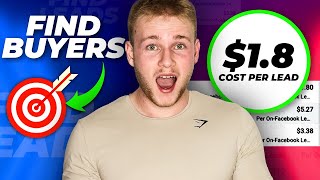
Sam (speaker) demonstrates step-by-step how to create Facebook lead campaigns and choose interest-based audiences for life insurance (final expense and term). Key points: set campaign objective to leads, manage targeting at ad set level, use psychographics to derive interests (age 50+ for final expense, typical buyers 60–75), test broad no-interest audiences versus 1–3 interest-based ad sets, start modest budgets (commonly $20/day per ad set), and pick niches (careers like nurses or retailers like Walmart) with audience sizes preferably above ~1M. Examples include interests such as family, online shopping, Walmart, Amazon, knitting, nursing, Grey's Anatomy.
Questions this video answers
May 9, 2023
50 to 85 (typical buyers often 60–75)
$20
1–3 interest audiences (plus a no-targeting ad set)
Prefer niches above ~1 million people
Chapters
What is going on? Ladies and gentlemen, in today's video, I'm going to be showing you guys how to basically do targeting on Facebook with interest. I'm going to be doing a deep dive on how to pick an interest, how to find a niche, and then basically just kind of everything that goes into that. So first off, I'm here in an example ad account. As you guys can see, we're on the campaign level right now. First thing I'm going to do is I'm just going to create a new campaign just to kind of show you guys what this looks like. So first thing I'll do is click this green button that says campaign. I'm going to click right here where it says leads and. And then click continue. I'm just gonna name my campaign whatever. I'll just call it AAM Leads just for Advanced Agent marketing. And then we're gonna leave all of this off and hit next. All right, so if you guys have ever done Facebook before, all of the targeting is gonna be set on the ad set level. So we have the campaign which is this, the ad set here, and then the ads which are the bottom level. So the ads are what people actually see. The ad set is where you set like location targeting, all that kind of stuff. One of the things I get asked about a ton is what interest use for final expense or term or whatever you're trying to market, right? Honestly, it really depends. The first thing you want to do and I'm going to touch on final expense and then I'll touch on term. The first thing you want to do is figure out who you're targeting for final expense. It's normally going to be people 50 to 85. Right? That's a massive range. So we'll narrow down to like, typically when people buy, they're between like 60 and 75. So that's like a 15, 15 year gap. Let's think about where do those people shop, where do they go out to eat, what are they watching on tv? You know, all these different. It's called psychographics. It's a marketing term. It's basically like the psychology of your target market. So what are they doing on a day to day basis? I'll work backwards based off of that to find interests to target them on Facebook. So let's look at that in action. So I'm going to scroll down here for the ad set. I always leave this on instant form. Just leave this all the same. I got my Facebook page, number of leads, all that looks good. Daily budget. I'M usually going to start at $20 and then the start date, I'll just do it for the next day at 12:00am all right, so we have custom audiences here. This is where you get into, like lookalike audiences, all that crazy stuff. The location, this is where you set, you know, what states you want to target. So for example, I always will go people living in this location, because I only want people that actually live or where I'm trying to target. So I could do people living in Arizona. So people living in Arizona, United States. There's 5.4 million people here. Now I'm going to scroll down on age. So this is where I can set the actual age of the people I want to target. For final expense, we're always going to do 50 or 40, 45 plus some people like to target 45 because they have products that go down there. I usually would just do 50. I've found that most people, you know, below 50 aren't buying final expense insurance. And then for detailed targeting. All right, so this is where things kind of get interesting as far as all the interest go. I'm going to click edit right here to get to detailed targeting. And this is where I can put in the different interests that I want to target. So whenever I set up my campaign, I will always do at least one ad set with the audience having no, like interest based targeting, just everybody on Facebook. What I found is that Facebook is actually pretty good at finding who your customer is if you just give it a wide enough sample size of people for it to sort through. But I will also test it against one to like three different interest audiences that I'll test the no targeting again. So if I'm spending 40 a day, I'll do two ad sets. At 20 a day, I'm spending 80 a day, I'll do one, no targeting. Three. Interesting. Let's look at how to find the interest that we want to target. So again, like I was just talking about, we can kind of just like think about the different things that our target market is doing or thinking about or shopping, whatever. Right. So for example, I could do family. People that are buying life insurance, they typically have families. Right? So I could do family as a social concept. Right. This is going to be an interest. And then I would just title this ad set family. So that's one way I can just kind of, you know, think off the top of my head. I'll show you guys how to find a bunch of different ones. So I'll type in family and then what I Always like to do is make a list of audiences that I can target. So I'll just do final expense.
And then I'll paste that. All right, so on Facebook, there's a couple different types of audiences in the detailed targeting. So you have demographics, interests, and behaviors. So what I always like to do is on my list, I will label what the target, like, the targeting actually is. So this one family social concept. If I look over to the right, it says interests. So on my list, I'll just do int, which would stand for interest, family social concept. So there we go. We got one interest ready to go. Make this, like, a bulleted list. There we go. So now if I click here where it says suggestions, comes up with all these different, like, suggestions that are related to the interest that I gave it. So we have parents, and this is a demographic. So this is people who have, like, marked themselves as being a parent on Facebook. People that are interested in parenting, that would be good. People that are married, that would also be good for final expense that are shopping online. Now, that doesn't necessarily, like, relate to life insurance. The people that are buying final expense insurance and are on Facebook, what else are they doing on Facebook? They're shopping online. So that could be another interest I could target. And the key with Facebook is you're really just trying to, like, test different ads and different audiences. So I could try this online shopping retail, and on my ad account, it might get me $3 leads, and on your ad account, it might be $20 leads. It really varies from ad account to ad account, because every time you give it an audience, it's like sniping after a different, like, subset. So if I give million or, you know, 1.6 million people or 1.9 million people, it's not targeting all of them. It's finding 5 to 10,000 of that 1.6 million and showing my ad to them. So if I relaunch the same audience, it might pick a new 5,000 to 10,000 people, and that one would. Could perform better. So that's one thing to note here, but really I'm just trying to find, like, very broad audiences that are related to my target market so they could look at more suggestions. Married would be one. Dresses, beauty probably not as much. Luxury goods, more than likely not. So, you know, I could copy this online shopping retail, paste it in here. I'm just gonna label it as an interest, and then I can keep going. So I could also do. I think we mentioned married. So this is gonna be a demographic, and it says what it is like up top here. So demographic interest, interest. So this one is obviously a demographic about political affiliation. So now I'm just gonna clear these out and I'm start again. One thing and this is an audience we actually test with all of our clients. When I was selling final expense we would go door to do about free gift cards. Now guess where the gift cards were too? Walmart. So I'm not going to try to target people that work at Walmart. I'm going after the interest of the retailer. So Walmart as an interest. So I can paste this here. Interest, Walmart. Do suggestions. Amazon people, I mean people that buy final expense still shop at Amazon. So that's a good one. Amazon is a retailer. And then you can also think about like what are the different hobbies that your clients are interested in. Maybe it's fishing, right? So I could go fishing as an interest. I could do.
Knitting for example. I don't know if this is a big enough one. This is massive. Knitting is huge. I've seen like a lot of times it's typically women that will buy insurance or at least like get the idea to buy insurance and then they convince their husbands it makes sense. So knitting would be a good one. And then I can do suggestions if I want to find more like knitting, sewing, crochet, embroidery. These are all great things to try. Crafts as in hobbies. This is kind of like the, that I'll go through now. Like inside of our, our program we have like a list of probably about 150 to 200 different audiences for people to test. It's just like a list that I made by literally just doing this. So you could actually make the same list yourself. Wouldn't be too hard. But yeah, this is kind of what I'll do now. Let's look at it for term. With term or like Iuls, I usually will go after like a specific career. I've seen that that works really well. So whether it be like truckers or nurses, police officers, I've seen that do really well. Construction workers, whatever. I'll go after like a specific job or career or and then find interest based off of that. So I've seen that work really well with term. So I typically call that your niche. In order to find a niche that makes sense, you want to do something that is above a million people in the entire US is willing and able to buy life insurance. So you want them to have the income to be able to buy life insurance and also the interest in buying life insurance. Right. So somebody who is a bounty hunter. They probably make enough money to buy life insurance, but they don't usually have a family. So what's the point of them buying or, like, a career where there's a lot of single men without kids? Probably not going to be the best thing to target. For example, let's say I'm doing nurses, so I could literally just type in nursing. There we go. Not nursery. So this one has. This is like 200 million people. That's going to be great. So I can copy that. And I do the exact same thing with term. Well, I'll do one that's like, no targeting, even though I'm going after a niche. So it'd be like no targeting versus nursing. And that'll be my first test. So I can do nursing and then do suggestions. So healthcare and medical services. That's a demographic of like, 8 million people.
Suggestions. Nurse education. That could be good medicine. And I'm going after these, like, massive ones. Like, if I see, you know, almost a billion people, that's what I want to go after. And I don't think, like, it's not actually a billion people. More than likely they're just, like, pumping the numbers up on the audience because I think there's only like a billion, 2 billion people on Facebook. There's no way that over half of them are, like, die hard into medicine. So nurse education would be a. And then you can also think out of the box. So one thing that I like to do that's actually pretty cool is you can go, like, find somebody on Facebook that is a nurse and look at their page and see what they post about. Or like, nurses, nurses, community.
I'm 47 and in nursing school now. Cool. So let's look at what this lady is posting about pets. Boom. I could check that out. She's into family. She has a bunch of photos of her family. Married. She's married. So I could do a bunch of things about family, sports. And I can test all these different audiences and, like, not all of them are going to work 100 of the time, but this is kind of like the process that I'll go down to find different interests. So go back to this page. Let's see. Maybe something about. You could do like, a kids cancer charity as an interest. Religion could be a good one. And then I can just find a bunch of interests, like, related to these different things. Jewelry. A lot of nurses like and wear jewelry. A lot of nurses also are in good health. Physical fitness as an interest. And so, like, it doesn't have to be something that's like directly related to what you're looking at. Like one interest I've seen work really well for nurses is literally the show Gray's Anatomy. Which makes sense, right? So Grey's anatomy. Grey's Anatomy. TV show. So 21 million people that are interested in this. So there we go.
These are a bunch of different, different targets that I could use for nursing at this point. You guys should understand how to go out and find more interests and then basically again, you just select them here. What I always would do is I'll name the ad set, the interest or the audience that I'm doing. So Graves and Nat. To me, this was Texas. And then obviously if I'm doing term, then I would just need to adjust the audience. I like to go 18 to 45 or 50. So then it's Grey's Anatomy, Texas, 18 to 50. There we go. So that is how you guys do interest based targeting on Facebook for insurance. You guys like this video? Be sure to leave a like down below. Leave a comment letting me know what you guys would like to see next. And hit that subscribe button for more videos like this. We'll see you guys in the next one. Peace. Sam.










