How I Made $10,723 in 1 Week Selling Life Insurance As A 23 Year Old
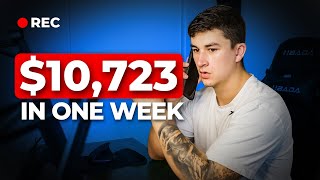
Julian, 23, made $10,723 in one week selling life insurance over the phone. Timothy Schucker breaks down six full call transcripts showing how to uncover why someone needs coverage, pitch term vs whole life, and handle objections. Julian worked 71 leads, made 1,501 calls, and generated $9,037 in annual premium.
Questions this video answers
$10,723
$9,037 (annual premium)
71 Zoosurance leads
1,501 phone calls
Chapters
How do you respond when your client says this.
Or this?
You're not gonna scam me, are you?
Well, I'm gonna show you how. In this video, we're gonna break down how we made $10,723 in just one week selling life insurance over the phone. We're gonna go over all of the numbers, exactly how many leads it took, how many calls it took, and we're also gonna break down all six of the calls so that you can replicate this exact success for yourself today to make six figures or more selling life insurance over the phone. So without any further ado, let's go ahead and jump into call number one. Now, I'm going to run through this one pretty quick because this lady is actually a client that we've worked with in the past. We already helped both her and her husband get life insurance, but now she wants some coverage on her granddaughter.
We can go all the way up to 300,000, but that would be $72.
The 72 is fine.
The premium actually ended up being a little bit higher on this one, so it turned into like 1001244 or something like that. Super clean deal. No real objections, just a refer. Referral from a previous client. Now let's jump into call number two.
Hello?
Hey.
No, who's this?
Yeah, this is just Julian. I just saw your request come through here through assurance. It looks like you were asking for information on life insurance here in California. Is that correct?
Yes.
Perfect. Okay, well, I've got everything pulled up here. It looks like you were wanting to leave this behind to your kids. Is that correct?
Yes.
Gotcha. Okay, so I'm just calling to see what you qualify for. Is this your first time looking into this, or have you talked to someone about this before?
That's a textbook call intro right there. First we need to clarify why we're actually calling. Then we're going to confirm information like their beneficiary and then leave it off on a question.
No, this first time.
Oh, okay. Well, I like to take a little extra time to go over some things after we go over what you qualify, just so you kind of understand how everything works, because it is a little bit different. You probably had life insurance through work before, is that right?
Yeah.
Yeah. It's very different from how that works. So I'll kind of ask you a few questions. But while I'm getting that pulled up, what exactly was it that you were concerned about?
Now, notice the last question that Julian just asked. We need to uncover what the prospect's why is you're going to notice this pattern repeat in every single one of these calls. What were you concerned about or what had you looking into this? Some form of that exact same question. Now, whatever way the question's framed, it's always doing the same thing, trying to.
Uncover what their why is, just to cover the service. What, you mean like the funeral and everything? Okay, gotcha. And do you have any type of plans in place for this currently, or is that what you started?
No. No.
Okay, so that's why you started looking then.
Now, next, we're going to jump straight into the health questions to match the prospect with best possible rate for them. Whenever you ask health questions, you're going to be inputting it into this software called Insurance Toolkits. It's going to bring up a list of all of the top insurance companies that are available to that person based off of their health. And your job is literally just to pick the lowest rate that's a company that you offer and sign them up. Now, since it's this lady's first time looking into insurance, we're going to cover some of the basics for her just to make sure she understands what she's actually buying.
So I'm looking at some things through Aetna here, and it's looking like they might be willing to offer you the best deal. Almost called a broker. Do you know what the difference is between a broker and an agent?
No.
Gotcha. Perfect. I'm. I'm just gonna kind of go through to give any questions, please stop me. But basically, you ever seen, like, Jake from State Farm?
Mm.
So Jake from State Farms, a great guy. He obviously does those little State Farm commercials and everything. But the only problem is, is, like, when you're looking for the best deal, Jake from State Farm can only talk about State Farm. He can't tell you about all the other companies out there that are going to make you the best offer. So with. With what I'm looking at here, I'm what's called a broker. That means I'm going to look at all the different companies, different rates coming in from companies like Gerber, aig, Aflac, cvs, Aetna, all these big companies. And basically my job is to just get you the best price one time so that you don't have to shop around. Does that make sense?
Yeah.
Do you have any questions about that or how it works?
No.
Perfect. So are you familiar with the difference between, like, term and whole life insurance and how those work?
I would want whole life.
Perfect. Do you know why you want Whole life.
Because the term life is. They only give you for so many years. Right?
That's exactly right. That's. I'm quizzing you here on that one because I wanted to make sure that you know the secret sauce. But, yep, you're exactly right. Term life is just like milk, eggs, and cheese. It's great while it lasts, but once it expires, you just got to throw it out. And so getting the whole life is going to be exactly what you're going to want to do here to cover that burial and that service to make sure that your kids don't have to pay this bill. Does that make sense so far?
Yeah.
So next, Julian's going to have this lady grab a piece of paper and a pen so that she can write down all the quotes he's about to give her. Now, make sure whenever you give quotes, you want the person to write it down. Here's why. It's going to make it more tangible. And they're also going to remember the price that you gave them.
But I've got those prices for you if you're ready for me.
Yeah, I'm ready.
This is the amount of coverage I want you to write down 11,000. Below that, I want you to write down 9,000. And below that, I want you to write Down 7,000. Let me know when you got it.
Got it.
I want you to put an equal sign to the right of each of those, and I'll explain why I'm having you do it this way in just a moment. Okay?
Okay.
So for the 11,000, that's going to be 92, 92. For the 9,000, that's going to Be 76, 66. And for the 7,000, that's going to BE $60.40 a month. Let me know when you got it.
I got it.
Perfect. So basically, I had you write the equal signs in between them, and I had you write it all this way because it's a super simple process. Let's say you pick the 9,000. If you were to pick the 9,000, if you pay the 76, 66, for first two years, they're going to give you that 10% interest if something were to happen to you. And after that, they pay out the full 9,000 to your kid. So that way, if something were to happen, they could cover your cremation and they would even have a little bit of money left over. Super simple. If you pay the small one, they pay the big one. Does that make sense?
Now we're going to ask her which of these three Options fits the best into her budget.
Out of these three options, which one would best fit in your budget?
The 7. 7,000.
The 7,000, yeah.
Now, as you see, she just picked the $7,000 option. Now, this sale seems like it's going pretty well right now. Just wait because it's about to get a little bit hairy.
Global Credit Union. Okay. And then just confirm they're out of California, correct?
Yeah.
Okay. I've just got to verify that they're.
You're not going to scam me, are you? Like, I'm not supposed to get stuff over the phone. My information.
So, as you saw, we're starting to get a little bit of pushback on the banking info. Now, what we want to do here is basically reassure her because she's a little bit nervous about giving her bank info over the phone. She doesn't fully trust Julian. Now, notice she's not objecting to giving her banking info. She's almost just testing Julian a little bit.
Right.
She's kind of giving him a little bit of pushback to see how her react.
No. I popped on on zoom calls a couple times here and there to make sure people know I'm a real person. So I'm always comfortable to do that if you want to. And then I just verified that Global Credit Union was a bank. And it looks like the routing number here. Can you verify this for me? Should be three.
So whenever you get somebody that tests you at any point in the sal, they're trying to see if it'll get under your skin a little bit and see if they can break you or have something like, have you reveal something that they should be knowing about, how you're untrustworthy or whatever. The main thing you need to remember is just maintain your composure and maintain control. Julian very clearly says, no, I'm not going to scam you, and then reassures her and then gives her her own routing number. This is a little trick that you can use to smoothen out that whole process of getting banking and account numbers and all that. You're going to ask them what bank they have, Google the name of the bank and the state that they got it in, and then you're going to find the routing number and read it back to them. Now, this is basically going to put them at ease because they feel safer giving you their account number when you just gave them their own routing number. So after that whole thing, we get the account number from her, but then later on she gives us some more pushback.
Okay. And then would you just want this to come out whenever your check comes in with on Social Security.
No, I want to see the, the contract and everything.
Yeah, I mean that's why we would push it out. But you wouldn't make your first payment until after your contract arrives and everything. Yes, that's if you get approved. But I just have to put everything in as if you were going to get accepted because if you do that way it wouldn't last. Does that make sense? Okay, would you want that to go through on the third if you were to get approved? Yes.
Okay, so Therehere we go. Second application of the week is closed in the books. Now if you're enjoying this video so far, stick around to the end because it hasn't even started yet. We're only at 1700 for the week and we still have 7300 AP to go. In just a moment, I'm going to show you how Julian turned this.
Into a seventeen hundred dollar sale. And you're going to see the breakdown of exactly what it took to get to $10,000 in commissions. But before we get into all that, let's go ahead and jump into call number three.
Hello?
Hey. Yes, yeah, it's just Julian getting back to you on this, this life insurance request that you sent in here about life insurance plans in California.
Oh, huh.
Yeah, I was just calling to basically see what you qualify for. It looks like you listed here that your kids would be your beneficiary. Is that right?
Yeah, I have one kid.
Okay.
Now do you notice the pattern? All of these calls are going to basically follow the same blueprint, clarify why you're calling, and then start to uncover what the why is.
Perfect. Gotcha. So my first question would just kind of be like, is this your first time looking into this or have you ever talked to someone about this before?
I have. Just briefly.
Okay, just briefly. So I mean, do you have anything in place currently or are you basically just trying to figure out what you qualify for?
Right.
Okay, let me get that pulled up for you. Give me one moment.
So now again we're going to go into health questions to find her the most amount of coverage for the lowest rate possible. Now what you'll see is as Julian's presenting the option, she asks him, what's the difference between term and whole life? Whenever you present this or explain this, you basically need to break it down to like the simplest possible terms that you can confused people don't buy. So try to give real life examples that are easy to comprehend and understand. AKA you don't want to give them a Bunch of insurance, speak about term and whole life, whatever. You'll see.
Yeah, sure. Whenever you're looking at getting a policy, it really just comes down to what it is that you're trying to accomplish. So, for example, example, I'm getting. I'm getting married here soon. So I'm going to get me a term policy, a big one. And the reason I'm getting me a term policy is because if. If I get a mortgage and I have a car and I have all these things, I want to make sure that my wife isn't going to have to pay off a house by herself. Or, you know, if we have kids, I don't want her to have to pay for the kids by herself. I want to be able to leave her a bunch of money behind. And because I'm young and healthy, it doesn't really cost me much. Does that make sense? Right. But like, for example, 40, 50 years from now, whenever I need to get whole life insurance, for example, then I'm going to get that to cover the costs of my burial, pay off any final taxes if all my housing and stuff is paid off. And that would be something that I would do to leave behind an inheritance or kids, depending on how many I have. And then also that would be able to make sure that if I had any leftover debt, I could cover those also. Does that make sense? So basically the biggest thing that it comes down to is what you're trying to accomplish with the insurance, right? Not one is not better than the other, it's just better for what you're trying to do. And so from what I've gathered, your biggest goal is just to make sure that your daughter doesn't have to pay for your funeral and she can get some leftover money. Is that correct? Is there anything else that you're trying to do with this money or is that the primary goal?
I think that's it.
So Julian used an example of himself to explain why he would get a term policy versus why he would get a whole life policy. And then he basically just confirmed what her why was, which was to protect her daughter from a funeral bill. And so he didn't have to tell her which one made more sense for her. She just logically came to the conclusion herself.
From what I'm seeing here, it looks like you've got some really good options just because of how young you are. Looking into this, Mutual of Omaha's actually looking like they. If you get approved, it looks like it might make you a great offer. Do you have a pen and Paper around, by any chance?
Okay, what is it?
Yeah, so basically the way that this program works, I'm going to kind of explain it to you after I give you some numbers. Okay, I looked at a few different numbers here. I looked at 50,000, 40,000.
And 35,000. Okay, so next to all of those, I want you to put a little equal sign. Let me know when you're ready.
Now remember, whenever you present these prices, make sure to have them write it down.
Okay, what I'm seeing is that with the 50,000, looks like it's going to be only 141, 33amonth. For the 40,000, it's only going to be 113 71. And then the 35,000 is only going to be 99.89. So just under 100. Let me know when you got it all written down.
Okay, I got it.
After you have them write down all the prices, you're going to want to do what is called a value stack. If you've ever seen those, like infomercials on TV where they're like, you can get 18 knives, five cutlery sets, extra knives, and a guarantee that if this doesn't cut an onion, you'll get all of your money back for only blank. That's a value stack, right? Terrible value stock, but you get the point. So essentially what you're doing here is just explaining what the policy will do for them. Going over all of the benefits like this is going to pay your daughter is going to do this is going to do that, and it's only going to be blank for mom.
Perfect. So basically the reason I had you put the equal signs here, if you were to choose the 50,000, for example, if you pay the small bill, Mutual of Omaha pays the big bill. So if you put down the 141 33, they will pay the $50,000 tax free to your daughter, no questions asked. And the great thing about this is that there's no waiting period. It never expires, the price never goes up, and as soon as you make your first payment, you're covered. So if you pass away the day afterwards, your daughter would get that check. Does that make sense?
Oh, nice.
Yeah. So this is like the Ferrari of life insurance. When it, when it comes to whole life insurance, Mutual of Omaha is the pickiest company out there because basically the way that insurance works is you have to apply to see if you get approved. Right. And so based off what I've kind of gone over here with you on the program so far, do you have any questions about, like, how it works? All right?
Did you hear that? The Ferrari of life insurance. All right, now just picture this with me for a second, right? Buying car insurance is boring enough, right? Now, imagine you're a senior and somebody calls you on the phone and they're going to sell you insurance that you're never going to see the benefit of of. In fact, the whole point of the insurance is to pay for your funeral, pay to put you in a cascade or burn your body and then you'll have ashes. But you yourself literally never see the benefit of this. Now, whenever you buy this type of insurance, you talk about it at all. You have to think about your own debt. So my point is, think about how miserable of an experience buying this insurance actually is for the person on the other end of the line and try to make it fun. Julian does a very good job job of making this poll process more fun than it should be. It sucks a little bit less. Right.
So, I mean, based off of the three options that I have here for you currently, which one of them would best fit in your budget?
Well, I would like to do the one. The 147.
You said the 140 what?
The 147.
The 50,000 was 141. Do you mean that one?
Oh, yeah, that's the one.
Oh, okay, cool.
All right, so there we go. That's 1695 AP in the books. Now for this next call. Have you ever heard somebody say that they're just going to save up and pay for their funeral themselves? Well, in this next call, Julian is going to overcome that. Objection. Call number four pretty much starts the same as any of the other ones until the prospect says this.
If I'm getting this and I pay for 50 years, it never goes up.
You said how many years?
Say I pay 50 more years. Say I live to 104.
Yeah.
Then I'm overpaid. 22.
Well, let's see what it would look like.
All right, now to summarize, in case you didn't catch that, basically what she says is that if she pays 106 per month for the next 50 years, she's going to end up putting more into the policy than what the policy is actually going to pay out. Now, granted, if this lady lives 50 extra years, she's going to be 104. She's not really objecting. She's just a little bit confused. She's probably still seen all of that IUL marketing and stuff on Facebook, and she thinks that at her age, with her health Conditions, that's actually a possibility, which unfortunately for her, it is not. So what you need to do in this situation is just reiterate and explain the value of whole life insurance, because she doesn't really see it yet. If something were to happen to her, she'll have coverage for her son.
Well, yeah, yeah, you would. And the reason why typically most people get this is because it's going to cover you early. Right? So for example, if you were to save the money, you can always save the money. But if you put the money in a savings account in the next two years, you're not going to get 10% interest at any bank. You'll get.01.
So what Julian is referring to here is basically how guaranteed issue life insurance policies work. Because of her health, if something happens to her in the first two years, the whole face amount is not going to pay out. She'll get all of the premiums that she paid into it plus 10% interest. Now, I'll be honest with you. Most people explain this type of insurance completely wrong. They say something along the lines of this, well, you know, Ms. Jones, because of your health, we're not going to be able to qualify you for a day one benefit. So what we're going to have to do is go for one of these policies. If something happens to you in the first two years, your beneficiary is going to get everything you put into it plus 10%. And then after the two years, the whole thing is going to pay out. Does that make sense? Now the problem is whenever you say something, something like that, you're basically making the client feel like something's wrong with them. Right. And that they're going to get the short end of the stick because something's wrong with them. So here's how you actually want to explain it. So, Ms. Jones, because of the health conditions that you have, we kind of have some limited options. But luckily there is one company that offers a great program for people in your situation. So what they do is in if something happens to you in the first two years, your family is going to get everything that you paid into the pulse policy plus 10%. Right. Better than any stock, better than any savings account. 10% interest guaranteed for the first two years. Now, after those two years, the full amount is going to kick in. Do you see how much more valuable that sounds versus the first thing I said?
Because it's like once you get to a certain amount you paying, but it's not going anything because you actually already paid it.
Exactly.
I mean, I can Understand if I was paying for a hundred thousand dollars and once I got old, it paid.
Yeah, let me check on it for you. Let's see what the word on the street is.
You guys see what I mean? She was definitely looking for like an IUL or a big term policy, but unfortunately she does not qualify.
But.
I like that you can only do what you can do when you have illnesses.
Now in this situation, she basically ends up just talking herself back into the policy. She realizes that she doesn't really have that many options because of her health, only options. Becomes the trusted advisor because he's not trying to like push her into the policy or anything. He's sharing information with her and then making recommendations. And when they go to start picking out a price, he says this.
I don't like to talk anybody into anything. I just say, look, they're going to get paid either way. I'm going to get paid either way. It doesn't matter to me. My boss is still going to help me put food on the table either way, I'm cool as a cucumber. The biggest thing is your bare essentials covered. And are you going to be coming comfortable financially with whatever decision you make? That's my job. So if that 20 is comfortable, let's go with that one. What do you think?
Let's do the 20 and go.
There you go. That's another 1275 in premium in the books. Here is call number five of six, starting with the call intro. Now, the intro is where the person on the other end of the line is going to decide if they want to hang up on you or not.
Hello?
Hey. Yeah, yeah, it's just Julian. I had that form you sent in here to us about the life insurance plans available in California. Does that ring a bell?
Now notice how Julian says hey, like he's basically her friend from high school giving her a call. Then once he confirms it is the right person, he immediately jumps into why he's actually calling.
Yeah, it looks like you listed your kids as your beneficiary. Is that right?
Yes.
Perfect. So I was just calling you kind of to see what you qualify for. Is this your first time applying or have you talked to someone about this before?
No, it's my first time applying.
Oh, well, congratulations. I'm going to be your case manager. My name is Julian. Nice to meet you.
Nice to meet you.
I guess. What is it that you were concerned about when you filled this out?
Now let's figure out what her why is basically just the reason she's buying.
Insurance Oh, I just wanted to have a peace of mind that my kids won't have to spend their money on my, you know, whatever I want to do. Either get cremated or whatever.
Okay, perfect. I'd be happy to help you with that. Here, let's see now. Did you know if you were planning to get buried or cremated?
I just wanted to get cremated. Yeah, I'm scared of being put in a box and stay in there and let the animal feed me.
No, no, that makes sense. My. My fiance feels the same way. I used to be, like, all about burial, and then when I got older, I was like, ah, I don't like that.
Then we're going to go into health conditions and use insurance toolkits to find her the most amount of coverage for the lowest price.
I'm going to pull up some quotes for you. So the ones I pulled up for you were 30,000, 20,000.
Okay.
And 10,000. Let me know when you got it all down.
Okay, I got it.
Okay. So the 30,000 in the 20,000 and the 10,000. If you want to put an equal sign to each. To the right of each of them. I'll kind of explain all this in a second. Okay. Okay, so the 30,000 equals 1 1169. Okay. The 20,000 is 75. 53.
Okay.
And the 10,000 is 39. 37. Let me know when you got it.
Got that. Got it.
Awesome. I also pulled up the 50,000. Do you want me to give you that one as well?
Okay.
The 50,000 equals 184.01.
Now, next, he's going to ask her which of those pricing options fits the best into her budget.
So of all the options that we're looking at here, out of these four options, which one is going to give you the amount of coverage that you want that also fits in your budget?
I would say the 50,000.
With that $2,600 policy in the books, we're now sitting at 7,300 for the week. Now, last but not least, I'm going to show you this call. What on earth did Julian say to get that response? And how the hell did he turn that into a sale? Well, you're about to see, this call actually starts out with one of the objections that I see agents struggle with the most. You have probably heard this before. I already have insurance.
Hey. Yeah, yeah, it's just Julian. I have a form that you sent in here asking about some life insurance plans here in Virginia. Does that ring a bell? You already have it.
So whenever you get this objection, you Immediately. Want to ask this question?
Oh, perfect. So were you looking to see if you qualify for rate reduction or to add some. Which one is it? This was through Zu Surrender. It was. Looks like it was filled out like last night. Yeah, yeah, yeah. Because I want to see if it's cheaper.
And as you can see, he was, in fact, looking for a rate reduction.
Gotcha. Okay, well, I can help you with that. How recently did you get the other insurance? Within the last year or so.
It was this year. This year? Yeah.
Whenever you're looking at replacing a policy, the first thing you need to do is figure out what the person actually has.
Beautiful. Okay, let me make sure I'm doing an apples to apples comparison here for you. Do you know how much coverage you ended up getting with that company? I think it was like, what, 35? Do you have any. Any, like, health issues?
Now we're going to jump into the health questions to figure out if we can actually get him something better than what he has.
Okay. So it's probably 50,000 with a rider. Did they say anything about accidental? It ain't even 50. It's 30. It's 30.
Yeah.
I'm like, that's bothering me. You said it bothers you?
Yeah, it seemed like I'm paying too.
Much for, so look. Right. And that's pretty normal. I mean, I see a lot of guys, especially around your age, that they end up going with a company like bankers or Lincoln Heritage or Colonial Pen, one of those cats. And they charge so much, man. But I'm definitely seeing some better stuff coming up here. It just. It really does depend on what you qualify. Qualify for. So I would have to apply you, but I did find a deal for 30,000, the same amount of coverage you have currently. And it looks like you'd be saving about almost 15amonth. So that would be about. Almost 200 bucks a year, I think.
I tell you what, can you call.
Me back about, like, 30 minutes? I should be home and I can look at the policy and make sure the numbers. Yeah, and we can check it out.
Together a few moments later, man.
Don't play with me, man. What's that?
You said don't play with you. Oh, I thought you were my son calling me by my first name. Oh, no, not. Not your son. This is actually a Julio on the insurance guy. Yeah, that makes more sense. I was like, I guess I'm confused. I was like, that's funny, though.
So after shopping the market, here's what Julian found.
Now, we wouldn't want to cancel that in until you get approved with one of these companies. But everybody I'm looking at coming in lower. So I've got one that's coming in at 30,000 for 1:14 that looks like they would approve you. Really? Yeah. Another one's at 119, all for 30,000. I got another one for 135. So yeah, everybody's going to be a lot cheaper. And these are all going to be something that would kick in from the first day. So instead of waiting two years and paying so much, you would actually pay less and it would go immediately. Because the cat that you talk to Bankers Life is a, is like kind of like State Farm. They only do their products. Does that make sense? Yeah, it's like trying to ask the guy at a Honda dealership for a Toyota and they only do Honda's kind of that type of deal. Yeah, I know I was getting robbed.
I know I've said this in other videos, but this is why it's so, so important to be a broker and not an agent. If you don't get your clients the best policy like this first agent didn't your client are going to shop around, they're going to fill out a form online like the ones that we have, and then Julian is going to call and replace your policy. I mean, this guy literally said that he felt like he was getting robbed.
So what I'm seeing is if you wanted to get a day one benefit, it would actually be 144, but that would still be for 30,000 and that would be including the smoking. So you'd still be saving about 14 bucks a month with the same amount of coverage and it would be available from day one instead of waiting for two years. Does that make sense? Yeah, it makes sense. So what I would suggest here and what is that I would apply for this one to see if you get approved. That way you don't have no insurance. And then if you do get approved, we can just get rid of the other one. Unless you want to keep it. No, let's do that.
Okay, there it is. That is $9,037 in annual premium. With our commission split, it turns into $10,723 in commission. Sp. Now let's break down the numbers to see what actually made this possible. So to do this, Julian took 71 Zoosurance leads. These are in house branded leads that are told that it's about life insurance, costs money, and that they have to speak with someone over the phone. Now, as you saw with this whole week, this translates to a higher quality lead. Now, it's also important to note that he wasn't only calling these brand new leads. The best thing about telesales is it allows you to build up a pipe with. So he was actually calling through all of the leads that came over the past few weeks that he didn't get a hold of the first time. So over the course of the week, Julian ended up making 1501 phone calls, or roughly $250 per day. So that is exactly what went into and what it took to make $10,700 in one week. So if after watching this video, you're thinking to yourself, hey, that sounds great, $10,000 in a week. Week is fantastic. But I'm a brand new agent. I'm just trying to get to my first $5,000 week, my first $20,000 month. Right? Well, if that's you, you're in luck, because this video right here is going to show you the fastest way to get to $20,000 per month, where I break down the four keys that you need to know and show you a live sales call breaking down the exact script. So click that video right there, check the video out, and we'll see you there.










