how I make $55k/mo selling life insurance so you can just copy me...
Timothy Schucker (creator) presents a repeatable outbound/inbound sales system for selling final-expense life insurance that he says produces about $55,000/month for his agency. The system centers on focused activity plus leverage: Facebook lead generation feeding a Go High Level CRM that runs automations and a Kixie dialer (Power List) to raise answer rates and enable high-volume calling. He outlines a scripted phone flow (discovery → appointment → close), follow-up automations, and client-retention actions (handwritten letters, payment reminders, holiday texts). He gives agent case examples (Donna, Michelle, Gina, Corey) to demonstrate rapid early earnings and states the long-term aim of scaling to a $100M agency.
Questions this video answers
$55,000 per month.
Build into a $100 million life insurance agency.
April 9, 2024.
Go High Level.
Kixie.
Chapters
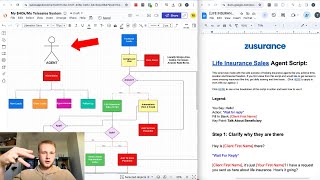
All right, so, ladies and gentlemen, in this video, I'm going to be showing you guys how my business partner and I are able to sell $55,000 per month in life insurance. I'm literally going to be giving you guys the exact system that we're using. I'm going to show you guys how this whole thing works and how you can use this system to make more money, make more money working from home and how to sell more life insurance. Right? So this is literally a system that I've been developing over the last two and a half, three years. You know, tweaking it, making different adjustments, just constantly improving and iterating and iterating to make it better. And this is ultimately the most potent, powerful system that I found and that we've created. Right. So we're actually using this exact system ourselves to build what we ultimately want to build into a $100 million life insurance agency, which I'll touch on later in this video. But what I really just want to do is kind of just break this down for you guys so that you guys can use this system to start making more money. So without any further ado, let's jump on into it. But before I show you guys the exact system, I want to talk about, like, what this system has actually done and how powerful it actually is. Right. So we, we brought on a new agent. Her name was Donna S.K. kind of like a grainy screenshot of the thumbnail. We did a video with her the other day, and she was actually a brand new life insurance agent with no sales experience whatsoever. And by leveraging and using the system, she was able to make three sales in one single day. And her first week. Right. So I think this was her third or fourth day ever on the phones. And she sold three policies in one day. Right. Um, I think it was like $2,000 in premium, which is just insane for someone with no sales experience, no life insurance experience whatsoever. Another agent that we brought on, her name is Michelle, and she actually was able to sell $7,244 and her second week on the phones. And this is 7,000 and approved business and life insurance. So the way that, you know, life insurance sales works is you, you know, put people through what's called underwriting, and they have to get approved by the insurance company through you to get paid on this. This is business that was approved for Michelle, not just business that was written. Right. Michelle actually just recently was able to pay off a credit card that she had from working this exact system, calling leads and selling policies. And now she averages about 7,000, 5,000 to $7,000 every single week in sales, Right? So a couple things I want you guys to kind of like keep in mind and consider whenever you're using this system and like, learning from this process that we're using and how we're able to write this much business and make this much money is it really comes down to focus, right? So I have this little diagram here, and on the left, you have a person that is not so focused, right? They're doing all of these different things. They're chasing all of these shiny objects, and their energy is going in all of these different ways, right? And so this person is spending the exact same amount of energy as this person on the right. But if you notice this person on the right, all of their energy is going in one singular direction, and they're focused on one thing. So this is a perfect diagram, a perfect example of what focus actually looks like, right? So person on the right is focused. Look at how much further they're going. Whereas this person on the left, they're doing all these different things. They're taking on too much stuff. And ultimately this person is going to go farther than this person. Right? And so what I want you guys to be thinking about when I break this down is like, how can you focus on just doing the one thing? What is the one thing that makes you money? What is the one thing that's going to drive the needle forward in your business? And that is ultimately the approach that has allowed us to build the system. And it's the same approach that's allowed Michelle to pay off her credit card, right. You know, $7,000 a week. And for Donna to make three sales in one day as an agent with no sales experience, Right. And there's. There's other agents, too. We've brought on the other week, Gina, she wrote like $5,600 in her second week. We had another agent, Corey, who actually just quit his third shift job to start selling life insurance full time. So this stuff is extremely powerful and it's extremely potent if you guys use this in the right way. Right? And the other thing I want to talk about here is leverage, right? I'm going to be giving you guys a tool that will allow you to increase your answer rate on calls by 5x, right? So when you're calling leads, working life insurance leads, you're going to go to 5x your answer rate with the tool I'm going to give you guys, right? So it's all about leverage. It's like, what is the, what is the system that I'm putting energy into that's going to increase the output? Right. I can put in minimal effort, but if I have a highly leveraged system, I'm moving big weight. So the, the system, what I'm about to show you guys is, you know, it's very much based on leverage and based on focus, right? So let's actually go ahead and jump right into this. So I'm going to walk you guys through this whole thing. And for those of you that, like, you know, you clicked on this video and you don't really know what life insurance sales is, basically what we do is we work with seniors who, you know, are on a fixed income or they haven't saved up enough money to pay for like a funeral or, you know, debts or different things. And so they will buy life insurance that will pay off that debt and pay for their funeral for their family when they pass away. So that's essentially what we're doing, right? We're selling that, those policies. And so this is a system that will allow you to sell a lot of that, right? And make a lot of money and help a lot of people. So in order to sell anything, especially life insurance, we're going to need leads, right? And so my Go to system, my go to, you know, preferred source of leads is Facebook. It's simple, it's easy. Our target market is there and all we, you know, have to do is spend more money and make more ads and we get people, people coming in, right? It's a little bit more complex than that. There's a lot that goes into it. But this is essentially like my preferred source of leads is Facebook. You can technically use whatever source you want and just plug it into the system. But this is what I prefer. So we get leads and then we put them into our CRM, right? So the CRM that we use is called Go High Level. And basically what Go High Level does is it allows you to text, call and set up all these different automations so you can communicate with your leads and with your prospects, right? So we have all these automations that are set up in Go High Level that will do different things. I'll show you guys in just a second. But we send all of our leads to Go High Level and this is where we store them. So as you guys can see on the right, we have this thing called Kixie, right? And so Kixie is kind of like, it's kind of like if you think about like, like steroids, right? It basically it Takes Go High Level and it puts it on steroids when we put Kixie on it, right? It makes Go High Level that much more effective. Because what Kixie is, is it's a dialer, right? And so basically what it does is it increases the answer rate when we call. So you're making all of these calls is a perfect example of leverage. Wink, wink. You're making all these calls throughout the day and Kixie is going to increase the output that you get for the input you put in, right? So it's going to increase the answers. So what it does is it locally wraps area codes. So if I'm in Texas and I'm calling someone in Arizona, it's going to call them with an Arizona area code. If I'm in South Carolina and I call somebody in Washington state, it's going to call them with a Washington state area code. If I'm in Pennsylvania and I call someone in California, it's going to call them with a. You got. Right. So this increases the answer by 5x and it also allows us to call multiple people at a time. So if you're, you know, doing any form of outbound dialing, whether it's insurance or whatever, and you're not using Kixie, you're losing money. It is 100%, you know, a massive needle mover. The only downside is Kixie is a little bit expensive. It's like, you know, I think we pay like $200 a month per user. So it can be pricey. But, you know, if you're gonna go into this and like fully go into it, it's 100 worth it, right? So Kixie is huge. So basically Kixie is going to increase our answer rates. We call all of our leads through, you know, using Kixie. So these purple little like diamond things, these are basically like decision trees, which it sounds more complicated than it is. Basically, you know, it's just a situation where like we can either go in one of two directions. So the lead comes in, we call them with Kixie. Do they answer? That's what the purple thing is. It's asking a question. Do they do this? If they do answer, we're going to use the life insurance sales script, which. Let me pull this up and show you guys.
Here it is. So this is essentially the script that we use, right? I'll link this down below in the description. And we have like a two hour breakdown that shows you guys how to use the script, which I'll show you guys as well. But basically the legend here, this is basically like if you've ever, like, read or looked at a map, there's like a legend that will tell you what each thing means. That's essentially what this is for the script. So if it's in this, like normal, like black text, that's just what you say, right? If it's in this, like royal blue color here, that means that it's an action you take. And then if it's. If it's like red like this, that means that it is something you fill in the blank. So client first name. I would just put in the client first name. So Jimmy, for example. And then this like black bold text. This is just to kind of help us keep the outline of the script. So we have step one, step two, so on and so forth. So let me show you guys kind of like how this call intro works. Hey, is Jimmy there? Right, I'll wait for reply. Jimmy's like, you know, who the hell is this Jimmy? It's just Tim. I have a request you sent us here about life insurance. How's it going? Right, Wait for apply. Oh, got it. So was this your first time looking into life insurance? Wait for apply. Okay, got it. And what were you concerned about? Was it leaving money behind for family or just covering funeral expenses? Right. So basically, like the way this script is structured is we're starting off the call and we want to kind of sound like a friend. We want to sound like a friend from high school giving them a call. Hey, Jimmy. It's just Tim. I was just giving you a call about the request you sent us here about the life insurance. How's it going? I don't want to sound like a telemarketer. I don't want to go, hey, is Jimmy Smith there? Jimmy, it's Tim Shooker from Zoosurance. I was calling you because you had requested us to call you about life insurance. That's how you get hung up on folks. You need to sound like a friend or a close acquaintance. So that's how this is structured. The next thing is you're basically asking them questions, right? This is what I call the discovery phase. We're asking them all of these questions to figure out, like, what is their why? Right. So their why is essentially the reason that they want to buy life insurance. The only way that you're going to sell somebody anything is if you understand their motives or their why. So the why is basically made up of who are they protecting, what are they protecting that person from, and how does the life insurance protect them? So that's what I'M trying to find out here. So is this your first time looking into life insurance? This is going to kind of open things up. It's going to tell me like, hey, you know, have they looked into this before? What are their pain points? Have they been declined? Have they charged back on someone? What's going on there? What were you concerned about? This is like what they're trying to cover. Are you trying to pay for a funeral or just leave money for your daughter? Right. What, what is the situation here? Okay, and just so we know exactly how much insurance to look at, did you want to do a burial or cremation? Right. Again, we're selling funeral insurance. We need to know these things. And was there anything else you were looking to cover, like pay off debt, pay off a car, different things like that. Then we're going to label their problem. Got it. Just to make sure I'm covering my bases here. Have you ever been declined? Nope. Yes. Whatever. And then, you know, hey, it looks like you listed your beneficiary here as Deborah. Is that correct? Perfect. So that makes sense. It sounds like you just want to make sure that Debra, you know, doesn't have to worry about paying for that funeral bill if something happens to you. Is that right? So we're essentially repeating their problem back to them. So again, I have a whole video that goes over the script. I kind of just wanted to give you guys like the brief analysis, overview of it. If you guys go to our YouTube channel and then click on Live, you guys will find it right here. The best Final Expense telescope script for 2024. It's a 2 hour and 13 minute video. It literally goes over everything you guys could possibly need to know when it comes to the script. And we even show you guys some live calls. So that's the script. Back to the system. So again.
Again with the script, there's essentially two outcomes when somebody answers. Either we set an appointment or there's three outcomes. We set an appointment, we sell a policy, or, you know, they just hang up. And in the case that they hang up, they're just going to get added back to the Kixie Power list and they're going to get automations. But I'll ignore this side first. Let me first show you guys what happens if they do answer. So let's say they answer but they can't talk. Right? Now we set an appointment, right? So boom, we set an appointment. If they show up to the appointment, the question is, do they buy when they show up? Right. If they don't show up to the appointment. We're just going to add them back to the Kixie Power list which again hold, hold, hold your horses guys. I'll explain that in just a second, I promise. But let's look at what happens if they show up to the appointment and they buy. So they show up, they book an appointment.
Do they buy? Yes, they buy. Boom. So we're going to send our clients a handwritten letter to help with retention. We're also going to send them payment reminders to make sure that they pay their bill. I cannot stress how huge this is to, to have a system to send your clients payment reminders. This is like game changers, guys. Remind them to pay their bill and you will save yourself so much money and so much time. It's insane. So again that's what happens if they ultimately buy. We send them the handwritten letter and then we send them payment reminders. So let's say they book the appointment but they don't buy, Right? So what the hell is this Kixie Powerless? What are these automations? What does this actually look like? What does this mean? So basically the Kixie Power list is inside of Kixie. You can use it as a dialer within Go High Level and then you can also use it separately through like a chrome extension. So basically when you're calling the Kixie Powerless you can have a list of a bunch of leads and it'll just call through them really, really quickly. So it'll call hundreds and hundreds of leads a day and you can call like four to five of them at a time. So it just allows you to call way quicker and get way more answers. It's amazing stuff. So that's where we're essentially adding them. So you're calling these leads in combination with your new leads, right? So you're calling your list that just grows. You're gonna eventually have a list of, you know, hundreds of people and you're just calling them constantly. Right? We have a list of thousands of people in our agency. So this just gets added to this Power list. The automations, these are through Go High Level. So as you guys can see, like the yellow, all of that stuff is Go High Level. So we're going to be sending them follow up emails, follow up texts, all these different things to try to get them to manually set an appointment on our calendar. So there's essentially two ways we can get in contact with someone. They answer the phone or they book an appointment on our calendar. Right. So these automations get them to try to book an appointment. The Power List tries to get them to answer the phone, right? So again they book the appointment, they don't buy, they get added to the power list to follow up with later and they get sent follow up automations. So they're either going to book on our calendar and then eventually buy, go down handwritten letter, payment reminders, all that stuff, right? So essentially let's go through it from the top. I've started to kind of break this down, it should be making a little bit more sense. But let me show you guys what it looks like, the other side of this. So Facebook lead comes in, they go into our CRM, we call them from the Kixie dialer, let's say they don't answer this time. So no, they don't answer, they're going to get sent automations text and email, right? And then basically some of these people will book appointments from the automations, some of them will not, but they're going to be added to our power list. So we're calling the power list constantly, right? If they answer, boom, we go into the script. If they buy, we send them the handwritten letters. If they don't buy, we add them back into the power list and send them follow up emails. That's essentially how this works, right? So let's look at any situation. Lead comes in, goes to CRM, they do answer script, we set the appointment, they show up to the appointment, we end up closing them, we send them the handwritten letter, then we send them the payment reminders. If they pay their bill, we send them holiday texts like fourth of July, Thanksgiving, Christmas, all that kind of stuff to kind of keep them nurtured, keep them engaged. And if they don't pay their bill, we follow up with them to try to get them back on the books for a chargeback. Right. Let's look at another example. Lee comes in, we call them through Kixie and the CRM, they don't answer, they get sent all of these automations, we add them to the power list, we call them later, they do answer and then we go through the script, we close them, boom. So everything, all, all roads lead to Rome which is them buying a policy and paying their damn bill, right? So essentially that is kind of the way this, this whole system is structured is we have all these moving pieces that connect to each other, all these automations that just like work in harmony to move somebody down along the line to where they're eventually buying. So what does this actually look like for the agent on a day to day basis? What is the agent doing so the agent is always calling through Kixie. Right? Kixie is great. I can leave a link below in the description for you guys. It's like 200. 200 bucks a month. 100% worth it though, if you guys are going to be doing this life insurance thing full time. So you're calling your new leads, you're calling older leads, you're calling appointments, and you're calling follow up. These are essentially the four things that you're working on. New leads, old leads, appointments, follow up. Old leads is just the power list. Right. So again, you're using Kixie to do all of that because Kixie is going to give you more leverage because more people are going to answer the phone. So, ladies and gentlemen, that there is essentially the entire 55k per month system. And the 55k month was with like two producers. So we're doing about 20k a week. Ron Pace to do 80 this next month. So, yeah, this system is going to scale US to $100 million.
Hopefully you guys got value from this. See ya.










