How This Agency Owner Went From $0 to $500k/mo in Just 6-Months
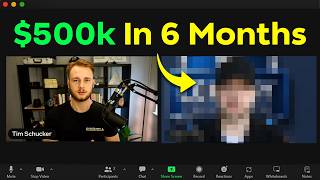
Dylan King scaled his agency from zero to $500k monthly in six months by writing $140,000 in his first three months. He started dialing in April 2023, worked 70-90 hour weeks, and built his team by recruiting agents through social media and free-leads programs. He recommends starting with final expense sales to learn the fundamentals before moving to higher-ticket products like IUL and mortgage protection.
Questions this video answers
Mid-April 2023.
$140,000.
~$30,000.
Typically 70+ hours per week (early period 80–90 hours).
Chapters
In this video, I'm interviewing an agency owner who went from zero to $500,000 a month in just six months with his agency. In this video we're going to be interviewing Dylan King, who among Other Things wrote $140,000 in his first three months in the business, now is running and building one of the fastest growing agencies in the country. So Dylan, welcome to the channel. How you doing today?
Yeah, I'm doing great. Appreciate you guys having me on and excited to get into it.
Absolutely, absolutely. Likewise. So for people who don't know you, can you kind of just give them like a brief background on what you were doing before insurance and how you got into the industry?
Yeah, so actually I played football in college and after college kind of didn't really know what I wanted to do. I, you know, was actually back at home working, working back at my college job, delivering pizzas, you know, trying to figure out what I was going to do with my life.
And got a job offer from one of my buddies down in Northern California. Not really a long term thing at all. I mean it was decent money but no path to being able to get up to that six figure income. So I was always listening to all the podcasts, reading all the books, trying to figure out what I was going to do and what kind of a business I could start, have control of my income. And you know, got, actually got my insurance license because I wanted to be a financial advisor. So getting into getting my insurance license, you know, kind of seeing that path, being more of a long term, you know, got to build up your book of business, got to go network, all that kind of stuff. Being a financial advisor, I figured, you know, I have this insurance license, you know, why don't I just get out of my comfort zone and try to, you know, give it my best shot just selling insurance and see how that goes, maybe build an agency if it goes well and you know, got, got my insurance license, actually booked a one way flight, quit my job, booked a one way flight to Europe, went and backpacked Europe for a few weeks to, you know, just because I had the opportunity, I had some money saved up and had the time. So when I went over to Europe, had a good time over there, came back, packed up my stuff, decided I was moving to Arizona and getting a fresh start in the big city, nice weather, all that good stuff down here. So I came down here, got started with another agency and did really well. I mean, I wrote 30k, 50k, 60k in my first three months and was able to see that this opportunity was going to be a long term fit for me and I had control of my income like I was looking for. So after that, you know, first 30 minute phone call and seeing a thousand dollars pop into my bank account a few days later, I was like, all right, like, I can, I can do this. You know, it was uncomfortable, but it was something where the more reps that I put into it, the harder I worked, the more money I was going to make. So it just made sense.
I don't know what it is. It seems like everyone that does insurance moves out to Arizona.
Yeah, it's like a hot spot, right? It's definitely interesting. So cool. So, you know, you kind of had that early success, but do you feel like when you started jumping on the phones, like, did you have any of that learning curve that most people have? Or for you, was it just like, it just felt natural? You jumped on, like your first phone call you made turned into $1,000. Like, did you have any of that, like, learning curve or challenge in the beginning?
Yeah, I mean, it's tough for anybody. No matter what you're doing, no matter whether it's selling, recruiting, training, whatever you're doing inside of this business, whatever you're doing in life, most of the time, you're not going to be really good at it when you first start. So. Getting started, yeah, I mean, I had a lot of trouble with the script, with the objections, with quoting, with running the applications. You know, it's your first time doing it, so, you know, you have to, you have to get those reps in. You have to kind of put in so many, dial so many leads that you find those lay downs when you're first starting to be like, all right, like, you know, I'm not, I'm not able to get over objections when I'm first starting, but I can see, like, I'm getting a little bit better with each call. And, you know, it did feel pretty rough after that first couple weeks. And I'm like, every time I get to an objection, I'm just fumbling my words and people are hanging up on me and, you know, I don't know the products very well. And it's like a lot of agents get to that point and, you know, it's a breaking point. It's like, am I gonna push past this? Am I gonna keep going and, you know, keep going down this road and, you know, continue to get hung up on, continue to suck until I get good at it? Or am I just going to quit and move on to the next thing. So a lot of people just see the shiny object syndrome of insurance and people flexing, saying that they're making 30, 50, 100 grand on social media and it draws them in, and then they end up seeing everything that they were told was a lie. And it's actually a lot harder than it looks, a lot harder than people make it seem. Um, yeah, definitely, definitely a learning curve there for, for me and for, you know, 99% of people.
But despite that, you still, did you do 30k your first month or was it like the first month was like figuring it out and then it was like 30k month after you kind of got over the learning curve?
Yeah, so I started like middle of middle of April, 20, 23, and the IP, you know, you, you put the start date out, usually at least with final expense to, you know, the third a month. I think I had like four or five grand of IP in couple weeks of April, and then in, in May was when I did 30, my first full month.
Wow. So like the first month was just like, you know, banging your head against the pavement, like figuring shit out. And then after that you kind of had that exponential growth. What do you think? Because I think a lot of people, especially for like the newer agents out there, people that maybe, maybe you're struggling or just not performing or producing at the level they want to, I think that first month is where they get caught and that's where they stop. So like, how can someone who's maybe going through that or like just about to hit the phones and they have this like rose colored, you know, rainbow fairyland picture of what insurance actually is. How can they have like the mental strength to get through that first month? Or like, what do they need to prepare, prepare for so that they can get through the 5k month and then have the 30, 50, 60k months?
Yeah, I mean, I would say a lot of people come into the business, like I said before, they get sold the dream, you know, you can work from anywhere, which, which is true. You can set your own schedule, be your own boss and you know, do it part time and make, you know, 10 grand a month profit. And it's just not the case. You have to, you know, especially when you're first starting, when you suck, that's when it's most important to put in that extra work and build that routine, you know, develop yourself, discipline yourself to be able to, you know, work longer and longer hours, be able to. You know, when I first started, I had never worked more than 40 hours a week before. I started in insurance and I haven't worked less than 70 hours a week since I started.
So.
So, you know, that's, that's a turn off for a lot of people like you. You work that hard and it's like, yeah, I don't want to just make ten grand a month. I don't want to, you know, you can, you can work 30, 40 hours a week and make 10 grand profit if you're a good closer. You got good lead systems, all that kind of stuff.
But usually not in the first month. It's going to take a little bit of time to master the skill.
Right, exactly. So when I first started, I was, you know, in, I was up at 5, you know, in the gym by 5:30, home, home by 6:37, usually, usually on Zoom and on the phones before 7:00'. Clock. So, you know, starting at 7:00am and you know, working till whatever lunchtime. And lunch, lunchtime was just, you know, heating up my meal prep. Same with dinner. You know, dial till lunch, heat up my lunch, dial till dinner, heat up my dinner, get back on the phones till 7, 8, sometimes 9 o' clock at night. So, you know, it's, it's long days and it's not for everybody, but for me it was like I wanted to outwork people and I saw that I could, you know, taking my competitive mindset. You know, Kobe Bryant was always my favorite player growing up and just having that mindset of, you know, Kobe jersey in the back. Yeah, yeah, I used to have the Kobe, Kobe jersey in my office. But yeah, just out working everybody and being able to pass a lot of people up in this industry just based off of work ethic. There's no politics, there's no, you know, asking your boss for a raise. You know, you go write your own paycheck. Like it's up to you to be able to put in that work to be able to get that success. So yeah, I mean Sundays, Sundays were kind of all about just getting myself set up for the week. And I was, I was working Sundays when I first started too. I was working probably 80, 90 hours a week compared to now. It's usually like 70. But yeah, I mean it's making Alex Hormozi quote that I love is just, you know, make it as easy as possible to work as hard as possible. So being able to optimize for everything. I'm single, I have no kids, you know, I have all the time in the world. I can delay gratification now to be able to set myself up down the Road. So just being able to, you know, on Sundays, do all my grocery shopping, do all my meal prepping for the week, all that kind of stuff knocked out to where it's like, you know, I see people on, on a weekday, you know, going to the gym at, you know, 10 o' clock in the morning, you know, 3 o' clock in the afternoon or stuff like that. It's like I can't do that. I can't relate to, you know, that's money making hours. We only have so many hours to be able to dial leads, to train people, to do all the stuff that it takes to be able to be successful and move your business forward. So it's just kind of locking in that schedule and locking in your discipline to set yourself up.
Yeah, I personally, I like the midday workouts, but I'll just wake up a little earlier. I like to work late hours, to be honest. Yeah, like if you're selling on the phones, which I'm actually, I'm jumping on and doing some IUL sales like recently, so I might have to kill the midday workouts. But if you're on like TCPA hours, you, you, you definitely can't do that. You got to be locked in for the whole day. So we're talking a lot about like, you know, the, the grind of being an insurance agent or agency owner and like the, the that you realistically just have to eat for a period of time. And it is what it is. But I think like the reason that you're willing to do that and the reason that I'm willing to do that and Julian's willing to do that and the other people who are building agencies are, is because they see the long term vision of what this can actually do for you and your family. So like, you know.
What does that look like for you? And then also what is, what is possible for someone that's getting in that like they, they heard all of what you said and they're like, cool. You know, I'm not particularly a fan of having to do that and work 70, 80 hours a week, but I'm willing to do it if the payoff is right. What's the actual payoff?
Yeah, I mean, when I got in the business, you know, I had people, you know, a bunch of different uplines and you know, they had varying levels of success. Obviously the people at the top are doing extremely well. So it was really just, you know, doing, doing, you know, copying what works for them, copying what works for other people, but also keeping an open mind to new ideas. New ways of doing things and not trying to come in and rewrite the script from day one or do everything your own way, but more of like, why don't I try this lead source, try this dialer, whatever it is, to be able to.
Have that experience for yourself, but also for agents that you're bringing on in the future, to be able to lead them in the right direction. But yeah, I mean, as far as the payoff goes, I mean, it's been, it's obviously been a grind to be able to get to the point where I'm at now. But you know, I look back sometimes, it feels like I'm not making the progress that I want to. And then I look back one month, three months, six months, 12 months ago, and it's like, okay, like I've come a long way and all this hard work is worth it as long as I just keep delaying gratification and, you know, put in that time. It should be a point in the next, you know, in the next year. I should be at the point where, you know, I could have six, six figures of deposits in a month. You know, being able to get to that point that so few people ever get to, it's like, you know, that is, that is firing me up every day and obviously making that money for myself is cool. And setting myself up for the future, my future family, my current family, all that kind of stuff is great. But being able to see other people come into this business and change their lives and be able to make that 10, 20, 30k profit, not just submit numbers in a month, is pretty cool to see. And having people that are like, dude, thank you for showing me this opportunity. Thank you for, you know, being able to put in that hard work yourself, to be able to set me up for success and be able to give those people advice and really see them, you know, implement everything, all the systems, all the training, all that kind of stuff into their process, in their, you know, day to day, and be able to see them take off is what really fires me up now.
I love that. So kind of like, it sounds like you, I know you still produce quite a bit, but like, you've kind of transitioned more towards like a leadership and a builder role. Talk about, like, what was that transition? Like, when did you decide to make it and like, what ultimately led you to. Because you were at a, you were at a different IMO that a lot of people know of. I don't know. I don't think you're still there because you kind of branched off and are Doing your own thing now. So, like, what kind of spurred that decision to go out and, you know, build, build your own agency and kind of talk to me about what that's been, been like?
Yeah, I mean, I, I, you know, I did well at my first opportunity and, you know, put up big numbers.
All right, so real quick, I need to interrupt the video because if you're a life insurance agent, chances are you're doing one of three things. You're either buying age leads, you're buying leads from your imo, or you're buying leads from a lead vendor. And chances are you are way overpaying for those leads. And not to mention the leads never even pick up the phone. Well, if that sounds familiar, then give me the next 50, 15 seconds and I'm going to show you something that's going to completely change everything. We just launched insurance agent Freedom School, which is an entire training platform and program that will show you how to fire your lead vendor and cut your lead cost to one tenth of the prices that you're paying right now. This is a program that I used to sell for over $2,000. But right now you can get access for just 99 bucks a month and try for free for seven days. Inside, you'll learn everything that you need to know to fire your lead vendor and cut your lead costs. You can start generating way more profits in your business. Not only that, but whenever you join, I'm also going to give you access to a dialing software that has allowed us to see answer. It's as high as 20%. So if you make 100 dials, that means 20 people are answering. So I'm going to include a link down below this video to get access to a free trial. All you need to do is click the link down below and start your free trial to fire your lead vendor, generate more profits, boost your answer rates, and, and start making more money in your insurance business. Now, back to the video.
Started to build a team. It was a lot of, a lot of, a lot of outbound DMS, you know, LinkedIn, Instagram, Facebook, all that kind of stuff to be able to try and get people on the phone to talk about the opportunity and, you know, tell them how great it was, sell them the dream type of thing. You know, I've always been transparent, but just, you know, trying to get people to work with me and then, you know, being able to go speak at convention and, you know, develop a, you know, good reputation kind of, you know, and then just continuing to post on social media, sharing what I've done sharing what I've learned, talking to so many different people from every different company, you know, you name it. I've probably talked to multiple people from that company and got perspective, taking notes on their opportunity, what I like about it, what I don't, what they, you know, how they feel about it and be able to kind of build an opportunity now to where there's no negatives to working with me as far as, you know, seeing every opportunity out there, it's always, oh, there's, you know, I really like this and this, but I don't like this. So it's like seeing everything, seeing the comp, the leads, the carriers, the, you know, the resources, the training, all that kind of stuff to be able to say, you know, everything is at least as good or better than every other opportunity to where it's like, you know, I have people reaching out to me left and right now on, on social Media, on Instagram, LinkedIn, Snapchat, Facebook, you name it, you know, just putting out content, sharing what I'm doing. And you know, people, people can see the transparency as well because they can see that I'm not like, oh, you know, come make 20k a month part time, you know, be your own boss, work from anywhere, all this kind of stuff. Like, it's like, all right, like this is what I'm doing, this is how hard I'm working. This is the opportunity, this is how the resources we have and the training, the leads, the carriers, all that kind of stuff. The comp, of course, and they can see all this kind of stuff that I'm being transparent in, you know, sharing the wins of people on my team, people that are working with me and they're like, over time people just start to buy into it and you know, they finally reach out after months of sitting on months, years sitting on the sidelines of, you know, just saying, oh, like, you know, it's a pyramid scheme. Oh, he's probably just, you know, selling a dream, it's not real money, all that kind of stuff. And then they're like, all right. Like it seems like he's actually doing really well and, you know, killing it. So maybe, maybe I should reach out. Maybe I should swallow my pride and ego and, you know, see if this is actually legit. But yeah, I mean, being over there, I kind of had five, six, seven different uplines, something like that. So a lot of people above me and, you know, getting a piece of the piece of and coming over here, it's, you know, it's the top and then it's me like just being direct to the top, being able to have those high contracts gives me the ability to, you know, talk, to have those top producers reach out to me and put them in a better spot. And then also being able to put people on a free leads program to where, you know, the spread is big enough to make it make sense to provide free leads, dialers, all that kind of stuff, to be able to, you know, help those people make money that don't have money to invest in their business and invest in leads. So that's, that's also been a huge part in being able to offer the best opportunity in the industry. No matter what, what type of agent, whether they're agency builder, whether a top producer, whether they're, you know, want to go on free leads, be able to put them in a better spot and be able to, you know, build an agency of all kinds of different types of agents and people and, you know, all come together to, you know, make each other better and, you know, build that culture, all that kind of stuff that it takes to be able to.
Build something massive for a new agent coming on. Obviously, I assume most of your team and most of the people you bring on are like new to the industry.
I wouldn't say that, no. I mean, it's a lot of people that are experienced agents. There's obviously some new agents that come in and are, you know, hungry to, you know, get. They get their license and you kind of train them from scratch and sometimes that's better because they don't have any bad habits. But it's a lot of people from, you know, captive companies or other, you know, brokerage companies that just don't have as good of opportunity. They don't have a skid of leads, they don't have the training, whatever it is. You know, there's a lot of people that get recruited into this industry by, you know, somebody they don't even know or somebody they do know that has never written 20k in a month, never written, you know, never had real success in this industry, never even profited 10K. Because, you know, the, the truth is most people never profit 10k in this industry. You know, they can say that they're riding 30K and you know, they're profiting all that. But it's like that's your submit number. That's not actually, you know, who the client's actually making their premiums. You know, you're just turning churn and burning and, you know, being able to flex these big numbers. But you Have a ton of chargebacks and a lot of people aren't even making their first premium and you're spending, you know, a ton of money on leads just to be able to profit, you know, three to five grand after all of it. So, you know, a lot of people get recruited by random people. They don't have the training, they don't have the, you know, mentorship that is, you know, that helps you to be able to see that success. So a lot of people just kind of see my stuff on social media and reach out over time.
Okay, so you kind of have a blend of both. But like, what would your advice be to somebody who, let's, let's take a new agent, for example. Somebody's just getting into the business. How would you, how would you recommend them to start? Like, what, what would you sell first? What would kind of be your path for growth? Like, they're like, cool. Everything you said sounds great. I want to get, you know, really rich and build a big agency. But like, where do I start?
Yeah, so I would say before you try and start building, you know, a lot of these places, they try and push you to recruit, you know, sell all your friends and family, recruit all your friends and family right off the bat. And that's not what I would recommend, honestly is, you know, I would recommend getting started and kind of like I did just, you know, work long hours, be able to role play the script over and over, record yourself, send it to your upline, and, you know, attend all the trainings. But obviously you need to be able to do dial 8 plus hours a day of legit focused dialing and getting your teeth kicked in over and over again to the point where it's like, okay, I've actually gotten better today. Stacking those days of actually getting better and whether you make a sale or not, fall in love with the journey, not the destination. So it's something where I recommend a lot of people. You know, final expense is not my favorite at this point. As far as, you know, being able to sell Iuls, mortgage protection, annuities, infinite banking, stuff like that is, you know, a lot higher net worth client and you know, less chargebacks, bigger policies.
Usually a better conversation too. Yeah, interested in it too. Like, I had a guy, I've had like four people in the last week that I've been doing like some stuff to just get people to book on our calendar. And like I have like a 60 or 70% show rate on Zoom appointments for IUL, like unheard of final expense. You'll never See, more than like, more than like 30 or 40 people just don't care as much.
But yeah, with final expense it is a lot easier. It's simple, it's the leads are cheap and easy to get. So a lot of people I do recommend get started on final expense if they don't have any experience in the industry and just kind of set their expectations up front. Like a lot of these people, they don't have a lot of money. They're making 1,2000amonth and you're going to have to try and really downsell them to make sure that they're able to afford it and make sure that they know that you're their agent for life and develop those good habits of your retention and keeping clients on the books, taking your time with clients, not just trying to close them in 10, 20 minutes, taking 30, 40, you know, an hour to be able to stay on the phone with them and really make sure that they remember talking to you and remember that you're their agent. They don't need to talk to anybody else. You work with all the different companies, you set them up with the best possible plan and you know, it's a lot, it's a lot more simple getting started on final expense and being able to develop those skills. And then once you show that you can write 20k in a month of good quality business, then start, spend your free time learning Iuls, mortgage protection, all that kind of stuff, to be able to start implementing those type of leads into your process and then being able to get comfortable with that and then just slowly transition out of final expense when, when you're ready.
Yeah, I think that's a pretty good plan. I mean that's, that's exactly what I would recommend. I think if I hadn't started on final expense, I don't think I would have seen success as quickly because there's just so many more moving pieces. It's more complex. But I don't think that like, if I'm an agent in an ideal world, like I wouldn't want to live the final expense lifestyle for like 50 years or 30 years or whatever. Whatever. Like, it's just, it's such a grind and there's a lot of business there and I think, I think. Let me know if you agree with this. But like when you sell Iuls or you sell other products, you'll find final expense opportunities.
Definitely. I mean, if people aren't, if people aren't healthy enough for it.
Yeah, exactly, exactly. But like leading with that forever, I think that ultimately There's. I think. I think you. You have to see the vision past it, and you have to be able to take. To grow out of it at a certain point once you've mastered it. So I would 100% agree. Awesome, man. So I think that's a really good path for. For a new agent getting started. For people that want to reach out to you and learn more about what you're doing, where can they find you?
Yeah, so I'm on, like I said, I'm on every social media platform. My Instagram is Dylan W. King, and then I have an agency page, Legacy Financial Group, LFG, and then, yeah, Facebook, LinkedIn.
You name it, I'm on it. So reach out. I'd be happy to answer questions and be able to just provide my opinion on any questions that they have for me and whether they work with me or not. I'm here to help. I'm here to.
The karma comes back around. So just being able to help people answer their questions, no matter if they're working for me, with me or not, it all comes back around. So I'm always open to answering questions for agents, experienced or new agents as well.
Perfect. Thank you guys so much for tuning in. We'll see you in the next one.










