How To Increase Your Answer Rate On Life Insurance Leads
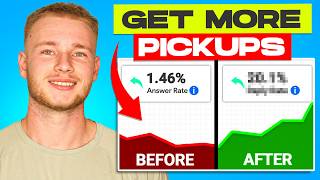
Timothy Schucker shares four ways life insurance agents can boost answer rates on outbound leads: protect your phone number reputation with multiple numbers, call within five minutes (a study shows 900% higher close odds), use local area codes to match recipients, and text or message leads before calling to warm them up.
Questions this video answers
Timothy Schucker
November 25, 2024
900% (nine times more likely)
Chapters
What is going on? Ladies and gentlemen, in this video, I'm going to be showing you four ways to increase your answer rate as a life insurance agent. So without any further ado, let's go ahead and dive right in. These four ways are going to be proven ways that we've used and our clients have used to increase their answer rate when outbound dialing life insurance leads. So first and foremost, the number one way to increase your answer rate when calling life insurance leads is something called spam protection. Okay? So basically what happens whenever you go out and you start making a bunch of calls is you have these, like, individual relationships with all of the telephone carriers, right? So what they're doing is they're monitoring your phone number to see, like, how you act and how you behave as a telemarketer, right? So, for example, if you have just one phone number and you start going out and making hundreds and hundreds of dials a day out of nowhere, and you're, you're triple dialing people back to back to back to back and doing all these different things, or, you know, you call somebody outside of the TCPA time the carrier is taking notes of all these different things and they're deciding, hey, is this somebody that we want to be able to get through to our customers? And by the way, guys, when I say carriers, I know it can kind of be confusing because we're in the insurance insurance industry. I'm not talking about insurance carriers. I'm talking about cell phone carriers like AT T, Verizon, T Mobile, and I think those are like the main ones now. So those three. So when you go out and you do all these things, they're basically taking inventory of what your reputation is. And based off of that, they're going to either allow your calls to get through or not. And basically what happens is, like, if you get marked as SP spam, like, I don't have to be like, you guys don't have to be a genius to understand this. When you get a phone call and it pops up and says scam spam, likely you're not answering the phone. So what happens is, like, your answer rate may be decent, right? Like, let's say you're, you're like here. And then all of a sudden you get marked as spam, you just go like down to here. And then it's just, you're just wasting time, right? So what spam protection is. And there's a few dialers that offer that I can kind of explain what dialers we recommend, and then I can Do a whole separate video that talks about the best dialers. But what spam protection does is they basically go. Whatever dialer you're with, they go and they monitor your reputation on each of your phone numbers with the carriers. And if it gets flagged as spam, they will notify you, so you can swap up that number, or they'll go in and they'll submit documentation to get that reversed so that your answer rate stays high. So that's essentially what spam protection is. I recommend having spam protection on all of your numbers. So have it on all of your numbers. And basically, the way that you want to have this set up is like, you don't want to just be calling with one number. What I recommend is, you know, let's say you're in, like, 15 states. Let's say you're in, like, California, Texas. Actually, I'm just gonna use, like, five states. For example, California, Texas, Kansas, North Carolina, and then Arizona. If you realize the majority of your leads, let's say, are coming in these two states, then I'm gonna buy more numbers in these two states, because most of my calls are gonna be in those states, obviously. So, like, let's say I'm gonna go out and I'm gonna buy, like, 10 numbers. I might buy.
Like three in CA.
Three in Texas.
And then like, one.
In Kansas, one in NC and then one in AZ. And then I could go, you know, let's say. Let's say I'm getting more leads in Texas and California, then I would just go for here. So I have the bulk of my phone numbers in the states that I'm calling. And then I would go and spam protect all of these numbers, like, make sure they're all spam protected. If you're using a dialer like Kixie, Kixie automatically spam protects all the numbers, and they rotate the numbers for you. But Kixie can be a little bit more expensive in other ways. But if you're using a dialer, like Wave dialer, if you guys don't know about these, just comment down below. I can make a whole video breaking them down. But if you're using a dialer, like Wave, for example, Wave, you have to buy each individual number. And so you'd want to spam protect all those numbers, right? So spam protection number one way to increase your answer rate, because again, if you're getting marked as spam, like, you're just totally screwed. Okay. The second way is something called speed to lead, right?
So there was a. There was a study Done, I believe it was by mit. And what they found is that if you contact your leads within five minutes of them filling out the form or requesting information, the odds of you closing go up by 900%. Right. Let me say that again. If you call someone within five minutes, them requesting info, your chances of closing go up by 900%. So nine times more likely. Right. So if you're not contacting people, call them as soon as leads come in. Right? Call people as soon as the leads come in. Like for best results, you want to call them as soon as they come in. Within five minutes, ideally. Right. And what happens is, like within the first couple days, that's when you want to hit people the most. And then you can kind of like decrease the frequency at which you're contacting them as time goes on. Right. So the third way to increase the answer rate is speed to lead. Now the. Or, that's the second way. The third way is something called local number wrapping. And I just have my notes written here. Local number wrapping, okay, so what local number wrapping is, is basically it'll mask your area code.
To match the area code of the person you're calling it. Right? So for example, if I'm in Texas and I call someone in California with a California area code, my area code is going to match their California area code. Now this used to be something that not a lot of people are doing. Now much more people are doing it. So it has kind of reduced the, the like efficacy and the effectiveness of this. However, it still works better than not having it. And so that's essentially what local number wrapping is, is you're matching your outbound phone number with the phone number of the person you're calling. So they, it makes them seem like. It makes it seem like you're somebody that they would know and they're more likely to answer. Right? That's the whole premise behind it. So local number wrapping, that is something that increases area, not increases area code, increases answer rate. Excuse me. And there's a couple of ways you can do this. If you're using a dialer like Kixie, this should be automatic. That's kind of like their whole premise is that it will automatically match the area code if you're using a dialer like wave, which is honestly my recommendation, because the way WAVE does it is actually more compliant than the way Kixie does it. But with Wave, you buy individual phone numbers and then you just turn on local number wrapping and it'll match the number with the area code. So like, if I'm Let me re explain this. If I have 10 numbers and I call somebody in North Carolina, it's going to call them with my North Carolina number. If I have these 10 numbers and the person's in California, it's going to call them with my California number. So with Wave you have to buy all of the numbers that will be locally number wrapped with Kixie. They just automatically do it with all of their numbers. So wave must buy numbers.
Cool. So third one again is local number wrapping. Now the fourth one is something you probably haven't heard about or probably are not doing and that's actually texting your leads. Okay, so what I found is basically when a lead comes in, you want to contact them in as many places as possible. So this is SMS Facebook messenger which is a new thing that we're doing. A lot of Facebook messenger and email and phone. Right. So what I found is if you can get somebody to respond to either an sms, Facebook messenger or an email, they are more likely to answer the phone.
They'Re more likely to answer if respond to other three. Okay, so what we basically do is we have automations that go out whenever someone comes in. So we're going to send them a text, we're going to send them a message on Facebook messenger and we're going to send them an email. Now if they start replying back and forth with a text or replying back and forth on Facebook messenger or the email, I'm going to jump in as the agent, start texting them and then call them and that makes the answer rate go way up. So instead of you just like dialing for hours and just calling through like tons and tons of leads, if you're messaging back and forth with them and you see hey this person's engaging, let me go hit them up, this is a hot lead. Then you call that person and your odds of getting them on the phone or are much much higher. So ladies and gents, that's going to wrap up the video here. Those are the four ways to increase your answer rate when dialing leads. You guys got value from this video? Leave a like hit the subscribe button for more content like this and if you want to work with us one on one, we'll do all of your marketing for you, help you set up all the automations and everything so that all you have to focus on is closing. Then click the link down below to apply to work with us. Without any further ado, I will see you guys in the next one. Take care.










