How To Know EXACTLY What To Work On In Your Business (Simple Framework)
Timothy Schucker walks through a two-step framework: map your funnel's KPIs to find the single bottleneck, then score potential fixes on effort and impact. Work the low-effort wins first, then tackle high-impact changes that take more work. Once you fix one bottleneck, re-run the analysis to find the next leverage point.
Chapters
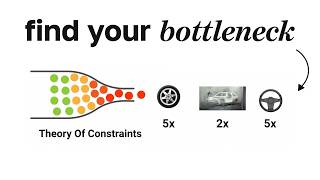
If you've ever found yourself as a business owner struggling to figure out exactly what tasks to work on, right. There's a million things that you can do in your business that probably would help and you probably should do. But how do you prioritize and figure out? Here's what I need to do. First, second, third, fourth, fifth, etc. I always say as a business owner, it's so hard because not only do you have to do the work, but you have to figure out exactly what work to do and in what order. So I struggled with this for years, up until just recently when one of my mentors taught me a two step, simple framework that makes all of this extremely easy. So you will have 100% clarity on exactly what you need to be taking action with in your business. That's going to move the needle the most and make you the most money with the least amount of effort. So let me show you guys exactly how this works. So as you can see here on the screen, I have a couple different images here. This is essentially a two step process and I'm going to walk you guys through each of these things. Mean, right? We got this apple tree and then we got here what I call a bottleneck. Well, I don't call it a bottleneck. That's what it's called. So we're going to jump into it. I'll come back to this apple tree. So essentially, most of you guys are probably familiar with something called the theory of constraints, right? But essentially what this says is at any given point in your business, there is only one singular thing that is holding you back from growing, right? The theory of constraints. We've all heard Alex Hormozi or somebody else talk about this. It's a pretty widely known, widely accepted thing in business. And I'll give you guys a perfect example to kind of prove it. So, you know, for example, let's say I saw this example just the other day. Let's say you want a car manufacturing facility, right? So let's say every day you're able to make two tires, right? Car frame.
Two tires, two car frames, and let's just say two steering wheel. So every day you're able to make two of each of these things, right? Obviously this, I'm oversimplifying what it takes to build a car, but the analogy will make sense. Okay, so you're able to do two of each of these things, okay? 2x 2x 2x. So how many cars can you make every single day? Well, it's pretty obvious that the Answer is simply just two. You can only make two cars a day, right? So if you.
Find some new tool that allows you to make 15x the amount of tires, how many cars can you make every day? Well, you can still make two. Well, let's say all of a sudden we figure out a way, let's scratch the number 15. Let's say now we can make five sets of tires a day, two sets of car frames, and five sets of steering wheels. Well, how many cars can I make? I can still only make two, right? Two. That's it, Only two. I can make two cars a day. So what's my constraint? My constraint would be the car frame right now. Even if, okay, even if, let's say I get this, where I can make 15 sets of tires, I can make 15 sets of steering wheels, I can still only make two sets of cars, meaning my constraint would be the frames of the car. So there's always one constraint holding you back in business. So the problem is most people, myself included, are not that good at actually tracking our numbers to see exactly what that constraint is. So you need to do what is called a bottleneck analysis. Okay, so this is something I learned from a mentor of mine. His name is Jeremy Haynes. Would highly recommend checking out his stuff. He talks about getting to million dollar months on YouTube. Basically, he kind of introduced me to the process of a bottleneck analysis. Okay, so essentially what you do is you're gonna take your business, right? And you're gonna lay out all of the main KPIs and metrics for your business. Now, I'll be totally honest with you guys. This is not like. This is. It's very, very annoying to do this. And you also need to consistently update it. So I'll just kind of give you an example of a bottleneck analysis here. So, for example, let's say I'm running ads to my business, and ideally you want to map out your entire business, but you can also do a bottleneck analysis on individual pieces of your business. I'll kind of explain what that means in just a sec. So bottleneck analysis. If I'm running ads, first number I'm going to look at is what is my cpm? Which is basically for those of you that don't run Facebook ads, that just means the cost to reach a thousand people on a face on Facebook. So cost per 1k impressions, right? So if my CPM is really high, that could potentially be a bottleneck. Another bottleneck is ctr, or click through rate on the ad. Right after that, we could have if. Let's just say we're running ads to an opt in page on a funnel. So I could say my opt in rate, right? Then from opt in rate, let's say this, let's just say this is for a VSL funnel for an opt in rate.
Let's say that from opt in rate then, then we send them to like an application. So I can say lead to application. Then I would say application to booked call and then I could say show rate, close rate. And then we could technically go all the way down the entire business and look at like cool. So we got show rate, close rate. We could say.
There'S obviously a lot between somebody becoming a client and then renewing, but we could also say renewal rate then LTV of a customer. Right? So essentially what you're gonna do is you get all of your numbers, the most important numbers for your business. Which the way you kind of think through this is like what are the numbers? Like, okay, I'll give you an example. So.
Cost per booked call is an important number to know, but it's not gonna, it's not like a percentage that sways something that's gonna easily tell me like an action that I can take. Like if my cost per lead is high, I don't know what to do because like I'm. You're more so looking for like percentages, right? So click through rate is a percentage, opt in rate is a percentage, lead to application is a percentage. Right? These are, most of these are percentages. LTV is obviously not a percentage, but it's like a ratio of how much the client is spending with you. So you want to map all these numbers out and then essentially what you're going to do is you're going to look through these numbers and you're going to try to find what is going to be the easiest thing to double. All right, so let's just say I'll give you guys some examples of numbers. Let's say my CPM is 60, right? Let's say my click through rate is 1.5% on the ad. Let's say the opt in rate on my page is 10%.
Say my lead to application rate is 20 or 30%. Right? Let's just say 20%. Let's say my application to booked call is 30%.
Let's say my share rate is 67%. Let's say close rate is 20%.
And then let's say 40% of my clients renew. And let's say my LTV of a client is 10k.
So if we look here at all these numbers, let me move this over a little bit. So if I look at all these numbers, I need to figure out what is going to be the easiest number to double, right? So take a second look at these numbers and just kind of think to yourself, what do you think will be the easiest to double? And I'll tell you guys, for me the first thing that pops in is opt in rate, right? If my opt in rate on my page is only 10%, I should be split, testing a lot of different things to do that, right? And I'll kind of go through, I'll walk you guys through the whole process. So if I were to simply get my opt in rate from 10% to 20%, my business would essentially double, theoretically, right? Because I'd be getting twice the amount of throughput for the same spend, be getting twice the amount of closes, twice the amount of everything, right? So my business would double if I simply double this because it's more throughput through the entire, the entire system. Right? Now if we mapped this out, the constraint or the bottleneck would be right here at the opt in rate. Right? So here's essentially what we're gonna do. Let's say we do the bottleneck analysis, we find out our opt in rate is our problem. So what we're gonna do is we're gonna make a little chart, I'm gonna pause the video and set this up for you. Alright, cool. So this is essentially what you want to create. Okay. This is like a, this is a little chart. I forget what exactly what this is called, but I think the first person I saw this from was like Hormozi or something years ago, but I never really used it. But let me show you guys how this works because now I'm using this on a consistent basis. So basically what you want to do is we want to list out all the possible solutions for how we could fix the opt in rate. Right? Now why are we fixing the opt in rate? Because we did the bottleneck analysis, we plotted out all of our numbers, which again, this is tedious, it takes time. You should probably have an assistant or a VA that does this for you. But now we figured out the easiest thing we can double is the opt in rate. Right? Very simple. So let's look at what are the high impact, low effort things we can do. This is obviously what we want to prioritize. We also have.
X there. So low impact, low effort. We list all the things that are going to be low impact, low effort, low impact, high Effort, High impact, high effort. All right, so let's look at what are some things we could do that are, could potentially be high impact, low effort. Well, we could test the headline on the page, right? That's pretty easy. That would be pretty easy to do. All we got to do is just literally change the headline. Let me fix the space in there. Cool. So we test the headline on the page. What's something else we could do? Test the button text. Right. Usually an opt in page is going to have like, you got like your text here. Whoops. You guys can't see that.
You've got like some text here, like your headline. And then usually you have like a little bit of like eyebrow copy or whatever and then usually some more language and then like a button. Right? So we could test what the button says. That's a, that's a perfect example of something we could do. What else would be super low effort? All we'd have to do is literally just switch something on the page.
Button, text, sub headline. Right? There's, I mean there's tons of things we can do. But I'm not going to like labor on here. Sub headline, right? That's cool. So high impact, low effort. I would say the headline on the page is definitely gonna be high impact. The sub headline is probably going to be like lower impact. It's not going to make a huge difference.
Another thing that I could do.
Low effort, low impact is I could change like the title of the page. Right? So like you see how this shows up? It says subheading. I could change how that shows up. That's gonna be very low impact. But it's also low effort. Right, let's see, what else could I do? Let's see. Another thing that I could do that would be like high impact, low effort is like testing out a different image on the page.
So that's a different image or photo. Right? Now let's go over to like high effort, high impact. Okay, well actually we'll do, we'll do high effort, low impact, high effort. Low impact would be like.
Custom coding the entire page.
Just so it's built on a different platform. Right. Just so you're not like you custom code the entire page so you don't have to rely on click funnels. Right? That's high effort, very low impact. That's not going to make any difference. Or translating the entire page into Spanish so that you can also run as a Spanish people. Low impact, high effort. Right. Now let's look at some high impact, high effort things that we could do okay, high impact, high effort. Well, I could change my entire offer.
Could change my entire offer. I could.
Test a new funnel.
Right? Or I could test a new funnel. There's different things I can do, right? Hopefully you guys are kind of getting the picture here. So looking on this page, what I want to do is I want to focus on the things that are low effort and high impact first. So first I'm going to focus on everything here, right? This would be the first thing I would focus on. So now that we've decided we're going to stay in this box, what I want to do, I want to score these on a scale of 1 to 10 in terms of the. In terms of the risk that it could cause my business. Right? The risk it could cause my business. So testing the headline on the page, realistically, if I do a 50, 50 split test and the headline does not beat the control.
Is that realistically a massive risk to my business? Absolutely not. It could maybe be. You could maybe argue I'm gonna use a different color. I can maybe argue that's like a two on the risk scale. Maybe it doesn't work. Maybe my opt in rate actually goes lower. So this would be like a 2 on the risk score. Testing the button text, that's also like a two. All of these are like a two in terms of the risk. Very low likelihood that this is going to cause massive issues in my business. So realistically I could take my pick. I would probably test the headline just because that typically has the highest impact of all these three things. But what I've done is I've looked at low effort, high impact things that I could do and now I'm scoring them on a risk assessment like so the reason you do the risk assessment is because sometimes, for example, changing your entire offer, I mean, yeah, this could solve the opt in rate problem. It is extremely high effort and the risk is like an 8. Because let's say the new offer works worse or let's say the new offer works really well, but it attracts the wrong type of customers that I don't want. Testing a new funnel.
I mean, I'd say that's like a six because worst case scenario, I just get rid of that funnel. But it's going to take a lot of effort and I could spend a lot of money on it for it to not work. Right? So based off of this, the first thing that I would probably do if I were this business owner is I would go and I would just test the headline on the page, see if I can Beat the control with a different and a better headline that is basically speaking more and is more in line with the ad. Right? So this is essentially the process that you go through to figure out what to do. We'll look at a different example. Alright, so let's say like, let's say for example, there was an issue where customers were like very unsatisfied, right? You were getting a lot of chargebacks, people weren't renewing, disputes, all that kind of stuff. And you identified that if you could improve your product.
You would be able to get more renewals and increase the LTV of your customers. So low effort, high impact would be conducting a survey to find why customers are not renewing.
Right? Why clients aren't renewing. That'd be a great way that'll identify whatever the issue is. Another thing that I could do is I could make my onboarding process better, right? A lot of people would decide if they're going to continue to work with a company simply based on the onboarding process. So I could improve my onboarding process.
Right?
Those are both very high impact, low effort things. Now next let's look at like low effort, low impact. Okay? A low effort, low impact task, for example, would be, let's say you like, I don't know, you like improved the branding inside of your course program. Like let's say you made the videos look nicer, right? Make the course videos look professionally produced or something, right? You guys have probably bought courses in the past where like some people it'll be like a, you know, it'll be like some dude in a closet with like a potato for a microphone, but like the videos are fire. And then other times it's like somebody in like a super nice studio, but it's like the content's okay. So I can make the course videos look professionally produced. Actually that would be a high effort, low impact thing, to be honest with you. Not low effort, low impact. A low effort, low impact thing would be like changing your logo, right? Changing your logo and you know, site design or something like site theme. Because maybe you think that, I don't know, your branding is bad. Another low effort, low, low impact thing.
Another thing you could do is like, I don't know, adding. We'll just leave it with that example. I got like four hours of sleep last night because I had an early flight, so forgive me. Hopefully you guys get the point there. High impact, high effort. This could be like.
Depending on what the issue with your product is, let's say maybe you're lacking some course Content. So you need to go and film and create new modules inside of your program, right? Or maybe you need to go and learn an entirely new skill set because your product actually sucks. Learn a new skill set because your product sucks. Right? Now, when you look at this, obviously this is not an exhaustive list of all the things that you could possibly do. But looking here, what I would focus on first, again, is we're going to go straight to the high impact, low effort, right? After we look at high impact, low effort, the next thing we're going to look at is high impact, high effort. All right? That would be the next thing that I would then focus on. And then third, I would focus on the low impact, low effort. Then lastly, I would focus on the high effort, low impact. So here's kind of how I would go through it. We're gonna start here. I'm gonna say, cool. What is the risk that my what is the risk to my business that something goes wrong or I end up worse than I started. If I conduct a survey to find out why clients are renewing, A1, right. What is the risk of me trying to improve my onboarding process? Maybe a 3, because I could accidentally do something that, you know, could. Could cause a separate issue. So I would start off with conducting a survey to find out why clients are renewing, right? And then I would go down the line. If that solves the issue or the survey identifies the issue, then I would just go and do that same exact analysis with ways to solve the problem, right? So I would run through. I would do this first, then I would do this, and then, let's see. Filming and creating new modules inside your program. The likelihood that this causes an issue is like a one, okay. Learning a new skill set because your product sucks. The likelihood that this causes an issue is like, you know, a one, right? Like, learning a new skill set would not cause an issue. So I would do this, then I would do this, and then I would do these two things, and I would just go down the line, right? And that's basically it, ladies and gentlemen, is you want to do a bottleneck analysis, find out what your biggest issue is in your business, and then list out all the things you could do in terms of effort, impact, and risk and just make your go down the line. Check your stats. If you solve the bottleneck, move to the next thing. So what's the next thing that's easiest to double? And if you just repeat that process over and over, you make so much money you don't know what to do? With it.










