How To Sell Life Insurance Over The Phone: Entire Script Revealed
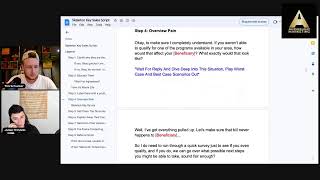
Tim and Julian of Advanced Agent Marketing walk through a nine-step phone script for selling life insurance, role-playing a final-expense scenario that covers burial costs, uncovering pain points, and comparing term versus whole life policies.
Chapters
All right, we're going live now.
I like fell down. Like you're like, hold on.
All right, I'll give you a second to fix your chair.
All right, I think we're live now. Or maybe we've been live for 15 seconds. Are you ready? Three, two, one. What is going on? Ladies and gentlemen, it is Tim and Julian from Advanced Agent Marketing. And today we are going to be showing you our brand new Telesales script. This script has literally made agents tens of thousands of dollars in deposits per month. And we're going to reveal it to you. We've been working on this for what like six months Jul. Just going back and forth, tweaking this thing.
Something like that.
Yeah. So let me, I'm going to share my screen here.
And what we're going to do is go through the script, we're going to kind of like explain each part and then also role play it for you guys so that you guys can see what this actually sounds like. So Julian, you want to kind of just start us off like explaining the legend, like kind of, you know a little bit about the script just before we jump into it. Yeah.
So basically like when you're looking at the script here, obviously the black text is going to be what you're saying, the actions are going to be the blue all, it's all there on the, on the legend for you. Basically just key points to follow across. But the biggest thing is understanding what key points is. So you see it says talk about the beneficiary. Basically this is a nine step framework that you can follow. I've used this to personally write multiple six figures in life insurance. I'm actually going to be writing business over the phone here in the next month as soon as my Arizona license clears and my fingerprints run through after going to 8% this year. But this is the most efficient way I've seen to make cold calls and using the call intro in the beginning here. But also this has been the framework I've used to sell insurance and trained other producers to do to make tens of thousands of dollars in deposits. So Tim, unless you have anything to add, I think, like do you think it'd be more beneficial for us to kind of go through the frameworks and then role play it out or kind of kind of go step by step or what do you think?
I think we should go through each framework, role play it out and then go to the next framework. So like explain role play, explain role play, kind of just go through like that.
Okay, cool. So I guess like we should start with the first framework and maybe if you could zoom out a little bit. I feel like I'm getting claustrophobic, but.
I think my dog's about to start barking. I have an inkling, but is that better? Yeah, but basically, like, there's a few things that I've kind of, I've kind of found and I've been in sales for five years. A few things I've kind of found. The first thing you want to do is basically just kind of like, kind of like clarify whether there. You can see that I kind of. There's a few of these things that we kind of borrowed from Alex Ramosi's closer framework, made it our own, but just basically an understanding for like what it is that they want to talk to you about. And like whether or not they're actually interested in the very beginning is kind of the most important thing that you want to touch on. And so obviously like your leads might be a little bit different. Like ours has beneficiary on it. Like, you know, it'll say like your spouse or your daughter, maybe yours just has. Like you can confirm as anything, like an email even. It doesn't matter. Date of birth, anything, literally anything. Like, even if it's their name, like you can confirm their last name. It does not matter. I've used this call framework for literally every type of cold call I've ever done. I've done tens of thousands of cold calls and literally I've used this for everyone. So I'll kind of role play it out with you, Tim. And, and I think if you guys comment. Objection. If you want us to do a separate live on objections, this one's just going to be to give you guys the framework on the script. So basically the, the way that you. I always approach it is I start with up notes and questions where questions shouldn't be. You guys will see what I mean by that. So I'd be like, ring, ring.
Hello?
Hey, is Tim there?
Yeah, who's this?
Hey Tim, it's Julian. I'm getting back to you on that request you submitted for the final expense program. You listed your beneficiaries, your daughter, is that correct?
Yeah, I think so. I honestly don't really remember filling anything out, but I mean, that would probably be my daughter if I filled something out.
Okay, well, reason I'm calling is to see if you. Is to see what you qualify for. And I'm just guessing you were probably filling that out to make sure that your daughter doesn't get stuck trying to cover the the funeral bill in the event that something were to knock on wood happened to you. Is that correct?
Yeah, Yeah, I. I do kind of remember that. Now I can't scroll.
Okay, gotcha. And just so we're on the same page, and I know what to go over, has anyone ever talked to you about this before?
Nope. This is my first time talking about life insurance.
Okay, no worries. I'm gonna go over everything just to make sure we're on the same page here. And if you don't understand something as I go through this, please stop me. Does that sound fair enough?
Yeah, it sounds fun.
Okay. And you have to let me know here, because if you don't understand the programs, that means I didn't do my job. Right? Okay.
Yeah. All right, sounds good.
And so as we. I want to kind of dissect that a little bit here in the beginning. So the first thing I need to understand and the reason why we go through this is because we need to understand whether or not these people actually know anything about life insurance. And so what most. Hey, my dog's barking. Sorry about that. But.
What happens is, is most people don't actually know anything about life insurance. But by the same token, you also want to make sure that you're get. You're getting them to ask. You have to get the permission for them to. To give you the information. Right. I think I might have said that backwards. But anyways, you get the point. Right. And so they need to be asking you to give them the information. We have to ask for permission to do that. Because if we just start throwing things out there, these people are not going to want to talk to us because we're just basically overloading them. So we have to. We have to force them to make us educate them, which is why we ask these questions. If you guys have any questions, drop them down below and we'll get to them here at the end. Just because I can't currently see them on the live here. But, Tim, if you want to step. Step down to the second step of this framework.
Yep.
We can kind of go over this. So the second step of this framework is basically, you want to do what's called objection blocking. Now, there's two reasons that we go this route. And so the first reason I've done this is how I've always approached life insurance sales. And you can use the same framework for pretty much anything, but specifically for life insurance sales, when you take the educational approach, people absolutely love you. It's beneficial for them, and you're giving them value. Before you're making them an ask, which is starting to create a deficit in value between, between the two of you, which means that you're now basically creating the benefit of the law of reciprocity for yourself. And so whenever I'm going through the second step of this framework, which is education, I'm starting to share value. Right. And so again, like I said, we've asked for permission to share. Now we're confirming what they do or don't know. And then we're blocking the objections by ensuring that they understand that we're going to do everything for them and they don't need to talk to anyone else. Right. Because one of the most common objections you're going to ever get is I need to shop around if you don't cover this base. So I'll kind of role play it out here real quick for step two. And like I said, any questions, drop them below. We'll answer them all. So I'll just pick up where I left off. So be like, oh, okay, perfect. So just before I go over how these programs work, do you know the difference between like an agent and a broker?
What do you mean? Like a, like an FBI agent or. What are you talking about?
No, I know, I hope, I hope you don't know the difference there. No, I'm talking about like a life insurance agent. So basically an agent only works for, for one company. Think like Jake from State Farm. The problem is guys like Jake can't show you the best rate you can get. They'll just show you the best rate that their company has. And so a broker works with all the companies, which means they can shop the market for you so you can get the most amount of coverage for the least amount of money. Does that make sense?
Yeah. Yeah, I think so.
Perfect. So based on what I just described to you, do you think it would make more sense for you to work with an, an agent or a broker?
I would say probably a broker because they'd be able to give me the best price. Right?
Exactly. And that's, that's exactly the same reason I became a broker, because I'm able to help my clients with the best thing that they can get. And since I have all the options, you don't have to spend weeks calling insurance companies, writing down pages of quotes, going through dozens of applications just to try to get approved. Does that make sense?
Yeah, it does.
Okay, cool. And just so we're on the same page, are you familiar with the difference between term and whole life insurance and how those work?
No.
Okay. So basically, the way that term works is you get more coverage for a lower price, and it expires after a certain time period. This is typically 10, 20, 30 years. And most people use this for replacing their income, paying off large sums of debt like a mortgage or a car payment or something like that. And usually term is a better fit for younger people who have a lot of payments or a family that relies on their income. Does that make sense?
It does, yeah.
Okay, now, with Whole Life, you don't get as much coverage as you do with term, but it never expires. So people that get this usually put this in place for things that are guaranteed to happen. For example, burial expenses. Now, most people that go with this option are usually over 50 and either planning ahead or in retirement and on a fixed income. Does that, does that make sense?
Yeah, it does.
Okay, now, based on your. On your situation, which one do you think makes more sense for you, Term or whole life?
I would say whole life.
And so I'm going to stop and kind of break that down before we jump into the next step here. So, guys, this probably. And to some of you, this probably sounds super elementary, and I probably sound like I'm literally talking to a child. But the reason why this is so effective and so efficient is because you don't have to talk over anyone's head. So one of the things that I learned about sales and this is copywriting, sales, marketing, whatever it is, if you can speak to the lowest common denominator, you can literally influence anyone. And so one example I'll use is Donald Trump. Now, I know, like, for some things, like, a lot of people say he's too crass or whatever, but one thing he does really well is that guy can speak to anyone. If you listen to many of the other presidents, oftentimes you'll hear them and they're, like, using big words, and people are like, what does that mean? And they just kind of are like, yeah, that's great. And, you know, they kind of. Their eyes kind of glaze over. But when you're listening to Donald Trump, regardless of if you like him or if you don't, there's no question about what he's saying, because it's so simple that it just makes sense. Agree with it or don't.
Right?
And so it's kind of like, I always. One of the comparisons I like to make when I'm selling Whole Life is that term is like milk, eggs, and cheese. Pick this up from my old upline. But term is like milk, eggs, and cheese. And then I added this part, which was whole life is like a Twinkie, right? You can leave the whole life on the shelf forever or. Yeah, you can leave the Twinkie on the shelf forever and whenever you need it, you can go back and grab it. Never expire. Yeah, yeah, it never expires. And it's going to be there even for the next generation if you never use it. But with term, it's like milk, eggs and cheese, and once it expires, you got to throw it out and it's great while it lasts and you can get so much out of it, but once it expires, there's no going back. And so that's very simple. And our goal here is just to make sure that whether we're talking to someone who used to be a doctor or someone who never had a job in their whole life, they can understand what we are going over. And we want to real quickly before.
We kind of go on to the, the next step here. I just want to talk about, like, because you mentioned, like front ending objections. If you explain everything to them first, not only are you going to front end objections, but you're going to, you're going to be able to avoid a lot of chargebacks that you could otherwise get. Because if somebody needs whole life and you explain what term is and then explain what whole life is and explain why they need whole life versus term or vice versa, if somebody else comes behind you, they're less likely to be tricked by that person. So if I'm selling someone whole life, who needs whole life, and they understand that they are paying for the guarantee, they're getting less coverage, they're paying more, but they're buying a guarantee if some other agent comes behind them and tries to offer them term where they get more coverage for less money. Now they're an empowered consumer and they're going to be able to make the right decision.
Exactly. And so the most powerful, the mo. The best customers are educated customers. Because if your client is educated on what they do or don't need, what they need to do or don't need to do, then I want, like, I want to have the client, my perfect ideal client, if I did my job right, is the, is the old lady or the old guy that bought the final expense that's arguing with the sleaze bag on the phone telling him that he doesn't need term life insurance because he's got an agent that told him how this stuff works. So I'm gonna, I'm gonna go through kind of step Three here. And why we kind of why we're doing these things. And guys, this was. This might seem super elementary, but this is like. This isn't rocket science. Insurance sales is like, it's literally this simple. When you're labeling people with a problem, you cannot, like, I don't know how to explain this without, like, making this sound so stupid that you feel stupid hearing it. But basically the idea is.
You cannot tell someone they have a problem without them getting defensive. It's that simple. You have to get them to tell you that they have the problem. That's it. If they like, I don't want to hear that. You know, for example, let's say that I'll use this example. If I were a plastic surgeon, I'm not going to tell Courtney Kardashian or whoever, one of celebrities that they need a nose job. I'm going to talk about everybody else that has a nose job and, you know, talk about the benefits around it or, you know, ask them if they're looking for any plastic surgery. I'm not going to just straight up tell them because they're not going to do business with me. And it's similar here. Whereas we just need to find out what it is that they see as the issue and then guide them towards the correct issue if they don't understand it. And so I'll kind of go through this and play this out with you here, Tim. So I'm going to continue to pick up where I left off. So what exactly are you looking to cover here, Tim? Is it a burial or a cremation?
I don't want to be cremated.
Okay, gotcha. So it'd be a burial then?
Yeah.
Okay. So the average burial. And guys, quick side note, I like to Google these or. Or understand like in the. The average of where your states are, where you're selling, just so you. You sound and look like a g. So the average cost of a burial in the state of Georgia is, you know, let's say $10,111. And let's see, we need to look at about. Is there. Is there anything else that I'm leaving out here? Does this sound about right or am I le out?
What do you mean leaving. Leaving anything out?
Like, so you said you wanted to carry the COVID the burial. Is there any, like, outstanding debts or, you know, credit cards or anything like that that you would need to cover as well? Or would it just be the burial?
I do have a truck payment that I. That I do have.
Okay. And how much do you own the.
Truck there about 3,000.
Okay, so we got 3,000 in the cost of burial. Does this sound about right, or am I leaving anything out?
I think that's it.
Okay, so we said Georgia average. Let's say Georgia average burials, $10,111 plus 3,000. That is $13,111. Are we both on the same page there, Tim?
Yeah.
Okay, scroll down. And just so I understand, you're basically trying to see if you'd qualify for a program to make sure that your daughter wouldn't have to pay the. The 3,000 and the 10,111 out of their own pocket. Am I off base in saying this?
No. Yeah, that's. That's exactly why I'm looking at this.
Okay, so while I'm getting everything pulled up here, I'm curious because most people don't just sit around thinking about life insurance. What exactly got you thinking about this kind of thing?
Well, I saw an ad on, you know, Facebook. You know, I'm in my 70s now, so I'm not getting any younger. I've had a couple friends around me pass away, and, you know, I just don't want to be that guy. That's a. That's a burden on my family. So I just want to make sure that I have that covered.
Gotcha. Okay. You said you had some friends pass away. Have you had any experience with anyone not covering this so far?
Yeah, I've seen, you know, you see the GoFundMes on. On Facebook and whatnot. But, yeah, I had a couple friends that passed away and didn't have it, and their families were. Were in pretty tough situations. Okay.
And while I'm getting everything pulled up here, when you say a tough situation, like, what exactly did that look like?
I'm not exactly sure, like, you know, the whole situation. But I know that their. Their family had to. Had to raise money on GoFundMe, and then I don't think they hit their goal, so they had to take a little bit money, take out some debt as well to pay for it. Put some of it on a credit card.
I hate to hear that. And that this wasn't one of those situations where they, like, lost the house or. Or the, you know, their car or anything like that, is it?
No, I think they just gotta, you know, had to put money on the credit card and, you know, obviously makes it tougher. Yeah, of course, things a little more. When you lose a family member and then have to foot a bill, especially.
With the prices of things going up, that's. That's Absolutely awful. I hate to hear that. And so I'm gonna kind of, like, break character for a moment. But you see, like, when somebody gives me a piece of information like that, I've got to dive deep on it.
Right.
And so the whole reason. Like what. What got you thinking about this? That's a very like. And as you guys can see, I kind of shift characters a little bit when I'm selling insurance. I kind of, like, speak a little more. I speak more simply, I speak more plainly, and I kind of. Sometimes I'll even throw on a fake country accent for fun. Know that sounds stupid, but that's because.
We sold in North Carolina. If you're selling in, like, California, maybe you don't do it. But yeah, yeah.
Sometimes I would see how crazy I could make it. And, guys, that's one thing. You got to have fun with this. But let's scroll up a little bit here, Tim, on this framework, so we can kind of break this down.
Yeah.
Because there's. There's a really. This is, like, one of the most important parts of the. Of the script. Right. And so when you're going over this, and. And again, guys, this isn't rocket science, but when you're going over this, you really want to make sure that you're getting them to understand that they have a need. But, for example, I've seen a lot of people that are like, oh, okay, cool. You want to cover a burial? And they skip over this part here where you're tallying up the prices, Right. And so when you're tallying this up, you're basically creating the need. Like, this is them telling you how much they need in coverage. I'm not guessing. It's not guesswork. And one thing I'll tell you guys is, like, if you want to upsell and also make sure that your consumers are protected, you can account for inflation and add to that based off of what you've seen in the last 10 years of inflation. That is something you can do. But you do want to cover at least what they have currently based on and also based off of what they can afford. But when I have them explain to me how much it actually costs, I said, okay, cool. And just so you know. Does this sound about right, or am I leaving anything out? No, no. I have that truck payment like you mentioned, and then if we scroll down a little bit here, once we've tallied up the bill, and then I've had. I've had them confirm how much it costs, then I can say, okay, cool. No worries. Go through this little next step here and have them confirm why they're covering these costs. Okay? And guys, again, this is super simple. This is. It seems so elementary, but we have to get them to say it. It can't be us saying it. This is why we're confirmed. Am I off base in saying this? No. Okay, great. And so then as a buffer, right, we can then ask them what got them thinking about this. This is typically because most people who want to buy life insurance have seen a friend or a family member die. They have seen a GoFundMe or some situation where somebody got screwed. There's something that got them to think about that they're thinking about dying. Maybe they feel sick or have that, like, inkling that they're going to die. There's something that got them thinking about it. You cannot brush over this question, and you cannot let people brush this question off. Sometimes you'll get the old grouch that'll be like, oh, you know, I'm just getting up there. But that getting up there does not sell, and it doesn't get me to buy either. So I have to dive deeper. Oh, okay, gotcha. So when you say, you know, getting up there, I'm, you know, what do you mean by that? Right?
It's almost like a, like a web question. Like it, the one question then spurs into other questions. So this part here, you could take about, you know, 30 or 40 seconds, like the deep dive. And this is where you're really building.
Building a lot of the need.
So it's like, what got you thinking about this? Oh, my friendly friend and family member just passed away.
Blah, blah, blah.
Okay, gotcha. You know when you say your friend, friend, or family member passed away, like what, what was the situation? And so you're digging deep to uncover the pain point. So that one question leads you into other questions which kind of like, you know, web off of each other to basically lead you to this next step, which is overviewing the pain.
Well, I don't even want to just skip over it just there yet, because the other thing too is with. With what got you thinking about this. That question has sold more life insurance for me than any other question. And the reason why is because it brings up the pain. You can spend as much time on this question as possible because, like, like Tim mentioned, 30 to 40 seconds. I'm okay with three to four minutes. Plus, I had a lady one time tell me that her husband got basically pancaked by an 18 wheeler on his motorcycle and that her dad had been, had been. Had passed away. And she'd been paying on a payment plan for almost 15 years. And, you know, 13 of her siblings refused to contribute to it. And her sister or her friend from high school married her dad and, like, basically took all the money and, like, crazy story. And the story took a while to unfold and to like, really hear that. And, you know, she's freaking sobbing, talking to me about this because she's on a fixed income, disabled, barely able to afford it. And we're talking and she's like, I may not be alive in the next 12 months because she was sick and stuff. We ended up getting her insurance. She ended up being fine. The operation was great. Everything worked out. But when you have someone, like, if I had just gone in there and been like, okay, let me pull up a quote for you and skipped over this question, like, I not. I would. I would not have gotten that deal. But I wanted to touch on that. Step four, overview. Pain. This is diving deeper into that. I'll kind of role play it out. We can go back through it if we need, but.
Okay.
To make sure. I completely understand. If you weren't able to qualify for one of these programs available in your area, how would that affect your daughter? What exactly would that look like?
Yeah, I mean, she'd probably have to. To, you know, put it on a credit card or something. Honestly, I don't. I'm not entirely sure. I haven't thought too much about it.
Okay, gotcha. Gotcha. And so when you say, like, put on a credit card, would that. I mean, I don't know anything about your family tree or anything. Would that, like, would she still be able to pay for, like, rent and everything? Or, like, is she gonna have to, like, sell her. I don't know the situation. We should have to sell her house. Like, what does that look like?
I mean, she wouldn't have to sell her house. It would definitely set her back for sure. I mean, you know, she's not by any means a millionaire. Like, we're not the freaking Biltmores or anything, but. Or Vanderbilt's. Not the Biltmore's, but I mean. Yeah, it wouldn't be a good situation.
Okay. Okay. And that. Would that affect anyone else in the family or just. Or just your daughter?
It would affect her kids. My grandkids, for sure.
Okay. And for your grandkids, I mean, like, is there. Is there, like, are we losing basic needs here? Or is it just. It might be hard for. She might have to pick up a second job and they might need a babysitter or something that like. Like what are we looking at exactly?
I mean, she would probably. Yeah, probably would have to pick up a second job. Either that or just, you know, take. Take a while to pay off the. The credit card.
Okay, well, I've got. I've got everything pulled up here. Let's make sure that bill never happens to your daughter. I do need to run through a quick survey just to see if you even qualify. And if you. And if you do, we can kind of go over what possible next steps you. You might be able to take. Does that sound fair enough?
Yeah, let's do it.
Okay. And I want to scroll back up before we jump through the next part portion here. So, guys, when you are asking this question, this is the second most important question in the script. What would that look like? Right. And that you also notice that it's. I'm putting a negative here if you weren't able to qualify. So when we. When we have them explain to us the imagery of the situation and they actually lay out the visual of what would happen to their family member, this gets really serious, really, really quick. And they are basically willing to let us know, like.
You know, what the situation is. And this will start to get them emotionally involved at a high level. And so we're able to basically now sit, you know, metaphorically speaking, sit on the same side of the table as our prospect to solve the problem. As we say, let's make sure that never happens to them. And now they are also hooked in with they may or may not qualify. Right. So they understand the importance of filling out the application. Because if you're jumping and skipping through this too quickly and trying to do one of these, you know, call to close, jump straight to the app with. After doing quotes or something, what will happen is, is people will say, I don't want to fill out an application just yet. And you can't have that if you cover all over this. Right. You have to cover what it looks like, how it's going to affect them, and continue on from there.
Tim, I do have an appointment here at this time. Do you think it would make the most sense for us to maybe finish this in the. Finish this at a separate time, let everybody digest what they've gotten currently, and we can kind of dive into the rest of it another day. Let's see what the comments are saying.
Yeah, let's see. I was actually about to text your appointment right now.
While you're going through that, what do you guys think? You think we should finish this out today because our plan. We want to make a whole YouTube video kind of explaining how this whole thing works and then posting it. What do you guys think? Should we finish it out?
We're about how I say we would probably be going to step seven, right? Not all the way through the referral script and everything.
Yeah, that's the secret sauce. Can't have anybody using our. I think it's nine. It's eight and nine. Finish it out. Great stuff. Yes. Would love a copy. Okay.
Let me call my. Let me call my appointment real quick and see if I can. The second time I've pushed. I've pushed this back. I feel awful.
I was about to text her now. I was like, dude, this is. This is. Just tell. Tell her to join the live stream.
Good evening.
And speaking.
Annie, hey, it's Julian. We have the appointment here at 5.
No worries. I was going to say, actually we're doing a YouTube live right now, kind of breaking down some of this. Some of the script stuff for all of the agents. It. Would it be easier for you to check in and we can kind of. Kind of get together afterwards and. And cover everything after that. Because I think you. You actually might want to check this out.
The one to one.
Of course.
I promise this wasn't scripted.
Oh, dude, this is hilarious.
No worries. Totally understand. Let's. Yeah, let's do the zoom. Does that. Does that work for you? Do you still have it?
All right, I'll let you guys know what. What happens in a second. I think. I don't know what's going on, but regardless, we will finish out this live stream. If not now, we'll definitely finish it Friday. And we're going to. For everyone in the Facebook group, we're going to give this to you guys. If you guys aren't already in the Facebook group. It's insurance agent freedom.
We only kind of allocated about 30 minutes for the live, and then things started going a little bit over. But we do want to kind of finish this out and we're going to post a whole YouTube video, like, going super in depth on the script. So. Yeah. Are you guys enjoying this so far? I see a few comments coming in that you guys want to copy and everything. I'm thinking Julian's gonna have to jump on this call. I have no idea what's going on, but if he does, we will definitely finish this out and give you guys this. But are you guys getting value from it? Let me know in the comments, just so we know if, like, this is Content that you guys are enjoying.
One thing I'm super excited for, once Julian gets the Arizona license, is we're going to be doing live dials with this script on the branded leads that we're generating just to kind of show you guys like what things look like. Showing you guys the one call close and everything.
I've got good news and bad news. Good news, I do have to jump off here. I want to make sure I can keep the schedule and be respectful of Ms. Annie's time. I want to say thank you guys for all hopping on. We will do a finished version of this. This is kind of. This was not planned. This is not a teaser. This is just the way that the world works. But thank you so much, guys, for hopping on. I do have to jump. And if you guys want a copy, join Insurance Agent Freedom. We're going to be posting it there here in probably the next week or so. And that way you guys can get access to everything. We're probably going to turn this, I guess, into like, some sort of training. That way you guys can get all the resources you need to be successful. And I think Tim touched on it. But I'm gonna be doing one call closes on here for you guys calling probably some recycled leads, to be honest, because I'm tired of hearing people say that those things are not gold. That's my favorite freaking lead type, except for the New Zoo Assurance lead that we've been dropping. So, guys, I'm gonna jump off here. Thank you so much, Tim. Thank you for. For everything as well.
We'll.
We'll finish this up another day.
Sounds good. Appreciate you guys. Sorry to cut it short, but we're gonna be sending out some more info on this and we will get you. I'm saying probably by the end of the week, we'll have another video coming out about this and share the script with everyone in the Facebook group. So we'll have the link to join the Facebook group. Make sure you guys are in there. We'll be dropping more info on the script in the YouTube and in the Facebook group. Appreciate y' all's time and can't wait to finish this out.










