How To Stop Getting Burned By Marketing Companies [Guide For Insurance Agents]
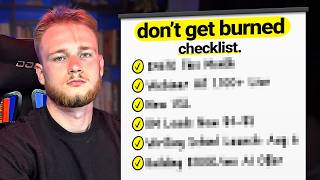
Timothy Schucker walks insurance agents through vetting marketing companies and lead vendors. Check if they show you the actual ads, use the five stages of awareness, and deliver leads exclusively to you. Red flag: anyone charging under $5,000, since that usually means low quality.
Chapters
Listen, if I had a dollar for every single time that I heard an insurance agent say that I've been burned before, then let's just say I would have a lot of dollars, a lot more than I have currently. Which is why I feel like I have a moral obligation to make this video for you guys, where I'm going to be outlining and giving you a checklist that you can take home with you that will show you how to vet a marketing company so that you can actually make sure that, that you work with someone good and you don't have to go around telling everyone that you get scammed by every single person that you work with because, frankly, it's a little bit embarrassing. So without any further ado, let's dive in. I'm going to show you guys my checklist. All right, ladies and gents, welcome in. We're going to be overviewing the Don't Get Burned checklist in terms of how you can vet and determine if a marketing company or a lead vendor is going to be good so you can start working with quality companies that make you more money instead of wasting all of your money. Now, quick disclaimer. This is not gonna be me feeding into your victim mindset about how everybody screwed you over. I'm actually gonna be blaming you, as interesting as that sounds, because in all reality, it is your responsibility to vet a company and do your due diligence to make sure you don't get screwed. Like these people that I'll talk to. Hopefully you watching this are not one of these people that will come on and, you know, I'll jump on a call with them and they're potentially looking with us and they say, yeah, like every single company that I've ever worked with scammed me. I'm like, okay, cool. What was the, what was the instance that happened? Yeah, well, you know, some person DM'd me in my Facebook DMs and offered to sell me pre closed policies, and they were from, you know, somewhere outside of the country. And I wired them over a bunch of money through Western Union and then I got scammed. It's like, duh, of course, right? Or they'll work with some, some company that has a bunch of fake reviews or just popped up out of nowhere like a month ago, and they expect to quality results from that company. So the thing is, at the end of the day, it's all your fault. And I say that because it actually empowers you, right? When you know how to vet a company and you know what to look for, then you're not going to make bad decisions moving forward and you're actually going to be able to see quality results. So I say that when I, when I blame you and I say it's your fault. I'm actually giving you power because now the decision is in your hands and you have control over who you work with. So again, if you pick the wrong company, if you work with crappy lead vendors, it's your fault, not the company's fault, because you are responsible for making good decisions for your own business. And this is something that I've found is common amongst winners and amongst clients that do very well when we work with them and just agents in general. Okay, so we're going to start off. The first thing that you need to be looking for is transparency and proof. All right, so I made this into an entire checklist. I'll show you where to get this at the end of the video. But you kind of just like go through and you're gonna check off these boxes as they meet these specific criteria. So first and foremost, I actually highlighted this one because it's so important. Will your lead vendor or your marketing company show you the ads that they are running instead of just talking about them? Okay. The reason that this is so important is most lead vendors have a completely misaligned incentive with what you actually want. Their goal is to get the cheapest possible leads and sell them to you at a markup. Your goal is to make money. Right. Those incentives are not aligned. So what you want is you want someone who is comfortable showing you what their actual ads look like. What are the ads that they are running on your behalf? Because as a salesperson, if you don't know what's going on with your marketing, you're completely unequipped to handle any conversation with a prospect. If I don't know what they just saw, how am I supposed to continue that conversation and have it be congruent? You can't. So very, very important. If someone won't show you any of the ads that they're running, immediate red flag, run away. Your odds of having a negative time is extremely high. Okay, now if they do show you the ads, here are the things that you want to look for. Do the ads clearly show or mention the actual product that you're selling? So I'll see a lot of these ads where, you know, maybe they're, they're running ads for iul, but then the ad itself says something about like a six figure policy that you can borrow against tax free and like it doesn't even mention the word iul. It's just very unclear. Or I've seen annuity ads where it'll say something like, get a guaranteed income for life. It's like, okay, well, who do you think that's going to attract? If it's not framed properly, then you're gonna attract low quality people, and people have no idea what you're talking about. So you don't want ads that are like, super vague. Now, this doesn't mean that they have to specifically say the type of insurance that you're selling in the ad. That's like, we have ads where it doesn't actually say IUL or doesn't actually say annuity, but it's very clearly about that and the expectations are being set properly. That's the biggest thing. Right? And we could go, I mean, I could make a whole video in terms of what makes a good ad versus a bad ad. If you want me to make that, drop it in the comments below. But we have a lot of things to cover, so I'm not going to go super deep on that. The next thing is, are the ads targeting buyer intent or are they just bait and switch? Clickbait. So a lot of ads out there are bait and switch. They're just incentivized to get someone to click on something versus are they actually ads that are made where you're, you know, you're putting something out there that you're showing how you solve a problem. Right. That's an entirely different kind of ad than an ad that's just like, hey, click this to get, you know, a toaster or whatever, which is legitimately stuff that I see. So they won't show you their ad. I wouldn't even bother giving them money. The next thing, marketing strategy. So we're going to get a little in the weeds here. There's something called the five stages of awareness, all right? And basically what this is is it's a concept in advertising, actually, I'll just pull it up and show you. Cool. So this is something that I reference a lot. It's from a $500 marketing book called Breakthrough Advertising. And basically what this is is it represents the five stages of a buyer's awareness. So they can fall into any of these five stages, unaware, problem aware, solution aware, product aware, and most aware. Okay? Now whenever you are looking at marketing, you want to kind of figure out like, hey, what stage of awareness are they targeting? I'll give you an example. Let's say you're selling vacuum cleaners. Well, Someone who's unaware would be somebody who doesn't even know what a vacuum cleaner is and doesn't have any idea that they would even need that. Like they aren't even aware that not having a vacuum cleaner is a problem. Right. Problem aware would be like, okay, this person is using a bunch of brooms to clean their house, but they're like, there's got to be a better way. Like, this sucks, I hate sweeping. I wish I just had a better way. That's problem aware. See, they're aware of the problem. Solution aware means that they're aware that there is a solution for it, but they don't know what it is. So they're sweeping their house, they have a broom, and they don't know the vacuum cleaners necessarily exist, but they do know that there is a solution out there that's better than brooms. Right. Product aware would mean they know that vacuum cleaners exist. Like if you said the word vacuum cleaner, they would know what that means. But they aren't completely aware of what a does and they're not completely sold. Whereas most aware means like they're actively in the market for that product, they have already looked at it, they're considering buying one, they just need a little bit of a push. So as you can imagine, you would sell to each of these people differently. So someone who's most aware, well, you're going to be more so you know they're going to be asking you more technical questions about the product. They're doing research, they're doing their diligence. You might have to compete with other agents. For example, product aware, these are people that are familiar with the products. You have to do less educating because they've already done a lot of the education and the research. But you have to do more of closing. You got to convince them a little more solution aware. And then as you go further up, they know less and less about the product, so they'll have less technical questions. But they're, you have to educate them a lot more. So that's something you need to understand is like if you're a brand new agent, you're gonna have a tougher time selling to people that are most aware because a lot of times they might know more about the product than you do. Whereas if you're selling to someone who's unaware, it might take a little bit more work because you got to educate them all the way through. But at least they're at least like you are going to know more about the product than them. So most lead Vendors, marketers, like, they don't go this deep on the marketing because they don't really care. Like, for most of these lead vendors, to be too completely honest with you, it's like a hobby for them and it's like a lifestyle business. Like, you don't want to partner with someone who doesn't really take what they're doing that seriously. And met a lot of the lead vendors, a lot of the people that do this, they don't take it that seriously. So you want, like, you want to look for someone that's like actually diving into the psychology and the marketing behind what goes into this. So I showed you the five stages of awareness. If you ask a company about that, like, do you understand the five stages of awareness? Then what stages do you target and why? If they can't answer that question, they're probably, you know, I mean, you're looking at amateur hour. Like, any good marketer has looked through that book, Breakthrough advertising. Like, I can tell you that as a marketer, anyone who's worth their salt, like, actually a serious marketer, has gone through that book or understands the concepts of it. Okay, so you also want to ask, like, can they customize and adjust their marketing to optimize the ads to fit your needs? So, for example, there's some people that, you know, they want to sell like, they would rather have quick deals than have big deals. Okay, that's something that, like, people legitimately would rather have quick deals than big deals. Oftentimes other people, they would rather have big deals than quick deals. So based off of what your ad says, you're going to attract the people that will close faster or you're going to attract people that are like, they're more, they're higher income, they take longer to close, but the checks are big, right? So you need to work with a company that can basically, like, they can tailor it based off of what you need, right? Can they tailor it based off of what you need? And then the other piece is, are they leveraging Meta's AI to produce high quality leads? So this is something I've talked about in previous videos and I'll go surface level here. I have a video where I go very in depth on this. But basically, Facebook, Meta, Instagram, like, Facebook and Instagram are owned by the parent company called Meta, right? So basically, when you run ads on Facebook or Meta, I just like calling it Facebook because that's how I grew up saying. So when you run ads on Facebook.
You can send data back to Facebook to tell them who is A quality lead. And what happens is they will start to optimize for the right people. So I've seen this within my own business is we basically have like a grading system where we say, hey, this person is a quality lead versus a not quality lead. If they're a quality lead, we then send that data back to Facebook and say, hey, get us more of these people. If they're a non quality lead, we don't send the data back to Facebook. So what happens is Facebook starts to optimize for qualified people, and our lead quality over time continues to increase. Whereas what most of you guys are dealing with is you're dealing with amateurs who don't know even. They don't even know how to send the data back to Facebook and they don't really care. So what happens is they're just optimizing for leads. So you get as many leads as possible, but they're not leads that are likely to close.
Sound familiar? You ever had that, that instance, that situation where you get a ton of leads, There may be even like a good price, but they're not quality. Well, that's because you're not sending the data back to Facebook and telling it what you want, right? It's like imagine you go to a restaurant, you sit down and then you just stare at the waiter, and they look at you for a while and they're like, what the hell are you doing? And then you just stare at them blankly and they're like, okay, well, I'll just bring you some food. And then when they bring you out the food, it's something you don't like. And then you complain. That's what you guys are doing right now with the way that you market. You just literally have to tell the waiter, you need to tell Facebook what you like, and they'll give it to you. It's that simple. And that's the biggest thing, right? And most of you guys are not. Are not taking advantage or capitalizing of that, unless you're either running your own ads on your own account or you're working with a marketing company that does that for you, which are few and far between, trust me. So next thing, lead quality and delivery. So are the leads truly exclusive or are they shared and recycled across other agents? So this is probably one of the big frustrations. And the thing is, like, a lot of these guys will just lie about it. Like, a lot of them will just tell you they're exclusive even though they're not, right? So a way that you can basically make this foolproof is if the lead vendor never actually touches the lead. So what we do for all of our clients. And again, I'm not like this video is not saying you have to work with us, full transparency. We. We do all these things on this checklist. So like, I made the checklist off of what makes a good company, and then we've optimized our company around being a good company. So a lot of them are going to line up. I'm not saying you have to work with us, but I'm just telling you we do do these things. So what we do is we run ads on the individual agents accounts. So the data is being sent back to Facebook based off of what they say is a qualified lead inside of their system. And then what happens is when the lead comes in, it just goes directly into their CRM. So we never have the chance to resell or share anyone's leads. Whereas with most people, if you buy leads from a vendor, right, you're paying the vendor for the lead, the lead vendor generates the lead, and then now they have possession of the lead, and then they give it to you. Well, there's a lot that they can do in the meantime. They can sell it to 15 other agents, which they often do. They can sell it themselves. Like there's a lot more that can happen, right? It's like if you ever order, I just ordered doordash, it's actually waiting for me outside. I got some kava waiting for me. But if you order food, if you like, if the food bag is opened, then someone could mess with it. But if it's closed, it's stapled shut, it's taped, it's wrapped, okay, you know that no one's messed with it. It's the same kind of thing. So if the lead is going to the lead vendor, the bag has been opened and like, you know, the lid on your chipotle is off versus. And that doesn't mean that the delivery driver messed with your food, but it means they could have, right? Whereas if the bag is shut, it's taped shut, it's wrapped, stapled, like they're not messing with it. That's the exact same way that you need to think about leads and lead delivery.
Next thing, team and support. So again, I was talking about how people kind of just like pop up into this business because they think insurance agents make a bunch of money and they think it's an easy. Like it's super easy to generate leads for them. That's what most of your experience probably is. You just find some Random person online that's been doing this for like three to six months. Maybe they've even been doing it for like a year and a half. And it's just one guy who probably lives in like Medellin, Colombia or something, or you know, he lives in Miami or whatever. Right. It's just one guy who's basically trying to fund his lifestyle. And in all reality, if it's only one person, they're not going to be able to give you adequate support. Like, for me personally, I would rather work with someone that has infrastructure because like for me, for me I want to build a business in this industry. I'm not trying to just like half ass this, be like a, you know, part time producer, make like four to five grand a month. Like I want to build a business. And so if you want to build a business too and you want to have a partner, then you should find someone that has a team. Because in full transparency for my clients, I don't run their ads. I have a business. I have a business that fulfills and runs ads for agents. And we have operations and systems and a team that does this. Which means if you ask a question, you're going to get someone from my team that responds. If everyone was waiting for me to respond, in all reality, nobody would get responded to because I just wouldn't have time in the day. And so it's the same kind of thing if it's like one guy on a team or one, just one guy by himself, like you're not going to get good support. We literally have 25 plus people on our team. The number goes up and down depending on the day because we have appointment setters and salespeople and you know, that fluctuates. But we have 25 plus people on the team. It's a whole, we have like a whole team. So I would look for companies like that where you know you're going to get support. They're established, they've been in the game for a while, they have a track record. Will you have a direct point of contact or an account manager? Right. If you're anything like me, like I. One of the most, the biggest frustrations I hear from agents is that they don't get any support. Right. Or they have to hit up email, like they just have to hit up email support or message someone on Facebook Messenger. What we do with all of our clients is everyone gets their own dedicated account manager who they can message and ask any questions and then our whole support team is in their slack. So we have you Get a dedicated Slack channel specifically for you where you can ask questions one on one. So like, I'm not necessarily saying that you have to do work with a company that has that, but you want to figure out what your point of contact is going to be like. Do you have someone you can reach out to? Or is it just like, yeah, you paid me and then email me if you have any questions. And then they never check their email so you never hear back. That's the biggest thing too. Right? Next piece, accountability and optimization. So do they track and report on key KPIs like cost per lead, show rate, close rate, and ROAS? Now, I will say in full transparency, it is very difficult for us to get our clients to report back their show rate and close rate. We have no control over if somebody tracks their numbers or not. Some of our clients do, some of our clients don't. And so we really just do the best with what we have. But like a good company is going to know their numbers and know their metrics. Like they should have KPIs. They should be able to tell you those numbers and tell you those metrics. And if it sounds like they're just making something up, that's probably a red flag. Okay, the next piece is do they run bottleneck analysis on your, on your specific funnel to identify and fix weak points. So one of the things that we do is we'll like when agents actually track their numbers is our team will go in and look at the numbers that they have. And then based off of whatever's the bottleneck, we'll say, hey, we need to fix this statistic in your number or in your funnel. And that's going to improve it. Right? So for example, let's say your cost per lead is like 25 bucks, your cost per appointment is 150 bucks, and your show rate is 10%. Okay, well, obviously the thing we need to focus on is the show rate. Right? That's an entirely different situation than let's say your cost per leads 25 bucks, but your cost per appointment is 500 bucks. Okay, well now I'm not going to worry about the share rate. I'm going to worry about how can we get this appointment cost lower. Right. So that's how you do it with marketing, is you focus on what's going to be the bottleneck. Same thing with your sales process. And so if you're working with a company that doesn't look at data, doesn't look at numbers, they don't do any of that stuff. I mean, that's, that's, that's gonna be a red flag, right? They're only gonna be to get you so far until something breaks that they don't know how to fix. And then are they willing to build out a financial model showing worst case, a mild case, and then a best case before they are launching the ads? Right. So one of the things that we'll do is we'll actually financially model out like, hey, this is what it would look like on a very conservative basis. This is what it would look like what we usually see. And this is like a best case, above average situation in terms of what your, your metrics could look like. Okay, now final checkpoints.
One thing that I would very much so look out for is if the, if the, if the ad spend and their fee is baked into one thing. So with all of our clients, they pay Facebook directly. Directly, right? So they pay us either a monthly fee or, or we'll do a revenue share where we basically get a percentage of the applications they sell. We only do that with like, higher level clients that we already know can produce and have kind of like validated themselves. But we'll do something like that where we'll do a revenue share, right? They, the, our clients pay us directly and then they pay for their ad spend. Now the reason that that's so important is because you know exactly how much is going to Facebook and how much is going to us, and there's nothing we can do with your leads. And plus, I mean, in all reality, you get all the credit card points and everything, which is pretty cool, by spending on Facebook. So you get all the credit card points, you get everything else, and then you know exactly what's going to Facebook and exactly what's going to us. Our fee stays the same and it's not like you're paying per lead. Okay? So I'm not saying you have to do that model. I think that it's better and it's more simple. But you want, you do want to understand that because a lot of people, you know, they'll think that they're only paying so much, but it's actually, you also have to pay for this. And then the other thing is ultimately the goal is to find something that's good and then once it's working, scale it. So has this company that you're talking about working with, like, have they scaled and, and like brought other businesses up to a higher level? Like, do they have the infrastructure in place to help you scale, or is it really just kind of like a chop Shop, you know, cheap kind of thing, and you're just trying to get the lowest cost marketing as possible. Well, hey, great. But what happens when it starts working and then that, that vendor, that company is not able to support you, so you want to find something that will allow you to scale up to hitting your goals. Okay, so that's the checklist. Let me go through a few red flags that I would recommend avoiding. Ads that never mention life insurance, IUL or annuity, or disguise it as a free government program. That is very common. I 1000% recommend avoiding that. Companies that refuse to show you their ads entirely, the leads are not directly sent to you and they go through the marketer or the lead vendor. No track record of results, meaning they've existed for less than two years. If they have overwhelmingly negative reviews online, that's obviously a red flag. Or if they have no reviews or no online presence, that's also a red flag. And then all in all reality, this is something that, I mean, this might be controversial. Some people would disagree with this. I, I will stand like, I fully, fully believe in this. Anything that's less than five grand, I wouldn't even consider. If you're paying someone to do marketing for you. Because you have to realize, like, if you're going to have support, if you're going to have a team that's actually like got your back and is actually putting things into place for you, if you have people that you can reach out to and if they're going to actually be working on your account and making sure you get results, they can't afford to do that for less than $5,000. Right? Like if you're paying somebody on fiverr or upwork or whatever, like, and you're trying to be cheap, the one thing, the one single thing that you absolutely should not be cheap on is your marketing. It is the own, like some of the only dollars in your business that you can say, if I put $1 in, I get X amount of dollars back. Like, that is the money that multiplies itself into more money. Why would you be cheap with the one thing that like, fuels the growth of your business? I can't possibly understand it. If you just don't have the capital and you don't have money at all, that's a different story. You need to go out and sell some policies and raise some money. But like, the thing is you can either buy it twice or you can buy it nice once. And so I've made this mistake before. I'm speaking from experience. When it comes to marketing. If you want to be cheap on other things, you can do that too. I've learned my lesson on those other things. But at the very least, do not try to be cheap on marketing. It is the dumbest thing you can possibly do. So I would avoid any company that's less than $5,000 just because from running a marketing company, I know what goes into it. I know what it costs to be good. I know what it like, what it costs to skate by and be garbage. Like, I can see what these companies are doing. And if you're paying someone less than $5,000, it's probably not going to be good right now. Final reminder, ladies and gents, with all of that being said, I've now given you the tools. I've empowered you to understand what to look for in a marketing company or a lead vendor. So now it's your fault. It's entirely your fault. So if you make a bad decision, don't go out and, you know, have this victim mentality of like, every single marketer and lead vendor sucks. It's, you know, woe is me. I'm just going to get out of the industry. No, I mean, you know what to look for. It's your responsibility. And now you can go out and make a good decision. You know what to look for and what to avoid. Right? And the biggest thing is if you don't understand marketing, at least on a fundamental level, you can never actually know if someone is doing something good for you. Right. Like you should understand it on a base fundamental level, which, by the way, you're watching this channel, so just check out some of these other videos. And that's basically what we do here, is educate you on marketing so that you can like, you can see what it looks like to have good marketing versus bad marketing. All right? So learn to vet, own your role, and then scale with confidence and make a bunch of money. Do not cheap out on the most critical function of your business, which is client acquisition. Now, ladies and gentlemen, thank you so much for watching. I'm going to include a link down below to this checklist so that you can grab it and use it to vet marketing companies that if you want to work with advanced agent marketing, which we follow all of the things on this checklist and simply click the first link down below in the description to book a demo call. See you guys soon.










