If I Started An AI Agency In 2026, This Is What I'd Do STEP By STEP
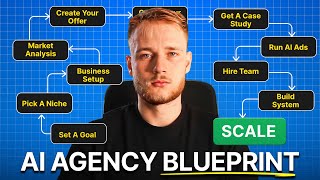
Timothy Schucker outlines how to launch an AI agency by picking a niche like law firms or roofing, building a three-pillar offer around lead generation and automation, and pricing with retainers that include guarantees. Start with a case study, run Meta ads to book appointments, then hire and scale with documented systems.
Questions this video answers
December 19, 2025
$500,000 in one month
March 2022
$140,000 in commissions in one month
$230,000 in commissions in four months
Chapters
All right, so if you want to grow an AI agency in 2026, this is going to be your exact step by step roadmap. I've scaled an agency from zero to $500,000 per month, and trust me, I have made just about every single mistake in the book, which means I can tell you exactly what to do and exactly what to avoid. And I've also had the opportunity to coach and consult with dozens of other agency owners that are scaling and doing multi six figures a month. So in this video, I'm going to hand you a literal roadmap, showing you everything you need to do step by step, like candy L. So that you can go from beginner to somebody that owns a profitable agency that is paying them multi five or even six figures per month in income. So that any further ado, let's dive in. Alrighty, so here's our roadmap, our guide. We're going to run through everything here. First and foremost, again, this is proof showing you that we did $500,000 in a month within our own AI agency. And this is screenshots from a couple of different payment processors and as well. All right, let's start with step number one. What is your why? So you need to set an actual goal. All right, so one of the things that I do with any employee that I bring on, and I also do it with a lot of my clients within the AI agency is I'll have them figure out what their why is. Because if your goal is not strong enough, if your why is not strong enough, inevitably in business there's gonna be brick walls that you have to smash your face against for months and months and months and months, sometimes even years, in order to get the result that you want. And if you don't have a reason to continually smash your head against the brick wall, well, any sane person, you're just not going to continue to smash your head against the brick wall. But that is what is required to see success and get to the next level. Right? The pain of not getting your goal needs to be more than the pain of what it takes to get to the goal. Right? And so it's very important that you start off by defining your why. Because, you know, you may not seem like it now when you're excited and you're watching a YouTube video about it, but you're gonna have dark times, you're gonna have struggles, you're gonna have times where maybe you don't want to quit, but you're certainly not happy about what you're doing. And you need to have something that you can continually tie yourself back to as to, oh, wait, this is exactly why I'm doing this. This is why I'm suffering. This is why I'm putting in the work, and that is why I'm gonna start with this. So the way that I basically teach it is it's almost like a pyramid, right? Pyramids are easy because they're good shapes and they explain hierarchy. But essentially, first and foremost, the base of the pyramid is your purpose, right? So your purpose is essentially, for a lot of people, it might be spiritual, right? Like if you're a Christian, that might be your purpose for other people. If you're not Christian or you're not religious or whatever, your purpose is basically whatever you would willingly sacrifice yourself for, right? So your purpose might be to, you know, buy your mom a house or retire your parents. Your purpose might be, hey, you know, I want to make sure that my daughter can, you know, wear Gucci belts to school. Because that's really important to me. Okay, cool. That's awesome. That could be your purpose. Or maybe your purpose is, hey, I want to make sure that my kids don't have to grow up the way that I did. Whatever it is, right? You can kind of think of what is your purpose. Hopefully you can figure that out. If you need to pause this for 30 minutes and go meditate to figure out what your life's purpose is, that's cool. Totally an option. I won't judge you. Next off is your vision. All right, so once you basically figure out what your purpose is, again, what you would willingly self sacrifice for. For me, I would say my purpose is one, to spread the word of God. I'm a Christian. Two would be to basically maximize out my potential. Right? I think when you're born into life, you're basically almost like a video game character with certain statistics. And you can, if you max out your character, that's better than not, right? And the other thing is to further capitalism in America, I think there's a risk that some people try to take that away. And then also to be a really good father, right? When I eventually have kids, I don't know, but when I do, I want to have kids. So that's my purpose, right? It's very clear to me, like, hey, this is what I need to do. This is living in alignment with my purpose now. Vision. Everyone tells you, make a vision board. Make a vision board. You know, tattoo it on your eyelids, whatever reality. The reason that you make a vision board is your vision board should be you living in alignment with your purpose. So for example, if you said your purpose was to make sure that your kids have nicer clothes than every other kid at school, then you would probably on your vision board have an image of you at the Gucci store buying your, you know, six year old daughter Gucci socks or whatever it is. Right? It's basically you living in alignment with the purpose. So your purpose is like the plot of the movie. The vision is like the actual scenes in the movie. Does that make sense? Right? You don't just like throw up a bunch of random stuff. With AI now you can literally take yourself and create a prompt in Gemini. I'll show you guys an example in just a sec. And you can have you in the specific scenes that you want to materialize. Right? So let me show you guys an example. I made a vision board with my fiance, kind of like a co vision board. So you guys can see a little bit of like what that should look like. All right, cool. So this is both, you know, what our dream physiques are. This is what she wants to look like. And then I took an AI image of me, gave myself abs and bigger bicep veins. Right? So I can like, it's really cool. You can literally say, hey, this is exactly what I want to look like. And then you can see that version of. You could never do that before. This is a $100,000 or 100 100,000 subscriber YouTube plaque. My fiance and I are going to get married this year. So this is us on a boat in Italy. I want to have $2.5 million in my brokerage account and then go to Japan. And then I don't really know that I care about this too much. I just kind of put this here, but I think that would be, that would be a cool car to have as like a black, blacked out Escalade. So that's a vision board. So you probably were not expecting me to say, hey, go make a vision board before you start your agency. And obviously I'm going to go into all the tactical stuff, but I think this is so important because if you don't have this dialed in, you, you're screwed. Okay. After you take your vision. Now we need to go and make goals, right? So goals are basically the steps on the path to achieve and materialize the vision. So for example, you know, if I, you guys just saw my vision board. Me having six pack abs, popping bicep veins and looking yoked as shit, right? The goal quarterly might be to get to X percentage body fat. Right. Or the goal for the year might be to have a six pack. Right. So the goals are the stepping stones along the way to achieve the vision. Habits are the daily actions you take every single day to achieve that. So for the six pack example, it might be eating less than, you know, 3000 or 2500 calories or whatever and then doing 10 minutes of cardio. Maybe that's what the habit would be. Right. But you break it down from here's my life's mission, the meaning of my life, the purpose, the vision board, how you achieve it, the the goals. Right. Was your goal, your vision might be to make a certain amount of money and the agency is just a vehicle to get you to that destination. Okay. So I'm not going to go too much further into this, but I think it's very important to start here. Go through, make a vision board, lay out what's your purpose, what's your vision, what are your goals? Five year, one year. And then quarterly we're coming into 2026 as I'm filming this video. It's a great time to do this. And what are the daily actions you're going to take in order to achieve that? Okay, cool. Next, picking a niche. So now that we know why we're building this agency, let's start with the most important part. Picking a niche. So tell you guys a story. Recently I had a friend who just started his own agency and I ultimately I'm partnering him in it. So we may make some content about that. I'm not going to tell you guys what it is, but I saw this guy pick a niche that just, was absolutely, just blowing it out of the water. Okay. Essentially I'll give you guys, I'll tell you guys what niche I'm in and then I'll kind of explain what we've seen to demonstrate the difference of like how big and powerful having a different and a better niche can be. So for example, I sell to right now mostly individual insurance agents. So the insurance industry people get recruited on mass. It's kind of like an mlm and then they come in and they got to buy leads and figure out marketing. Right now these people, on average, it's typically somebody that had like a job before and maybe they lost their job or they just wanted a different opportunity or they're like some broccoli haired kid in Miami that got told they can get a Corvette C8 by selling insurance. So that's like the general avatar. Now if you compare that versus, let's say you were selling to plastic surgeons. You got to think, okay, those people go through years and years of school. They have to invest hundreds of thousands of dollars to even get that certification. And the amount of money that they make per surgery they do is insane, right? So you want to pick high ticket niches, people that sell things for $5,000 or more. The reason why is, let's say here on the left is like a small, you know, a low ticket business, like this business. Let's say they're selling gym memberships. Every single one of these little red bricks, red bricks is a gym membership. They got to sell a lot of gym memberships to make that amount of money. Well, let's say someone else is selling something mid ticket, right? Maybe this is $500 each. 1, 2, 3. If I only sell three units, I've made more than this person. Now if somebody's selling something for Thousands of dollars, 5,000, 10,000, 50,000, $100,000, my job becomes a lot easier because from just an incremental change in their business, they're gonna make a massive amount of money. And that's what we're really looking for is we want people. Or if I bring them one extra customer, I've basically paid for my entire, you know, bill that I would charge them. There's so much leverage in picking a good niche. And I'm gonna give you guys some examples, okay? You wanna look for boring businesses, boring businesses that people don't know anything about or, you know, that take that back. Boring businesses that have been around for a long time and they silently make money and nobody really talks about them that much, but they just exist. Okay? All right, so let me give you guys an example. Let's say I work with a doctor's office and their technology is just absolutely terrible, right? Let's say their technology is at a 2. Well, if I can take it from a 2 to an 8, I'm going to make a much bigger impact in that business than I take, you know, a SaaS company and I take their tech abilities from an 8 to a 10, right? Or if I take a E commerce company's marketing ability from a seven to a nine. Well, if I take a doctor's office who has very minimal marketing from like a one to a eight, that's gonna be a much bigger difference, right? And so what you're looking for here is it's essentially called arbitrage, where I can put in a little amount of effort and get a massive output result for this business. Like, for example, you know, back in the day when you could just literally build someone a website and they were like, oh my God, you just discovered fire. This is like literally, if I could, you know, harness the power of lightning, that was what people thought about websites back in the day. Nowadays you build someone a website and they charge you money for wasting their time. You know what I mean? And so that's kind of like the difference is you're looking for businesses that, where you can come in, plug in some form of marketing, some form of technology, and just get a massive output. Which I'll show you guys how to do that in a moment. All right, so I'll give you guys a perfect example to demonstrate this. So Uber obviously does ride share, okay? And Uber was kind of like the first of their kind. They pioneered it. But then all of a sudden what started happening, people saw that Uber already worked and they essentially went and China created Didi, and then Israel created Git, and, and then Thailand created Grab, and then India created Ola, and then Kareem was from UAE and then Brazil. Like, you get the point, right? All these companies, all these countries essentially just copy and pasted the Uber model into their own market and made billions and billions of dollars. In fact, there's a couple German brothers, three German brothers who literally became billionaires from doing this exact thing, right? So they would just find an idea in the US copy and paste it into Germany and make billions of dollars, right? And that is exactly what we want to do for these boring businesses. You can look at businesses like E commerce SaaS, like, you know, usually high ticket coaching, consulting businesses. They're usually light years ahead of other industries in terms of marketing. And so if you can just take those things and then, boop, install that into a plumbing business, they're gonna have a massive result, right? And they're gonna think that, you know, you're like a genius or something. Like that's the arbitrage that you're looking for. Okay? So again, boring businesses that aren't like super advanced technologically or aren't super advanced marketing wise, I'm gonna tell you guys what service to do. But first we're gonna talk about picking a niche. All right? Next thing is you wanna have businesses that have recurring or reoccurring revenue. Okay? You don't want to deal with what I call pre rev junkies, which is basically people that haven't started a business yet and want to start a business. Like they don't consistently make money every month. And this sounds obvious, but a lot of people, myself included, have Made this mistake, right? Where it's like, okay, cool, I'm gonna go build my entire service around helping people start a business. No, no, no, no, no, no. Do not do that. Build your entire service. Especially if you're doing services, you want to build it around a business that is making money consistently. Okay, so let's go over some different niches. This is in no particular order. Law firms. Fantastic. Niche Accounting and tax advisory firms. Fantastic. Niche wealth management and financial advisors, plastic surgeons, dentist, orthodontists, specialty clinics, roofing companies, Custom home builders, private school and tutoring companies. I haven't seen anyone do that, but I think that would probably do really well. And then insurance agencies. Okay, so these are all great niches. There's certainly more out there, but these are just. These are all ones that I've seen people see success with and that fit the build for the ideal niche. Cool. Next, let's go into the business setup. All right, so once we've picked our niche, you know, we got to figure out what are we going to call our business, what's our logo going to be, what's our domain, all this stuff. Right? So for your agency name, you can literally just use Chat GPT to help you come up with this. A couple things that I would think about. When it comes to names, you don't. Again, you don't want to overthink this. Don't spend a year trying to come up with a name and 50 grand on a logo. That's stupid. But you do want to kind of think through it a little bit. Right? You want a name that's memorable, and ideally it relates to the. The industry of the niche that you're in. So, for example, if I'm going to serve roofers, I might call my agency Advanced Roofing Marketing. Right. For example. Very easy to remember. And it includes roofers or roofing in the name. I want to have something where it's, like, obvious. I wouldn't want to just name it something like noodle. Right? Like just something random that doesn't really make any sense. Like, no one's gonna know why you're called that or what. What it is. It's always good to at least have something that relates to the niche you're serving in your name. Okay. But you also want it clean, memorable. Go to ChatGPT and then just check with GoDaddy because you're always gonna base your name off of the domains that are available. Okay. So a logo. You can use Chat GPT for this or canva. I'll include A link to Canva down below if you don't already have it. I think you get like a free trial or something if you go through my link. So I would recommend that. And then for a domain just use namecheap. I'll also include a link down below in the description. So the domain will basically, you know, that's where you'll host everything. So I always prefer to make sure that the name I pick, I can also get the domain name. Then when you sign up for the domain name, you're gonna want to set up a professional email. And the reason why is because if you don't have a professional email and you're just using your Gmail, you're going to lose a lot of credibility, especially when you're pitching bigger, more established businesses, which is what I'm going to show you guys how to do. You want to make sure that you have a professional email. Next thing, sign up for Go High level. So I'll also include a link down below. You get a 14 day free trial if you sign up with my link. Or actually I think it might be 30. I'll give you guys some good stuff. I'll probably just give you my entire snapshot if you sign up with my link. So I get an affiliate commission. But sign up for GoHighLevel. This is where you're going to build all of the automations, host all of the client work and do everything inside of GoHighLevel. And lastly, I recommend using WAP so you can process payments. So I'll include links for all of these in the description down below. And then I'll also give you guys access to like a tool that'll help you name your agency inside of my free school group. So just click the links down below in the description to get access there. So you need a payment processor, a CRM, an email and a website and you're ready to get started. Cool. Now let's talk about doing market analysis. Okay. So whenever I first get into an industry, I'm just going to become a freaking student of the game. When you're first getting in, what most people do, I call it, they, they're called niche gypsies. So what they do is they jump in and like one week they're the marketing agency for roofers. And then they do that for a week and they can't figure out how to get a client. And then the next week they're a marketing agency or AI agency, AI marketing agency for med spas. And then the next week all of a Sudden they're selling, you know, crypto or something. Like they just jump from thing to thing to thing. Don't do that. The, the real compounds and the real money that you'll make is from picking one industry and just lasering the down on everything about that market. So, for example, I'll always kind of go in this order. So first of all, you want to find out what are the competitors that are big in your market. So I would go out and look on ads library, I would do research, I would go through Reddit threads, all this stuff. And I want to, want to see what are the people that are making the most money selling to this industry, right to this niche. And I want to model their offer a lot, right? I don't want to try to reinvent the wheel. If someone's already figured out something that's successful, so someone's making a lot of money, I'm going to emulate and model them. I'm going to go and look at competitor reviews. So what are people complaining about when it comes to this person? What do they like? What do they dislike? YouTube comments. I'm basically just going to go through like hours and hours and hours and hours of research. Like, I want to understand, let's say I'm going to go serve underwater basket weavers. I want to know every single thing that there is to know about underwater basket weavers. I want to know who's making the most money, what are their pain points, what do they like, what do they not like, what are the trade shows they go to, what are the events. I'm like, I'm gonna watch podcasts, YouTube. It just become a student of the game. Immerse yourself in the industry. Like you're trying to learn a new language. Because in all reality, you kind of are learning a new language because every single industry has their own terms, their own acronyms, everything. And you have to understand that so you can market to them, get them as clients, and ultimately serve them the best. Okay, next. Creating your offer. So obviously this is Alex Hormozi's value equation. Just wanted to show this. I'm not gonna re it. Everyone knows what this is, right? But remember this, right? Just keep this in the back of your mind because it obviously plays a massive factor. Now, the thing is, whenever you create an offer, it's okay if it's not perfect the first time. Your offer will constantly change and evolve over time. The market changes. Like, if you would have asked me, what offer would I sell in the 90s, it might be Kodak Cameras. But today it's obviously going to be an iPhone. Right. The offers change, so you don't have to. It doesn't have to be perfect the first time. You'll end up changing it more than likely. Okay. Because the market's always changing, so you're shooting at a moving target. All right, so I'm gonna give you guys what our offer is for our 500k per month agency. And then I'll also tell you some other things that you can do as well that I've also seen work very successfully. So the offer basically has three pillars. One, qualified high intent leads. Okay, so I'm explaining all of this before I even talk about fulfillment or systems. Cause you need to understand what you're gonna sell before you understand how you're gonna fulfill it. That is something that beginners always get wrong. Okay, So I want you to burn this into your head. If you're taking notes, write it down and duct tape it to your desk. Always, always pick a product to sell based off of demand, not off of supply. Okay. Always pick a product to sell based off of demand and not supply. Okay, cool. So now that we got out of the way, I know you're like, oh my God, but how am I going to do all this stuff? Wait, I'll get to that. So three pillars of this offer. Number one, qualified high intent leads. The reason that I focus on leads and I focus on marketing and getting them customers is if I can sell somebody a $100 bill for a dollar, they're going to keep paying me every single time. So I always want to focus on acquisition for customers. I am not going to come into a business and, you know, create them a customer service automation right out of the gate. And you can sell that as a backend offer. You can sell that once they're already a customer. But in order for a business to grow and be successful, you need to have what's called a cold friendly offer, which means you can run ads and get people to come and buy what you're selling. And the best way to do that is by selling lead acquisition, customer acquisition with AI systems. Okay, so we're going to get them qualified high intent leads. We'll talk about that in a moment. Automated appointment booking. So we can actually create an appointment bot. You can do all of this inside of GoHighLevel and 3rd AI automations to help them scale up their business. So how do you create your offer? Again, this is our offer. We always structure it into three pillars because this is how we pitch it. On a call. But ultimately, every single industry is going to be unique. So this is why it's so important when you're going and doing your market research to like, understand your market as best as possible. Because if I were to go into the roofing niche as opposed to the insurance niche, I'd probably have a completely different offer. My guarantee would be different. Everything would be different. So remember the nuance, the money is made in the nuance of understanding your market and making your offer sound different from the rest of your competitors. If I was starting out again from scratch, I would 1,000% use a guarantee. Okay. 100,000%. Would you use a guarantee? Okay. All right. So now let's talk about how to actually price your services. So there's two main ways that people price their service. Number one is the retainer model and number two is the pay per X. So pay per lead, pay per appointment, pay per show deployment, pay per client. Right. Those are kind of the main ways that people price. Now I will tell you this. Pay per lead, pay per appointment, pay per show, pay per client. The closest that you can get to what they're paying for is exactly what you're delivering to them and they are getting, the easier it will be to sell. Okay? Now with that said, the problem is if you're newer to an industry, if you do that, there's a lot of risk on you and you can literally lose money fulfilling. So what I prefer to do, especially as a beginner, is have a little, you know, it can be a little harder to sell, but at least I'm not going to lose money delivering for this client. So retainers are going to be. I would do a retainer with a guarantee. So hey, you're going to pay me X amount per month. You're going to fund the ad spend separately, which will I'll either go into like how to actually deliver the service in this video or it'll be in another video. But there will be content on that for sure. But essentially I'm gonna have them pay for the ad spend and they're gonna pay me a retainer. So I cannot lose money on this client. Once you have an idea, like an idea and a, you can predict what a lead, what an appointment, what a show, what a client would cost, then you can start charging pay per X. Okay. But I would be very weary of doing that as a beginner when you don't know anything about that industry. So next, now that we have our offer, we now need to create our pitch. So I basically gave you Guys, this is what I was talking about. Three pillars. When you're going through a sales pitch, people like to learn in threes, fours and fives, right? Ones, threes, fours and fives. Those are the easiest numbers for people to remember when you're teaching things. So I could be like, hey, the one thing you need to know, right? The three things you need to know. The four pillars or the four keys or like the five steps, right? Like people learn in ones, threes, fours and fives. So three pillars or four pillars is fine, but three is a very easy number for people to remember. You want to like, basically like people are going to kind of tune you out as you're pitching to them and selling to them. So you want it to be like almost like where you're. They can understand it even if they're not paying attention. Like I just saw a video and it was talking about how they're now like movie studios are making movies dumber and less complex and thorough in the plot because they understand that while people are watching the movie, they're also going to be doing this, right? They're also going to be looking at their phone. So they have to make things more simple, more complex. People have terrible attention spans. So make your pitch easy to understand. Do not complicate it. Okay, so three pillars, that's essentially how we're going to pitch it. So basically your three pillars in your pitch, in your script should be the three key components of your offer. So for example, if I'm selling a AI marketing service to roofers, the first pillar might be qualified roofing leads, right? Or qualified roofing appointments. Two might be AI follow up system, right? Or it could be, you know, for example, for roofers, I know, like they have this thing with storm damage. So it could be like, you can check. I don't even know how this would work. But just, you know, bear with me. You could check with an AI to see if their roof actually had damage. You could see if the insurance company was going to pay for their roof. And then lastly, it could be referral machine. So basically once you get a client in an area, it then automatically sends things out to people around them to get them as clients. That might not even make sense, but that's essentially kind of explains how the three pillars work. Okay, next, once you kind of have your pitch figured out, now we want to go about getting a case study. Okay? So if you do not have a case study, it's. It's like pushing a boulder up a hill, right? You have no track record they see your Facebook page was just created like two days ago, and now all of a sudden you're trying to sell them this, you know, $3,000 a month package to generate them ads and build them an AI system. It's tough, but if you have a case study, if you have a track record, if you've had success and results with other clients, it's a lot easier and it's less friction. Okay? So oftentimes I will recommend working for free or at cost. Okay? The reason why you are an indentured servant to the market until the market tells you otherwise, okay? You have to put in the deliver value to the market before the market wants to reward you and pay you. You can't just go to the market. The market's basically like an atm, right? If I put my debit card into the atm, I'm going to be able to take money out. If I give value, I'm going to take money out. But if I just go to the ATM and I start like shaking it and beating it with like a crowbar and a baseball bat, and, you know, I try to set on fire, like, it doesn't matter what I do, it's not going to give me money, right? You have to give value first before you get money. So that's why I recommend having a case study, because it puts out a lot of goodwill into the market and it makes it so much easier. And in our business, every single time that we got a big or solid case study was always a massive increase in results for our business. For example, one of our clients in our insurance AI agency just got. He made 140 grand in commissions in one month. And we basically put that in an ad. And now all of a sudden it's ripping, as you can imagine, right? So we want it to be magnetic where clients are coming to us instead of us having to chase clients. You are going to have to chase clients in the beginning, but a case study makes it easier. So let me explain what we did, and this will kind of tell you guys, like, hey, this is what I would do if I were to start again. Okay? So I started my business in March of 2022, and I was basically selling a. I was trying to sell a lead generation course to insurance agents through cold LinkedIn DMS. So I would just DM people all day long, all day long. And then eventually I partnered with an influencer in the space. We went on his YouTube channel and we basically found two agents who let us run the ads for them for free. So when we first started trying to run their ads like nothing was taking. We couldn't get them leads, the leads wouldn't answer the phone, the leads were terrible. And you know, eventually we kind of figured it out and we started to get some crazy results and we got this awesome case study that we can then promote. So for months prior we were trying to get these clients over dm doing all this stuff. Once we got the case study and did that JV where we, we did a YouTube video with this influencer. All of a sudden we just started getting sale after sale after sale. And then this random guy who owned a big insurance agency and was exiting just like wired a $7,000 to build out automations and do marketing for him. So like that is the power of a case study. Months and months and months of no traction, nothing. All of a sudden get a case study, we promote it, do a video with about it and a guy just like wires $7,000 out of nowhere, right? Cool. So next we're going to run ads on Meta using our guarantee or unique positioning. So real quick, back to the guarantee or the case study. The way that you get this is there's a few different ways. Outreach, reaching out to an influencer and asking them if they know anyone in their network. They would let you basically do a, we call it a scholarship program when we're doing it for free. So we don't say we're doing it for free. We say basically, hey, we're taking on three clients where we're basically going to cover their fee to us. They don't have to pay us their fee or our fee. All they have to do is pay for the ad spend. And then as they see results, when they see the results, we want them to be a testimonial and talk about how great we did for them. That's essentially, you know what it is and that's very easy to get somebody to say yes, okay, it's cool. So once you got that, you got your case study. We're now going to run AI ads. So we're going to run ads on Meta with our guarantee. So for example, let's say I'm selling to roofers, hey, you know, 10 appointments per month guaranteed or you don't pay. That is going to be. I'm going to literally just put that on an ad on Canva. Like here you go, boom. Example, put that on an ad on Canva and run that on Facebook. I can also do that with video ads. So VO3, I have a whole tutorial on this channel about VO3 and then also AI ads, which is basically so AI ads would be doing it with like VO3. You can also just film it yourself, you, you yourself in the video. And then you can also make photo ads and then just literally run those ads to get clients. This is essentially how the funnel looks. So you're going to get clients from Facebook, have them go to a calendar, text, email, call them to basically get them to book an appointment. If they don't book directly on the calendar, text, email, call them to get them to show up to the appointment, and then once they show up, you close them. All right, this is a very oversimplified version, but just want to kind of give you guys a high level overview. So I'm going to have my editors include an example of what one of my video ads looks like and then also an example of one of our ads. You guys can kind of see what that looks like. If you're on pace to make over 200k in profit selling life insurance in 2025. Here's exactly why you need to invest in a lead generation system before January 1st. There's two reasons. Number one is that any investment that you make in your business, in this case into lead generation, is 100% tax deductible.
You're seeing AI everywhere, new tools dropping every day. But here's the one AI system that's actually making insurance agents real money. Our client Brendan made $230,000 in commissions in just four months. Not by working harder, but by using this AI system. Let me show you how this works.
Step one.
AI creates and runs your video ads, like this one you're watching right now. Imagine having an ad like this getting you qualified appointments at record low cost.
Next, once you start getting clients and closing clients, now we're transitioning into hiring a team. So you don't want to just hire people to hire people. You want to hire people to hire to buy back your time. So I want to look at how am I spending my time. Okay, if I'm doing a bunch of responding emails, maybe I can hire someone to take over my email. If I'm doing a bunch of client work, I'm going to respond, I'm going to hire somebody to do client work. And you always want to hire someone that replaces the lowest dollar per hour task that you're doing so you can level up and get to a higher dollar per hour task. So if I'm responding to emails, that's pretty low dollar per hour. If I bring someone in for $5 an hour, and now that unlocks four hours a week that I can dedicate to this other thing. And they're also handling other admin tasks for me. That's a positive roi. Okay, we only want to look for a players. I cannot stress this enough. Every single time that I've hired somebody and they're not just like incredible, they end up at a certain point we outgrow them as a team member. Right. The company skill set becomes greater than that person. So you want to look for people that like every time you hire someone new it should be like, I'm hiring the best person at my company. Right. You always want to hire like the next person that you hire should be. You want to aim. This is not always going to be the truth, but you want to aim for them to be the best hire at your company. Okay, so hiring a team. Here's the order that I would go in. First, you're going to hire a virtual assistant, slash executive assistant to take over admin work and client work. Then you're going to hire a media buyer. This person is basically, if you're, if you're doing like the retainer model, you're going to be running ads on your clients accounts. So you're going to have to hire a media buyer to actually run those ads. Then you're going to hire an appointment setter to call your leads and set them on your calendar. You're going to hire a client success manager to go back and forth with the clients and handle the communication and, and then you'll hire closers. So the last thing that I'm going to replace is actually taking the sales calls and closing clients. Next you're going to focus on building Systems. So creating SOPs using AI. Let me show you an example. All right, so this right here, this is a GPT that I created that literally creates SOPs for me. So I'll include a link to this in the free school. So if you guys want access to this, join the free school and I'll give you guys a link. All right, help me create an SOP for uploading videos to YouTube. Right? And then basically this thing will ask me whatever questions it needs. I can also film a loom video and then paste in the transcript to this thing and it'll go and create all the SOPs and I just paste them onto a Google Doc. So this makes it so easy to just crank out SOPs so that you know, you want to get to a point, you want to get to a point where everything in your business is documented. So you could literally just hand playbooks to other people to run the entire operation for you. Okay, next. And finally, we want to scale. So how do you scale to scale? You simply do more. You hire more people, you spend more on ads, you make more ads, a whole lot more ads. You create more systems and you continue to approve the offer. And if you just repeat those cycles over and over and over again, before you know it, you'll wake up, you'll have a multi six figure a month agency. You'll be making multi five or even six figures a month in profit. That's not a promise, but it's 100% possible if you just do these things. And you'll come back and comment on this YouTube video saying, thank you for showing me the steps. So if you guys found this valuable, join my free school community link down below in the description for more stuff like this. I also host live streams on the YouTube where I'll answer your questions directly. So go ahead and subscribe for access to that and I'll see you guys in the next one. Peace.










