If I Were A New Insurance Agent In 2024, This Is What I'd Do [FULL 0-$10K/MO GUIDE]
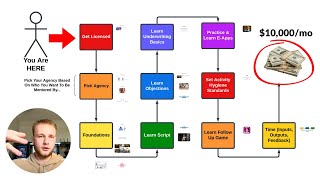
A life-insurance agent walks through 10 steps to reach $10k/month selling over the phone, starting with getting licensed and joining an IMO with leads. The core moves: dial high volume, master a script, follow up aggressively, and handle rejection as part of the grind.
Chapters
Ladies and gentlemen, in this video I'm going to be showing you guys the exact 10 step process or framework to go from zero to making $10,000 per month selling life insurance over the phone from home or anywhere in the world that you want to. So let's go ahead and jump right into it. How do you know that you can actually make 10k a month doing this? Well, this is actually screenshots from our bank account from just last month. So as you guys can see, I honestly, I, to be honest with you guys, I don't even know what you're not supposed to see and what you're able to see. So maybe somebody's going to steal our banking info. I really hope not. But this is screenshots of deposits from our bank account over the last month. And as you can see, granted, there are some stripe deposits, some of these are from like, you know, the CRM and then we get paid a little bit from YouTube. But, but majority of this, as you guys can see, these are deposits from life insurance sales. It's 18,000, nearly $19,000. And you know, this is money that we're getting paid every single month from selling life insurance over the phone. So it is 100% possible. And in fact, you know, we're kind of like just getting started with our agency and so these numbers are only going to get bigger and bigger and bigger and bigger. So let's start with step number one of this ten step process which is getting licensed. Now before you click off of this video, don't worry, I'm not going to spend too much time on this because I already put together an entire 16 minute video that, you know, shows you guys exactly how to get licensed. So if you're not licensed yet, go ahead and watch that video and come back to this one. So that's all we're going to talk about. When it comes to getting licensed, the next step is picking an agency. So this is something that I think a lot of people kind of overlook.
Because most of the time people actually just get recruited into this industry and they go with the first agency that recruits them. Right, they go with the person that recruits them. But you actually want to think through a little bit of a different process when it comes to picking an agency and especially when you're a newer agent. This is a little diagram I put together and I'll kind of explain like what this actually means. But you only have so much time in the day and you only have so much focus. So this is actually a diagram of human focus. If you guys could, you know, picture that, right? So here we have an unfocused human. They're doing all these different things, they're chasing all these different objects, they're trying to figure out all of these different things. We have this other person, you know, we can call this guy Bob and this guy Jimmy. So Bob's on the left, Jimmy's on the right. So Bob's chasing all these different things. He's trying to figure out, you know, a million different whatevers, and Jimmy is just lasered in focused on one thing. Well, if you believe it or not, guys, if you total up the distance between all of these arrows, it actually equals this distance. But Bob is just doing all of these different things. He's just going in all these different directions, whereas Jimmy's just moving in one direction. So what the hell am I talking about? And how does this relate to picking an agency? Well, the guy on the right, I already forgot his name. I think it's Jimmy. Jimmy's going further because he's doing one thing and Bob is staying in the same place because he's just throwing energy in all these different directions. And when you're a brand new agent, if you guys are wondering, while I'm looking down at my desk, I have this whole guide piece, PDF guide of all these steps and I took some notes on it. If you guys stick around to the end of this video, I'll give this to you. But basically.
When you pick an agency, you want to pick an agency that's going to allow you to just focus on selling because that's the thing that makes you money, is selling, selling policies. So when I say that, I mean like try and find a agency or an IMO or someone that's going to handle all of the leads for you. So you don't have to worry about buying leads, you don't have to learn about generating leads. You don't have to learn any of that stuff, right? I by nature am a marketer and I started off in a free lead program. I didn't worry about leads, I just learned about selling insurance. But when, when, like these people, they go and they try and figure out, hey, what CRM am I going to use, what dialer am I going to use, what leads am I going to buy? Am I going to generate my own leads? You're throwing energy in all these different directions where there's already enough things to learn when it comes to selling insurance. So my point being, find an agency that does most of these things for you so you can Just laser in and make more progress in one thing right now. The other factor you want to take into account is what I call the X factor. Right, right. So if you guys have seen Karate Kid, this is, I think, Mr. Miyagi, and basically he trains, you know, Karate Kid on how to do karate.
Yeah. So basically he's an example of a mentor. And whenever you're selling insurance, you need to basically, like, pick your agency based off of who you want to be mentored by and who you want to actually train you. Because.
Whenever you get started, this is supposed to have text on it, but it doesn't. So I'll just kind of explain what it is whenever you get started. These are the two learning curves of insurance. So this one on the, on the left, this is the insurance learning curve. This one on the right is the sales learning curve. And so basically up here on, you know, up top is the success. This is 10k month. So let's say there's one on the left is the insurance learning curve. The one on the right is the sales learning curve. Most people get into the industry and they don't know anything about selling insurance. So they start right here. Some people have some sales experience, but most people are, you know, usually like around right here. Right. So basically what happens is your mentor or your trainer's job is to move you and progress you a lot across this learning curve so you can get to success. And you have to go across both learning curves to have any chance of actually making money selling insurance. And so a lot of people, they just blindly join some agency. Their upline never even calls them. And they. Their upline, like, oftentimes doesn't even actually sell insurance. They just recruit people. And so if you want to make money in this industry, you need to learn from somebody that can actually take you and progress you across these two learning curves. Otherwise, you know, you're just going to find freaking drown. So I say all that to say pick your agency based on who you want to be mentored by. And that's all I have to say about that. Now, the next thing, this is something that I honestly haven't seen anybody talk about when it comes to selling insurance. And it's actually one of the most important things, not just in insurance, but just in business in general. And we're going to be talking about foundations, right? So insurance is just a vehicle, Right. So basically there's all these different vehicles or opportunities or whatever, Right. You could say.
Selling cars is a vehicle, no pun intended, because you're selling vehicles selling Solar is a vehicle. Becoming a doctor is a vehicle, right? Become a lawyer is a vehicle. Going to college is a vehicle. These things are all just vehicles. They're opportunities that take you to a goal or an end destination. And so insurance is just a vehicle. It's just a way of reaching your goal. It's just an, it's just an opportunity. It's just a career path. And so a career path has to lead you somewhere. And so if you don't have a goal that you're working towards, or if you don't have somewhere that you're trying to go to, then you're just aimlessly doing nothing, right? And so you need to figure out why you're doing this before you actually do it or before you actually get into it. So the way that I recommend doing that is basically setting a goal for yourself, right? What lifestyle do you actually want to live? And is that lifestyle, is that driver important enough to you that you're going to push through the rejection and push through the hard, hard times that come when you sell insurance? Like, you're gonna have to work your ass off. This is not easy. Right When I said at the beginning of this video you could make, you know, 10 grand a month within three months, yeah, it's doable. But like most of you watching this will just never do that because you can't get through this hard time. And the reason you can't do that is because you don't have something that like, you don't have something you're looking forward to on the other end. You have no self discipline. So set a goal, write that, go down, and then basically what you want to do is you want to have that goal available and in front of you every single day, right? So.
I'm going to skip over that and I'm actually going to come back to that. This is my vision board here. And I'll just kind of just show you guys, like what the different things on here are. On the left. This is a photo of me and my business partner Julian, smoking a cigar on a back porch on a sunset in the mountains of North Carolina, right? So basically, like I. This is not an actual photo. This is made in Mid Journey, which is like an AI software that allows you to create different photos. So I spent about three hours on a Sunday going through and creating all these different images. I'll show you, I'll tell you guys what each of them means and like why this is so important. But basically like, this actually kind of looks like me and this looks like Julian. And we're smoking a cigar. And this is like a moment that I can picture in my mind of, hey, when we make it, sitting on the back porch, smoking that cigar, talking about the good times and reminiscing about all the bullshit that we went through to get there. That is like a. It's like when I think about that memory, I genuinely feel something right here. And so what I can do is like, you know, gosh, I just got hit with the charge back. Or, gosh, you know, I'm dealing with some BS or whatever it is. I can look at this image and I'm like, this is why I'm doing it, because I want this moment. I'm going to make it happen. I'm going to bring this from this vision board into reality. And it's only a matter of time. Here is I want to have a hundred thousand subscribers on YouTube and I want to get the little golden plaque and I want to get the letter and all that stuff. You know, that one's pretty simple. This is a house in Sedona that I want to own. I want to own a house in Sedona, which is a really cool place in Arizona. I actually have it tattooed on my left arm, right? So that one's pretty simple. This right here, if you guys can tell, this is supposed to be me. This is my dog. And then this is, you know, little Tim, who doesn't exist yet. But this is an image that, like.
I remember that the reason that I'm working so hard is for my future family, right? It's for, you know, little Tim to look up to his dad and be like, you know, damn, you accomplished something, right? Like, I can do anything if you can do that, right? So I'm honestly, like, just thinking about this kind of makes me a little emotional. And that's the whole point of this, right? This other one, you know, I'll skip over it's private jet. That'd be pretty cool, you know, don't have to fly commercial. This is a photo of me and my dad scuba diving. Again, none of these are actual real photos. These are all AI generated, but they actually kind of look like me, which is pretty cool. So this is a. AI photo of me and my dad scuba diving. He's never been scuba diving. And I want to take him at some point and fly my whole family to, you know, Thailand or Australia and take them on like, a really, really cool trip. And this would be like a moment from that. And then this is me and Julian on a beach in Brazil. His wife is from Brazil and we want to go down to Brazil and sit on a beach and enjoy time. And then this is acquisition.com.
Alex Hormozi's company. I think it'd be cool to partner with him or sell my insurance agency to him at some point. So those, not to get too personal, but those are basically like some of the things on my vision board. And the reason this is so important and the reason I spent the last three minutes talking about this is because this is my freaking screensaver on my computer.
As you guys can see. So whenever some shit goes down or I'm dealing with a problem in business, like I can just go and look at that, right? And it brings me back and I realize why I'm doing this. And so if you don't have this goal, if you don't have the vision board, if you don't know what you're working towards, you're not going to get through any of the hard shit. And so I'm showing you this and I'm talking about this and spend so much time on this because this is something that you guys actually need to do is create, figure out what your goal is for one, and then two, create a way where you see it every day. And whenever you're going through something hard, you can easily quickly be reminded of why you're doing what you're doing. So that's the goal part when it comes to foundations. The second thing is something nobody talks about, but this is another thing that's critically important. And this is what I call the power pyramid. This is something I got from one of my mentors, Sabri Subi. And so basically this is like everything in your day, all of your output, which is the red triangle here up at the top, hinges upon all of these other different things, right? So at the bottom of the pyramid, meaning this is the most important, it's the foundation is sleep, right? Most people discount their sleep. They don't realize how important it is and they totally disregard it and just treat it terribly. But.
Your sleep, like there's.
Every single professional athlete.
They, they credit most of their success to their ability to sleep and recover, right? And there I was watching a video the other day and there was like this, you know, Dr. Scientist, honestly, I don't know what the guy's name was, but he said that sleep is the closest thing we like, if sleep wasn't natural, it would be a performance enhancing drug. That's how powerful sleep is. And so the way that you sleep at night is going to Dictate your performance during the day. And so most people don't even think about this or optimize their sleep. But one of the things that I've done that has allowed me to, you know, sleep better is I'll turn my screen off or I'll put my computer on like a, on a different lighting, right? It'll dim the lighting at a certain time. So it's seven every day. My screen will dim, right. I'm not going to go crazy in depth into the sleep and all that kind of stuff because this would be like a crazy long video. I track my sleep using an aura ring. If you guys want to learn more about the sleep stuff, look up Sam oven sleep on YouTube and there's like a really, really solid video on it. The next thing I'm going to talk about is diet. I know a lot of people in sales.
Don'T really take care of themselves and I was included in this when I was selling insurance. The first go round, right when I was doing this face to face, I would literally, you know, drive three hours away from my house and I would just eat fast food all the time. It was like chick Fil A, Chick Fil A and more Chick Fil A. And Chick Fil A is great, but it's not great for you. And so I started looking worse, I started feeling worse, I started having less energy. And all of those things actually affected my performance at work. Right? So eating a healthy diet, eating, you know, good whole foods, high protein, these are all things that are going to contribute to your, your success over phones. Exercise. I prefer to start every single day with an exercise before I get jump on the phones, before I, you know, start working on systems for my business. Like getting your blood flowing is critically important, especially when you're in sales because you have to keep high energy, your environment. So this is basically just like creating a work environment that is, you know, conducive to you wanting to work there more. So your office, when you're selling life insurance from home is like your holy place. It's like it's sacred ground. You go here every day, you put in output and this is how you basically make your living and feed your family. So if your office is, you know, granted it looks like I'm in the freaking storage closet. I'm with my parents at my parents house right now. So I don't have like a crazy office set up. But as soon as I move back out to Arizona like next month, I am going to have a crazy office set up and I'M going to, you know, optimize my environment and optimize my office.
I would recommend going ahead and doing that for any of you guys. Not, like, make your office somewhere that you want to go to every single day and you're excited to work there. The next thing is focus, right? So a lot of people, you know, when they get into this business, they jump on the phones, they make, you know, 15 dials, and then they check Facebook, and then they, you know, go and scroll on TikTok, and then all of a sudden, they go to the grocery store, and then by that time, it's time to pick the kids up from school. And then they come back home and they make another, you know, 50 dials and nobody answers. And then they go and watch Netflix, and then they repeat that for about three months. They don't make any money. And they're like, oh, life insurance is a scam.
Well.
You have to focus, right? You need to cut out all of these other things from your life. I recommend, honestly, keeping your phone in a different room while you're working. And the only reason that you would keep your phone in the same room is if you get inbound calls to your phone or if you're on a zoom call with your team. So turn all notifications off on your phone so that you don't get distracted by these things. Delete social media. Just cut all of the BS out of your life. All the stuff that's not helping you reach your goal is things that you need to eliminate, right? And so focus. Like, the definition of focus is just not being distracted or not doing distraction. If you don't do distraction, then you have focus. It's that simple. So just cut everything out that's distracting you. So, tools, this is. And guys, like, the way this pyramid works is it increases it. Like, the things on the bottom are most important, and as it goes up, it's less important, but it's still all these things are important. Otherwise, they wouldn't even be on this pyramid. So, tools, this is basically like your mouse, your headset for. For. For calling, your laptop, your WI FI connection, all these different things. Like, what people don't realize is that having a slow computer cost them more money than buying a nice new computer. Because if I'm making all these dials every single day and these, you know, little clicks and motions, if having a faster computer allows me to get an extra 50 dials out, if I compound that over a month, I. That's like three or four, maybe even five extra sales that I'M able to get probably more for being honest. And that pays for a computer by itself. So this is the power pyramid. Take notes on all of these different things and just really like, to be honest, I'll probably make a whole video on the power pyramid at some point. Let me, let me know if this is something you guys would want to see because I have a lot of things to cover and I don't want this to be like a three hour long video. So I can't go crazy in depth on that. But these things are critically important. So basically like optimizing your environment, your sleep, your diet, exercising, focusing and investing in good tools. So the other thing too is the mindset that you come into this with, right?
And actually before I jump into that on my notes here.
Actually I'll touch on that in a second. So the mindset that you guys need to attack this with, what most people will tell you because they're trying to sell you on getting into this industry, is that this is what it's going to look like to get to six figures, right? This is you, it's a straight, easy line and all of a sudden you're making six figures. Next thing you know, in reality, this is what it actually looks like, a bunch of bs. Bumpy roads, rocks, trees, rain clouds, chargebacks. There's, you know, spikes everywhere. Like it's freaking treacherous as hell, right? It's not easy at all. And so don't let anybody tell you that it's easy, it's simple, but it's not easy. And so you need to approach this vehicle, this opportunity with the mindset of like, hey, this is the hardest thing I'm gonna do. Most people fail. I'm going to be the one that doesn't fail, right? And you need to be ready to face rejection, right? You need to have this iron mindset. Like, this needs to be your brain through thick and thin, through the up and down, right? Somebody is, you know, telling you to screw off and that you should go, you know, do whatever. And this is how you feel, right? Even when you're getting rejection, you're staying centered. You have a thick skin.
This is just the reality of, of sales. Most of it is rejection. You go through rejection, rejection, rejection, rejection, rejection all day long until you find a few people that tell you yes. But those few yeses make you a absolute ton of money, right? And so if you approach it with this, like this disciplined mindset of whatever I face during the day, I'm just gonna power through it. You are gonna have a Higher chance of success. And if you don't, if you, you know, somebody tells you to go jump off a cliff and you take it personally and carry that with you for the rest of the day, you're gonna have a tough time making this work. And that's just the, that's the harsh reality of selling insurance. There's a lot of money in it, but trust me, it is not for everybody. Right? And so what I wanted to touch on as well, and I don't really have like a fancy slide that kind of explains this, but I'm going to talk about income producing activities really quick. This kind of comes on to like focus. So basically when you're a salesperson, you have income producing activities and you have non income producing activities, right? So the best salespeople, they just fill their calendar with income producing activities and they eliminate non income producing activities like checking email, checking slack, you know, picking up groceries from the store, cooking, all these, you know, dumb little tasks that you just like, they just suck up your day. Income producing activities is talking to people on the phone, making dials, setting appointments, running appointments, writing policies. Fill your calendar with income producing activities and your income will go up. It's literally just that simple. Right? So next we're going to talk about learning the script. Give me one second, I got to plug my laptop in here. All right, now step number four is again learning a script. So I have a script actually in the description down below and I have like a two hour long video that shows you guys how to use this script.
We go super in depth into everything. That's not what this video is for. But I am going to give you guys kind of like some guidelines and things that you need to know when it comes to, you know, a script, having a script, how that all works and then also how to learn it, right? So basically like the reason that you need a script is because a script is structure and you need to have structure on your sales calls. It's basically a sales system for you to follow. And if you don't have a system, that means you're just approaching every call blindly and you're, you're pretty much just following emotion, right? Emotion. So however you feel that day is the way you're going to take the call. But if you want consistent results, you need to have consistent outputs and consistent systems, which is what a script allows you to have. And so when you learn and understand a script, you can take every sale down the same line, right? And then if someone takes you off the script, you address what they say, and then you take them back onto the script. And that's why you don't just need to have a good, have a script, but know your script because people will take you off script. And that's just the nature of sales. A lot of sales is off script. And your goal is to keep them on script and move them down the line, right? So whenever you are, you know, get a script which, you know, use this one, it's great, it works. It's, you know, helped us write 12k a week in production. It's pretty, pretty ridiculous. And it's what we use in our agency. Study it, right? Practice it with friends and family, roleplay with other producers. Like.
Basically I should be able to break into your house at 2 in the morning with a freezing cold ice bucket of like bucket of ice water, come up to your bed while you're sleeping, pour the bucket of ice water on you, like wake you up just out of a, you know, out of a dream, point a gun to your head and tell you to recite the script. And you should be able to get it word for word. Like that is the level of memorization that you should have this script because.
You'Re not going to run into a circumstance that's like that extreme, but you're going to have people just totally just slap you and shake you off your game. And you need to be able to come back to the script. You need to be able to come back to where you need to be and basically like stay on the path of the script without looking at it, right? You need to know, hey, they took me here, I'm going to come back here. So really learn that script. Master it, Understand the word tracks, understand why you're saying what you're saying. And you can do that by just reading it and role playing it, saying it out loud, listening to the recording, just master the script. Point being the next thing is learning objections, right? Learning. So with objections, there's basically like three types of objections. You have circumstances, which is where people blame circumstances. You have others, which is where people blame other people. And then you have self, which is like I need to think about it where they, you know, they take responsibility for the objection themselves, but they're saying that I'm going to have to think about it in order to make this decision. So again, this is not a video where I'm going to go over like every single objection. This is step by step how to get to 10k a month. So we have a video, it's like a 40 minute masterclass where I teach you guys how to literally overcome every single objection. So this is also going to be linked in the description down below. So check this out. But basically I'm going to tell a similar story as I did with the script. Basically, like the objections are just as important as the script because objections are just part of sales. People are going to tell you they're not interested in the first five seconds of the call. And that's just the nature of the business, right? And those people buy all the time. So I mean, I should literally be able to come up to you in public with a gang of people, push you on the ground into the dirt. You know, everybody in the group just starts kicking you and you know, like kicking dirt into your eyes and like you're this guy right here. And then all of a sudden I like grab you by the shirt, lift you up, and I'm like, hey, you know, I need to think about it. And you need to have the, you need to have the response to that objection memorized down pat. And I know this sounds ridiculous, but I'm using these over the top situations so that you guys can like visualize and picture how important and how down. You need to have these, these overcomes and these scripts. And like, if you don't have the scripts and you don't have the objection ever comes down to this level and you go out on the phones and you get crushed. You can't say that this business doesn't work because you didn't work. You didn't try, you didn't memorize it, you didn't put in the effort. You didn't, you know, act like a professional and learn what you needed to learn. So this is the level at which you need to know these things. And you know, the agents at my agency, they practice and they role play and they train to know these things on this level. This is what they're trained to do. So that's why people that work with us are able to see so much success. And that's why a lot of times, you know, people that are just thrown to the wolves and said, hey, you know, go learn a script and figure it out and then buy leads. Those people don't see as much success. So learn objections. This is the level at which you need to learn them. Again, free resource in the description. Whole video shows you guys how to do it. The next thing is underwriting. So basically your job as an insurance agent is to essentially match your clients with the best possible company for them, right? You're basically like tender for insurance, you go out, you say, hey, you know, I'm going to find the right, the right company, the right policy, all that, and then you're basically just finding them the most bang for your buck, right? It's like Costco or Amazon or Expedia for insurance. That's your job, your broker. So you go out, you shop in the market. You need to know how to underwrite and you need to know how to get people approved for policies. So the way that I recommend doing this is use a tool like insurance toolkits. Uh, it's like 40 bucks a month and you just plug in all of the, all of the, you know, medicines they take, the health conditions they have, and then it's basically going to spit out which company you need to use, right? And then it'll show you the quotes, all of those, all of those different things. If you guys want like a full video on underwriting and how that works, drop it in the comments down below and I can potentially make that for you guys. But like, this is something most people overlook because a lot of IMO's out there will just tell you, like, hey, you know, go write Americo on every single person. And so there's no underwriting. They just go out guns blazing and they just put people in not the best situation. And they wonder why they get all these chargebacks and it's because you didn't sell them the right policy and you didn't get them the most bang for the buck. So use toolkits. That's really all you need to know when it comes to underwriting. The other kind of stuff will come with time. But use toolkits. Use toolkits. Use toolkits, Underwrite, ask health questions. All of the health questions that we ask are actually in the script, so you guys will know what questions to ask there.
This next part is something that most people overlook and it causes a lot of pain and a lot of frustration for agents and clients. So this is actually. I know what you're thinking. You're thinking that this is a client trying to fill out an E application and you're actually wrong.
This is an actual photo of a licensed life insurance agent trying to figure out a Transamerica E application. As you can see, the confusion on the face, the utter look of shock that it's been 45 minutes and they still can't figure out anything. And their clients on the phone frustrated as hell, ready to, you know, jump off and go watch the prices, right? But they're stuck on the phone because this agent can't figure out how to sign a Transamerica application. And so the reason that you need to learn these E applications and know how to do them before you try and sell a policy is so that you don't end up in this situation. So the way that you can do that is all carriers actually have training on their websites that will show you how to do the applications. So go through, watch those videos, do the practice E apps, do the studying and the practice before you jump on the phones. And don't, you know, don't make this stop you from jumping on the phones or don't like, don't over prepare, but prepare, right? Go out there, run through a few practice apps, make sure you understand how to do it. Make sure that you know, you know how to work these different carrier systems so that you don't end up in a sticky situation where you jump on the phones.
That is step number seven. Now step number eight. This is probably one of the most important things and most people just completely botch this, which is setting activity hygiene standards. Most people set activity goals, but they don't set hygiene standards. Let me talk about hygiene standards because this is basically like brushing your teeth, right? You don't go to bed. Let me rephrase that. Hopefully you don't go to bed without brushing your teeth, right? Hopefully you shower, right? I'm assuming that everyone watching this does those two things. You won't go to bed without doing that, right? You won't go a few days without showering because it's a hygiene standard, right? You are unwilling to break your hygiene standard. You are willing to not hit a goal because you do it all the time. Let's be real. But you won't break a hygiene standard. So you need to set activity hygiene standards for yourself. And these are basically things that like, you won't compromise on. So especially when you're a newer agent, you really need to front load your activity, right? And this means that when you're first getting started, this is when you're going to need to work the hardest because you have the most to learn as you get better and as you improve, you won't have to make 500 dials a day. You can get away with 150 to 200 and you'll just end up getting in applications and you'll, you'll be selling most of the day instead of dialing. But when you're just starting out, when you're just, you know, starting as an agent, you gotta front load the activity. You have to get as many reps under the bar as possible. And the way that I kind of like to think about this is like, let's say that you are practicing free throws for basketball. How are you going to get good at free throws? Well, you're going to take as many as possible and then you're going to see how many you made and how many missed, and then you're going to make an adjustment and then you're going to try to shoot as many free throws as possible and they're going to be like, okay, well I made a little bit more this time, but why did I miss all these other free throws? And then you're gonna try to make as many free throws again as possible. And you're gonna do that day after day after day after day after day after day after day until you can make 90% of your free throws. And then you don't have to shoot a thousand free throws, you can shoot 500. And you're just doing that over and over and over. So that's why you need to front end your activities. Because when you're first getting started, you're not as good as the people that can get away with making 250, 300 dials a day. Like you need to make a minimum of $300 a day. And the agents that I've seen that have the most success, they aim for closer to 500. Right? Especially when they're just getting started. And then anything less than that, it's just because they end up in applications. So.
Focus on activity and focus on out on inputs. What you're putting in, the activity, you're putting in. And use Kixie. Right? So if you haven't heard of Kixie, this is like a, a dialer that locally wraps your, your area codes and we'll call multiple numbers at once. So it basically makes dialing way better and way easier. This is literally like 5x the answer rate at our agency. It's pretty expensive. It's like $200 a month. We pay for it for all of our agents. But you know, if you can't afford that, I would figure out a way to afford it and then use it. Because without Kixie, it's really, really tough to put in those high levels of activity. And then basically like every day you should aim to beat the amount of dials you made yesterday. You should aim to beat the amount of dials you make per hour. Like if I, if it's, you know, 9 to 10, and I made 50 dials from 10 to 11, I'm trying to make 100, right? I'm trying to outdo myself as far as activity.
And the next thing we're going to talk about is, is actually the follow up game, right? So you.
You kind of need to be like this person, right? You kind of have to be a little psycho when it comes to follow up. Most of your sales are not going to come from one call closes. Despite what everybody will tell you, it's just not true. Most of your calls will come from you being this person and just following up like an absolute crazy ex girlfriend.
Most of your sales will come for this because most people don't buy the first time that you talk to them. Most people, you know, for whatever reason, you know, they need you to call them back or they get declined or whatever happens. If you can master follow up, you can basically create what we call the infinity pipeline, where you always have leads to follow up with and you never run out of people to talk to. We had an agent just two days ago, put up like three applications in a day. Two out of those three deals were from follow up and one was a one call close. And most of her business ends up being follow up, right? So master the art of follow up, which is basically just like setting these appointments and setting these tasks for yourself in the future to call and call and call and call. And eventually you're just the water, you know, carving out the Grand Canyon. And eventually these people are going to say yes to you because you just keep calling them and keep calling them and keep following up. So mastering follow up and then the last piece of this is literally just time, right? When you incorporate all of these elements, it just takes time. So this is a pretty simple, you know, diagram or graph. Then I'm going to kind of show you guys, like what actually happens is you go and you do these inputs. So these are your dials. You go and you make the calls. This is the actual process of making the calls. And then the output, you're going to jump on calls. You're going to have these call recordings, right? This is critically important. You're going to have these call recordings. This is your output, your sales. Everything that happens is your output. What you're going to do is then listen to your call recordings. Nobody does this, but this is what has allowed us to help train producers so quickly is listen to your call recordings and take notes on them and say, hey, what could I have done better that I can take into my next call? And then guess what you do? You now use that with your input. So the Next day, you make all these dials, you implement this one change that you notice that you should have done from your last call. And then boom, output. Oh, little small improvement, but I still need to fix this. Which you will then notice listening to your next call recording. And you just repeat this over and over and over again. And it doesn't actually take that long because in about two weeks, all of a sudden, you fix all of the. All of the, like, glaring issues that you have with your sales process. And then, you know, two weeks after that, now you're starting to get advanced and you're like, really good at overcoming objections and you're really good at figuring out what people's what people's why is, and figuring out, like, you know, how to read people and how to convince people of things. And then two weeks after that, you know, now we're just, you know, a month and a half in, you're starting to just be a freaking wizard on the phones. And you just repeat this process over and over and over. And within a year, you know, if you're not making 10k a month, you're just not even trying. And realistically, if you do this and you listen to these call recordings and you put in this high output and you have a good mentor that can help give you that extra feedback, that is how you make 10k a month with just 3 months of selling life insurance is this process right here. And having a good mentor that can give you feedback, coupled with everything else we did, we just went over, that's how you make that 10 grand a month, this entire process, right? So, ladies and gentlemen, hopefully you guys got value from that. I will see you guys soon. Bye.










