Pros & Cons Of Selling Life Insurance Over The Phone (Life Insurance Telesales)
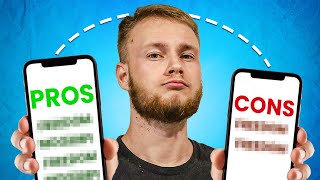
YouTube video (Timothy Schucker) discussing pros and cons of selling life insurance via telesales. Tim describes advantages: time/location freedom (works remotely from places like Spain), efficiency and higher daily contact volume (claims ~400 dials vs 40–50 door knocks), lower risk per action, and easier recruitment/duplication. Cons include less structure (requires discipline), lower answer rates (industry ~5% for ≥60s conversations), and a steeper learning curve. The speaker positions telesales as a scalable alternative to face-to-face sales.
Chapters
What is going on? Ladies and gentlemen, in this video, I'm gonna be showing you guys the pros and the cons of selling life insurance over the phone from home. So if we haven't met yet, my name is Tim Shooker. I run the life insurance sales channel where we put out free content to help insurance agents make six figures over the phone working from home or anywhere else in the world. And I also am one of the co founders of Advanced Agent Marketing, a company where we help insurance agents generate their own leads and get pre booked appointments on their calendar so that they can make six figures over the phone working from anywhere in the world. So without any further ado, let's go ahead and dive right into it. I've been in the industry for the last three and a half years. I've done this face to face and then I've also done this over the phone and with telesales. And I'm going to kind of break down like what's good about the Telesales model because everyone is really like pushing, you know, agents to go and sell over the phone. And what are some of the things that maybe you should know about that aren't as, you know, sunshine and rainbows as everyone makes them out to be? So I'm gonna do pro and then con and then pro and then con and kind of just like go back and forth from here. So the first pro that I like about telesales is really the fact that you have time and location freedom, right? I'm actually filming this video from Spain, right. And the reason that I can work from Spain and you know, do anything and you know, sell insurance or do whatever I want from Spain because my business is entirely remote. So it's telesales, right?
The nice thing about that is like, I mean, you could sell it from, you could sell insurance from Spain. You could be in Mexico, you could be in, you know, Italy, you could be in the beach on Florida. Like you can do this business from anywhere, right? And you can also do it on your own time, which is really great. So there's nobody telling you when to call, what schedule you need to have, you need to show up at this location, right? And when I used to sell face to face, like it was literally drive two and a half hours to an area, go and knock on doors all the time. You had to be there in person. And it's not like we were going to like, you know, the, the greatest location. It's not like I was selling insurance in Spain, it was like selling insurance in section 8 with capiso couches, right? So the time and location freedom is a big thing for me. That is one of the reasons that I'm very, very pro telesales. The con of this is it's a little bit less structured, right? It's less structured.
Meaning that if you're not a disciplined person and you're working from home or you're working from a, you know, nice location, you could probably get pretty distracted, right? Like, I know a lot of people really struggle with working from home. Like, they have to go and, you know, be somewhere where they work versus in their home. Which for me, I mean, personally, I can just have like an office and then my bedroom. As long as I don't work in my bedroom and as long as I don't sleep in my office, I'm good. But for some people, like, they just can't get themselves to make dials from home. So it's less structured, which can definitely be a con, because if you're not disciplined, you can fall into the trap of like, oh, well, I work from anywhere. But you're really just being anywhere and not doing the work part, right.
The other pro of telesales is really the efficiency of it.
Because with telesales, you can touch so many more people. I know that sounds weird, but you can touch so many more people throughout the day than you can with face to face. So when I used to sell face to face, I could probably, in a good day, I would hit like maybe 40 or 50 doors, right? Which is a lot. Like, that's a. That's a long day of door knocking, hitting 40 or 50 doors. With telesales, you can call like 400 people in the same time, right? So it's like, you know, 40 doors.
400 dials.
Right? And you're just able to. You're able to get in contact with so many more people.
And you can have a wider reach, right?
So, I mean, this is like 10 times as many people that you're talking to with. With telesales versus face to face, right? The downside of that is with the efficiency, you are going to deal with, like, answer rate, right? So there's. There's going to be a lower answer rate if you knock on somebody's door. I mean, they have to. They don't have to answer, but they're more likely to answer than if you just call their phone, right? So it's more of like a spray and pray approach where you can. You can. Your reach. Your reach is like, way wider. But each individual shot that you take is probably less effective than, than face to face, right? So you're going to have answer rate problems. I see like on average in the industry is like 5% is like a really good answer rate. So you make 100 dials, you talk to five people, right? And when I say answer, we usually count this as like you're on the phone for 60 seconds or more. We're not just counting like hello and then hang up, right? So 60 seconds or more is what we count as an answer. So 5% of people that you call will stay on the phone with you for at least 60 seconds. So that is a con, is, you know, you are. It's just, it can be hard to get people to answer the phone. Right. The good thing is if you have the right system and you're locally wrapping your area code, you can consistently hit this number. And as long as you know that, you just know, hey, I need to convert this amount of people and I'm gonna get, you know, at least a minute conversation with about 5% of them, right? So answer it. The other pro of telesales, right, is that for every single shot that you take, it takes less effort from you, right? So if you do face to face, you go and you sell in person. You're driving out to an area, you're parking your car, you're getting out, you're going and knocking on the door, going into the house. And then it's just like it's so much more work to talk to one person versus with telesales, you're just sitting in front of your computer, right? You got your headset on and then you just press a button and you're just dialing, dialing, dialing, hello. Oh, you know, go screw yourself. Click, okay, bang, next person. Whereas it was a door knock. If I'm driving all the way out to somebody's house, you know, it could be a 15 minute drive outside of my normal area to go and knock on one door. They don't answer. I've just wasted 30 minutes of my time. Whereas if I, you know, call somebody with telesales, something doesn't come of it. I haven't wasted anything. So I just, I'm risk. It's way less risk per action that you take. Whereas with, you know, doing it face to face or door knocking or whatever, you know, you have a preset appointment, you drive out an hour to go meet that person, and then they don't show or they need to reschedule. You wasted two hours driving there, driving back, right? Versus Telesales, they don't show. You just call your other leads. So it's less risk.
Just the best way I know to say this is less risk per action taken.
As opposed to face to face. The con is, you know, each, each shot that you take is less effective. Effective, right, because each dial, like a dial versus a door knock, your door knock has a higher response rate, but it's just so much more risky. Right. So I'll just lump this back into the answer rate thing. It's kind of the same. The same thing there. The cool thing as well about telesales.
Is I feel like this is more duplicatable.
So I have another video on the channel called the.
The two ways to get filthy rich as a life insurance agent. And one of them is being what I call a farmer, which is where you basically build up a book of business. You get residuals, you start doing cross sells upsells with your existing clients. And the other way is being a teacher, which is basically where you build an agency. And once you start to see success, now of a sudden you can teach other people how to do it. What I found is it's really, really difficult to recruit somebody to go and buy a, you know, buy mailer leads or take a stack of leads, put them into a GPS on their phone and then go out and drive and go to these people's houses where a lot of times it's not like super desirable areas. It's tough to get other people to want to go do that. Right. You're spending all this money on gas, all these different expenses. It's risky. You're on the road all day. It's very hard to recruit people to do that. And I find that telesales is more duplicatable and it's more recruitable. Right? Like you're opening up a whole different market of people. You get the moms with kids that want to stay at home, you get the dads that just had a newborn that want to stay at home with their kid, which is like a super common, you know, avatar that we see. A lot of times that gets into telesales is like, you know, somebody just had a kid, they want to be able to work from home and make six figures and be with the family. And now all of a sudden this is a way for them to do that versus, you know, you go and sell the face to face model. It's like, hey, look man, you know, you can maybe make six figures and. But you're going to be driving, you know, on the road, 12 hours a day, going from house to house. Like, it's just not as. It's not as sexy. Like, it's not as. It's. It's harder to get people to want to do that. Right? So that is the duplicatable and recruitable side as well. Now, the con of telesales is it can be a little tricky to learn, I would say.
I'd say it has a higher learning curve.
Because.
You have to.
There's a few factors at play with telesales, right? And the thing is, whenever you're selling over the phone, you basically have to catch somebody's attention with your voice. Voice and hook them in so that they're engaged enough to stay on the phone with you to go along with the rest of the sale. So you have to be more skilled, in my opinion, to take somebody from, you know, they just picked up the phone randomly all of a sudden, to their buying an insurance policy from you and doing that only with your voice than it takes to do that with a physical presence where you can dress nice, you can look trustworthy. I think people that are not as skilled are able to close face to face, whereas those same people, they have to level up their skills a little bit more to be able to sell over the phone. So that would be the con. So we got four pros, three cons. The pros were time and location freedom. Again, I'm filming this video from Spain. That's evidence in itself. The efficiency you can get out is like 10 times as much activity. 40 doors, and the same time, you can make 400 dials. There's less risk per action take, per action taken. So one door knock versus one dial, one no show that's face to face versus one no show that's over the phone is, like, way less energy invested. It's more duplicatable and recruitable. So you can bring more people that would want to go and sell over the phone. Then you can recruit people to go and, you know, drive hours away from their house and knock doors all day. The cons are there's a little bit less structure, right? When you're doing face to face, it's like, I'm in my car, I'm going, and I'm knocking on doors. And that's something that I think kind of keeps people a little more disciplined. You can deal with, you know, issues with answer rate, which realistically, like, if you have the right systems in place, this is not really a major issue. It's more of, like, a mental thing where people just have to get over the fact that they're having to make dials. Right? And then there's a higher learning curve or steeper learning curve, I guess would be the better way of saying that. Because you do have to be able to master your tonality and be quick, which is ultimately where, like, having good training and systems really comes into play. So those are the pros and cons. If you guys got value from this video, leave a like down below. Hit the subscribe button for more content like this. And if you want to reach out to us to have us help you generate your own leads and get pre booked appointments on your calendar, we have a coaching program where we help insurance agents do that. We set everything up for you. Click the link down below. You can learn more about that and I'll see you guys in the next video. Take care of.










