The BEST Daily Schedule For Life Insurance Agents
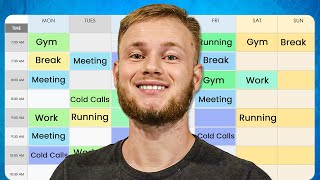
A practical guide from Timothy Schucker on structuring a life insurance agent's day to maximize leverage and revenue. Central concepts: identify high-asymmetry (high-leverage) activities, focus on two revenue levers—getting more customers and increasing value per customer—and build a daily schedule that prioritizes roleplay/sharpening skills, outbound dialing during peak windows, midday carrier/admin work and client retention activities, and end-of-day call review and tracking.
Chapters
What is going on? Ladies and gentlemen, in this video, I'm going to be showing you the best daily schedule for life insurance agents to maximize your time, make the most amount of money possible, and ultimately enjoy what you're doing while you're doing it. So if we haven't met yet, my name is Tim Shulker. I run the life insurance sales channel where we put up free content on YouTube to help insurance agents like yourself make six figures over the phone. I also have a company called Advanced Agent Marketing where we help insurance agents set up their own marketing and lead generation systems to get pre booked deployments and make six figures over the phone. So without any further ado, let's go ahead and dive right into it here. And I want to kind of take an approach where I'm going to show you guys, like, tactically and like strategically why we're going to structure our day this way and like what the best things for you to do in your day are. And then we're going to actually talk about like structuring it out and your calendar and all of that. So this may be a little bit of a longer video, but it is going to be value packed as hopefully you guys think most of my videos are. So the key concept that we're gonna be talking about in this video, I'm gonna draw this out here.
Okay? Now this is something that.
A mentor of mine has talked about quite a bit. And I wanted to talk about this because I haven't seen anyone mention this in our industry. I see a lot of people talk about this, like in the online space, but I've never seen someone talk about this, our industry. Okay, let me just move this down a little bit. And basically, if you guys have never seen this, like, little weird triangle diagram, what this is is it's something called asymmetries. Okay? So basically.
What an asymmetry is, is you put a little bit in, right? You put a little bit in, but you get a lot out, right?
So, for example.
Me making these YouTube videos, right? I spend, you know, 35, 40 minutes making a YouTube video. I send it to my thumbnail guy, and then all of a sudden it's on YouTube. A bunch of insurance agents see it, we get subscribers, we get people that watch our videos. Now all of a sudden they want to work with us, they want to buy, you know, our coaching program, different things like that. So I spent 35 minutes on one YouTube video making something quality, putting in value, and then all of a sudden I get this massive output, right? So small input Massive output. Another example would be.
This was one of the examples one of my mentor gave. It's like you eat a Carolina Reaper, right? It's a super small pepper. I'll make this red to emphasize the effect, right? It's a super small pepper. And. And then you could literally just take like, one seed out of a Carolina Reaper. It's so concentrated, right? Just one seed. And then you eat that one seed, and then your mouth is like, on fire, right? This is fire. So it's like very, very concentrated, very small input, massive output, right? So whenever we're trying to design our day, whenever we're trying to figure out what we need to be doing throughout the day, we want to look for an asymmetry or. Right? This is basically the concept of leverage, right? So I'm gonna open up a little new doc here. So it's basically the concept of leverage. So what we're basically talking about is how can we get the most leverage possible for our time? So if I can do one small task, right? If I can do one small task and it moves a ton of weight, this is an asymmetry, right? And symmetry is just like. Not Symmetry Financial Group, but symmetry means that it's even on both sides, and asymmetry means that it's uneven. So we're looking for something that's uneven. We put in a little, and we get a lot out, right? So as a life insurance agent, there are a few things that make you money, right? There's actually only two ways that you can make more money as an insurance agent. Okay? So two ways you can make more money.
Make.
More.
Money.
Okay? So there's two ways. Number one, we can get more customers.
First, we can get more customers. And two. Whoops. Not two. Move that. Two, we can make them worth more, okay? So we can either get more clients, we can sell more policies, or we can make our existing customers.
Worth more. I'm just going to make more from existing.
Clients, okay? So either we can go out and we can sell somebody else, or we can sell more to our existing clients or make sure that our clients continue to pay their bill so that we continue to get the renewal. Right? So whenever we're going to design this structure for our day, these are, like, the only two things that we should be doing. We should either be working on getting more customers or we should be working on making more from our existing customers. So what do those tasks actually look like? Right? So if we talk about getting more customers.
Getting more customers, this would be our dials, right?
This would Be our follow up.
This would be.
Dials follow up. This would be.
Pushing things through with the carrier, right?
And that's mainly it. Dials follow up, pushing through the carrier appointments.
So if we can focus all of our time during the day on these things, we're gonna be golden. Right? Now, the other piece to this, right? And then I'll talk about how to make more from your existing customers. But this is more, more. Most of your time is gonna be focused on this because a lot of the getting more from existing customers is gonna kind of be like the long game, right? So.
I think it was Abraham Lincoln. I may be wrong. There's some, there's somebody out there that said this, okay? So pardon my misquoting here, but they said if you, if you were given, I think it was like if you were giving 24 hours and an axe to chop down a tree, how would you do it? And most people are going to take the ax and they're just going to start swinging, right? You're going to take the axe and they're just going to start swinging. And what this guy said, which says Abraham Lincoln, maybe it wasn't. He said he would spend the first 20 hours sharpening the axe and four hours chopping down the tree, which nobody actually does in the insurance industry, they just go and they jump on the phone and all day long they make dials and then they get cursed out or they get hung up on or they run into an objection and they don't know what to do. And then all of a sudden they jump off of the phone and they say, oh my gosh, this industry is not for me. I'm terrible. Blah, blah, blah. Right now there's no axe sharpening in there. It's just swinging, just straight swinging all day long. Now, I don't think that you should spend 20 hours sharpening the axe and four hours chopping on the tree. I think you should still spend most of your time chopping on the tree. But we need to put in some time for sharpening the axe, right? And the best way that I've found to do this is to go out and do the activity and then based off of what you ran into, sharpen the axe that way, right? So this is actually a very high leverage activity, sharpening our axe, because it's gonna make all of the effort that we do.
That much more effective, right? So sharpening the axe, there's a few things that we can do here. So my favorite thing is listening to your call recordings.
And this could be your call Recordings, or it can be somebody else's call recordings. So listening to call recordings.
Role playing.
Like role playing out objections and just role playing whatever you're struggling with. Most realistically of all of the things that you can do, these are like the two best activities for you to get better. So if you can listen to your call recordings and other people's call recordings and then role play out objections, your axe is going to be so sharp over the course of a few months that all of these getting more activities are going to be so much more effective. Right. The other thing, too, I'll throw in on sharpening the ax is like your underwriting, right? So getting your underwriting down, which realistically, this is probably going to take you about a month to get like, really proficient at where you're not making mistakes. And then once you're doing that, like, you're golden. Right? But the best way to get better underwriting is really just going out and doing it and then taking it back to your upline and finding out what you could have done better. Right. So we got, again, we're just listing out the good activities that you should be doing as an insurance agent. And then we're going to kind of block this out on the calendar. So getting more, sharpening the axe. And then now we can talk about making clients worth more. Right?
And then we're going to put this onto a calendar and talk about how you can actually implement this daily schedule. So making clients worth more. So this is like referrals.
Cross sells.
Upsells.
And retention. Okay.
So referrals. This is basically like, I mean, I don't really need to tell you guys what a referral is. I think you probably know, but I'm going to tell you how to get them. So referrals, what we personally do is we like to do a. I call it.
The reciprocal effect. I don't know, I couldn't think of the word. But we basically, we leverage the law of reciprocity. So whenever a client buys from us, we will automatically send them out a handwritten card. And then after the card is delivered, we'll call them back and check up on them just to see how they're doing. So usually it's about two weeks after they buy the policy. Everything's going swimmingly. We call them back, hey, you know, just checking in on you. Did you get my letter? And we make the card, you know, like something funny, something goofy. So it catches their attention, makes them laugh, makes them happy. Hey, how's it going? You know, I was just Checking in on you. Hopefully you got my letter. How did you like it? Boom. Amazing. Great. Well, you know, I. And then we basically we'll do a survey asking them about their experience working with us. So on a scale of 1 to 10, how would you rate your overall experience? Right. Anyway, we go through the survey and then the question we ask is, on a scale of 1 to 10, how likely would you be to recommend me to a friend or family member? And if they say anything above an 8, they've just committed to recommending you a friend or family member. And then you just ask for names and numbers. Right. So kind of a side tangent there, but that's how we ask for referrals. So basically we do want to block in some time for actually doing this. Right. Cross sells. This is just selling to your existing clients. And the good thing is once you already have somebody, like once you already have some as a client, it's much easier to get them back on the phone and get in contact with them. So Cross sells. I wouldn't even worry about this for the first like year. If you're a new agent, if you already have been selling for a while and you already have multiple product lines and you understand it like maybe you sell Medicare, then cool, you can have Cross sales in. But I don't recommend doing that if you're brand new upsells. This is like selling someone more coverage. This is always amazing. And then also retention, which is basically just making sure they keep their policy. Right. So the way that we usually do this is we'll have automated payment reminders that go out. These are just set up inside of the CRM. So a few days before their first policy, payment automation will go, hey, just reminding you, your payment comes out in three days. Boom. That seems to be super helpful with retention. Right. So if we do all of these activities, some of these we're going to automate, but we need to find the ones where we get the most asymmetry out of our time. Right. So this.
And this are going to give us the most asymmetry this somewhat, but we don't want to spend all of our time saving policies. So eventually we'll end up like once you get a little bit later down the line, we'll end up delegating this to like an assistant that's going to go out and chase your policies. Right. So we've gotten our most, most like high leverage tasks. We need to make dials because this is obviously how we get clients. Like the most high leverage thing that you can do is talk to somebody and get them to give you money. So dials and appointments are like huge dials, follow up appointments. Running apps through carriers is like, this is also really high leverage because it's pushing a deal over the line. So, yeah, so we got our tasks. We know we need to listen to call recordings, do role play. We need to make dials, follow up. Now how do we actually make a schedule out of this? Right. So I'm going to just kind of write down some hours. So we got 8, 9, 10, 11, 12, 1, 2, 3, 4, 5, 6, 7, 8. So we got 12 hours here. And this is honestly the best way that I recommend structuring your day as an insurance agent. Okay. So the first thing that I recommend doing before you jump on the phones is have some kind of a call or like a role playing session that you can do with other agents. So inside of our school community, for all of our clients, we have a zoom room that opens up in the morning at 8am Eastern. So everyone can jump on real quick and before they hit the phones, they can do some quick role play and just kind of like, you know, athletes warm up for a game. The best thing you can do as a salesperson is warm up before you hit the field. Right. So kind of just a quick role play. I would do like, you know, 15 to 30 minutes of role play.
Role play.
And then you're going to want to jump on the phones. Okay, so 15 to 30 minutes of role play and then jump on the phones. Now there's a few hotspots for dialing. Okay. So our hotspots for dialing are 5 to 8 right. Now, obviously if you're calling multiple time zones, then this would. You'd have to figure out. That was really ugly. You're gonna have to figure out when the hotspots are for. Like if I'm in. If I'm in eastern.
My hotspot will extend past 9 to 12 because I'll be calling central and calling Pacific. So it'd really be like nine to like three because we have three extra hours to be like nine to three and then, you know, five to 11. If I really wanted to call through all of the hotspots, most people don't want to work that much. So I'm going to kind of make a little bit of a hybrid here. So we got three hours here and three hours here. So we know for a fact we want to be outbound dialing new prospects here. Right? So this is going to be our hot time for dials.
And Appointments, okay.
Is going to be our hot time for dials and appointments.
This is what we want this time to be blocked out for. Meaning I'm not going to be calling any carriers during this time.
I'm not going to be doing any, you know, I'm not going to be role playing during this time. I'm going to be calling this, this is the best time for me to call. That's when I'm going to be calling. Okay. Now again, we also have referrals, upsells, retention, all these other things that we can add on. So, you know, dials appointments, you can add follow up here too. Right? But what I recommend is first and foremost calling all of your new leads, calling any appointments that you have, and then following up with people because follow up can usually wait. It's not like time sensitive. But you want to get back to your newest leads the quickest and then follow up like kind of as you're going throughout the day. So the 9 to 12 block and the 5 to 8 block, these are going to be your hotspots for calling outbound. Now we also have this whole block here, 1 to 4. Some people like this is when I would recommend taking your break. Because the way that it works for insurance is you want to be working early and you want to be working late in the middle of the day. If you're gonna take a break, go to the gym, this is the best time to do it. Some people go to the gym before 8, that's totally fine, whatever you want to do. But yeah, I mean if you're gonna take a two hour break, that's totally fine. The other thing that you can do, like if you're, you know, like me, you workaholic, you want to hit, you know, 12 hours a day in this meantime, the, the middle time, this is where you can do all of your other tasks, right? So for example.
Like pushing apps through with the carriers and then also calling your existing clients. Right? So this would be the time, right? We could put four in there as well. I'll just. Four is counting in whatever I put here. So during this time, you know, call carriers.
Call carriers.
Call existing clients.
Any admin tasks?
You can have lunch here, right? You can kind of customize this exactly how you want to do it. But these middle hours, this is kind of like do anything. You can do anything but calling. You can also call during this time if you want, but this is not going to be your hottest time to it. Call, call, right? So calling carriers, calling existing clients, admin work, lunch, you can go to the gym, whatever you need to do here. And then just make sure that 9 to 12 is for calling. Now I'm going to add in after eight. This is one. This is like one habit that every successful agent does. That unsuccessful don't is listen to one call before your day is over. Listen to call recording. Okay? Now what you're going to find is when you listen to the call recording, right before you end your day, you're going to like. So when you listen to a call recording, you download the call, you upload it, you listen through, and you take notes on what you did well, what you could have done better. And then you rate the call on a scale of 1 to 10. If you do that every single day, you're going to start to pick out these little things that you're doing and just make an action step that you can implement the next day. So, for example, if I jump on the phone, I notice my tonality is like terrible. Okay, I'm going to make a note, work on having better tonality going into the next call. And then I could also watch a video tailored to tonality. Now, when I go to bed, my brain, my subconscious is going to be firing in the background thinking about tonality and how I can improve my tonality going into the next day. So then if I do that every day over the course of a month, listening to one one call recording, finding one thing I could do better and doing more of what's working. I mean, I'm going to be making sales like clockwork. Like, nobody's going to be able to stop me. And so I highly recommend at the end of the day, listen to one call recording. It takes like 30 minutes to do, but it's like one of the most asymmetrical, high leverage tasks that you could do because it's making each and every dial you do ten times more effective because you're better on the phones, right? So listening to a call recording, then also just number tracking. So putting in your numbers for the day. We have a spreadsheet that we give to all of our clients that has exactly like. It's literally a spreadsheet where you just input like five numbers and input policies you get. And it tells you all of your stats, it tells you how much you're making all of those different things. So making sure that you're tracking your numbers so you actually know what you did during that day is another crucial, crucial thing. Now, if you guys want to screenshot this and then kind of just like time block it into your calendar. That's what I would recommend. But again, ladies and gents, this is the most high leverage.
Way that you can spend your time based on asymmetries, right? We're trying to find minor input, massive output. So we make a few phone calls. We find one client that gives us, that gives us, you know, $1,000. Then we're getting referrals and we're selling more policies from that one client, right? You spend one day calling and you could sell two policies and then sell a bunch of referrals off of those people. That is an asymmetry right there. So this is the way we want to spend our time. This is the most highly leveraged way that we can be spending our time as an insurance agent in 2024. So hopefully you guys got value from this video. If you did leave a, like, hit the subscribe button and I will see you guys in the next one. Take care.










