The One Trait All Successful Insurance Agents Have...
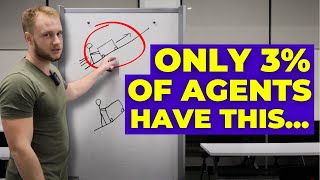
Timothy Schucker argues pain tolerance is the one trait that separates successful insurance agents from the rest. He uses two analogies: pushing a brick uphill shows how momentum builds through incremental work, and comparing cars by fuel efficiency versus miles driven proves activity and persistence beat pure sales skill.
Chapters
There is one singular trait that all successful insurance agents have. And in this video I'm going to break down exactly what that is so you can see if you have it, if you're likely to be successful in this industry. And if you don't have it, maybe it's time to get out of this industry. So let's go ahead and break it down. I'm going to give you guys a couple analogies and then I'm just going to reveal what it is. So let's look at a example. So, so in the insurance industry there's a lot of different types of models, right? There's different ways that businesses run their business. And as an agent, the business that you work at and the model that you work at is going to determine quite a bit. It will definitely determine your success to an extent. If you're at a model where you have 20% comp and you're buying leads, that's going to be a pretty tough model, right? Or you're expected to go out and talk to people in the grocery store. Well, that's going to be a pretty tough model. If you're at a, you know, IMO, where you get free leads and you have, you know, let's say 50, 60% comp or something like that, that's a pretty decent model to be in. As long as the leads are good or, you know, there's tons of different models out there, I don't have to go into all the different models. You guys get it. So I would say there's varying degrees of difficulty when it comes to life insurance. Right? Alright. So let's look at two different agents in a, let's say like a medium model, right? The model's decent, Right. So I'm gonna draw two lines. Obviously the steeper the line, the harder the model would be or the worse the model would be. But these are two pretty much the same lines. So let's put guy number one, right? So this guy is pushing a brick and let's say this is a brick, like Pyramid of Giza brick, Right. Like this brick would comprise the pyramid of Giza. We actually draw an arm there, so he's pushing it and remove that there. So this guy's pushing this with like all his might, just like shoving this brick up this hill. And then let's put another guy and he's like, you know, he's like kind of pushing the brick a little bit, but he's like, I don't really know if this brick pushing thing makes sense. Like there's Got to be a better way. Like I'm not going to push this brick until this brick starts pushing itself. And then I can see that this brick is going to move. And he's just like, eh, not really, not really giving it anything. Now all of a sudden, let's say.
We add wheels to this, right? So we start making it easier, right? Okay, now it's getting a little bit easier. Well, this guy already has some momentum, so this thing's going to start to move, right? And then let's say.
Now all of a sudden we start to change the slope, it's going to move even more, right? Now this guy who's not even really pushing, even if we change the slope and even if we add wheels, this thing's not really going to move at all. So as you guys can see, the guy who's already putting in some of that effort, even if he's in a tough situation pushing, you know, a brick without wheels up a freaking hill, once you add that easiness, he's just gonna take off, right? Whereas this guy who's putting nothing in, he's not going anywhere. So let's look at another situation, right? This time we're gonna look at a car, okay? And I'm wondering if you guys are gonna be able to guess what this one trait is. So if you look at a car, right? Let's look at efficiency, right? Because ultimately, like when we're looking at all these models and we're looking at, you know, the skill level of somebody, we're looking at efficiency, right? Like somebody who's really good at sales is going to be able to close more of the calls that they make than someone that's not. So the person who's good at sales is ultimately more efficient. So let's look at a.
Let's like, basically we're going to draw like a neighborhood block, right? Okay. And then let's say that around this block there's like a street.
You guys are probably like, I have no idea what this video is even about. Don't worry, this will all make sense in a second here, right? And we have the street.
And then we have a car, right?
And let's say.
Well, actually, we don't have just one car. We have two cars. Yes, this is a car. No, don't judge me. So we have one car, right? This is car number one. And then we'll have a second car right here. And one of these cars is super efficient on gas mileage, right? Like this one. This one gets 75 miles per gallon. Which is just insanity, right? 75 miles to the gallon and this one gets a whopping 10.
Miles to the gallon. Right. So if every single day we take these cars out and we just drive them around the block one time, how much are we going to notice the difference in the miles per gallon, the efficient one versus the not efficient one? Not really at all. Right. And if we take this car out and we just drive it around the block one time and we take the 10 mile per gallon one and we drive it on the highway. Yeah, we might have to stop for gas a little bit and it's going to be a little bit more efficient, but we're going to go really, really far if we're driving this thing on the highway every single day. And if we took this 75 mile to the gallon one on the highway, well, now we're going to actually start to see the difference of this one versus this one. But again, if this one drives more than this one, it's still going to go farther even though it's less efficient. So what's my point here, right?
A lot of people, when we talk about the one trait that's gonna make an insurance agent successful, they think, oh, it's the sales skills or it's their people skills or it's their ability to talk on the phone or whatever. In reality, that's actually not it at all. The number one traitor that determines if an agent is going to be successful or a person is going to be successful in this business.
I'm going to grab my red pen here for emphasis. It's literally just pain tolerance.
Meaning how long can you go without seeing success or without seeing initial results or how far can you push it? How much can you push before you give up? It's literally just a matter of pain tolerance because the person, like, there's amazing salespeople that come into this industry that jump on the phones and just, they're like, this just is not working. And they quit. They drive the car around the block one time and they stop. And then there's people that suck that jump on the phone and make $300 a day and they just start to see results because it's a numbers game. So what actually ends up happening when somebody has a high pay tolerance and low skills is they do such high activity that their skills start to make up, they start to get better skills, and then they just lap everybody else. They just, their skill level increases and they have the drive and the pain tolerance. They just absolutely lap everyone else. So if you're an agent who's just getting into this business, or you're an agent who's in this business and you're watching this video. What I want you to take away from this is if you want to increase your skills and increase your income in this industry, you literally just have to increase your pain tolerance and just be willing to sit and make the dials for more time. Because what you're going to notice is once you're able to put in the high activity and just deal with that, when you start to add the efficiency, things like start to practice the objections or start to learn the script or you get better leads, those things are going to be magnified because the volume you're doing is so much higher. Again, as we saw with the 75 mile per gallon car, if it goes around the block one time, you don't notice a difference. If you're the best salesperson, you have the best leads, but you're making 20 dials a day, you're not going to see success. You have to have that high pain tolerance, the high drive, the high activity, and the results will come. So hopefully this video was valuable for you guys. If it was, hit the like button down below and hit the subscribe button as well. And if you are an agent who has high pain tolerance and high drive and wants to see success in this industry, then click the link down below and learn more about what it would be like to work with our agency. Thank you guys so much for watching and I will see you in the next video. Take care. Peace out.










