THIS Simple Final Expense Script Makes Me $100k/Month
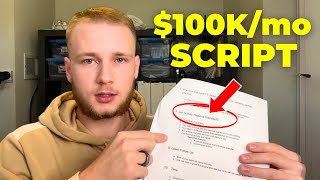
Timothy Schucker walks through a nine-step final-expense sales script his agency uses to sell life insurance. The script covers call openings, discovery, term versus whole life, and closing techniques. His team sold over $100,000 in premium in one month using this approach.
Questions this video answers
Over $100,000 in premium ("this very script has made my agency over $100,000 just last month").
About 11 pages long, sectioned into nine different steps (intro, discovery, etc.).
Agency started in January; by May the team hit 100 ("we just had our 100 came up as a team").
Insurance Toolkits (an aggregator of top carriers' quotes).
111-000-0025 (presented as the routing number to confirm).
Chapters
This simple script right here, I'm about to break it down for you guys. This very script has made my agency over $100,000 just last month. So with all the agents on our team using the script, they sold over a hundred thousand dollars in premium. And I'm going to show you guys what the script is, how it works. I'm going to break it all down for you guys so that you can literally just steal it. If you guys stay to the end of the video, I'll give you the script in a PDF version how the whole thing works, how you can use this to just absolutely crush it on the phones and make a ton more money selling final expense. So let's jump into my laptop. Alright guys, so this is the script. It's about 11 pages long. And I'm gonna break this whole thing down for you guys. It's basically it's sectioned into nine different steps, right? The intro, discovery, so on and so forth. We'll go through all that in just a second. But real quick, before I dive into the script, let me tell you, like, why the hell am I making this video? Who am I if you've never seen me before? So you guys have a little bit of context. So my name is Tim. I own a life insurance agency, as you guys saw in the intro. And basically we're on a mission to grow a life insurance agency to $100 million. That's our ultimate goal. That's basically what I do.
For work, right? And then in my free time I like to make videos like this to help agents like yourself make six figures over the phone, right? And so this is in large part the script that our agents use. We started our agency in January. We hired our first agent, it's now May, and we just had our 100 came up as a team, so pretty cool. Fast growth for us. And ultimately, I think that this script has been a large piece of what's allowed us to do that. Giving the script to agents, you know, them learning the script and being able to replicate a process that works is what has allowed us to train a bunch of agents to, you know, become 10k a week producers, even starting as brand new agents. So without any further ado, let's go ahead and dive right into it. So basically what I'm gonna do, this is gonna be a bit of a longer video, kind of like just presentation style, teaching you guys how to use a script and everything. I'm gonna go through each of the different parts of the script, right? And then I'm gonna explain why you're saying what you're saying so that you're not just saying it. You know why you're saying it. And then I'm gonna kind of role play like through how I would say it as an agent on the phone, right? So quick, housekeeping. This part up here that says legend anything, that's just a normal black text. This is just what you say. An action is going to be in this, like royal blue, meaning, like, wait for their reply or whatever. Fill in the blank, is going to be in red. So obviously you have to, you know, use your user thinking cap here and just fill in the blank. And then we've outlined the script with like key points or steps which are going to be in the bold black. So this is. This is not part of the script. This is the legend. So you know how to read it. So let's go ahead and dive into this. Let me show you guys this script without any further ado. So starting with step number one, we have the introduction. So the call intro is realistically one of the most important pieces of your script. Now here's why. Think about a television show that you maybe have watched, right? Like Breaking Bad or Game of Thrones or whatever show you guys watch. I don't know what you guys do in your free time. Let me know in the comments down below. Or don't they all have a pilot episode that hooks you in, right? Otherwise you wouldn't watch the rest of the show. And if you'll notice, each episode, they always have a hook at the beginning of it. And then they have their, like, you know, little intro. Like with the Breaking Bad, it's like the chemistry table and the, you know, meth smoke or whatever. Please don't demonetize me, YouTube. And then they go into the rest of it, right? But they always have a hook to, like, catch your attention. And so if you don't have a good hook or a good intro to, like, buy the person's attention, they're not going to stay on the phone. So what we're doing here with the intro is we're basically buying attention, right? And so a lot of that is with the tonality in our voice of what we say here. So you guys could read this and you could just be like, hey, is Jim there? Right, Jim. It's just Tim. I have a request you sent us about life insurance. How's it going? That would be the complete wrong way to approach this. When you're going through this intro of the script, you need to sound excited. You need to have like, basically like an excited whisper where you're not like over the top, but you sound like you're somebody worth talking to. And I'll show you guys how to do that in just a second. The other key point here, too is we just say our first name because we want to basically sound like a friend from high school that's just giving them a call, right? We want to. In the first few seconds, they're like, do I know this guy? Like, who is this? And we just sound so friendly that they're just going to want to stay and talk to us, right? And then we're going to dive into it and then we'll go to step two. But first, let me show you guys how step one works. So I'm the agent calling them up. Ring, ring, ring. Hey, is Jim there? Right. Hey, Jim. Right. We can basically, there's a couple variations that we can use here. Some people feel more natural saying this. Other people, it's literally just, hey, first name, right? So, hey, Diane. Right? I'm having like a, almost like curious tone, but I'm very upbeat. Hey, Diane. Hey, Diane. Right, and when you guys are learning the script, this is like one of the most important lines. So just repeat this over and over and over and over and over. Because the first impression that somebody is getting of you is this line right here. Hey, is Diane there? Hey, Diane. Right. Very, very important to have this down. Then they reply, hey, Diane, it's just Tim. I have a request that you sent us here about life insurance. How's it going? Right. Notice how I sound happy. I sound positive. I'm smiling a little bit. You guys can see my face. The client wouldn't be able to see my face, but I'm smiling. Hey, Diane, it's just Tim. I have a request that you sent us here about the life insurance. How's it going? Right? Upbeat tonality. It's not boring, it's not dull. Next. Wait for her reply. Awesome. Well, I'm just calling to see if we could even help. Was this your first time looking into life insurance? Again, upbeat, positive, engaging tone. Now, you guys will often get some objections here, right? This is like a big sticking point in the call in our internal script. I've had to, like, strip this one down a little bit because, you know, we do have to keep some stuff internal for agency. That's what allows us to, you know, smoke the competition. We have objection overcomes linked throughout the script.
So, like, you know, if they say not interested, you have like the objection linked right there. So you can go in and answer it. So if you guys want access to that script, you're going to have to apply to join our agency. But I won't really talk a ton about that. I just wanted to let you guys know, like, there is a way that you can optimize this more, and it's having the objections linked for you in the script so that you can basically go through. But this is going to be a big sticking point for objections. Right. Awesome. Well, I'm just calling to see if we could even help. Was this your first time looking into life insurance? Right. I have to end every single statement with a question to maintain control of the conversation. Now we're going to go into discovery. So the goal here is basically to figure out what is the client's why. What is their reason for buying insurance? Why did they fill this form out? Why are they concerned? Because if we don't know their why, we have absolutely a snowball chance in hell of selling this person. Meaning we have no chance. We have to understand what is the reason they're looking into life insurance. We have to know that. And that's what step two allows us to do. So we're gonna ask these questions. Right? Okay. And what were you concerned about? You know, leaving money behind for family or more so just covering funeral expenses? Right. Based off of what they say, we're gonna dig deeper. So we're not just gonna leave it at this question and then just jump to the next one. When they give you a response, you need to hear the response, actively listen, and then basically just kind of like repeat it back to them and make them feel like you're listening. Right. Okay. What were you concerned about? Was it just, you know, leaving money behind for family or more so, covering funeral expenses? Well, you know, I was looking for, you know, covering funeral expenses and then maybe leaving a little bit extra money behind for your family. So I'm going to pause. Okay, got it. That makes sense. You know, basically just leaving money behind for covering funeral expenses and any leftover money, maybe leaving that behind. Family, if, you know, you can afford it. Yes, exactly. Okay, perfect. And, you know, do you have any life insurance in place currently in the event that something were to happen to you? So I'm gathering information. I need to know this. Right. They say yes or no. Obviously, I'm going to, you know, acknowledge, pause, acknowledge what they say, mirror it back to them to make sure that I understand them, and then wait for apply. Okay. And you know, Jim, just so we know how much insurance to look at, did you want to do more of like a traditional burial or a cremation? Right. Sometimes they'll have no idea what they want to do. Sometimes they say burial, sometimes they say cremation. You just, you know, same deal, mirror them. Got it. Okay. And it looks like you listed, let's see, Sarah as your beneficiary. Is that right? Right. So I'm going to, you know, kind of pause, like, check the card. Okay. It looks like you listed Sarah as your beneficiary, Is that right? And when you say the name of their beneficiary, they're going to kind of like light up a little bit because it's familiar. Right? You know, somebody said my girlfriend's name to me, I'd be like, what? Or someone says your name to you, you kind of light up. Same thing. When you mention the beneficiary name, it's going to be like a point of familiarity. So you want to kind of pause and then it looks like you listed Sarah as your beneficiary. Is that right? Wait for apply. They're going to say yes or no or whatever. And then, you know, obviously answer that. That makes sense. So it sounds like, you know, you basically want to make sure that, you know, Sarah doesn't have to worry about paying for a burial. And, you know, there's event that something were to happen to you. And you know, also kind of like leave some money, extra behind here. Just kind of help her out in life. Is that. Is that about right? Right. So here you obviously have to fill in the blank. You're just repeating what they told back to you. You're summarizing it to them, which is called mirroring. Right. They did like a study where they basically had waiters go out and in one sample size, the waiters would give the patrons or the, you know, restaurant goers positive feedback with their order. So they'd say, yep, that's an excellent choice. Fantastic. Got it. Good. Okay. Huh? That's positive feedback. The other sample size would just mirror the prospects. So they would literally just repeat their order back to them. And the results were the mirroring sample size got 70% higher tips than the other ones. So literally, just by repeating what they said back to you, they got 70% higher tips. So think about how that translates to sales. Imagine 70% more sales. That's insane. So.
Basically you're just gonna mirror it back to them. Okay, so that makes sense to me. It sounds like you just, you wanna make sure that Sarah doesn't have to worry about paying for that, for that burial, then in the event that something were to happen to you, also leaving some extra money behind to her to make sure that, you know, she, she's set up for life. Is that, is that about right? Right. Wait for reply. If they correct you, just repeat it back with the corrected statement. And if they acknowledge it. Okay, we'll go to the next part where we set expectations. So we need to set expectations of what we're going to do and then we deliver on it. And this, ladies and gentlemen, is a simple formula for building rapport. You tell somebody you're going to do something and then you do it. And that's how you build trust, that's how you build rapport, that's how you build credibility. It's literally that simple. So we're going to make them a promise and then we're going to follow up on that promise. So this is what we're going to do. Okay. And so basically just to kind of let you know, the way that we work, we look at all the big companies for you, like, you know, Mutual of Omaha, Aetna, American General. Basically we just try to find you the most amount of coverage for the lowest price price that you qualify for. Does that make sense? Yeah, that makes sense. Perfect. And I'm just going to ask you some basic health questions to see which company is going to make the most sense for you. So let's start with. And then I'm going to run through the health questions. I'm not going to go too in deep into this on this breakdown. If you guys want to see like an underwriting video or something about that, let me know in the comments down below. But basically what we're doing here as we're going through these is we're plugging this into a software called Insurance Toolkits. If you guys don't have this or you aren't using this, this is your wake up call to get it because it's going to save you so much time and make you a lot of money. It's basically an aggregator of all of the quotes of top carriers and it'll tell you what somebody will qualify for and what the price will be. So get toolkits. If you don't have it, but you're just plugging in the answers into toolkits to see what, what company comes up. Then we're going to move to quotes. Right now the key here is we have to tell them that they might qualify. We're never going to tell them, okay, so you qualify for this company because realistically we don't know. We don't know if they're going to get accepted, so we have to frame it as such. You might qualify for this company. Right. Okay. So you know, based on what you're telling me, it seems like you might qualify for one of the programs here in the area. I'm going to get a few quotes pulled up for you real quick. Give me one second. Now, are you familiar with the different types of life insurance like term and whole life? So the reason we're doing this is we're buying ourselves time to explain term versus whole life. So everyone wants, they just want the price, they just want the quote. Just get to the freaking point. Right? Give me the quote. And so we have to like basically kind of give them an inch so that we can take a mile. Right. Because there's certain things we have to tell them before we give them the price. Because once we give them the price, we lose all of our leverage. So we're using the price as leverage to get as much information to pre frame the sale as possible. Right. And so basically we're like, you know, in the act of getting up quotes, but while we're doing that, I just need to explain term and whole life. So it's very casual. Okay. Yes. So based on what you're telling me, it seems like you might qualify for one of the programs here in the area. I'm going to get a few quotes. Quotes pulled up for you real quick. Give me one second. Right, so I'm saying I'm doing this right now and then in the meantime, and while I'm doing that, are you familiar with like the different types of life insurance like term and whole life? Usually they don't know or they say they do, but just explain it again. Just do a quick recap. Okay, yeah. So basically, you know, the simple way that I explain it and this is how that I'll do it on the phone. Term, kind of like milk, milk, eggs and cheese, Right. It's great while it lasts, but it has an expiration date, meaning that once it expires you have to throw it out. Right. It's great for younger people and it always lasts for a period of time, but it gives you more coverage for a lower price. But the thing is, once that coverage expires, once the term is up, you lose all of your coverage. Right. So again, better for younger, healthier people that are like working, trying to replace a big income. Whereas whole life, just like the name says, it lasts for your whole life. Right. So this is usually what People in your situation, people in retirement, they'll go with whole life because it's guaranteed to pay out. Right. You get less coverage and because you're paying for that guarantee. But again, you're playing with certainty as opposed to chance. Does that make sense? Right. That's me explaining it. Does that make sense? Right. And then usually I'll also throw in there, like. Yeah. So based off of that, which one do you think would probably be a better fit for you? Term or whole life? Right. And they'll pick whole life, like 95% of the time. If they say term, just loop back and kind of re. Explain it and try to understand where they're coming from. Okay, perfect. Yeah. So the quotes I'm getting pulled up for you here are for a company called Mutual Omaha. Have you ever heard of them? And just insert whatever carrier name, Right. You're going to wait for the reply and then basically give them a brief explanation of the carrier. Right. So you know, Mutual Omaha, they're one of the biggest life insurance companies in the country. They've been around since like the 1900s. And you've probably seen them on TV. They do that show called Wild Kingdom with Marlon Perkins. You remember that growing up. Yeah, I remember that. Yeah. Yeah. So that's them. The great thing about Mutual Omaha is they have really, really great rates. But the only downside is it's. It. It's a little tough to get approved with them. They're very picky. But if we can get you approved, they're gonna offer you the best rates. Right. And so the reason that we're picking this company. So that's me explaining it, then I'll go here. So the reason we're picking this company is based on your health conditions with the. Just repeat back whatever main health conditions they said, you know, with. With you being a smoker and having diabetes. Mutual of Omaha is going to give you the most amount of coverage for the lowest amount each month. And there's no waiting period. Obviously, if there is a waiting period, just don't say that. And there's no waiting period. Right. But here I'm putting the emphasis on most amount of coverage for lowest amount each month. Right. So make sure you put the emphasis on that because that's what you want them to hear when you're over the phone. Your tonality and your voice is your face. Right. Like, if I do this, like, my voice now becomes my face. You guys can't see what I look like. You see AI version of Tim, but you don't actually See me, right? So I can overemphasize my words and it doesn't really like come across over the top. Right. Because I'm. My tonality now becomes my face and it becomes my voice. Right. And if I do this now, it's completely that way. Right. My tonality is, is all that you guys see or like that's, that's literally it. Right. So add my face back in.
There we go. But that was to basically demonstrate the point, right? When it's just the voice, you are imagining what the person looks like based off of it. So you want to over emphasize different things. Right. So again, so the reason that we're picking this up company is based on your health conditions with, you know, the diabetes COPD or not copd, Mutual Omaha doesn't accept that with the diabetes and you being a smoker, Mutual Omaha is going to offer you the most amount of coverage for the lowest amount each month and there's no waiting period. Do you see why we're going with this option? Right. Notice what I put emphasis on. If. Yes, just continue below. If they don't understand, then you're just going to look, loop back and re explain. Next we're going to go to pricing. Right? So, okay, so you know, I've got these quotes ready for you. Do you want to grab a pen and paper for me? Now we have to get them to grab the pen and paper. Otherwise like you're screwed. Right? So I'll give you guys an example. Let's say they don't grab the pen and paper. I'm going to give you guys some options and I want you guys to remember it without repeating like rewinding the video or anything. Right? Okay, Ms. Jones. So 20,000 for 40 or 20,000 for $141.93 a month, 15,000 for $112.82 a month and 15,000 for 1,000. Sorry, 15,000 for 57. 84amonth. How much was the 15,000?
You have no idea. Right? Because like numbers are really hard to remember. You have to have them write it down because, you know, some of you, like our average age of a viewer is between 25 to 34. These people are like 60 to 70. So as horrible of a job if you did as remembering that, they're gonna do even worse, especially when they get off the phone. Right? So we have to have them write it down. So grab that pen and paper for, for me. Make sure they grab the pen and paper and then you're going to the next spot. Okay. So I wanted to give you a range of options so we could figure out which one makes the most sense for you. Just let me know when you're ready. Right. Wait for reply, just them confirming they're ready. All right, so, and I'm going to kind of come down to a low whisper, so they listen in really intently. So the insurance company, they came back with three different offers for you. They came back with 15,000, 12,500 and 10,000. Let me know when you got it all down. Right, so we're going to have them write it all down, just the coverage amounts. Notice I have not given them the price. The reason why is because once I give them the price, I lose all my leverage. So I'm trying to extend my leverage as long as I can. Right. So I give them all the quotes or all of the coverage amounts, and then I'm going to explain this to make sure they understand everything. So basically, the way that this program works is it covers you from day one, meaning if you make your first payment on a Tuesday, and God forbid you pass away on a Wednesday, your family gets the full check. Does that make sense? Right. So what I'm doing here is I'm explaining how the plan works so that they understand, even though we've just went over term and whole life and all these different things, if they don't understand this, when you give them the prices, they're like, oh, my God, $10,000 for, you know, $57 a month, that's a rip off. I could get 500,000. I saw that on TV. Right. Like that's the reaction that you get if they're not on the same page about what they're getting. So don't give them the price until they know for a fact and you're 100% confident that they understand the plan. Perfect. And, you know, it also never expires. And then the plan will never reduce. Go up at any time. It always stays the same. What questions do you have for me on how this plan works? So I'm not asking, do you have any questions? I'm saying, what questions do you have? Because I want them to start thinking about what questions they have so I can go ahead and knock those objections or questions or, you know, obstacles out of the park before I give them the prices and lose all my leverage. Right, so you're going to wait for the reply and clear up any confusion that comes up here right now. All right, so it looks like these prices just came back for us. Now, these prices never go up or down. And for as long as you make the small payment, they give your family the big pound. Okay? You guys see how much freaking pre framing I'm doing before I give them the prices? Like I've just gone through and I've said, you know, this company is, you know, amazing. Like, you would be lucky to even get accepted. This company, it's really hard to get approved. Mutual Omaha is like the Cadillac of insurance. Blah, blah, blah. This is what the plan does. Write it down like they're, you know, I'm getting to a low whisper like this is something like really important for you. And then I'm doing all of that before I even give them the price. So it's like, oh my God, what's the price? What's the price? Okay, so it looks like these prices just came back for us here. These prices never go up or down. And as long as you make the small payment, they give your family the big payout. Okay? Okay, Right. That's what they're gonna say. Now, the 15,000 came back here at only $112.41 a month. The 12,500 came back at only $100.08 per month. And the 10,000 came back here at only 89, 9, 17 per month. Let me know when you got it all down. Right. Now this line right here is of critical importance because as soon as you give them the last price, it's objection city. Right the neck, like after I say, you know, whatever number I said 89, 17. Objection. Objection is coming. So I have to like on the heel of the last quote, let me know when you got it all down. I'm maintaining control. I cannot give up control in this part of the sale or it all goes like it all goes to shit. Right? So let me know when you got it all down. Okay, I got it all down. But blah, blah, blah, blah, blah. That's what's coming. So you have to be prepared to answer objections. Again, in our internal script, we have the objection overcomes linked right here for our agents and we have all of the objections scripted out so that they know exactly what, what you're saying. You can do this for yourself. Or if you want our script again, agency application link down below. But anyway, yeah, so we're going to go through. Let me know when you got it all down. So we can always go up or down if we want. But based off of these three options we just covered here with you, which one do you think would be the best fit for you and your family? Ladies and gentlemen, this Is the close right here. Basically, I'm saying pick one of these three options, right? They have to pick one, right? If they want to go up, they can go up. If they want to go down, they can go down. But based off of these three options, we just cover here with you. Which one do you think would be the best fit for you and your family? Now, once they pick one of the options, I'll be like, all right. Now, in the event that you were able to get approved, would you want to go ahead and get the set up for today? So what I'm doing here is I'm going for pay now. Issue paid. Like, our agency gets such a higher percentage of business issue paid than other agencies because of this one freaking line right here. Because we just ask, literally everyone automatically goes, and they set it up for the Social Security date, but if they have the money, why would you not get them to pay today? And then the future payments can come out on their Social Security date, but just freaking get them to pay today, your chargeback rate is gonna plummet. You're gonna get paid faster. Like, there's no downside to asking this question, but nobody thinks to ask it. So in the event that they can't pay today. Yeah, no worries. Most of my clients, you know, they either get paid on the first or the third. Which one is it for you? So I'm saying this very casually, like, yeah, I mean, I totally get it. That's fine. Yeah, no worries. Well, most of my clients, they either get paid, like, almost the first or the third. Which one is it for you? Oh, I get paid on the third. Oh, okay. Well, yeah, what we can do, we can just get it set up for the third. If you were able to get approved. Give me one moment while I get logged in here. I'm going to verify some information with you real quick just to make sure this pays out to the right Jones family. And I go straight into the application. That's the close. Literally, that something. Right? Do you want to get this set up for today? No, I can't get it set set up for today. Okay, well, which day do you get paid? Oh, I get paid this day. Oh, no worries. Well, we can just set it up for then. Give me one moment while I get logged in here. They already picked a coverage amount. Unless they give me an objection, I'm going straight into the application. And most of the time, like, it just works because they are. They're down to do it. But if you're uncertain, they're uncertain. Right. So we'll start filling out the application now. Again, if they give you objections, you need to have your objections linked in your script. If you want our script where we have the objections linked, it's only for internal agents, so link down below and apply. That's the last time I say that, I promise. But yeah, then next thing we'll go to completing the application, Right? So completing the application, just run through, complete the app, any dead space or silence you want to fill with, you know, conversations. So just narrate what you're doing. Right. So the worst thing you can do is get into the middle of the app and just stop talking because they're gonna get freaked out. So narrate what you're doing while you're filling out the application. If you're stuck with the loading screen, I'll just be like, yeah, it looks like mutual mah is getting us, you know, stuck with a little loading screen here while trying to get this sorted out here for you. And then I can ask, like, now I can start doing, like, the rapport questions, right? Like, you got anything fun planned for the weekend? Right? Like questions like that or, you know, how long have you been in Texas for? And just kind of fill the conversation with small talk, basically. And then once you get to social and banking, this is how you ask for it for social. Okay, perfect. And just to make sure this pays out to the right Smith family, I need to put down your social as well. What's that? Social for you. That's it. If they give you social objections, have your social objections linked in the script. We have those for our agents asking for banking. Now, we do need to put valid payment information on file here for you. What is the name of the bank or financial institution that you do business with? So they'll say whatever bank they do. Oh, let's say it's bank of America. Gotcha. And did you register with them here in the state of Texas? Right. Yes, I did. Right. And then here's what I'm gonna do. I'll go boom, boom, boom.
Bank of America routing number Texas.
And it pulls up right here. Right. So I'm going to go.
Okay, perfect. Yeah. My system automatically populates the routing number. Can you confirm this for me? Just to make sure my system is up to date? The routing number should be 111-000-0025.
Is that correct? Right. So I'm confirmed. I'm giving them the routing number, which builds trust that, like, oh, you know, this person knows what they're doing. They have everything sorted out. So I'M giving them the routing number, and then I wait for confirmation that it's correct. Perfect. Okay. And the last thing that we need, just to make sure that, you know, the last thing that they need. Excuse me. Perfect. Okay. And the last thing they need to make sure they can guarantee that, you know, your daughter will get that check for 10,000 is your account number. What is that account number for you? And then they'll just give you the account number. If they give you objections, go through, the objection overcomes, and that's it. And then you reinforce the decision. Wrap it up. Just let them know. Three things. So three things that you need to know before or now? You know, Diane, before we get wrapped up here, there's three things that you need to remember. Okay? First, your policy is going to arrive within five to 10 business days. If you were to pass away after the day you make your first payment, your daughter will get paid that full check. And your first payment is set to come out on whatever date. If it's today, then it's set to come out today. And then going forward, it'll be on the third or whatever date you set it up for. What questions do you have for me? Wait for reply and answer all questions. And ladies and gentlemen, that's literally the whole script. Step by step, how to do it. Gonna leave this script linked below in the description for you guys. It's gonna be inside of our Facebook group. So if you guys join the Facebook group, this will be linked, pinned in the top of the Facebook group, this script for you guys. So join the Facebook group. It's gonna be linked there for you. And yeah, I'll see you guys in the next one. Take care.










