Why Alex Hormozi Hates Final Expense...
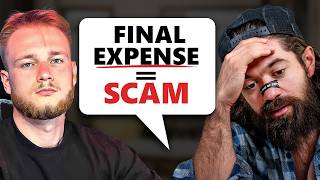
Timothy Schucker reacts to Alex Hormozi advising a final-expense insurance broker on why his business churns despite high ad spend. The problem: selling burial insurance to low-income customers creates heavy chargebacks and thin margins. Hormozi recommends switching to higher-ticket products or fixing retention, while Schucker adds that final-expense has structural churn that free-lead models mask.
Questions this video answers
August 28, 2025.
"Seven" (spoken as seven top line — interpreted as $7,000,000 AP).
"Two" (stated as "you got two in profit" — interpreted as $2,000,000).
60,000 (caller statement).
26.
Chapters
What's going on? Ladies and gents, in this video, I'm going to be reacting to Alex Hormozy's opinion on the final expense industry. Ultimately, he had a. On his book launch that he just did last week. Little session or section of the. Of the live stream where you could call in and get advice on your business. And an individual called in that owns a very large final expense brokerage to get Hormozy's advice on what to do next. And that's exactly what we're going to be reacting to today. So let's dive in.
I'm from Baltimore.
No, I saw your area code. I saw your area code. All right, that's what. That's why I did it. That's why I called you back. All right, so you're doing. You're doing seven top line, right? All right, you got two in profit. It's insurance. What kind of insurance?
Yeah, so we sell final expense. So I need your help here. We sell to poor people. So burial insurance, which is a really.
All right, so the first thing that I will say, and I don't know the exact numbers of this individual's business, I actually know this individual personally. Very intelligent guy. And as you guys will see from watching this video and listening to what Horosi says, despite this individual being a talented business owner, the results of the having are not that good. So when they say 7 million in top line, what. I think there's probably a little bit of a miscommunication here. And again, I could be wrong, But I'm thinking 7 million a year in AP annual premium, and then 2 million is what they're actually getting in revenue. So when they talk about their Profit margin being 25 or 30%, again, this is just my theory. My guess from knowing the industry, that's probably what they're actually depositing, and then all of their expenses are coming out of the 2 million a year. Now, again, I could be wrong. Not 100% sure, but that's kind of my theory or my guess.
Interesting. Model barrel burial insurance.
Yeah, got it. Yeah, got it. Okay. Okay, got it. All right, so what's the issue? What's holding you back?
Yeah, so we're kind of like at a crossroads right now. So we. I have built a large brand. I have about 60,000 insurance agents on my YouTube channel.
16.
60,000.
Oh, got it. Great.
So I get naturally about 20 to 30 people that want to work with us to grow our team. Basically, we want to scale our team. So our biggest problem is increasing our LTV and our profitability right now, our options to expand or increase our ltv or to increase and go into a new product like Medicare, which is really highly compliant.
Yeah.
Or to offer insurance products. Like, we're an Elway call center. So we generate the leads, we pay salaries, and it's a small margin for our agents. But opening up the broker model, there's a licensing model where we can take them, they pay the fee, and then we can ultimately have them the high contracts, but they take on all the risk. So we don't know if we should just open that up to go from LOA or call center model to.
All right, so I'm just gonna pause right there. So for anyone that I've talked to, individuals who, like, they see people on YouTube doing a free lead model and they're like, oh, wow. Like, because these people are doing it, it must be a good idea. I made the same mistake. Okay. The problem with the free lead model with final expense is you are basically betting your entire business on broke, unhealthy people paying their bill and living long lives, which is a, is a bad bet to make. So this individual, in particular, their entire business, they'll talk about it a little later in this video is they, the agent has no risk in terms of chargebacks. They're paying for all the softwares, all the leads, everything. And so basically, they do all of this top line revenue or ap, but what they actually get paid on is just a percentage of that because of all the chargebacks. And then in addition to that, they also have all of their costs that come out of that number. Now, again, I'm not exactly sure what their numbers are. I'm just going based off of this video and what I know about the industry. So if I'm incorrect, you know, take it with a grain of salt. But the problem is, like, you guys see all these people on YouTube that talk about what they do, but in all reality, and again, I'm guilty of it too. When I had the free lead program, like, I talked about the AP numbers, how much we were writing in ap, but what I didn't talk about was like profit after all expenses in full transparency. It's because the goal is to recruit people.
Right?
And so you got to realize, like, you should take a lot of things on YouTube with a grain of salt. And just because somebody that you look up to or respect on YouTube is doing something, doesn't necessarily mean that it's always the best business model. Which is why I think it's so important to really do your due diligence and research into understanding the industry on a deep level and, you know, like, thinking with your own brain, like, if you, as an individual producer are not profitable selling final expense at a high level, why would it be profitable for somebody that's paying for all of the leads and taking on all the risk and all the expenses? It's probably not that profitable. Right. So that's the thing you kind of need to look at and think about and consider. So I just wanted to add that in is I've had people come to me and they're like, oh, these people must be making all these money, all this money with free lead programs. But it's like, why would they be having existential crisis if it was, like, working so well?
So let's press play now.
Brokerage model or add an additional product like Medicare.
So you said your margins are bad, but you're running 30 margins.
So, like, yeah, how would I say? It's tough.
It's a battle.
We pay for all of our agents.
Chargebacks.
Yeah. So they have no risk. So it's like you have to keep selling new products to keep up with the chargeback. Because when you're selling to poor people, as, you know, it's a lot of returns. You know, they can't afford 60 bucks bootstrapping this business. We have, you know, a healthy savings.
Yeah, yeah, yeah.
It's. It's. We're at a tough spot right now.
Well, I think selling a better product or more affluent customer is a good idea. I don't really love. I mean, like, I'm not gonna make.
See what I'm saying, guys? Literally, what I've been trying to tell you for the last few months on this YouTube channel, you feel bad, but.
Like, you know, if you're getting a ton of chargebacks, like, that kind of sucks. You know what I mean? Like, it's not a good way to live. You know what I mean? Like, I mean, you can make a buck.
But, like, to be clear, I think hormozi, in this instance, I could be wrong, but I think he thinks that this individual is getting chargebacks. Like, the clients are going and placing a charge back on their credit card or something.
Because chargebacks can be a different term in different businesses. Like, if you're selling something online, like an E commerce product, and you get a chargeback, it means that the customers didn't like your product and then they went to their credit card and charged back. But in this sense, it could literally just mean that, you know, they have Insufficient funds. So it doesn't necessarily mean this individual is like scamming or doing something wrong, which I could be wrong with it. It kind of sounds like that's how Alex is taking care.
Make enough to go legit, you know what I mean?
Yeah.
All right.
See what I'm saying?
So I do like a superior product.
And you obviously know how to market and sell. It seems like you have that skill set. So you just gotta sell better stuff, man. Better stuff to better people. You have a good base skill set. You know how to recruit, you know how to hire, you know how to train, you know market, you know how to sell. You got a lot of the right tools. I think you just gotta build a better business with those tools that you got.
Okay, build a better business. So would you just find a different product to sell? We know how to market. Okay. And would you still build into like keeping the loa? Because there is that we get the long term value which is the residual play a little bit. But it just made all the product things showing us up.
Yeah, but the residuals aren't worth much because the people cancel so quick. Yeah.
If you started for two years, would you just say, hey guys, like prepare the team to change the product?
No, it's. You're in a tough spot. But like it takes, I mean, sometimes, I mean like listen, like I want to be upfront, you're making money, all right? So I don't, I don't want you like, you know, I don't want you to burn your building down. But the main thing is like it really depends on your goals. Like either you have to like if you can figure out a way to improve the service or improve the expectations such that people stop charging back, this could be a business that's better. And so like if we think about which problem would you rather solve? Right. So problem one is I can try and improve the way that my people sell. How they're being pre framed on the call via the nurture, the marketing, all the messaging that they're seeing prior to the phone call. Right. And then whatever their experience is post call, there's some automation, some AI can put in so that I can retain these people and increase their ltv. If I can do that. That's one solution set to fix the business. The other solution set is to enter another business which fundamentally like even though it's insurance, it's a total. You already know this. It's a completely different ball game. Right. Different avatar, different acquisition process, different sales process. All of these.
Alright, so Let me interject here. What he's describing is basically trying to pre frame people better to buy final expense. As somebody who has done that and spent like basically two years trying to solve that problem, it is a very difficult problem to solve. And for this particular individual who he's giving advice to, this guy's obviously much deeper into final expense than you probably are watching this video. Like I'm imagining the person watching this video is probably an individual agent. You were recruited into the business and you have these dreams of, you know, going big in the insurance industry, which, let me be abundantly clear, is 100% a very worthy, worthwhile goal. This is a fantastic industry, just not in that side of the business. I highly, highly discourage you from trying to solve the churn problem and final expense. Because.
I remember I actually, I watched a video from Ormozi, it was like about eight months ago that like really hammered this home for me. And he was talking about a concept called structural churn where essentially like, there's churn because your product is not good or your delivery of the product is not good, or you're Ms. Mis. Like you're not setting expectations properly. And then there's also churn where it's literally. Here, let me make my face a little bigger. There's also churn where it's just by the nature of what you're selling and who you're selling it to. A lot of people are going to churn and cancel. This is an example of structural churn. If you're selling final expense and then recruiting other agents to selling final expense, you're trying to build a city on like a foundation of sand. Which granted, there are some cities built like that, but that's besides the point. Like, imagine trying to build it on quicksand. That's the equivalent of what you're trying to do when you're trying to build a career on final expense. Or then recruit agents because the agents are going to leave because the opportunity you're recruiting them to sucks because the clientele that you're selling them to don't have any money. Okay? That's the fundamental key. So I think this is good advice for this individual just because of how deep they are in a funnel expense. However, for you watching this video, just.
Get out.
Pieces, right? So I hesitate a little bit to say, like, go, you know, go change everything. I'd rather you see if you could fix the existing thing because you already have it down. Like, it's just like, can we just fill the two holes that are breaking this rather than like really overhauling the whole thing. But I do think if we're looking at a ten year time horizon rather than a two year time horizon, you'll probably be better served with the better, better customers. Higher ticket.
Okay, gotcha. So expand that way. It's almost like Sharon, he had that brokerage model we didn't take into, like, we have the people.
Yeah.
Our model doesn't attract eight players because it's like a call center, like loa.
Yeah, of course.
Yeah.
I mean you're selling to broke people. It sucks. Like, I mean like you're like a collections company, like 50. Yeah. It's brutal.
Very true.
Well, yeah, it's, it's tough.
Yeah.
Problems. So change the. You think by changing product you also can change, you know, ultimately who you.
Recruit a thousand percent. Because like no one wants to be something. No one wants to sell.
This.
No, this is super true.
So I can speak to this in terms of providing. Like, I've done basically every angle on the final expense side. I've sold it as an agent, I've built an agency, and then I've also done marketing for agents. And I gotta tell you, like, the clientele that we would work with, when people would come in to pay us to market for final expense, most of them didn't even want to sell final expense because it just sucks so bad. And so they would basically blame us as marketers for the fact that final expense sucks, even though we were really good at getting leads for it and getting high quality leads for it relative to what high quality can mean in final expense. And we would get complaints like, all these leads are broken, unhealthy. I'm like, dude, you're selling final expense. Like, you know, yeah, that's the game. And so, and from building an agency as well, the people, like, what I found is the only A players who want to sell final expense just haven't realized what it is yet. And then once they realize they're like, this sucks, I'm going to either go to an agency or work with a marketing company that can help me do something else. Which is why like we pivoted our whole business.
About eight, nine months ago to solely focusing on advanced markets and selling higher ticket products to higher ticket people. And you know, now like, I love our clients, whereas when I used to do marketing for final expense agents and full transparency, it was like, it was brutal a lot of times because people were just complaining constantly. Not even due to anything that we were doing just because of the market that they were Serving. And we were the ones who were getting them, those clients. So if you're an agency owner watching this and you're gonna go recruit people to sell final expense, well, hey, guess what? They're gonna blame you about how shit the market is that they're serving because you're the one that brought them into it. Versus, you know, if you bring them into a better opportunity where, you know, they can sell higher ticket products to, you know, more affluent people, they're gonna be much, much happier with the service.
Supposed to buy it. No one wants to sell it.
Yes.
Right.
And we can't control the product cost because it's like 60 bucks. And we have a lot of agent retention problems, too.
Of course. Yes, of course it is. They. I mean, think about it. Like, you deal with absolutely terrible people, and so everything sucks. Everything stems from there. It's terrible people, terrible products, terrible employees.
Listen, ladies and gents, it's almost like I've been saying for months that the quality of your business is based off of the quality of your customer, and the quality of your customer is based off of the quality of your marketing. See, I might know a thing or two.
Like, a whole thing sucks.
Yeah.
So we just have to fix that.
Well, yeah, I appreciate it. We're trying to think about adding the product, but it's just. It's the people, and it's. It's painful. These last, of course, two and a half years.
But did you learn. You learned a ton of skills, and now you just get to apply them to a better opportunity. Nothing wrong with that. Nothing wrong with that.
Do you learn?
How old are you?
26. We've been.
Dude, you're fine.
Yeah, you're fine.
Dude.
Dude, 26 are Baltic.
That's right, man. That's right. No, so I think I would go. I would.
Cool. So actually, let's see if there's more.
Go with the higher ticket, better insurance. The only. So the skill that you're gonna need to learn, you really only have to learn one right now. The skill that you're gonna need to learn is you're gonna have to learn how to advertise to hire socioeconomic people. And I mean, to be fair, just not bottom feeders. You don't have to, you know, advertise ballers. You have to advertise normal people.
Middle class.
Yep. Okay.
Yeah, it's all, like, one call. Close says, like, all we're doing is chasing that next sale. Of course. I know it's hard on the guys. Yeah, man.
You just need to take this Monster front end. Maybe you expect that it's going to be a 2 call closer, 3 call close. Okay. But if LTV is 10x, you can attract way better closers. They'll stay longer. And there's also more models that are available to you like a brokerage, et cetera, which is a legit, you know, it's a big, you know, big boy shit.
Yeah.
And those things exit for 15, you know, 15x, 12x, sometimes 20x multiples on premiums. Yeah, super big, real enterprise value.
Absolutely.
All right. That's the plan. Thank you, man. From bottom heart, thanks for calling.
Cool. So, yeah, ladies and gents, just a couple final thoughts on that. I know this individual personally. They're a very smart individual, but they just have a terrible opportunity. And so the biggest thing that you can do is, you know, they've spent two years building this brokerage, building this company that now they're kind of in a pickle. I was lucky enough to kind of have that realization a little bit earlier with the free lead program that we were building. Otherwise I would have been in a similar situation right now. But hopefully this video is eye opening to you of like, hey, these are the people that have taken this to the extreme of where it can go, right? The people that have taken it to the extreme are questioning their, like they're, they're having a business existential crisis. That's where it ends up if you take this to the logical extreme. So just get out of it. Look in a, like, look in a different direction. Understand the business, go to conferences, talk to people that are like, doing really big numbers in other fields. But like the final expense game, it's like the, the whole pitch is come in you, this is so easy to sell, which means that you can recruit other people and then when you start selling it, you realize that you're not making any money. But then they tell you that if you recruit other people to sell it, then somehow you're gonna make money, which doesn't make sense. Right. But we all believe it when we first get in. And I know I did, right?
But yeah, I mean, this is your wake up call. I have like four videos on my channel where I talk about this. So at this point, like I'm, I'm doing my part to help you. If you're watching this, do your part and save yourself. Like I can at least sleep at night knowing that I put out the information necessary to save you from final expense. Now you just have to take action. Or I mean, you can put your head down and just grind it out and see where that takes you. And then you'll end up calling the hormozy hotline three years from now talking about, you know, having even bigger problems than this individual did. So that's all I got for you. I think, like, realistically, the game plan for, for anyone watching this should be sacrifice the short term in terms of putting time and attention towards learning new skills. And maybe you feel a little bit unclear on what to do next. But what I would recommend you to do is just learn about the products that wealthier people are buying. Like learn about infinite banking, learn about iul, learn about annuity, learn about health insurance. Right? Learn about these different things that, like qualif quality people that pay their bills are buying and figure out how to, how to market for those. You know, we can help you with that if that's something that you want to do. That's like literally our entire business and just get away from final expense. So that's all I got for you guys. See you in the next one.










