Tim Bell - Creating a good deal
Tim Bell breaks down wholesaling's two core rules: the deal must work for the next buyer, and you need to build in profit. He walks through three buyer types—fix-and-flip rehabbers, buy-and-hold landlords, and retail homeowners—and how to structure deals that appeal to each one.
Chapters
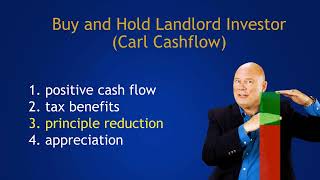
Now, we've talked about one of the cardinal rules of wholesaling. And that cardinal rule, of course, is that rule number one is the deal that you create must be a good deal for the next person. It has to be a good deal for that B person, that end user of the property, the person who's either going to fix and flip it, or they might be going to buy and hold the property, or they could be a mom and pop homeowner who's going to fix the house up themselves. We'll talk about that in just a minute here. But before we move on, I want to tell you about rule number two. Rule number two is also very important in that. Rule number two states that in creating a good deal for the next person, we also must build in a profit for ourselves. Now, I know some of you are going, yeah, duh, of course I have to build in a profit. But you'd be amazed at how many people I talk to on a regular basis that when we talk about their deal, they're going through the numbers of their deal. And I say, oh, that's a terrific fix and flip deal. You need to go do that deal. And they say, oh, no, no, no, I'm not going to fix and flip it. I am going to do a wholesale deal there because I don't have the resources to do a fix and flip. I say, well, okay, but where's your profit? And then they get real quiet on the other end of the phone and then they go, oh, I knew I forgot to add something. Okay, so you need to remember that in building a good deal for the next person, that's critically important to have your deal saleable, but you also have to build in a profit for yourself. Because let's be honest, that's why we're doing this, right? That's why we do our wholesale deals, is to make a profit. So you've got to build in a profit for yourself. I just, I point that out because I just don't want you to forget that that's an important component. Okay? So make sure that you do that. All right? Now we want to talk about this and we want to think about this. You remember I told you I'm kind of a step by step checklist kind of a guy. And so if we think about it, if we know that rule number one says that it's got to be a good deal for the next person, if we can then think about, okay, the next logical step would be, who's the next person? Who is going to be the next person. Well, we're going to talk about that. But if we can think about who the next person is and then we can project their criteria, their formula, their perspective into our deal and into our formula, into our numbers, our calculations, then at that point we're much more likely to make a saleable deal. We're much more likely to meet rule number one in that it's got to be a good deal for the next person. So we know it's got to be a good deal for the next person. And if we can figure out who the next person is or get a pretty good idea of who that next person is and then apply their perspective, their criteria to our deal, we've got a much higher possibility and opportunity to create a deal that represents a good deal for them and is therefore saleable to them. Because remember, as a wholesaler, we are not buying the property ourselves. We are basically controlling the property and then transferring that property over to someone else. A fix and flip investor, a buy and hold investor, a mom and pop homeowner who is going to do their thing with the property. So if we think about what their thing is, then we can more likely build an appropriate deal for them. Okay? Now, as it says here, we can see it will most likely be one of three different types of investors. Okay? The first one is a fix and flip rehabber investor. I'm going to add names to a lot of the different scenarios that we're going to talk about so that you can help keep all the various different people that are involved in your wholesale transaction straight. Okay? All right? So this person is a fix and flip rehabber. This is Robert Rehabber, we're going to call him. He's a person who buys properties that are physically distressed, fixes them up, and then resells them on a retail basis for a profit. This is what virtually everyone on TV does, okay? All the real estate, reality TV shows, this is what they do in one form or another. They buy a house, they fix it up, and then they resell it on a retail basis. Everybody does this. And as a consequence, people are often very familiar with what happens here. So that fix and flip investor is our first one that we're going to consider as far as our buyers are concerned. The second one is a buy and hold landlord investor. That's someone who wants a rental property. We call him Carl Cash Flow. Okay? Now, Carl buys a property which may be physically distressed, it may or it may not, fixes it up to make it rentable or livable for human beings, and then rents the property out for the four basic pillars, the four basic advantages of, of rental property ownership. And of course, those advantages are positive cash flow, tax benefits, principal reduction and appreciation. So let's talk briefly about each one of those, okay? Positive cash flow, of course. Hopefully it's obvious to you positive cash flow is the difference between how much rent they're receiving from their tenants and how much their expenses are. Okay? So the expenses are here, the rent is here. The difference between the expenses and the rent, of course, is the positive cash flow. That obviously is a huge, big portion of the reason that we buy rental properties or someone would consider buying a rental property. Okay? Now the second one is a tax benefit, okay? Owning a small rental property or a large rental property. Any rental property has certain tax benefits and write offs that are available. It's kind of like owning a small business. You've got various different benefits that you can use. There's write offs for expenses, there's write offs for property management, there's write offs for other different things there. So there's. That can be a big tax advantage. The third one is principal reduction. Now, principal reduction is a little more subtle. Principal reduction is where if you owe this much money on the property and the property's worth this much in the marketplace every time you make a mortgage payment on that property, for most mortgage loans, there is a principal portion that's paid every time that you make that payment. And by the way, just as a little hint here, I know you already know this, but I'll mention it anyway. Guess where the mortgage payment comes from? Yeah. That would be your tenant, right? Your tenant's gross rent. So the tenant pays the gross rent and then you've got the expenses. But you also, one of your expenses, of course, is your mortgage payments in many cases, and as a consequence, you're paying that principal down on that mortgage. So each month, as you use your tenant's money, their rent that they pay to you as a portion of that money to pay your mortgage payment, then that principle goes down and down and down and down. And of course, the difference between what the property's worth and what you owe on it, that's your money, that's your equity, okay? So each month as you make that payment and reduce that amount that you owe on it, your equity goes up and the amount of money that that property's worth to you increases. Okay? And then the fourth one is appreciation. Now appreciation is market appreciation. It can be appreciation that comes as a result of raising rents or lowering expenses, various different things like that. But obviously we know that appreciation is an important thing in real estate investment. So that's the, that's the second most likely investor for our property that we're going to buy, that we're going to wholesale. Now, the third and least likely investor is not really an investor. Okay. These people are what I call retail homeowner buyers. Okay? Now I've given them a name, Dick and Jane Homeowner. Okay. From when I was a kid, they used to have a little book, a little that kids learned to read with, called Fun with Dick and Jane. Well, anyway, Dick and Jane Homeowner. This is a person who buys a property which is in many cases physically distressed. They fix the property up and then they move in and use the property as their primary residence. Okay? Now I'll give you an example of this type of property. In the market where I live, there's a neighborhood called Sugar House. Now, Sugar House, it was originally called Sugar Houses because they used to, they used to haul sugar beets there. And that would be where the milling and processing happens on those sugar beets. And they turn sugar beets into granulated sugar. Who even knew you could do that? But they did. So somewhere around 1900 or so, that industry kind of went away. I don't know what happened, but it went away. And so the land sat fallow for about 30 years or so. And then what happened was builders came in and started building houses in there. And they would build these cute little brick bungalows, little two and three bedroom brick bungalows, real solid little houses. And then people would move in and they would enjoy them. Well, the nice thing about the Sugarhouse area was it was close proximity to the downtown business district. And so people like that because a lot of people work downtown. And then what happened was the suburbs moved north and south. And so Sugarhouse became a little bit out of favor because people wanted newer houses moving further north and further south as the suburban area expanded. Well, as a consequence, by the 70s, mid-70s, early 80s, Sugar House had kind of deteriorated. Those houses were, you know, 30, 40, 50, 60 years old and they were kind of in disrepair. And so. And a lot of the new home buyers and the people who wanted those houses had moved south and north as the suburbs expanded. Well, what happened was a bunch of yuppies came in. Now, I don't know if you know what a yuppie is. A yuppie is. Yuppie stands for young urban professional. They're typically a couple that doesn't have any children. And they typically have two incomes. Sometimes they call them dinks. Dual income, no kids, dying. Yeah. Okay. Anyway, and so the yuppies started going into these little rundown bungalows, these little rundown houses in Sugarhouse, and they started buying them, and then they would go in and dump a ton of money on them, and they would make them just into these perfect, beautiful little gems. They'd use exotic materials, exotic hardwoods and exotic tiles and all these beautiful materials, and they'd be this perfect little gem. And then they'd move in and live there. Well, so many people started doing. Doing that that it became very, very trendy. It became chic, it became cool. Where do you live? I live in Sugarhouse. Oh, wow. You must be really cool. So it became very popular to live in that area also. The yuppies liked it because it was close proximity to the downtown business district, so that their commute was short. And so that's what happened. That is a perfect example of a retail family home buyer. They want to buy the house because they have an emotional connection to the neighborhood, something like that. That's really why they're buying it. And then they go in, they fix it up, and then they live there. Okay? So again, the three buyers, a fix and flip investor, a buy and hold investor, and a mom and pop homeowner, a retail family home buyer. Okay, Those are the three people that you are going to sell your wholesale deal to. Now, there might be some others, but that's pretty much every category that covers everybody. Okay, now, of the three categories, each of these potential buyers in these three categories has different criteria that they use to decide whether or not a particular deal is indeed a good deal for them. Okay? And I'm going to go over some of that criteria, and remember, on some of these, their actual formula that they use, their actual perspective might be a little bit different, but the bottom line ends up being the same.










