CAMP NOLAN RYAN - Training and Mechanics with Tom House & Nolan Ryan
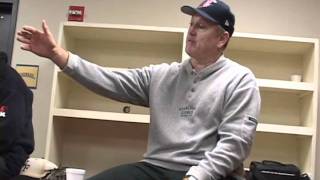
Nolan Ryan and Tom House break down pitching mechanics from balance and posture through arm slot and release point. They cover drills like long-toss and flat-ground work, conditioning routines including flexibility work, and why pitch counts and overuse wreck young arms. Functional strength and rest can extend a pitcher's career.
Chapters
What would you say if I said if the towel had a brain, pitching coaches wouldn't have a job. Would you relate to that? The towel is the best teacher of pitching mechanics that we've run across. Number one and number two, what are the most important things?
Balance and posture.
Because everything else turns to crap. You don't have balance and posture. Now, where's Kevin Craig? Built just like you. What's one of the biggest difficulties you have even as hard as you work physically? Balance and posture. Keeping the heaviest thing on your body over your center of gravity. Mark Prior didn't put all the pieces together until he had the functional strength to support balance and posture. Core strength and just walking around and talking to Brent, talking to Gary and talking to Jeff there. There's core strength issues across the board. You're a three quarter guy. For you to get on top of the ball, you got to change your posture.
Read my lips.
Don't do that. How's that for coaching? Keep your head straight. Your natural slot is 3/4.
Let it happen.
Don't let a kid, don't let a coach arbitrate your arm. Slide. Why do you think they leave Mark Pryor alone? Why do you think they just leave him alone? Because he's pretty friggin good.
All right?
Who are they going to mess with the most? Stumpy? They're going to mess with a guy that could be messed with. Are your parents aware of this, Tom? They're going to mess with your kid.
Oh, yeah, they do.
Because they can. If your kid's carrying the mail, they just kind of say, okay, I hope he continues to carry the mail. They're not going to fiddle him. And when does Opposite and Equal start? The second your hands break. Because that is giving you balance as you're going down the tightrope that you call your stride. If we've got balance and posture, gentlemen, the legs are fixed. Some kids are going to land on their heels. Some kids are going to land on flat foot. Some kids are going to land on
the ball of their foot.
When I first was a pitcher coach with the Rangers, I wanted everybody to land on the ball of their foot. Nolan says, I ain't doing it.
That's fine, don't do it.
But then we went back and Allen Blitzblog said, okay, tell me what's going on because I'm teaching something that some of these guys don't want to do. He said, tom, they all get to the ball of their foot. If they land on their heel, it's no big deal. As long as you get to the ball of your foot. Now we've taken the teach even further. If your head only goes forward, you will get to the ball of your foot. You can't screw it up. You kids, I just heard Brett telling you, why do you want to keep your eyes going toward home plate? What does it help your balance do? Thibault Keeps your head up. Yeah, it keeps your head up and it gives you the kinesthetic and proprioceptive awareness. Awareness. You're going.
He was a kid in high school that, you know, he was blessed with These big body kids, 65230, could throw really hard, but he couldn't consistently throw strikes. He was always up in the strike zone. Curveball had a big hump in it. Scouts loved him because of his body and his arm strength, but he really wasn't a dominating high school pitcher. He signed to go to Vanderbilt, went there last year, didn't pitch all that well. Decided he wanted to transfer. His uncle is Tim Foley. Tim knew Tom from years ago. Finally, after, you know, he'd heard from a bunch of people, including me for three or four years, that he needed to work on his functional fitness. You know, he hit the bottom, decided to ask for help. Came to Tom got on the right functional fitness program, consistently throwing 95 low in the strike zone, nasty curveball. He's going to change Santa Clara's program around this year.
The key of the thing is he committed to what he didn't want to do. Functional strength. Now, when did you finally put all the pieces together? Strengths?
Oh, I think it's 24, 25. But I think, like with these younger kids, the fact that they have the knowledge now and they know what to do, I think they'll cut that down. I think they'll cut that time frame down and have more consistent success.
Earlier, did you hear what he just said? This information, instruction. You guys that are really good will probably get to the big leagues. You'll get there sooner because of the quality of information and instruction that you are. Indeed, you're applying. What's his back shoulder doing there? 45 degrees, the best in the game. Get close to 90 degrees average. Major league is right around 60 degrees of torque. Get close to that and you'll find out how good you are. Shoulder squaring up. When the shoulders square up, the glove sidearm is going to be 90 degrees to the forearm and elbow, and the throwing arm is going to lay back 90 degrees forearm to elbow. It's kind of like a Z across the board. Randy Johnson does It when Randy Johnson's arms snaps straight from that position, he comes through this way. Nolan and Mark came through about three quarters, maybe a little bit higher. Guys like museum. He comes through over the top. His arm lays back at 90 degrees and snaps straight over the top. Perceived velocity, 1 foot of distance is 3 miles an hour to the hitter's height. Now, if you have perceived velocity and real velocity created with torque, then you're an elite pitcher. Why am I so concerned about everybody getting the back parallel to the ground? Because that's what the best in the game do. And we'll see Nolan doing it differently. But Nolan's back gets parallel to the ground. Nolan's glove also at release point, is slightly in front of his landing leg foot. It's teachable, Nate.
Well, I was telling Tom, if I need to really make a pitch low and away, a really good fastball low and away, I knew I had to stay up the ball longer and get out as far as I could. And what it did, as I stayed with the ball longer, I had more force behind the ball. And when the ball would leave my fingertips, I knew if it was a pitch I wanted to throw. I knew if it was where it was supposed to be. And I took my head right to where I wanted to. So I stayed what I use the term I use, I stayed closed as long as I possibly could with my shoulders and get my head out.
This is the kind of torque that you have right now. Now, I'm not saying you're going to throw like Nolan did, but see where you're back in the Mets uniform, right there where your shoulder goes back, that's torque. That's what we were fiddling with with you. Did his. Kevin, did his glove change position there? Did his glove change position here? What's the only thing that changes position now? Is that something that's teachable? Yes.
So you would really focus your eyes on your target. I mean, pick it up early.
Before I ever threw the pitch, I knew where I wanted to throw it. I had to envision where that ball was going to be. And then when I did you keep
your head there as long as you could.
I took my head right to where I'm going to throw the ball. And the only time I ever lost sight of where I was throwing the ball is as I released the ball. If I got way out over my front foot, my head would go down and I bring it back up and I'd momentarily lose sight of it.
But after release.
Right.
So all the way through release, you
had Your eyes, I'm right there. I'm locked on where I'm throwing the ball.
He used to call and correct me if I'm wrong. Riding the ball. He wanted to ride the ball on flat ground, thrown and off the mound. He wanted to ride the ball as long as he could ride it.
When we played flat ground or long toss, I wanted to ride the ball. I wanted the ball on that plane and I wanted that good tight four seam rotation where that ball looked like it would riding, you know, like that.
Did you ever cast the ball?
No, you don't want to cast the ball. And what we would do with our long calls, we would keep getting further and further apart until I got to the point that we'd reached the distance that I couldn't continue to do that. And I'd start short hopping. I started moving back in and I moved in and there at the end, you know, I was airing it out and we were, I don't know, maybe 90ft and, you know, and that's the way I would finish up. And at that distance, you know, it was hard. It was hard to play catch boys
when we were playing long toss. And what I had you do is I had you shorten up to where you could hit your partner in the chest 7 out of 10 times. We would lengthen it out to where he could no longer throw. Perfect. And then we'd shorten it up and succeed. Excessive 3, 4, 5 throws until he was 65 or 70ft and playing major giddy up. Flat ground, long tosses as far as you can throw.
Perfect.
You have to throw, throw, throw, throw and throw some more to your level of tolerance with perfect mechanics to build arm endurance. The only place you can build arm strength is with resistance training with the stuff that Sean is showing.
So let's see the guys going out and throwing 200ft. Well, is there any purpose or is
that just warm up? No, that. You know what that is? This is my opinion is that's lack of knowledge.
I watch Freddy Garcia before the game
go out there and he'll get a guy out deep right field. We used to use football and I used football to warm up prior to going out on the field. And Tom will tell you this. One of the problems we had with football was we could get 30ft apart and accomplish what we need with the football. But we would have trouble with the guys going out there wanting to see how far they can throw it.
Well, let's have a name on the pitch.
Mitch Williams, Bobby Wood, you know, and they would lose Focus of why they were what that drill was all about. And so, you know, it was counterproductive. I used to, when I played long toss, I would drop the ball on the ground, I would reach down and I'd pick it up. And then I. The term I use, I would gather myself basically, and then throw the throw. And I did that as a conditioning because it made me bend my legs and it was a conditioning tool. I just started doing that because it was just something I had to do to get. But now that I know more about why I did that, it was because when I said I gathered myself, I got within myself, my balance. I had my balance so I could throw the ball deep on long toss.
When he bent down to pick the baseball up and came up with his step behind, where was his head relative to his belly button? Do you guys even know what pickups are? Do they do those anymore?
So for the purposes of these guys pitching, though, up to 90 or 100ft is more than adequate. Just stay perfect, mechanical.
You don't even have to put a number on them. Long toss as far as you can pro perfect at that distance. One hop, a few of them, then close it up where you know you can hit your partner and what he used to call riding. And that's where you. The arm speed side of the equation, when you're chunka, chunka, chunka, you know, you've lined up all that energy. Now let's stay with this just a little bit longer.
Let me say one other thing before you go any further. That was also a stamina drill. And I would throw until I reached that point and I would finish up really hard. But it was also, I used it as a conditioning tool. It gave me that stamina that I did besides just throwing a flat ground, working on my delivery.
Now let me throw something out for planning purposes, boys. Nolan knew that on a given day, it was a long toss day, that he was going to throw 50 to 100 long tosses. Do you think he did that? On my time with other pitchers, do you think he did it and pulled away from batting practice and whatever, or did we go out early and do it on Nolan's time? He never took advantage of the other nine pitchers on the staff with him. His work, his extra work, was done on Nolan time. Now there's real time and there's Nolan time. He's 62 Nolan, and he had an 81 inch stride. Now, was that genetics? Was it functional strength? Was it flexibility? Flexibility? Nolan was one of the few guys in professional baseball that could do a legitimate splits and you would come in in between innings and go up and work on the flexibility.
Is that where the leg lift comes from?
You know, he started lifting the leg higher.
As I got older, angels, as I got older, I lifted my leg higher and it just was a field deal because I felt like that I could just. And again, I would say I used it gathered myself, I would just get up and I just felt like I was in a position that then I used the incline of the mound more. But was it strength or flexibility that you thought you can get your legs tight? Well, I think it's a combination of both. I think that, you know, and I don't sit. I don't sit here and say everybody needs to have a high leg kick. They need to have what's comfortable to them. It's just like their arm slot. It's whatever their comfort level is. Just like hitters, you know.
And how much has your career progressed? How much did your body change and how do we have to keep tweaking?
Well, you know, when I signed, I was six' two and weighed 150. When I was out of the game, I was six' two, two' 12. So there was during that 27 year period, I was much stronger, in better condition. When I walked out of the game as when I came in the game,
I heard you say one time that Mark gets there quicker than most than Nolan did. Explain that.
Well, because of Nolan's high leg lift, he took longer to get to front foot contact, but once he got to front foot contact, he was catches up. Remember in the little PowerPoint that we did, Randy Johnson has a certain timing. Roger Clements has a certain timing. Nolan had a certain timing. At front foot contact, Mark got to front foot contact quicker than you did. But after front foot contact, you blew by them like they were standing still. Your acceleration from these pictures to release point, however you did it caught up in a blink. So you were slower to front foot contact, but into release point, you caught up. Have I made it clear to you kids, I don't care what your opposite equal looks like. I don't care as long as you get 60 to 90 degrees of torque. I don't care how you achieve it or when you achieve it. In your delivery. When your shoulders square up, your shoulders are going to square up somewhere in the vicinity of the ball of your front foot. Your glove will be somewhere in the vicinity of straight up from the ball of your front foot. Some guys get a little further, some guys are a little bit behind. But it doesn't. It squares up like a gyroscope thing. And remember the picture of Mark Pryor? You can kind of see it with Nolan here. The Astros shirt is doing what it's going from. Everything in the man's body has stopped except the forearm on the throwing hand.
One of the things we were talking earlier when I first came up, you know, they taught you to rock back. Well, as I was saying earlier, the only time. The reason you rock back is so you can set your foot. That's the only reason, is you set your foot. And then I would come up, and I had checkpoints in my delivery, and the first checkpoint I had was my knee to my shoulders. I had to get there before I did anything. Then I broke and went to the plate. But when my foot hit the ground, that's when it happened. My foot hit the ground. Boom. That's when I went.
And see what he just did right there. What did he do? Damn it, boys. I mean, did you see something right there?
We had a drill where I always like to have a ball when I played catch with Tom in this hand, because what it did, it forced me to do that.
And watch what his torque. Pretend you're throwing.
Just. Just like that.
Watch his head. Just pretend you're throwing. Watch this again. Watch this.
It was there.
What did his head just do, Joe?
And I took my head right to where I'm throwing the ball.
And when did it happen for you, Gary? I hope you're still in here. I'm here. What. What did he just say in his own words? When did it happen? When his front foot hits.
You can't throw the ball until that foot hits the ground. You have to. That foot hits the ground. That foot hits the ground, you're right there.
I think, Tommy, I think a lot of kids. A lot of kids try and throw at separation.
Yep, I was. See, I grew up throwing as hard as I could, and I didn't know anything about it. And so the first thing you do is when you broke your hands, you were going to throw as hard as you could. And you did that.
Look at his Mets picture.
And when you did that. And anytime when I knew if I was going to throw the ball and I didn't throw it where I wanted it, I knew what I did, my delivery, and why I didn't throw it there. If I flew open, the ball was up and away. The left handers were up and in the right handers. That told me right then that I was too quick here. Okay, if I yank, if I throw a curveball in the dirt. It's because I abbreviated, not try to get too quick.
That was a big word. I hate issues to bring the answer.
I will.
That was a big word.
Still English.
And that's the thing with you. You have to learn. And it's repetition of when you're successful, why you were successful and how it felt and when you weren't. And when I say successful, meaning you didn't throw the ball where you were, meaning to throw the ball, that's a different. That's the difference in being successful, not successful. You hear the term, people are wild in the strike zone. Well, I didn't walk anybody. No, but you gave up 15 hits. Because you try and throw low and away and you're throwing right down the middle. And you see that every. You see that. And all you have to do is turn on a game and the catcher's sitting out there like that and the ball's up here. The reason the ball's up here is because that guy did something in his delivery that didn't allow him to throw the ball down there.
No.
Would you say a second about what you mean by abbreviated?
No, I know what you mean by abbreviated.
Instead of staying with the ball, I tried to make something happen and I cut it off, is what happened. Instead of staying on my delivery and letting it all happen like it should, and throwing my breaking ball like it should, what I did is I shortened it up and cut it off. Tried to throw it too hard. A curveball. Boy, you see people do that all the time. You'll see a guy, man, he is going to snap one off and he doesn't even reach the dirt. He throws it in the grass. That's what he's doing.
Do you think. Let me ask you, Nolan, do you think your early formative years at the Mets when you lacked the functional strength that you acquired later, had you had been a frontline guy with the mets at age 19, 20, 21, whatever, and accumulated Brett Saberhagen type innings? 250, 270. Dwight Gooden. 250, 270. Would you have risked the chance of injury at a very formative age when those guys ended up having.
If I wasn't strong and logged those kind of innings, you're going to have problems.
And that's what they're.
I want to tell you, when they tell you the weakest linkfield, trust me, the weakest link will show up when you accumulate in. That's. That's a given. And I'll tell you if you ask me, the thing that I did that I felt like allowed me to pitch as many angles as I did was my abdominal work. I can't tell you how much of that I did. I did it all the time because I knew that I could. I had that feel. I. I didn't know what it was, but I knew that if I wasn't strong in my core, then that's when I started having problems.
If that isn't enough to motivate you boys, I don't know what will. Does it take any talent to work hard in the Wakers?
No, that's one thing. And I've always said you never want to walk off the field and feel like you got beat because other teams are better in shape than you. Because that's a no, no. I mean, that's one thing you control on personal basis. You know, they might have better talent, they may have gotten the breaks, but they sure should never be in better shape than you. And I always conditioned to go 12 innings. I felt like that that's your ball game. And if it requires you to go 12 innings, win a game, then I wouldn't be in shape to do that. Most people aren't going to allow you to do that, but in the old days we did. You know, they talk about one of the greatest games that was ever played was when Warren Spine and Juan Marichiel matched up. I think they went 16 innings and the game was ended one to nothing on a home run by Willie Mays. Now I'll tell you something, we won't live and see that again because the game won't allow it.
What was your highest pitch count?
If you know, 242. And I was on a four day rotation and I came back and fished four days later and didn't do very well. I went 12 innings and won the game through 242 pitches and we were pitching on four days. And those days, that's why Frank Tanana, Frank and I were the angels together when we were pitching on four days and Frank Tanana blew out because he didn't have the strength.
Tommy, can I make one point?
Sure.
That's always intrigued me. 17 guys have been voted into the hall of Fame or that have won 300 games in the last 30 years or something like that. The majority of those wins have been after the age of 26, 25 years old, spawned a lot of these guys. And what happened to the Goodens, the Saberhagens, the Tanannus and these people at very young ages, before they had functional Students strength were deemed prospects and stars, and they pitched 250, 260 innings at very young ages without physical strength. And they all broke down. And most baseball executives, when they see a young tanana, a young saberhag and a young Gooden, the first thing they say is, wow, he's awful good. Just think how good he's going to be when he has experience. They never get the experience. They end up breaking down the number of guys that have won 150 games by the age of 30. I think only one guy has won 300 games in the entire career, and they won 150 by age of 30. So that shows how important the functional strength is at a young age to be able to withstand this.
One thing about it is every one of y' all that are in here are in here because you have loved baseball and you have a gift. You give an idea. You know, Nolan Ryan didn't do anything to be blessed with the arm that he had. It took me a while to figure that out. You know, it took me a while to figure out, hey, this was a God given gift that I have. And then I decided I was going to be the best player I could be for as long as I possibly could be. And once I made that, realized that and made that decision and I didn't do it at 18, I was just, hey, I was happy to be playing professional baseball, getting paid to do what I really enjoyed doing. I thought it was a pretty neat opportunity. But then it finally went off my head that, hey, you know, I really have an opportunity here. Then I dedicated myself to be the best player I can be. And that's what each and every one of y' all gonna do. Need to do, is dedicate yourself to be the best that you possibly can be. And condition is one of the biggest aspects of it. Because I want to tell you something. If you're not in shape and you can't handle the workload, it's just a matter of time before you start having problems and you break down. And one of the things is that it's been easy for each one of y' all to this point in time because you've been blessed with this gift, and so you've always excelled. Well, when the workload comes in, if you're not prepared for the workload, then it's just a matter of time before you break down. So you have to work hard. You have to take that gift and make something out of it if that's what you choose to do. And I feel like, that's probably what y' all choose to do because you're here today and that you have an interest. So you have to take the information they give you and apply it. And that doesn't mean that you do it a couple days a week. That means you live by it. And I'll say one thing. I took one of the things I did when the season was over, I took a month off. And the reason I took a month off was for what I call recharge my battery. I did it because I need to get away from that routine in that schedule. And when I found towards the end of that month, I started getting itchy to get back into that routine because I missed it. And when I did get back into it, I got back into it with the attitude that I really missed it and I enjoyed it. I enjoyed working out. I felt good about myself after a good workout, and that's what you need to do.
How much relationship from that time and energy and sweat and effort and conditioning carried over to your mental toughness on the mound.
That's all part of if you don't have the discipline to work out and prepare yourself, you're not going to have the discipline on the mound to win ball games. Because there's going to be times during that game that it's going to require you not to be distracted. You know, I develop tunnel vision and not to be distracted and let things that affect you affect the game, affect you and your approach. And as Tom now said, I took one pitch at a time. That's the way he plays game. One pitch at a time.
More from Tom




Throwing Guru Tom House Talks Tom Brady, Josh Allen, Mahomes & More with Rich Eisen | Full Interview
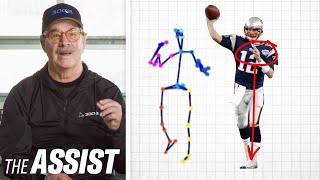
Tom House Baseball Pitching Mechanics (Problem Recognition & Solutions) - 1989 Pitching Tutorial
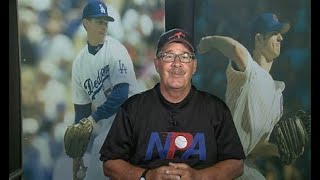
Tom House, Godfather of Pitching/Throwing Biomechanics & Founder National Pitching Association