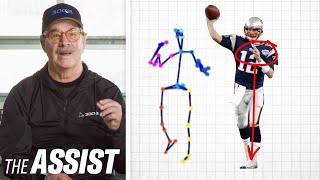
Tom House explains why throwing cold stresses a young pitcher's arm more than pitching in a game. He outlines a four-block warm-up system: core temperature elevation, arm care drills, body work, and kinematic sequencing. The key is warming up to prepare for the activity, not just going through motions.
Chapters
Baseball specific right now. So our baseball families are going to love this. You've been really the. The person who's kind of pioneered this whole concept of you don't throw to warm up. You warm up to throw. And. And I. And it's a baseball term. It's a throwing term, but I think it really goes across all sports. Right. How often do you see. You go into a basketball gym and what do they do first? Layup lines? Well, no, they've been sitting around in the gym waiting for the. So just talk a little bit about, you know, from the biomechanic, Just from the way the body works and gets warmed. Like, talk a little bit about that process of preparing your child or preparing the team you coach of young kids, the process of preparing them to be ready to compete.
Okay, perfect. Again. You're setting me up perfectly here. You warm up to loosen up, to do your activity. You prepare to compete, to recover and repeat. So keep that in your head. It's harder on a little Leaguer's arm. If you watch most little league games, when the kids get there, they'll get a ball and a buddy and they'll go out and they'll start playing catch right out of the car. That's actually harder on their arm, you know, throwing before they've loosened up to warm up. That's harder on their arm than actually pitching in a ball game. So the process. And again, if it sounds like I know what I'm talking about, it's only because I screwed it up enough to know what doesn't work. And now we have the research to support what's coming out of my mouth. We call it block training. The first block should be core temperature elevation. And I'll give a plug to the National Pitching association and to Mustard. If you go to either one of those websites, there's a process. The first block, block number one, is core temperature elevation. And there's five or six exercises that any thrower can do. Pitcher, quarterback, infielder, whoever it might be. The second block is arm care and recovery. And this is before they've gone to play catch on the field or take infield or whatever. Arm care and recovery has four or five little exercises. I don't know if you remember what. When you see the quarterbacks doing this.
We do it at every one of our practices. If my kid picks up a ball and doesn't do the whole thing, walking, alternating it, I will. I'll kill him.
So he's right. Right at the head of the curve on this one, literally. Arm care recovery is second block. The third block, if you have the time, is body work. And that's where you use anything from arm presses to arm circles to planks, something that wakes the whole body up physically. And then the fourth block is. The big word is kinematic sequencing. But basically, you go through exercises that are specific to what you do when you pitch, range of motion stuff, and there's three or four that go there, and then you go warm up to either start the game or take infield. So if you follow that process and you don't have to do everything in every block, every day, you cherry pick, depending on time available and the motivation of the kids. Remember, kids can get bored really quick, even if they're passionate about the game. So you have to keep challenging them with doing things either the same idea, different application, or a new application of a better idea. So all that puts together. But if the parents and the coaches could remember one thing, you warm up to, loosen up to do your activity.