Hear all about how I got started in YouTube! And some of my best advice for you
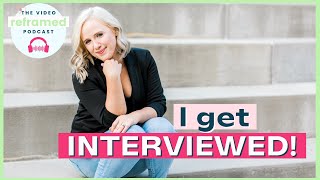
Trena Little, a video strategist, shares how she started on YouTube and offers advice for coaches and service providers. She covers getting comfortable on camera, using video for business growth, and leveraging YouTube to build visibility and sales.
Welcome back to another episode of the Video Reframe podcast where we help coaches, service providers, and course creators reframe the way they think about video content to help them drive more leads and more cash to their business without adding more stuff to their to do list. I'm your host, Trina Little, and thank you for listening today. Today is going to be a little fun because we have Erica here, who is my assistant YouTube strategist. She works with all of my agency clients and. And she's going to be interviewing me. So we're going to dive into this and Erica's going to get all of the questions maybe you've been wondering answered.
Katie Freling said it best. Video marketing is one of the biggest reasons she's been able to make multiple six figures within her business. That's the power behind video. When you use video the right way, you're able to increase your sales based off of an increase in brand awareness because you have built a solid know like and trust factor with your audience. That's huge. Let's back up a minute. It all starts with video. So before we can grow a business to multiple six figures, we have to get comfortable on video. And what better person to teach us how to get comfortable on video than your host, Trina Little.
Okay. All right. Ask away.
All right, Trina, so tell us a little bit of your backstory story.
So I actually graduated college with a master's degree. Well, back up. I actually graduated college with a degree in marketing and a minor in pr. But I ended up going to work as, you know, the federal government. And I became an intern in their program, so to speak. And I really didn't like it. There was just no creativity. I just didn't feel like that was the right spot. So I tried to figure out a way that I could get out. And so what I did is when I got pregnant with my daughter, I somehow got on YouTube. I started watching YouTube videos. I started learning about what to expect when I was pregnant because it was the first of my friends that were pregnant. And I started to use my marketing brain watching this video content and realized this is huge for businesses and brands. So at that point, I thought this was the answer. I'm going to be a mommy vlogger. Like, I'm going to vlog. I'm going to make this money on YouTube. But it quickly realized I'm not a vlogger. And it is very hard to talk to a camera. And so I started to figure out ways to use it in a business model.
Nice okay, so let's talk about how you got started on video. Why did you initially get started on video then?
I was never afraid to speak and, like, talk on camera. I actually took electives in high school that put me in on stages. But doing the vlog style, like grabbing your camera and trying to speak out in public, was definitely not me. I think my first vlog is like, okay, we're going to do this target haul, and Nora and I are going to go to Target, and I'm going to vlog this. And I quickly realized that's really weird, and it just wasn't something that I could do. So I decided to set up in my office, and I actually made my husband leave because it was really weird to talk to this camera and to know somebody in the other room is listening to you and thinking about, are they judging me, how I'm talking to the camera? And so if you're thinking that, that's normal. It's taken me, obviously, a pandemic to now feel comfortable just talking and creating my content with people home, because they haven't left the home in over a year and a half. And so I have to. I had to get to that point.
Right, that makes sense. So you didn't like going into Target with people watching you then and not all the eyes on you, even to this day.
So that was probably six years ago. But even to this day, I've tried to vlog myself, like at a speaking engagement or even at a conference or a Mastermind, and I still can't do it, and I can't remember. So I forget. I went to a Mastermind a few weeks ago, and I was like, I'm going to vlog. This is going to be awesome. And I couldn't even remember to do it because I'm an introvert. And so a lot of people don't realize that. That I'm an introvert. And it just. Yeah, it feels really weird.
Yeah, it's different. All right, Trina, so over the years, how has video played a key role within your business?
So pretty much video has been there since day one because I realized how powerful video was going to be even back in 2015. And so I started to figure out YouTube. I put videos up, I played around with it, and that alone skyrocketed me and my visibility because I started to get tagged in Facebook groups back in 20, 2015, 2016. Go to Trina. She's the YouTube person. She's the video person. Because people could remember me because they saw me on video at the time I was also doing Snapchat, that was before Instagram stories. So I was on Snapchat in YouTube videos, and so that was really what allowed me to escalate my business a little bit faster. Also, the first course that I created was called brand boosting video to also help people figure out how to use video. And then ultimately led to my very first client, who I'm still friends with, I still work with today, and she wanted me to edit her videos and help her get content on YouTube. And so video was really the driving force behind the growth of my business.
That's amazing. All right, let's dig in a little bit. So say there's a business out there, they want to get on video. They want to use video within their business. They see the power behind it. They see you using video and the power it has. What would you tell them if they're just not comfortable putting themselves in front of that camera?
If you are watching the video version of this on YouTube, this is Erica's first time on video, and so I feel like she's feeling this right now for sure. So if you all feel that way, Erica's in your spot right now, and I get it. I would get started with Instagram stories, honestly. First of all, you can put filters on so you can always look better. I've recently been trying to avoid filters because I just feel like filters is creating a negative connotation. And so I've been trying to get better without filters. But you can use filters so you can feel better about yourself. You don't have to worry about putting makeup on, and they expire in 24 hours. And so just playing around there on Instagram stories is kind of your first way to start dipping your toe into videos, I think.
Okay, Yeah, I like that. Good way to start. What advice would you give that business owner for who they're targeting on the other side of that screen? Should they be targeting, like, mass amounts of people or just, like, targeting one specific person?
Yeah, that's a good question. And that's what a lot of people come to me about. They want to get started on YouTube, and they want to reach all these people. But the thing is, with business owners, we don't need to be a YouTuber. Uh, YouTubers are making money based on AdSense ads that YouTube is placing on their videos, and that's their livelihood. But us as business owners, if we have client services or we have courses or we have coaching or consulting, you really want to make sure you're creating a small, powerful channel. Because you're going to make money on the back end and you want to ensure that content is created for that person that you would like to work with. I know we hear all the time like, who is your dream client or your dream avatar? And that can seem so vague. But if you do really think about who would be the best person that you could get to work with, and then you create content that that person needs online, that's how you're going to attract that people. I mean, I could go into a little more detail about YouTube and how YouTube figures that out, because if you can get that ideal person to watch your content because you titled it or you thumbnailed it in a way that draws them. YouTube collects data on that viewer and YouTube is looking at what other kind of content are they watching, what are their viewing habits? And they're finding more people that fit that profile as well. And so if you can attract some of your dream clients, YouTube is going to do the hard work for you for free, because it doesn't cost you to upload YouTube videos. YouTube is going to look for more people that fit that profile. So you can then expand your visibility and get in front of more. More of your dream people.
That sounds amazing. Yes, that's what you want to do. So let's dig into some of the clients and students that you serve. So what do you initially start helping them with? What's their like, primary primarily, or sorry, I can't think of that word primary issue that they face.
That's a good question. Because right now, in as we're recording this late July, August of 2021, the clients in our agency, which is our full service agency, where Eric and I work to plan their content, tell them what to shoot, and we kind of do everything for them other than film the video. Their biggest problem right now is Facebook ads. And a lot of them have hung their hats on Facebook ads. They knew if they put money into ads, they were going to see a certain ROI in return. And since Apple updated its iOS 14, I think you can't track people the way you used to anymore. And so their ads have plummeted. And people that weren't necessarily creating this free organic content like Pinterest, Instagram and YouTube are having to get back to the original type of traffic that worked for bloggers circa 2012, 2013, 2014, because Facebook just isn't working like it used to anymore. And we don't know when that's going to change. I'm. It's Facebook. They have plenty of money they're going to figure it out. But right now, they're taking a big hit with the students. They are wanting to get started with video because they know video is critical. They are not at the point where they can hire a team out like us, and they're trying to learn how to. They can do it themselves and get to a point that creating these videos drive them more students or drive them more clients, so that then they could hire maybe an assistant to help them do the YouTube workflow or eventually hire our team. And so what they're really looking for is to get that visibility, because YouTube is so important to remember. It's a search engine and it's owned by Google. And videos on YouTube always show at the top of Google search results. And so they know that's the quickest way that they can get to the top of search results.
So it's more eyeballs on their content right away when that's showing up in search.
Yeah, it really grows their visibility quick. It also allows people to get to know them faster. Being on video, we can see your mannerisms, how you speak. And in 2021, businesses need to have a personal brand, especially online businesses. I mean, there are scams out there. There are people that will take your money and waste it. And so if they don't feel like they know you enough to give you their credit card information, it's not going to happen. And so video is just that way to build that relationship and to eventually convert them.
Yeah, yeah. What about some of the accomplishments you've seen either clients or your students making? I know your students are really thriving right now. Can you talk about that a little bit?
Yeah. So I would say right now our A student, which I'm not sure if we have released the podcast episode yet with Hope, who is under the median. And what's so interesting about Hope is her and her husband are using older apartments equipment, and they're actually shooting on square format. So when they go to YouTube, it's not even the normal YouTube video that you would see. And she grew from about 230 subscribers to 20,000 in around five months, hit over a million views. She actually started her channel thinking about her retirement and making money for her and her husband. So their plan was YouTube monetization, and they were monetized within one month. But now, after going through VSA, she's also learning how to sell things. And so she's making sales, digital sales on her digital products every day because of YouTube.
Wow. So she wasn't even going into it thinking I'm going to kind of turn this into a business type thing. She was just going and thinking just to use it for monetization.
Yes, she was using it for AdSense. And then I think one of our oldest clients, not age wise, but who's been with us the longest, she has been committed to YouTube. She knows it's a long term game and so we've been working together about two plus years. Every time she launches her course, which is now I think in the 7 97, 997 price range, she has an intake form for people that come in and the majority of people are saying they found her from her YouTube videos and they watch her YouTube videos. So she's created this community from YouTube and she doesn't have a huge channel, it's about 20,000 subscribers. Like not anything massive. Massive. But it's a tight knit community of subscribers that always waiting for her to open her course and for them to know when they can buy it or if they realize she opened the course and they don't have the money yet, they start saving and they're the first one to get in the next time she enrolls. And so that's what YouTube is really doing. It's like this long term game with Facebook ads. It was so instant, but it's not working anymore. So we've got to think more long term here. Are there any clients that you like to talk about or like who's really amazed you since you're working with all of them?
Yeah, so actually it's one of our newer clients, Christina, the contract shop. It's actually pretty cool. So she came in with a low subscriber count and I mean it's still lower. But to see her growth already and to see her popping up for search terms like digital products, digital products online, that type of thing, it's, it's crazy how fast YouTube can work once you are target targeting that key audience like you were talking about.
Yeah. What's interesting with her, I've talked to her before is she says every time she publishes a video on YouTube she sees traffic to her online shop increase. So like I said, what we can do is get you traffic on YouTube and send it somewhere. Obviously you need to make sure your sales copy and your shop is working for you. But, but we can use YouTube to help you generate traffic to your business. And she sees that every time she publishes a video.
Right. And going back to like the lower subscriber count and like the other client who only has like 20k, I mean you don't need that large audience. Once you do know that ideal client you're targeting.
Yeah, it's similar to. It's an article about a thousand true fans. You can just build a thousand true fans. You can, your business can thrive, which is a thousand true fans.
And honestly, they're going to self promote for you too, because they know you and they know what you have to offer within your business.
Absolutely.
All right, Trina, so I've seen you take one piece of video content and turn it into numerous pieces of video content and it really is crazy. But the audience you're reaching with just that one piece of content and that time you've spent with just one piece of content versus trying to create all the content, it saves you so much time in the long run. So talk about a little bit about how you do that.
Yeah, I mean this is really how I survived through a pandemic with my kids, home, no childcare, literally probably working half the amount of time that I was working. And so what I do is I focus with YouTube as the primary piece of content because search also YouTube lives the longest, like Instagram. I think your post can live for about 48 hours, stories 24 hours, Facebook six hours. And so on average a YouTube video can live about 20 days. And that is short changing YouTube because we've seen videos for myself and clients live months, years even. And so that's where I'm going to put all my effort into because I want that to live as long as possible. And so I start with the YouTube video and do all of my researching and planning for YouTube. One of the little secrets that I did start picking up and something I'm going to be trying more of, I learned from a client, Virginia Kerr, who puts her YouTube videos. We create her content for her, her repurposed content as well. She's only putting about two to three minutes of the video on Instagram TV and then getting people over to YouTube. I've put my entire video on Instagram. But I do want to try the way she's talking about because she's amazing over on Instagram. I think since working with us, she's gone from about 20k followers to I think she's approaching 90k.
She truly knows Instagram in and out.
Yeah. And so I trust her on that. And so those are things I'm going to look at because again, Instagram isn't my world, YouTube is. And that's where I focus. And then I just try to put it on as many platforms as possible in a way that looks native to that platform. And so Facebook, we create like a square template and just plop the vertical video, the horizontal video on there. Instagram tv, same thing. We've done a vertical template. No. Yes, Vertical template. And then put the YouTube video in the middle. We've taken clips and put it on Instagram stories. We're going to be trying in the future, also taking square clips for the feed on Instagram with captions on it. Because Instagram is no longer a photo sharing app. And so I need to start getting better videos in the feed as well. We create video pins, we create Pinterest stories. If you're wondering about Pinterest, Vanessa Kynes does all of my Pinterest and tells me how we can incorporate our videos. And so the key in all of that, yes, it takes time. There are things you can do to streamline it, creating templates, creating a process, but always starting with YouTube as the beginning piece of content.
Right. And I even heard Virginia talking about how she only shows that minute or two minute clip on Instagram. And it's pretty smart because then you're hooking them and then you're taking them over to YouTube to watch the rest because they want to know what else you have to say.
Yeah, because I, I think I just watched this story literally yesterday when we were filming this. And she says, you know, people on Instagram TV aren't used to watching longer videos. And so if you keep it two to three minutes and they get hooked on it and they want to keep watching it, not only did you feed the Instagram algorithm because they watch the whole thing, then you're sending them over to YouTube and they're going to be more likely to watch a longer video over on YouTube. And one kind of hack about that is when you're shooting your YouTube videos at the end after you shot it, film a different ending so that you can edit it in to that first two pieces. And you say something like, I, I actually go into more detail over on my YouTube channel. Swipe up. If you have swipe up or go to the link in my bio to watch the full video over on my YouTube channel. And so that's literally like 15 seconds. You just edit it right into your YouTube video right there.
Again, it's like another time saving hack with video and you're making it native to that platform, which is what they want.
Yep, absolutely.
Okay. So when thinking about sitting down and actually having a conversation with somebody versus sitting down and having a conversation through the lens, it's a little different. So right now we have our script, and we're kind of bouncing back and forth off of that. But when you're in person talking, you're obviously looking at the person. You're making eye contact, facial expressions, connecting with them. How do you do that through the lens? Can you teach us a little bit about that? It's going back to that. Getting comfortable.
Yeah.
On camera.
This was a hard one for me because I thought I had to be extra to be on video. So if you watch even my very first channel trailer, it's incredibly cringey because I was trying to be extra. I thought that's what I needed to keep people watching me. Then I went the total opposite way, and I became, like, very professional and made sure every single word that I said said was right. I redid it a million times to make sure everything that I said was right. And in the past about two years, I think I really found the sweet spot. And there's no, like, shortcut other than doing it. And if you. If it's easy for you to have somebody and you have somebody near you, like, Erica is here, and you just have them sit on the other camera, that could help you, or you just think, okay, let me get in my mindset. Let me make myself think I'm talking to you, and just try to be yourself. Like, if you talk with your hands. For so long, I tried not to use my hands. If you're watching the video version of this, I'm, like, throwing my hands in the air. But I tried not to talk with my hands because I thought I looked crazy. But that is me. Like, if you're going to meet me in a coffee shop, you're going to see me talking with my hands like I am right now. And so you just really need to find practice to do it. That's why I think it's great to start with Instagram Stories. If you have a script, don't write the script word for word. Just know what you want to talk about. That was another thing that I found out really tighten me up was trying to read the script word for word. If I have a plan and I know what direction I want to go, then I'm a little more free. But it won't come naturally. It doesn't for anybody. So if you don't feel it's natural, it's not natural for anybody. Unless, like, those news broadcasters or those people that are. There are some people that are really good on video, but the majority of us aren't. And it takes practice.
So going back to, like, you Said your first video was like, watching it back. It's like a little cringy and like, it's going to be your first one. So what would you tell? Even, like, business owners are like, I need to get video out. Would you tell them like, okay, that cringy one. Don't post that or go ahead and post that?
Yeah, I go ahead and post it. Like, if you look at any business owner that you maybe look up to and you're like, wow, they got it going on like an Amy Porter Field or maybe even a Marie Forleo. Go to their YouTube channel, look @ their oldest videos. They get started somewhere, they're not who they are now. It's taken them a while and. And it's. It lets people see your journey. And if you're uncomfortable, like a year from now and you want to private, that's fine. I leave mine all up there so you all can see my journey. Like, you can go back to the oldest videos that I have and see, this isn't where I started. I wasn't this confident. And I would just say, like, be messy in the beginning because that's when the least amount of people are watching you. And so the more you get started and if you are messy, it's going to be a while till you start attracting all those people. And so you are getting better as you do it.
Yeah, I think that's great advice. All right, Trina. So I look at video and how it has played an essential role in your business. You've made it so that you fully see the impact of video throughout your business. So can you share with your audience? Listening now, what is the top advice you would give them to try and master video, if that's possible.
Yeah. And so I kind of want to preface that with the reason why video has been so big in my business is because I'm not spending a lot of money on ads. I did a talk a few weeks ago. I think I spent a total of maybe around $30,000 on ads in total last year. And then our business brought in multiple six figures. And so why that's unique, if you're doing Facebook ads, a lot of people are spending, you know, sometimes the large, obviously the larger business owners you see online that you see their ads, they're sometimes spending a hundred thousand dollars a month on ads just to make $200,000 a month. I mean, that's a great profit margin. But if you're a small business owner and you're just getting started, you don't have a hundred thousand Dollars to dump into ads. And my 30k was spaced throughout the whole year. So we were just playing a little bit here, a little bit there. And so if you want to get started on video, like I said, start using Instagram stories to warm up to it. And you just have to rip the band aid off. There's no shortcut button. I wish there were. I can teach you some like, techniques and ways to get prepared. I always like to have my video game plan, which I talk about in my program, Video Strategy Academy. But really just practicing this is something like I'm doing right now with vlogging. Yep, we're going full circle here. I'm going back to vlogging, but thanks to the world still being as it is, I'm not having to go out in public as much. So I'm moving around the house, sharing certain things, sharing more stories about running a business at home. Different things I'm doing and I feel like it's a mess, but if I don't practice it and do it, I'm not going to get better. I always use the analogy like riding a bike. We're never going to cruise down the largest hill in the neighborhood when we first get started on a bike. We're going to have our training wheels, our helmet, our elbow pads. We're going to maybe run into a stop sign or something. But you've got to keep going.
Okay. So I love that you're going back full circle to the vlogging because it shows your audience the more authentic you. So they are getting value packed videos when you're sitting in your office and telling them what they need to do to grow their business through YouTube. Through YouTube. But to show them what makes you you through vlogging, that's. That makes you stand out from everybody else in the industry.
Yeah. And to just piggyback on that. I think a lot of the times we think we need to vlog to be on YouTube, but it's really just a talking head video that you can get started with. Making sure whatever video you put at the end of that video that viewer has a, has learned something or there's that value piece that they are just appreciative of. You don't have to be entertaining and like cut up all these clips and do all this stuff to get started on video. It's just share your values, share your knowledge.
Yeah. I think it goes back to what we've talked about before, that you need to provide your audience with value time and time again, but you also need to like touch in on what makes you you.
Yeah, because again, when we talk about personal branding, that's what's going to convert if they like you. Because unfortunately everything is online now. Everything they can figure out online. And, and what's going to make you stand out from 100 other competitors, so to speak, is you, your personality, how you teach and how they connect with you.
All right, Trina, so thank you so much for sharing all your best tips and tricks when it comes to reframing your thoughts around video with us today.
And can we if you are, if you're listening to the podcast, go over and check out on the YouTube channel this video. A round of applause for Erica's first video. First time on video. She's been working with me for, oh, 10 months. Yeah, about 10 months. And this is the first time I'm getting her on video. But it's just as a way for you all to get to know her too. She's a big piece in my business. She works with the agency clients. She understands my process. And so hoping to have her more on the podcast and interviews like this now we have an ask for you. If you found this episode helpful, I would love for you to subscribe to hear even more tips and strategies to reframe the way you think about video in your business. And if you had a major takeaway or you love something about this podcast today, if you could just tap the five star button on itunes specifically or Spotify wherever you listen to your podcast and leave that takeaway in the comments below or leave us a review that really helps us reach more people to help them reframe the way they think about video. Thank you so much for tuning in to another episode of the Video refrain podcast. If you would like to be surrounded by a community of creators, creative, hardworking women ready to reshape their thinking about video, I would love if you joined us inside our video reframed Facebook community. We discuss the podcast further. We give you some behind the scenes look and I'm giving monthly trainings inside there as well. So I can't wait to see you inside.
More from Trena







Why Every "Business Guru" Suddenly Went All-In on YouTube (And What NOT to Copy)

