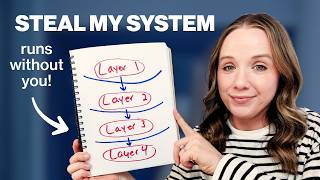
In this video Trena Little explains why relying solely on YouTube or viral content cannot sustain a coaching business and introduces a four‑layer sales system that turns YouTube into a reliable client‑acquisition engine. She first outlines two common mistakes coaches make: chasing viral, broad‑appeal content that attracts the wrong audience, and copying YouTubers’ entertainment‑focused strategies that prioritize watch time over sales. Trena then presents her 4‑layer “sales team you don’t have to pay,” using a Bravo‑show analogy to illustrate how each layer acts as a safety net. Layer 1 is YouTube as a discovery channel, built around a playlist funnel of five purpose‑driven videos. Layer 2 is an email list cultivated with a highly specific lead magnet and regular value‑rich newsletters that deepen trust. Layer 3 is a low‑ticket “appetizer” offer that validates the coach’s value and creates qualified buyers. Layer 4 is a conversion mechanism—typically a webinar or live workshop—that closes warm leads at a much higher rate than cold ads. Trena shows how the system reduces her workweek to about 25 hours, enables predictable monthly revenue, and frees her to enjoy personal activities. She illustrates the model with client examples (Paige DeSorbo’s multi‑layer media strategy and “Belle,” who earns consistently from YouTube, low‑ticket sales, and high‑ticket coaching). Finally, she dives deeper into the YouTube layer, warning against keyword‑only virality, emphasizing title‑thumbnail psychology, and describing three pre‑creation tests every video topic must pass. The video ends with a call to action to join her workshop for a detailed playlist‑funnel walkthrough and to comment on viewers’ current “layer 1” acquisition channel.
Chapters
YouTube alone won't run your coaching business while you get to go out and live your life. A system that has 4 specific layers will. So let me break down those layers for you. My name is Trena Little and I help established coaches and course creators use YouTube as a sales asset. And I want to be honest with you about my business this year. This past April, I ran a launch and it didn't hit the projections we assumed it would. Now a few years ago, this would have totally sent me into a spiral freaking out about how I'm going to pay the bills moving forward. But this time it didn't. Because that launch that so many people put a lot on isn't my only revenue lever anymore, because I found that it is more important for me to build a system to book coaching clients every single month. So you're not reliant on a launch going good or bad. And that system also allows me to just work about 25 hours a week. What I want to do is tell you the two biggest mistakes that you as a coach or an established course creator makes to keep you stuck in the cycle of needing to work and do these launches and not get to 25-hour work weeks. And then I want to walk you through the 4 layers that I built that are basically 4 safety nets for me that so many coaches mess up and is why they don't have that time freedom that they want. I'm gonna be real, every single one of you watching this video here today probably thought, if I just had one video, one post, one reel, one TikTok go viral, I would be set. Here's why that is so wrong, because going viral isn't the answer to your problems. In fact, it could create more problems for you. Viral content needs to be broad, and broad Broad content does not attract people who are ready to buy from you. Just think the mom sitting at soccer practice or the corporate exec scrolling her Instagram or TikTok during a lunch break. Both will end up watching your content. Neither of them is your champagne client or your ready-to-buy viewer. And while you may get 50,000 to 100,000 views on that post, on that reel, you will probably end up getting zero calls booked or zero applications.. And to me, that math just isn't working. Trust me, I've seen it for myself. These are some of my top performing YouTube videos that have gone viral, and they actually hurt my business because they were so broad and they attract so many of the wrong people. And then the other part that nobody really talks about is short-form content, especially like TikToks and Instagram Reels and carousels, are short lifespan content. Even if one of those go viral, you're back at the drawing board at the latest a month later, and you're stuck trying to recreate that special package that did it last month. And that is the content hamster wheel so many of the coaches that I work with want off of. So going viral isn't really the strategy you want to go for. Now, the other mistake that I see established coaches and course creators like yourself do is they know they want to go all in with YouTube. They've decided YouTube is their spot. They watch some YouTube videos, maybe they even buy a DIY YouTube course. Here's the problem: a majority of the videos that you're going to watch on YouTube and the courses that you're going to buy about YouTube are built for YouTubers, and YouTubers create a strategy for entertainment, and they're optimizing for watch hours and AdSense. As a coach, as a course creator, you need a completely different strategy if your YouTube videos are gonna pay off, because I know you don't wanna be putting time into a YouTube video that doesn't make any money for you, like brings you clients and leads, right? So those aren't the same strategies. The strategies that are being taught for YouTubers and the strategy that you as a business owner need do not equal. And when you follow that YouTuber playbook that you see so often being taught, maybe your channel grows, but your sales will not. I promise you. Now, YouTube is just one layer of this 4-layer system that I keep talking about, and it is a critical layer, but it's not the system. And if you treat YouTube as the only piece of the system, you're gonna get really frustrated and broke. The reason why this 4-layer system is so— when you have one of those slow months, I know I had a slow month back in May, but I know the future months and the previous months keep my business running. So I had some better months earlier in the year. I know I'm gonna dip and have a slow month, and it's gonna come back up because that is cyclical in business. But having these 4 safety nets really help eliminate those bumps or make those ups and downs a lot less high and a lot less low. So here are the 4 layers that I've built in to keep my revenue consistent as possible, and I'm gonna call this your sales team you don't have to pay. And we all love getting some free momentum, right? I'm gonna explain this with a Bravo reference, and stay with me because I really think this does a great job of explaining these safety nets. So let's take Paige DeSorbo of The Summer House. She was on The Summer House, but she knows she's not going to be on The Summer House forever because eventually she's going to age out, right? And this is what a lot of smart Bravo lebs realize: the show isn't where the real money is. The show is the discovery layer. So because Paige was on Summer House as her discovery layer, she knew she needed different layers built in. That's where her podcast, The Giggly Squad, was built from. She also started doing, I believe, like weekly or biweekly Amazon Lives to again build an audience, make money in a different layer. And she built her own pajama line, the Daphne line. So again, you see she's building these layers of revenue in, and each one of these is to monetize the audience she's bringing in from the show. That is exactly what your coaching business As well, because the show alone didn't make Paige rich, and YouTube alone isn't gonna make you a sustainable business. That's coming from a YouTube strategist. So YouTube is your top layer, and that's your prospect. That's like you throwing the net to get attention, to have people find you, discover you. It goes out into the world, it finds your champagne clients, it qualifies them because you're creating specific content, and it brings them to your business doors. This is exactly where the playlist funnel lives, because these 5 videos are designed to do specific jobs that will help convert a very cold audience, someone who just found you on YouTube. Now, I don't have the time in this video to break down what every single video's role is in a playlist funnel, but if you wanna deep dive into that and me actually share with you what those are, make sure you grab a seat in my next workshop. You can go to trenalittle.com/class to get that workshop where I break down the entire structure of the playlist funnel. So for Paige, in this example, Summer House is her YouTube layer. Got it? The second layer is your email. This is where you can build your relationship with that viewer. They may absolutely watch all your videos, but they're still not ready to buy from you because it's going to take them longer to say yes. You've got to build that deeper relationship. The best way to get them on your email list is having some type of lead magnet that they will find valuable, not something generic, not something lame, not an ebook, but something that's really going to solve a specific problem that they have so you can instantly gain that trust and give them a quick win. So once I get people in through my lead magnet, then I'm building their trust by sending them weekly emails, sometimes 3 times a week emails, where I'm sharing value. I'm giving them information. I'm giving to them to make them see that I know what I'm talking about, and here's a lot of value from me for $0. And once a month, I actually send a monthly recap email where I get completely transparent with my audience, which is great for building trust, and share exactly what I made in my business, what went wrong, and what I'm planning to do in the future. And this really creates the relationship that no algorithm can and it's really the bridge from that public content that everybody can watch to those buying decisions on the back end. So just because somebody watches my video doesn't mean they're gonna join my coaching program, but if I can get them into my email list and continue serving them, that increases the chances that I will get them into my coaching program. That second safety net layer for Paige, that was the podcast. She continued to build relationships with free content. The third layer is a low ticket. Now, as a coach, you may be thinking, I don't have a low ticket, or I don't want to do a low ticket. Listen to me, if you can pull out one specific thing in your coaching program that you already have that gives them a sampling, like an appetizer, and it solves a problem for them, it is going to do gangbusters for getting them to believe your coaching program, your course, is the next best thing that they need. And I honestly feel that this is the one piece that I had missing in my business the last couple of months because I was trying a different strategy. And it's the one piece that I am adding back in as we speak today because it does such a good job of showing people what paid offers look like to validate you're actually going to deliver on what they promise and to get people to convert to a higher ticket coaching program or even a higher ticket course. And I have email sequences behind the scenes of this low ticket offer that has incentives and coupon codes, these different levers that I can pull to do like a soft launch behind the scenes. So if my April launch doesn't do very well to the public, I can tie in these different levers to people who have bought a product of mine to supplement the low launch numbers. Because if somebody bought something from you, at least $27, they're a qualified buyer. They've already put their money where their mouth is. They've already bought from you, and you have a higher potential to get them to come up to your coaching program. Okay, so YouTube is our first layer. Then we have our emails. Then we have our low ticket. Now this fourth safety net is a conversion thing. By this I mean like a webinar, a virtual conference, a free workshop, because this is how you're going actually close. People who have been getting my emails for weeks, watching my YouTube videos, who maybe bought my low-ticket offer, they're the people that will show up to my webinar warm, ready to buy, as opposed to just doing Facebook ads to a cold audience. When you compare a cold audience conversion rate to a warm audience conversion rate, it's night and day, right? And so the more you can warm up your audience for a webinar, the better your conversions are actually going to be on that webinar. And so if you're constantly just running Facebook ads to a cold audience and you're wondering why your webinar conversions are doing so well, you've got to build a warm audience. And this has honestly been like my secret sauce for my webinars for so long because my YouTube channel does heavy lifting to warm my audience. And that is why when people come to my webinar, they're much more likely to convert, or I have a higher conversion rate because they are warm. The best part about this is that YouTube takes one video a week and I can batch those once a month. The emails I can automate out, the low ticket is already set up and automated. And then the webinar I used to do once a week, which was about 2 hours a week of my time. Now I'm down to biweekly. So every layer is doing something for me without me needing to be online 24 hours a day. And it allows me to go to a Harry Styles concert back in May, hit my Pilates class every morning at 9 AM, and make sure I'm taking the kids to the pool in the summer. But I wanted you to see what this looks like in real life. So this is my client client, Belle. She not only makes money every single month from her low ticket, but it also allows her to make money in her high ticket coaching program as well. So her YouTube videos are not only feeding directly her coaching program, but it's also feeding those low ticket offers as well. Those are your toe dippers, the ones that are going to want to get a sense of, are you the right person to invest in? Are you real what you say? Because Belle has these layers built in. People watch her YouTube content, they can see her, they can feel her vibe, they can get a of what it's like to work with her. They grab a low-ticket offer, they're on her email list, she follows up with them, she has automations going, and when they're ready, they either upgrade from the low-ticket to her coaching program or they buy the coaching program straight from her YouTube videos, which she has said happened countless of times. And Belle isn't depending on one launch to make her revenue. In fact, she was able to take over 6 weeks off for a family issue and still make tens of thousands of dollars because her YouTube videos are evergreen content and they were continuing to drive her low low ticket and coaching clients. I do wanna touch base just a little bit deeper on layer 1, which YouTube is my specialty, because if you don't get this layer right, the rest of the layers will not work for you. And this is the piece that so many people get wrong is YouTube. And it goes back to what I said earlier. First of all, they're using YouTube to try to go viral. They're trying to find the keyword that has the most searches so they can get more views on their— but that doesn't drive the people that are actually going to buy. And if you have the wrong people watching your videos, the algorithm is gonna assume that's the type of people to watch your videos, and you're gonna get in this cycle of the wrong people watching your videos, and your video is not making you any money anyways. The second reason is not truly understanding what a YouTube strategy is. So not thinking through your title, your thumbnail. This is something I work with my clients on consistently, making sure that packaging, that title and that thumbnail will actually win the click of their ready-to-buy viewer. We're not just putting the title of the video on the thumbnail, No, no, no, no, no. There is a clear strategy and psychology behind winning that click. And if you aren't thinking that through, again, you're gonna be wasting your time putting videos on YouTube. Here's what I want you to do, and let me know in the comments right now. What is your layer 1? What is the one thing you're doing right now to get in front of new fresh people? Maybe it's Instagram, maybe that's a little bit harder, maybe it's ads, but how are you getting in front of people right now to warm up your audience? Let me know in the comments. Comments. And then if you are doing YouTube, are you thinking through the title and the thumbnail and watching your click-through rate? Because I'm telling you, this is going to be the differentiator in whether your videos actually drive the right people who are going to buy from you versus just posting videos, maybe getting views, most likely not getting views because if you can't get somebody to click, nobody's going to watch. But you need to really understand the packaging of YouTube because if layer 1 is broken, everything else below breaks it and then you don't have any of these safety nets. Now, there are tests that I take every topic that I think I'm going to create on YouTube through. It's actually 3 tests, and my video topic has to pass all 3 of these tests before I even create it, because it ensures my layer 1 is doing exactly what it's doing. If you want to know what those 3 tests are and take your next topic through those 3 tests, click the video that's on your screen right now, and I'll walk you through those 3 tests right now.