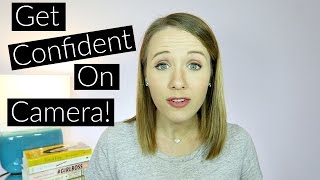
A speaker shares psychological insights and practical advice for overcoming self-criticism and imposter syndrome on camera. The video targets business owners and content creators who fear rejection or judgment when producing video content.
Putting yourself out there on video can be scary. I get it. What are people going to say? Are your family and friends going to see you? Are they going to think you're ridiculous? Being on video, we also start to pick apart ourselves and start looking at everything that's wrong with ourselves. But guess what? We end up being our biggest critic. And the things that we see that are wrong, most people don't even notice. So let's address some of the common fears that are holding you back from creating video content for your business. Number one would be, I don't like the way I look on camera, or I don't like the way I sound on camera. These are common fears so many people feel. So don't think you're alone in feeling this way. So let's get to the root of the problem. It all comes down to a psychological disconnect from what you perceive to what is reality. So we aren't looking at ourselves all day in the mirror, and we aren't really listening to our voices every day. So when the time comes to see yourself on camera or hear yourself on camera, the disconnect happens from what you perceive in your mind to what you're actually seeing. When you play that video back, you're thinking, holy crap, that's what I look like, or that's how I sound. Why do people even listen to me? This sounds terrible, but it's not true. It's just a disconnect that you're having from perception versus reality because you perceive your voice sounding a certain way in your mind, but then when you hear it back in reality, it's something completely different. This isn't something that you should fear. You just have to work on connecting these two. So you have to bring your perception of your voice up to the reality of your voice. And the only way to really do that is to just keep listening to your voice. When I first did my first couple videos and I played it back and heard myself, I thought, oh my Lord, I sound terrible. Like, who's gonna listen to me? I cringe to my voice and I just thought, ugh, my voice is so annoying. But after a few videos and listening to myself in the editing process, I started to get that connect from the perceived sound of my voice to what my voice really sounded like. So now when I edit videos, I don't really cringe when I hear my voice because I've connected those two images together. The same goes with our image. We may think that we look terrible on camera or that we have a face for radio but we end up being our own biggest critic. And the things that we pick out about ourselves really aren't that big of an issue. And people aren't going to really see the same things that we're seeing. People are actually going to have more respect that you're putting yourself out there and being vulnerable on video. They aren't going to think, oh, your hair's the wrong shade, or you have gray hair, or you did your makeup wrong or you don't have makeup on. They're not going to think this. They want the content that you're providing, and they're appreciating you being vulnerable and being on video. In the next lesson, I'm going to provide you more exercises that you can do to really start over, overcoming these fears. So let's move on to a couple more fears that you might be having. What if no one likes me? What if people make fun of me? These fears all stem from a fear of rejection. We all, deep down, want everybody to like us. That's just how we are as humans. We want people to like us. And when people don't, we get scared. We don't like that feeling when somebody doesn't like us. But as business owners, we have to realize we aren't everybody's cup of tea. We're not going to please everybody. It's impossible to please everybody. I love coffee. Any type of coffee, any time of the day, I love coffee. It's hard for me to understand people who don't like coffee, but there are people that don't like coffee. Not everybody likes the same things. So we just need to think of that when we are thinking about trying to please everybody and when that's really holding us back from creating video content. And yeah, some people might make fun of you, but you need to realize those people who are making fun of you probably don't have the courage or the strength to put themselves out there on camera like you are. You are being in your most vulnerable state by putting yourself on camera. And they know they can't do that. Take what they had to say very lightly. If it's constructive criticism, or go ahead and think about that and think how you could change your delivery or what it is that they said on your next video. If it's something downright rude and not constructive at all, totally ignore it and even block that person if you want. You don't have to have that type of negativity in your life. I will promise you, though, you will receive much more positive feedback by putting yourself out there. Than you will receive. Negative. People really appreciate those who step out of their comfort zone and do something that's not typical for them. They see that and they appreciate it. You will really be surprised at the amount of supporters you have after you post your first video, I promise. So let's move on to some more fears. No one wants to listen to what I had to say. I'm going to make a fool out of myself. These fears can be rooted back to imposter syndrome. Imposter syndrome has been talked a lot online recently and it's such a great thing to address, especially when it comes to talking on video. A lot of people think they don't have the expertise to be telling somebody how to do something. What makes me the authority on something to go on video and talk about it? Well, you may not be at the top of your industry, but you're probably a few steps ahead of somebody else. And those people that are at the top of their industry, sometimes there's a disconnect with them and the beginners and they don't remember what it's like at the beginning when you're scraping and you're crawling just to get by, but you being in the middle, where you're just a few steps from scraping and crawling by, but you aren't at the top. You understand what it's like to be a newbie. You have valuable information to provide those newbies so that they don't have to struggle as much as you do. Like I said, just because you're not at the top of your industry doesn't doesn't mean the information that you have to share isn't valuable. You need to redefine what an expert is to you. You may be an expert to somebody who's just starting out, but you may not be an expert to the industry leader. So you're an expert to somebody and just realize that, accept it, and want to share your content. Are any of these fears hitting close to home? Are these some of the reasons why you haven't started creating video content yet? I hope you're starting to reevaluate your fears and and understanding why they can be so crippling and start to break out of those fears. In the next lesson, I am going to give you specific exercises and ways for you to overcome your fears so that you can start creating video content for your business. There's a worksheet associated with this lesson and it's to help you write down all your fears and turn those fears into something positive so they aren't crippling you anymore. I've also written this entire lesson out in the text down below. The text is a little bit more extensive and covers a little bit more just because I'm able to really write down everything that I'm thinking to help you. So if you want to print it out, put it in a binder, highlight the important stuff, and just have it for reference. Feel free to do that. I'll see you in lesson two.
More from Trena







Why Every "Business Guru" Suddenly Went All-In on YouTube (And What NOT to Copy)

