In this video Trena Little explains how she audited 50 coaching‑related YouTube channels and discovered that all under‑performing channels share a single fundamental error: they attract viewers who watch the content, not the people who actually pay for the coaching services. She breaks the error down into three interchangeable manifestations – Wrong Payer (the content is aimed at the watcher rather than the buyer), Wrong Words (titles lack concrete “wallet words” that buyers search for), and Wrong Pool (the audience is too broad or unrelated to the coach’s ideal client). Trena illustrates each pattern with real client examples (a tutor whose viewers are students while buyers are parents; a mortgage advisor whose high‑impression videos target a national audience that can’t become local clients; title comparisons showing the impact of nouns, numbers, and proper names). She then offers a practical three‑step test: (1) verify the buyer persona before filming, (2) count wallet words in the title and ensure at least one is present, and (3) assess whether the topic’s audience can realistically become a client. To help creators apply the test, she introduces a free tool, “Who’s Watching GPT,” which predicts whether a video idea will attract a buyer or a watcher. Trena also shares her own experience of cleaning up her channel by deleting 54 outdated videos that were pulling in the wrong audience, reinforcing that channel health depends on aligning content with the paying customer. The video concludes with a call to action for viewers to declare whether they want more views or more sales, emphasizing that the true metric of success is who is watching, not how many are watching.
Chapters
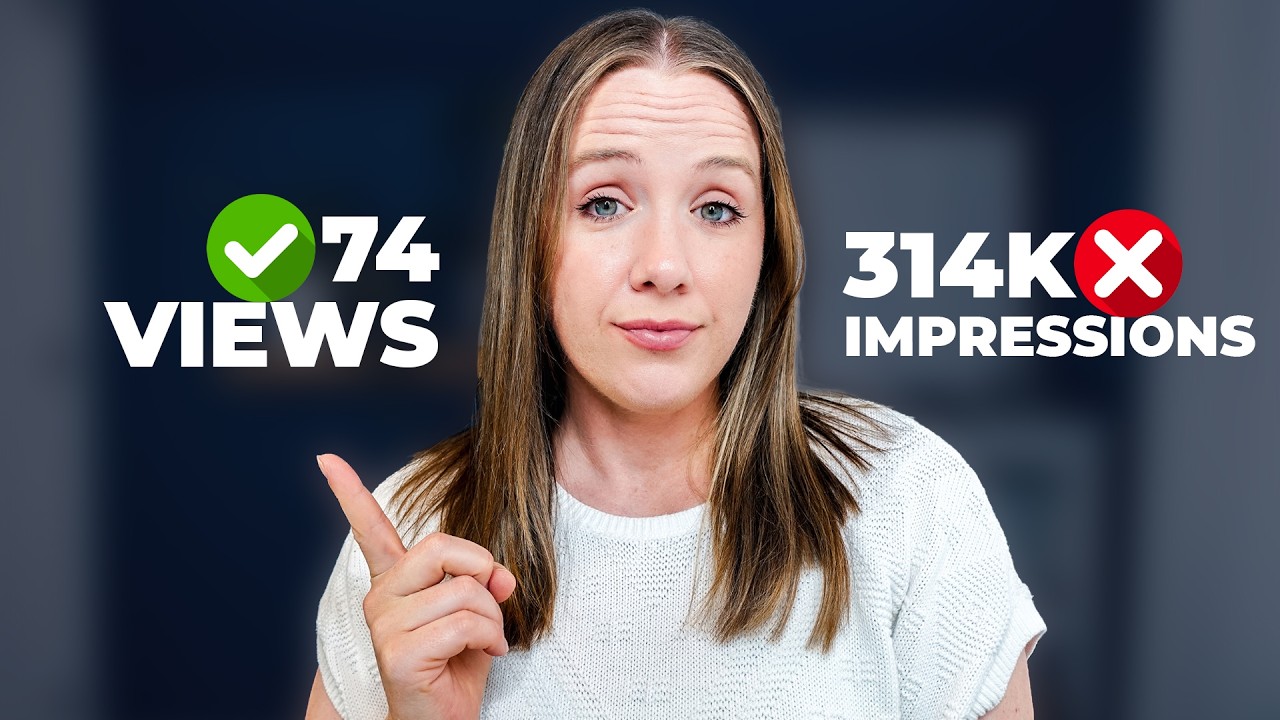
One of my clients gets 314,000 impressions per month on her YouTube videos. That means that's the amount of eyeballs that are seeing her YouTube videos every single month. Another client gets around 74 views a video and closes 5-figure clients from them. It's the same platform, it's YouTube, just completely different results. So I spent a Saturday recently deciding to audit over 50 of my clients' YouTube channels to find out why some clients get great results and some clients get okay results. And I was surprised because it literally came down to just one mistake. And if you're on YouTube or you're thinking about doing YouTube to help you generate more leads and more sales into your coaching program, you're probably making this mistake too. I know if you decide to do YouTube, you're gonna put real time in it, you're gonna take it seriously. And if sales aren't matching the effort that you're putting into it, it can be really discouraging. And I'll be frank with you, incredibly frustrating. I've taught coaches and course creators for years how to use YouTube as a sales asset, about 11 years now I've been teaching this, and it's exactly how I run my multi-six-figure coaching business, working just about 20 to 30 hours per week without needing to be a YouTuber. That's very important. So in this video, I'm going to show you the exact mistake that I found across 50 of my clients' channels, the 3 different ways this one mistake actually shows up, and a simple test that you can do before you film your next video so that you don't waste any more of your time. Here's the mistake in just one sentence. Your channel attracts people who watch, not the person who pays. And let me explain why I went looking. As I mentioned, my clients are good. They have amazing offers, they have great results, they have great testimonials. I know their offers do exactly what they say, and they're also showing up every single week on YouTube. And I knew there was some of my clients that could definitely be getting bigger results. So that's exactly what I did. I took a Saturday, opened up 50 channels and their analytics, and asked myself, what are the clients that are getting these big results, these $15,000 from 19 views, closing $19,000 in sales with just 5 videos. So what are those clients doing that the ones who are getting okay results aren't? I honestly thought I would find a laundry list of things that they weren't doing that the clients who were getting big results were doing, but it was literally just one big thing showing up like 3 different ways. And I want to tell you all 3 of these ways because I'm going to bet some money at least one of them is happening on your channel right now and is you're not getting the results you want. So first, the person who is watching your videos and the person who are paying for your offer or your course are not the same human. And if your content, your videos are built for the watcher instead of the buyer, you can build a big audience that will never send you a dollar. So there's one channel that I was auditing that was for a tutor. Her videos were exam walkthroughs. These were really good exam walkthroughs. The audience retention was great. Students were watching them. Students were commenting on them. Students were even subscribing to her channel. Then I clicked over to her website and every single testimonial on that website was from a parent. Listen to that again. Students watch, parents pay. Her channel, her videos are not meeting the buyer. She was making content for the wrong person the entire time, and she didn't really have any idea that she was because all of the YouTube data was great. Views were growing. Click-through rate was high, audience retention was amazing. So those signals said, keep doing what you're doing, but it wasn't turning into sales. So let me know real quick, comment below why you want to start a YouTube channel or what your goal is for your YouTube channel. Is it for more views or is it for more sales? Type more views or more sales down below because that is really important with a YouTube strategy specifically built for business owners because we are building a channel for more sales. So here's the question, and most coaches have never asked this once: who actually pays you? Not the person that's engaging, saying, "Great content, I love this video, you're so good." The person who actually pulls out that credit card. If your viewer and your buyer are different people, every video needs to be speaking to the person that holds the wallet, or at least be able to hand that viewer something that they can carry to the buyer, or, you know, digitally, or a script that they can convince the person who holds the buying power to 'Cause for this tutor, views, click-through rate, and audience retention said her channel was healthy, but the sales told the truth. That's honestly the theme of this entire audit that I did across 50 channels. But even when the viewer and the buyer are the same person, there's a second version of this mistake happening, and it's hiding in your video titles right now. When your buyer is 48 hours from buying, she's not searching feelings. She's searching things, specific, concrete, typeable things. I like to call them wallet words. They're nouns, numbers, and named moments a buyer actually types into a search bar, whether that be YouTube, Google, or AI. And when I lined up the titles alongside the best performing clients against the rest, the pattern was so blatantly clear. So when we look at a list of titles from the performing channels that were producing sales, you see First Look Treasure Beach Ocean View Cottage Suite. You see, the real reason IVF fails even when you do everything right. You see, 90 Days into My GLP-1 Weight Loss Journey: Real Results. Those are all videos that were getting people to buy from my clients, and they were also the videos that were attracting the buyers. Now let's look at the titles from channels that were getting results, but the sales were basically like crickets. So we have how to feel safe working less, the signaling problem destroying women over 50 in sports. So I want you to take a look at the words here. When we look at the videos, the winners that were producing sales, we see a resort suite name, we see IVF, a drug name, 90 days. The ones that aren't getting the sales, the titles have the word safe, signaling, capacity, alignment, stuck. The winning titles are naming something. The struggling titles are naming a feeling. And this is the piece, this is the proof that should really end this debate. The last two examples, the GLP-1 title and the signaling title, same channel, same person, same expertise. The only difference is the words used in the title. One title has a drug name and a timeline. The other has an abstract noun nobody ever types into YouTube. That first video with the drug name and the timeline, 8.27% click-through rate. The abstract noun, 2% click-through rate. So here's how to test the title before you finalize any title. You want to count the wallet words. Wallet words are proper nouns, numbers, named tools, named moments. If the count of wallet words in your title is zero, don't use that title. Your buyer in crisis, when they're ready to solve their problem, isn't searching feelings. She can find GLP-1, she can find 90 days, she can find a chapter number and a dollar amount. So the thing is, your expertise isn't the problem in these videos. It's your translation. The buyer is out there searching concrete words, and most of the time your titles are speaking in expert words that she hasn't even learned yet. She doesn't know those words exist. Now I know what you're thinking right now. Okay, Trena Little, but how do I know if my next video is going to attract a watcher or a buyer? I built a completely free tool for just this moment. It's called the Who's Watching GPT. You give it your video idea or your title before before you film it, and it tells you who that video will actually attract and whether that person is an expert Esther or a beginner Betty— somebody who will be willing to pay you versus somebody who's not ready to pay you. It's linked below. It's also at trenalittle.com/whoswatching. It takes just 2 minutes. Run your title through it before you even hit record on your next video. But stay with me because this third pattern is the sneakiest one. So this third version of the mistake is where your content works, your reach is great, your audience just doesn't become a client. Remember the client at the very beginning of this video? She had 314,000 impressions a month. Here's what's actually happening on that channel. The content rides big national news topics, trending topics, house headlines, kind of this scary stuff, and it works. This type of content works on YouTube. YouTube is serving it to a huge audience that loves this type of content. The problem? This client is a mortgage advisor who serves clients locally, so The overwhelming majority of those over 300,000 impressions belong to people who never will or never could become a client. And that's not an audience you wanna build. That's going to be a treadmill where you run harder every week and your business just stays the same. So I want you to look at your topics now and ask, can the person that this video is going to attract actually hire me? Is it talking to the right location, the right budget, the right problem, the right transformation? Because broad topics, Mistakes can totally get you reach and get you in front of a lot of people, but reach that you can't convert buys you nothing but a dopamine hit on the analytics screen. All three of these patterns are the same mistake, just wearing different outfits. Wrong payer, wrong words, wrong pool. The channel is attracting the watcher, not the buyer. Before you think I'm sitting here above all of this, let me show you the worst offender of the entire audit that I did. Yes, it was me. Hi, I'm the problem. It's me. While I was auditing my clients, I also wrapped my analytics into this audit as well. And every single month, half of my most watched videos this year were made before 2020. Now I preach evergreen is amazing on YouTube. That's the whole point of YouTube. But evergreen only works when the right videos live forever. And my channel has lived through some eras, and I could do an entire eras tour here on my YouTube channel. And one era in particular, my imposter syndrome era, when I felt like I didn't have enough subscribers subscribers. I didn't have enough views to look like an authority in this space. I made beginner videos that I knew would go viral, like what to say in your first video, how to edit faster, how to make a faceless video, because that's what got views and that's what turned views into subscribers. And I needed that silver play button, right, to look cool. Why I thought that? Because meanwhile, before I made those videos, I was making 6 figures plus in my business without needing to chase those numbers. But that's a story for another day. Here's what those old views were actually doing to my channel. They were sending YouTube signal that my channel was built for beginners. So when I was publishing deep strategic content my actual buyers like you wanted from me, all the stuff about generating clients and making sales here on YouTube, YouTube had already decided who my audience was based on videos from a different version, a different era of me that doesn't exist anymore. So when I would publish these videos, they would go out to the wrong people. YouTube would think my content wasn't good and it would get buried, eliminating the opportunity for me to find my ready to 5 viewers. So a couple years ago, I did a full delete of about 15 videos and a million views. And when I was doing this audit, realized there are some more videos that need deleted. So I deleted 54 videos on my own channel. This was about 1.5 million views total, both deletes gone on purpose, because those views on those videos were attracting watchers. And I'm sorry, but I'm in the business of buyers. So here's the questions I ask my clients all the time, and now I wanna ask you, and I want you to share me the answer in the comments below. Do you want views or do you want sales? Because they are not the same scoreboard. One channel in this audit averaged about 100 views a video and generated over $152,000 in sales. Another gets hundreds of thousands of impressions and can barely convert into a client. The scoreboard isn't how many people are watching. It's who is watching. And when the right person is watching, the numbers just get stupid. My client Nicole, she was able to close $19,000 in sales from her very first 5 videos with less than 10 subscribers. And I'm gonna break down exactly what she did in this video on your screen right now. Click to watch now.