Most YouTube channels will NEVER hit 1000 subscribers... here's why
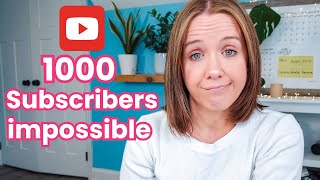
Trena Little explains why most YouTube channels stall below 1000 subscribers and what actually works instead. She covers consistency, the profitable keyword framework, and how to attract an audience that converts to clients.
Hitting a thousand subscribers on YouTube is important because when you hit 1000 subscribers and you get 4000 hours of watch time on your channel, you can get monetized here on YouTube. Meaning YouTube, AdSense or YouTube is going to send you a paycheck every month. The bad news is that paycheck isn't much. In fact, with my channel of about 52,000 subscribers, I'm lucky if I make $250 a month. But in my business, I'm making upwards of 40 to $50,000 a month in my business. But we all love good vanity metrics and we know the more followers or subscribers we have, the more authority we build. Which do we really? Because with people with more subscribers and followers, are they actually good people to follow a video for another time? So let me talk to you real talk. Why most people will never hit a thousand YouTube subs of the biggest reasons is inconsistency. Ever hear of the shiny object syndrome? Yes, I am guilty of it. And I think I've had four shiny object syndromes in the past four weeks. But I know how easy it can be to get excited about something new or to start a new project, starting a new podcast or launching a new YouTube channel. In the beginning, we are so excited. It's something new, it's something fresh. We are 100 miles per hour, right? And then three, four, five weeks later, the hard part starts to come in and that grind of routine and consistency and it's not so new anymore kind of sets in and we get bored and something else distracts us. We Forget about our YouTube channel or we don't make it a priority. And the way YouTube actually works is it will push new content. Like it will actually promote new content more than older content. So when you are publishing a new video, that video actually kind of gets more eyes on it initially. And if you've done the strategy right, like what I teach to all my coaching clients, that initial video, that new video will get push from YouTube for free and you will get more views on past videos. That is the strategy that I talk about. I like to use this chart, for example. It is a compounding interest chart, but I'd like to think about it as YouTube too. And I call it compounding views. So every time you publish a new video, the yellow line, it gets its initial views. But when you use the strategy that I teach my clients, you will get more views on past videos to the point when you are publishing a new video, that new video will get less initial views, but it will stem lots More views on your past videos because people will start binge watching your videos. This becomes important because the more people watch your videos, the more YouTube will promote your videos. So even though it's promoting new content, it's the priority, right? If you have videos, people are also binging. YouTube is going to start pushing those videos as well. Because it's like, hey, people are watching these videos and they're staying on the platform or they're watching hours of content on YouTube. And so you've done what YouTube wants or is asking of you and it will promote your videos for free. I know, I feel like I'm repeating myself over and over again. But not only creating this binge session is important for the algorithm. It is so important for you as a business owner, especially if you want to get leads, especially if you want to generate core sales or get coaching clients or service clients from YouTube. You got to get people to watch more than one video from you. The more you can get them to binge watch your content, the more likely they will want to work with you. And I can't tell you how many coaching clients have come to me and said, you know, I just binge watched all your content and I understand why your strategy works because it just worked on me. How do I sign up to work with you? And that wasn't with any Facebook ads. That was all through binge watching on YouTube. So it's important for you to show up with a new YouTube video and stay consistent every single week. Now, you don't have to do something super crazy with your video. These videos I've been testing on Sunday, super easy. Me talking to you, me editing it, not anything fancy. You just need to decide and make it a priority to get a video filmed and published every single week. One a week. Now, I do want to take a sidebar real quick here because this also gets people a little nervous. Like, ah, do I want to commit to a video every single week for the rest of my life? You can take a vacation off of YouTube. In fact, we've had a client take six months off of YouTube and come back and her channel just kept right going, right? You can miss an upload if you want to skip a week, if you want to skip two weeks, right? I just want you to understand, like, you're not tied into a YouTube video every single week. You're going to start building a library of content that will continue to work for you. In fact, Vanessa Lau recently did a video where she took a year off social completely. Her Instagram completely died. But her YouTube channel basically plateaued. But by plateauing, it was still getting views and it was still getting subscribers, and it's still generating traffic to her business and making her money. So even though you're taking off of YouTube, you still reap the benefits, unlike on Instagram. I believe the biggest reason why people can't get consistent on YouTube is always coming up with a new video idea, right? Because we always hear these gurus say, create a list of ideas. Write down all your ideas on a notebook or in the notes app, or go to YouTube and type in in search and see what comes up. This is not how you're going to stay consistent. Listen, if I had to come up with a new video idea every time I needed to record, there's no way I would be this consistent on YouTube the last eight years, because you're having to start from scratch every single week for a new idea. I got to come up with the idea, I got to research, I got to script it, and now I got to film it. And by the time you've got it edited, crap, it starts all over again and you have all the other stuff you've got to do in your business anyways. So on my channel, in all of my coaching clients that I work with, we use a process called the profitable keyword framework. This is a research process that we go through at the very beginning of building out a YouTube strategy. What we do is we marry together who they're ready to buy viewer is not beginner tutorials and not how to videos, but what is their advanced viewer looking for? And then what are the results we're seeing on YouTube? What are the search results for the specific topics? So we're taking basically these pillar keywords, and these pillar keywords all tie into their ready to buy viewer. From there, we're using a tool called Vidiq that gives us data on how frequently these pillar topics are searched and also related topics. Let me show you in Vidiq what I mean real quick.
So one of the pillar words for my ready to buy audience is digital marketing.
We are all digital marketers.
They are basically who I am targeting. So we type in, I can get it.
We'll just go digital marketing.
What YouTube will do here now in related keywords is tell us other words that the algorithm associates with digital marketing.
So first of all, I can see digital marketing is being searched over 1.2.
Million times, but it's medium competition. So what I can do is find another related keyword that gives me an opportunity. This is a great Example, content marketing. It tells me that this is searched 76,000 times a month with low competition. And what do you need to do in digital marketing?
You've got to create content, right? So I could click on this keyword.
And, and expand my content ideas even more. And I know digital marketing is associated with my ready to buy audience because look at a related keyword, YouTube marketing, Instagram marketing, right? So if I click on here, I could get even more related content ideas. How to scale content marketing right here, low competition, a thousand times a month, content planning strategy.
So this is what I do with my clients.
We go through this process to ensure we are creating the right content, all tying into the ready to buy viewer.
So we collect all of this data on a spreadsheet, which I'm not a spreadsheet person, but we deal with it and we start to go through it in a system where we're analyzing and organizing this data. If you've watched any of my videos, you know I've talked about bingeable content, right? We are just talking about the compounding views phenomenon. But when you go through this profitable keyword framework, you can could build out potentially 50 plus video ideas and build them into this bingeable series of videos. That means you could have, you know, five to six videos within six to eight different series. Now why does this make your life easier? Because you have all your video ideas done. You know they're strategic, you know they're leading into certain videos. You know there are certain series. So when you can sit down to film your videos like I did earlier this week, I can plan my videos in one day, so script them out. And I can sit down today and film multiple. Because it's not every day that I can film videos. I've got calls, I've got clients, I've got kids. And so when I can sit down to film, I'm trying to get at least three to four videos done. And if I already know what my content is going to be and I just need to write the scripts, it allows me to stay consistent for the last eight years here on YouTube. And you also know that you're putting time into videos that will pay off. Because when you build your YouTube strategy in this process, thinking about your ready to buy viewer, that person who is looking for the solution that you have, that person who's not looking for email marketing strategies for beginners or how to start a copywriting business. But there's more advanced topics because they have the money to invest. They also understand the importance of investing and the importance of how you can help them collapse time. And every single video that you create then because of the profitable keyword framework will attract the ready to buy viewer, which will lead into seeing your email list grow, seeing more core sales, and seeing more inquiries to your coaching program or your services. This is why when I had a YouTube channel of less than 30,000 subscribers, I was making over half a million dollars in my business because I wasn't worried about reaching the masses and getting the most amount of subscribers. I was worried about creating the content that the person that would want to work with me inside my agency was looking for. This is also why you don't need to worry about a certain subscriber number. Because when you create the right videos for the right people, they're going to come work with you. And the way the algorithm works anyways is if they're binge watching your content and they never subscribe to you, YouTube's still going to recommend your video to them when they log in again, because YouTube says, oh, this person like watched five videos of Susie's channel. We're going to put some of Susie's channel on the homepage the next time she logs in. But when we get back to why most channels will never hit a thousand subscribers is because most channels are never going to put the time into building this strategy. They will never take the time to go through the profitable keyword framework, which may be, you know, a lengthier research process up front, but then it streamlines every video that you do after that. Most people will just continue coming up with a video idea or picking a random video idea and never really seen either their channel grow or results coming from their YouTube channel to their business. I've actually been hosting a live workshop, Profit per View, where I literally show you how to do the profitable keyword framework, like step by step, what you can do. This isn't a lame webinar where I hold information from you. I literally give you the information. In fact, this is just what some of the people have said about this workshop. And it doesn't matter whether you're starting your YouTube channel from scratch or you've been doing YouTube for a while, or you're doing YouTube and you're like, dang, it's so freaking hard to grow out here. Or maybe you're even posting videos and you're like, I haven't got a sale yet from YouTube. Profit per view is specifically for you. It's just $47 to grab your seat. You do get a lifetime replay. And like I said, I literally walk you through, step by step how to do this profitable keyword framework and talk about the importance of how to find your ready to buy viewer. Because when you do that, this is what happens and this is what happens. And those clients saw those results because they focused on creating content for the right person. Based on data developed in the profitable keyword framework process. They were able to get in front of their ready to buy viewer faster. YouTube was able to understand who they're ready to buy. Viewer was faster, therefore they were able to get in front of more people faster. If you're ready to commit to YouTube with a solid strategy that's great going to provide ROI, you can grab your seat at treanalittle.com forward/ppv for our next live workshop and make sure you try to come live and hang around to the end because I stay for a complete Q and A so that every single question you have about your ready to buy viewer, your profitable keyword framework strategy and anything that you need to know about YouTube I will hang around and answer specifically for you. I Now I know I mentioned earlier I Talked about my YouTube agency where I was attracting six and seven figure entrepreneurs and I burnt it all down to the ground. You can watch this video right here where I talk about why I did it and what I'm doing now instead for my mental health. Go ahead and click it now to watch.
More from Trena







Why Every "Business Guru" Suddenly Went All-In on YouTube (And What NOT to Copy)

