My Content Calendar Strategy Revealed! [HOW I PLAN MY WEEKLY CONTENT!]
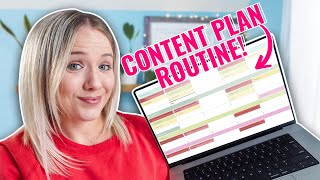
Trena Little walks through her content planning system for entrepreneurs, from defining your audience to building content pillars and repurposing posts across platforms. She shows how to structure a weekly content calendar that keeps you consistent without burning out.
My content calendar is key to how I'm consistently making hundreds of dollars every single day. The content calendar strategy that I use helps me book more clients, sell more products, sell more courses, and helps me build a larger platform to increase my visibility and be able to have the opportunity to speak on stages. This is the ultimate strategy and how I've been able to grow my business to half a million dollars without having to spend a butt ton of money on Facebook ads. But I know coming up with content and creating a content calendar isn't easy, so go ahead and hit that like button right now if you feel frozen when it comes to figuring out content to create for your business. Cause I'm gonna walk you through a process today that I feel is going to open your eyes to a new approach to content that's gonna make it easier for you and hopefully help you book more clients or see sell more so that you just don't feel like content. Is another checklist on your to do list. Hey guys, welcome back. If you're brand new here, my name is Trina and I am on a mission to help burnt out and overwhelmed entrepreneurs get a plan in place to help them start making consistent revenue in their business. Now we're going to be talking about content and I generally see two types of people and I would love to know if you fall into one of these categories. So let me know in the comments below. Are you the person that has lots of ideas but you don't know which one you should start with? Or are you the person that just has nothing? Let me know which one you are down below because no matter which one of these that you are, the process is still going to be the same. And the very first thing that you really need to do and understand is your target audience. This is something that I didn't do well enough when I started creating my content. It wasn't until the past year or two years that I really honed in on my target audience, which really skyrocketed. Skyrocketed my business growth when I knew exactly who I was talking to. You see, for a long time I didn't want to pick a specific person. I just wanted to talk about YouTube. And what it did is it split my people. I had people over here who were interested in learning how to grow a YouTube channel as like their business model, which is YouTube. And I had people over here that were business owners and they wanted to use YouTube as a traffic generator or a lead generator. And what I was doing was not talking to either one of these People I was skirting down the middle and really missing out on an opportunity until I took the time to really decide. These are the people I'm talking to, these business owners that are struggling with Facebook ads right now. They're struggling to get traffic to their offers. These are the people that I need to talk to. And once I understood that like all the content ideas fell into place so that I could get in front of them and make them realize, oh, she is the solution to the problem that I am having. Before, they weren't sure. These people were like, oh, well, she's talking about YouTube, but I don't want to be a YouTuber, so I'm not sure if that's the right person for me to follow. And these people over here were like, well, she keeps mentioning something about a business and I don't have a business, so I don't know this is right for me. And so again, this is why it's so important to really nail down who you are speaking to. And I did a video about not niching. I'm going to link it right up here for you to watch after this. But I've heard from so many people that this video gave them an aha moment to clearly understand how to create this content ideas and really understand who they are talking to. Because until you can understand them, you're not going to be creating the right kind of content for them and it's not really going to do anything for you or your business. And I don't want you wasting time. I want you creating content that makes you money once you know who you are creating content for now it's about your content pillars and what are you actually going to be talking about. So. So more recently here on my YouTube channel, I've been really opening up over the mistakes that I made over the past five years in my business. And content pillars was one of them. When I started on YouTube, all I heard on YouTube was like, niche down, niche down, niche down. And while I did I niche down to YouTube, I niche down a bit too much. And the problem was I just talked about YouTube. So my audience started to get tired of hearing about YouTube. Like Trina, how many times can you talk about subscribers and your first video ideas and what to say in your video? And I got tired of talking about it. You've noticed the past couple of videos may be a little bit different from me because I'm actually passionate about these topics as well and I'm excited to be talking about new things instead of just YouTube. So this is why content pillars come into play and why they are so important. I know you're probably a multi passionate business owner, entrepreneur and this is your permission to be able to talk about different things. But remember we talked about understanding who your target audience is. You need to be talking about the topics that are relevant to that audience. That's why it's so important to understand this audience. So let me break down my content buckets or content pillars to see if that can help you start to figure out the different categories that you can work with. Because here's the thing, you want people to follow you for you and come back basically like Netflix, right? You want people to netflix your content. And if you're just talking about the same topic again and again and again, they're going to get a little tired of it. They want to see your evolution, they want to know your journey. They are bought into you as a brand and so you need to be giving them that information in relation to who they are. So for example, I am a YouTube strategist. So one of my content buckets is obviously YouTube strategy, right? How to build a strategy, how to use that in your business. Another bucket or pillar that has been a huge audience opener for me has been content creation and content planning. Two years ago, Trina wouldn't have done this type of content because it wasn't YouTube specific or YouTube strategy content. But two of my most popular videos, some of my most viewed content here on my channel in the past two years was me sharing about my content calendar. This was just proof that those people that are subscribed to me care more than just about YouTube. Like they see me doing YouTube. But how do I put this all together? So another portion of of my content has been content creation and content calendar. The next bucket I have is business things. I'm going to say. So business advice, business tips, business lessons, learn. Kind of really sharing how I have built my business to what it is. Because I talk about how YouTube has done this for my business. But what happens after people Find me on YouTube? What happens to them? Make that money? And so again, this just broadens the opportunity of people finding me, my audience finding me, because my audience is entrepreneurs who have digital products or digital courses or even a service based business. Right? Um, but this allows me to open up to people that don't even know that YouTube could be that solution yet. Then the other bucket that I have is behind the scenes. I like to kind of really share, you know, how I'm setting up my equipment, what I'm working on. On a day to day basis, kind of what my schedule looks like because I am a mom of two smaller kids, 5 and 7. And so how am I balanc balancing work and life and kids while running a half million dollar business? And this just makes the connection with my audience even more special because they feel they can relate to me. They say, okay, she has built a business that I would like to build as well. I want to learn more from her. And so they are bought in and they come back and they watch video after video after video. And as they see my journey and my progression, they realize, okay, she could help me with this. I'm going to purchase this digital product, I'm going to purchase this program that she has because she has shown me with all of these types of content, how it all works. Now I want to get serious with her. I want to do another example of this content pillar exercise, because I know we can start to get in our heads about this. So we have a client that is a launch copywriter, really specializes in copywriting for launches. So like sales pages, launch emails, launch content. And while that is one pillar, one bucket of content that she does talk about, people may not even realize like launch copy is a thing or that they need something special for launch copy. So another pillar that she talks about is website copy. We all have websites nowadays and so people are wanting to know what to write on their homepage, their about page, right? And so she does a whole chunk of content on website copy. Another huge bucket of content or pillar of content for her has been sharing about her business finances, her journey to getting to feeling comfortable with her numbers, what numbers she looks like, what her finance routine looks like. Her audience eats this up whenever she talks about her business finances. Another pillar is social media content. Look, we all struggle with what to say in our captions or what to write in our blog. And so she has an entire pillar on social media content. And I would say this includes like blog content, so how to write captions, how to write your Instagram bio, like how to write better blogs, newsletter content, all of this stuff. And then a final pillar for her would be email marketing, because again, emails are all written, emails are all copy. And so she's really hitting these different aspects that her audience is interested in, which is all creative entrepreneurs that are getting their business running, they all need to know these different aspects. And so she's bringing them in and she's not getting tired about talking about the same dang thing over and over. And her audience isn't getting tired of her talking, talking about the same dang thing over and over. So I challenge you here to sit down and think about maybe three to four pillars or buckets, what I've been calling them, so that you can stay creative and you can stay passionate about your content and your audience doesn't get bored with you either. All right, now that you have pillars or buckets, let's start creating ideas or putting your ideas into these pillars. So we have a well rounded content plan. That's the whole point of our content calendar strategy here. It needs to be well rounded so that people want to come back for every single video that you create or every single post. Whatever kind of content that you're creating and putting on your content calendar, you want to make sure that your audience wants to eat up everything you put out there. So like I mentioned earlier, you may be a person that has loads of ideas so you can start putting them in these pillars or maybe you don't have any idea. So let's talk about some places we can go to come up with some ideas. One of my favorite places to go is YouTube. Knowing who your audience is is going to help you figure out who they are watching on YouTube. And then when you figure out who they are watching on YouTube, you can see which videos are performing best, which topics are getting the most views. And is that a topic that you could talk about? Because that when you're seeing a channel with a lot of views on a particular topic, that is telling you your audience is interested in it. Right? This is what we call the piggyback strategy inside of video Strategy academ. I really break down how to perform this piggyback strategy and how to find these channels. If you're interested in learning more about Video Strategy Academy, I'll leave a link below. Right now we are in a wait list, but we will be opening it very soon. I'm just updating all the content. But this piggyback approach allows you to figure out what your audience is watching on YouTube so you can create content around that topic as well and they can find you. YouTube can start pairing up you with that other channel that your audience is watching. So for example, let's say your audience is watching channel A and there are some topics that you could totally talk about, put your own spin on and you put those videos up. What you want YouTube to recognize by doing this is YouTube may put on the homepage of people subscribe to channel A your video and that increases your chance of getting more eyeballs, getting more traffic, building your platform right so that's the whole idea behind the piggyback strategy. Some other places that I love to go for content ideas, as well as Pinterest podcasts that I know my audience is listening to Facebook groups. Like, if you go in and you search, you know, if I go in and search like YouTube and Facebook groups, I can see what are the conversations people are having, what are the questions people are having? Any common questions that you get or frequently asked questions that you're always getting? I always get the question how long your YouTube video should be. So these are the ideas you can start really putting into these pillars and seeing where they fit when it comes to what to actually post. Here's the secret. Just pick one and go with it, and then pick the next one and go with it. There's no need to get super strategic right here, right now. You just need to get the ball rolling here with some consistent content. Now I'm going to share with you my little secret for making content creation a heck of a lot easier. And I start with hub content. Hub content for me is content I'm going to put my time into because it's going to last longer. I'm not going to put my time into an Instagram post or Instagram stories because that crap does not last very long. I'm going to do it absolutely to help build my platform on Instagram, but I am going to repurpose content over there from my hub piece. So a hub piece could be YouTube, obviously my favorite, because it lives for years. You could do blogging and I could say also podcasting, although there are ups and downs of podcasting, but podcasting could be your hub content as well. When I'm thinking about hub content, like I said, I'm thinking about content that is going to last for longer than 48 hours, because let's be real, Instagram, Facebook content does not last much longer than that. Now, I am going to show you behind the scenes how I do this here coming up. But I want to get through this process first so you can understand why I do what I do and then show you how I do it. So once you have Your hub content, YouTube, blogging, podcast, whatever it is, then you would use some of that content for a second platform. For me right now, I've talked a lot here on my channel about a minimalist approach to my business because we're focusing on some other goals behind the scenes in my business. So I'm really only focusing on YouTube as my hub content and then Instagram. So what we do with my YouTube content is we will pull like a really good clip from it and turn it into a reel. We will also kind of summarize the main points that I'm talking about here in this video and put it as an Instagram post. We have created Instagram carousel templates because Instagram algorithm love saves. So we do is pull out the key points people need to know that they would want to save and come back to and put that in an Instagram post. And that is how we are using our hub content and repurposing it on Instagram because it makes life easier. But it also streamlines what you're talking about because you don't want to be on YouTube talking about a topic and then on Instagram talking about a topic and then your newsletter talking about a topic. Your audience is just kind of like, what? Wait, what? You want to stay streamlined with the content that you are posting each week. But until you're creating consistent income and you can start to hire help, don't worry about being on all the platforms right now. Just focus on your hub platform and your second platform and when it comes down to it, ultimately pick what you like because you got to live with it. It's your business. You get to make the rules and the decisions. The next thing that you need to do to have a strategic content plan is figure out how you can cross promote. So like I said, if you are On Instagram and YouTube, how can you cross promote your Instagram on your YouTube channel? How can you cross promote your YouTube on your Instagram account? Because if you're on both of these platforms, not everybody following you is going to see that content, and not everybody following you on YouTube is going to want video content. They may want a quick recap on your Instagram and not everybody on your Instagram is always going to want to, you know, written content. They may actually like to watch you on video. So what we've been doing is actually cross promoting our podcast with our YouTube channel. And our podcast strategy is totally different. If you would like to hear like my podcast strategy, leave the comment podcast below. So I know you're actually interested in that. But what I do is I will talk in my podcast. My podcasts go live on Tuesday and I usually have a YouTube video live on Monday and Thursday. So Tuesday I just reference, you know, something that I spoke in particular to that podcast episode that I also talked about on my YouTube channel that week and tell people, you know, check that out. And then on Thursday's video, I will mention something about that Podcast episode. My podcast episodes tend to go a little bit more personal, where these YouTube videos are more tactical pieces. And so that's how we kind of differentiate that, but we cross promote. So for example, I'm looking at my content calendar and for this particular week on Monday I talked about about overthinking your YouTube strategy. And then on Tuesday a podcast episode went live about what I would do differently if I were starting my business and my YouTube channel over. And in that podcast, I talk about how I go into more detail about why overthinking your YouTube strategy, not actually getting started, is holding you back and really causing you to lose out on thousands of dollars. And I say I go into more detail about that on the YouTube that was released on Monday and then on Thursday's YouTube channel, I'm talking about my minimalist approach to business. And then I mentioned that I dive into how I would start my business all over again if I was starting from scratch on my podcast episode this week. So hear what I would do differently in regards to like this minimalist approach. So we're cross promoting and we're growing platforms together. All right. Once we have that all down, we're starting to get kind of a formulated plan here, right? We know who we're talking to. We have our content pillars, we have our ideas, we have our hub and our secondary content. We've talked about cross promoting, but if you miss this step, none of that matters. You have to actually make time to do this. No, seriously, if you do not put this stuff on your calendar to do, you will not do it in real time action. Like, okay, I got a post today, let me do that. It will not happen. You will find an excuse. So what I like to do is I have a system that in my weekly schedule and every Monday I take time to plan content. And then every Wednesday, like I'm doing right now, I sit down to record content. I know I'm recording, you know, either YouTube videos, course content reels, TikToks, whatever I am doing on camera because I know I got to do this is for Wednesday and if you do not put this on your calendar and treat it like a doctor's appointment, it is not going to happen. Let's take a look at my content calendar so you can see what this looks like in a real life. Now I going to show you my content calendar in Asana. You can literally use anything. In fact, I have Google Calendar pulled up to show you how you can do this just the same on Google Calendar ClickUp, whatever you're using. So I probably picked the wrong colors here. I got to go and update this. But you see, the dark red are my YouTube videos that are planned. And we're currently planning April content. I'm filming this video at the end of March, and I like to have an idea of at least the month. I don't shoot these videos. I shoot them about two weeks earlier before they go live. So my video editor has plenty of time to edit them. But I do like to have a general idea of what my content is going to be for that month, because we may actually tie in a theme. This is more going into, like, a YouTube strategy that I have called my firework approach on YouTube. That's for another video. If you're interested in that, let me know. But this is how we get started. So I am looking at. This was my content at the beginning in the middle of March, my YouTube video. My YouTube videos. Okay. And then my podcast episodes. So I know why overthinking YouTube YouTube strategy is costing you thousands. That was the YouTube video. We then took that particular video and we pulled out the main takeaways and put them in a carousel post like this. And this is templated, so we just have to change out the text in here. And we can see in the insights already that this had five saves. And while that doesn't seem like a lot, I have a small Instagram following that is a positive for the Instagram algorithm. And so it's actually going to push it to more people. So it doesn't say here on desktop, but it will tell me how much this reached my actual followers and how much it reached new people. And when you have saves, it's going to reach new people, which is going to help you grow your Instagram account. The other thing that we've done, I said, is turn this into an Instagram reel. And we literally just pulled out a clip from the video. We put text on it. My amazing video editor did this, and we recapped some of the content on here and publish it. And you can see it's not showing me here, but this particular reel has about 1400 views, which is on par with some of the original reels that I did. You can see I did this original reel 1200, 1800. And so it's actually working for us right now. So what that would look like is I would take this, and then I would just add in here an Instagram reel. So we would do reel, and I have this all color coded. So I can go in here, I can add a tag that is Instagram. Let's say an Instagram post here and then maybe we add here, maybe we'll add here the Instagram post, which is a carousel. So I have again, this saved in here. I don't know, we'll just. Again, just as an example. And this starts to fill out your content calendar. You know, you're talking about overthinking your YouTube strategy these two days. Your podcast drops here. It's talking about what I would do differently in my YouTube channel and business, which is also tying in. I would have stopped overthinking my YouTube strategy and just get videos on YouTube. And then I'm also talking about my minimalist approach to my business, which is focusing on YouTube, predominantly on YouTube. And then I mentioned, you know, if you are overthinking your YouTube strategy because you haven't posted yet, make sure you watch this video, right? And all of this content is all tied together. You can do this just like I said on Google Calendar. So you could come in here and let's say you post a YouTube video. You can color code this as well, right here in Google Calendar and you can create the exact same thing, whether it's in Asana or not. But this is really the strategy that I have behind creating my content. I never don't know what to post. I know I'm focusing with my YouTube content, my hub content. Then this content drops and I sprinkle it out through half the week. And you can add layers to this. Let's say you want to add a Facebook video. You just take, you know, the video that you posted on YouTube, you put it on Facebook, you can come in here, add that Facebook again. I already have these tags set up, so everything is color coded for me. And so what I do is right now, as I'm shooting this content towards the end of March, I'm going to go in and fill up my April calendar. I do this 30 days at a time. It doesn't mean I'm stuck in stone to the second half of the month's content, but I know I have a direction and I know how each one of these videos are going to feed off of each other. So I'm creating bingeable content on my YouTube channel. I'm creating content that people want to watch more than one video so that YouTube starts pushing my content out to more people. But that's a YouTube strategy video. All right, I need to know if you're picking up what I'm putting down and you have made it this far. Does this help you start to look at content planning a little bit differently. So you can see the possibility if it is, and this has kind of changed your perspective and you see how this can be easier than what you thought. Put in the comments below possible, because that is what I was really hoping to get across here, that content planning and a content strategy is possible if you approach it a little bit differently than maybe you thought before. And really, when you start with that hub piece of content, it's going to be really easy to figure out what you're going to talk about the rest of that week. No matter what platform you choose to be on, you just really need to know what that weekly YouTube content is going to be to then loop in those platforms. Now, nine times out of 10, when it comes to YouTube, you're probably overthinking your strategy. So I highly recommend the video that is on your screen right now where I'm showing you how literally overthinking your YouTube strategy is costing you thousands of dollars every single month. So again, make sure you click on that video right now and check it out.
More from Trena







Why Every "Business Guru" Suddenly Went All-In on YouTube (And What NOT to Copy)

