My YouTube Content Calendar + How I Plan My Videos
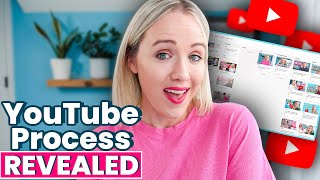
This is a YouTube video titled "My YouTube Content Calendar + How I Plan My Videos" created in May 2023. The content features a single speaker sharing detailed strategies on how they plan, batch, and produce YouTube videos as part of an organic marketing approach for their coaching business. The speaker discusses content calendars, video production workflows, batching techniques, and the importance of titles and thumbnails to maximize engagement and conversions. The video also highlights the use of a content team and marketing support to optimize video reach and repurposing content across platforms. There is no indication of multiple speakers or a conversational format.
When I publish or choose to publish a video here on YouTube, there's a bigger strategy that comes into play when I'm deciding what are the videos I'm posting and when I'm posting them. In this video, I'm going to be sharing with you not only how I create my YouTube content calendar, but also how I make weekly content here on YouTube possible. As a multi six figure business owner, a coach, a mom to a 6 and 8 year old and still only work about 28 hours a week on this channel, I help online business owners create a sustainable organic marketing strategy that will drive consistent traffic to your offers, helping you build and scale a profitable business without the headache of overwhelm that so many of us entrepreneurs struggle with in this space. If this is something that you really want to take seriously and get your business to that next level and have a solid organic marketing strategy in your hands, there's a link below this video in the description box to an application to work with me. We can get on a call and see how I can best support you in making this possible. I personally read every single application that comes through because we're very selective in who we work with. I only ever work with 100 clients at a time so that I can give personal real time feedback to each of my clients. I don't hand you off to another coach. It's me working with my clients inside of this program. So make sure you fill out that application with as much information as possible to make sure we need all the information to know if this is going to be a good fit or not. Now the first part of this video I'm going to talk about how I calendar out my YouTube content and figure out what videos going live each week. Then the second part of the video is I'm going to show you my entire process of how I do it, how I batch, how I set up my filming space, how often I record, what my workflow system looks like, and most importantly who I have working with me to make this all even possible. Okay, so first up, YouTube Content Calendar. If you watched last week's video, which I will link right up here for you to watch after this one, I talked about the importance of thinking of your videos in a four to six video series. The thought process behind this is to get people to binge watch four to six videos of yours at a time. Not only does this make the YouTube algorithm happy because you're getting people to watch more content and keeping them on YouTube longer, thus getting YouTube to put your videos in front of Even more of the right people who are then going to binge watch your content and the cycle continues. But doing this process gets people or a viewer to watch multiple videos of yours. What this allows them to do is get a sense of who you are, your style that you teach, and if they would want to work with you. The more videos that somebody watches with you, the higher the conversion rate becomes of them when they go to a sales page or a work with me page. Because if they've watched multiple videos of yours, they are more bought into your style, thus increasing the conversion rate. So knowing all of this is why I align my YouTube content calendar with my promotions calendar. In my business. One of the things that I share with the clients that I work with inside of my coaching program, 10 count replay, is how we create a marketing strategy in my business first that then formulates what my YouTube strategy is going to be. This marketing calendar, when completed, includes Things like my YouTube videos, my email newsletters, my blog posts, my Instagram stories, my Instagram posts, like basically everything marketing wise, that's going out to the public or content that's being created. And it all fits with what we are promoting. Because if you aren't actively promoting something in your business, how will people know what they can buy? Thus, if you're not actively promoting something, you're probably not going to make sales. So that is why again, we start with our marketing calendar. We figure out what we are promoting, we create our YouTube content calendar, and then all the rest of the content for any other platforms that I am on follows the weekly YouTube content. So let's walk through an example. In April, I was promoting my coaching program 10 Count Replay by hosting a one day virtual event, 10K Con. So the six videos that I published on YouTube leading up to the event, the goal was to get people to watch that video and buy a ticket to the virtual conference. 10 KCON. All of the content that I was creating in this series of six videos was going to be a great lead into why they needed 10k con to dive in and learn more about these particular topics and why it was going to be so important for them to get their ticket right now if they really wanted to get deeper on this topic. When we looked back at the numbers in our launch debrief, the conversion rates from the traffic that we got from YouTube was over six and a half percent. So out of all the people that came to buy a 10k con ticket was 6 1/2% of the people that landed on that page bought. And that's a pretty high conversion rate for a sales page, particularly a virtual conference with over six and a half percent. This again showed why it is so important for me to utilize YouTube and creating this YouTube content calendar to feed into my marketing and promotions. Another example of this entire process that we use our YouTube calendar for was in January we released a new product called Going Video. It was a. It's a $37 offer where I walk you through how I create my YouTube scripts and provide you template to my viral video scripts. I also walk you through how I set up and do everything when it comes to filming my videos. And I also give you my complete workflow within asana and show you how I use that and give you basically the file to upload into your asana as well. So that you had a system now for creating weekly YouTube videos in going video. Our conversion rate from the traffic that came from YouTube so anybody that watched a video on YouTube that then went to our going video sales page was over 11%. Over 11% of people that went to Going video sales page from YouTube purchased. On top of that, 37% of people that purchased also added a bump. We added an additional $17 workshop that they could purchase a workshop on how I batch my content. 37% of people then added that to their purchase. And from all of the people that purchased, 43% of people that checked out then also bought an offer that I have on the back end that was 97 DOL. So what YouTube has allowed me to do was drive traffic to the Going video sales page knowing 11% of people that go there are going to buy a $37 offer. Some of those people, like I said 37% added that bump which took the cart value the amount of money that I was making up to $54. And then on top of that, 43% bought a $97 product which brings the total value of this traffic per person to $151. They were convert a higher conversion rate because they watch my videos directly targeting the topic that would get them to want to buy Going video, increasing the conversion rate. This is why it is so important to know what you are promoting so you can form your videos around that promotion and help you sell more. So the next question like that sounds pretty good. I need more people to my sales page. I need a higher conversion rate on my sales page. YouTube might sound like what I need. How often are you posting, Trina? So I'm going to be honest, from from January to March I was publishing videos twice a week. Now There was a reason behind this. When I started 2023, I knew I wanted to shift the algorithm and really how it kind of classified my channel. And I really wanted to break out of this YouTube educator space and talk more about organic marketing strategies because that's what I really do. I think YouTube is super important as an organic marketing strategy, but there are so many other pieces that need to fall into place for YouTube to even be successful in your business. So the quickest way I could get the algorithm to recategorize me was to put out updated content with a new content strategy. So by me doing two videos a week it just allowed me to pump out more content quicker to get the algorithm to reclassify who was the best audience for me. I am now back to one video a week and I personally believe as an online entrepreneur, if you're selling your online courses or you're selling a self liquidating offer or tripwire or you're selling one on one services or coaching, you can get away seriously by doing just one video a week on YouTube and still see the benefits. Especially if you're going to tie in your YouTube content strategy with the other parts of your marketing strategy like email marketing, Instagram marketing, blogging, all those other pieces. Now I would love to go into more detail about how I plan my videos, like coming up with the idea to the title, to the thumbnail, like all of that stuff, but not in this particular video. So if you have any questions about that please please ask down in the comments. And I would love to follow up with you and potentially create a follow up video on planning content for YouTube because it's time to move on to the second part and that is the production process of my weekly YouTube videos. I have a complete video game plan that I fill out before I shoot any content and there's a specific process in how I fill out this plan as well. This all ensures that I'm setting my video up for the most success on YouTube and I actually have this video game plan template available in of going video. So if you just go to trina little.com forward/going video you get this viral video script template as well as my complete asana workflow and a few tips and tricks and how I record my content. But let me walk you through what is really important to know here. Like I said, I always start with the title first. Here's why. Your video title and your thumbnail are basically marketing package for every single video that you put out and it does not matter how great your video is how professional it's recorded. If you're on a professional sound studio, you know everything. If people don't click on that video because of the title and the thumbnail, nobody is going to watch it and it's ultimately going to be buried by YouTube. So before you even think about the content that you're going to create in a particular video and you start booking that film studio, which you don't really need, you need to think about what is the title going to be and is it click worthy? Meaning is it going to cause enough curiosity, curiosity to my audience, Is it going to show enough value to my audience that they want to click on it? This is why it's also so important, which I talked about in this video about myths on YouTube. You're not packing this title full of keywords like how to start a squarespace site or how to start an Instagram account. Those are boring. People aren't going to click on them, they're not sparking curiosity and they're not promising value in that video. So you really need to think about the title that is going to do this first before you move forward with the content. I also prefer to come up with two to three additional titles so that if our click through rate isn't where we expect our click through rate to be, we can switch out that title quickly to get our click through rate up as well. It's just ultimately having a backup plan if our video doesn't end up performing where we want it to. The same thing with the thumbnail. Once you have the title, you want to think about a thumbnail that is going to assist that title. Which means not just putting the title on the thumbnail as text, but what complimentary imagery or what complimentary text can you use on that thumbnail that's going to tie this marketing package together is going to encourage people to click and actually watch your video. Once I have these two critical pieces determined first, then I start basically brain dumping my thoughts for this video based on the title. The content should always deliver on the promise of the title. Always. So you can see these different areas on my video game plan on where I'm putting questions that I've heard people say, questions that I've answered before, thoughts, ideas. I'm just starting to brain dump because then further down in the game plan is when I start pulling this all together in basically a script. Now, I don't like to call it a script because I don't think you should be reading your script word for word. I'm not actually doing that right now I have my script on my computer over here. I take a glimpse at it every so often to get back on track to remember what I wanted to say. I'm also not reading from a teleprompter prompter because I believe that we can see you and it just eliminates that personal connection that you're trying to make with your audience when you read from a teleprompter. So I created Video Game Plan which is a combination of my script written out, bullet points and outlines to just ensure I'm covering everything that I want to cover. I will do these video game plan in batches. So as I record this on a Wednesday, I did this research yesterday. On Tuesday, I go through the whole game plan first for each video before I move on to the next one. So I came up with the title ideas, the thumbnail ideas, and then I wrote the game plan for one particular video which was posted last week. Then I did this particular video, the title, the thumbnail idea and then I wrote it out. I did those all on Tuesday. I do not try to film and script on the same day because it just takes too much energy to do both of those. And I know I need all of my energy to show up here on camera. I know it's the very first thing I'm going to do here on Wednesday. It's going to get. The most brain power that I have all day is shooting these videos. So I do want to talk about batching here and I think it is critical if you want to stay consistent on YouTube you have got to batch at least two to three videos in a sitting. I will tell you I have batched up to 14 videos in one day. Now my content during that time wasn't as. I feel jam packed or as robust as it is right now. And I was also nine months pregnant so I was trying to get a lot of content off my plate so I didn't need to do it with the newborn in hand. But I don't do that anymore. And I would say the max amount that I can batch is about three to four. After that I notice my energy really dip. I start to get kind of blah here on video. I start to really just overthink things and start to get into my head because my energy is so low. So I do encourage you if you are going to batch, do two to three videos at a time. That does mean you will need to block one to two days in your calendar each month for recording so that you have the space to do this. Because listen I don't want to look like this every day. I'm not putting lipstick on every day. I also don't want to set up all of my equipment to do this every day as well as you can see. I mean, honestly, I'm really just throwing a bunch of crap on the floor down here so that it looks put together. But I don't have the time to do this every single week. I don't know about you, but I just don't. So the typical batching day for me, like day I got the kids on the school bus around 8 o' clock and then I ate my breakfast. I always like to have a little bit of a slower morning, eat my breakfast, not rush into the day. I've done that plenty of times, rush into the day. But something I'm trying in this quarter, quarter two is just slowly start my work day. After I eat breakfast, I then do my hair and my makeup. I get my equipment set up here and I start recording. I have nothing on my schedule for today other than these videos because I'm going to talk about here in a few minutes. The other things that I do on these batch days in addition to recording that are critical to a batch day success. Okay, so once my hair makeup's done, I'm sitting here doing the video. The very first video that I will shoot, I will shoot all the content. You will notice that I am moving my camera. So I pick it up every so often throughout a video and I just move it slightly to get a different angle to keep you engaged, to keep your eyes engaged. And I will go through the entire video doing that. That all I am doing is I'm looking at my game plan. I'm following the plan that I created yesterday. After I film each video, I then shoot thumbnail images. And that's literally just me turning the camera on self timer and grabbing a few photos of myself. That is why the thumbnail concept is so important too. So you know what kind of image you need of yourself to get a thumbnail for that video to increase the likelihood of your marketing packaging of your video being successful. I keep my equipment incredibly simple. The more complicated it becomes for me, the more frustrated I get and I don't do it. So all I have as far as lighting is I have a ring light right in front of me. You'll see that I have a soft box this side of me. Because if you notice when we're moving the camera, I have a window over here that puts light on this side of me. So I need to Balance it with a softbox over there. As far as the camera, which I will get footage of with my cell phone and show you right now. It's a Sony ZV1 with a rode shotgun mini mic, something like that. I'll link to it all down below in the description box. But it becomes one package. I have the camera on the tripod with the mic and I can move it around super easy. You can see that I do back here have like a super fancy camera with a lens. I spent probably close to $1,000 on that fancy DSLR camera with the fancy YouTuber lens and it was too difficult and complicated for me to set it up. And I don't like to make this process, process hard, simple, easy, point and shoot is what I need to make these batch days successful. Now here's a massive pro tip. If you want to create more content in one day, I highly encourage you to repurpose your content. But strategically what I mean by that is not just pulling clips out of these YouTube videos, but creating native short form content, whether that's reels, TikToks or YouTube shorts. But it needs to be native. So what I have done in the past and when I'm feeling more energy and I'm feeling up to it, because remember Instagram's not my number one platform so I'm not there consistently. But when I am feeling the energy, I will grab this tripod that I have for my phone. I will take my phone which is right here, I will put it on the tripod and I will speak to the camera, sharing different parts of my video game plan. So in creating native content for Reels, TikTok specifically in vertical form, I have noticed not only with my own content, but my clients content as well. When you repurpose YouTube videos to short form, they just don't perform as well. You need to be creating short form content for that platform specifically and you can do it with all the time that you put into your video game plan, just splicing it up and sharing it a little bit differently for short form content content. So I've done that. Where I've shot the YouTube video, I've done the thumbnails, then I pull up this guy and my Bluetooth microphone and has shot two to three reels for each video as well. Now once this is all shot, I will then upload it to my computer. Usually this is around lunchtime. So while it's uploading to my computer I go get my lunch and I look at okay, what B roll content, what screen Grabs. What screen recordings do I need to get next to make this video even better? Now, I worked with my video editor for a few months now and she really understands my editing style. When you start working with a video editor, the more feedback that you can give them and the more insight and the more direction, the easier it's going to be for them to get up to speed. And so now we're really up to speed that she creates amazing first drafts for us and it eliminates my need to always create B roll. But if I am doing something where I'm showing you me doing my makeup, I need to make sure I have footage for her of me doing my makeup. So what I will do while my videos are uploading again, because this entire day is blocked off, I'm making sure she gets all the footage that she needs to edit my videos. I will also take the images that I took for my thumbnails. I will put the filter on thing that I do to make my thumbnails look all consistent. And then my marketing director, Erica, we'll send it to the thumbnail graphic design agency that we use custom thumbnails. So you've heard me mention now how I'm making this possible. I have a video editor and I have a marketing director by the name of Erica who helps me get some of this stuff moving along. Now, once the video is edited and the first draft is reviewed and approved, Erica will then upload my video to YouTube. She'll write the description box, she'll add the tags, she'll add the cards, she'll add the the end screen, she'll add it to a playlist, she'll do everything that we need to do to set that video up for success. Add the thumbnail and then she will actually track that video for the first couple hours to see what the click through rate is doing. Do we need to change the title out? Do we need another thumbnail so that we can ensure it's set up for success? And once this video is edited, at least the first draft, I have a content team as well, Uncanny Content. And I'll link them below if you're interested in learning more. That will turn my video into a newsletter to send out to my list every single week. Not only does this provide value to them, but it tells them to go watch my YouTube video as well. So it gives me traffic to my videos. They also write it in blog form as well. So now I have a blog with a YouTube video embedded and they turn it into about three Instagram captions for us too. So it does help us stay consistent on Instagram, even when I don't want to show up because we're using the main piece of content that I create every single week, YouTube, and just molding in, tweaking it for each particular platform that I'm showing up on. And this has honestly been the best investment that I've had, is hiring Latasha and her team at Uncanny Content, because like I said, an email newsletter every week, a blog post. I'm spending a lot of time here on these YouTube videos and I want to make sure I'm getting the most juice squeezed out of it as possible. And that's what they allow us to do with each YouTube video. Now, I will mention from earlier in the video I talked about working with me one on one in my coaching program. One of the pieces pieces that we work on with our clients inside of 10K replay too is their YouTube strategy. Because we heavily believe in YouTube being the hub of all your content because it lives longer, it's searchable, and it is so darn good as evergreen content. And then moving it around in different places like your newsletter and your blog and Instagram. And if you want somebody to work with you, build your YouTube content strategy, help you create a system for doing your YouTube channel. I highly encourage you to to apply to work with me inside my program. The link will be down below. And if you want a more detailed explanation of how I script all my videos, watch the video that's on your screen right now because it goes into full detail and I will see you over there.
More from Trena







Why Every "Business Guru" Suddenly Went All-In on YouTube (And What NOT to Copy)

