SETTING ONLINE BUSINESS GOALS IN 2024 (How to do it RIGHT!)
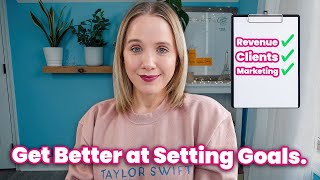
This is a YouTube video titled "SETTING ONLINE BUSINESS GOALS IN 2024 (How to do it RIGHT!)" created in February 2024. The content features Trena Little, a YouTube strategist and business coach, discussing how to set realistic and data-driven goals for online business owners, particularly those selling courses, coaching, or digital products. Trena shares detailed insights on revenue goals, client acquisition, conversion rates, and tracking metrics using tools like the Marketers KPI workbook and Profit per View workshops. The video is instructional and aimed at helping entrepreneurs plan and achieve their business goals effectively.
Setting goals has not worked for me, period.
I don't know if you can relate.
But at the end of every year we're getting excited about the new year. Fresh start sitting down, grabbing a cup of coffee or tea or maybe a margarita and planning out your goals for the new year. Gone through the steps and within three years into the new year, the goals are completely scrapped. I'm nowhere close to hitting them. I'm incredibly discouraged and I decided to completely change the plan I mapped out based on the goals I set. And it took me hours to do because it's just not working for me. Go ahead and hit the like button. So I know that you can relate to this feeling of goals just not working for you. Because in this video I'm going to share with you what I'm doing differently that allows me to know my goals so clearly, which then allows me to set up a better plan that I actually can complete and hit my goals. Let's have you stick to the end of this video. I'm going to share with you three goals that any online business owner, whether you're a course creator, digital shop owner, should be setting in their business. My name is Trina. If you are brand new to my channel and I'm a YouTube strategist and business coach. I help course creators, service providers, and online coaches start to use a strategy on YouTube that attracts people to their offers and optimize their offers to ensure maximized conversion rates on those offers.
The first thing I did when I.
Completely changed the way I was setting goals was I started to get realistic at the end of the year. We're in this dream period, right? Thinking about the new year. We want to have the best year ever. We're setting high goals, but we aren't thinking realistically about those goals when we decide to write them down. What I do now is I know exactly what my goals need to be to help me achieve what I want to achieve in my business. I do this first by knowing exactly what I need to make in my business by the end of the year. Like what I need to take home in revenue, what do I need to bring home to live the life that I want to live, to do the things that I want to do. You know, the fun stuff. Fortunately, my cost of living, where I'm at, where I'm living right now, isn't that high. And based on professional tax advice, I give myself a pretty moderate salary or paycheck every month. It is not massive, but it's enough that I know I can run to Target this month if I want to, or I can pick up new Taylor Swift gear if I want to.
Once I know how much I need.
To make, I add in how much I need to pay my team members to keep them on board. Humans always come first in my business. From there I will look at contractors, then I will look at any software programs that I'm participating in or need to have a subscription for my business. The next thing I look at when I'm adding up right all of my expenses so I know how much I need to make to keep the lights on is marketing expenses, particularly Facebook ad budget. This is something really new to my business here in 2024, so I don't necessarily have the best grasp on what that budget would look like. I set a number here for the first of the year and we're going to set see how it goes moving forward after that. Then I look at continuing education or how I'm going to invest in myself. Because if you aren't putting money in yourself to learn how to get better at things, to have a support system, to have peers around you is going to be very hard to do this.
Business thing on your own.
So I always have a budget set aside as well for masterminds, coaching program, those types of things. Then the last piece that I look at are those business softwares are those conferences, travel or any of the other expenses that I had in my business the prior year. So once I've added those all up and I got a good idea of what it costs me in my business, plus how much I need to make to pay myself, boom. I have a revenue goal that is exactly what I need to make. I'm not pulling it pie out of the sky number. I'm not picking it based on what some guru tells me I need to make this year to feel successful. I'm picking the number I know I need to make to live the life that I want to. Like I said, this number isn't massive. It's not even seven figures. To be completely transparent with you, it is the number that I need to make to keep the people on board that I want to keep on board, have a job that I actually like and don't need to go somewhere that I hate like I did when I first got started working. And I have the flexibility in my life because I am running my own business. If a kid calls home from school sick like they did this morning, I can go pick them up without having to worry about a boss or a manager to deal with. Now this is where I'm at right now with the life that I have with the kids, the age that they are, there may be a time longer down the road that I want to increase this number, that I want to do more things that I have more time to put into my business. But with a seven and a nine year old, they're still kind of reliant on me. I've got time between when they go to school and when they come home to work. But again, they need me more than what they may need when they're like 15. And I may decide to bump that revenue goal up because I have more time to focus on business things. But I am not chasing a massive business. I do not want a team of 10 people to manage. I want simplicity, I want profitability, and I want easy. Right now, starting with a realistic revenue goal at the start of setting these goals makes all the other goals that I have in my business so much easier to set and achieve. Now, if you watch last week's video, which I will link right here, I talked about how I stay focused and organized in my business. And a huge reason how I'm able to do that is I stay focused on just one offer in my business. This eliminates so much freaking work. You want to believe it actually allows me to make more sales because I'm much more clear in what I offer and how you can work with me, and it ends up driving more revenue than if I had a product suite. Knowing that I have this one offer and knowing what my revenue goal needs to be, now I can set the goal of how many clients I want. And that number of clients directly relates to how much it costs to work with me, how many people I need to do that to get to my revenue goal. And that's pretty easy to figure out. I just take the amount of my program divided by the revenue goal that I want. Bam. 75 clients. Again, transparency with you. That's all I need, 75 clients a year to hit my revenue goal. I'm not trying to make this super difficult. The last few years in business have been hard enough. So let's not overcomplicate our goals and our metrics and what we're trying to make right now. Let's just keep the lights on in our business and like the business that we're in. Okay? So I know how much I need to make, I know how many clients I need to have. How am I going to get that many clients in my business? That is the next goal that I set. Since my program is by application only, because there are limited spots. I just told you 75 people. I have people who apply so that I know that they are serious about my program and B, to get on a call with me because I am very protective of my program and I want to just touch base with every single person who wants to be in it and make sure it's going to fit into the community that I've already created. This is where the power of doing one strategy over and over and over again comes into play. Because you can start tracking historical data to have a better understanding if your goals can realistically happen. So the main way that I get applications to my program is talking about it on my paid workshop Profit Purview. I've done about seven sessions of profit per view at the time of recording this video. So I've got a lot of data to help me figure out what I can realistically achieve from profit per View. Let me actually show you a little behind the scenes of how I track this data. So I can see what my application rate from this program is. What is my call booked rate, what is my close rate? So again you can see how I'm using historical data to set realistic goals to get to the revenue number that I need.
This is the spreadsheet that we track all of our data for profit per view.
So if we go back to the.
Very first one that I hosted on September 19th of 2024, we can see the overall view that we got from organic traffic because we break this up organic versus Facebook because we want to be able to contribute. Is the budget we're putting in the Facebook ads worth more or are we in the hole? So you can see right here we had a little over 600 people to the sales page, 57 purchase. That's over 9% conversion rate. Then 15 people bought the bump and 15 people bought the OTO. Now this was the very first time we did this workshop. So we've been able to tweak things since September because of this data. When we ran ads not as good going on over here. This told us that we needed to tweak our ad copy and creative to get more of the right people here. But again, we can see this number. Then what we track is how many total signups we had. The traffic from Facebook, the traffic from the organic. And then we get more detail into how well this workshop converted into clients. So we had 26 out of the 62 people show up live, which is a great show up rate, over 40%. We did have some replay traffic as well. We had over 240 people to the application page. Because we did send this out to our entire list. We had 12 applications submitted. We had four people actually accept. So our application conversion rate was about 17%. So you can see from what we actually booked to what submitted, 12 divided by 4. If that math is right or if it's flipped around 17%. That was our first data point. Then we did it again in October 17th. Numbers weren't as great in October 17th. I don't know what was going on. Maybe it was the time. A lot of people launched during that time. But we had 16 people show up and we didn't actually have anybody apply from that workshop. Then we did it again on October 31st. So I did some more organic pushing. I talked about it, I made it a fun Halloween themed event. And you can see we had 20 purchases from organic and three from Facebook. Our goal is 60 per workshop.
So again, you can see we haven't.
Hit that yet here in October. But when we're pulling the data, 38 signups, we had 26 people show up. So that was over a 68% show up rate. We had eight people apply. That means we had 15% of the people who came to the workshop applied. We got four sales. So we've got four new clients from that workshop. We actually booked five sales calls, our discovery calls. So our application conversion rates, we got eight total. We had four clients. Our application conversion rate was 50%. Now the last one that we did in 2023 was November 14th. We had just 15 people sign up. Again, kind of a weird time. We didn't do a lot of organic push. We were really testing our Facebook ads here. And you can see paid off because our Facebook ad conversion rate on that page got almost to a 6%. Um, we had 53% of people show up. We had two applications submitted out of just the 15 people that registered. We had one person sign up to work with us and that gave us at about a 50% conversion rate. So we know the numbers that we are hitting to start to set goals based on data that we are tracking.
Honestly, this is one of the biggest things I wish I did when I first got started was tracked more data. But when I was starting in 2015 and 2016, people talked about these numbers, but they weren't willing to show you their numbers and to show you how they're actually doing it. They were just like, yeah, you need to know this, you need to know that. Figure it out. Okay, but you're the expert. Why aren't you teaching me this. And so that's why I'm opening up everything that I'm doing, sharing with you my numbers because I wish someone would have done this for me. So I really hope this is helpful. And if you are enjoying this type of video, go ahead in the comments below and type metrics if you want to see more videos on metrics like this. Now, the one place that I did find that helped me so much understand my numbers without being confusing and overwhelming was Funnel Gorgeous. In fact, I love their program so much that I have purple labeled with them. So when I work with my clients in my coaching program, I am able to give them free access to some really great resources that Funnel Gorgeous has. Like the Marketers KPI workbook which is a spreadsheet with multiple tabs that have all the formulas already plugged in for you so you can understand your numbers. And it just makes metric tracking, data mining and knowing what you are actually achieving so much easier. So if we think about Now, I need 75 clients to hit my revenue goal and I need applicants to bring into my program to get that revenue goal. I need to set an application number goal. Now I am able to find this again only because of this Marketers KPI workbook and how amazing it is. Let me actually show you this.
This is the Marketers KPI workbook which is invaluable. And every single one of my clients get access to this. You can see down here all the different tabs that are included in this like lifetime value and how you can calculate your lifetime value, your cost per customer acquisition, your average cart value.
You could also do social trackers.
We don't do it here, we do it somewhere else. Conversion calculators, which I showed you in the last video.
But I'm going to show you the.
Most powerful spreadsheet this sucker has. It is your backwards calculator. So for me, I talk about profit purview my workshop, right? And what you can do with this backwards calculator is figure out the numbers you need to hit your sales goals. So you can see right here is a buy now launch, no challenge, just straight to the sales page. A Facebook challenge, a high ticket funnel, Live webinar funnel, Evergreen funnel, they all have a little bit different benchmarks and metrics or formulas. So let's say I'm doing profit per view. I actually don't need to make a certain number for profit per view, but let's say I wanted to make a hundred thousand dollars and this is a $37 product. This is going to tell me I need to sell 2700 and I need to get over 90,000 people to the sales page in one year to make $100,000. All right, if you have 5% conversion rate, you only need 54,000 7%.
38,000.
Right. It's also going to allow you to plug in what your list number is and then it's going to tell me what your click through rate is. Typically I see most people in this 2% click on links in the email. Only 30 people are going to get to that page each day that you email about it. When you're trying to get to this 54. So again, it just gives you a lot of information. This is also where I dive into my application funnel. So if I'm trying to make half a million dollars from my coaching program and my coaching program is 2997, I need to sell it 167 times. Now I cut this in half because this is only a six month program. So overall for the course of the year I need 167 people to be in it. Now I have a great renewal rate. So a lot of those people in that initial 83 are going to renew. But this also isn't the total number that I need. I just put some nice round numbers in here. Now what this tells me for application, again, I need to figure out if I want this many people in. I need to get certain amount of people to apply and certain amount of people to accept applications. Right? So what this tells me is I've got to do 556 sales calls in one year to get this amount of clients in. And I need a thousand people to apply to this program throughout the entire year. And I need to get 7,800 people to the application page throughout the course of the year. Now if you break this down by month, that's around 650 people to that page, the application page per month to hit this number. This backwards calculator has changed my life.
Has allowed me to set the goals that I need to set to get.
To the revenue number that I need. Now since we're here, I do want to show you this launch calculator as well. So if you're thinking about launching a an offer, let's say you have a course that's $297 and you're looking at what the conversion rate of your main offer is. Again, you need to know what that sales page converts at if you have a list size of 5,000 people. But let's make this 3,000 people and let's say your open rate is 25%. You will know that when you're in this launch period, 750 people will see your email if that's your open rate. And 2% of people, that. That's benchmark average. That's benchmark. Okay. That means you're going to get about 60 people to your sales page each day during this launch and then you can fill out this other stuff. But what it's going to tell you in the end, what you are realistically going to make in your launch. So if you are doing awesome, you're going to get eight sales based on these numbers, based on an email list of 3,000 people with an offer of 2, 9, 7.
All right.
Right. An insane conversion rate would be 11 people. This helps you get realistic and shows you the importance of your email list. Because let's say we bump this up to 10,000 people. Now look what you're going to make 15 to 21. Let's say you work on increasing your open rate and you get it up to 45%. Again, that number goes up. I love the spreadsheet because it gives you realistic expectations and it allows you to see what you need to focus on, which we talked about in last week's video to get the goals that you want to hit.
Now, I've got to keep a steady flow of applicants coming in because some people renew. I do have a six month program, but not everybody renews. So to keep a steady 75 clients in my program, I've got to keep a steady flow of leads coming in. That is what Profit per view does for me. So again, looking at my data from Profit per view, I know I can convert around 20 to 30% of people that buy profit per view into applying. And then if I know what my application rate is to clients, I can start to break those numbers down into actual number goals. But then I need to set sales goals for Profit per view because this is the generator. This is the lead generator that gets applicants, that gets my clients right. So since I know around 20 to 30% of people that purchase profit per view then apply, I need to back into the number how many people need to purchase profit per view to hit that to 30% that apply to hit the percent that. Then join me again. The marketers, KPI Workbook, Super Lifesaver. I'm able to plug in the number. And again, based on my historical data, I need about 60 people to purchase Profit per view every other week that I host it, or a total of 120 purchases of profit per view per month. That doesn't sound like a whole lot, right? That is achievable, that is attainable. That isn't so scary that you're dropping your plan three months into a new year. Knowing how many sales you need is great, but this next goal to set is what most people don't realize or don't take into consideration. Now, because we know how many sales we need to make and profit per view to get the applicants, to get the clients that we need to get to the revenue goal that we want. I need to know what my profit per view sales page conversion rate is, which is pretty good. And when I say pretty good, Anything above a 2 and a half percent conversion rate is pretty good. Since I know my conversion rate is around conservatively about four and a half percent and I know how many I need to purchase, I can now nail down how many people I need to my profit per view sales page every month to hit the sales goal for profit per view, to hit the application goal, to hit the client goal, to hit the revenue goal. This is something so many people miss because I work with clients and like Trina, I send an email to my launch or my sales page and nobody bought or one person person buy and I say, okay, how many email subscribers do you have? Okay, what was your open rate? Okay, what was your click through rate? That was industry standard. How many people did you get to your sales page? You only got 10 people to your sales page. Well, that makes sense why nobody bought or you got 10 people there, you got one person to buy, that's 10%. That's above industry standard. So we really need to be thinking about this traffic goal because that's the very first number that I need to get to the end. We started at the end and, and worked our way back and now I know I need to focus on traffic and I know my main goal every month is to get this amount of people to this sales page. Now since I do have Google Analytics set up and I have a Google Analytics dashboard, I'm able to dive into more detail about that traffic. Where are they coming from? Facebook ads, YouTube, Instagram. Which traffic source is converting higher? Again, I know this because I track my data and, and while I get a little bit less traffic from YouTube than Instagram, people who come from YouTube convert more than people from Instagram. So that is why I continue to say here on YouTube, creating content, you can also, when you're doing your metrics Monday, which I talked about in last week's video, I Can see if there was a spike in traffic to my sales page and figure out what did I talk about on Instagram. If I saw Instagram traffic increase, all right, that tells me I probably need to work on more of that content to continue to get more people to my sales page page. Maybe it was YouTube. What did I say on YouTube to get more people to that sales page? Was it an email newsletter? What did I say in that newsletter? What was my subject line? What was my call to action to get people to click on it? This is where you're going to get the most information on what to focus on to get you to your goals. Okay, let me take a step back now. If you are an online business owner, selling courses, selling coaching, selling agency, one on one services, selling digital products, bucks, these are the goals you need to take time right now to figure out and then you need to dive in how you're going to hit those goals. Revenue goal is the finish line. This is the first number that you need to have before you set anything else in place. It doesn't matter how many YouTube subscribers you have or how many Instagram followers you have, because that's not equating to revenue. So we need to figure out what our revenue goal is and work back. The next goal that you need to set is how many sales or how many clients you need to hit that revenue goal. The third goal you need to set is what is the conversion rate of your lead magnet? And I say lead magnet because it could be a free thing, it could be a paid thing. My lead magnet is profit per view. It's $37 at the moment. Maybe yours is a webinar, but based on that lead magnet, the people that come into it, what is the conversion rate of the people that come into it that then buy or want to work with you one on one? Now, I know I said three goals at the beginning of this video, but I got a few more goals to really help you get on your way here.
Here.
If you're doing a webinar or if you're doing a challenge or a paid workshop, you need to know how many people have got to come in to that funnel, so to speak, to get the conversion rate of sales. All right, so let's say you have a webinar and you got a hundred people in and 15 people converted. That webinar converts at 15%. You need to figure out that conversion rate. And if you want 30 sales, sales, you know you're going to need 200 people in that webinar and if your landing page for that webinar converts at like 50%, you need 400 people to that landing page to get to sign up, to get that 200 to sign up, to get that 15% conversion rate of 30 sales. These are the only goals you really need in your business. These are the goals that affect your revenue, and your revenue affects whether you keep your lights on in your business or or not. In my next video, I'm going to be talking about marketing metrics specifically, and what you should be looking at when it comes to your marketing plan to hit your traffic goals. I will show you my Monday metric spreadsheet that I fill out every Monday to see if the plan that I put in place for my content marketing strategy is actually working. Check that video out right here. Next.
More from Trena







Why Every "Business Guru" Suddenly Went All-In on YouTube (And What NOT to Copy)

