The ONE Social Media Platform Strategy For Your Online Business!
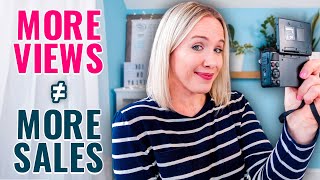
This is a YouTube video titled "The ONE Social Media Platform Strategy For Your Online Business!" created on April 5, 2023. The content features Trena Little delivering a detailed monologue about using YouTube as a powerful lead generation and sales tool for business owners. She shares her personal experience, strategies for targeting the right audience, tracking ROI, and optimizing video content to convert viewers into customers. The video also promotes her coaching program "10K on Replay" and her course "Video Strategy Academy."
Most people you're watching on YouTube teach about YouTube are teaching YouTube all wrong for business owners, or they're speaking to somebody who wants to grow a large YouTube channel to make money from like YouTube, like YouTube, giving them a check, an influencer or an actual content creator, not from booking more clients or making sales to your digital products or courses or something from your own business, I want to tell you in this video how YouTube could be the only content that you create every single week. And those videos, videos that you create, continue to send you leads and sales for probably years to come. I've been on YouTube now for over eight years, and when I initially started my YouTube channel, I thought I was going to be a mommy vlogger and that I was going to make money from brand deals, sponsorships, and ultimately YouTube AdSense. But I'm going to tell you that's not the best way to build a business because you're building a business on somebody else's business. So what I quickly realized is as I learned how to do all this stuff on YouTube, I could teach teach business owners how to use YouTube. Now, even though I started YouTube way back eight years ago thinking I was a mummy vlogger, and for the past seven years, I really utilized YouTube as a lead generator, I've had a really hard time adjusting my mindset that it's not all about the subscriber number and getting the most subscribers and making sure that my video hits number one in this little YouTube analytics box that we see for every single video. The reason why this mindset is so hard to adjust to is because we are bombarded with vanity metrics that literally don't mean crap to your business. Because as a business owner, you don't need a silver play button or a hundred thousand subscribers or 50,000 views on every single video. Yes, I would love to have a silver play button. But you know what's more important to me? Consistent generating revenue in my business. In fact, let's just do a little bit of math about how Even a small YouTube channel of, say, 500 subscribers could really change the trajectory of your business. We'll use my business as an example. I have a course, Video Strategy Academy, that literally teaches you how to use YouTube for your business. But its price point is $997. If I had a video go live on my YouTube channel and get about 500 views of the right targeted people, which we're going to be talking about in this video, that's just 500 views, views again of the right people watching that video I could potentially convert those 500 people to my course. And that's over $498,000 in revenue from just a video getting 500 views or my entire channel getting 500 views. How's that for math? Now let's say, Trina, 500 views, that's a lot. How am I ever going to get that on my YouTube channel? Let's look at a smaller number. Let's say you had a video go live and you 100 views on that video. And let's say out of the 100 views, only 50 of the viewers are the right audience for your offer. In this case, I'm using Video Strategy Academy. Even 50 people to Video Strategy Academy, which is a 997 course, will generate for me just about $50,000 in revenue from just 50 views on YouTube from the right people. And the best part about YouTube videos is they don't expire, they don't die off like reels or stories, but they will sit there and Dr. Drive the right people to your business. Your course sales, day in, day out, month in month out, year over year. You see, most people who are teaching YouTube are teaching YouTube for content creators. People who don't have their own business model. Maybe they have merch, yes, but that's not a solid business model. I've actually been talking about business models and different types that you should have here on my channel. So check out some of those right here. But how most people are teaching YouTube is basically how to be a YouTuber, how to get the most subscribers, the most views. Because the more views you get, the more AdSense money you can make on YouTube. But the problem with this is your money is connected to somebody else's platform. You don't own YouTube and revenue from AdSense is all over the place. Depending on the time of the year, the kind of content, there is no consistency. What I quickly learned when I joined the YouTube education space is that myself, with a solid business model in place, was making more money at the time than a lot of these YouTube education channels that had hundreds of thousands of subscribers. Because I had a business model off of YouTube and I was utilizing YouTube as a lead gen to my business. I wasn't counting on YouTube to cut me a check because guess what? If I relied on YouTube to cut me a check, my business lights would have been turned off a heck of a long time ago. But because of how I teach YouTube to business owners and how I use YouTube in my business, I've been able to consistently generate new leads and new clients. Without worrying about Facebook ads, without paying a butt ton of money on Facebook ads, and having a constant stream because YouTube videos literally live forever. And don't just believe me, look at what some of my 10k on replay clients are experiencing by utilizing YouTube as well. So let's walk through the steps that you can start doing now to use YouTube to not get the most amount of views or the most amount of subscribers, but the right views that are going to make you money in your business. All right, the very first thing that you need to do is make sure you understand who you are speaking to. You need to understand that one person with that one problem. Because when you create content for that person, they are going to fly to it like flies on honey, I don't know, like a mosquito with that, you know, buzzer light. But when you can create the content that your audience is looking for and wants, they will immediately come to you. They will also be able to find it because most of the time your audience, your target audience is looking at Google or YouTube for an answer to their question. If you have a video that is answering their specific question, guess what they're going to watch. They know you exist and they're going to be interested about learning more from you, or learning how to work with you, or learning about your offers. So truly understanding your target audience, pain points, struggles and what they are looking for online. The answers to their question is what's going to help you create relevant content? And I get it. This is a totally different mindset shift that we need to accept on YouTube because again, we're pushed more subscribers, more successful. But you don't need a massive channel for a successful business. Like I said, I'm around 50,000 subscribers right now. I've made over $700,000 in my business last year alone, utilizing YouTube as my hub for all the content that I create. So how do you figure out what is relevant content? Friend of mine Tom Martin actually taught me this process called keyword harvesting. And this process really allows you to deep dive in to understanding the right topics, the right keywords for your audience. But you need to understand those. YouTube's just not going to come up with them. You need to understand who you are speaking to. And once you understand that in their pain points and what they're searching for, then you can go into YouTube, into Vidiq, which is a tool that we use to figure out the content themes and the keywords that you should be using to get in front of that target audience that's ultimately going to convert into Your business. This is something that I do with all of my YouTube production agency clients and something that I'll be teaching my 10k on replay clients in the next couple of weeks. The reason why this is so critical is because if you can create content and kind of get your content categorized for the right person, then YouTube can understand who to put your content in front of. Because if you're just throwing content out there for everybody, YouTube has no idea who they should be putting that content in front of. And then you're getting all these randos watching your videos. Views are great, but we want money in our bank. And so by really doing this keyword harvesting process and understanding the topics and the content themes that your audience is is looking for, not only is the content now relevant to your target audience, but it's relevant to the YouTube algorithm to really start to figure out who to put your content in front of so you can find more of your Target audience on YouTube without needing to do anything other than create the content. The YouTube algorithm is doing the work for you for free. You're not having to put money behind Facebook ads. You're not having to constantly create a new reel or new stories on Instagram, because the YouTube algorithm is going to continue serving your videos to the right people if you give it enough information to understand who to serve it to for months and years to come. Now, I do want to give you three quick tips on how to start finding the right content, since I'm not going to walk through the keyword harvesting process here, but we also teach a process inside of my program video strategy academy called piggybacking. This is where you find channels that are talking about your topic and talking to your audience. And you look at what are the videos that are performing well, well, what are getting the most engagement? What is the conversation in those comments? Like I said, this is something that we do with all of our agency clients when we're determining their strategy. But it's something that you can do as well. Because if you look at the videos on channels that are talking about the same topic as you are talking to the same audience as you, this is where you start to understand how your audience speaks and what content that they really need. The other thing you can do is just go to the YouTube search bar and start typing in a question that maybe your audience asks. Or maybe you start typing it out to see what YouTube predicts it to say, because these are actual search terms that YouTube finds people asking. And then the other place that we like to play around with Right now is vid iq. I'll type in the topic and then I will also look at relevant keywords to see if that sparks any more content ideas for myself. Another thing that you need to be tracking if you want to be using YouTube. The best wits ability in your business is ROI of your video. Now, initially, we probably think return on investment means more views and more subscribers. But what I'm actually looking at is how much revenue did it generate. So we're going to take two of my videos, for example. This particular video went viral for me. Fantastic. Lots of views is gaining subscribers, but it drove the wrong audience. Because if you look at the comments of this video, it's not my people. It's not the people that I want to work with. It's not the people that are willing to put in grit and to put in the work to build a business. It's just people complaining. On the other hand, let's look at this video. It did by all means below average, right? But I created this video for my specific person. I created this video for the person that I wanted to join me inside of my program, 10k on replay. And with this average, below average video, I generated 20 applicants to my coaching program, 10K on replay. 17 of those applicants were approved. And within 24 hours of this video going live, we had four people join me inside of 10K on replay. And that is a $28,000 Prof. In 24 hours from one YouTube video. This is the key. This is the importance of understanding your ROI on your video. You don't want to hit the most amount of people. You want to hit the right people. And again, if you look at the comments in this video, these are my people. These are the people that I want to attract to my program, and these are the people that will buy. So you really want to look at the ROI on your videos too, as you're creating them. Remember, we want to detach from things. Getting the first out of your last 10 videos, which I know it's really hard not to do, that you're not focusing on videos that get the most views and drive the most subscribers. We're going to look at specific metrics from YouTube. Now we have people inside of our program that say, I've been putting YouTube videos up and nothing is happening. I'm not getting any sales, my channel's not growing. Pretty normal questions. And then I ask them about some of their metrics and they haven't took time to look at their metrics. So what should you be looking at? Because YouTube gives you so much data, but there are a few that you should really be watching. Especially for business owners that want YouTube to do the work and have the algorithm push your content out to more people. So that first thing is your click through rate. This is how well your title and your thumbnail cause people to click on your video. This is why When I teach YouTube strategy, I talk about truly understanding what the title and the thumbnail of your video is going to be before you even write any of the content. Because if you can come up with a title and a thumbnail that you know your audience is going to want to click on, then why create that content, right? If your audience isn't going to be interested in clicking on that title and thumbnail, don't waste your time on that content. It's also important to understand when you look in your analytics there is an overall click through rate, but there are also specific click through rates for the browse the search and suggested so we talk more about how to really understand these specific click through rates inside a 10 count replay and Video Strategy academy. But you need to be looking at how well your video is getting clicked on in search. Because initially when you're building your YouTube channel, your audience is probably going to be finding you through search. Remember the answer to their problem, the answer to their question, typing it in, right? So you want to be ensuring that your click through rate is continuing to improve in search so that you can ensure the content that you're creating is actually attracting the right audience. Another metric that you're going to be looking at as well on your YouTube channel, I encourage you every single week is your audience retention rate. So when you publish a video within 48 hours, you're going to get a graph from YouTube to let you know how well your video kept your audience's attention. Now if your audience retention is low, we have a problem. We either attracted the wrong people to your video with the title and thumbnail or the content wasn't what you promised in the title and the thumbnail. So by watching your audience retention graph, you're going to understand if your content is hitting with the right audience or not. Again, when we look at that video that performed really well for me and generated $28,000 in revenue. Here's the audience retention graph. I got about 37% of people that started the video to the end or where I pitched 10k on replay. That's what's important to be tracking now. I also get the question how long should your video be? Well, what we are noticing on YouTube for business creators is giving really meaty great content. So if you can create, you know, a 15, 20, 25 minute video, these are serious people that are watching your video to the end. This means they are really your person if they're getting to the end. And it's going to increase your likelihood of them wanting to convert into your business, work with you, buy from you. I honestly don't know how long each of my videos are going to be when I create them. I know what the title is and I need to deliver on that title. But again, when you're creating these longer form videos and the people that get to the end, if you're getting like 35, 40% to the end of a 20 minute video, these are more serious people than people that are just watching a five minute video. And this has nothing to do with like the YouTube algorithm. I'm just looking through the lens of the best person to watch my content and the best type of people that are watching my content, they generally watch longer videos from me and they get to the end of the video. There is one more other metric that I want you to think about on YouTube as well and it's engagement. And I don't want you to say a boring lame like subscribe and comment because that's just lame. Nobody's going to do that. But instead, can you incorporate engagement throughout your video by telling people, if this video makes you want to get started on YouTube, comment below, below. Starting YouTube now so that I know you're going to get started. That gives people more of a reason to want to comment than just like subscribe and comment, right? Or if you are talking about something in your video, you can say something like has that ever happened to you? Hit that like button to let me know that that's happened to you. Right? That gives them more of a reason to want to engage with your channel. Then the other biggest mistake that I see at the end of the video is just telling people to watch another video from you. When I create my YouTube script and I plan it out, I know exactly what my customer, what my target audience will want to watch next. And so the specific video that I pitch at the end of every video is very targeted and specific so I can get my target audience to watch more content from me. So increase the likelihood of them wanting to work with me or buy from me. So when you're planning your YouTube videos, if you want to maximize the potential of it getting people, viewers into your business, don't just like subscribe and comment, give them Specific calls to action that make them want to do that with your video. The other thing that you need to be doing to use YouTube to generate more leads and ultimately more sales in your business is converting. You need to convert a viewer to a customer. So how do we best do that? You do want to incorporate in your videos calls to action. Not a lot because you don't want to confuse them, what to do, but calls action to take that next step with you. Whether it's to get your free lead magnet, whether it's to watch your free training, whether it's to apply to work with you. You need to incorporate these calls to action in your video and then track how many people actually took action from that video. So if you publish that video that day, how many people converted that day, how many applications did you see that day? How many lead magnets did you see that day? And there are more detailed ways that you can start tracking this by using UTM codes and stuff like that. But the key conversions you need to be tracking here is when you publish a YouTube video and you have a call to action to your free lead magnet. Do you see lead magnet opt ins increase? Do you see your email list grow when you publish a YouTube video? Then you also need to consider how you're going to continue to nurture this viewer. Right? They watched a video, maybe they got a free lead magnet. What are you doing on the back end of your email sequences to get them to sell? Because yes, they may be watching warm enough to opt into a free lead magnet or opt into a free webinar, but there is more work that needs to go on with your email funnels to build them up to actually buying something. So for me, one of my lead magnets, I build people up to buying my $37 offer, going video. I talk about the importance of it, what they're going to learn. It's a series of emails that gets them in there. Then once they join Going Video, I have a series of emails that teach them how to use going video. And if they're ready for that next step, here's Video Strategy Academy that teaches them how to utilize their entire YouTube channel strategy to drive more sales to their business. So While you're using YouTube to generate leads to your business, it may not immediately convert into sales. You need to be ensuring you have these systems and these emails sequences in place to continue to convert viewers into actual sales and clients. Now, if you want to ensure that you have a solid game plan for YouTube and you know exactly what you should be creating on YouTube to generate more leads to your business without having to create more social media content. Join me inside of my coaching program, 10K on replay, where I will teach you how to use a YouTube strategy with your business strategy. So whether you have your business mapped out yet, or you have a YouTube channel or not, I really teach you how to bring these two together to ensure each video that you're creating on YouTube will generate leads to your business, and that your business model is set up to turn those viewers into paying customers or clients. You can go to trina little.com 10k to join us now or use the link in the description box below. If you have any questions about 10k on replay, please let me know in the comments below and watch this video where I dive in to how you are really over complicating your business and how you can start simplifying it now.
More from Trena







Why Every "Business Guru" Suddenly Went All-In on YouTube (And What NOT to Copy)

