Top YouTube Analytics to Grow Your Small YouTube Channel
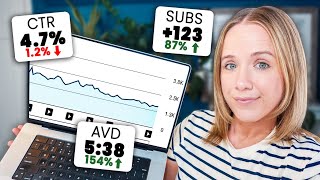
Trina Little walks through YouTube analytics for small channels, focusing on how to read retention data and optimize content to keep viewers watching longer. She covers the metrics that actually matter for growing an audience and generating leads through YouTube.
When you're not seeing more views on your videos and it feels like your channel is growing at a snail's pace, but you're doing everything people are telling you to do, it can be very hard to stay motivated and posting consistently on YouTube. I want to walk you through what to look at in your YouTube analytics, even if you're just getting started, to know exactly what's going on with your YouTube channel, what's working, what's not, and what action steps you need to take based on what you find in your analytics. What this is another video in the series I've been doing here on my channel on ways to help you stay motivated to stay consistent here on YouTube. So if you haven't caught the other ones, I will link to all of them right up here for you to catch. Next. If this is the first time we are meeting, my name is Trina Little. I help course creators, coaches and service providers use YouTube to generate more leads and sales to their business through completely organic traffic. Before I show you the first place to go in your analytics to start diagnosing what's going on, I do wanna share some context as to why this is important and why you should take time to do this each month. Because I know you're already loaded with stuff to do. Juggling clients, juggling family and checking your analytics can start to fall down the to do list. But if you don't take the time to do this and you are not happy with the results that you are getting on YouTube, you are going to continue to not be happy with the results until you figure out what is and isn't working and what. And what I'm going to show you to look at in your analytics is going to give you that answer. Let's talk about how we can ensure YouTube understands what your content is about and who your content is for. Because if we are clear to YouTube the algorithm, it's going to understand who to put our content in front of and YouTube is going to do all the promoting and send the people to us if we give them everything that it needs. So, so when you post a video, YouTube is collecting all the data that you've provided on that video. I'm talking title. I'm talking thumbnail. Yes, it's scanning the words on your thumbnail. Description box. Tags. Even though they say tags are sometimes irrelevant, they are still asking for tags. So if YouTube is still asking for tags, we put tags and it's even listening to what you're saying in your videos to really understand what you are Talking about. Then in a really simplified explanation, YouTube is going out and scanning all the other content that is on YouTube to find videos that are talking about the similar things that your video is saying it's about. The algorithm is trying to put you in a category. A category that it understands is where you fit. And if you give the algorithm all the information it needs to know to understand where you best fit in a category on YouTube, it will put your videos in front of the right people, either on the homepage or within some similar videos in the suggested column. And that is what we are looking for. Basically, the algorithm is trying to find if somebody is watching this particular video, they are also going to be likely to want to watch your video as well. That's why if you're watching my video right now and you look at the suggested column, you're probably going to see other videos related to possibly analytics or YouTube strategy in general. And I know this is really important for YouTube because it gives you this data within your analytics. But a caveat here. You only get this information if you have enough data on your channel, meaning have you gotten enough views within a 28 period for YouTube to generate this data? And I sometimes have this data, I sometimes don't. I took off a lot in May, so I didn't generate as many views in the last 28 days. So for a while I wasn't getting this data as to who are the other channels my audience is watching and what are the other videos that they are watching. This tells me that this is really important for YouTube because if it's giving you this information, it's telling you to keep an eye on this. Now if you don't have that data, like I said, I don't sometimes there's a way for you to find this data. Let me walk you through how to do that in your analytics. You're going to go into analytics and then you want to hit see more from here you're going to hit traffic source and honestly, you're probably going to need a little bit more than 20 days to get some data, especially if you're a smaller channel. So you could go as far back as a year, the last 365 days. I'm going to go 90 because I do know I have some data and because we're in traffic source, we're going to come here to suggested videos and these are going to tell you who YouTube is putting you alongside. Mine is aligned. One of the things I'm looking at specifically is the content. What I want my audience to be watching. And it is now, if you would have checked this six months ago, it definitely wasn't aligned with the content that I wanted. So my channel is good. I'm wondering what you think your channel looks like. Do you feel the the algorithm is categorizing you properly based on your suggested traffic? Figuring out if YouTube is categorizing you properly is mission essential if you want to see better results on your channel. And then in fact, it is one of the first exercises I go through with any of my brand new clients who are wanting to figure out what do they need to change or adjust on their YouTube channel to reach more people, to get more subscribers, to convert more views into paying customers and clients. So one of the other exercises, if they are posting YouTube videos and we can see what is being suggested alongside of their videos, is doing a niche neighbor analysis. So what you want to do in a niche neighbor analysis is look at the channels who are creating similar content as you are and get a sense of who your audience is watching in relation to the topic of your channel. And I know I talked to a client earlier this month where she had said it seems kind of weird, like corporate espionage if I'm looking at my competitor's content. But that's not what you're doing. You're looking at what is your audience responding to. Because if your audience is watching YouTube videos, watching specific channels, you're going to get the answer or the market research that you need to understand what they are most interested in. And if you can find the content that they are most interested in, flip that topic to share it in your own way, your own message, your own style. You're not copying, but you are hitting the specific topic that your audience wants to hear and that's going to give YouTube the information. Oh, her channel talks about similar topics as this channel. The other reason why I'll tell you that it is not corporate espionage is that everybody likes different people, different styles, different vibes. There are Thousands probably of YouTube strategists. And what is one of the reasons you come to watch me? Actually, let me know in the comments why you actually come to watch me. Because a lot of the times I get that you are more relatable or I get that I like that you're a mom and that you're transparent and that you share more real stuff. And again, that's what's going to make you different. Because there needs to be somebody for everybody out there. So just because somebody or your competitors are doing this topic doesn't mean you can't talk about it and share in your own style and your own vibes. Now, doing this research, this niche neighbor analysis and seeing what topics are really good for those channels will affect your content strategy on YouTube. Because this is basically going to shortcut your categorization in YouTube if you double down on some of the topics that we know that your audience is relating to and watching based on the topics that are being watched more on your niche neighbors. So when you focus on those types of topics, YouTube is going to be able to better understand where you should be categorized. Thus, you're going to be able to reach more of the people that your content is for and grow your channel quicker. Now, let's talk about if you went and looked at your suggested videos and you're like, oh, these are some weird videos listed here, you're going to need to do a few things. First, you've got to take a look at your current content strategy. Are the videos that you are creating and publishing very clear in what the video is about? Is it clear in the title? Is it clear in the thumbnail? Is it clear in the description box, all that metadata? And is it clear what you're talking about in the actual video? Okay, that's the first thing you need to audit and analyze. Are you clear in your videos, in your content strategy about what you're talking about? Take a look at your target audience and are you clear on who your target audience is? I talked about this more specifically in more detail in a video earlier this month that I will link up here for you to watch next. But if you aren't clear on who your audience is, how is the algorithm going to understand who your audience is? And how are you going to know you're creating the best content for your audience when you don't know who your audience is? Again, this is another first step process that I take all my clients through. I make them go through this exercise where they define who their target audience is so we know we are clear on our target audience so that we know our content links to our target audience. So when we publish our content with all that metadata, it is very clear to the algorithm who to put our videos in front of. Because if you're all over the place with your content, the algorithm has no idea what to do with you and it's going to continue to be confused and basically throw your videos to the wall like spaghetti on a wal and just hope one hits. And if it doesn't, you're going to continue to struggle. So if you're looking at your suggested videos that just don't match up. You're going to need to adjust your content strategy and make sure your target audience is clear. I'm telling you, the sooner you can get the algorithm to understand what your content is about and who your content is for, the quicker you're going to see that momentum of more views, more subscribers, and that snowball effect on your channel. The next analytic piece that you have got to be looking at. In fact, before I recorded these videos, I went and looked at this analytic and that is your video audience retention graphs. These can be a little scary because we assume that we're creating amazing content and we're biased about the content that we're creating. But the number and the data doesn't lie. So when you go into your videos and you're looking at the audience retention graph, you're going to see unbiased how good your content actually is. So here are the few things that you need to be looking at specifically when you are analyzing your audience retention graphs. The first 30 seconds are really important. This is why in my process for teaching YouTube strategy, I say you need to figure out the title and the thumbnail first. And sometimes I even kind of write the content piece before I figure out what the hook is going to be that bridges the title and the thumbnail to the content. Because the first 30 seconds is generally where you're going to see the largest drop off in audience retention. Some of the most common things that I see my clients do when I analyze our audience retention graphs is they're taking too long to get to the meat of the content. Look, if you aren't getting to the value of the content within I'd say 40 seconds, you're going to lose a lot of people. And if you aren't keeping people watching your videos, YouTube isn't going to push your videos to more people. The goal for the algorithm is to serve videos that people are going to watch. And if you can't get people past the first 40 seconds, they're not going to push your videos to more people. The other reason we may see this large drop off is that the hook doesn't connect or tie into very well with the title and the thumbnail. That's why I said I like to know what my title and thumbnail is first. I like to get an idea of what the content points are going to be. And then I can write a really solid hook that bridges the title in the thumbnail and and the content so that when they are watching this Video they know within the first 10 seconds. Okay. This ties into why I clicked on it and then I'm setting them up to want to watch more of this video. So I mentioned when I was planning these particular videos I'm filming today, I'm filming three. I went back and looked at my last four videos. Audience retention graphs. I've been trying a few different things here on my channel, testing a couple things, so I wanted to see how it performed audience retention graph wise. Let me walk you through what I looked at. You're going to look at each video's audience retention. So come into your content tab and pick a video that has a few views on it. I'm talking we need to at least have 20 views to get some audience retention data. So I'm going to go ahead and pull up my last week's video as I'm recording this and you can either go here to see it or you can go into the engagement. It's in both places. So right here I'm going to lump these two things you should look at together under one category because they both fall under the audience tab in your analytics and that's analyzing new viewers and watch time from subscribers. It is important to see are you growing new viewers throughout, you know, a 90 day period? Because if you want to grow your channel, you've got to get in front of new people, right? So if you aren't getting in front of new people, we need to figure out and diagnose why that is happening. Are our click through rates not doing well? Is our audience retention graphs not doing well? Is our content strategy not on point with our target audience? This can all affect our reach or our impressions that we're going to get from YouTube and that will affect how many new viewers we will actually attract to our content. And if we aren't attracting new viewers, our channel is eventually going to die off. So let's go to that audience tab I talked about. So you're going to go here to analytics. Then you're going to click up here to audience. And this blue line is what I mean when I say new viewers. This purple line is returning viewers. What I want to see, let's say in the last 90 days, am I growing? I'm not significantly growing, but I don't see it declining. Right. It's pretty plateaued. I will show you just a sneak peek from a year ago that I was way up here because I had some videos that were going viral that weren't the right audience and so I deleted a few here and then some more. So we're significantly lower. But the viewers that I have coming in here are much more closer to my target client that I work with. Now down that same tab in the audience retention tab of your analytics, you're also going to see watch time from subscribers versus non subscribers. Here's where I'm talking about watch time from subscribers. You can see with my channel, about 69% of the watch I'm getting are from 9 non subscribers. So I am getting in front of new people. I could be doing a slightly better job of converting them. I like to see 60% of watch time from non subscribers and 40% of subscribers. That's telling me I'm creating good enough content that my current subscribers want to come back and watch that 40%. But I'm also ensuring that I'm making an effort to bring more and more people to my channel and when I turn them to a subscriber, I keep them watching. And if you're seeing about 90 plus percent of your watch time coming from non subscribers, we have a problem. This tells us that people are coming to your videos, watching and bouncing. They're not invested in you, they're not coming back for more. This is telling me that you've probably leaned a little heavy in the tutorial how to content. And so people are searching your videos and finding your videos in search, but they're just coming for the answer and bouncing. They're not coming to make the connection. You aren't making a connection with them, you aren't building a community. You've built your channel on search based traffic and that's not always the best thing that you want to do. In fact, your content strategy should not be purely search based traffic strategy. This is why my clients are taught a specific strategy that yes, gets them in front of search results, but is crafted in a way that even if they find a video in search results, we are setting them up to binge watch content, how we plan our content and how we are strategically getting them at the end of one video to watch the next one and the next one. So before they know it, they've possibly watched four to five videos because we've teed them up for that. And that's when they turn into a subscriber, that's when they turn into a community member. That's when they turn into a loyal fan, so to speak. And if you are getting a viewer to watch more than one video, not only are they more likely to become a subscriber, a part of your community on YouTube but they are becoming a much warmer and warmer lead and they are going to be much more easier to convert into your email list, into your webinar, funnel, into your work with me page, into your coaching program, into your course, whatever it is. You're utilizing YouTube to generate leads and sales too. I get that this is a lot and it can be very overwhelming. In fact, I avoided my analytics for far too long and I definitely regret that. But if you know you want to do better and you know you want YouTube to be a pillar of your content strategy, in a way you're growing your audience, you've got to focus on this. That's why I work one on one with my YouTube coaching clients because I get to dive into the problems with them. I can show them here's what I'm seeing is going on in a video and then they can take that video, save it and use it to self diagnose later. Because it is overwhelming to jump in to YouTube Analytics. But if you have somebody walking you through auditing your channel for you, pointing these things out, it is going to be so much easier for you to find those things on your own. In fact, once I understand what's going on In a client's YouTube channel, I'm able to give them better feedback on their scripts. So they send me their scripts and I help them craft better hooks or better call to actions. They send me their thumbnail and title ideas and because I know what's going on on their YouTube channel, I can say well actually we saw these thumbnails not do so well this style. What if we tried this style of thumbnail? And because I'm able to understand what is going on and I'm able to show them what is going on, they are able to make those changes and those pivots much quicker and they're able to do it on their own later down the road when they are wondering why did their YouTube channel stop growing. If you would like me to take a look at your channel and see if we would be a good fit to work together in this coaching program, I still do have a few spots available. It is very limited spots because I give this one on one close attention to every single one of my clients. It's exactly what I've been doing with one of my clients, Christine. You can see here the questions she's asking me in Slack in our direct message thread. I'm able to give her a personalized loom walkthrough on what I'm looking at, why I'm looking at it and the diagnosis I'm giving based on the analytics I'm reading since working with me and implementing the strategies and the feedback that I had based on the data on her analytics, within two months she was able to grow her channel by 740,000 views and over 2,400 subscribers in a two month period. I'm not just giving you content in this program to figure out on your own. You're getting my eight years of experience as a YouTube strategist to help you better understand what is and isn't working on your YouTube channel so that you can get quicker results and stay more motivated and stay consistent. Like I said, if you're ready to work with me or see if we're a good fit, go ahead and comment below. I'm in and if you give me an email address, I'll be in contact. Or you can feel free to email me@trinarinalittle.com because you do get custom one on one time with me through milestone calls and hot seat one on ones. There are limited spots, so seriously, once they are filled, they are filled until someone decides to move on from the program. And if you aren't quite ready for that, I've got plenty of great content here on my channel for you. And in fact, if you're ready to DIY your YouTube strategy, I would start with the playlist that's on your screen right now where I show you how to use YouTube marketing in your business strategy. Click there to start watching.
More from Trena







Why Every "Business Guru" Suddenly Went All-In on YouTube (And What NOT to Copy)

