Tomer Molovinsky applies Paul Graham's essay on unscalable work to launching cafes and restaurants. Six principles: manually recruit customers, delight them, embrace fragility, pick a niche, work by hand, skip the big launch. Early growth relies on retention and repeat visits, not fancy systems.
Chapters
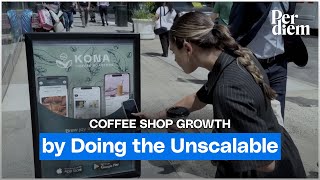
Everyone wants their cafe, bakery, or restaurant to open up with a big bang. But here's the reality. It doesn't happen that way. So Paul Graham, who's the founder of Y Combinator tech accelerator that had the likes of DoorDash, Airbnb, Coinbase, and yours truly, Per Diem, go through it, wrote this essay called Doing Things that Don't Scale. He wrote the essay after Airbnb did a batch back in, like, 2005 or something. Essentially, all their customers were in New York. And so we told them, go to New York. Go talk to your customers. And as a result of their trip, they ended up taking professional photos of these apartments. And they made sure that payments went out instantly because that was a huge pain point for the hosts. And they just got to know their hosts one on one. That became the core building blocks for what Airbnb is today. You can leverage this playbook, and you should leverage this playbook when you're opening up your own store. So let's jump right in and see how you can do that. The first thing that doesn't scale is recruiting customers. So in the early days, you can't just think that you're going to put up a sign or post on Instagram and then the masses are going to come. You got to go out and physically recruit those people to your store. That could mean giving out samples, walking into nearby offices, or just inviting your neighbors. But here's the deal. When they come in, you can't just offer them a coffee and say, c' est la vie, and hope that they come back. You want to kind of lock them in. So if you have a loyalty program at the outset, or if you have an app with, say, Per Diem, get them to download that, get them to follow you on Instagram, or, you know, just do something simple like have a punch card, this at least will enable your hustle to lock them in a little bit longer term. So once you've done all that hustle, the second part of Paul Graham's essay talks about delighting your customers. The idea here is to make them so happy that they think to themselves, man, I have to go back to that place. This is everything from remembering their name, their favorite drink to give them a free cookie, throw it in their bag, or if they say something like, hey, I wish you guys had oat milk next week. Make sure you stock oat milk. All these things they add up and what your goal is, that everyone that comes into your store, they leave thinking, man, that was the best decision I made today. The Third section on Paul Graham's infamous post on doing things that don't scale is to embrace fragility. So, so in the early days, coffee shops and restaurants are very fragile. You might only have a couple of regulars that are keeping you afloat. That's fine. Treat those people like gold. But the reality is, instead of thinking about how you're gonna get 500 people or how you're gonna get that viral Instagram post, what you wanna be thinking about is, how am I gonna get 10 people to come back and order from me again? Start small, because survival is where momentum starts. The fourth section of Paul Graham's essay on doing things that don't scale is to pick a niche. So in the early days, you don't want to be everything for everyone, because you quickly become nothing for no one. And so think of it like a campfire. You want to start small before you throw a bunch of logs on top, right? And so in the early days, this might mean that you're going to be focused on, let's say, you know, freelance workers at your coffee shop, or maybe you're focused on, you know, construction crews that need lunch. The idea here is to start with a clear identity, win over that group, and then expand from there. The fifth part of Paul Graham's essay on doing things that don't scale is to do the work by hand. So initially, this can be writing punch cards or calling customers to confirm their orders or keep a notebook behind your counter with their favorite drinks. One of my coffee shops in the neighborhood, they had a subscription program, and later on we digitized that for them. But initially she literally had a Rolodex. People would pay her in advance, and then she'd keep track in that Rolodex, like the old school 1980s Rolodex of how many more drinks each person had. And honestly, people loved it. So sometimes low tech can be better than high tech, but they can also help you figure out what works. And then later on, the likelihood is someone like Per Diem will be around, and then you can digitize that service and make it even more seamless for your customers. The sixth part of Paul Graham's essay on doing things that don't scale is to forget about the big launch. I know you probably want to be written up in the New York Times or have some big influencer write about you on social. But the reality is, in the early days, those first 10 or 20 customers that you get through the door, you just want to make sure that they're coming back and ordering from you Again, retention and repeat visits, that's the only metric that matters. In the early days, it doesn't matter how many people show up on your opening day. And so I remember I opened a restaurant for my brother. We got written up in the Washington Post really early, and we just got crushed on a Sunday. And literally all that momentum that we would have gotten from that review kind of went out the window because we just weren't prepared for it. So build things up, make sure you're ready for it, and then that opportunity will come down the road, and then you'll be able to capitalize it. But don't look for it. Make sure you're ready. So that's a wrap on summarizing Paul Graham's essay on doing things that don't scale and how you can apply this to your coffee shop or restaurant. So starting from the top, recruit your customers manually initially. So this is everything from walking around your neighborhood, walking into offices, handing out free samples. Then you're going to want to delight your customers. So make sure you're remembering their names, their favorite drinks. If somebody asks about oat milk and you don't have that, make sure you stock it next week. Those are the things that show that going above and beyond for these people. Third thing is to embrace fragility. Again, early on, you're only going to have a handful of regulars, so you really want to treat those people like gold and make sure you're driving those repeat visits and you just become a key part of their day. The fourth part is to pick a niche. So whether you're the bakery for moms, you're the lunch spot for construction workers, or you're the cafe for remote workers, pick a niche, develop that and expand from there. Don't try to be everything all at once. The fifth thing is to do the work by hand. So whether it's punch cards or as I mentioned, that subscription program and Rolodex, track favorites in a notebook, whatever it is, later on, you can digitize things and really systemize them. But in the early days, you should be doing everything by hand. And then finally, forget about the big launch. You don't need the New York Times or some big influencer to make you a success. Just make sure your first 10 to 20 customers, you really wow them and they come back next week early on. Again, repeat visits, that's all that matters. Those are the people that are going to be spreading the word for you. And so that's what you want to focus on. So that's it. If you follow these things, you're not going to be guaranteed for success. But you will be one step ahead of everyone else and on a path to being the talk of the town. Good luck.