Adam Marx: The Zero To One Network | The Tyler Wagner Show #1034
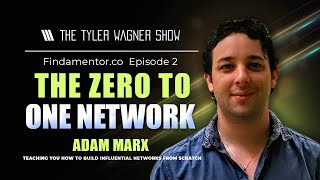
Adam Marx discusses building genuine relationships without treating them as transactions. He's working on a startup for low-minimum angel investing and writing a practical networking manual. The best connections happen after formal events when people mingle informally, and simple tactics like regular follow-ups and holiday outreach compound over time.
Chapters
All right, man. So it's been since September since we've, uh, since we've talked. I guess it's been a few—
in a minute.
Yeah, it's been a couple minutes, many minutes. So what, um, I guess just overall chat is like What are you currently working on right now? I know you have a book and stuff. What else is going on?
It's interesting. I'm working with— I actually just got done with a meeting with a founder who's running a startup. It's a really interesting startup. He and his team are building a platform for new kinds of angel investing. So their thesis is you don't need to have $50,000. You could be somebody just out of school or in school and learning how to angel invest with $1,000 and learning how to join syndicates. The platform is really interesting. It's actually on my to-do list this weekend to check it out and get more involved with that. He and I are talking about doing a collaboration around bringing in my expertise around networking and relationship building and how to facilitate those dialogues into the platform. So that was really interesting just this morning. And looking at doing speaking and looking at booking more calls around how to build networks in ways that are non-transactional, but can lead to really great transactional possibilities. Right? So like how to do business.
That's a good way to word that. Okay.
So like how to build really great relationships that can lead to really great business. Without showing up in someone's email box going, where's my money? Where's my investor check? Then this book that I've been— I took a little bit of a break. My friend got married, I did the best man thing. It was just the right time to take a step back for a few weeks and work through some writer's block. But what I'm really focused on now is writing a book that can become a manual for somebody who wants to get into a brand new industry, new company, or just learn how to build really great relationships where you don't have to be a startup person, you don't have to quit your job, you can just want to learn to meet people and facilitate dialogues and see where those collaborations can go. So that's really what this book has evolved into is like, you don't need a special degree, you don't need a special piece of paper, You just need to learn how to be patient and create value and create empathy, and you can start doing it like day one. So that's, that's the, the driving factor.
Yeah, I think we're both experiencing this is like, I, you know, when I was younger, I didn't really think about it fully, but now when I look back on things, it's so crazy to me just like how valuable what I was doing and what I continue to do to this day with just relationship building really is like, it really starts to have like this compound effect. So I just, yeah, whoever's listening to this, I would just like start as soon as you can. And like you're saying, I think a lot of people mess up because it's very transactional and you can actually tell that by just going to LinkedIn and see, like go to your LinkedIn inbox, okay? And like, just look at all the messages and like 90%, and I'm really not exaggerating, I think like 90% of them They're like pitching you something. They want you to invest in something like, and it's, they're like, hey, sometimes I don't even use your name. And it's just like a direct pitch. And it's like, what I think the approach you and I have taken is actually reaching out and wanting to truly connect with the person. And then if business comes from it, great. But that's not the ultimate goal from the standpoint. It's just, for me, at least I'll speak for myself. It's just building as many solid relationships as possible. Then from doing that now, there's so many benefits that have come to my life from it.
Tyler Wagner There's so much wrapped up in it. I'll give you a couple of examples. A few weeks ago, it was like last month, was Venture Atlanta, which is a thing here. It's exactly what it sounds like, people coming in to talk about crypto and startups and tech and stuff like that. The funny thing is I didn't know if I was going to be in town, so I didn't buy a ticket. It was downtown, right across from like the Ritz and the Hard Rock Cafe, if anyone's been to downtown Atlanta. But I figured I'll go downtown and hang out across the street, do some work, and maybe people will meet for coffee afterwards. And what was so interesting was the first day after the events were done and after people were done doing the talks and stuff, because the real networking doesn't happen during talks that people are trying to pay attention to. During the events where they're trying to focus on the speakers. The real networking happened at around 4:30, 4 o'clock after the events are winding down and everyone's filed into the bar at the Ritz-Carlton, which was like a nice quiet lounge. And then suddenly it was like, boom, every seat's taken. There's this humdrum of talk of tech and investing. And I posted about like, there are people who I know who work down at Atlanta Tech Village and people who work at certain venture capital firms and people whom I I know who I was introducing to each other who should know each other, but didn't know each other until that night. And that's real networking, right? It's not at the networking events per se, it's kind of when those barriers come down and everyone's just kind of got a coffee and they're just kind of chilling and talking about what they're working on. And, "Oh, you don't know person X? You should know, let's make an introduction." That's where real networking happens. And it happens like just popping all over the place. Like wildfire. And that is what I want to teach people, to tell people is like, when you're not showing up, and in this case, it was in person, but if you're not in the dialogue, either physically or virtually, you don't exist. So the thing that you gotta be doing is getting into that dialogue, and you don't have to walk in guns blazing, like, I know everything, here's why you should all listen to me. Oh, that's an interesting comment. I never thought about that. Identifying somebody that you'd like to learn from. And through that process of learning and creating value, you create a dynamic of conversation. And I think that that's something that you and I have experienced is like, I did your podcast. It was fun to do your podcast. I enjoyed it. But the most interesting things about it where that we chatted for like 30 minutes after the podcast because we just gelled, right? We're just like on the same rhythm. Over the course of a few years now, we've developed a good working relationship, a good friendship, a good rapport. You don't know where something is going to go until you explore that possibility. That's the most interesting thing about relationships, I think.
I agree. Yo, that's what I actually tell people all the time, is like, I think it's so interesting that the way I kind of view people in a sense is like, I don't— you never know where it's gonna go. Like any relationship, like just business, friend, relate— like a person is like the unraveling of discovering who they are, like what they're capable of in helping you and you helping them. Like, it's just a never-ending spiral of just like greatness. So I don't know, it's just like anybody I meet— and that's why I forget who said the quote, but it's an old quote. It's kind of like basically saying like you can learn something from anyone, whether they're rich or poor. And, um, I butchered that quote, by the way. It sounds way better.
I'm gonna hold you to it.
Yeah, yeah, it's a real one. I can't recall who said it. But so that's how I view things. Like, any— I'm very curious, and just like anybody I connect with No matter of like a status or non-status, whatever it is, I am just like, I don't know, I just view it in a way of like helping them feels good to me and things normally come back around, whether it's 1 year later or 10 years later, or maybe it doesn't come back around. It's really not a big deal. I just think if you lead life in that way, it just— things just work out. You know, and I think people overcomplicate things because of the way we're taught of like, yo, you get this job, you're paid this much per hour or this salary. And then they view everything like that. They're like, oh well, if I'm going to connect with you, that's 20 minutes of my time. So that's like worth something. And it's like, well, yes, but like, no.
But it stops people from It stops people from having the ability to see that even what they think they may deserve out of it may not even be the extent of what they could get out of it, right? If you say, okay, my time is worth $200, in theory, I could charge you $200 now and you may or may not pay it, you know, depending on where we are in the relationship, or we can have a working relationship and something can come across our desk and go, "Hey, this is great for both of us. We can make way more than $200 because we both can bring something to the table and everyone can benefit." Relationships, it's not like sports where it's zero-sum. There's one winner and one loser. That's how sports are. Relationship building doesn't have to be like that. You can have situations where lots of people win and everyone walks away feeling like they got a really good deal. And I look at, you know, like basic things that we talk about. Like I always tell people, clients or audiences or whoever will listen, like 30 seconds can change your entire trajectory. Just 30 seconds of a follow-up. Hey man, it's been a little bit, it's been a minute. Just wanted to reach out and see how you are. Let me know what you're working on. See if I can create some value or give some feedback if you're looking for it. Let's hop on a Zoom and, you know, I hope you have great holidays. "Be well." Like, how long did that take me? 15 seconds? Right? Like, we're coming up to the busy time, right, for people in the US. Like, I love the Thanksgiving week because I have a great reason to just send out just tons and tons of messages and say, you know, "Look, I'm just really grateful for your friendship. I'm really grateful for our dialogue and our relationship and what I learned from it." and I'm just grateful that you're in my life, you know, and then that I, I can hopefully create some value for what you have going on, you know, as well. Like, that doesn't— it doesn't come across as, okay, I want something. But if people did that stuff every day, not just during the holiday time, their relationships were just like boom, boom, boom, you know, it's just like wildfire.
I agree, man. And I think relationships are I want to say they're like the best, like they're the best thing that you can have in life from my experience. Like I was talking, I was talking to somebody, a friend of mine last night. She's here visiting Miami and we were out to dinner and I've been doing these, um, uh, I've been involved. Do you know, I think we talked about this, you know, like a family office, like what that is? I think, um, it's like somebody who has a net worth of $100 million or more and then they have that manages it. And what I was just telling her is like, from my experience of being around like those people, um, I've built a lot of amazing relationships. But just out of my curiosity, I've always— I've just been curious, like, are they happier, right? Like, are they happier? Um, like happier than a person who, I don't know, makes $100 grand a year or whatever? Um, and from my experience, I would say I don't think they're—
they're happier.
I mean, think about it, the difference is like, there's— it's still— they're, they're at these events and it's about the relationships. The only difference is that the table and the wine and the food on the table is a little bit nicer. Like, and that's what I was telling her last night. And we were at like a nice restaurant in Miami, so I don't even know if that's like the best. But that's what I've come to discover is like, I've had, I've had dinner with people that work 9 to 5 and they're making $50,000 to $100,000 a year and we have an amazing time. And then I've had dinner with people that are worth hundreds of millions, sometimes billions of dollars. And I can't honestly say that one or the other was like a better or happier, joyful time. And see, that's what I feel like people need to realize is like, even once you make the money that you think you want to make, it always comes back to like serving others and like helping them. Like that is what is So either way, go ahead. I feel like—
Well, I mean, no, you're so on the ball here because what I think that, what I wish people just generally understood, and I realize like we're in a society where like we're conditioned to kind of grow up thinking a certain way, but what I wish people really understood was like, you can talk to, I use the word anyone, maybe not anyone, but you can talk to so many people who you think you can't talk to because what their job title might be or, what their bank account might, you know, the number might be in their bank account. And what I found is that if you treat those people who have that, you know, that job title or that bank account number differently, it doesn't feel good to you. Oftentimes it doesn't feel good to them. Okay? Because if it's somebody who you want to talk to, like if it's somebody who's going to be good for you, then they won't let that get in the way, right? Then they'll honestly feel a little awkward because if they're lauding it over you, that's not going to be a good relationship anyway. It's not gonna feel equal. And, you know, like you and I are a great example. Like, I really love what you're doing and the projects you're working on. And like, I look at what you've accomplished and where you are. And I'm like, you know what? That's where I wanna be, right? And not in a, you know, jealous way, just like Tyler's doing things that are really interesting. He's having experiences and he's able to help people in ways that I wanna be able to help people and have the flexibility and freedom to do that. So, what can I learn from him? Right? What can I learn from what you're doing in a way where I create the value that I'm able to create that we both feel it's a mutually beneficial relationship? Right? Where your understanding is, okay, Adam wants to be here. And maybe there's a mentor-mentee dynamic to it, but it doesn't need to be an uneven dynamic. People get so hung up on this junk. And if they just talk to someone from the heart and say, I really love what you're doing, I want to do that. Can you help me get there? Can we find a way for you to help me get there? I want to be able to value your time and your expertise. Here's what I can do, but I really, really want to be able to get there. So what— because there's value for people on your end too, the mentor type of stuff. When I mentor people, when I have clients, They go out and tell people like, Adam really helped me. I was giving talks at the Atlanta Tech Village and one of the people who helped book my talk, in the middle of my conversation with some of the founders was like, I tried what Adam told me, like on Twitter, on LinkedIn, is like, it works. Over the last month and a half, it works. I didn't ask for that. That testimonial, that recommendation, it just was like, I think you should try this, it could help you. And now you have somebody who's an evangelist for what you're trying to put out there. So there is a huge mutual value element. And a lot of that's what my book is going to be about is how to create a magnetic type of network around those types of dynamics, utilizing things that anybody could do like patience, Empathy, value creation. Anyone can invest in those things.
Yeah, and I think you are like— you're one of the best I know that at this, right? Because the thing that I think— another thing for people to realize is that the mentor, the value that the mentor gets, in my opinion, is the mentoring, right? And it's actually the same thing even though it's the opposite, meaning like the mentee is trying to learn something, right? So that, that's, that to people is like a very obvious like pro, right?
Okay, right.
And but the opposite side, people think it's like a taking. Um, and look, it's, it, it depends how you look at it, but in my opinion, if the mentor says yes, right, like that means they want to be there. Like they don't have to be there. You don't have to be there either, right? So but it's just like, there is a value and I would say an equal value with the giver and the receiver. Like, it's just because the person who is giving, like they're doing it not just for you, like they're also doing it 'cause it feels good to them.
You know?
So I don't know, it's just, I think people, when you ask somebody to be a mentor, I would, like, don't do it in a way of being like scared or something, or like feel like you're wasting their time. Like, I think it's kind of like, it's an equal exchange. That's how I see it, but.
Well, I mean, and you run into things that you never thought about, right? So like, I, like, you know, my background is like, was the music industry for like ever. And then like through that, that's how I got, I stumbled into doing tech journalism just because I enjoy writing. And that's kind of how I started doing writing and editing, like in a more serious way. And I never thought, about like doing networking consulting, personal branding, communication consulting. I never thought about it until more than one person was like, "Wow, your brand is on point. Like the orange sunglasses, like everywhere. Like this is like, you could have knocked me over with a feather." I had people at the Atlanta Tech Village who were like, I was 10 minutes into a conversation with somebody who I couldn't believe was giving me their time. And they're like, "Oh, I know you, right? The orange sunglasses on Twitter." You could have knocked me over with a feather. And, you know, I didn't come up with this like Zero to One Networker moniker for myself because I thought that I'm, you know, God's gift or anything. It just was like people were like, it's kind of like a zero to one networking kind of thing. Like it just happened. I don't even remember where it came from. It just seems to fit and it fits my brand and trying to help people and trying to help retrain the mentality of this stuff is doable. You can talk to so many different people. When you and I started our conversation, I had no idea about your experience. I knew you had written a book, but that wasn't the basis for our friendship, our dialogue. It just was like, I had fun on the podcast, let's keep talking. It wasn't like in my head, like, okay, maybe if I do this and do this and do this, it wasn't a chess game. People so often try to make it a chess game. It's not a chess game. Just talk to people and create value and see what happens. Because if you try to treat people as if you're playing chess against them, they're going to know. People aren't dumb. They're going to figure out that you're trying to game them, and you can't hack relationships. So now, as I write this book and we have these conversations about how can I do it really well, how can I get it on these bestseller lists, how can I really write something that is really valuable and really successful, we have a rapport and a rhythm that we can now fall back on and have that conversation, a foundation on which to build that dialogue. There's not wondering of like, okay, but is this person just trying to game it? Is this person just in it for the money or in it for the fringe benefits?
Yeah, no, I 100% agree, man. So I think, um, we'll, we'll definitely continue the dialogue for sure. Uh, but as always, my brother, it was a great time chatting with you.
Cheers, man.
More from Tyler


Catherine Nikkel : THE STORY EVERYONE HAS BUT HASN'T TOLD : The Tyler Wagner Show #1120



Scott Ritzheimer: Bring Predictable Success to your Organization | The Tyler Wagner Show #1115


Fred Moskowitz: A GUIDE TO GETTING STARTED WITH IN MORTGAGE NOTES | The Tyler Wagner Show #1113

Mark Podolsky: From Land Investor to Full Time Success How I Made $90,000 Cash in Real Estate


Mark Podolsky: How to achieve a 300% return on investment my foolproof strategy

Mark Podolsky: How to make passive income selling raw land the irresistible pricing strategy