Adam Morse: INTERNATIONAL AWARD WINNING FILMMAKER | The Tyler Wagner Show #1096
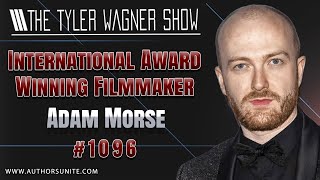
In this episode of The Tyler Wagner Show, host Tyler Wagner interviews filmmaker, actor, and philanthropist Adam Morse. Morse recounts his lifelong fascination with cinema, sparked by a childhood viewing of Star Wars, and his early experiments making short videos with home cameras. He describes his first professional short, The Window, funded with winnings from a Las Vegas trip, and how it launched his career. Morse then details the creation and festival run of his feature film Lucid (2020), including its premiere at the Edinburgh Film Festival, a brief surge to an 8.7 IMDb rating, and the subsequent rating manipulation he observed. The conversation shifts to the film’s premise—a socially anxious young man learns lucid dreaming from a therapist (played by Billy Zane) to overcome anxiety—and Morse shares practical lucid‑dreaming techniques (hand‑checking, coin flips, dream journaling) and their benefits for confidence, rehearsal, and performance. He offers advice for aspiring filmmakers: start making films, network aggressively, and treat oneself as the first hire. Morse also discusses his disability sports charity, the Crystal Vision Foundation, launched at Cannes to support filmmakers with disabilities, and promotes his recent short Suppression, directed by his partner Julia, which explores isolation and mental health during lockdown. The interview ends with Morse sharing his social handles, upcoming festival appearances, and an invitation for a longer follow‑up conversation.
Chapters
All right, everyone, welcome back to another episode. Today we have Adam Morris with us. So welcome to the show, man.
What's up, Tyler? Thanks for having me on.
Have you— everybody listening, we have like the best mutual connection. Shout out to Adria Dunn.
Good job. Legend. Yes.
So before we like dive in, can you just give us a little intro, a little bit more about you and what you do?
I'm a filmmaker, actor, philanthropist, probably a bunch of other things too in my professional life. And, you know, my personal time, big soccer fan, Manchester United supporter all my life. Still play a bit of fivE-A-Side from time to time. Love music, you know, make— I've been making music since I was a kid. Haven't released anything yet. But yeah, I mean, I think I'm just an artist, entertainer, storyteller through and through. Always have been. And, you know, now I'm trying to find ways to, you know, use everything I've learned to help others and pay it forward again. You know, shout out to Adria Dahn, very inspired by everything that she's done with the community that she's built and how we connected. And yeah, I recently launched my nonprofit Crystal Vision Foundation at the Cannes Film Festival this year, which is a disability sports charity. To help aspiring filmmakers who have disabilities or who are differently abled.
Oh, that's awesome, man. And dude, as you were talking, that's what I was thinking is I was— I would say just like creator, like through and through, like everything that you listed off there as far as like work-related stuff, it's all like artistry and just creative ventures in general. So, um, first question I want to ask you is when you were— I love starting interviews off like this— like when you were younger, let's say like middle school, so let's say 12, 13, did you envision yourself doing what you're doing now or completely different?
Yeah, I always, I mean, I was obsessed with movies, you know, from childhood, making my own little films on little, you know, home video cameras and webcams even when I was like a teenager and, you know, didn't think too much about the career as a filmmaker, it was always imagining myself, you know, as an actor because that was always my, my ambition originally. And just through my fascination with the, you know, the technical side of cinema and watching, like listening to all the director commentaries of all my DVDs I'd collected from a young age and, you know, the making of some of the featurettes and just, you know, seeing how it all works on set and then getting my kind of first on-set experience as a runner and production assistant, it, you know, gave me that buzz of being, you know, on the team and, you know, putting everything together from script to screen. And, and yeah, it's definitely been something, you know, this career and life is something definitely I've been manifesting since then, since you know, whatever you said, middle school, high school, whenever, like, was it even, was it even before then or is that when it started?
You would say?
I think it probably, you know, it's cliché, but Star Wars was the experience going to see that. And so I think I was 6 years old. It was a remastered re-release when they did, you know, all of those in the '90s. And I was like 6 years old and I saw Star Wars instead of my dad and, and, you know, coming out of that mind blown and just being like, okay, someone— and I knew that that had been created by somebody. And so, you know, shout out George Lucas. You know, I think he's the reason why so many people are, you know, cinephiles or want to aspire to go into filmmaking.
Yeah. You know, I think— and I hope this isn't incorrect, but I think there was a movie that Spielberg just made and it was about him. And I think he— like, it starts out, if I remember, I watched it a few months ago, but like, he's like a kid and he's in the cinema and that's where it like started his fascination with just making movies. And So it's just the point I'm making with this is I think it's so rare that somebody under, let's just say, 10 years old actually has any idea what they want to do with their life. So to actually be kind of— I mean, it's obviously not all luck or like blood, but it's somewhat— it's like being blessed, I feel like, you know what I mean? Like, to actually have, you know, to have an idea of what you do. Most people don't know that for their whole life.
Like, I definitely find that. More and more now with, you know, the, the younger people out there that I speak to who are still in school and I talk to them, I say, you know, what do you want to do when you finish school? And none of them have any idea. Like, you're right, it's rare. And I think it's getting rare. And maybe that's— I don't know. I know I've been thinking about what it comes down to, but yeah, I, I just always knew that I wanted to entertain people and tell stories. But to be honest, before I you know, had my, my mind and heart set on being a storyteller. There's a video actually of me. It's like I must have been like, I mean, yes, before I saw Star Wars, maybe I was the same age. I was 6. But me saying I wanted to be a scientist and apparently according to my parents, that was the first thing I wanted to do when I was a kid is I want to be a scientist. And then after that, it was like I wanted to be a footballer, soccer player. And then I guess, yeah, filmmaker, actor, entertainer came third after scientist and footballer.
Wow, that's, that's cool. And I mean, I would say still like scientist is— I mean, that's definitely still on the creative spectrum, right? I mean, it's pretty cool.
It's true. You know, it's a good point. I think you need to be able to have abstract thinking and to have critical thinking to Yeah, of course, that makes sense. It's true. And I was reading books from when I was a kid, and I remember getting this encyclopedia when I was super small and just going through that and being really fascinated by astrology and space, and still am.
Yeah, no, I hear you. So one question I want to ask, and then I want to get more detailed into your work, but If you— if somebody wanted to get into like the film industry, like what would you recommend? Because I— from the story you just told, it seems like you really, you know, you really started kind of— I, I don't like to say bottom, but you like started at a—
oh, you can say that. It's fair to say I started at the bottom for sure. Like I didn't—
like you started in an initial role. Yeah, yeah. Like I know your way up.
Yeah, yeah, definitely. Because I didn't know anybody. I had no network. I wasn't from like a film family or, or I didn't, you know, I didn't inherit any contacts or anything like that. I had to really put myself out there online, you know, cold calling and emailing, trying to connect with people. Facebook, LinkedIn, you know, this is years ago, so, you know, 10, 15 years ago, and in the beginning of those, you know, kind of social media platforms. And then, you know, hearing about different networking events and just, you know, turning up, showing up and just handing out little business cards. I'm fresh out of school or, you know, dropped out of school, but It was, yeah, you know, it was definitely a case of starting from scratch, zero, to amass a network and, you know, find like-minded people that wanted to, you know, that there was synergy for collaboration. And the advice I always give is the same that I hear so many filmmakers give, you know, some of my, you know, you know, Scorsese, Tarantino, these guys, they all say the same thing. And it's so true. If you want to be a filmmaker, go make films. It's as simple as that. I mean, I was talking to somebody today and they asked me, well, how did you get the job directing Lucid? I said, I gave myself the job. I wrote the script. I had a story that I wanted to tell. So I hired myself. I went out and I made the film, you know, before that it was the same with my first short film that I, you know, that I made before Lucid. So really, I think it comes down to, you know, you, you know, all that you versus you stuff is true and you have to take away all the excuses you give yourself, those reasons why you haven't done it yet. You know, oh, um, you know, I need to learn to walk before I can run, or, you know, why would I throw myself in the deep end? I need to let— you never— you know, the only time you ever see anyone thrive is when they come out of their comfort zone, right?
Yeah, it's true. And I think, like, I love what you said there because you didn't have any context or anything. So the reality is start from the bottom. And secondly, I mean, with technology we have today, you don't even need to go into the industry technically. I mean, we have YouTube, you know, so you could actually make your own film without having to go through Hollywood. It's like, yeah, it's not really a—
you can find an audience, like, for sure. Yeah.
So, so what was your, um, let's talk. Okay, so you, you work your way up, and what was your first film? I mean, I know the answer.
My first professional film was, was, was The Window. And that was something that I, I mean, I, yeah, I had, it was my first. I remember I turned 21, first time I'd gone to the States, to Vegas and made, I got lucky beginner's luck on the slots and blackjack tables. And managed to actually come home with a bit of extra cash as well as, as well as spending money while I was out there and having fun. And with that, and I remember this little like a tin that I had in my, in my bag with notes. I came back and changed and, and, and yeah, I made the window like out of my own pocket for like a couple grand and it was enough to pay for equipment to rent a load of, you know, cinema lenses and camera and all the kit and, you know, and the catering to make sure that everybody was fed for the 3 days that we took to shoot the film. I was so blessed to have an amazing, you know, group of friends that believed in me and the project and the story that I wanted to tell. And essentially it's kind of like a dark comedy, I guess. No, dark, dramatic comedy. It's, you know, it's kind of hard to box it, but essentially it's like Sliding Doors meets Superbad. It's like a story about how fate and luck are connected and a coin flip that separates two friends from getting into a house party and then turns to turmoil. All kind of boils down to this one climactic moment, and then the perspective shifts and we see how it could have all changed in a split second. So it's about windows of opportunity and, you know, alternative futures could have been lived if not for like a micro decision that tips it one way or the other. And the inspiration for that was, you know, when I lost my eyesight in 2009, I got diagnosed with this rare mitochondrial disease, which I still have because it's incurable at the moment to this day. But it's, it's left me registered blind. And, and I always thought like, okay, what life path would I have been on if I hadn't have lost my eyesight and gone blind? And, you know, how different would things be? Very different, I'm sure. You know, it's like the butterfly effect, really. That was my sort of my fascination with the butterfly effect and, and, and, and yeah, so that was my first film. And like I say, I was only able to make that because, I mean, we talk about network, but it was really just, you know, me and my friends coming together and, and, and all rolling our sleeves up and, and, and, and that turned out, you know, it came out to be a cool film and played at festivals and won awards and, you know, was a showcase for me.
Dude, that's incredible. Yeah, I think about that stuff too, actually, a lot where it's like one small decision can change everything. I actually have a friend that I grew up with and he's doing better now. This kind of, I guess, a little bit sad, but he's doing good now. But he started thinking about that so much that he got like, he got into his head so much that like he would, like when he was walking, he would like be, he would like think about which step to take because he would like, like, and if you think about it, it can go to that level. You don't—
yeah, yeah, like, like, uh, like Jim Carrey in The Number 23 or whatever that movie was, where you're just overthinking everything and second-guessing. Yeah, exactly.
Because it's like, yeah, I'm gonna move my right foot or left foot, everything from that point forward is different technically on which— you know what I mean? Like, every little thing changes the thing after that. So, but you don't want to think about it that deeply. Yeah, sometimes, sometimes, sometimes.
I swear, honestly, like, there are some days, right, I do catch myself going, but if I use my hand, this hand to pick up this, it's just— I can relate to that a little bit, but you have to rein it in obviously and go, well, hell yeah, or take it easy.
Yeah, dude, but that's such— so Sliding Doors and Superbad mix, that's so wild.
I think it's the most accurate.
So yeah, so okay, so that was your first one. So that— this is okay, there's a lot of rarities in your life because— so your first one had some success, that's probably pretty rare too. Like most people's first book or first film normally doesn't have success, you know, I don't, I don't think normally. So your first one, so you're already like on a roll. And then when does Lucid come into play? Was that the second one or way down the road? Yeah.
Um, Lucid was, yeah, the next thing that I, that I shot after The Window. And it was okay. It was a few years trying to get that made because I was jumping from my first short to my first feature and your language film. And I remember you know, people around, some people around me were saying, oh, maybe you should make another short, you know, you know, keep, you know, honing your skills or learning before you, you know, dive into doing a feature-length movie. And, you know, for somebody like me, it's just water off a duck's back because I don't need other people's opinions to, you know, justify the opinion or the feeling that I have inside myself. When it comes to, you know, believing in my own capabilities and, and having the, yeah, the confidence and the self-awareness to say, okay, everything I've done on The Last Thing, of course, there's, there's a massive learning curve in every film. You're always evolving as an artist and you're always growing and learning new things. But I knew that the story I had for Lucid I had written, I had the script, and after writing the script, I just knew that. And I even remember I tried condensing it into a short script, but the story was just so deep and there was so much to play with in terms of the themes of reality and, and the journey that I wanted to take audiences and the character on. Yeah, I just was really dead set on, on doing it as a feature film and and yeah, it took a while to find the backing to get it made, but we got there in the end and we did it. And, and, and then even then though, after, after getting it in the can, it was, it was, yeah, it was, it was, it was tough trying to find a home for it. I mean, like you say, you can always just stick it on YouTube, but this was like, you know, you know, even though it's, it's still like, I guess deemed a low-budget indie film, you know, a lot of money went into making Lucid. And, you know, I was, you know, really fortunate to be working with some big stars on the film as well.
Yeah, for sure.
Yeah. And so, of course, there's an added responsibility when you're, when you're making feature films compared to making shorts. And, and eventually, you know, we found, you know, a good— well, I mean, we were getting a good response on the film festival circuit. Audiences that were seeing it were really loving it. And something really strange actually happened. Like, I remember we, we premiered at Edinburgh Film Festival, which, by the way, is the oldest film festival in the world. It's a really cool piece of trivia because Cannes is, I think, the second oldest film festival in the world and is only a year— I think they took like a year off during World War II, but Edinburgh didn't or something. It's been going— it must be going like, I don't know, 80-something years now, whatever. But anyway, the, yeah, the screening, it was sold out. We were nominated for the Michael Powell Award and it's a full house. We were getting great press, but mainly it's the audiences. I don't really care what the critics say, to be honest, because it can be 5-star in someone's mind and 1-star in someone else's mind. But as long as it leaves an impression and, and, and it stays with you, then I've done my job and I'm happy as long as it's a point of conversation as well. If it's creating some sort of a debate and people are you know, trying to, yeah, pick it apart in some way or work something out about it, then that's fine. But yeah, the, the people that saw it at the screening, I guess, you know, quite a few of them who had— because it was our first time showing it to an audience in that kind of setting at a festival. See, a lot of these people are film people because they're interviewable. We had like an extra sort of maybe almost like 50-odd votes on the, on the IMDb page of the film. And they were all, I guess they were all like 9s and 10s, people that were voting, maybe some 8s as well, whatever. But so we had this like crazy high score on IMDb for a minute where we were like up there with The Godfather and Shawshank Redemption. It was like an 8.7. And the same thing happened like the next day. It just came crashing down to like a fall, like, like, and it wasn't even the next day. I remember it was like a week later almost or something. And it wasn't like after the screening. And there was just no way that there was that like delayed thing where all these people could do it. And then I found out a little secret, which is obviously IMDb is a very trusted place for movie lovers to see kind of average user scores on, on different films. And so when you have a kind of unacknowledged or, you know, like an independent film like mine that suddenly makes it onto like the top 250 films of all time list, they have these bots that basically just bought accounts that just give it 1, 1, 1, 1s just to bring it down, to kind of like balance it out, to try and give more credibility to— Yeah, this is how it works. So it gives the site more credibility because you know, you can't just have all these, you know, films that like these are like, you know, all of us become like an overnight success. That's not how the system works or the, or the platform. So when I heard that, I was like, oh, that's kind of, you know, strange, but whatever. I mean, for me, it's all about the audiences and, you know, if— and the people that have been in the screens or people that have seen it and found it on Amazon or or, you know, or seen it or streamed on Amazon Prime or wherever they found it or watched it, you know, they've, they've always said that, like, whether, whether it's their cup of tea or not, that it's— it left an impression on them and it got them thinking, you know, and it made them reflective afterwards. So, you know, I'm definitely happy of— happy about how the film turned out. And, you know, I'm just kind of focused now on making, you know, the next movie and and telling the next story that I'm passionate about. But that was a very personal film, you know, it was like semi-autobiographical and the whole movie is about the power of dreams, right? And how dreams can change your life. And I still see in my dreams. I'm not blind when I'm lucid dreaming. I can still do things that I can only do before, you know, pre-19 years old or whatever.
Dude, that's so crazy. I'm almost— I'm thinking about because as you know, I'm in the book space, so I'm thinking about with Amazon, they don't do like the bot thing, but if you are like a kind of unknown person and then you have a book that comes out and it gets a bunch of reviews really fast, they will— and don't quote me on this, but it's like I've seen— let me just say to what I've seen, I don't know what they're doing, but I have seen them remove reviews. So they don't add 1 stars, but like a book will have like 100 reviews in the first week and then Amazon will remove like 80% of them. And I don't know the reasoning behind it. Like I've heard because they think it's like your friends, family leaving it and that's not a fair— that's like a biased review.
Yeah, exactly. I think that's the same thing with IMDb. They just think, oh, this guy's just got all his friends and family to give it a 10, so we're going to knock it down and, you know, basically like punish you in a way for people liking the thing. And it's the same, I guess, book reviews where it's crazy because you got to think about like even famous authors, right?
Like, yes, they'll get thousands of organic reviews, but they also like just because you're a famous movie maker or author, it doesn't mean your family isn't reviewing your stuff as well.
Exactly.
So are they removing like Tony Robbins books reviews like off his, you know, I mean, I'm just thinking like that doesn't really make sense. I don't agree with that.
I know, man. But you know, it's the system and how it moderates. Yeah, interesting.
Maybe we can find a better solution for that. I don't, I don't think they have the best solution out there. Interesting. Okay, so if you were, and I know you just described it, but just for people, because I highly recommend everybody listening to this goes and checks out Lucid. Like if you were to describe it like a short summary, how would you describe it to people?
It's a movie about a young guy who's isolated, living with social anxiety and He— yes, in a way, it's kind of like a Cinderella story for boys because he's, you know, looking out into the world from his apartment, you know, kind of yearning for intimacy and wanting to put himself out there. But, you know, the fear has got a hold of him and his neighbor catches him hiding from this other girl that lives in the building. The neighbor's played by Billy Zane, who turns out to be this really awesome therapist and dream doctor who teaches, um, this kid about how, uh, how to lucid dream. And so yeah, this, uh, this boy uses dream therapy, um, to reinvent himself essentially, and, um, you know, draw strength from dream memories. But we follow him into his subconscious mind at night where he starts to practice, uh, being social and also the art of seduction. And this girl that he's infatuated with in waking life.
Yeah.
And a relationship begins to build with her, or at least, uh, his mind's projection of her. And then, um, in waking life, yeah, he builds a relationship with the real her, but he starts to kind of become so dedicated to the practice of lucid dreaming and recording dream memories, writing them down, remembering them, and then the line between dream and reality begins to blur, and it gets trippy.
Yeah, dude, it's— I love it. Honestly, man, it's so— so let me— maybe, uh, I don't know if you could answer this in a short way or we don't have enough time. I don't, I don't know. It's up to you. But how— if, if somebody were to just ask you, how do you lucid dream? Like, how would you answer that? Because I don't know.
I, I would say watch the movie, honestly, because the, the movie, it's not, it's, it's not, it's not— this isn't me just like trying to shamelessly plug more people to see it. It does— everybody that's seen it has, you know, it does give you the sort of first step takeaway in how to get started. And it's by no means a documentary on how to lucid dream. And, and even I remember when I was developing the screenplay, I was, you know, the first draft was way, way longer. And it's because I had so many little things in there that Elliot's character was teaching Zell. All these, you know, the kind of step 2, 3, all these different techniques. And it was going in that direction. I had to kind of, yeah, you know, look at it and go, no, no, no, this isn't what this is about. This is meant to be a character story and a character study film, a coming of age. And, and, you know, it can't become too much about the practice of lucid dreaming, although that is like the catalyst for how this kid turns his life around. Yeah, you, you do, you do get, like I say, the first step in how to do it, um, which is to— yeah, basically when you— because, you know, a lot of people have their first lucid dream, um, accidentally. That's how I had mine. I remember I was really young and, and, uh, you know, usually what happens is your subconscious mind will kind of eject you or kick you out. You wake up and go, oh, that was weird, I just realized I was dreaming. Um, and one of the first things you can do it, or you should do, um, is try to look at your hands. Because once you look at your hands and you can see your hands in the dream, step 2, which isn't in the movie, um, which is like a delete— not deleted scene, but an omitted scene from the earlier draft— is, um, coin flipping. That's a really, um, good device in being able to kind of, um, get a handle on, on, on the— on your subconscious, but also on the world, and being able to world build. Calling that outcome, predicting the, yeah, the heads or tails flip. And, and yeah, when you, when you wake up, the most important thing really is to write everything down because usually dreams are dumped in short-term— dream memories are dumped in your short-term memory and they're forgotten because they're not deemed to be vital information. They're not important. To us. And, you know, that's kind of like the default process of our brain. But if you— the more you— and it's just logical, right? The more you— if you wake up every morning or you can take it a step further and, you know, alarm yourself out of REM cycles every kind of 90 minutes or every— yeah, hour and a half, every 2 hours in the night, like, so, like, you know, 3, 4, 5 times a night while you're sleeping. And then every time you get alarmed out of that REM cycle and you remember any picture, any, uh, thing you've seen, anything from the dream, just write all that down next to your bed, go back to sleep, do it again. And then basically you're training your brain to commit dream memories to your long-term because they go, oh, these are important, we keep writing these down, they must— these dreams must mean something. And that's your brain then figuring out, kind of like self-learning, to, um, yeah, commit them to long-term memory. And then the more you do that, then when you're in that state of hypnagogia between kind of like we get that sleep switch where you're about to, just as you're dozing off, whatever you're thinking about can, can end up being like the place where you go to. And, and then you can sort of induce that as well and incept yourself with what the dream is going to entail, or at least a jumping off point or where you want to start. And then you also, you can, like I say, go worldbuilding and, and control it from there.
How often do you lucid dream?
I used to a lot, and that's why I was so passionate about this story and writing this film, because I was lucid dreaming all the time at one point. And it kind of happened to me where I, um, I was starting to— because obviously the dreams are so real sometimes. And then, and then what happens is when you, when you remember dream memories with the same clarity as real memories, you, you confuse things that happen in waking life to things that never really happened, and that was happening at one point for me where I was like, hang on, did I, did I have that conversation or was that in the dream? And it, and it becomes, it becomes a little trippy. Yeah. And so I had to like catch myself a bit to go, you're going a bit too far, like chill on the lucid dreaming.
That's so awesome though. Um, what are the— and I think it's kind of, uh, obvious, or, but maybe I'm wrong, that's why I want to ask— is like, what are the benefits of lucid dreaming?
I think the benefits that you see in the movie, I think, are the best benefits anybody can take away from lucid dreaming. I mean, you know, we can get super deep and start talking about, um, you know, astral traveling and all that kind of stuff, but it's probably gonna, you know, veer off into a conversation just about that. And that, we can go all day on that, we can go all day and all night on that problem.
Yeah, we'll do another one on that.
Yeah, I think the next time we'll do one about astral traveling and dreams, that kind of stuff. And, you know, Um, yeah, you know, transitioning the different planes of consciousness. And, and, but, but I think with, with lucid dreaming is like a real practical thing that is, you know, universally agreed on. Um, no one can deny, you know, that it, it's, it's, um, the how, how cathartic it can be to— like, like Billy Zane says in the movie, right? Things aren't so scary the second time around. After you've done something once, you realize, oh, I can do this, I can— you can do it again. So I think it's as simple as that, really. Like, you know, in the case of Zell in the film, he's scared of, um, he's anxious about human interaction, especially with the opposite sex. And, and so, you know, after he's, you know, had the conversation once in a dream, the next day he sees the person, he's, oh, Okay, I can, you know, it's like muscle memory, you know, you kind of desensitize somewhat because it's just, you know, rinse and repeat. And so I think, you know, if somebody's, you know, I don't know if you're like pitching a new business, you're trying to get, you know, you've got a startup or you're going to sit down with some investors and you want to be on your, you want to be on your A-game. Well, you know, maybe lucid dream the scenario and, and play it out in your mind a few times so that you can really, you know, sharpen up how it's going to go down. And at the same time, you know, it could be argued that you're actually manifesting the outcome with precognition from, from these, those, those, those dream, those dreams as well. But, you know, if you're an athlete and you're preparing for a game or a final and you're about to, you know, get on the court or the field or whatever, I've heard about, you know, players doing this, you know, where they, they dream, they dream it, what they exactly, how the play or what they're going to do, and then so be it, that's what happens on the day, and it's magic, dude.
Yeah, that's what I was thinking. Number one is like confidence building, and but I didn't think about it as deep as you just presented because the reason it's confidence building is like you said, like you've already, or it feels like you've already lived the experience, so it's way less scary. Like If you're gonna do this, would be perfect for like public speakers or people that want to be public speakers. Like before, because I think I heard a stat that like public speaking is the number one fear.
Yeah, I heard that.
Like it's like more than like dying. Like it's like literally the highest fear in the world.
Crazy. I, I, I, yeah, I don't relate, but I mean, if that's a thing, I, I heard that as well. Yeah.
So it's like, Okay, if that's the case, then like if you have a speech, then you could lucid dream it beforehand, and then when you go up there, you're like, I already did this.
Yeah. And I think most importantly, it's not just about how you perform in the dream. It's also about having a precognition of the reaction that you're going to get for how you perform and envisioning raptures of applause and people really digging it and vibing with whatever you're presenting or pitching or performing or saying, speaking and And that way, like you say, it gives— it's confidence building. And that's the biggest part, really. Like, if you have— if you have confidence and you have the belief, you know, it's the thought meeting the feeling. It's the two, the two in one. And, you know, if somebody was to ask me, like, what is Lucid about in one word, if that— if you ask me that question, I wouldn't even say dreams. I would say what you just said, confidence. That is what I think the movie is about.
Dude, that's sick.
Say that.
Yeah, that's what I— as I was, uh, listening to you, I was like, yeah, confidence, that's what it—
yeah.
Um, okay, so then let's talk about now where you're at. So when did Lucid come out again? That was a couple years ago, right?
2020. Yeah.
Uh, okay.
Yeah, which could, you know, I mean, uh, could have been a blessing in disguise because although I'm, you know, I, I, I shot and framed Lucid for the big screen and it plays really beautifully in cinemas and theaters, but Obviously with it coming out in 2020, there were no theaters open. All the cinemas were closed down because of lockdowns and the pandemic. But I think maybe it was a win for the best because when an indie film like Lucid comes out, it's against, you know, Star Wars, Marvel films, all these big blockbuster popcorn flicks that obviously smash the box office numbers and then you're judged against them. So if you don't do the numbers, you could be in a flop or whatever. But You know, when you, when you get a release on a streamer like we did with Amazon, you know, I mean, you can't really— you can't— yeah, you're not judged on box office. You know, people just say what they want. People just say what they want about the movie. But yeah, it came out 2020. Yeah.
How does that— and then I want to talk about your latest short film, but how does that work? Like, is Amazon Prime for movies like similar to books where like, can anybody upload a movie on there or is there like an approval?
I think I think you need to have an aggregator or a, yeah, you know, a distributor unless you're doing like, you know, if you're an Amazon original or they've kind of white label acquisitioned global rights. But otherwise, yeah, it has to be through a kind of like another sales company or whatever. Yeah.
Oh, and actually that makes sense. I'm just realizing because if not, like everybody on YouTube would just re-upload their videos onto Amazon. That would make that place crazy.
Yeah, exactly.
Yeah. There's got to be a gatekeeper in there or something. Um, okay, cool. Now, what is your, your latest— the one that you sent me earlier, which sadly I didn't have a chance to see it yet, but tonight I am going to watch it. Uh, tell us about your latest short film.
Yeah, that's a, a film that was directed by my partner Julia. It's her debut short, and, uh, it's a super strong debut. Um, better than my first short, and I'm not just saying that because, you know, I'm with— I'm genuinely like really proud and just like, I think everybody, you know, that worked on it was super impressed when they saw how it came out because you never know, you know, when you're on set and you're creating and you're there on the day shooting, you know, even if there's a good feeling and, you know, it looks nice on the monitor and everything, you just never know how it's going to come out. And I, you know, I wrote the script years before, and actually this came about during lockdown where Julia, you know, she had wanted to be a film director since she was 12 years old. And, you know, she, she's been and, you know, she's been busy doing other things, you know, being an actress and a producer and a choreographer, a stylist and a photographer and many other things. But when, when, when the world was kind of standing still for a minute, and, you know, we had our feature films that we were developing on while we were still developing them. But, you know, there was no chance of getting any feature movies into production because of COVID We were like, well, we could just go make a short. And Julia was like, yeah, I'll direct it. And she was like, why don't you act in it? You know, because acting was always my ambition. And I had taken a long break from acting after losing my eyesight in 2009. I didn't think it was possible to be an actor because I didn't have any reference points out there of other blind performers at the level that I aspired to be at, at least anyway. And so when I— yeah, and Julia, you know, she knew me and she wanted to make a showcase for me as an actor. And, and then she said, you know, she's like, I think you'd be a really good convict. You know, I can see you as a psychopath. You know, I'm like, oh, well, convict. Yeah, I've got a prison drama. Let me dig that. And I'm, you know, pull out this screenplay, the short script that was written years before. And then we realized, wait, this is all about like isolation, mental health, and not— and what happened, how dangerous it is not to communicate when you isolate yourself mentally and emotionally as well as physically. And we were looking around us during lockdowns and pandemics, and that was happening everywhere. And it was just so serendipitous and ironic that it was way more relevant then, you know, to when it was first written years prior. So yeah, we shot it and, and yeah, like I said, you know, well, Julia wanted to make a showcase for me, but in the process she's made a really great showcase for herself as a director. And it's essentially about a, a detained killer played by myself who is being psychoanalyzed by a doctor. And yeah, the tables turn. And let's just say the doctor becomes the patient because we, we see that, well, my character Max feels that there's trauma kind of bubbling under the surface of this guy and sniffs it out and tries to bring it out of him. But, you know, this, this, this psychoanalyst doesn't want to address his own— face his own demons. And, and yeah, we, we see a kind of first person kind of subjective view of exactly how, you know, that how somebody can explode when all of this negative energy is stored and built up and, and, and, you know, you just keep harboring the same pain and you don't release it or express yourself and you don't talk to anybody when you just hold everything inside and don't share, then yeah, it can get really ugly. And you see that in the film.
Oh, well now, damn, if I didn't have so many calls today, I would've been able to watch it. I, I'll, I am gonna watch it tonight. I'm excited. So here, I want to just, last question for you and I, I definitely think if you're down, I'd love to do a part 2 and maybe part 2 we can actually, maybe we'll do like 2 hours if you're down and really get some stuff. Yeah. Because I know we could, yeah, we can go deeper. This is a good start. That's cliffhanger for—
I remember the first time when we were chatting on the phone. Yeah, you went deep 10 seconds in.
I know, that's why I'm thinking, I'm like, this interview is great, but I'm like, if we really want to give the people what they want, we got to do 2 hours.
That's what they want, then we gotta go. I'm always down to give the people what they want.
Um, but so last question for you is, if there's anything like that we didn't talk about that you want to bring up, please do. And then, uh, let everybody know, like, how they can stay in contact, like socials, website, film, stuff like that.
Oh, thanks, man. Well, I think I mentioned Crystal Vision, didn't I? My foundation. Yeah, we announced we launched it in Cannes and now we're, you know, looking for, you know, donations and donors to come forward for, for us to have the resources to scale the organization, onboard more members and help more people. And the, yeah, the website is CrystalVisionFoundation.com. If people want to connect with me, I'm on Instagram at The Morse Force. I'm, you know, pretty approachable. And if somebody wants to collaborate or even have some advice on how to navigate their own path, I'm always happy to, you know, help however I can. And let me think. Oh, well, if, if anybody listening to this is based in the UK or can make it to London, October, I want to say 24, I think the date is. But if you, if you hold tight and stay tuned for details on the Little Venice Film Festival, it's going to be the inaugural festival. It's going to be, yeah, in Notting Hill in London, and Suppression is going to be screening there. So that's going to be exciting. And yeah, chance to celebrate the film, show it to a new audience as well.
That's awesome, man. Dude, thank you again.
More from Tyler


Catherine Nikkel : THE STORY EVERYONE HAS BUT HASN'T TOLD : The Tyler Wagner Show #1120



Scott Ritzheimer: Bring Predictable Success to your Organization | The Tyler Wagner Show #1115


Fred Moskowitz: A GUIDE TO GETTING STARTED WITH IN MORTGAGE NOTES | The Tyler Wagner Show #1113

Mark Podolsky: From Land Investor to Full Time Success How I Made $90,000 Cash in Real Estate


Mark Podolsky: How to achieve a 300% return on investment my foolproof strategy

Mark Podolsky: How to make passive income selling raw land the irresistible pricing strategy