Adriana Monique Alvarez: How To Create Your 6 Figures | The Tyler Wagner Show #1011
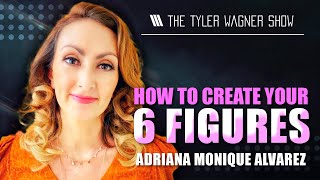
In this episode of The Tyler Wagner Show, host Tyler Wagner interviews USA Today bestselling author and publishing coach Adriana Monique Alvarez. Adriana shares how she transitioned from a brick‑and‑mortar consulting business to an online publishing empire after having two babies in 2009. She explains how she discovered a market need—clients wanted to write books but found publishing intimidating—and built a multi‑author book model that produced six books in nine months. The conversation covers her personal writing discipline (daily writing, outlining, dedicated coffee‑shop sessions), the mechanics of multi‑author projects (pricing per chapter, ghost‑writing, 10‑minute intake forms), and how those projects generate a self‑sustaining referral funnel that turns group‑book participants into solo‑author clients and further publishing‑company owners. Adriana outlines her mission to help 10,000 women launch their own publishing houses, her certification program, and the importance of community, referrals, and strategic partnerships. Both hosts discuss work‑life balance, morning routines, the value of delegating, and the broader vision of white‑label publishing services for businesses and influencers. The episode ends with promotional details for Adriana’s book “How to Create a Six‑Figure Publishing Company” and her website Amaspeaks.com.
Chapters
Alright everyone, welcome back to another episode. Today we have Adriana Monique Alvarez. She is a USA Today bestselling author and she teaches women how to start 6-figure publishing companies. So welcome to the show.
Thank you so much. It's great to be here.
Of course, pumped to have you on. It's cool to have someone else on in the same industry. So, um, first question I have for you: when did you start your publishing company, and like, uh, like, why did you start it? What, what, uh, pushed you to do that?
Good question. I never set out to do this, really. Yeah, it I like to say I sort of fell into it and I was inspired by my clients. So I started off offline in 2009 and was working with brick-and-mortar business owners, you know, doing that. And then after I had 2 babies in 12 months, I decided to transition my business online. And every client I had, after working with thousands of clients in 36 countries, everybody wanted to write a book. And nobody did. And I began to ask my clients, why? You know, you, you had this great idea, you were so excited about it, and every one of them told me publishing is intimidating. It's a whole nother beast. You can be good at business, you can be good at all these different things, but that doesn't necessarily mean you know how to tackle the publishing world. And so I created different opportunities for them to practice writing and get their stories out there. I actually started out by teaching a course on how to write for publications. And then I created a multi-author book and then I created 6 in the first 9 months and realized there was so many people who just needed an easy first step. And that's how we got rolling.
Wow. Okay. So you did 6 multi-author books in 9 months?
That's right.
Whoa. That's crazy. Oh my gosh. I'm trying to remember years ago because I don't know if you know this, but I did 4 books called The Better Business Book that each had 100 authors. So, and that was like a lot to manage. Like, it was a lot, uh, very fulfilling, I will say. Like, it was like a— literally built like a lot of friendships that are going to be lifelong, and like communities were built from these books. But it was a lot. And I— that was over though like 2 years, 4 books. So you did 6 in 9 months. That's crazy.
Okay. And you're right. I mean, this is the thing, is multi-author books, it is— it's like You know, you're herding cats in a sense. But what I learned through that process is it gives me a high. I absolutely love it. Working with one person, that's hard for me. Working with a huge group and having lots of moving parts and it's different every time, that really gets me excited. And I just love creating in that space. And I agree, the women who, like, I think about the women who are in my first book, I actually made a trip to Australia and I went to visit like 12 of them who were in the first book. These are women who have worked with me. We collaborate, they're friends. I mean, you know, they've got my cell phone number and it's, it's incredible what can happen when you really share your stories together and you move forward on a common goal.
100%. No, that's awesome. And like, yeah, I can definitely, I can relate to that high. I think I just, I don't know what the right word would be. I damaged myself a little with the 100. 100 was a lot. Like, and I remember what the hardest part was, was, and it was, it never failed. It was kind of like that 80/20 rule.
Oh yes.
Like every 100, there was always 80 that easy, turn their chapter in on time, no problem. And then there was like 10 to 20 that I like lose, like they would disappear and I'd be like, and I'm like, we can't launch this with 99 chapters. So like, there was always like something that happened. Happen.
But, um, oh, that is so true. I talk about the people who disappear, and yeah, it happens. I think, you know, I, I personally think that fear has a lot to do with it. When you like, you, you made the commitment and then you realize like, oh, I'm actually doing it. Because what I found with books is most people are in love with the idea of writing a book and writing it and having the world read your story and it all being out there is like whole nother thing.
Yeah, I agree. Let's actually talk about that, like, because I think for the audience, it'd be really useful. So when you actually started, and I apologize if I missed it, but have you written your, like, own book? Or did you start? Okay, you did. And what was that?
Yeah, I wrote my first book when I came online, because what I realized, you, I think you can relate to this, online is like the Wild West. And I'm I'm out here in Colorado. I went online and I was used to going to BNI and Chamber and working with people who'd been in business for 20, 30, 40 years. And I came online and I was just like, what is this? And I noticed that if you're really good in the online space, you can have no experience, have high prices, and it's hard to distinguish you from someone who actually has a ton of experience. And so I decided, to write my first book then. And so I wrote when my boys were napping. Then I released another book this year called How to Create a Six-Figure Publishing Company because I wanted to have, you know, a lead magnet, but also have in one spot what it looks like to break into the publishing industry and also feature success stories of women who've worked with me.
Got it. That makes complete sense. And I definitely wanna talk about How to Create a Six-Figure Publishing Company. Because I do think there's a lot of people out there that I've actually thought, and it's actually one of the things on our website, it's not that exactly, but it's called White Label Books. And like, I feel like businesses, they could add a publishing arm, right? It's not like you have to just like drop everything and run, but like, if you understand how it works, what you could literally be, I don't know, you can be like a realtor, but also have like a little side publishing business because you're meeting with so many people and it comes up in conversation. So I don't know, it's just a little idea that I have. But, um, so, but with writing your first book, like any tips on just the writing and publishing process? And then I definitely want to get into like building a publishing empire, if you will.
Yeah, sure, definitely. What I found worked for me, and, and truly writing a book is like anything, running a business, having a happy marriage, what, being healthy, you have to find what works for you. But what worked for me is writing every single day. I found that having that practice and having a— starting out with a good outline, I knew the main topics that I wanted to cover, so I never sat down and stared at a blank screen. I had, this is the theme of this chapter, and so that would spark ideas for me to write. I went to the same coffee shop at the same time every day for 3 months until that book was finished. And this is the sort of thing that I think is usually missing, is discipline is a dirty word. And what we forget is that in order to birth something like a book, in order to organize your thoughts and your ideas, your values, your knowledge, you have to, you have to create the sacred space to make it happen. And I also find that there's a swap-out. One thing I told myself is until this book is finished. Like, I'm swapping out this time. I could have done something else for those 2 or 3 hours, but I let those other things go. And that might, you know, look like the Netflix and chill time. That might look like getting up earlier. That might look like, you know, giving up social media. But it's really carving out that time. And that's what helped me.
Yeah, I couldn't agree more. For me, my first book, it was just in the mornings, 1 hour. In the morning. And it was like right after a workout because to me, like, writing is very hard. Like, marketing is not— it comes easier to me. But writing is like just so— it's hard. Like, I don't know how to describe it. Like, being— like you said, creating that space and environment is so difficult. But like having a conversation like this is like my favorite thing to do. So it's just like easy. But it was like right after a hard workout, I found that I was almost in like a meditative state. Like, I was just chill. And then I could just relax and just take an hour, turn off the phone, no social media notifications, lock the door. At the time, I was in an entrepreneur house with 6 other guys. So, you know, could be distracting. And I would, that was just like, that's my hour. Don't knock on the door, like no excuses. And that's how I got, you know, my done. And I think there was a, how I came up with that is there's a stat. I think the average person can write 1,000 words an hour. So when you realize that, it's like it becomes way more doable because what's an average book, like 50,000 words, something like that? So yeah, like 2 months you could have your rough draft complete with 1 hour a day. So, okay, so then you write your first book and now you're— you've written your second book, but you've done 6 in total group projects, or is that just 9 months? So you've done more than that.
I've done more than that. So I worked with some solo authors. I did another multi- multi-author book that was the USA Today one. And then I'm actually creating two more right now. And, and then in the middle of that is what I had the idea, oh, you know, I could create a certification and also teach this. So there's been a few projects that are kind of moving parallel to each other.
Okay. So is that the Six Figure Publishing company? Is that basically helping others set up their publishing companies to do multi— and they could do whatever they want with it, I suppose. Multi-author really is the best way to start because what also occurs, and I'm sure you realize this, with those 100-person books that I did, those people then, you know, I built trust with them and then, you know, let's just say 20% of them wanted to do their own book. So then that was like, so it was 100 clients and then 20 one-on-one clients. So is that kind of been your—
Yeah, absolutely. When you take that approach, it's like you have a an automatic funnel. It just sort of feeds this way. And that's exactly what I found is in every multi-author book, there's a certain percentage that will go on to do their solo book. There's a certain percentage that will want to work with you privately in one way or another because there's a connection there. And I also found it led to a lot of referrals. So I just, as an example, I had some women in the first book who sent me over 30 referrals.
That's amazing.
It was Amazing. And also what I love in, in the mix of this is I also learned kind of like what you said, where I realized that there was different influencers or business owners that if they made an announcement or sent out one email and said, we're going to put together a book and share these types of stories, they could fill it very quickly. So I started producing and managing those books as well. So there's so many different ways this could look, you know, maybe they don't want to start their own publishing house, but that's like a good first step of them seeing how it can build their brand and and make their clients happy because it's a dream for most of them.
Yeah, that makes a lot of sense too. So it's like, it's not just like it could be an extra arm for any business, but like also it's just like really at the end of the day, if you have a following, because I mean, and I'm sure you've heard this stat, the New York Times, I think this is literally from like 10, 20 years ago, but they said like 81% of Americans believe they have a book in them. Right. So it's like, and I think that's true. It could even be more than 81. Like, I don't know anyone that like doesn't want to be an author, but I know a lot of people that just like won't put in the work to do it. So it's like everybody wants it though. So if that's true and you're on it, you're an Instagram influencer, you have 100,000 followers, chances are like you could probably fill a multi-author book with 25 people.
Definitely.
Yeah, and that could be an extra 6 figures for you that you wouldn't have had otherwise, which— and all that, like, a lot of the social media stuff, like you were saying, that you can't distinguish. So like, I know, you know, I know of people that have millions of followers on Instagram and like, you know, they're not like, uh, how would you say, they're not like loaded, let's say. But like, if you just looked at that number, you'd think they're like So this, for them, this is like, okay, here's a way you've spent all this time to build this amazing audience. Here's how to monetize. Um, so yeah, I like that idea. So I, you're probably already doing this, but if I was you, um, you know, that's, I would maybe try that, like go on Instagram. I think you can do like 30 to 50 DMs a day, and I would message influencers that have like 100K or more that you think have like the right audience. Although honestly, with that amount of following, I don't even know if the audience matters that much. But there's certain audiences that would convert higher than others. Yeah. And I mean, 50 a day, I think you could convert 2 clients a day with that.
I think you're right. And actually, this is what I'm expanding right now because what I find is that every person that I go, hey, have you ever thought about this? They're just like, oh my gosh, I would love to do it. And here's the interesting thing. Obviously there's a spectrum here, but I have some clients that are charging anywhere from $5,000 to $50,000 a chapter for these books. And so it, it gives them, like you said, this whole new stream of income. And you already know as well as I do, many of those people are going to do repeat business with them. That, you know, they can't— maybe for things they haven't even created yet.
And I want— for everybody listening, I want you to like really let this sink in because I think it's interesting. When I did my group books, because it was 100 people, I only charged $300 a pop. But like, I know, uh, how much are yours normally? Like 25 people?
Yeah, normally 25 people.
25. So like, I think It's so interesting. Some people would maybe think $5K is a lot and others would think it's like cheap. And what I want you to think about though is like somebody who really wants to become an author, it's— there's different things that people value. So somebody that's paying $5K for this, I think in my opinion what they value the most is their time. Because it's like, hey, you want to be an author, you want to be a best-selling author on like a major list. Well, all I need from you is like 1 hour. Like, I need you to write one chapter and $5K and it's all done. That is a deal for $5K when you think it's true.
It's like such a simple, refined process. That's what I found with one of the books I'm working on. Every chapter is actually ghostwritten, and so all they have to do—
oh really, it goes through—
oh my God, they fill out a form, they, they can record like a voice or video and the chapter is written from them, and it's like the easiest process.
Okay, so I didn't even know that. So like, if I were to be selling this, like, I would have— and you probably maybe already have some of this stuff built out— but like, I would have like, um, two lines just comparing, like, here's like all the pain, and, you know, obviously this product, that's how I would position it. Like, here's all the pain and time and cost to do your own book. And then here's our process: 10-minute form, one $5K payment, results. Like, that's all.
Writing notes here. I like this. You've got your list, your pain, and your, your pleasure over here.
Yeah, because it's, it's true. And like, and it really depends on— it's just so perfect. Like, for even somebody that does want to do their own book, it's a great introduction to it.
It is.
Um, and then for somebody else who really just like wants to have the title, like, I don't hate on anything. I just— it's— everybody does it for different reasons, right? Um, like some people pay me to help them hit bestseller, and they put bestseller, and then they never, they never market their book again. They just wanted the title. And I'm like, cool, like, that, that's what you want. So I think in this case, some people think they just want the title and they're willing to pay, and it's a group project, and That's it. So perfect business. Um, and I think it can scale endlessly. So I love it. Um, so is that— what is your overall with your company? Um, is that kind of the vision, or like where do you see it? I know in today's world, because the tech— uh, technology, like 5 years is like— I feel like 5 years is like 50 years, like what it used to be. Like we could be on Mars in 5 years, who knows.
I do. I almost feel like in 5 years, like, I can't even imagine where we'll be in 5 years.
Yeah, things could be way different. We'll be reading books on like one of the, like you see in the movies where they put something on and it's a, like a screen pops out. Yeah, be like scanning. Um, but is that what you see? Like, um, maybe not 5, we could go like 3 years or something. Um, like helping people build their own publishing company arms, that's the main Yes, so I, I definitely want to help.
I have this mission to help 10,000 women start their publishing house by the time I turn 50. So I've, I've got, you know, 6 more years to do it. And I also love these types of projects where there's a great visionary who's leading the way, because along with that, and the reason why that's so important to me, is because I want more stories to get out there, stories of people who didn't feel like they qualified, stories of people who maybe if they went another route, there might, they might be censored or they might feel shut down or there might be a lot of gatekeepers to get through. And so I just want to let people know, listen, there's a way to share your story without any of that. There's so many creative ways that we can do it today.
Yeah, 100%. So that's also 10,000. That's so cool. And what another thing I want people to realize about this business that's so magical about it is every time you launch one of these, like, you're probably going to get a couple more clients. And I'm talking like, obviously you're going to get some one-on-one clients, but I'm more talking about another— for every publishing one you do out of those 25 authors, 1 or 2 of them are going to be like, I want to have a publishing company too. And then they each go, then you got 4 more, then 8. And it just honestly you don't need paid advertising for this business. You don't.
And you, you nailed it exactly because this is what I found. If I look at my first 6 books, most of the first group that came to start their publishing house, they had, or they were in one of those books. And then here's the other interesting thing is every time one of my students launches a book, I get clients because somebody says to them, this was an incredible experience. How do I learn what you do? And they refer them to me and I pay them a referral commission.
Yep, exactly.
Everybody's happy. I mean, this just happened. One of my clients launched a book like 2 weeks ago. Immediately I get a message, hi, you know, she said she learned from you. How do I get started?
Yes, I love this. And that makes it so easy too. Like, I always think about this when I'm making like an offer, or like when somebody's interested in what we do and I'm making an offer, I'm like, how can I essentially like de-risk it like, and make it like a no-brainer. And like, one of the ways, like, as you know, like, we guarantee certain things on our side. So that's how to de-risk it. But we've also had multiple people that literally end up making money because that commission. So they hire us to do their launch, they refer— bad at math— let's say 4 people, and they already got their money back. So it's like, I don't know, it's just like, this is like a no-brainer thing if you make it that way.
So Yes, and this is, this is how I got started. You know, when I was offline, this is how it worked. It was just all about who am I taking to breakfast, lunch, and dinner, whose circles am I in, who am I referring. You know, I was trained in BNI. What do they do in BNI? They teach you to come with a new referral every week. And so that's always been my goal. If I'm giving referrals and I'm training other people on how I like to receive them, you, you're never You're not— you never run out of clients. You never run out of people who are talking about you and saying, hey, you've got to absolutely meet her. And that's the way I love to do business.
100%. And that— and that's why too, it's like, I never understand like the delivery. So it's like there's two things. There's marketing, but then it's the actual product, right? And there's really nothing better. There's actually a book, um, by Joey Coleman called Never Lose a Customer Again. And what he basically talks about is like shifting your marketing budget into your customer experience because that is actually like the real marketing, right? Because if your customer has such an amazing experience and with books, this is like the easiest. Like when somebody writes a book, they share it everywhere because, you know, that's like their— it's almost like their baby, like not literally, but like kind of close, honestly. Like you love your book and you put a lot of time into it. So it's like, um, if you make that experience so good, they will tell everyone.
Oh yes, they talk endlessly about it.
Yeah. Um, so I'm curious too, on, um, like a note of, so running your business, what does it look like for you when I guess you made that shift? So you were more doing like local stuff and you were saying like chamber and then online, and like, what's your schedule look like? Morning routine? And how are you managing running this company currently?
Okay, so I have to say before I tell you that it's probably going to seem unlikely. Okay, so my husband often says it's sort of a magical thing. Most people wouldn't believe it because I don't believe in having a business and sacrificing your happiness, your health, your peace of mind, your marriage, your anything, right? So I arrange everything so that it gives me a good life, because that's actually why I'm in business. I want to have an impact, but I want to live in a great way. And so I start my morning off, you know, it's really slow, it's really quiet. I love walking by the river. I love having meditation right there on the floor. You know, I've got all my little tools. I use tuning forks and sage and all the things, right? Because it's really about me being as connected to myself as I can be. Because I find that if I try to go out and serve anyone else or get into any sort of action and I'm disconnected from my own heart and soul, I'm disconnected from the earth, I'm disconnected from my soul's purpose, it's gonna take a lot more effort for me to get a result than when I'm in that really good place. And so I spend a good chunk of my day there. And, and one of the things that I do is I also— I'm very connected to my ancestors, and so I ask for guidance every single day. What is mine to do today? How can I be a blessing today? Who, who am I to connect to? And then I move from that place. And I don't like to manage anything that isn't connected to people. People is my thing. I love working with people. I love conversations, ideas, you know, creating things. All the rest of it, it's, it's pretty much soul-sucking. So I have anything like that someone else takes care of, and that's what I learned early on. If I try to mess with it, then the parts that I'm really good at completely suffer. So on a day-to-day basis, I have, I have a handful of private clients, and so I, you know, obviously I'm I've got a few meetings there. My certification, I have very streamlined, so I have 2 meetings a month for them, and otherwise they're in a great community on Voxer and they help each other all the time and they collaborate. So I have a lot of space, and I find that that's what helps me expand and really invite abundance in, is having space. If I'm just booked solid every day, it doesn't work well for me. And, and as you know, you can imagine some of those times that I'm, you know, on Zoom or on the phone are also with collaboration partners. So from the beginning, I've always had 12 people that I'm always referring to and who are sending me referrals. And sometimes that, you know, expands and contracts, but there's always a minimum of 12. Um, and really cultivating those relationships, seeing what's going on in their life, what do they need, you know, what What's going on? How can I assist them? What can we create next?
All right, I love this, 'cause there's some real good gems in there. Not to get like, well, I know, I feel like we can relate to this, but I always like start with this before I go down this path. Not to get like too woo-woo on everybody, but I always wanna say I'm a big Alan Watts fan. I don't know if we talked about that before, but one of the things he says is like, you know, you can't have a thing without nothing. And in fact, like nothing is no thing. So where I think a lot of people mess up, and it's in the culture we live in today, is like hustle, hustle, hustle, right? It's just like do. And in reality, like one of my non-negotiables, which I think is similar to yours, like every morning I do like very long cardio. So that's like 1 to 2 hours every morning. And that is like my space, whether it be, if it's on treadmill sometimes, but I prefer more like a long walk. I live down in Miami, so that's really easy, warm all year round. And I, afterward, I'm at peace and my workflow is so much better. And some would say, well, if you had that 2 hours, you could have put work in. I'm like, but I don't work effectively, you know? And that's the key.
That, that's just it. I have found that I've had people say, well, you know, you could have used those 2 hours for this, that, and the other. It doesn't come out the same. That's all I'll say. It's kind of like a recipe. You know, if you don't— especially baking— if you don't do things in a particular order at a particular temperature, it's not going to turn out the same. And that's the recipe for my business. There's no— I found substitutions don't work well, and conventional things absolutely don't work for me. And I think you're right, it's, you know, I, I've actually found that if I go spend 2 hours like picking peaches and making something delicious to eat, and I'm in that beautiful space of just completely at peace and joy, and then maybe an idea will come to me. I'll do one thing or I'll mention it to one person. It just falls into place. Yeah. And this is the sort of way it can be, but we really have to trust ourselves and we have to trust life.
Definitely, 100%. And yeah, it's so interesting. I just think people need to give themselves more time like, like you're saying, especially by themselves. I think a lot of people are afraid to be by themselves, whether they're conscious of it or not. Um, and when you can just be by yourself, you really start to like realize what you really want. But when you fill your life with just constant stimulation, that's when I feel like you, you go like 10 years and you look and you're like, oh, this isn't even where I wanted to be. Be, you know. Yeah, it's interesting. Okay, so there was something else I wanted to say and I lost it. There's two— oh, the delegate. Sorry.
Oh yeah, no, no, I want to say too, and the delegation is key, but this also I think comes down to trusting ourselves, because I found that I have a hard time trusting another person when I don't trust myself, right? And I grew up, both of my parents have owned businesses my entire life. My mom celebrating 40 years this year of owning a health food store. And I found this to be just observing them. This was the number one challenge, hiring, delegating, pushing things off of their to-do lists and off of their responsibilities, their shoulders onto somebody else. And it's also the number one way to become the bottleneck.
Yes, it is.
And I just, you know, they, they have a totally different business, they did it in a different time, but this is one thing I took away from watching my parents is I just really wanted to learn how to not have the belief that if you want it done right, do it yourself.
Yeah.
And so I've worked a lot on that of saying, you know what, I surround myself with the best people. Everything's being taken care of, you know, and also becoming a really good communicator and learning how do we work through things. How do I make sure people know the culture, the mission, and the energy and spirit in which we do things? Because I think that's the number one thing. Obviously, I want to live my life this way, but if everyone who's working on my team is just in that like check it off the list and we're grinding and we're hustling, we're just right, which is sort of the machine, it's going to come through and people will feel it. And so that's a big part of it as well, making sure people understand we've all got to come from this space. And I want you to go have time with your kids. I want you to go pet your dog. I want you to have an afternoon nap. I don't want aspects and people who are in my business to be inconsistent with this sort of way of being.
Yeah, no, I feel that because then they're kind of like— I think really it's like you don't want them to be inconsistent with what they are, right?
Absolutely.
Because then that comes out, and that's so interesting. That's kind of like the way it works. It's like, um, how would you say, like somebody who Like somebody, like you said, we'll just use that example. Like somebody who doesn't trust anyone is probably because they don't trust themselves, right? And it just like comes out in that form into the world. But the delegation thing, I just think, I just wanted to highlight it because I know when you first start out as an entrepreneur, you know, Seth Godin would say more like you're a freelancer. It was more the term. Or solopreneur is a term that's going around. It's amazing, but it's very hard to like give up the reins, right? From that. And it's because, and that, I don't know where that quote came from, but it like, I think everybody's heard it where it's like, if you want something done right, do it yourself. And like, in reality, it's just, you can't scale all alone, nor really would you want to. Like, honestly, I remember when I started, it's kind of lonely at first when you don't have anyone working with you.
That's how I felt. It was incredibly lonely. And also what I realized at some point is that I'm, I'm really good at a couple of things, and that's about it. If I have to now provide a whole wide spectrum and I have to be this generalist and I've got to be everything to everyone, um, number one, they're not going to have a great experience, and I'm not going to enjoy it. And so I found it's way better for me to bring other specialists by my side and be able to call on different people to refer to, you know, delegate all of these things because I actually am the happiest when I just do the one or two things that I just, you know, I really excel at.
Same. We're very similar too. Like I've actually, um, for this podcast I've done almost 2,000 interviews, which some people would be— and that's in like 2 and a half years or so. That's great. But, um, I love it. Like, it energizes me. Like, I, I don't ever feel like you were saying, but there are activity— like, to me, and it's funny because, you know, I work in the book world, but writing is one of those actually so— like, it's, it's hard for me and it like tires me out. Like, and really what I've realized, what tires me out more than the actual doing of it is like the anxiety I get.
Yes.
Think about like the day before, I'm like I remember writing my first book, I was just like, I don't want to do that tomorrow. Like, I don't want to start my day with that tomorrow, or like the second thing in my day after the workout. And like, that's why I actually— what I, I remember, I never did cardio harder because what I would do is just run so hard that it was almost like I said, I was like almost meditating where I was just numb and I was like, okay, I'm just gonna let get this out of me. But like This, I could do this all day long, you know, and it's like realizing what's your genius, what do you enjoy, and delegate everything else as much as possible.
Definitely.
And that is better for everyone because some people, like my dad's an accountant, some people like being alone in an office crunching numbers. I have no idea why, but like that's how some people's brains work. I'm the opposite. So, you know, but there's, it's good that they're both out there. And they are so, so cool. I kind of— I want to leave the floor to you. If there's anything else you want to share that we didn't cover, please do. And then let people know, like websites, how to get in contact with you, socials, all things like that, and your new book, where they can get that.
Excellent. Yes, you know, the interesting last piece that I wanted to say in all of this is having all of this quiet time and We've been going to the mountains a lot where there's not any cell service, there's no Wi-Fi, there's nothing. And being at 10,000 feet or higher, I realized at some point in the spring and summer that I just knew it was time for me to move off of social media. And it was so interesting because when I was at BNI and I was that local person, I was terrified when I couldn't attend those meetings anymore and had two babies in my arms and I was traveling full-time with my family. And I had that same fear, like, is there any other way to get clients other than at the next BNI breakfast? And then I found online, obviously, you know, it exponentially grew. And then I went through the same thing. Okay, if you're not on social media every day, is there another way to get business? And it's interesting because I had to really come even deeper into that trust and knowing and that guidance, this is what's right for me. And so I just want to, you know, I just want to remind your listeners of that, that as we evolve and as we grow and as we expand and as life is always shifting and changing in businesses too, there's going to be times where we just absolutely know in our heart of hearts the direction that we're supposed to go in. And whether or not it makes sense initially, you know, that's really our, our test. And so this is what I've been doing is, you know, obviously lots of podcast interviews, lots of connection calls with collaboration partners and writing. And so I definitely invite people to check out my book, How to Start a Six Figure Publishing Company. It's available on Amazon. And also I have a site called Amaspeaks.com. So it's my initials, A-M-A speaks dot com. I'm happy to send you a free copy of it as well. And hear, hear about what they are creating in the world and how we might be able to do something fun together.
Perfect. Thank you again for coming on the show. Really enjoyed it.
Absolutely. It's been my pleasure. Thanks for having me.
More from Tyler


Catherine Nikkel : THE STORY EVERYONE HAS BUT HASN'T TOLD : The Tyler Wagner Show #1120



Scott Ritzheimer: Bring Predictable Success to your Organization | The Tyler Wagner Show #1115


Fred Moskowitz: A GUIDE TO GETTING STARTED WITH IN MORTGAGE NOTES | The Tyler Wagner Show #1113

Mark Podolsky: From Land Investor to Full Time Success How I Made $90,000 Cash in Real Estate


Mark Podolsky: How to achieve a 300% return on investment my foolproof strategy

Mark Podolsky: How to make passive income selling raw land the irresistible pricing strategy