Aleric Heck: ADOUTREACH YOUTUBE ADS EXPERT | The Tyler Wagner Show #1097
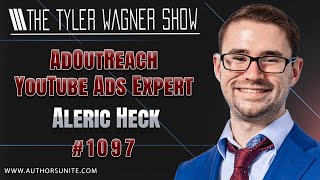
In this episode of The Tyler Wagner Show, host Tyler Wagner interviews Alaric Heck, the founder of AdOutreach and the creator of the AI‑powered targeting tool Keyword Search. Alaric recounts his entrepreneurial journey, beginning with the AppFind YouTube channel he launched at age 12, where he grew to over 100,000 subscribers and earned six‑figure ad revenue. He explains how a pivotal moment in high school shifted his focus from filmmaking to marketing, leading him to systematize his channel production using a small team and the 4‑Hour Workweek principles. While in college he experimented with using YouTube ads to promote app downloads, discovered the power of paid video advertising, and eventually founded AdOutreach (originally AppOutreach) to help businesses run YouTube ads. He describes the agency’s hybrid model of hands‑on campaign setup combined with client training, the “tree‑scaling” strategy for sustainable ad growth, and the importance of targeting trends and long‑tail keywords. Alaric also details the evolution of his software, Keyword Search, which now incorporates AI to generate audience segments for YouTube and Google ads. The conversation includes multiple client case studies—Jared Ernie (local GMB services), James (animal‑connection coaching), Cole Gordon (sales training), and larger brands like Procter & Gamble—showcasing revenue lifts from six to seven figures. Throughout, Alaric emphasizes the “ripple effect” of impact, the why behind his work, and offers a free 19‑page YouTube ad strategy PDF and a link for strategy calls. The interview blends personal storytelling, practical marketing tactics, and product promotion.
Chapters
All right everyone, welcome back to another episode. Today we have Alaric Heck with us, so welcome to the show, man.
Awesome, thanks so much for having me on. I'm excited.
Of course, grateful to have you here. So if you can just start us off a little bit more about you and what you got going on.
Yeah, so I run a business, Ad Outreach, which helps businesses with YouTube ads get more consistent leads and sales. I've also built a software company, Keyword Search, that actually does AI targeting for YouTube ads and Google ads. Just describe your business, click a button, and it'll do a lot of the YouTube ads targeting. It's one of the tools we use with our consulting clients. And then I've got a couple other businesses as well. I started out with a YouTube channel, you know, 14 years ago. We might dive a little bit into that. And I also have an e-commerce company on the side as well. So got a few businesses, but the main one is Ad Outreach and then the software Keyword Search that we use to kind of power some of the things we do with our clients.
That's awesome. I can tell, and this was before I hit record, but I can tell you have the entrepreneurial spirit, that's for sure. So I, I'm not surprised because I only did research. I only found your, your one business, but now that you're saying you have other things going on, I am not surprised at all. I'm the same way as you. I feel like once you start, it's so hard to stop, man. It's so fun. I enjoy this stuff. So first question I have for you is, And probably you could not have foreseen this, but when you were younger, say like middle school time, did you know you were going to be on the entrepreneurial path or what were your thoughts that you were going to be doing when you were older?
So there's two answers to that question. So yes, and also I thought it was going to be slightly different in that I actually started out my YouTube channel when I was in middle school. So, you know, 14 years ago I was, you know, 12 years old. I'm 26 now. I started out with my first business, which was a YouTube channel called AppFind. It still exists today. I've got a small team that runs it, reviewing mobile apps, tech tutorials, teaching people how to use their iPhone. And I knew that I wanted to just share this love of my phone and use something that I was able to really learn at an early age was I had a video camera, I was learning editing. I remember loading up all the Adobe discs onto my computer and teaching myself Adobe Premiere and After Effects and all those platforms. I actually thought that I wanted to be a movie director at that time and that YouTube was gonna be a path into that. So I knew I wanted to kind of build something. And I actually don't always tell this part of the story, which is kind of interesting too. So we're diving a little bit. And I know that's what you say you dive into on here is we just map things out. So I always talk about that because it's kind of like, it seems obvious in hindsight that my path was entrepreneurial. But I think at the time, there was just kind of this, you know, I had a video camera from an early age. I love filming videos. I can even tell you the moment that I realized that I was destined for entrepreneurship and marketing, as opposed to creating videos. And I'll get to that in a second. But Essentially, I'd started that YouTube channel early, early on. I was just uploading videos originally. It was just for a few friends, but then video, video started to take off. People were watching them. At the time, the App Store, basically every app, you know, cost a little bit of money, like $0.99, whatever, you know, all the good apps. And so people wanted to watch videos to find out what apps they wanted to download because if they were going to go and buy an app, they wanted to know, okay, is this a good app? It's not a good app. And that's what I was doing is I was doing app reviews. I was also teaching people how to use their iPhone. And the channel started to take off, you know, slowly but surely it was really growing. And by my sophomore year in high school, I had hit over 100,000 subscribers. And I had these videos that had gone viral. And what they were is teaching people how to use their iPhone. So I did, I remember I did an iPhone 4 complete beginner's guide. Hour-long video. Nobody was really doing even like videos that long was also you had to be a YouTube partner to even be able to do videos that long back then. So people don't even really realize that. But like, for, because there used to be an upload limit. And so I'd upload like this hour-long video as like a, as, you know, YouTube partner, I did a full beginner's guide. And that was kind of the first video that hit over a million views and started to get a lot of traction. And By that time, I actually started earning. I was earning around $60,000 a year from that YouTube channel. I remember I had one of my teachers in the high school came over and he overheard me talking about what I was doing on YouTube and like the ad revenue and all that stuff. And I told him that I was making like $5,000, $6,000 a month, whatever it was at the time. And he said, there's no way. I'm like, what do you mean? Like, let me show you. And so I just pull up the stats and show him, you know, the ad revenue. And I wasn't trying to like, I was just, it's like, yes, this is what it is. And his face kind of went white and he's like, that's more than I make.
More than a salary.
And that's when I realized, wait a second, I have something pretty cool here. And it was actually around that time that again, you know, because before that I was filming like kind of sketch videos with my friends. I was watching, you know, like, and also at that time too, I was building the thing on YouTube. But even the people on YouTube, people don't really remember this. They wanted to break into the industry of like, you direct. This is before YouTube is— YouTube's now the thing, right? But in the past, back then, why were a lot of those YouTube content creators? They were doing movies, they were doing TV shows, right? They were, you know, aspiring to kind of break into that side of things. And so, you know, again, I loved filming videos. And so I thought that maybe my path would be to be a director, although I was loving the momentum I was building on on the marketing side. So I remember going and I toured and I was looking at business schools. I like business as well, and I was looking at potential film schools. And so I remember I went to this kind of same time frame, sophomore, junior year of high school. I went to, I think it was Syracuse, and they had both a business and a film program. And I was actually looking at possibly like doing both of those. That's not what I ended up doing, but I was looking at both of them. And I remember going to the business side And there's just this great kind of marketing talk and I love that. I was like really resonating with it. Then I went over to the film side and I remember meeting with, you know, one of the students there and I was asking her about, you know, what she was working on and she was talking about it and she said that she was posting them on Vimeo, like these videos on Vimeo. And I said, well, you know, if you post the videos on YouTube, and you title them a certain way, you tag them a certain way, more people will watch them. And I remember distinctly what she said. She said, oh, I don't care if people watch the videos. I just want to make the best videos. And that's when I realized I'm not destined to be like a content creator on videos or like a director or like, you know, a filmmaker. Yeah, I didn't care about making the best video. And that's not to say I was making bad videos, But that wasn't my goal. What I love is people watching the videos and the marketing and the business side of it. And so that was the moment, the defining moment. There were, you know, things that led up to that, that I realized marketing, this is what I actually am passionate about and love to do. And I love video. And so I've incorporated video into what I do. And that's, you know, with YouTube ads. And I love, having people see a video and the transformation that that can have and actually showcasing that video to people. And so that's where video marketing was kind of my, my path.
That's awesome. It's actually very similar to my story with books of just like I realized, and maybe at some point in my life I will, I don't know. But the idea of spending like 5 years or like I think of like The 4-Hour Workweek by Tim Ferriss, I think he said it took him like 3 years to write that book. And like, you know, more than a full-time job, like 60, 80 hours a week and 3 years. The idea of doing that is just not, it's not that, it's not really an idea for me right now, but the idea of helping a bunch of other people that are willing to put that much into their book and help them with the market, like, I'm like you where I, I don't know, I kind of, it's just more exciting for me to see all the tips, tricks, and techniques I can figure out to make a book go viral for someone else rather than spend 3 years of my life writing my own. So somewhat of a similar realization that you had. Just to ask this question, and I know the thing is like 14 years ago YouTube was way different, so maybe your answer to this is different than it was. But if you were to say to grow a YouTube channel, like not the ad side, but just organically, what were the things that were allowing you to do that? Like, was it really the keywords mostly? Was it consistency? Was it, you know, it's probably multiple things all in one, but just curious, like now if you were to start zero subscribers, how would you grow it to 100,000, I guess, is a good question.
Yeah, that's a really great question. And what I will say is I'll answer the first part of the question first, which is like back then, I think that it was really finding— and this is similar to like right now— was finding the content that really resonated with the audience and continuing to do that and also producing things that were unique and also trending and that people were searching for. So if people were looking for iPhone you know, whatever tutorial, and all they found were 5 to 10 minute long videos, or just videos talking about a review of the iPhone, then, you know, what is something that I can do differently that's gonna make me stand out, that's gonna provide extra value, that's going to make my video be the one that they watch? Well, I do what other people aren't doing, an hour long, but I don't do that in something that nobody's looking up, right? So I don't do that for a random obscure individual thing or like an hour video on an app that people haven't heard of, right? I do it on the thing a lot of people are looking up. So the trend, but then I do my variation on it that's clearly different that people are looking for. And I think that's the exact same thing that's gonna help you succeed now is it's the combination of trend and things that people are searching for that's related to what you're looking to do and build a channel around. In doing it your unique way that people are going to want your way specifically. And so I think that's really where the key is. And I know that that's kind of more theoretical, but that's where to start. And then from there, it's making sure that you have the right titles, thumbnails. Tags are a little bit less relevant. It's now more like how you title things in the thumbnail and also in the description, having certain, you know, keywords in the description. But where, where kind of tags and keywords are important is finding what's trending. So seeing what topics are trending. We have elements. In the software that I build. We're actually rolling out, we're rolling out a feature pretty soon. Well, I guess you heard it here first. So there we go. You heard it here first, which is great.
Exclusive.
Yeah, exactly. So we're gonna be rolling out a YouTube like copilot feature in the future where we're gonna be able to, you know, kind of scan your channel and then actually tell you, okay, here's what trends are coming up. We're already doing that with ads, right? With, you know, trending, you know, topics. But here's what trends people are searching for more on YouTube. We're already, that's already kind of incorporated into what we do with our ad targeting, right? We're trying to figure out, Okay, what are people searching for? What are, you know, the trending searches that we can build an ad audience around and put into what are called custom intent audiences? That gets technical, but basically there's this way to go in and take, you know, what people are searching for on Google or on YouTube, build an audience out of it, and then target those people. And that said, it's the same thing that you can do when you're going to create YouTube content. And so that's an expansion we're doing on that side, but it's also what we train, you know, a lot of our clients they come to us for YouTube ads, and I'm sure it's similar with you with books, right? It's like as you grow and you build a bigger business, people come to us for YouTube ads. We do that, we help them knock that out of the park, but then they want to know, okay, how can I do retargeting and how can I go and build a YouTube channel and how can I, you know, do that, this and the other thing? And that's what we can do and support them. And so we've really been looking at that question of what's going to create a great YouTube channel for our clients, and it's really going to depend on what they're building, what they're looking to create. But then it comes down to if you really want to see growth is figure out what your, you know, kind of niche is, right? So, okay, what, what, who are you speaking to? Who's your ideal audience? And then find what's trending for those people either at that time or just in general, and then create your unique spin on that. And you're not always going to get it right away. So you're going to have to try a few times to get there. And then once you find that, you double down. And honestly, that was a learning lesson that I had with the YouTube channel. If I had doubled down sooner on those complete beginner's guides for other products, we would already have been further than it is now. I have a small team that runs the channel. It's got about 550,000 subscribers now. We're continuing to grow that. But there was a little bit of a plateau period, especially when I pulled myself out about 3 years ago. I kind of like mostly pulled myself out like more like 6 years ago, but I fully stopped recording, like being the, you know, the face and voice of the channel about 3 years ago. We went through a few different content creators, but one thing that we discovered recently is we should just create more of these complete beginner's guides. Now there's complete beginner's guides on the channel, which I've got, you know, Justin, who's like my main like content guy, he's out in in kind of Silicon Valley, like, you know, kind of area. And he's plugged into all the latest tech and everything. And, you know, what we're having him do is create complete beginner's guides, not just on iPhones, but on like the Amazon Alexa, on, you know, all the different phones and products and like all these like different things that people can use. And that way we realize we have this format that works really well. Why not double down on that? Not just do it for these like iPhone videos, for instance.
Yeah, and you could do it for apps too. I don't know why I was just thinking of like Evernote or like any app or whatever you could do, like how to maximize an app and like go into every little detail of how to use it or something. That could be something there. So I want to, I want to dive deeper into your business, your current business, like your core one, the ad outreach and strategies around YouTube ads. But before we do, you kind of alluded to it. I realize there's kind of an open loop here. What happened in the middle? So we know where you are now and we know where you were in middle school, but how did you like get to this point? Like, I'm sure— did you have any businesses you started that did not work? Like, what were the ups and downs to get to this point in between? Let's say when you were at 100,000 subscribers to where you are now with Ad Outreach, what's in the middle?
Yeah. So, well, okay, so I'll talk about the middle, then I'll talk about where the transition happened from AppFind to Ad Outreach. So Essentially, now we fast forward to going to college. I realized, I decided that I wanted to, you know, focus on marketing, also build my business. I got accepted into some different colleges that, you know, really were— it was kind of funny. It's like they were technically more prestigious, but they were saying, hey, you come here, you put the business aside, focus on classwork. And it just made no sense. It's like you're supposed to be some of the top entrepreneurial colleges and you're telling me that like, you know, okay, that was good to get me in, but then you're going to go and just have me be in a classroom all day. It's like, kind of like, oh, that's a good project. But now let's, let's do that. Let's do this and then get you ready. Like, it made— it didn't make sense. And so I eventually, you know, ended up going to UMass Amherst and in the Eisenberg School of Management. And I, you know, got to college and I was doing my classwork, but I was also running my YouTube channel. One of the first things I did, and you alluded to it earlier, The 4-Hour Workweek. I read, read that book and what I was able to do was I turned my YouTube channel into a 4-hour workweek, which it continued to be until I actually stopped being the face of the channel. Now it's about a 30-minute to 1-hour workweek, which is even better. But essentially what I was able to do was pull myself out of all of the kind of systematized things, which was exactly what's taught in the book, right? And so essentially I got a scriptwriter, got a video editor, got a business development person, the time we were getting 50 to 100 inbound emails a day with people that wanted to like feature their apps on the channel, which was crazy. So we had all these, you know, people reaching out. So, you know, business development person, we had, you know, scriptwriter, video editor, and I think there was one other role, but there's like a few of those like kind of roles to help every step along the way. And then essentially I had it down to a science where they would sign a sponsorship. I'd have the scriptwriter do all the script, write the video. I trained them in my voice. And then, and then what I was able to do was I would just record the audio. I wasn't even recording the, you know, the actual apps or live action that was being prerecorded. And then it would be sent over to the editor. And so I'd have this kind of whole production. And so I pulled myself out of that. That, you know, was making about, you know, 6 figures a year, was putting some towards college, some of it, you know, savings, and I was reinvesting some of it into what I was going to do, you know, as my next business. So I had a, I was going to do a kind of Apple News style, like blog website thing. And that actually didn't end up working out as well. There were a couple other things I was going to start like a, a different YouTube channel and expand into other YouTube channels. And I was trying to find other, you know, trying to do like a content incubator. And I was going to like kind of have somebody I was going to build up. That, you know, that I had found there. So there's a couple of those things that didn't work out as well, but I didn't really aggressively pursue something that didn't perform, if that makes sense. Like there were just a couple of those ideas that didn't really click. What ended up happening is I then found what the next opportunity was still in that, you know, kind of between my freshman and sophomore year of college. Basically, there was all these apps that would sponsor me, so I would do a video, You know, they'd get a bunch of downloads, it'd be great. And the word of mouth, that's why so many people were reaching out. 'Cause whenever I would feature an app, they would get a lot of downloads, they get a lot of people to download it. And so what ended up happening is I had one social media app that sponsored me and they got a bunch of downloads, it was great. So they said, hey, can you do the same promotion tomorrow? Like upload the same video, same dedicated video. We want to double our users. From what the last one was. And I had to tell them, well, it doesn't really work like that, right? You can't just post the same video the next day to the same—
I guess I don't know if that'll work.
Exactly. And so, and so I said, hey, I don't want to— I don't want to take your money and just do that like that. It's not going to work the way you think it will. But what if we take that $500 that they were going to pay, like, you know, to repost the video? Let's take that $500, just put it into YouTube ads. And I had done a little bit of experimenting with YouTube, like, ads to, like, kind of get new subscribers. I wasn't really doing that much. I knew it existed. But basically I wasn't doing a whole lot with it, but I knew what it could potentially do. And I was fascinated about this with marketing, right? I was like, oh, what if I, what if we did a YouTube ad to this video that we know gets users and we put money into it to get that in front of the right people? And so I set that up, $500, one week, we get 11,000 users for their app, which they're blown away. Like they're like, this is crazy. And I was also, you know, by What I was like, all right, well, I guess this, this works really well. And so then I kept doing some promotions for them. They were part of like, there was kind of a performance marketing company that I was working through them, you know, with that company. And so then they said, hey, we've got another app we represent, you know, can you do that app? And then we've got another app, and then that one was even bigger. And so then I had done a few of those promotions. And so that performance marketing company calls me up, they say, hey, We'd love for you to drop out of college, fly out here to Silicon Valley, join our team, and you could be our YouTube ads guy. And it was tempting, especially earlier on in college. And it was a lucrative offer, but I decided to turn it down. I wanted to build this myself. And so that's when, I'd rather be kind of a king of my own castle, even if it starts off smaller than the knight in somebody else's, right? I want to forge my own path. As a lot of entrepreneurs, I'm sure, you know, listening. Exactly, exactly. And so what I was able to do was I built, and it took some time before I officially kind of formed it. So like around my sophomore year of college is when I officially formed what is now AdOutreach. At the time was AppOutreach, it was like YouTube ads for mobile apps. I tapped my network, reached out to all the developers I had done promotions for before, signed the couple dozen clients from that, ran promotions, got, you know, app downloads. And then what I noticed was I, it was later on that year that I discovered ClickFunnels. So I was at HubSpot Inbound in 2016, went over to the ClickFunnels booth and got connected with them, created a funnel, joined a mastermind, not their mastermind, but like, you know, mastermind kind of around building out funnels, learn how to build like a webinar funnel. And I was doing YouTube ads to webinar funnel to then have people learn how to, or not learn, but like to have people discover like what was possible with mobile app ads. And I was like then going to run YouTube ads for their app.
Yeah.
What I realized was I was running YouTube ads to a webinar and other people in the mastermind started to notice, how are you getting so many people to show up for your webinars? And like, such a low webinar registration cost. Like all of ours is more expensive on Facebook. And so that's when I realized that my expertise wasn't just working with, you know, mobile apps and YouTube ads for mobile apps. I could do YouTube ads for other businesses and especially online businesses, businesses that have funnels. So then I started to do YouTube ads for a variety of the people in that mastermind. Then I realized that this is something that I had really developed. And so I started, you know, over the course of the next couple years and kind of fast forwarding here, started to teach YouTube ads at a time when most people were just doing Facebook, right? And so then I was able to go out and train people in YouTube ads, help businesses set it up and kind of had a hybrid model where we hands-on help them set up their campaigns, but also show them how it works and show them how they can continue to run it long term. And that's, you know, basically what we were able to scale up and has turned into AdOutreach today, you know, really supporting businesses and using YouTube ads to get in front of the right people, to have the right message, reaching the right person at the right time with the right message. That's the key.
That's the one thing, and correct me if I'm wrong, that I noticed with your, we'll call it an agency, that I really liked what I saw is that it's not just done for you. You're actually like teaching the person so that they can kind of take over the reins and do it for the long term. And it's funny kind of timing or just interesting timing because like Hermosi, I'm a big fan of his. I, I love his first book. I just finished his second book. And that's actually one of the ways he teaches about like when you work with agencies, he's like, don't just pay them to do it for you, pay them to consult you and then you'll learn it and then have your team internally do it. So you kind of, based on my understanding is that you do kind of do it for them, but you're also equipping them with everything they need to do it without you. Is that accurate?
It's mostly accurate. So essentially what we're doing is we're helping, we're going in and we're setting things up. We've got our copywriters writing their scripts, we're helping them launch their initial campaigns. We're going in, we've got our software, and then we're enabling them to be able to run it long term. So in terms of day to day, there's not in the main program like a point where we're necessarily managing their ads completely with them hands off, right? So it is a hybrid from the beginning. That being said, we're there and we're a lot more close to actually launching those campaigns, helping them get it all set up, writing the scripts, you know, the targeting side of things. And then when it comes to optimization and scaling, that's a process we're doing together throughout the program. And then it hands them the reins so that them and their team can take it. And that's exactly the case, like exactly what, you know, Alex is saying. And, you know, huge fan of everything that he does as well. You know, that's exactly what's the best. And I've been saying this for a long time. Is you don't want to just have somebody, you know, running your ads and being in the silo where they also don't fully understand your business, right? What you want is you want to be able to actually dive in and have somebody help install this into your business, train you, train your team. That way you can take it and run with it long term. And it's a skill that you actually own inside of your business. So it's something that you actually have inside of your business that you can continue to have control over. Like, it's the lifeblood of your business is the marketing. And so you want to know how it works and you want somebody on your team that can eat, sleep, and breathe your ads. And part of that is having them be trained by the best experts. You don't want them just to try and figure it out on their own, right? You want to shortcut that learning curve, but you also want to have somebody on your team that is doing it that's dedicated to you.
Yeah. And I think the reason for that too is just the reality is, say, say you're an agency and you're managing, you know, hundreds of different people's campaigns. You know, and I'm not saying anything negative, it's just the reality is you care about your own ad spend more than any agency would. So it's like, but that could also be a part of the negative, right? I think a lot of times people give up on paid ads because they spend their first couple grand and they don't see results and then they get scared. But so here's actually a good question. And having said that, is for YouTube ads, is it similar as Facebook ads where, you know, you got to spend some in the beginning, throw it against the wall and see what sticks? Like, You're not going to find what works with $50. Like, you got to— I mean, you can use your tool and your consulting and you can have like a very good idea of what will work. But until you spend, you know, I'd say at least a couple grand, you're just— you have to be willing to go in the red a little to get massively in the green. Is that accurate, you would say?
And so I'd say yes. And it's also— it's a little bit of a hybrid of what you're saying because I think that yes, you do need to have time to test with any form of advertising. This isn't just YouTube or Facebook or anything, any form of advertising. What you're doing is you're essentially saying, okay, this is, you know, the dartboard is over here and we know we're not throwing darts in the wrong direction, right? We know where the dartboard is, but we're throwing darts and some might miss the board. But we're going to analyze that. Some, you know, might land on some of the outer rims. We're going to see, okay, what can we do to actually change and change our trajectory a little bit? Then you're going to have some that hit the bullseye. And then what you want to do is you want to analyze that and say, okay, how can we keep hitting the bullseye? How can we change the way we're throwing these other darts? So you keep throwing darts towards the bullseye. That's how I describe ads. And it's exactly what you're saying. That said, I do think that there's people that take this approach where they spend a whole lot at the beginning. They go super broad. And I've talked with— and a lot of them are agencies that sometimes are incentivized on ad spend and other things. They'll go really broad at the beginning and then they'll narrow down. So like what I like to do is get more targeted with a few campaigns that are more specifically targeted towards your ideal clients. That's what our software does too, is it actually goes in and says, okay, here's, here's what they're likely searching for on YouTube and Google. And these could be longer tail keywords. And let's go in and maybe we're not building the campaign that you're going to be able to infinitely scale, but we want to build a campaign that you're going to be able to have as a bedrock that you can scale. Yes. And but then have as a bedrock that gets your results early on that you then you can scale like a tree, right? So a lot of people, they treat campaigns like a balloon, right? Where you can just kind of just fill it, you know, full of air, just like, all right, this one's working. Let's pump it up as much as possible. Bigger, bigger, bigger. But then what happens, right? It bursts, it pops. And so what we found is what you need to do is treat your campaigns like a tree. And it's the same thing I talked about with the dart analogy. And what you're saying is completely You know, true, right? It's going to take a little bit of spending to narrow down and see what works. But once you have those campaigns that are working and you have essentially like a seedling that now is becoming a tree, you don't want to just, you know, really try and scale it super fast. You want to take care of it. You want to water it. You want to pay attention to it. And then you also want to create branches off of it. So instead of like a balloon, just trying to pump that one campaign full of as much budget as possible and risk it, you know, um, it, it not perform at the same level, you do want to keep scaling it, right? So I'm not saying don't do that, you want to do that, but then you want to create branches. You want to say, what made this campaign work? How can we create 3 new variations that are very similar but slightly different, kind of like a family tree? And then we create branches, and one of them might not work, and that just falls off, but the other ones do. And so now those are sturdy branches. Then you create branches off of that and branches off of that. And so essentially, we call this the tree scaling strategy But you want to scale a sturdy foundation with that initial campaign that you see really performs, and then you want to build branches off of it and, and then prune the ones that don't work and the ones that do more branches off of those. And that's also how you more sustainably scale, because if all of your spend is just in 1 or 2 campaigns, and I've seen people that are like this, something happens, that campaign, that's a lot of risk. What you want to do is you want to scale like a tree and have a section of interconnected campaigns that are similar but have differences in the targeting, maybe the video that's being used and all of that.
Yeah, like very slight difference. I've actually heard of this, I think, with Facebook ads where, you know, because what'll happen is no matter how good an ad is, eventually in Facebook's algorithm, it'll kind of like level itself out. So what you do is you could— you create the same exact ad, but maybe change just like a couple of words in the headline or just slightly change it. And then, you know, not necessarily will it definitely work, but it should work almost just as good and it'll get that initial boost from Facebook's ad algorithm. But then again, it'll level out. So you want to just keep creating very slightly different variations and then you have hundreds of these, like you're saying, branches that are just crushing it. So it seems like it's somewhat similar. Another question I want to ask you, because I feel like stories, people learn from them and can relate to them. So with your— and you can name names or you don't have to, it just depends on your clients and stuff. Can you share a few stories of people that like say they were, you know, maybe 6 figures and then you worked with them on an ad campaign, now they're 7 figures, or any transformational stories like that? I know you have some for sure.
Oh yeah, yeah. And there's a lot, there's a lot of different types of people. And one— so I'll talk about somebody that really kind of ramped up, you know, throughout the process. And then I'll talk about some of the bigger examples of going, you know, from, you know, multiple six figures to, to now, you know, to multi, multi-seven figures, all that stuff. But essentially, you know, we had in terms of a month, but we had, we have a client, Jared Ernie, who's really fantastic. And he, and so what he does is he helps out businesses like local businesses with their Google My Business profile. And he came to us back in 2020 when a lot of businesses, especially local businesses, were really struggling. And he was struggling a little bit too. And, you know, because the way that he was getting clients had changed. And so we were able to get him on YouTube and get his YouTube ads up and running. And what he was able to do is within just, you know, a month, actually, I think it was 6 weeks was the exact amount of time he was already he had tripled the amount of revenue he was bringing in on a monthly basis in his business. He was able to, you know, within shortly after that, over the course of that, he had his biggest, you know, period of time ever. So he had, I think, the next 6 months, he was able to do more than he had made, you know, the entire previous year. And then he was able to go and, you know, pay off his mortgage, sell his house, and get an RV, get his family in it and travel all over the States just by being able to have his YouTube ads running, bringing in new people, connecting with those people. And then he scaled that up from there, you know, crossing over $80,000. Now he's around that like 6-figure mark a month and, you know, mapping out the next step, which, which is also building out the team and doing all that. He's also— he's now going from— he was doing more of the lifestyle, traveling all over. And then now he's excited to dive into, you know, what does it look like to scale to that next level? He's, you know, I think he's in Atlanta now and now he's looking to take it to that next level. And that's what we're helping him with. And so that's just an example of somebody that comes through. And the reason I use him as an example is I really like to talk about like the ripple effect of impact that really matters to me because he's going out and helping small businesses, right? And helping them with their Google My Business profile. Like they don't have— that's what like Google reviews and like the location popping up. A business doesn't have that, they could really, that's a local business, right? They could really, you know, not perform as well as if they had one. And so he's going, he's really impacting and helping a lot of people. And by us being able to help impact him, he's able to go out and create that ripple effect with other businesses and the businesses that he supports and, you know, his mission to grow. Another, Another great client that we scaled to, you know, multiple, like, you know, six figures a month and was kind of before that, I was actually just on with him the other day. James, he basically— his business called The Trust Technique. So he helps animals or, you know, sorry, people connect with their animals better. Right. And so he's got kind of this business that essentially helps people develop a bond with— and he's got a lot of clients that have like horses, things along those lines. But he also has clients might be looking to connect with a dog or a pet or somebody or an animal that they have. And one of the great things with him, and he's just such like, I could talk with him all day, but he's a really great person. What he was able to do was really build it up to a certain point that he now has all of these people coming in to be able to learn how to connect with their animals. Now he's expanding out to people. He's got aspirations to, you know, do amazing things in the future. He's now doing his, you know, TED Talk in Italy coming up. Like, these are all these amazing things. And it's just really exciting to see when you can get people in front of the right people with YouTube ads, like what results that's able to do. We've also worked with, you know, bigger, like a variety of different companies. We trained the Tuft Needle team several years ago, like with their YouTube ads, obviously a big, you know, company mattress, you know, kind of space. One of my honors was being able to work with the Procter Gamble company and Bob Procter before he passed away. It was really sad when that had happened. We were actually with his former kind of director of marketing at the time, and it was definitely a tough moment. But it was really great to be able to have that because now those ads and the things that we were able to do are able to continue. That was definitely a highlight, being able to see, you know, seeing Bob Proctor giving, you know, the script that we like wrote for him. And then another one that I can say, you know, some of the specific numbers around was Cole Gordon. So he's big, you know, the sales team teaching people on sales. Yeah, yeah, you've probably seen some of his YouTube ads, right? There you go. So he's one of our big case studies. So he was at, when he started with us, $600,000 a month. Only Facebook ads and we got him on YouTube. And then, you know, within the next year he scaled over $3 million a month, which is incredible. And so he's talked about how, and it's not all just, you know, obviously there's a lot of other business things that he's doing as well, as you know, with scale and growth. But YouTube ads really unlocked that ability to do that because, you know, the video that I have him saying is how YouTube ads just perform so much better than what he was seeing on Facebook, just unlocked another level. And so it was really, you know, excited working with a variety of different people. We've also, you know, worked with ClickFunnels and a variety of different other bigger companies and things like that. And so it's been great to work with now thousands of clients and just, yeah, scaling things up.
Dude, I love it, man. And maybe I need your friend with help. I got a new puppy, 2 months old, and I got to seriously, I got to connect with a deer because it keeps pissing and shitting everywhere. So it's not listening to me.
Well, honestly, that's it.
That's serious.
The thing is, it's really, really great. And one of the things that he— he's just so really impact-driven too. He's got a full, like, you know, he's got his, like, initial, like, course that really impacts people. And then, you know, and then he has his other, you know, kind of things.
And so I was gonna say, I actually met a woman, uh, she was a potential client. She actually helps, uh, people, like, communicate, uh, with horses. Like, actually, it's— I forget what it's called, but there's actually a way of, like, Somehow I can't think of the word, but there's some way that you can actually like truly communicate with them. So I don't know. I know that's a little bit different than what you're saying, but it's somewhat similar. It's just, it's interesting, but it would actually be helpful. It's a bull terrier and this little thing is crazy. We actually named her Stormy because she's that wild. But very cool, man. And I, dude, I relate to what, to how you feel because Like with all the authors we work with, it's just, it's so cool to see the ripple effect, right? Like the way, like our mission, we say by helping authors succeed, or we believe by helping authors succeed, we help the world succeed, right? Because people read books. So if I can help the authors, then inevitably I'm kind of helping everybody else that reads those books. Same for you with businesses. Every business you help blow up, all their clients are benefiting from their, uh, business that you helped promote. So it's really cool. It's kind of cool to know that you'll never be able to actually fully measure the amount of impact that you've had. You know, like it's bigger than you will ever know. It's kind of sick.
Exactly. And I actually love that. That's why I talk, I talk about with our team all the time is that's the ripple effect of impact. And that's all the rocket fuel, you know, that we need to show up every day. Like, you know, because at a certain point you realize like it's all about the ability to create that impact, that ripple effect, the ability to help other people. And that, that's really the rocket fuel. Yeah, it's fun hitting milestones and growing the business and doing these different things. But at the same time, you know, there has to be something more, right? As you know, Simon Sinek would say, right? Start with why, right? What's the why? What's the purpose? What are we doing this for? And I think that amplifying that impact, that's something that, you know, we'll never know. We'll never be able to measure exactly what that is. But we know it's out there and we know that it's not even just the businesses we directly help. And then, but then the people that they support, but then the families of those people and then, you know, and so on and so on down the line. It's really exciting to think about. And then that just gives you that fuel and that excitement to go in and just do great things and do what you do.
And that's why, too, going back to her mosey is like, I feel like the best marketing is always just having the best product, right? I mean, if you put— and then I mean, because there's guys like you out there, right? So it's like for everybody listening, if you just focus on creating an amazing product and then you go to you, you already know the marketing for YouTube. So it's like there, I mean, there's the equation, make an incredible product, go to you, learn from you on how to market on YouTube, and then you're off to the races. I mean, there, you don't need anything else. I mean, that's pretty, that's it. So last thing I want to ask you, like, is there anything we didn't cover that you want to touch on? And then if not, please share with people like how they can stay in contact with you, social media, website, and any first steps if they are interested in working with your team.
Absolutely. So I do have a gift for everybody and I'll share that in just a second. I think the one thing that we didn't fully cover is kind of leads into some of the different things that I'm doing and where to kind of go next. So then, you know, over time as we built this out, we realized there were certain things with the targeting that we had down to a science that we knew exactly what to do. But what we wanted to do is make this process simple for our clients. And, and so we developed the software internally for our clients that basically originally— so it's called Keyword Search, it's KeywordSearch.com. And originally what we would do is we would go in and do individual YouTube keyword research. And then from there, over time, YouTube shifted to be more audience targeting specific. So you build out these audience segments. So how to target people, you know, basically what are they searching for on YouTube, what are they searching for on Google, you know, what are the URLs they might be going to. There's this thing called audience segments. And so over the last 9 months, what we're able to do is AI really, you know, took prominence. AI is everywhere now. We added AI into the software with our proprietary algorithm that we had already developed that actually helps us find all of the different searches that people are doing on YouTube, on Google. There's a certain way that we run it through and collect that data. And related search terms and all that. And so what we're able to do is add AI. So people just go in there and just describe, okay, here's what my business is, here's some details about the business. They click and they add their, their website, they click generate, and then it'll go in, it'll give them all of the different targeting options that they can do for YouTube, for Google Ads, select which ones they want, click sync to Google Ads, and you have audience segments already made. And so that's something that over time I realized, like, I also wanted to kind of build you know, a tech like software and really empower what we're already doing with clients. And I will say that especially people that have those, you know, product services, you know, coaching, consulting, you know, they're experts, they're really looking to scale and grow. It's not just about the software. There's obviously a lot more to it than that. And I'd encourage taking a look at some other resources, potentially reaching out to our team. But the software combined with, you know, what we're able to do and train our clients It just speeds up the process. We can train our clients to use the software to actually find way more audiences and more in-depth audiences than they can find on their own. And then here's how to take those and set up your campaigns. Here's how to create the video. Here's how to put all these pieces together. And that's one other evolution that we've had, you know, kind of since, you know, starting off on the consulting side and the way that we build out and work hands-on with our clients is now we add this AI component, which makes it even easier as we train our clients to be able to implement and scale. So that's been another exciting, exciting piece as well.
Yeah, I was, I was looking at the website as you were talking. So that, dude, that's wild. Like Zoho, ClickFunnels, Mindfulness.com. These are some big, big players that use this. Yeah, dude. So how new is this? When did this come out?
So the software came out 2 years ago. That said, the AI element was added in, in January. We launched that in January.
Okay, got it. Very cool, dude. This is awesome. And so we—
Oh yes, the gift. So yeah. Okay, so I've got a gift for everybody who's watching or listening. You can go to adoutreach.com/gift and I've got a full 19-page YouTube ad strategy PDF. It'll walk you through step by step exactly how the strategy works and it really dives into how to script out ads, how to target your ads, the audience segments, the whole process. Adoutreach.com/gift, completely free. You can go and get that PDF and then you'll also have an opportunity, you know, after that to book a strategy call. You could also go specifically to adoutreach.com/apply. That's where you can hop on with my team. We can understand your business, where you're at, and map out exactly how you can scale to that next level with your YouTube ads. And of course, you can follow me on YouTube as well. Alric Heck on YouTube.
That's awesome, man. Thank you again for coming on, man. I really appreciate it.
Absolutely. Thank you so much.
More from Tyler


Catherine Nikkel : THE STORY EVERYONE HAS BUT HASN'T TOLD : The Tyler Wagner Show #1120



Scott Ritzheimer: Bring Predictable Success to your Organization | The Tyler Wagner Show #1115


Fred Moskowitz: A GUIDE TO GETTING STARTED WITH IN MORTGAGE NOTES | The Tyler Wagner Show #1113

Mark Podolsky: From Land Investor to Full Time Success How I Made $90,000 Cash in Real Estate


Mark Podolsky: How to achieve a 300% return on investment my foolproof strategy

Mark Podolsky: How to make passive income selling raw land the irresistible pricing strategy