Alex Dorr : The Power of Mushrooms | The Authors Unite Show #998
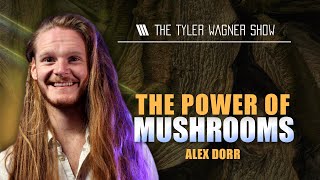
In this episode of the Authors Unite Show, host SPEAKER A interviews mycologist Alex Dorr, founder and CEO of Mushroom Revival. Alex shares his lifelong fascination with fungi, describing mushrooms as humble ecological stewards that underpin forests, clean toxic waste, and support plant and animal life. He explains why fungi are under‑appreciated in Western culture, linking the gap to historical factors and recent “shroom boom” driven by interest in psilocybin and functional mushrooms. Alex details his academic background—a degree in mycology focused on mycoremediation—and how his thesis became a free 230‑page book on fungal waste‑cleanup. He outlines the health benefits of functional mushrooms (cordyceps, lion’s mane, reishi, chaga, turkey tail), emphasizing immune support, adaptogenic stress relief, and bio‑available tincture delivery. The conversation moves to his entrepreneurial path: founding Mushroom Revival as a direct‑to‑consumer supplement brand, growing it over three years, launching a top‑ranked mushroom podcast, and navigating typical startup struggles. Alex discusses his outreach efforts, including the free mycology book, an upcoming introductory guide for non‑experts, and the broader mission to educate the public about the pervasive role of fungi in food, drink, microbiomes, and medicine. The episode closes with Alex’s core message that humans are not separate from nature; embracing symbiosis with fungi and other organisms is essential for sustainable solutions to plastic, waste, and climate challenges.
Chapters
Alright everyone, welcome back to another episode of the Authors Unite show. Today we have Alex Thor with us. So welcome to the show, man. Glad to have you on.
Yeah, thanks for having me on.
Of course. So just as a brief rundown to our listeners, you are a mycologist. And you specialize in the study of fungi, is that right?
That's right. I'm, I'm pretty obsessed with mushrooms, and, and hopefully by the end of the show you will too. Uh, I, I tend to rub off on people.
Okay, awesome. I like passionate, uh, people, so that's great. So, uh, yeah, just kick us off and tell us a little bit of your history of before you go into mycology and what made you get into this field of study.
I always joke that mushrooms really got into me, and it feels like I'm backed into a corner and I have no choice, really, and the mushrooms are at gunpoint. No, I love it. And really, it comes— there's a few things which make me fall in love with mushrooms again and again, day after day. They're here in the US, there's not that many people talking about them and it's not a main point of conversation for many people here in the States. For other countries, it is, and it is a big part of cultures, say in China or some European countries, things like that, Japan. Here in the United States, it's kind of niche. And so I like to think of it as the underdog. And it's unbelievable. They're their own kingdom. So, you know, they're separate from plants, they're separate from bacteria, and they are really the stewards of the forest and our whole ecological system, right? And we wouldn't have plants today without fungi. We share over 50% of our DNA with fungi, and they're responsible for cleaning up toxic waste, to degrade trees falling in the forest. They can create new functional ingredients, they can create new alternatives to Styrofoam and plastic and degrade plastic and really solve a lot of our world's problems. And they're really humble about it, right? They're not like trees that they're growing big and tall. They're hiding under the soil. And so that's why I really like them is that they're really humble stewards and they do a lot of the heavy lifting without taking a lot of the credit. And to study that, they're we only discovered about, you know, there's estimated 5 million species of fungi out there and we've only described 120,000 of them. So putting that in perspective, we barely scratched the surface about them. So it's really exciting to be on the frontier of this field. And every day there's someone first in the industry, first in the field, discovering something, inventing something, to do with mycology. So it's an exciting place to be.
Got it. And why do you think people don't know so much about mushrooms here in the Western civilization?
It's just not part of, you know, um, here in the United States and Canada, really, you know, it's not part of our culture very much, you know, and if you go say Mexico, or some countries in Central, South America, it is pretty big. Mushrooms are really big in Mexico and they're abundant, really, really abundant. But for whatever reason, it could do with colonization here in the United States and just the wiping out of native populations and that history could do, and witch burnings and things like that. I think that has a big part of it. But for whatever reason, we're just not that big into it. But just in the last, you know, 5, 10 years, and really the last couple years, we're seeing a shroom boom. So really, the industry is growing. It's estimated to grow at least to about $50 billion in the next couple years, and people are flooding into it, especially with psilocybin, which is like magic mushrooms. There's so many people talking about that and human clinical trials being done because it's really promising as a solution for PTSD, for addiction, for trauma, for all these different things, cluster headaches, depression, anxiety, XYZ, the list goes on. So it is a great alternative for our pharmaceutical industry right now. And so people are flooding in like the next green rush. And, you know, I'm seeing companies go public left and right and pouring hundreds of millions of dollars into this. So it is really exciting place to be. I'm more coming at it from a functional aspect. So I focus on functional mushrooms. I'm the founder and CEO of Mushroom Revival. And we're a dietary supplement company. And so they're not psychedelic, they're not illegal, they're totally above board. And we work with mushrooms like cordyceps and reishi and lion's mane for supporting energy, cognitive function, immune system support, things like that. And that's where we come in and we have a strong love and care for the environment as well. We plant trees for every product we sell, and we planted over 45,000 trees. And I wrote a whole book on how fungi can degrade toxic waste in the environment. And that's really a passion point for me is that we're just another organism on this planet, right? And we're just guests. And if you look at the whole time span of the life of, the Earth, right? We're the tiniest, tiniest speck, right? And we're— the way that we're living right now is very unsustainable, and if we keep it up, we're gonna wipe out our species. So we need to change our habits and think of solutions for the oil spills, for the plastic, for the huge accumulation of waste on our planet before it's too late. And fungi hold Some of the keys to those answers, not all of them, right? But they are promising.
Yeah, got it. And before we dive into your book, I wanna tell the viewers, or you should tell the viewers what your degree is in so people, they can trust what you say because you're speaking from actual research. So tell them about your degree and your history with this.
Yeah, so I got my degree in mycology with a hyperfocus on mycoremediation, so the study of how fungi can degrade and filter toxic waste in the environment. And I wrote my book as my final thesis, and I didn't need to. I was just so passionate about the project that it ended up being a 230-page book, 8 by 11. And yeah, my faculty was blown away. They were like, "I would have passed you with all the rest of the stuff you did, but you went ahead and wrote a whole book." And only because I just wanted to. And it started as my own— I was just doing this research out of a need. I felt like someone had to do it. And I just was seeing all this accumulation of waste in our environment. And it was just like, wow, we're inching towards the end. I'm hearing the angels' harps playing and the light at the end of the tunnel. And we got to do something, right? And so I started writing the book only as my notes, right? I was writing so many notes and I was like, oh, wow, I have 10 pages, I have 50 pages, I have 100 pages of notes. And it just kept going on. I might as well publish a book about it to help other people. And so it started as a selfish reason, as me just writing my own notes, but it, you know, I self-published, I, you know, made enough to cover the printing costs and then Now I give it out to people for free, right? 'Cause I don't wanna charge for this information. I want this information out to people for free. I want this, the tools in people's hands and the inspiration for them to go deeper than I did, right? And put a lot of funding into this because I think it is huge that we can tackle chemical pollution, we can tackle biological contamination, heavy metals in waterways and soils and XYZ. It is a huge problem that we don't think about, right? We're a very consumer-driven culture and we love Amazon Prime, myself included. I love next-day shipping. That's awesome. But we don't think about the whole process of, okay, yeah, there's packaging material in the box and yeah, there's packaging in the product, but what went into making that product in the first place? What went into making the plastic bubble and the whole process from the start? And once you really think about that and look around your house and look around if you go to the store and XYZ, It really changes your perspective on how something costs a dollar. It doesn't really cost a dollar, right? It costs way more than that, but we're not paying for it, right? And at the end of the day, no one is paying for the pollution. And that's an issue. And I know a lot of people have raised the idea of charging extra for very pollutive heavy items like oil, and then people wouldn't buy it because it would cost so much, right? And that is an incentive on the consumer to change the bigger picture. So that's what I focused on is how fungi can play a role in that cleanup, but it goes farther than that, right? Because fungi can clean up toxic waste all day, but then the people who are making that waste will still make it. So we need to start from scratch. And so there's a lot of great companies like making alternatives to the waste. So alternatives to styrofoam, alternatives to plastic that are, you know, alternatives to meat. And things like that that have the same qualities, the same everything, just a little more eco-friendly. And that's as well why we plant trees and we're all certified organic. We don't use any non-certified organic ingredients and that's really important for us.
Yeah, definitely. And I was going to ask about your book, but you pretty much already answered it. Most of my questions, but who is this book for? Is it for the general population to see? Is this like a message to the world, or is there like a specific group of people that you're targeting for this book?
You know, when I was writing it, I thought more people would be interested, and I had my horse blinders on, and I was like, oh yeah, this is for the whole world, and everyone should care about this. And, you know, after I published it, I realized very quickly that it was just a small portion of the population that were more like mush heads. So people that are already into mushrooms, that already know how to, you know, there's a lot of heady stuff in the book, and it's not for anyone. And that's another reason why I made it for free. I am in the process of writing a new book that is for everyone, and the whole premise of the book is really to inspire people to get into the world of mycology and and just to see how magical they are, right? And to see the world in a different lens of, wow, fungi, most people don't know that they consume fungi on a daily basis. If you had bread in the morning, avocado toast or a breakfast sandwich or whatever, that has yeast in it. That's a fungi, right? You're consuming that fungi, or you had kombucha or beer at the end of the day, wine, cheese, fungi, you know, and every breath that you're taking, you're probably inhaling dozens of mushroom spores in every breath, right? And you have a whole system of, you know, it's called the microbiome. So similar to the microbiome of bacteria in your gut and things like that. And we're realizing that we're about 90% other organisms. So We have millions of species of bacteria interacting in our bodies. And 90% of our serotonin is produced in our gut by those bacteria, and 70% of our immune system is in our gut, a lot to do with our microbiome. But we have, and we're getting this new research, a whole system of fungi in our bodies as well. And we would cease to exist without that fungi. And there's up to 70 species of fungi just living in our mouth, right? And on our skin and in our gut and things like that. And plants as well. 95% of plants form a really, really crucial symbiotic relationship with fungi in the soil to help them hyperaccumulate nutrients and protect against pathogens and things like that. And so plants would cease to exist without fungi. And they're, you know, penicillin, for example, a wonder drug that has saved hundreds of millions of people's lives, that's from the Penicillium mold, right? And so we, you know, we would have hundreds of millions of people more that would have died without penicillin. And other, you know, very crucial drugs. So they really are everywhere and deserve the respect. So that's the whole premise of this new book, is to really inspire people to just appreciate them more. And something happens whenever I teach or whenever I talk about mushrooms, is I always get people texting me or emailing me or whatever afterwards saying, If they go on the walk, say they have a dog or something, they go in the woods. He said, "I've been walking the same trail for 20 years and I've never seen one mushroom. And then I listened to you speak or whatever, and I saw probably 200 different types of mushrooms. There were orange, there were blue, they were like right in my face. And how did I miss them this whole entire time?" And it really is, they're the underdogs. They're doing so many things in our world and people don't realize how special they are. And so that's really the premise of this new book and it'll be really broken down. So anyone, if you hate mushrooms, don't know a thing about them, don't even know what a mushroom is, you can read it and understand the jargon and understand it and really appreciate it and come out the other end being like, holy shit, these things are awesome. And so very friendly, very introductory level, a lot of fun, a lot of fun facts sprinkled in.
Okay, yeah, that's great. I feel like the whole population needs to know about this because I never knew about this and I'm into science. I've heard about the organic materials and everything, the packaging made out of fungi, but I've never really thought about it's everywhere. And we need it to survive, which is absolutely insane. But tell me more about the health benefits to people that fungi bring. So you do sell supplements. So what type of things can people expect from, from taking it? What are some problems that people have and what can they gain from, from taking fungi in their diet?
Yeah. Yeah. And just to break it down, I'm not talking about button mushrooms, you know, the typical grocery store mushrooms, you know, or portobellos or whatever. And I'm not talking about magic mushrooms, the illegal mushrooms that make you trip out and things like that. I'm talking about functional mushrooms for health and wellness. And there's, you know, a couple more popular functional mushrooms are cordyceps, lion's mane, reishi, chaga, turkey tail, things like that. Maybe people have heard it, maybe not, but these, this class of mushrooms, they're pretty famous for two concepts, and one is being very important for supporting your immune system, and that's why they're so popular and why people use them is to support their immune system. And the second is that they are really potent adaptogens, and that word is kind of a buzzword right now. It's being thrown around left and right, and if people have never heard of it, adaptogens are herbs or mushrooms that help support our body's natural ability to deal with occasional stress and fatigue. We live in a very high-paced world and being bombarded from stimulus left and right, working probably jobs we don't like and XYZ, and so we're constantly bombarded by this occasional stress and so anything that can help us in our body's natural ability to stay flexible, right? And roll with the punches, so to speak, and not just be burnt out by the little things, you know, and just crash and burn by all these little things piling up. And so that's incredibly important to work with these natural plants and fungi that can help support our bodies. And so a couple, I'll just break down probably the top 3 most famous ones. So Cordyceps that I was talking about, it's an orange-looking, it almost looks like a Cheeto, it's really weird. It does not look like a typical mushroom. And in the wild, they actually grow on bugs. So the ones we use do not grow on bugs. The way they're farmed, they're grown on rice and other grains. And then the actual mushrooms, they look like these orange Cheeto things, and we use the actual mushrooms, we don't use the rice or anything. And they're most popular for supporting energy. And so a lot of athletes use them, they've been used for thousands of years, they are really great adaptogens, support occasional stress, but also athletic, supporting energy. Another really famous mushroom is lion's mane. And it kind of looks like the mane of a lion if it was all white or these kind of white icicle-looking shapes. And it's also called the brain mushroom, so supporting cognitive function, memory, and it's a great study buddy. I use it right before getting to work or things like that, and it really gets me in the zone. Some people take it before sleep as well and have accredited it to a better night's sleep. Reishi is really that sleep companion. So reishi, also common names is 10,000-year mushroom, mushroom of immortality. This is the number one mushroom in traditional Chinese herbalism, been used for thousands of years, super revered. Actually, in ancient China, there's times where it was only reserved for royalty. So if you were not part of the royal family or friends and family, you could be beheaded for holding this mushroom, for having it. It was that revered and sacred, and it was, you can see it on emperor's staves and on robes, and it's really revered. And nowadays it's really becoming this super mushroom and one of the most popular ones for supporting a sense of calm and super adaptogen, really good on your bedside table for assisting our natural transition to a good night's sleep and supporting our body's natural inflammatory response post-workout or like activities. So those are just 3. We work with 10 at our company, and so, you know, but all of them help support your immune system. All of them are adaptogenic, so supporting our body's natural ability to deal with stress, occasional stress. And they're tonic, so they should be used every day. And, you know, we focus on tinctures, but we have like 5 new products, lines coming out soon in the next 6 months or so. And tinctures are just liquid extracts, so you can drop it in your mouth or you can drop it in a drink, and they're just really easy to take on the go. And you don't need to swallow anything like a capsule, you don't need to mix anything like a powder, and it's really bioavailable. So the benefit of a tincture is that it goes right into the bloodstream and you can ingest it sublingually. So underneath the tongue and it bypasses the liver. So it goes right into your bloodstream. Basically you get the functional benefits right away. Uh, and you know, you can absorb more of them. So more bioavailable for the body.
Got it. Interesting. That is super interesting. So this is an entrepreneur show. So tell me a little more about your history of the company. How you got started, any struggles, um, what was your journey pretty much?
You know, I never thought I would be here, and there, there's 3 reasons why. I mean, I went through a phase in my life where I was— I thought, I, I thought I would live off-grid, um, live out of a backpack and just be in the wilderness, like living off the land. Never— I didn't want a I didn't want anything. And I was literally like learning skills to farm and live out in the woods, like seriously. And also, I never thought I would write a book or multiple. I got a D- in English class in high school, one point away from failing, and literally had to beg the teacher not to fail me. And so he gave me that extra point. To not fail. I failed Spanish 1 and had to take it again and got like a really terrible grade. So terrible at language. Didn't go to business school. And so all those things combined, you know, I never thought I would be, you know, a founder and CEO of a startup, would be talking on podcasts, would write my own books and things like that. But here I am. And it really shows you just got to be persistent, right? And it's all about mindset and a lot of other things, but, you know, mindset is really important to, you know, the second you say I'm not good at anything, you know, and give up, then you're fucked, you know? And I could have said, hey, you know, I got a D- in English, I can never write this book. but I didn't. I said, hey, you know, if it's bad, I'll have an editor come in and fix it up. And I've gotten really good at writing books really quickly. So that whole book I wrote in 3 months. And, you know, I wrote other books that I didn't really publish, but they were 150 pages I wrote in a week. And, you know, I'm really good at throwing stuff out on the page that might not be the best articulated sentences, but I can definitely throw up the main ideas. And this whole business started as a passion project. I didn't go into it because I went to business school and I had a whole business plan laid out and I knew I needed to make X amount of margins and I need to focus on these KPIs and this business structure and whatever. Did not go into it whatsoever. I just knew I liked mushrooms and I needed to pay my bills. And I had to figure it out. And there was definitely times I wanted to give up. There was definitely times I was on the verge of tears and just months of work down the drain. And thousands, tens of thousands of dollars, thousands of hours just gone. Yeah, there's days where, and you get really excited because you think it's going to work and then it just crashes and burns right in front of your eyes. And that's part of the startup. It's a roller coaster of nothing goes the way you want it to. And it is going to crash and burn along the way, but it's how many times you get back up and have that positive mindset, not delusional positive mindset, but realistic, grounded, positive mindset that you don't let the little things crush you, similar to the adaptogens. Taking a lot of adaptogens help being an entrepreneur to not burn out, but it's been a journey. We've been, we just had our third birthday in March, and so we're just over 3 years. We're all e-commerce, D2C, We think that's the future. I mean, I've honestly, since day one, I've not been interested in brick and mortar, and then COVID happened and brick and mortar kind of died a little bit. And I was like, yeah, I saw that coming. And so we've been sticking with e-com and it's been working really, really well for us. We have our own mushroom podcast. We're actually the number one mushroom podcast in the world. And we've been doing that for like, a little over 2 years, I feel like, and have a little over 100 episodes now. And we're ranked in many different countries in the top 10, which is great for natural sciences, for science. I actually saw this morning in, I think, Lithuania, we're like the 34th top podcast, all podcasts in Lithuania for whatever reason. I don't know why Lithuania, but that was interesting to see. And it is super fun. I do it with my partner who's the co-host and she also geeks out about mushrooms as well. And we bring on guests from all around the world to just geek out on specific topics. And we have some episodes that are really, you know, science-y and are more for experts, but then we go on the other end and we have episodes for very, very beginners and we break it down. So it's really a podcast for anyone interested in mushrooms, whether they're just getting into mushrooms or have been studying it for their whole life. And so that's really fun. And so we have a bunch of new products coming out soon. We are growing rapidly and currently writing a book, trying to get on as many podcasts as possible. But I wouldn't see myself doing anything else. I couldn't be in a cubicle. I couldn't be working for Wall Street or whatever. I have to be in mushrooms. This is my bread and butter.
Yeah, definitely. Yeah, I love that you're following your passion and you didn't fit into the the quote-unquote norm. I love that you went your own way and you're following your passion, so that's amazing. So I think this is a good segue to, to ask you before we end, what is the one thing that you want people to know or take away from this podcast, your, your most important message?
I think the most important thing that I want people to to start thinking about is that we're not separate from nature. And I hear a lot of people say or think of nature as something separate from themselves. And, you know, especially if they live in the city, it's like, you know, so far away and it's a separate phenomenon, right? But, you know, we are part of nature. We're just another organism on this planet. And the faster we realize that, I think the faster one, we'll all get along, you know, we have a lot of shit to figure out interspecies, right? You know, we have so much fighting and so much war and racism and, you know, the list goes on forever that, you know, we just forget we're all the same organism at the end of the day, but then Going beyond that, it's like, okay, there's billions of other organisms on this planet that we need to get along with and form a symbiosis with or else we're— It's not saving the world, right? A lot of people say that and like, "Oh, we need to plant more trees because we need to save Mother Earth." Global warming, all these concepts. The Earth is going to be fine. The Earth has dealt with so many major catastrophic events that has wiped off pretty much all species on the planet, and it's totally fine. And biodiversity has bloomed right after the fact. Human beings are going to die. So we got to be like, literally, we're going to die if we don't get together and work together. And also have symbiosis with plants, with mushrooms, with fungi, with bacteria, with the world around us, with different animals, and work on these different solutions like mycopackaging instead of Styrofoam or solutions to clean up these Superfund sites or brownfield sites or oil spills. Is there an alternative to plastic? Is there an alternative to industrial farm-raised meat? Is there an alternative to all these different things? And is our trajectory sustainable, right?
It's not.
It's not, right? And the science is pretty clear that it's not. And so it starts today, it starts with all of us. And it can be as simple as just appreciating the natural world around us, right? And appreciating like, hey, I'd never even thought of fungi. Most people, they think of fungi and they're like, "Oh, ew, mold or button mushrooms I find in the salad bar or magic mushrooms that make you trip out or whatever." And they don't realize that while they're drinking a beer, they're consuming— that's literally a fungal beverage right there. Or bread is like, that's a fungal rectangle. Like, you know, and all these things, they're breathing in mushroom spores. So that's the main takeaway. I want people to appreciate mushrooms and fungi, um, and our symbiosis with the world around us.
Yeah. And I think you're a perfect catalyst for people to get into it. I think your passion really rubs off on other people. I'm, I'm very, I'm very into it now. So thank you. But yeah, so tell us where we can find you, your podcast, the name of your book, where the people can find it, and when can we expect to see the other book come out, and your website and your socials.
Yeah, yeah. The main kind of platform where people can find us is mushroomrevival.com. And so you can find all of our products on there. You can find— we have a— we're pretty active on our blog as well. So we have a bunch of recipes. Mushroom 101, you know, all a bunch of great information in our blog. We have our podcasts on there. It's also on all major streaming platforms, uh, and, you know, links to our social and things like that. But any social, we're pretty much on all social platforms at Mushroom Revival. Um, I'm not really active on my personal social, so you can probably find it via our, the brand social, but I have to force myself to post that. So, you know, but you can reach out to support any mushroom questions you have, and that's the way to find the book as well. You know, we'll give you the Google Docs to the book, um, or PDF. You know, we're— we'll give it to you. You can, you can download it. We're, we're out of print of it, unfortunately. We're not going to do another reprint, but we can give you the digital copy, uh, and you could read through it and you could look up keywords and things like that. For my new book, I'm not releasing any information yet. I'm still in conversation with a couple of publishers and don't even have a name, a title yet. I have a whole list of titles, but I don't have a publish date yet, but it's in the works. So stay tuned and stay shroom.
Okay.
I love it.
I love it. So Alex, Thank you so much for coming on. Uh, we really appreciate it. It was extremely informative and really interesting. Like I said, your passion rubs off on me, and I hope it's the same for our audience as well. So I appreciate you, and thank you for coming by.
Thanks, appreciate it.
All right, take care.
More from Tyler


Catherine Nikkel : THE STORY EVERYONE HAS BUT HASN'T TOLD : The Tyler Wagner Show #1120



Scott Ritzheimer: Bring Predictable Success to your Organization | The Tyler Wagner Show #1115


Fred Moskowitz: A GUIDE TO GETTING STARTED WITH IN MORTGAGE NOTES | The Tyler Wagner Show #1113

Mark Podolsky: From Land Investor to Full Time Success How I Made $90,000 Cash in Real Estate


Mark Podolsky: How to achieve a 300% return on investment my foolproof strategy

Mark Podolsky: How to make passive income selling raw land the irresistible pricing strategy