Alfred O'Neil: DON'T BE AFRAID TO LOSE | The Tyler Wagner Show #1078
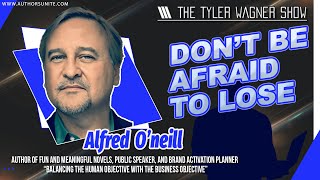
Alfred O'Neill grew up with a mob-connected father and a Quaker school education, a duality that shaped his novels. He wrote two books in his "Even Love and Murder" series during the pandemic by listening to characters through a mental window. O'Neill spent 20 years in pharma marketing before self-publishing, and warns authors away from predatory services while emphasizing targeted Facebook ads and authentic brand-building.
Chapters
All right, everyone, welcome back to another episode. Today we have Alfred O'Neill with us. He is a bestselling author who grew up going to a private school paid for by a mobster father, rocks out to the Grateful Dead and Beethoven for inspiration. He reads comics to never lose his inner child and disregards most of society's rules except for the importance of decency, empathy, and humanity. Roll It All Up, he gathers and tells his story. So welcome to the show, man.
Thank you, Tyler Wagner.
Of course, pumped to have you here. So, you know, there's a lot of questions, but the first one that sticks out is the mobster father, which you may have guessed. That was like highlighted when I read your intro. It wasn't actually, but in my brain, I mean, it was highlighted. So question, so tell us more about that first, then I have some deeper questions. But your father was in the mob, in the mob?
Yes, so I, um, much like the stories I write, or just the way I'm wired, uh, it's a lot of contradicting dualities, right? So one, the biggest and the seminal one in my life was the fact that my father, Irish, which means he couldn't be a made man, um, was a money launderer and a schemer for the mob in Philadelphia. Uh, very low level, but let's just say my entire childhood was filled with having to leave town during mob wars, the FBI bugging our house. I met at least 2 or 3 different federal agents who were following my father because he would fool them and go circle around them and come up behind them and go, hey, Jim. And the guy would go, ah, and grab his earpiece. And my dad would go, Jim, this is my son Alfred. Alfred, this is the FBI agent who's been sent to tail me. He said, have a good one, Jim, we're going to keep walking. So that happened several times, and that actually is my childhood. Meanwhile, I'm going to a Quaker school founded by William Penn himself. He was not alive at the time, um, and it's a school of principles, it's a school of ethics and values. And I mean, their first thing is that no child— a child could do no wrong, you know. There's, there's just this elevated sense of— I mean, Quakers You know, they don't go to war. They don't— conscientious objectors. They're peaceful people. They negotiate with anybody. And yet they took the mobster's money. It was all good.
That's so— what? Yeah, so I don't know if we were, uh, Philadelphia was only like an hour away, um, from us. So kind of, kind of interesting. Um, how far were you from Doylestown? Do you know Doylestown?
Sure, I was gonna move up to Doylestown recently. I'm on Northwest Suburbs called Mount Airy, Chester Hill.
Ah, perfect, perfect. Yeah, I know exactly where you're at.
Yeah, so the book takes place— so the story is, he told me the story of the, of the book, the first book, the, uh, even the pandemic can't stop love and murder, because it was related to a mob experience that he told me. But so it's a true crime-based book, but I can't use the whole story or I'd be very much in trouble with the FBI.
Yeah, yeah, 100%.
And others.
What? Oh yeah, I'd be more concerned about the others. Um, so what, uh, and, and obviously we can move on from it, but I, I'm just, I think a lot of people would be curious about it. What is like, can you share any like stories, um, you know, that wouldn't get anybody in trouble, like from your childhood with your dad that, that occurred that would kind of be like outside of the box? It's already outside of the box. Most people don't have a dad in the— but like, you know, I'm just curious.
Well, um, when he— so, uh, when I first got engaged out of college, my future mother-in-law said to my future wife, and what does his father do? And my future wife, who was very funny, said, 3 to 5. And she said, pardon me? She said, well, yeah, he's in prison. And she goes, for what? And she goes, oh, bank fraud, mail fraud, you know, money laundering. She goes, oh, white collar, not a problem. So in that 3 to 5 year period, I was in college and, uh, he, um, coming out of college from there, that whole area. And he insisted, uh, being the big personality that he was, that we come to Allenwood Penitentiary on Christmas Day and gave us exact instructions on how we were going to dress act, behave, bring, so he could be the king of the hill in front of all the other prisoners with their families visiting. So literally, it was like, park in the no parking spot, get a limousine and a driver, wear your best suit, get all the boxes wrapped professionally. I don't care what's in them, I wanted to see professional boxes. I want you to walk, park the car, and don't move it so everyone could see it. And then when you come up, sitting there, he's opening boxes. My sister and I were talking I look over at his hand and there's this big brown triangle mark on his hand. Dad, what's up with the mark? Oh, don't worry about that. Rips up more boxes like the Depression-era kid he was, you know, doesn't matter, just ripping the paper. I'm like, what is that? He goes, oh yeah, well, I was in the laundry doing the laundry and some guy had some headed out for me and he took a hot iron and threw it at me and I blocked it with my hand. That happened. Merry Christmas. So, wow, Santa. So I, uh, yeah, that was pretty much it. He said— and I said, and are you okay? He said, I'm fine. He said, the other guy, not so much.
Oh my gosh. So wait, how did, um— and then again, I promise we'll move on from here.
No, no, do whatever you want. This is part of my life.
Yeah, yeah. So wait, where— is your dad alive or did he pass away now?
He passed away, uh, 2006. Uh, yeah.
So where did you and him have like a good relationship all the way through? Or I'm sure there's ups and downs here and there, but like— oh really, the whole way?
Well, you know what, I was just, you know, in the Irish tradition, I was the one, one son, and I have his name. I'm a junior. So that may be the prince. So I always was with him, and he assumed that his little son playing with the soldiers on the rugs wasn't listening. But when things would happen like, yeah, I'm gonna do some work for the Catholic Church, and the Pope comes to town in Philadelphia, and I'm doing these commemorative plates, I need to change my tax record so it looks like I made more money last year so I can get the investment from the bank. And I'm like, that doesn't sound right. Oh well. So there were a lot of scenes like that growing up.
Got it. And then as you got older, you kind of just decided you didn't really want to be a part of that?
When I was 14, he called up because every Sunday or most Sundays he would call up my sisters and I and say, I mean, we got divorced at 7, he'd call up and say, um, got a dinner in South Philly, I need to show up, wear something nice. Okay, we did that for years. And what they would do is all the families, I mean, it's right out of the cliché, All the families in the front of the restaurant, kids and mothers and grandparents and the fathers making a huge racket. Dessert comes, coffee comes, all the men go in the back room and they tell the families to have at it to make enough noise to cover up the FBI bugs. So '14, he called me, and I guess the Quaker thing was taking hold, and he said, uh, got a dinner in South Philly, your sisters are going, uh, next to Elbow. And I said, Dad, I am not going to any more of your mob dinners. Oh, shit. And that was the beginning of the end of our relationship, which ended up being fine, but was always— or—
Yeah, got it. That makes sense.
And he was very— he was really— you just never knew what he's gonna do or say next.
Yeah, that's tough. Um, so now, and another part, and then I, you know, we'll move out of the intro too because I want to talk about your book and everything, but for, um, When you say disregards most of society's rules, what does that mean?
So he was a sociopath, and so I grew up in a household where society's rules were just— were disdained. You cherry-picked which ones you followed and believed in and embraced. Um, at least that's what I was told, or I saw behave— the behavior I saw demonstrated. So, um, I think most rules are bullshit. I think that, uh, I think they're made up either by people who just want to stay in control or things like that. But yet there are certain human rules that are not necessarily taught but are wired inside us, which are really the ones we live by, should live by, and that's kindness, decency, and empathy and humanity. Um, but it's not the rules that— when you think about it, how hard How hard is it to be kind to the person? How hard is it not to blame the messenger for the screwed up nature of your entire bank? I worked in New York for 20-some years in advertising, and it was a place where you didn't follow rules. You just, you know, you broke the rules to get ahead, to be successful. You never hurt people. But you just did whatever it took.
Yeah. So yeah. Oh my God. I was just watching, um, on Netflix, it was maybe a couple months ago. I was watching the Bernie, uh, Madoff, um, uh, oh my God.
Yeah.
That is insane, man. I was like, I don't know. I was just my, I was watching it with my dad and he's like, yeah, dude, this is, this guy really went about as fraud as you can get.
I know, I know, I know a guy, my, uh, daughter's future father-in-law. Um, he lost millions from Bernie Madoff. Yeah.
And see, you know what, that's what's so crazy to me is— here, actually, yeah, we can talk about this real quick— is obviously it's not funny in any way, shape, or form, right? Like what he did, right? Now here's the thing is, and a lot of— he's definitely not— what, what he did— here's what me and my dad were talking about is it seems like he didn't really think— and this is an issue, but, and I'm not trying to I'm not saying he's a good guy, but I just want to talk about this for a second. It doesn't seem like he realized in the moment how, like, what the end effect would be to so many people. He was just so hyper-focused on, like, keeping the status of himself.
Yeah.
And, and, and so I don't— I'm just saying that, like, it doesn't seem to me that he, like, was necessarily wanting to, like, hurt people, but But when it— it's just— but what it did is like, it really hurt a lot of people, you know? So the end result was terrible. So there's no excuse for it, but I'm just saying, when people say he's like an evil man, I'm like, I don't think his intent was evil. I think he just got very freaking wrapped up in his own like image, and he— it went so crazy out of control. And, um, again, he got what he deserved. He should be very in trouble, but I just don't think—
I think the parallels is actually appropriate because I can actually tell you my father was not an evil man. He was just, um, yeah, okay, he was abused as a child by a priest and he was traumatized by that and he was a sociopath and one of 9, the last of 9, and a poor Irish family. So he did what it took to survive using all his skills and wits and taught me that's the way you do it. Uh, the Quakers just had the overlay that you're supposed to do it ethically.
Yes. Yeah, yeah, he left that part out.
But yet I saw him once give away the last $5 he had to a hippie friend of my sister's. And I said, Dad, that was our last— that was our last $5. Wasn't it? He goes, oh, don't worry, it's money. But yet it was important for him to give that last meal to that hippie panhandling in the park.
Yeah. And you see, that's what I mean. Like, I— and I do think when you judge somebody's character, like, intent is, is pretty important. At least judging character. Now, at the end of the day, an end result is an end result. So if you continue to do something and even if it's not intentionally having— you're not wanting it to have a bad effect, but it does and you keep doing it, well, you know, that's still bad. But I'm just saying, it's not like your dad was like trying to hurt people. It's just, you know, he got caught up maybe in a bad situation and it was— oh yeah, with his family.
So Oh yeah, the— I knew many, many schemes that went on. Yeah, and you'll love this. So when he went to trial, his older sister— oldest sister was a— was a super nun, like on the board of directors of the Franciscans for the worldwide. And every day she rolled all her other nuns into the front pews of the courtroom behind him. Oh my God, you gotta love it. This is— you see the judge?
Yeah.
Really? A room full of duds? Yeah, he broke it all out, whatever it took to win.
Oh yeah, you gotta love it.
But he told me frankly, he told me frankly, if he didn't go to jail, um, he said if I tell the FBI what they want to know, which I can't repeat, it's a really big secret, um, he said then I, I will, uh, you know, I'll be fine. They said they don't really care about the money laundering, he said, but If I do tell them, he said, and I go to jail, I'll be killed. If I don't tell them, I'll come out of jail with the job. Yeah, yeah.
See, and that now, that was what I was gonna ask you too. Is it, is it as people from the outside would perceive? Like, because you always hear like, once you're in the mob, you're always in the mob, like you can't really— is that the way it kind of is? And they try to maybe get you when you're young a little bit?
There's rings. The outer rings, they just tap into you when they need you. You're just another, you know, another handyman, which is kind of where he was in the outer ring because he was Irish. He didn't really— couldn't get that close in to be the Italian part.
Got it. Got it. That makes sense. So let's go a little bit deeper because obviously a lot of our audience is authors and aspiring authors just because based on— so tell us about— and obviously you became a bestseller, which is awesome. Congrats on that. Um, tell us a little bit more. And actually, before you get into the content of the book, what even like led you to, to wanting to write a book? Did you think when you were younger, did you have any aspirations to do that?
So, uh, yes, I was told at 14, uh, sitting on a beach in Beach Haven on the dunes, that I would be a novelist someday. And, uh, it just took a while. I was inspired by a story he told me over lunch in Manhattan one time about him being part of a crew cleaning asbestos out of a mob bank. His crew didn't know it was a mob bank. It was a nighttime job, and they stole something. And the next week was one long cat-and-mouse chase through Camden, New Jersey, looking for the stolen object with the hitmen, the state police, the FBI, my father And as my dad said, uh, all hell broke loose and you don't want to know what happened in the end. That's the basis of the novel.
Got it. And so wait, what was it at when you were 14?
Uh, I did something, just the voice told me.
Oh, oh, okay. Got it, got it, got it. Okay. Um, and then now the book, you said what it was about, but what was it like writing it?
Because I think I kept telling the story to my Yeah, I kept telling the story to my wife and she finally just looked at me. She was very pragmatic and she just said, then write it. You like it so much, just write it. So I was like, wow, blind glimpse of the obvious. So I started writing and it was kind of bits and starts because I couldn't quite make it work. But as the pandemic hit and the isolation took place and I lost my wife in the beginning of the pandemic to cancer, um, it just became my isolation activity. I just wrote all day and all night for actually the last couple years for two novels. It just came out.
Wow.
I hear the characters. I don't see them. I don't understand the act of— I don't understand how the imagination works. But when I am really tuned in and even tired sometimes, it's like walking past the window of a party. The window's open and I can see them doing their thing. If I stand close to the window, I can hear what they say. And half the time I record it on an app and then have it transcribed and then edit from there.
So interesting. So wait, let's tap in a little deeper to that. So is there a way that you've come to find that like you're more like when you said stand closer to the window, are you able to like tap into hear these voices more or like Is it just completely random?
My two characters named Ginger, one named Albie, both— she's very much in 1930s cinema. He's just a construction guy in the witness protection program. Very different characters. I hear them. I hear them speak and I have to write it down as fast as possible. And then after that, I'm just the scribe making clever sentences and making it filling in the narrative, but I hear them. I listen really closely.
So interesting. Yeah, that's awesome. I literally, a couple hours ago, I was talking to a potential client for a company and it's a kid who's 17 years old and he wrote 300,000 words like a fantasy novel and he's 17. And I'm thinking to myself, I just think it's, you know, we're all the same in some regard, but we also obviously have differences and like, for me, you know, mostly like business books, self-help books. I've never had like the— even how to structure a fiction novel is just so foreign to me. Like, I don't— whereas business makes sense. It's like, okay, here's a value that I can provide. All right. Um, okay, so this really is something that's kind of coming through you and then you're just putting it on.
Yes. And I was actually very lucky that my editor ended up being a Reiki healer. Editor for 40 years and also a Reiki healer and trainer. And she said, I don't do thrillers, I don't do your book. And then I talked about it and we together realized that it wasn't a thriller, it was a love story wrapped around the thriller. And she said, when she read the first draft, she said there's a lot of healing and a lot of trauma going on here besides the crime and the crazy bad guy, um, and the cat-and-mouse story and chasing down the mob, things like that. She said, but there's a different story going on here that you're kind of slipping in for people. So I have two readerships. I have this readership that is non-thriller readers who really tune into the traumas and the love, the nascent love story the two characters Ginger and Albie are going through, which has nothing to do with the crime. There's no role, they have no role in the crime. I mean, it's just happenstance. They draw bad mojo to them. As a couple. And, you know, it just, it's just the way that they, the interaction of that. And then I have a thriller audience who read my book and they've gotten back to me and fed back through interviews or reviews and they're like, love it, love the murder, love the thrill, love the pace, love the chase, love this. So everybody seems to cherry-pick what they want from it. But my intent is to write a love story based in the reality of the time we live in. It's a few years in the future, but to me, life is the duality once again of good and evil, of life and death, not versus and, because one never ever wins against evil or death. You just move the pendulum. So that's what I do is I merge the dualities into stories.
Got it. Yeah, that's interesting. I think I— have you ever heard of Alan Watts before? Okay, okay, amazing. I'm a big— I'm a big Alan fan. Oh, are you?
Okay.
Yeah, yeah, yeah, I'm a big fan. Um, and he says a lot of stuff kind of similar to how you said that, where it's like, uh, you know, people think like, um, or this is something he would say, he's like, you can't have life without death. And you— and, and he'll be like, somebody will ask him in the audience What's it, um, what, what's it like before you're born? And he's like, well, what's it like after you're dead?
Perfect comeback.
Yeah, that, that's what he, uh, and he's just so witty like that. And his voice is amazing, you know, you can listen to him for hours, like it's, it's great. Um, so just, it just reminded me of him when you said that.
But you know, some of the things you bring up, you talk about other authors, people who want to publish, and of course be successful. But I definitely say the lessons I've learned very clearly, because I'm a marketing guy for 30 years, I've been in Europe. Yeah, right, for successful marketing executive. Uh, but I did no research at all into how to market self-published books at all. I completely shut it down just to focus on the path of creation because it was so new and is so inspired that nothing else could get in the way. Um, and really take that that speed, that velocity away. Um, yet when I start to self-publish, I realized I was absolutely naive. I had not a clue what to do. And it was a very unusual thing because now I've realized in hindsight, a few years later, that you could take two paths. You can— because I've talked to another writer who's doing a nonfiction book right now, and she took the path of research the heck out of the industry, research agents and publishers and the publishing and the model and the different venues and KDP and all those things, then step back and do your outline and find your— and she did a very methodical start with understanding the landscape, find your place in it, do that proposal. And yeah, it's nonfiction and like you talked about earlier, but I think there's definitely two approaches and I just, in some ways, unfortunately, but it's worked out. I took the inspiration approach because the words were flying so fast outta me. I had to get the story out. And I just did not want to soil it with marketing, but now I'm soiling it every day.
Yeah, 100%. Well, here, what else? Um, because, you know, I know we on the marketing side, we work together, right, in some regard. So, but what other stuff are you doing now for, for marketing? Is there, or do you have like, um, I'm just curious.
Yeah, no, I do. I'm a consultant. I, I work, um, for, uh, pharma companies. Um, I did that for 20 years. Spanish. So I lost my sister to melanoma in 2000, and I went online. I was the digital guy at the time for my family, and I saw some rules that she had to follow to understand her cancer. And I was given the internet, and I noticed anything out, and there was nothing. So when she died, I was in the room and I looked her in the face and I said, I will change my career to go work for pharma companies and convince them to spend money on patients and families, help them educate themselves, they make better choices. And I did that for the last 22 years.
Yeah, man, that's a bit— that's wild.
Like, well, mission-driven work is a whole different— it's a whole way, a whole different way to work. Because I gotta tell you something, they're not emotionally intelligent, a lot of clients like that. They're not particularly sensitive to patient needs because they're highly regulated by the FDA. They can't touch a patient, let's say. They can't directly communicate. So they are very, very arm's length from their customers, let's say. My job was to broach that chasm and help them find their way and spend millions of dollars along the way on behalf of patients and caregivers. So it worked out. I feel very proud.
No, I agree.
That's still what I do. I still do that. That's what I still do.
Yeah. Let's actually go a little deeper in that too, because I agree. I think, and this is kind of commonly talked about in the sense of, you know, it's not all, it's not just about the money. Don't work only for money. And I agree. Now, money is important, but I do think there's something very different. And this is where a lot of employees, I think, struggle. Meaning like when you run your own thing, it could be mostly for the money. Like for my company, right? It is somewhat money, but it's also, I was solving my own problem. When I was younger, I came out with a book when I was 19, 20. I talked to all these publishers. None of them offered marketing. So, I was like, oh, if I create a— and it was honestly very much a struggle to figure out the marketing of a book. It would just— and nobody had an answer for me. Nobody. So, I was like, okay, if I can figure this out, not only will it solve my own issue, but I know other authors are going through this. It'll help them too. And then it becomes like very passion and mission driven because, you know, and maybe I'd say, you know, what you just said is definitely deeper than what I'm saying. But I do think, you know, a lot of authors will pour a couple years of their life into a book and then if it doesn't have any success whatsoever, it's a little bit like demeaning, you know, it's like, oh shit, I just put 2 years into this thing.
Oh yeah. Are you kidding me?
Yeah.
Who doesn't want to, who doesn't want to be loved, Tyler Wagner?
I do. There you go.
That's what it is, right?
So it's like, I mean, it's different, but like, I think that, that is the kind of the thing about it is I remember when I launched my first book and, you know, it was just, it was hard, man. So either way, um, now are you, it seems like, uh, just based on what you said so far, you're gonna continue writing. Like, how many books do you have now in total?
I have, uh, 2 of a 4-part series.
Okay.
Even a pandemic can't stop love and murder. Even climate change can't stop love and murder. It just came out last November. These take place around 2025, 2026. And by the way, the pandemic has no pandemic really, and it's like a dark castle. There's no sick people in it. It's just, as I like to say, it's a dark castle. The castle does not kill you. It just houses the really dangerous people. So, and then there's a third one I'm working on and a fourth one I have, I'm outlining. But meanwhile, my, my mind is taking me to a new novel, which I've been thinking about for years, and I'm calling it Decay of the Angel: A Memoir of Imagination. And it's based on a 1990s mayoral campaign in Philadelphia, of what I know a lot about because my uncle was the candidate and I worked for him. So I took that story and I'm taking it and I'm going out here with it. And basically kind of on a famous novel called All the King's Men. That's the structure. There's a winner of many prizes. But it's definitely like the other day I was having another moment. I was frankly in the shower and all of a sudden I see the candidate in the book talking to the guy at the the other character, two main characters having dinner together and talking about do they trust people, what do you think of people, and like, oh crap. So I jumped out, grabbed my phone, and just started recording it. So there's another one bubbling up.
Yeah.
So right now I have 3 in the hopper, 2 done, 3 in the hopper.
Yeah. So, and wait, the memoir one though, is that like, that's not fiction then, right? Like, because that's—
it will be.
Oh, will be.
Oh yeah, that's why I say it's a memoir of imagination, because— gotcha, gotcha. Okay, it's that cool. I know, and then you often talk about, oh, write what you know and things like that. And well, frankly, yeah, I wrote about a mob father a little bit, but, uh, no, this is more, um, write what you know but take it so far to another place that that was not possible. So it has no basis upon reality when it's done, but it still has that germ of the same mayoral race, a candidate race, a dark horse race in a large urban city.
So, gotcha.
All the dirty crap that goes with it.
Yeah. Um, no, I saw—
I saw some real corruption. Oh my God, tell us more.
What do you mean?
Well, it's nothing like— nothing like going around the day of an election and buying votes.
Oh my gosh. Yeah, I can't imagine that. Yeah, I, um, yeah. It is so crazy. I, I actually, um, we've started to partner with a lot of political consultants because, uh, what happens is they're now, a lot of political consulting firms are recommending to their political clients to write a book and become a bestseller because it'll help them win the race.
Of course. Um, right.
So we started partnering with a lot of them and doing it. It's very interesting, right? Like the stories I don't know, it's just interesting. I've heard some, uh, yeah, well, let's just say, who's fact-checking those books? Uh, yeah, well, yeah, not me personally.
So yeah, I was gonna say, no, I don't get near that stuff for sure. No, but I think, you know, but going back to what we're talking about, which is, you know, the helping other authors, I would just say that, you know, authors, if they're looking for marketing support port in the world, or, or services, because like you said brilliantly, it was, uh, Tyler Ross, it was a blank slate for you to walk into, and you, and you've done a great job. But I did— I've done a lot of research, and there are— there's a lot of bloodsucking, and let's just say a lot of taking advantage of someone's dream, uh, and basically squeezing their wallet until they feel anything or something, or just go away. Famous author. I went to her website. Someone told me to read her book, and book about how she didn't like the industry, not just her novels, but actually her, her own experience. Um, of coming to the industry and learning. It's a great book. But when I went to her website, there's her husband giving mystery writing seminars and a series of classes over months. And I'm thinking, okay, that's great, and yes, people help that. But I thought Why would I do that? I know how to write a mystery. I've written two, but, but it doesn't help me market it. It just helped me create it. So suddenly I'm sitting there with this creation and I've spent thousands of dollars and now I have thousands more to go to even try to figure out how to get out into the world to find readers. So I, I find that the, the parasitic nature of self-publishing is very, very large and very difficult to wade through. Very difficult. There are very few ethical players.
Yeah.
You being truly an exception.
Yeah. No, thank you for saying that. I think one of the like important lesson outta that is, and I, this happens to so many authors and I know this because again, we're a lot of times on the marketing side, we do the publishing and writing too, but we are on the marketing side. So we're more of the, the end of when an author gets to us and There has been so many occasions. I mean, I got to say, it's almost every occasion that an author gets to us. And by the time they get to us, they cannot believe that they just, in the beginning, they had no idea how much of an investment of money that was going to go in to make it successful.
Yes.
And they're like, oh my God. They're like, I've already spent tens of thousands to have it written. Maybe, you know, a couple thousand or $10,000 to have it published. And now you're coming to me and then it's like 10, sometimes even 6 figures to have it marketed effectively. And they're like, yeah. Oh my God, I just— I'm a quarter million in. Like, it can literally get that wild, right? Um, right. Oh, so, and where do you appear?
And wait, so what happens is people don't have that money. They run to a— they get to a point where their dream is crushed by their empty wallet.
Yes.
Yeah. So what happens— and it's true for nonfiction— because not because you have the ability to create a platform and a model and revenue streams from the ideas, uh, whereas fiction It's, you know, it's finding your readership. It's finding your readership and in a sense, always keeping them close to you and not betraying them, but also not dulling them out. But finding your readership is the big one. And there's a lot of noise and a lot of people who are just— what you realize in the end for fiction is you have to write for love. You have to write because you're compelled to write, because there is no guarantee at all that you will ever find your readers.
True. That's so true. And I think that what this comes down to is I do wanna make sure I say this too, is that yes, you can spend a ton of money on everything, but you don't necessarily have to, right? It's not, it's not, but if I do agree, cuz with nonfiction it's a little bit easier with, or a lot easier with targeting, right? Cuz it's like, oh, I wrote a book on how to be successful with Facebook ads or so, let's just say, okay, well, every company needs help with Facebook ads, so I just need to get this in front of those companies and then it'll work itself out. But with fiction, it's like, I guess the psychology behind it, right, would be, okay, who am I similar to, right? Like, is this like James Patterson? Like, who, what, what are these?
Well said, right?
Right.
The analogs, basically the other analogs.
Yes. And then once you discover that, then you can target And you could do this through paid advertising, and it doesn't have to be paid, but either way, at least you can find those people and be like, okay, this is a similar genre. Well, I mean, what happens if—
what happens if you're bending the genre?
Yeah, yeah, I mean, you'd have to be so similar for it to fully function properly, but I mean, yeah, you're right, it could be the horseshoes.
Yeah, yeah, yeah, yeah, get it close to the stake. Yeah, but it's not like playing darts.
Yeah, yeah, no, totally. Because like, I mean, and I'm positive on this, and I haven't done it specifically for, for— I'll just use James Patterson as it— but like, I'm sure on Facebook, if you went, he has a Facebook page or something. It probably—
I've been there.
Yeah, it probably has hundreds of thousands, millions of likes, you know, probably millions. Um, you know, so if that's true, which it is, then you could essentially target your books to his, uh, cuz Facebook allows you to target to all the people that like a page. Um, and you get it in front of all those people, you know? So, but again, they like James Patterson, they don't know who you are, but if it's similar, and again, this would be opinion too. So it gets a little weird. Like it's hard.
It gets weird. Yeah.
Yeah.
It's not, yeah. That's why it is such a crapshoot in an act. And like I said, an act of love in the end. But you need good marketing and you need to have people who you can trust to basically say, here is my act of love. I don't know enough or want to about marketing it, but I know who I think my audience is or whatever, or I found them before by myself or things like that. But the idea of having trusted partners or trusted venues, because I've tried everything. I've tried Kirkus reviews, which I was told by a publisher, you have to get a Kirkus review for your, your book. If they give you a bad review, they publish it anyway. You're doomed. They give you a good review, it's like a big check mark for other agents and things like that because they review for publishers. Kirkus, um, at the same time, you know, um, they will sell you ads, which for thousands of dollars, which are useless. Uh, Facebook, if you don't know the Facebook meta game, get the training because it's really— the meta interface is really, really difficult for targeting. It's not as easy. It's great, but it makes a rabbit hole look very shallow. So is it down the path? And things like you have to understand that Twitter is not the end answer. Twitter is an information machine. Instagram is not an activation acquisition model. It's an awareness builder. TikTok is not about acquisition at all. It's just getting your voice in there and being as ubiquitous as you can. With your brand, personal brand. And actually, maybe that goes back to saying it's part of the commonality between fiction and nonfiction is in the end it is the personal brand of the author, you know. So what did you start with? You started with my contradictory childhood of being raised a Quaker, living with a mobster father. So, you know, that's my brand. That is the brand that— that's just who I am now. And it was shaped to be. And so how I market that through my books and use that to gain attention is a big part of what I've learned along the way is that personal brand is very important even in fiction. But if you're just doing it out of love or just an idea came to you in the bathroom one day, it might not work out so well for you. You know, it's not— an editor once said to me, 99— no, 100% of people have a book in them. And she said, but 99% never get it down on paper.
It's true.
We all have stories.
Oh, totally. And I like that, what you just said there too, because a lot of times, like, people will be like, oh, that person has a million Instagram followers, they must be rich. Here's the truth. Most of people that have a bunch of followers online, it, it, behind the scenes, it's not what it looks like, right? Like, it's, it's not necessary. It's not acquisition.
Right, right.
So many people that have millions of followers on TikTok and they're still living at home with their parents. Like, it's just a chair, right?
Which one? Living at home with your parents?
Actually nothing. I love my parents. So my—
yeah, I'm just saying, is that your dad back there?
Yeah, this is my parents' house.
Yeah, sure. Columbia, right? Yeah, Columbia, Maryland is where you are. So yeah, no, but I think, I think that— but that's what I learned working also with you is It was— it deepened my knowledge that you cherry-pick your venue really carefully to know how to spend your money. You can test, but you learn on the cheap is the best way to do it. And to exclude, exclude. Don't be everywhere doing everything. Be the places you find yourself most naturally suited— social media or Facebook, whatever it is— and be there, but be active and be that presence. So when people do start to read you, there's a log and you're in the search fields, you're in the indexing, you're, you know, you're a presence already. People pick it up and go, oh, I had no idea. Let me read some more.
So 100%. And I think too, like what it is, is at least out there, like you were saying in the industry, and that's what I think makes us a little bit different is there's, there's a lot of companies out there that'll sell you like, hey, we'll do your social media posting for you, or we'll do, and it's like, But wait, what's the result, right? So for me, whenever I'm looking at something, I always want a guaranteed result. And I know not everything can be guaranteed, so I'm not naive.
I did it. I did it. I did it. What a waste of money.
I know, man.
What a waste of money, dude.
I've done it too, actually. And it's why— it's another reason why I built it. Like SEO, right? For SEO. And I want to be like, look, there's great companies out there that can do it, but I've tried to hire 5, 6 SEO companies in my day.
Dude.
And they're like, hey, you'll see results in like 6 months. Just keep paying us monthly. And nothing. Just literally $100,000, $200,000 just down the drain. But you know, it's like learning lessons along the path. But right, I finally just got fed up. I'm like, dude, I'm not paying. I'm not paying anymore for these like maybes. Like, if I'm paying for something, I want what I freaking been paying for, dude.
Like, it's that simple. Like, right, bang for the buck.
Yeah. So I don't know. I digress on that, but what I wanted to do is, so if there's anything we didn't cover, I want to leave it to you just because we're coming up on time soon. Let us, if there's anything we didn't cover that you want to share, please do. And then let people know, if kind of funny, full circle, let everybody know your social media, website, where they can stay in contact with you.
Well, it's pretty simple. So, I am on TikTok, um, and I basically do it. It's at, uh, A-E-S, the author, uh, but also my web— the author's website, the anchor site is, uh, www.evenloveandmurder.com, which I think is a pretty good URL. Evenloveandmurder.com. Um, so, uh That's pretty much it. And I'm on Facebook under, under, you know, Alfred O'Neill, things like that. But the main one that you can find me, reach me, email me would be either my Facebook page, but mostly the evenlovingmurder.com, because there's the reviews, there's a sample, there's a sample of an audiobook. Um, so because I did the audiobook version of this, I hired a guy from Random House that does Random House stuff. So that's where you would find me. Um, also please, if you ever buy the book, uh, Review is golden, as you know, reviews are golden on Amazon. And so far mine are mostly 5-star, thank goodness. And I would just say that for those writers out there, write what you love. Start with that and go out from there, whether it's fiction or nonfiction, just write what you love, right? Write what you know, write what you love. And for myself, I would just say people who are looking for stories that really are about love and trauma, love and death, love, life, and murder. That's the themes I really keep to. But I do it in a very— the love story is a true love story. It's not, let's just say, drop the pants on the detective and the wife of the murdered guy so they get together in the middle of the crime. No, it's a love story. It just has to be surrounded by A lot of screwed up events. So that's my style of approaching things.
Dude, thank you. This actually was because I didn't know we were going to talk about like, I didn't know the mobster father part.
So I was excited about that.
So thank you again for coming on, man. I appreciate it.
Tyler, my pleasure. Thank you so much for helping so many people. I really appreciate it.
More from Tyler


Catherine Nikkel : THE STORY EVERYONE HAS BUT HASN'T TOLD : The Tyler Wagner Show #1120



Scott Ritzheimer: Bring Predictable Success to your Organization | The Tyler Wagner Show #1115


Fred Moskowitz: A GUIDE TO GETTING STARTED WITH IN MORTGAGE NOTES | The Tyler Wagner Show #1113

Mark Podolsky: From Land Investor to Full Time Success How I Made $90,000 Cash in Real Estate


Mark Podolsky: How to achieve a 300% return on investment my foolproof strategy

Mark Podolsky: How to make passive income selling raw land the irresistible pricing strategy