Amanda Holmes: Self Realization | The Authors Unite Show #977
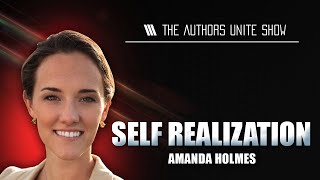
In this episode of the Authors Unite Show, host Tyler Wagner (Speaker A) interviews Amanda Holmes, CEO of Chet Holmes International and daughter of the late Chet Holmes, author of The Ultimate Sales Machine. Amanda recounts her upbringing in a family of entrepreneurs, her early career as a singer‑songwriter, and the sudden responsibility she assumed after her father's death. She explains how she modernized the family business, doubled sales, and is preparing a new edition of the book that adds a 13th competency focused on personal mastery. The conversation delves deeply into her spiritual journey with an Indian guru (Sri Sri Sri 1008 Guruji Purnamji), who helped her heal celiac disease, reshape her relationship to food, and develop a belief that energy and consciousness drive physical reality. Amanda shares her views on gluten, GMO corn, alkaline diets, fasting, and the importance of clean energy in personal and professional life. She also describes extensive travel experiences (Kilimanjaro, Japan, Singapore, Africa) that reinforced her self‑realization work. Throughout, she ties spiritual practices—chanting, meditation, fasting, minimalist living—to her leadership of a sales‑and‑marketing firm, emphasizing balance, emotional awareness, and the integration of inner work with business growth. The interview ends with practical resources: a free video series on sales strategies at ultimatesalesmachine.com and her social‑media handles.
Chapters
All right, everyone, welcome back to another episode of the Authors Unite show. Today we got Amanda Holmes. So welcome to the show.
Thank you so much.
Of course, grateful to have you on. So to kick us off, give us a little background. Who are you? What do you do? Just a little intro.
Yeah. Okay. My name is Amanda Holmes. I'm CEO of Chet Holmes International. It was started originally in 1991 by my father, Chet Holmes. And maybe you've heard of his book. It's voted in the top 10 most recommended sales and marketing books of all time. That is The Ultimate Sales Machine. And he unfortunately passed away 8 years ago. It was a rather big shock. He won pretty much every battle he ever went up against except for the one to cancer. So I, at the time I was a singer-songwriter, had no plan to take over the business. We have, we've assisted over 250,000 businesses worldwide. You know, it's, it's, he's very well known. And then here I am, you know, little 24-year-old looking around at all my staff, hundreds of staff going, you've got to be kidding me. I don't, I don't think I can do this or want to do this or want to be a part of this. And here we are 8 years later and still growing and moving and shaking. And we doubled sales last year. It's nice. So it's, it's good to see my father's legacy is continued. And I get to be a part of that journey, which is really beautiful.
That is awesome. And for people that are only listening, not watching video, I just have to point this out. I don't know if that's the sun, but you got some great lighting right now. Like, it's sick. So let's just, you know, whatever you want to say about that, it's awesome.
I'm getting a tan.
Okay, yeah, yeah. I was like, and it like wasn't like that right before we hit record, so I was like, wham! Okay, so now back on track. Um, so when you were younger, my first question for you is like, when, when did you, at what age did you kind of realize that like your dad was— now everybody's dad and mom is cool, but like your dad, that's pretty sick, you know, like, and I'm a big fan of his book actually. I remember when I listened to it on audio, it was, uh, in Pennsylvania. I was walking around the 6-mile track and I just kept walking and just kept listening to it. So, like, um, so either way though, I guess, when did you just start to realize, like, what your dad did?
When you— oh man, that, that was a very crazy thing because he had so many, you know, he had 12 businesses. So when people would ask me, what does my dad do? I'm like, I don't know, business stuff. And then as, like, um, like, he grew up very, very poor. When him and my mom moved into their first place, they would drink their cereal with water because they didn't have enough money to buy milk. So from that to then working for Charlie Munger and co-chairman of Berkshire Hathaway, he doubled his sales in 9 different divisions in multiple years consecutively. So that worked out for him. So a house got a little bit bigger, right? And then as I'm getting older, I'm noticing we're buying bigger houses. So that was kind of like an indication of Okay, my dad is probably pretty crazy, but he's doing something right because we're living in bigger houses now. But I still, like, I never saw him speak live. Just like everyone else, I learned his business strategies, watching his videos, his training videos, nonstop for the first, like, couple of years. I just kept watching them over and over and over again. I mean, I lived through them. They made sense to me because his way of thinking about business was how I thought about business because, you know, I'd grown up with that. You know, the way that I ran a lemonade stand was, you know, okay, Dad, I'm gonna put lemonade and 25 cents. And he'd go, no, right? The best lemonade in the world. I'm like, why would I do that, Dad? And he's like, because more people will stop. Okay, Dad. So the best lemonade in the world. Why is your lemonade the best lemonade in the world? Because my dad said so. Okay.
That's awesome.
So growing up with that, you know, you start to get used to how to speak and marketing and sales because there was my dad, you know, showing me how. But I didn't ever get any kind of— yeah, didn't even get to see him speak. It's just crazy, right? I was at the events, but I'd be off in a corner playing my guitar, writing a song.
Song.
You'd find me in a tree.
Yeah, that's what I was going to ask you next, is like, so then you, um, so you went into music. Like, when, when did you start to, um, kind of discover that about yourself? And there's like 5 questions I have here, so either way, we'll start there. So when did you start to realize you were like interested in art, um, in that type of art?
Well, it It came from the inspiration of my father, actually. So my father secretly wanted to— well, not so secretly, he sold the screenplay to Warner Brothers, but he wanted to be a filmmaker. He wrote 7 screenplays. And, um, yeah, he had written hundreds of songs. And all through my growing up, he would be in the recording studio when he wasn't running his companies, recording his next song that he wanted to, you know, go out. He wanted to be a rock star. And he said, you know, I have worked this hard in my life so that you can do what ever you want. What do you want to do? I will support you. So I was like, one, one night my father overheard me singing the national anthem in the shower because what's better than the national anthem? It's like, go big or go home. So I'm singing, you know, you can hear me, you can hear me from the living room. And he's like, maybe we bring you into the studio. So I got in the studio and I recorded his songs and I sang them exactly how he wanted them because I knew, because I just heard him sing my whole life, right? So My first record was mostly his songs and then two of mine, and then the subsequent three others came from, you know, just my pursuit of wanting to find my own voice and write and went to college for it. So it was, it was him and his, his love of the art and just the expression of creativity, uh, and wanting both me and my brother to have that.
Got it. Okay. And then Where, uh, just because I don't know, so like where your mom, where is she in this picture? Like, was she like, uh, similar and like in support of, of you doing music, or was it, was it kind of a different scenario?
100%, yeah. My mom is like salt of the earth, most loving Midwest mama you could think of. She is, yeah. I've never met a— I've never met one person that didn't love my mom. So my father was like barracuda New Yorker, you know, like I came from the I'm gonna make it no matter what you say. I don't care. I will bulldoze you down. I will make this happen, right? And my mom's just like, love. Like, he used to, he used to bring her in for meetings with big clients so that if they saw that she was so loving, they would think that he was less harsh. So she was like the— thank goodness I have her, because I don't think I would want to be a duplicate of my father, you know. I, I pride myself on being a balanced, more balanced person. Yeah, so I got the, the best of both worlds.
Got it, that's perfect. So, um, now, so you're doing, uh, music, but then from there, once your father passed, that's when you started to think like you wanted to keep his legacy going? Is that kind of when you transitioned to because it just, it seems like very different, right? Music to like business.
So crazy. It's crazy to me because so for a year and a half, my father was battling leukemia. And me, my brother and my mother, you know, left our any kind of life or job, and we just solely took care of him. So we were the caretakers. And because of his night sweats, we'd be up all night long with him. So it'd be, I'd pull, I would sleep over twice, or I would sleep over, then my mom would sleep over, then my brother. He didn't spend one night alone in the hospital for a year and a half. And so I had all of this time, like all-nighters twice a week with my father for a year and a half. And we really, that was a beautiful time. I got a lot of bonding time with him. But I also am just like, my mind is baffled that like other people got to have these conversations with him. Like, what do you want to do with the company? What are your aspirations? What are some of the problems that are in the company that you can look out for? Like, I didn't get any of that. And I was there sitting there and nothing. And so then after he passed, like, everyone came trying to pretend like they were my best friend, which was really hard too. It's like, I don't know who's telling me the truth or not. And I would have to read his emails to try and like decipher who he thought was good or not, you know, because there was just so many people. And, and then after a while, I just kind of decided that, you know, the way that he ran the business was his way of living. And I wanted a different kind of life and a different kind of business. If it was going to be a business that I would carry on, I would want things different. So I, I changed a lot of things and I adapted things for the modern day. And I really took into account how I live my life because my father passed at 55. 55, you know, I want to live longer than that. And so that, that battle within me of like, I don't want to just go straight into my father's grave right after him was a huge resistance at first. And yeah, it, it took— I hired multiple different C-suites for the first 2 years. And then when I turned 26, I stepped in as CEO. So, it was a process of not being able to find the right people or just even like finding my own footing. Yeah.
So, was it the year and a half or so, '55, was it because like, was work-life balance related to the cancer or like, you know what I mean?
I think so.
You do? Okay.
He was just, I mean, he invented the concept called pigheaded discipline and determination. You think that person backs down?
Oh my gosh. See, it's been like, I think it's when I listened to the book, it was like 8 years ago, I think.
Okay. Yeah.
So like, I don't recall, but the pigheaded, that literally just like triggered me back to the moment. He says that a lot in that book.
A lot. Well, it was supposed to be the title of the book. You guys, you'll appreciate this. So it wasn't supposed to be Ultimate Sales Machine. It was supposed to be The Pigheaded Executive wins every time. And then he got the book deal with Penguin and they were like, nobody wants to sell your book. That's a terrible title. You can't sell the book that way. And my father's like, but it's all through the book. It's the whole reason I wrote it. It's the whole thing. It's big-headed. And they're like, no, The Ultimate Sales Machine. And he's like, but my book isn't even just sales. Are you kidding me? It's so many different things. You're gonna pigeonhole me into being a sales guy? No. My whole life, I've worked to be against being a salesperson. I hate being a salesperson. That's why I've created my whole system. And they're like, yeah, no, Ultimate Sales Machine. It's going to be Ultimate Sales Machine. And here we are.
Yeah, yeah. That's interesting. So what are some of the, for people that haven't read it, like what are some of the biggest takeaways from the book?
So my father was a karateka. He was a 4th-degree black belt. And he realized that there's only so many punches and kicks that you can do, blocks, right? In karate, it's not a whole bunch of different moves. You just master them by doing them repetitively. So he realized it was the same thing in business. It's not about doing 4,000 different things. Mastery is about doing 12 things 4,000 times. So he found amidst his whole world of, you know, everywhere he went, he was a sales superstar. And he started realizing that he had this methodology or this thought process around systematizing marketing and sales so that you ensure success. And he realized other people didn't think like this. So he started mapping out, you know, there are 12 different core competencies that you need to learn to be able to be an executive that, you know, goes to the highest levels. So for instance, the first chapter, Time Management Secrets of Billionaires. Because some, you know, maybe you're at $1 million in sales. What got you to $1 million isn't going to get you to $5 million. And what got you to $20 million isn't going to get you to $100 million. So those skill sets shift, right? How to hire sales superstars, you know, and do it on pure commission. He taught that as well in one of the chapters. We talk about how to get 9 times more impact from every move you make. And that's into like marketing and sales messaging. He goes into Yeah, I mean, every chapter is a different competency.
And so you— and we can cut this out if— I don't know if you've said this publicly or not, but you're coming out and adding more. Like, are you kind of filling the— are you filling some holes, or is it more like it's a new time, day and age, like you're adding some stuff that you feel is very important now?
The new edition is coming out. It is sprinkled in because so much of the book is just timeless. It's information that transcends, you know, what he's talking about with lumpy mail can be applied to LinkedIn mail. It's like, it's crazy how it's so applicable. So it was just a matter of me taking in these different stories of, you know, all of these wonderful people that have had such great success reading the book and just sprinkling in those stories so that people have a better context. I did remove every mention of facts. And, you know, when he wrote the book, websites was two words. So now—
Oh, was it?
Yeah, it's pretty funny. Websites. I'm like, okay, websites is now one word 10 years later. Who knew? But then I have— I put in there examples of, you know, people making great successes using Facebook. And like, I just interviewed Russell Brunson an hour ago. And he him going from 0 to 100 million in 4 years is a great success. And he did it with 300 affiliates. And a lot of what we talk about there is like what you're doing on DM on Instagram. So I'm putting those little stories in there to help with the context, but the heart of it is still there. And then I'm adding in the 13th chapter.
What's the 13th chapter?
So glad you asked.
This is the off-limits part.
No, it's, um, no, it's not off-limits. So I would say that the reason why CHI is alive and here today is because of the journey that I've gone on to master myself. So And this is where every person that tries to take that book and then implement it misses. This is the one competency that if you do this wrong, then all the others just don't make sense. And the abundance is half what it could be. Because let's say that you have a fear around reaching out to a Dream 100 client, you know, who is that big best client that could completely change your world? And you understand the concept, you've read it in the book, you know that it works, but your own fear holds you back from doing that reach out. You know, your own belief system about yourself stops you from, you know, achieving. When I inherited the company and I looked around and I'm like, I'm 24 years old, all of you guys are in your 40s and 50s and 60s. And there's no, and there's very little females as well. I'm like, my, the words going on in my head were crazy. You know, there's no way you could do this. You're a singer, like, no. And the amount of work that I had to do, and then I continue to do on myself to let go of the belief systems, to let go of the fears, to let the angers, you know, let go of me. That is the reason why CHI is here today, and it wouldn't have survived if I didn't, you know, work extremely hard on me. And, and I'm grateful that I had a teacher through all of this. I study under an Indian saint. Her, her formal title is Sarvalokama Her Holiness Sri Sri Sri 1008 Guruji Purnamji. She has a nonprofit called Divine Bliss, and it's around the world. And I've, and I've traveled the world to study under her, because if it weren't for her, I wouldn't be in front of you right now. The new edition wouldn't be here. The company would be gone. So, it was really that 13th competency that made all of the difference.
Okay. So, now let's enter the 13th competency. So, that's big. So, first off, wait, how did you meet this? I can't recall how you said her name there, but—
Yeah, my teacher, Guruji. I call her Guruji.
Guruji. Okay. That's easier. Okay. Guruji. So, how did you come across her? Let's start there and then I want to go down this journey of traveling and, and how you worked on yourself and on all that.
So yeah, um, I met her because we were looking at all the different alternatives for my father. So we had 2 people on staff looking for alternatives to leukemia, and we boiled it down to the top 150, and we went and saw all of them. I mean, we're talking sound therapy, light therapy, uh, priests speaking in tongues. I studied with monks from Japan. I studied— I mean, We did everything, alkaline diets, you name it. We saw everyone. And of them all, she was the one that was just so far beyond everyone else. To me, I'm like, wow, there's just something that's like heavenly about her, her, her, her intuitive understanding of people. As soon as she saw them, she would just seem to love them and know everything about them. It's so hard to put into words how magnificent and how much she changed my life. But yeah, that's, that's how I initially met her. My father was already going through his treatments, so it was very hard for him to be able to go down the path that she taught, which she actually cured— assisted me to cure myself of celiac disease. And she has this whole premise around, you know, disease is just a disease of our minds. So Yeah, pretty— I mean, that's something that the Western world says, okay, don't eat wheat, that's all you have to do. Whereas she said, okay, your digestive lining has holes in it, let's rebuild it. What does it take to rebuild your digestive lining? It's, it's many different steps. And I went through that while I was in her center in Singapore. And for the last 8 years, I've worked to bring that to the United States because it was so profound.
Wow. Okay. Let's touch on that real quick because I don't have celiac, but I am like gluten-free. And when I eat gluten, it just like, it's not even worth it. It just messes my stomach up so much. So tell me, so wait, can you actually like eat gluten right now?
Yeah.
And you're fine?
Yeah.
What? I've never heard of that.
I know.
Tell me about that. That's insane.
It is crazy. I mean, it's not to say that like wheat is really all that good these days. I don't go out and eat it a bunch. Because I think that the manufacturing of the wheat is quite poor. So majority of the time I can eat it, but I prefer to like, I will get, I'll get my wheat flour from the Indian shop because I, well, if you actually looked under my skin, you'd see that I'm Indian. I may look white, but I'm like an adopted Indian child because I've learned so much about their culture. But you're like looking at me like I'm not following you. So everything I cook is Indian. The music that I listen to is mostly Sanskrit kind of chants. You know, I just, I live a very culturally, you know, when I go to temple, I'm going to a Hindu temple or a Sikh gurdwara. Like, I'm just very, I love the culture. And thanks to my guru, I've been, I've been blessed to have a lot of training there. But so when I buy my wheat flour, usually I go to the Indian shop to get it because I know that it will be made majority of the time in India, which there's a lot less pesticides there. And, you know, so, and then I'll make my own bread as opposed to putting someone else's preservatives that you get from the store. I'd much prefer, you know, doing that.
Yeah, no, it's, it's not funny. It's just interesting. You said that, that my, my uncle actually said, told me like a year ago, that it's because of the manufacturing, like, apparently, we don't actually have— I don't know if this is true. But it just— he said, like, humans don't actually have a problem with wheat or gluten. It's just the way the chemicals and the way it's manufactured nowadays. That's the actual issue.
Yes.
So yeah, I don't know. I thought that was interesting because doctors, at least when I figured it out, that's not what I was— they were just like, no more gluten. And that did solve the issue. But the annoying part is when you go out to eat, a lot of like waiters, waitresses, and I don't blame anybody. I'm just— it's— they don't know, right? And then I'm like, yo, I can't— like, if you put gluten in this, I'm gonna know tomorrow morning. So like, you can't—
don't do it.
I'm down in Miami. So luckily, there is a lot of like very healthy food options, like walking distance, but I'm not like a big cook. Go ahead. Yeah.
I was just gonna say that different places in the world know more about gluten, you know, gluten-free than others, right? Like, when I grew up, gluten-free was not the cool cool thing to do. I, I was allergic to gluten before it was cool, you know. So like 20 years ago is when I started, and I would eat a gluten-free bread, and it— we used to use it like nunchucks, you know, those little star things, people, is like a, a form of defense. So I went from there to then in California, you know, they're very— they're much more known of what gluten-free is, so there's so many more menus, and it's nice to see all of that. But yeah, the, the core problem is the way that we manufacture our food. And I got this firsthand. We were looking for land. I've been looking for land for the last 5 years. I've walked the most remote areas in the United States looking for a pure piece of 200 to 1,000 acres where we could teach people how to connect to themselves through being in nature and connect to the earth and know where your food comes from and be able to actually maybe grow it and then take it in the kitchen and learn how to cook a healthy meal in under 15 minutes. But so I was in South Carolina with Guruji, and we were looking at these rows of corn, and we, we observed as a deer walked up to the corn and walked away. And she was shocked. She's like, that's so odd that the deer won't eat the corn. And it dawned on us after 2 days of going through all of these cropland and seeing that no, none of the wildlife would eat it, the change in genetically modified food is why we're having such an issue with these foods, because our body isn't used to digesting genetically modified food. And the insects and the deer and the wildlife know it. So we're actually the dummies, humans that eat it and think it's okay. I mean, I watched it with my own eyes going, holy cow. I mean, the statistics around food allergies are just crazy today. Even just down to like, you know, the, um, that obesity has quadrupled over the last 10 years. That, that, that has a lot to do with the way that we're manufacturing our food.
So how, tell, how did you solve it? Uh, if it's, if it's easy to say, because I would like to eat a piece of bread again. Well, yeah, I would like to have pasta tonight.
It's a process. It's a process. I, I can't say that it's something that you can You know, I had to go to us. I had to go to one of her centers and go through it, you know, a Divine Bliss Center. But, um, it was a series of healthy eating, right? And because food is medicine if you eat it right and you eat the right things. So, um, food workshops to understand the emotional blockages that have caused the issue. So for me, she actually— we figured out that my father had cancer the first time when I was like 13. And a year later, I became celiac. And something in my head, not consciously— I mean, we only use 3% of our brain, right? Or maybe even 10% of our conscious mind. 90% of it is subconscious. So there's so many thoughts that are going through our head that consciously we're not aware of. So subconsciously, I had believed that I had caused my father cancer. So there was this guilt that I had had. My father always used to say that I could cure him of any— of anything. He's like, you can cure me of cancer. You just keep praying for me and I'll be okay. He used to say that all the time. It was a little bit stressful because I really believed him. And so I prayed really hard and I worked really hard on that. But Yeah, at the time I thought that, that I had caused it, and it took me about a year to— for my body to process that guilt and create holes in my digestive tract. So it's, it's a pretty wild— I could take you down some serious rabbit holes, but, um, yeah, I would like to go down them.
Um, but, um, it doesn't seem that crazy to me, honestly. Like, I, I was last night, um, well, when you really think about it, like like, not to go so like wild, but nothing is that crazy, right? Because I mean, we're on a floating ball in the universe. I mean, the fact that your energy could create holes in your stomach or something doesn't— that seems actually normal to me. But last night I was talking to somebody about theta healing. Have you ever heard of theta healing? So it's like this, like, this woman down here in Miami, I'm going to hit her up. She does like these like one-on-one sessions. And I don't even know quite what I want to work on with it, but it just seems like a cool thing to try. And it's like this, um, it's like energy healing or something. So it's like a one-on-one thing, and she just like, any blockages or anything that you have going on energetically— I think it's like chakra type work too. And, uh, I don't know, it just seems cool, so I think I'm gonna try it.
That is awesome. See, my belief system is that energy is what dictates the physical reality that we see. We look at this physical reality and we think that this is real, but really it's the energy that dictates all of this, right? So it's my own thought process of like, okay, I'm gonna go after this client and I'm gonna go after them with all my heart and soul and I'm gonna win them as a client. It started from the energy, right? The intention, the the energy within me to then do it physically. Um, same with the creation of Celiacs— happened from an energy of me thinking and feeling something that then manifested physically. So, um, my guru once challenged me and said, can you sit in front of a flame for a half an hour every night before you go to bed and repeat the words, my soul's real, my body is an illusion? You really want to go on some trippy stuff. Let me tell you, that was so profound to just see how limited our world is, our society, to believe that, that life is about this, this physical realm. You know, I— you see like The Matrix, right? Are you gonna take the blue pill, right? Or, um, yeah, I think The Matrix has done such a great job of just like displaying this idea that Is happiness really about gaining all of these material possessions? Is life really about getting in that paycheck and going to the bar and picking up a hot chick? What is life truly about? And as I've journeyed very deep into this hole of trying to understand that, especially after losing my father and seeing wealth at, Yeah, you know, I was the one selling off the yacht and the Rolls and the mansions, you know, because why would I need that? I don't need that. It, you know, it only caused him so much happiness, but he's gone half before his time. So, there's got to be something more to life, right? So, I'm going through this journey while also running a sales and marketing company.
No, yeah. And I think what it is too is, I think a lot of people get caught in the trap of always like living like in the future, right? So even if it's a short-term future, like picking up the chick at the bar, you're still not in the present moment because you're like, you're still even just like projecting 20 minutes forward, like, how am I going to approach? Or like, what am I, you know? So it's like, what happens, you can literally, it's, I don't know percentages, but you could literally live your whole life almost that way. And then towards the end, you kind of realize like, Holy shit, I've been living like 3 years ahead and I never actually lived in it, you know. So, I don't know, it's people. I think it is the majority. It's actually one of the reasons I do the podcast because it is like, to me, time, there's no other where to go, you know. Like, it's like we're here talking. There is, it's, I don't know, it's the most present I am. And Somebody actually I interviewed earlier, they said, if you find something where you lose track of time, then that's something, you know, that maybe you like or you should keep doing. And that's the podcast for me. Wake up, do it, and the day's like over. And I'm like, holy crap, like 10 hours went by. I didn't even like realize it. So that's so fun.
I felt that same way. I reported for Entrepreneur for a while, and I'm looking around and I'm like, People get paid to do this, huh? Like, you get paid to interview somebody. This is awesome.
Yeah, it's so fun. And like, having these conversations, like, I like talking about everything, but like, I like going down the rabbit holes too, because it's just— I don't know, that's fun. Like, I want to get to know, like, what's like, like, your journey, for instance. Let's, let's go. So when you traveled to all these places with your guru, like, what was some of the most, like, profound awakenings that you had? And actually, before that— sorry, I'm a little over the place— before that though, did you go into it with a clear intention of like what you were— like, I know it was taking over your dad's company, but yourself, like, where did you feel, besides the voices of like, I'm 24, I'm female, like, where did you feel you were like really lacking that you needed to work on? It's a big everything.
Okay, okay, what was I lacking in? Uh, experience.
Okay, okay, well, but you did— you, you grew— well, I guess you were playing guitar in the corner sometimes. Okay, so you weren't listening all the time. Okay, fair enough.
Not at all, I was not listening, but I learned it, you know, I learned it sitting at dinner, I learned it You know, I mean, just he— the way that he lived his life was how he trained me to live mine. And, um, yeah.
Okay, so what was the first place you went with your guru? And then like, what was the, uh, like, I guess I'm assuming there was like just so many different experiences. Like, I'm just gonna throw some things out there. Like, was there any like plant medicine involved? Was this just like silent meditations? Any like 10-day what do you call it, vinyasas, where there's like no talking. I think I pronounced that wrong.
Yeah, that's good. Uh, when I first met her, it was, it was in California, um, and she has a center in Singapore. So when I went to go, uh, heal, get healing for celiac, I went to Singapore. But it was never about going to a destination outside of myself. What was magical is that she would bring it inward. And I, I'm, I grew up with a lot of traveling. I've, I've traveled quite a bit of the world and had some really crazy experiences. Like, yeah, I won't list them. The, the, when I, when I met her, it was as if I didn't need to travel anymore, that the journey was really actually within me. And and I could see even more beauty if I just looked within. I spent a lot of time in her garden in Tampa, right outside of Tampa. Lived there on and off for years. And I've gone in and out of times where it's like, I'd rather talk to plants than talk to people. But that was also because I was going through a really hard time with the company. And it's very difficult to come— come in in that space. And people had been there for a decade. And they're looking at me going, what are you going to do? Like, who are you to say anything? You know, I know what to do. And I'm like, I know you know what to do. And I don't know what to do. So what do we do here?
Tell me what to do.
I don't know. I don't really know what to do. So there was a lot of battle, a lot of— and I'm, I'm a lover. I'm not a fighter. So, uh, unfortunately I had to go through a lot of battles. So there was a lot of time that I took to heal from that and, uh, search within me, because I think I would be a pretty, a pretty dark person, I think, if I hadn't had that light of divine bliss to just go there and be myself and search for that. I shaved my head for the last 5 years. I've been on and off with with a shaved head because to me it wasn't about how I looked and I was working really hard to let go of how I look and just search for meaning within me. So to let go of that ego or what anybody else thought of me and just say, I'm committed to me being the best person I possibly can and having that connection to some divine source so that I can be a conduit of that. That's That's been my journey.
Gotcha. Okay. And so, well, actually, I am curious, even though you said you won't list them about— so when you were younger, though, the traveling, just a couple cool ones. Hit us with a couple of those.
I mean, last minute, my friend of— or one of my staff asked me if I would go to climb Kilimanjaro in Africa, the largest freestanding mountain. And it was a Tuesday. And he's like, would you like to come? I think you'd have fun. And I'm like, yeah, maybe. When would I have to tell you? Uh, by Thursday. Okay, I'll let you know. Okay, yeah, I'll go. And we were out of town, so I got home on Saturday. I went out and bought all the gear Sunday, and then by Monday I'm on the flight to, um, to Africa. That was pretty crazy. And then also I went to go study an energy healing form in, in Japan with these monks. And then when I got there, I was like, oh, I'd really like to spend some time in Asia. So then I stayed there for 5 months and to Thailand and Singapore and all of this. That was a lot of fun. I backpacked Europe with my brother when we graduated college. That was lovely. I've seen majority of white sandy beaches. My father really liked white sandy beaches. So nice. I— yeah, they all kind of blur together now. But yeah, I've been to quite a few of those.
That's awesome. So as far as like, like an awareness, like, what do you feel like where you're at with like just awareness and like energy? And like, in a sense, I'm asking, because you've been with your guru and like, you know, wait for, well, 24. I don't actually know how old you are. But let's say like 10, I don't know, 5 years, 10 years. You've been with her for a little bit. So 9 years. So like, do you feel like you are like developed, or like, is it, and is it forever that you will continue? You know, you know, like, I'm trying to think of that book. I can't remember it, but there's like a spectrum of like, uh, it's like a yellow cover, um, and it like shows you like your levels of like awareness or something.
Yeah.
And like the top is like where like Jesus was or something. It was like, like bliss is right below it. Yeah, so like, where do you feel you're at, I guess, is the question.
I definitely feel that the more that I work on— that I've worked on myself, the more I realize I have no idea what I'm doing and how I'm acting. Yeah, like, you'd think that, um, you know, working so hard at self-realization or self-awareness that I would then have less things that bother me, or, you know, I've realized that my awareness goes so much deeper that I, I find that I've probably— that today I get more angry than I did before, but it was because I was hiding it and burying it in the pit of my stomach, burning holes in my digestive lining, right? So before, I didn't feel it was okay to be angry, or I didn't feel it was okay to be sad, and I just had to be happy all the time. So Part of my journey has been understanding that I have emotions and to express them is better than to hide them. And then how long does that expression of that emotion last? You know, can— is there a process that is better to flow through them instead of go around them or avoid them? And I am a toddler. Oh my gosh. I mean, I've I've learned a lot. I've done some crazy things, everything from fasting to living a minimalist life where you have, you know, I could carry everything I own in a backpack to, you know, I've done some fairly extreme things. I'm not really one to do things halfway.
Yeah, no, me either. I think that's like an entrepreneurial tendency or something. Like, I'm very extreme. I'm either all in.
What have you done that's extreme?
Um, I actually have gone— I went to Africa on a whim too. I was over in Madrid, Spain, and then a friend of mine was like, yo, there's this, uh, flight, uh, company Ryanair that you can— yeah, we can go to, um, Africa, uh, for like $10. And I was like, uh, yes, let's do that. So we did that, and we did Atlas Mountains, and then we stayed overnight in the Sahara Desert. And that was— we were there for like a week, and that was like pretty— it was a culture shock. It was pretty wild. Saw some snakes and stuff. It was intense. Oh yeah, I think we saw some mountain lions too, actually, if I remember. And the guy driving up the Atlas Mountains, he may or may not have passed his like driver's license test because it was sketchy. But I don't regret it at all. I think that's one of the best things Like traveling for me has opened, I don't know the right term, but like, I feel like if you don't leave your like little kind of bubble of where you grew up, you just really don't understand like just the differences, like going from Africa and then coming back. I actually used to live in Encinitas in San Diego for 5 years. I just thought of it because you said self, I lived right next to that Self-Realization Fellowship.
Yeah, Yogananda.
Yeah, Yogananda. Yeah, I go to the meditation gardens all the time up there. But basically, it just, it makes you just realize it's not even that it's like better here or there. It's just a different thing, you know? And I was just like, when I came back from all the travels I did, Africa and then all over Europe, I was just like grateful that I got to experience that. I was grateful to be back here and I was honestly happy in both places. And that was the realization of like, I was in the desert with pretty much nothing, right? Like a tent and like a bonfire. People were playing music and like, loved it. And then, you know, back in Miami, nice place, like kind of, you know, whatever luxurious area, Miami Beach, whatever. I like it, but I don't necessarily think I like it better. Like, it's just a different thing, you know? Obviously, to do what I do, I need internet so that the Sahara Desert makes that a little difficult. That's the only downfall there. That's a little different. But yeah, I don't know. That was one of the crazy things I did. I didn't expect to go there. So I guess one of the last things I want to ask you, and then maybe there's a part 2 down the road, because I feel like we could go— there's just a lot of different directions we could go. But now, what is your like kind of typical— what are you doing to kind of keep the practices Because I think, uh, and not just that you learned from your guru, but that you've learned about yourself to like keep growing happiness, meaning, whatever you want to call it, to kind of just keep going in the right direction. What's kind of like your week or day-to-day look like to, to keep that awareness like flowing in the right direction?
This is a really hard question for me because I have, yeah, I have really gone very deep on that process. So at this very moment, I'm focusing much more heavily on my business than I have in the last 8 years. So, so, and I'm using what I learned to get through the barriers and to accomplish and, you know, um, grow my business, but it's definitely much less around what I'm doing to grow me spiritually. Yeah, I mean, I still do a lot of, a lot of stuff. I, before I got on with Russell today, I was doing a chant. I, I love the Gayatri Mantra, so I was chanting, playing guitar, just getting in the groove of that. It's really nice. I eat vegetarian. I really believe in an alkaline diet and You know, cancer can't— cancer doesn't breed in an alkaline environment is something that I took away from all of these different healers. So I eat a lot of chickpeas and beans and such, and just keeping a very clean, protein-dense diet is, is something that's really important to me. The intake of information and the people that I spend my time around with, I'm very Uh, very, uh, yeah, I don't spend a lot of time with people because I, I want to keep my energy clean and clear and uplifted and bright as possible. So there's a lot of people that I don't spend time with. I mean, with COVID we're not really spending much time with anybody anyways, but, um, yeah, but I do a lot— the way that I cook, the way that I I believe that food is medicine. I believe that it's a sacred, beautiful experience to make food and to feed people. So that aspect of giving and being in service is, is, is truly where the joy comes from and the abundance that permeates beyond a physical coin. Mm-hmm.
Yeah, that makes— and it kind of makes sense to what you're saying with like the extremes in a sense. It seems to me like you went into kind of extreme, like, working on you. Now you're going into the business. And I think maybe it's actually not too bad of a way to go about things in a sense of like what I was talking about with like Miami and Africa is like, in Africa, I felt more present because I didn't have to think about anything business or anything related. And in Miami, although I love it, it is like I do think in the future sometimes because I am like thinking of growing something, whereas So maybe it's, I don't, maybe it's like you could go like 6 months in that direction and then like 6 months in that direction. It seems kind of wild, but I don't know. I think it could work that way.
So I think the reset is important. So once, twice a year in the change of the seasons, I do this fast, the 7-day fast. It's called Navaratri. It's It's wonderful. It resets my mind. It resets my body. It helps, you know, with the— we overeat so much in this country. You should be giving your stomach a break for a little while so it can digest the undigested food. And I think that it's crucial for people to take those breaks and to step out of the day-to-day to, to really just connect to something deeper within themselves.
And fasting is really, from my understanding, really helps. It helps like heal your cells and stuff like that inside. So, um, last question, just because I don't know, what exactly is the alkaline diet? Like, if you were to summarize what it is?
Oh, I'm— I mean, there's just food that's alkaline or acidic. So acidic food is— can be like meat. Acidic food could be like coffee, acidic drinks, could be like alcohol. I mean, like everything that is questionable for your body. Oh, coffee is a lot of the time acidic. And, you know, whether it was studying people from South America to India to Germany to Japan to Australia, like, I mean, we saw them all. All of them, hands down, said, okay, cancer can't breed in an alkaline environment. It'd be better if you stay to an alkaline diet for now. And, and I mean, they all didn't say it exactly like that, but they had some version of it that I just saw repetitively over and over again amidst— and, and they didn't recommend it for everyone and always, but because he was in this cancer environment, I'm like, why wouldn't it be all the time, then if it helps you so that you don't get diseases, like, I think I'll avoid those things.
So yeah, yeah, better to like prevent in that sense. Gotcha. Okay, I guess I could get— I'd have to find some good teas or something. Okay. Yeah, my coffee, no coffee. Oh man.
There's a whole list of them. It lists the different foods and where they are on the You know, alkalinity scale.
Okay, I'll take a look. I'm sure Google can help me. So, I'll leave it to you. If there's anything else you want to share, the floor is yours. And then, where people can stay in touch with you, social media, website, any of that? Yeah.
I usually recommend, I shot this video series that's for free. It's called The Three Strategies to Double Sales. It's on ultimatesalesmachine.com. So it's the name of the book, ultimatesalesmachine.com. People can go in there and watch these 3 videos on the different ways to grow their sales. I know we didn't talk about that much at all in the podcast. Yeah, I really— you said go deep on some crazy stuff. So I didn't hold back. I did some really weird— I normally don't talk about all these things, but you You challenged me, so I had to go there.
I'm glad we did. I'm happy where it went.
So I let my freak fly. My freak fly. So, um, yeah, but if anybody wants business advice, ultimate-sales-machine.com, and then I'm on social media channels, you know, Amanda Holmes, or if you want to find me on Instagram, it's my salsa name, Amandita Holmes.
Gotcha, perfect. Thank you again.
Yeah, thank you.
More from Tyler


Catherine Nikkel : THE STORY EVERYONE HAS BUT HASN'T TOLD : The Tyler Wagner Show #1120



Scott Ritzheimer: Bring Predictable Success to your Organization | The Tyler Wagner Show #1115


Fred Moskowitz: A GUIDE TO GETTING STARTED WITH IN MORTGAGE NOTES | The Tyler Wagner Show #1113

Mark Podolsky: From Land Investor to Full Time Success How I Made $90,000 Cash in Real Estate


Mark Podolsky: How to achieve a 300% return on investment my foolproof strategy

Mark Podolsky: How to make passive income selling raw land the irresistible pricing strategy