Andrew Heaton: What It Takes To Be an Improv Comedian | The Tyler Wagner Show #1042
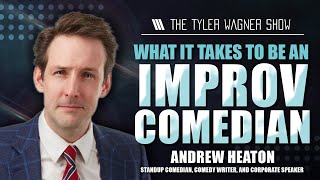
Andrew Heaton breaks down improv versus stand-up comedy, offering a formula for open-mic sets: one joke per 20-30 seconds. He then explains how gerrymandering, closed primaries, and first-past-the-post voting push candidates to extremes, and argues for open primaries and ranked-choice voting instead.
Chapters
All right everyone, welcome back to another episode. Today we have Andrew Heaton with us, so welcome to the show, man.
Hello. Hey, a pleasure to be here. Thank you for having me, Tyler Wagner.
Of course, grateful to have you on. Um, so if you can just start us off, tell us a little bit more about you and what you do.
I am professionally clever. I do a bunch of things. I am ethnically a comedian, so I am paid to be funny. But my main day job is I host a podcast called The Political Orphanage, which is designed for people that have friends they disagree with and are kind of tired of the red team versus blue team slap fight. So I tend to do a lot of deep dives on stuff like By the time your show comes out, Tyler Wagner, I will have just done an episode on everybody's favorite non-controversial topic, Roe v. Wade. But what I did was I actually read Roe v. Wade and read the other jurisprudence poised to overturn it and got into legal theory and just went, hey, I know, I know we're all about to kill each other with rakes over this. I'm on board, can't wait. I'm sharpening my pitchfork, gonna be super fun. But aside from that, I'm actually gonna just go through and just explain what the this case is so that you know what we're talking about, because I like to kind of get underneath the partisan stuff to the underlying issue. And then it's arguably kind of funny at times because I'm a comedian and I write books and stuff and I do other things. But that's the main thrust of it. I'm a comedian, podcaster, and clever guy. You're all going to love me. You're going to love me.
I love this. All right. This is going to be fun. Yeah.
No.
So I always say, like, people, I'm like an aspiring comedian. I did— I did improv for Excuse me a little bit.
And, um, hey, wait, where'd you do that?
Uh, so I live in Miami, uh, and it was, um, I think it was called the— not the Laugh Factory. I listened to too much Rogan. The Laugh Factory, I think, is somewhere else. I don't know.
It's in LA.
Yeah, but it was— it's in Coral Gables, uh, and it's like some improv, uh, place. And I did it for 6 months and absolutely loved it. Actually, actually like a natural at that. But I found like trying to— because towards the end of it, they actually will have you like— the next class is like, uh, actually like writing jokes. And regardless, that I tried to do and that did not work out as well.
It's a very different skill set, isn't it? So like, I kind of came the other way from you, Tyler, where I started out in stand-up, which is very writing heavy because you're— if people listening are utterly unfamiliar with comedy, you sometimes see a really good stand-up comedian and you think they're just talking off the top of their head. They're not. We will spend like— we will spend literally years getting 45 minutes of material that we've really burnished and tightened down, but there is some point where you have to sit down and write the funny joke about airline peanuts or whatever. And so it's very writer-specific. And then I did that, then I took improv training up at Upright Citizens Brigade Theater in New York when I was living in New York. I have a bunch of really good improv friends and can do improv myself now, but it's a very different muscle because with improv, what you're basically doing is you're you are being earnest and truthful as a character in a crazy situation. Whereas with stand-up comedy, you were basically going, hey, look at this thing. Wrong, it's over here. I thought it was— no, it's here now. Like, it's actually the complete opposite because like stand-up comedy, you're just ripping the rug out from other people all the time. Whereas with improv, you're going like, listen, I know we're getting a divorce, but we're both beavers. And then you have like a real serious scene about beavers that just ends up being funny because of the juxtaposition, dude.
Yeah, no, I found it. I did love it. And when I actually realized that— it's interesting how comedians though, because like you just said, they'll actually make it seem like it's coming off the top of the head.
Yeah, yeah.
And Jerry Seinfeld, I saw him live down here in— nice— it was in Holly— it was at that Hollywood Casino or something, the guitar, uh, thing down here. Regardless though, I literally every line I laughed like it was. And it— and you—
he's, he's the master. I'd say Jerry Seinfeld is the top of the game in observational comedy. He is the living exemplar of that field, 100%.
So yeah, this is like we're talking about literally the best in the world at it. But like, it was strange to me to just see like how it did seem like he was just conversating, but there's no way you could have every— because it wasn't even His type, it wasn't even like it built up. It was like every sentence was a hit. I was just like, dude, he's literally—
he is a genius. And one of the things why he's so good at observational comedy— observational comedy is really— and I'm going to get so boring. I'm so sorry to your audience. No, no, no. Whenever you discuss comedy, it ceases being funny. Like, you're— when you dissect it, you're not funny anymore. You're looking at the components that are not funny. But what you're effectively doing is you're— it's like you're looking at the stars. Everybody can see the stars. We all know what the stars look like. And you can go, look at that one. That one kind of looks like a horse. And people go, I've never—
you're right.
So like, the data is there, right? So like one of Seinfeld's jokes, I'm going to butcher it, but I think it's brilliant, is he talks about how like we went all the way to the moon. We built a rocket. We went all the way to the moon. We landed on the moon and then we got in a go-kart and we drove a little bit further. We drove an additional— and it's like, that's so fucking funny. Can I swear? I don't know what the rules are here.
Oh yeah, you can do it.
It's so fucking funny. But it's like, we all knew that. Like, everybody remembers that go-kart picture of Neil Armstrong and stuff, right? So he's really, really good at taking those data points and going, you've probably never seen this thing that I'm seeing in the data here because he's not explaining new data to you. He's explaining new positions for you. Or like, he talks about how like human beings are the only species that's invented helmets. Like, any other species would just quit going places where stuff falls on your head. We don't do that. We go, no, I'm going to make this special hat that's very hard that allows me to go into an area with falling bricks. And like, that's such a fascinating way to look at it. But he's really— and he's not only is he doing that brilliant insight that I think requires just a touch of genius He's also doing it in an extreme economy of words, which is a big part of the craft of stand-up comedy, of taking— like, when I'm funny off the cuff, it'll take me 3 or 4 sentences, and it's funny, it's good, but it's like conversationally funny, right? And he's taking that, and then he's reducing that to the smallest possible amount of words that can communicate the same topic, and he's doing it with an incredible inflection and the right word choice. It's really impressive when you know what he's up to.
Yeah, that's— I had never thought about it like that, but it's— when you said that, just reminded me of like Nietzsche. When he said— you're familiar with Nietzsche? What he says, he's like, what it takes, uh, one person to say in a whole book, I say in one sentence. Yeah, that's what he says. It's kind of like an asshole thing to say, but, uh, I guess potentially true in some cases. Um, so that's cool. But, um, okay, so then let me ask you this because I skipped, because comedy just excites me. It's kind of like that, uh, last thing for me that I just feel is like the most exciting and like fearful.
Well, can I— here's what I think you should do, and like feel free to report back to me because I want to know how it goes. Uh, if you're— Coral Gables is in Miami, is it not? That's one of the neighborhoods in Miami.
Yeah, so I'm in Brickell, the main city. It's like 15 minutes down.
Okay, so you're in the greater Miami area. I am confident there are open mics in Miami. Um, what I would do if I were you is sign up for an open mic They're going to give you 3 to 5 minutes and here's what you got to do. Just assume that this is a very good rule of thumb to have for comedy purposes. You need to have one joke for every 20 to 30 seconds that you're going to be on stage because a joke, unless you're doing something fancy, which you don't need to do when you're starting out, a joke is going to be a setup and a punchline and that's going to take you 30 seconds. So it's 2 jokes per minute. So if you're going to be doing 3 minutes on stage, if that's what that open mic has, Write 6 jokes. If you're going to be doing 5 minutes, write 10 jokes. They're probably going to give you 3. You could— this is totally— I haven't known you very long, Tyler Wagner. This is very much within your ability to do. Write 6 to 10 jokes.
You can do that.
And then get up there and like, you might hate it, uh, but you, you've done it. And it will, it will color and enhance all the comedy you watch for the rest of your life because you'll be able to appreciate it that much more.
All right, I know I do need to do it. It's just that thing I'm just like putting off.
No, it's also— it is scary. It's a really balls-out thing to do because like You can't get good at comedy without being bad at comedy at the first, because you have to have that feedback. So like, I could— like, my buddy left, he's starting to do a variety show here in Austin where I live, and he asked if he could put a keyboard in my place because it's near the bar he's going to play at. So there's a keyboard here. I could theoretically doodle around on a piano for 5 years and get real good and no one would ever know. And then I just all of a sudden go, oh, I play piano, and I could play it, and you'd be amazed, right? You literally can't do that with comedy. It's just— it's not possible to do that because you have to learn through feedback from the audience. You have to learn what gets a laugh and what doesn't get a laugh. There's no way around that, which means at the beginning you suck. Like, there might be some raw stuff that's pretty good, but it really like— it is kind of a crazy thing to think about where you're like, here's what I'm going to do. I'm going to fight 300 million years of evolution telling me that the tribe is about to kick me out where I'm going to starve to death. And never have sex again and all of my genes will die. I'm going to fight those 300 million years of evolution to tell people jokes about airline food, and I'll have fun doing it. So it's going to be a little— like, there's going to be some adrenaline at the beginning of it. But I think there will be no harm that will come of it, and it'll be an interesting life experience for you.
Dude, no, I agree. I definitely will do it. And actually, and that's what a lot of things is like when you break it up into smaller parts like that, because I actually didn't know that, right? So to just even know that like 3— and I have actually— what's funny is I've gone to these before. It's just like not ever like prepared. So yeah, yeah.
Which is why the very first time I did it, not knowing— like, I'm from Oklahoma, right? Like everyone in my family is a farmer, works in construction, or happens to be a federal judge. But like no one in my— I'm the only whimsical person in my family. I'm the only person that went Or I could tell jokes and that's how I will pay for my food, right? No one in the history of my family has ever done that. So I didn't know. And I'm from Oklahoma. I don't know, like, if you live in LA, you can't swing a dead cat without hitting an old Jewish comedy writer that can take you under his wing and teach you. I didn't have that. So I, like we were talking about, I literally thought the first time I did stand-up, I'm a funny guy. I'm a lot of fun at parties. I'll just go on stage and ideas will magically come to me. And it was horrible, Tyler. It was so horrible. I literally went on stage without anything and just stood there and like mumbled something about Mike's Hard Lemonade and then walked off stage. I was so mortified by it. I didn't do it again for 4 years because I was so horrible.
That's what happened to me. No, because I was so in the improv, like I was just so— just people recognized that I was just kind of naturally good at it, right? Like, and it was just like, you know, as you were saying, Everybody's on the stage and they just say something. They're like, beaver. And then you just do something in that moment. And somehow, most of the time, whatever I did off the cuff would be funny. So I thought, let me go.
It was—
it's called Red Bar. So I did it. I was like, let me just go. It's 5 minutes exactly like you said. And I'm like, let me just get up there and just fucking start talking, you know? And dude, yeah, I'm gonna say there was maybe one snicker in the back.
Well, the other thing too is like, improv audiences are very different than stand-up audiences.
Is that—
Like stand-up, like the difference is, and I have great respect for both art forms. I'm not denigrating improv when I say this, but stand-up is the highest distillate of comedy you can get because you have to get a laugh every 20 to 30 seconds while you're up there. And you're just— and like, if you watch like a really good stand-up comedian like Patton Oswalt, and he goes a minute and a half without a joke, that's because Patton Oswalt is about to have a massive payoff at the end of that. He's doing it intentionally because he's a pro and he knows what he's doing. You don't have an American in stand-up, you don't have anybody that just doesn't get a laugh for a minute ever who knows what they're doing unless there's a payoff for it, right? Whereas improv is like, it's improv's a light beer of comedy. There are moments that are sublimely funny, But there are also going to be 3 minutes where just like we're kind of feeling this out and you're kind of chuckling and like it hasn't really found— it hasn't found its rhythm yet. And then it'll get into it and then there'll be a new scene. And so like, like improv crowds know this. And so they're kind of— they're leaning back and they're like, they're enjoying the ride and it's going to be super funny. But there's going to be a minute where we're just enjoying the light beer, right? Whereas your comedian or your stand-up crowd, they want— they want to— they're wanting to pound the moonshine that you're putting down their throat. And so, if you get up there and you're like, "Hey, like, we'll find something," like, they're gonna, like, it's gonna be dead in the water.
It's good to dissect this stuff like this because, like, you're 100% right. The improv, and in fact, if I were to actually think back, there was only really, like, one at the end of the improv class, then they invite people from the outside. But other than that, it is literally the improv class is also the audience, right?
Well, that's, I gotta say, that's another trick people don't tell you is, The only people who go to improv shows, with the exception of Second City in Chicago, which is a fine institution outside of Second City, literally the only people to go to improv shows are people that do improv. Like, it's not people— stand-up people. There are people who will be like— I know multiple people, like probably you, Tyler, who like own albums of stand-up comedy and love it and like can like quote like an entire Norm Macdonald album from beginning to end and like love it and read it, right? And will never go on stage as a stand-up comedian. You don't have a lot of hardcore improv fans that will not— like, it's all people that do improv that go to improv shows. And as a result, they're also a lot more forgiving too.
Exactly, right? And that's the thing. Like, when you go out to stand-up, like, you are going there— that's like a night out on the town. Like, you're expecting to laugh, whereas improv is just kind of like, yeah, like, let me just— I'm an impro— like, I do improv. Let me just go support. Like, I totally get it. Like, if they— if it's not funny, They'll even give like sympathy laughs. Nobody's getting a sympathy laugh at a stand-up show.
Yeah, you will. I will say you will get like one of the— well, I'll say like you can get it in that one of the surprising things about stand-up comedy that is a pleasant surprise about stand-up comedy is that the audience is actually really nice in America. So like, and I'm not saying this to piss off our British friends, but it's a different game. In the United Kingdom. So like in the United Kingdom, because I used to live in Scotland and I go there every year, I'll be there this summer. So I go do comedy when I'm over there. In Scotland and in England, comedy is a contact sport. The game that you're playing that is established, no one's being an asshole here, the game you're playing is the audience is going to heckle you and part of the fun of stand-up comedy is they want to see the comedian respond in a funny manner. And meanwhile, the comedian is absolutely going to make fun of the people on the front row. Like, don't sit, don't go to a British comedy show and sit in the front row unless you want them to make fun of you and that's part of the sport for you, right? So that's how that works. American comedy, the audience is on your side. They want you to succeed. It is considered a faux pas to heckle the performer. You will— it does happen occasionally, but it almost always, I'd say like 90% of the heckling I've dealt with in my entire career has been like we're talking about, guys who don't understand that it's not stream of consciousness. They're kind of drunk. They think that the dude just came up and started saying funny stuff and that they are assisting him by saying their own funny stuff. And you can usually just tell them like, hey, man, I got this covered. I'm driving the car. You can sit back. You don't need to talk. And like, they'll kind of get it, right? And generally, when people start out, like if you're doing a show and like when I started out in D.C., a lot of the shows would be— would have various stages of people. So maybe the headliner and the feature would be pros that have been doing it a long time. But there'd be 3 or 4 opening acts and they'd say, this next guy, it's his very first time doing stand-up comedy. And the audience would rally to it. They'd understand this guy hasn't done it before. He's trying. We can tell that he's, he's putting in the effort here. It's not that great, but he's— and they would, they would give him some laughter. So there's even some pity laughs you get, but you have to explain it and it has to be early on, dude.
So I just thought of a beautiful comparison that will allow us to transition because I want to get to political stuff with you. I want to talk about that. So I just realized, right, so I am a huge comedy fan. So, you know, like Mark Norman and stuff. Like, I don't know Mark Norman. Okay, so he's on, um, uh, Rogan. He's on with, um, he's on when the, uh, what's Sean Gillis? Do you know Sean? Sean Gillis?
Yeah, yeah.
Okay, so he's on sometimes. He has an Ari, Ari Shaffir or something.
Uh, Ari Schaefer.
Schaefer. Yeah. So, uh, Rogan will do like, um, every like 100th episode or something, he'll have like all, all of them on. Now he started doing like a group one, and I've— and so I follow all of them separately And this is the comparison I thought as you were talking. So I can only go off the shows that I've been to and all of those, I've never seen actually a heckle. So totally agree with what you mean. But if you have ever seen YouTube, they only show you like in clips, the heckles, right? Like on Mark Norman's YouTube, he'll actually show you when people heckle him.
Yeah.
So that was kind of planted in my mind when I said that of me thinking like it happens a lot, but that's not true.
Well, and the thing that Mark Norman's doing too, not knowing Mark, so I don't I don't know if he's doing this. I would not do that on my show. So like, let's say theoretically, like, most of the time when you're dealing with a heckler, again, 90% of them are drunks who think they're helping and you just—
Yeah, yeah, they're drunk most of the time.
Yeah, and you— and like, there's a kind of emotional intelligence you need in responding to these situations because you don't want to go so hard that the audience freaks out. Because if you just like lose your shit and just like threaten to kill this fucker, Like, the audience will like, holy fuck, like, they will back off, right? It's like, it's not appropriate. So like, you have to like, you kind of want to use kid gloves at first, right? Um, the situation I think that you're more likely to encounter in those rare instances where you actually do have a heckler, it tends to be a guy on a second date. He's taken his gal to your show for some reason, and in his dumb mind, his date's laughing at you, and he thinks on some dumb subconscious caveman level, he thinks maybe she's going home with you, which is not happening, by the way. That never happens. And so he'll start heckling you to show his date that he's also funny and she should have sex with him. And what you do is you just ignore him. Don't even pay attention to him. You just talk to her and you go, hey, what's your name? Deborah. Are you on a date with that guy? Cool. Like what date? First date? Second date? Second date. Oh, cool. So like not third date, second date. Like, do you think you're gonna fuck him? What do you think? Like, where are you at? 50/50? Like, where you bet? 60/40? Cool, cool, cool, cool. Have a fun date. And you just look at the guy and you're communicating, don't fuck with me. Like, if you say anything else, if you fuck with me again, I'm gonna— I'm gonna— I promise you, you will be flaccid tonight if you keep doing this. And you can do it in a way that, like, you don't even have to be mean to her. You just, like, you just cut— like, you just, hey, Deborah. And like, then he's scared because you're talking to his gal. So that occasionally happens. But with, with, uh, the Mark character that you brought up, I, I would not put that on YouTube myself. For this reason. If I were to have that go viral and people were like, man, Heaton's great at slamming down hecklers, what's that going to do? It's going to incentivize people to heckle at your show. It's going to teach people that like, oh, part of the fun of this guy is that we come heckle. There are comedians who do that. There's a lot of them are British comedians where they will actually, because it's built into their program, they'll have to kind of at the beginning of the show be like, hey, we're not on camera yet. Feel free to heckle me because I'm going to slam you down as part of the fun. I don't want to do that. So I wouldn't post that stuff. That's like you're— that's voodoo magic you're doing right there. Yeah.
Interesting.
Okay.
I didn't actually know that was even a part of some shows like that. Like beforehand they would actually say that. So, but so my comparison though to saying that was I think in politics that's the case a lot of the times, right? Is the crazies get risen to the top and then that's what hits the media. And then we are like, So everyone believes this and really it's just that one woman with purple hair who's naked waving a sign. Yeah, that's not everyone. That's just great.
Oh my God. So great, great point. And on top of that, like, I want to give like, like tip of the hat to you, Tyler, for having a fun 15 minutes about stand-up comedy before we get into demographic political analysis. Because I've already built up a little bit of warm feelings with your audience. So, like, he doesn't seem like that much of a douchebag. And so now I can talk about this, no one's gonna get mad at me, and everybody's warmed up. I think you're exactly right about that. I think there's multiple phenomena that are occurring in politics in terms of the flaming asshole phenomenon, right? Part of it is that I do think that you tend to have politicians tend to be operating on a spectrum of either narcissism or sociopathy or both. I'm not saying all politicians are narcissists or sociopaths. I'm friendly with Justin Amash. I texted him the other day. I think he's a great guy. I don't think he's a narcissist or sociopath. I'm sure there's plenty of Republicans and Democrats that are great people. However, the higher up you go in politics, it becomes a disadvantage to you to have a sense of shame. And it becomes advantageous to you to not be encumbered by shame, which is a sociopathic tendency. So like me, I am just a limp-wristed coward of a man who wants everybody to love me. I'm craving that love. That's why I went into comedy, right? So like, I'm not going to— if I ever run for office, like state legislator is as high as I'm going to go because it would really bug me if like three-quarter, like a quarter of my district just hated me, so I'm going to be a little bit more tepid. I'm going to naturally balance myself out. So that, to some extent, that's happening. There's also a lot of media bias. And for anybody at home, uh, let me give you an example. When I say bias, I don't mean in the sense that the media is being, um, conspiratorial. I mean just in the sense that it gravitates towards that which is flashy. So for anybody at home that wants an example of this, Um, uh, who is the other senator from Texas who's not Ted Cruz? And my guess is everybody listening to your show knows who Ted Cruz is, probably has an opinion about Ted Cruz. Who's the other guy from Texas? And yeah, see, there you go. His name is John Cornyn, and he's also a Republican. I, I, I don't know a lot about John Cornyn. My guess is that his voting record's probably very similar to Ted Cruz, but he's not Ted Cruz just kind of looks like, like if The Simpsons made a televangelist character, like he just kind of looks like a cartoon. And so he naturally, he's just kind of, he's bait for, for, uh, for press. And he, he eggs that on too. He also is an exacerbatory figure. John Cornyn's not like that. John Cornyn is much more of like, if you saw John Cornyn, you'd be like, oh look, a stock photo character. Like, that guy should be pushing a kid on a swing in a frame that I buy at Walmart. Uh, and So as a result, you don't hear about that. And then the deeper thing that's happening that I think should give people solace right now, because we're living in a period where politics feels all-consuming and angry and hyper-partisan and all of this stuff. So there's good news and there's bad news. The bad news is people are more partisan and reactive than they've been at any other point in my lifetime. That is to say that people hate whatever team they're not on much, much more than they did in the '90s or the '50s. So that's gone up. The weird thing is that is really just about tribal allegiance. Like, we've become much more tribal in our partisanship. The actual ideological spread, and this is so weird, is about where it was in 1960. We're not like, if you're looking at policy positions, preferred policy positions, preferred ideology, We're not any more polarized than we were in 1960. The difference now is that we're much more organized, we're much more sorted than we were in 1960. And by that, I mean, for example, I used to work for the United States Congress when I was starting doing stand-up in Washington, D.C. My day job was getting yelled at constituents in Congress. So if you were an old, angry person, you probably spoke to me at some point. And I worked for, at that time, Blue Dog Democrats. That is to say that I worked for the moderate Democrats or the conservative Democrats that existed when I was there. They were still a force to be reckoned with. There were like 40 of them in the House. They were kind of their own voting bloc. If you were to go back prior to my time, there was a group of people called Rockefeller Republicans, and the Rockefeller Republicans were liberal Republicans that were Republicans, but they were very pro-gay, or they were Republicans, but they were pro-choice, or something, right? So there was overlap. And if you go back to like 1960, you would find that whether you were a Democrat or a conservative really didn't have a lot of correlation with what you thought, how you thought government should work. If you were— if your kid came home and said, Dad, I'm dating a Republican in 1960, you probably go like, well, what kind of Republican? Are you dating like a liberal Republican like Nelson Rockefeller, who's, you know, pro-gay and pro-Latino and wants welfare? Or are you dating a moderate like George Romney, who's kind of a middle-of-the-road centrist character who could probably be in either party? Or are you dating a kind of libertarian Barry Goldwater character from out west. Same thing if you were— if you said, I'm dating a Democrat. What kind of Democrat? Are you dating a bigot? Because that's all the people doing Jim Crow at this time are Southern Democrats. They're the Bourbon Democrats. Or are you dating a Union Democrat up northeast? Are you dating an academic like out in Berkeley? I mean, it really could kind of be across the board. And what's happened since around like 1990 or so, and there's debate as to what caused this, is that the electorate is really sorted. Particularly when it comes to media and it comes to politics. If you are a member of the commentariat like me, or you are a person that holds office, chances are you are very sorted according to your partisan ideas. So if you are a member of Congress or you're a journalist and you're a Republican, you are probably very conservative, and you probably don't have a lot of ideas that go outside of that house. If you're a Democrat, you're probably very liberal, and you don't have a lot of ideas outside of it. When you get down below that level, though, to the average American, the people that are just regular folks that don't host shows and don't hold office, you'll find that they're really widely distributed, that most Americans think we should have guns, but there's not all guns, not everybody should have a gun. But, you know, you can have guns, but, you know, there's some caveats here. Most Americans think free speech is very important, but hate speech is bad. Most Americans think that we ought to have small government, but we ought to have welfare. Like, like, really, like, it, it, we're a lot less polarized at that level. It's sort of the, the, the, the managerial class which has really become the partisan apparatus.
Yeah, no, that makes sense. And that's what, like, yeah, and I think that's kind of what you're saying is where the, the flashy stuff that we see all the time is the extremes. And the, the people that, like, you know, down here in Miami that I'm going to dinner with, like, it's not, um I don't know, like, yeah, I mean, look, I don't want people homeless on the street, right?
And like, most people don't. There are very few people that are drinking snifters of orphan tears and cackling and going, haha, I feel good because there's a man in a tent.
Yeah, yeah. Like, so I think there's a lot more common grounds. But so actually, let me ask you this about the Roe v. Wade. Like, what's— give us a little teaser because I think that'd be a perfect thing to send some people to.
I will be happy to do that. Can I add one more thing to this extremist thing? Because I'm fascinated by this. I'm actually— I'm impressed that that's the first thing you went to, because that's like a significant amount of my thinking on a regular basis. The other phenomenon you have going on about this kind of artificial extremism is the system that we have right now is like, you know what gerrymandering is, where the district will be carved, where they carve out all the Republicans or they carve out all the Democrats. That's gerrymandering. It's where—
I've heard the term.
Yeah, yeah, yeah. Basically. So this happened to one of the guys I worked for where the state legislature They go, if we make a district out of like a quarter of these 4 cities, there won't be enough Democrats to actually wage a competitive battle, and we know that it'll be safely Republican. Or the Democrats do this too, historically. It goes both ways, right? We have right now, we're living in a period of ideological gerrymandering. And what I mean by that is the system that we have pushes extremist characters to the fore in terms of running for office. So we have first-past-the-post in our election system. That just means whoever has the most votes wins. And, and we also have closed primaries in most states, which means that the Republicans pick their guy, the Democrats pick their guy. Well, the problems with that system are twofold. First of all, the people that show up to primaries are way more vocal activist-type characters than the party itself. So your average Republican, your average Democrat is a lot more moderate and centrist and has views that are like a little bit of column A, a little bit of column B in terms of things. But the people that are voting in the primaries are the ones that are like really conservative or really progressive, and they elect a guy that is really conservative or really progressive. So already that the Republican and the Democrat that are being nominated don't really reflect their party, they reflect the, the activist extremists in the party. Now you're going to put it up to the district as a whole. Well, I'm an independent, I'm not a member of either party, I didn't get any say in this at all. And about a third of the people in the country are like me. We're not a member of a party. About a third of the people— there's actually a little bit more independents now than there are Democrats, and I think Republicans, at least up till Trump.
I didn't know that.
Yeah, no, we're really big because everybody's so fucking sick of the Republicans and Democrats that we're all dropping out and going, fuck you. And so, but the thing is, now, like, I don't get to participate. So now this— what's being offered to me is they're going, do you want this crazy Democrat or this asshole Republican? Which one do you want? And I'm like, I don't want either of these fuckers. Like, this is like Like, this is horrible. I don't want this. And like, and even, even the, the Democrat and the Republican, like, their base is like, man, I don't like that guy. I guess I like him better than their asshole, but it's not my preference. And what would be better is if we had open primaries like they've got in Alaska. In Alaska, the way they do it is, um, just whoever has the most votes, uh, in the primaries— like, everybody runs and the top 4 people get sent. So like Lisa Murkowski, who's a Republican senator from Alaska, she doesn't have to win the Republican primary. She just has to be the top 4 people to be on there, which means she can make considerations of, um, the whole district rather than the party. Uh, in most states where you got a closed primary, it's not a competitive election. It's already been gerrymandered to go Republican or Democrat, which means that if you're a Republican, you have zero incentive to work with Democrats or to represent the Democrats in your district because that just means you're a traitor. If you're a Democrat, same story. It doesn't— there's no reason for you to ever work with Republicans because you're not worried about getting beat by a Republican. You're worried about somebody in the primaries saying that you're weak and you're fraternizing with the enemy. So you have every incentive to go balls to the wall left or right. If you have open primaries, I, as the incumbent, the guy running, I don't have to worry about that anymore. All I have to do is be in the top 4, and now I can appeal to moderates and independents and Democrats and Republicans, and I might win. And if you have ranked choice voting, the benefit that I now have is I can go, oh, of the 3 Republicans running, like I'm in Texas, right? Let's assume that I'm gonna— it's gonna be a Republican who wins regardless in the districts that I live in. But if there's 3 or 4 of them, I can go, well, that guy's an asshole, that guy's crazy.
I—
but that Republican is not my first choice, but I definitely prefer that Republican over those 2 fuckers. Well, that guy is probably going to be more emblematic of the district as a whole, where we all get together and we're like, Yeah, you know what, we can all live with that dude. So those would be good things to do. And right now the system we have sort of artificially forces all the candidates to go to the extreme left or the extreme right, and we get this weird system where our government doesn't actually represent the people, it just represents partisan extremists.
That's crazy, man. That makes sense. That makes sense. And dude, and literally the exact statement you said, like, I let all my friends that voted for Biden. And look, I, I don't care either.
I mean, I don't judge people by who they vote for, meaning like I'm not the type where you're one of those nutballs that judges people based on how they are as a person and like why they voted for the person rather than the fantasy you concocted. How weird, Tyler Wagner.
Um, no, but like, but the statement though, I, I'm, and I'm being honest when I say this, like I'm trying to cycle through because I would ask because I'm always just coming from a curiosity standpoint.
Me too. Me too.
So like all my friends though that I can think of that said they voted for Biden, their reasoning was not because they liked Biden. The reason was because it was better.
Yeah.
Anything— no, actually, most of what they said was anything but Trump. Yeah, that was the answer.
And I was like, we're— and that's, that's the, the horrible timeline we're living in now. Uh, 2016 was the first election where, at least in my lifetime, but I believe in polling and as far as we can go back, where if you even go back to 2012 where it was Obama versus Romney, and you polled people and you talked to them, why are you voting for Obama? They'd be like, I really like Obama. Why are you voting for Romney? I think Romney's a good dude. He looks a little bit like a Lego, but I like him. He seems like he's good on market stuff. Right? And there was a subset of people that are like, I don't even care about Romney. I just hate Obama. Or I don't care about Obama. I just hate Republicans. But there was still a lot of people that just liked the candidates. 2016, um, both, both voting blocs didn't like their person. The people that voted for Hillary didn't like her. The people that vote— I mean, some of them did, but the majority did not. There were more people that voted— or should rephrase this— there were more people that voted against Trump than voted for Hillary. There were more people that voted against Hillary than voted for Trump. And this is another one of the problems we have, is that this is where I'm going to sound a little bit conspiratorial. That's how the Republican and Democratic parties wants it. I can tell you that the Republican and Democratic parties, their leadership, the last thing they want you to do is to think clearly about what you want. They want you voting based on fear and hatred, and they want you to have two options so that you go, God, I don't like this person, but they're better than that one. They're the lesser of two evils. They don't want ranked choice voting because if we had ranked choice voting, we had open primaries, they'd actually have to make a case for why you should vote for them. Because if we had ranked choice voting, I could come in and go, hi, I believe in these values and I believe in these solutions and I want your vote. Vote for me on the top of the ticket. And if you don't, if you don't think I'm going to make it, put Romney at number 2 or put, put Obama at number 2 and there's— it won't matter. You'll still get that. But like, but put me at the top of the ticket because I really— they don't want that. That's the last thing they want because right now they're not making the case to vote for me. They're making the case of don't vote for this other person. Fear and hate half of the goddamn country and vote for me because I'm not part of the monsters that live next door to you. And it's fucked up and I hate that.
That was actually how it all kind of was. Like, even if you remember the debates, more of the debate was not what they were going to do. It was more like, yo, you don't want that crazy witch over there.
Yeah, 100%.
For president.
Yeah. And it's, you know, yeah, it's— I would— this is, this is again, this is why I host a show called The Political Orphanage. I'm like, I'm not going to participate in this bullshit.
Well, his last name is Jones. First name is Alex.
Do I agree with Alex Jones on this shit? Uh, you know what, he plays laser tag at the same place I play laser tag, so there's a zero chance I'll run into him. If that is the case, I actually— apparently he's a big Star Wars fan, so I kind of want to talk about Star Wars. I'll keep that in mind if I meet him.
The best Rogan episodes are with Alex Jones.
I've not seen him, but I'll check it out. You know what, if I'm not a Jones fan, but if that's what he's saying about the two-party system, that he's right about that.
No, I just love it.
And in answer to the Roe v. Wade— so I just did a big episode of Roe v. Wade, it's an hour and a half. Like I said at the beginning of your program, Tyler Wagner, one of the things I try to do is like right now what you're about to see is you're going to see the floodgates unleashed on Roe v. Wade, where you're going to see a lot of very partisan talking points about abortion is murder or abortion is slavery. I don't even contend against that. Like, I don't think abortion is a subject where we're all right in our own way. Like, either you're enslaving somebody or you're murdering a child. Child. There's actually not a lot of gray room there. That being said, I try to get outside of that, like, that anger, passion, and try to get into the thinky, well, what's happening here? I would rather my audience know what's going on and have that as the background to interpret all of that other stuff. And so that's what I'm doing. So I went through, I read Roe v. Wade. For a comedian, I'm a pretty good attorney. I'm not an attorney, but I've slept with a bunch of attorneys. I've slept with a lot of attorneys, Tyler, and, uh, and I think by comedian standards I've got a pretty good legal mind, although I should say I don't have a law degree. Um, my, my reading of Roe v. Wade basically boils down to this: I think Roe v. Wade was good legislation and policy. I would have voted for it if I were a senator. I think it was very bad judicial ruling. I would have voted against it if I were a judge. And what I mean by that is judges shouldn't be writing policy. That's not their job. The job of judges is to determine what is in the Constitution, rule on that. It is not their job to rule on what ought to be in the Constitution. That's judicial activism, and it's contravened to the constitutional system that we have, one that I am emphatically in favor of. So when I look at Roe v. Wade, the logic of it's basically this: the Constitution has certain rights that are not mentioned in the Constitution but are sort of There are historic rights enjoyed by the American people that ought to be treated as constitutional. Privacy is one of those rights. Abortion is a deeply personal decision, therefore it is a private decision, therefore it falls under privacy, and so we are going to declare this a constitutional right. I think that that is a really big stretch to come to, and that it effectively was a right which was invented by judicial fiat. So Had I been a judge, had I been on the Supreme Court, I would have ruled against it and said, even though I agree with the outcome of this decision, you're making it up and you're creating a law whole cloth, and that's very dangerous. I wouldn't want conservatives to do the same thing by outlawing all abortion in the country by making something up. In terms of the legislation itself, or I should say the policy that came out of it, I broadly agree with it. And this is one of the things that surprised me, Tyler, was that The policy side of it is like weirdly moderate, and I know that that would surprise a lot of conservatives to hear that, but Harry Blackmun, who wrote Roe v. Wade, was a Republican. He was a Nixon appointee, so he's a Republican appointed by a Republican senator, and the case before him, in terms of what the people wanted, Roe wanted, or her attorneys wanted, legal abortion in all instances with zero state interference. So the position that Roe wanted the Supreme Court to take was We want you to say no state can ever ban abortion under any circumstance, including partial-birth abortion, including a week before birth, anything like that. Texas, which was the appellant represented by Wade, or the appellee, excuse me, I have to call one of the attorneys I slept with, get those terms right. Texas wanted to ban all abortion from the moment of conception on, with the exception of when the woman's life is imperiled and needs to be, there needs to be an abortion for medical necessity. And what Blackmun, writing for the court, said was, "Ah, you guys are both taking this way too far." He went, "Texas, listen, like, this is a heated topic, but we the judiciary have no means by which we can determine when a fetus goes from a morally ambiguous phenomenon to a human being that we all agree deserves rights." That's at the moment of conception. There is lots of debate within religion and within science as to whether or not this is merely cells or this is a human being that has a soul. We as the judiciary cannot determine this, so for that reason, we believe you've selected something that can't be justified, and so we are going to strike down your ban. You can't outlaw abortion in the first trimester, or the second trimester if you want to get into it, because there's just— there's no consensus here, there's no way to determine this. But then conversely, he goes, 'Bro, a week before a fetus is born, it's a fucking baby.' He doesn't say that, I'm paraphrasing Blackmun, but he basically, he goes, 'Look, like, come on, at some point it's a baby. At some point you're murdering a baby. And so we the court think you were being way too far the other direction, and we the court are going to say under American law you can't kill an unborn child from the point of viability on.' The point at which the child could live outside of the womb seems to be a baby, and it seems to be deserving of rights, and the states have a logical vested interest in protecting the rights of the unborn at that point. And so that's what he came up with. And I look at that, and I'm like, you know, honestly, that makes a lot of sense to me from a policy perspective, to go, clearly, at some point, this is murder, and we don't want to murder babies. If we go too far back the other direction, At some point, I would say it's not a baby. At some point, it's just a clump of cells. I don't know where their bright line is. It makes me deeply nervous because I don't want to kill a child, but I also don't want to enslave a woman. And so if I were a senator, I would have been like, this seems like a pretty good workable solution to me. But it wasn't. It was a judicial ruling made whole cloth. So I picked the position that nobody likes in the whole country of going, I agree with the outcome, but I disagree with the judicial decision. Most people go, I love both, or I hate both. And I figured out a way to alienate everybody.
I love that. Well, that was perfect. So let us know, because that's a good tee up. Where can people follow you and watch that episode when it drops and anything else you'd like to share?
So it just came out today. You can find it on podcasting or on YouTube. I just launched the show on YouTube, but it's normally a podcast. It is called The Political Orphanage. So Apple, Spotify, wherever you find it, The Political Orphanage. And if you're interested in that episode in particular, it's very easy to find it. The Guts of Roe v. Wade. But there's lots of other episodes that— just scroll through there. I think your audience, based on my interaction with you, Tyler, if your audience is as funny and inquisitive as you are, which I imagine they are, you'll find lots of stuff that you'd probably enjoy on that. And you can find on YouTube as well. So check out The Political Orphanage. And Tyler, on your end, if you do stand-up comedy, please let me know how it goes.
I definitely will, man. Thank you again for coming on the show. This was fun.
Thank you.
More from Tyler


Catherine Nikkel : THE STORY EVERYONE HAS BUT HASN'T TOLD : The Tyler Wagner Show #1120



Scott Ritzheimer: Bring Predictable Success to your Organization | The Tyler Wagner Show #1115


Fred Moskowitz: A GUIDE TO GETTING STARTED WITH IN MORTGAGE NOTES | The Tyler Wagner Show #1113

Mark Podolsky: From Land Investor to Full Time Success How I Made $90,000 Cash in Real Estate


Mark Podolsky: How to achieve a 300% return on investment my foolproof strategy

Mark Podolsky: How to make passive income selling raw land the irresistible pricing strategy