Anthony Trucks: The Identity Shift You Must Make | The Tyler Wagner Show #1008
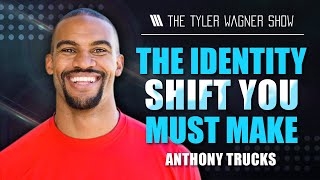
Anthony Trucks, a former NFL player and foster kid, realized after his adoptive mother's death that he was the common denominator in his problems. That realization led him to create the Identity Shift method, a three-step framework to align identity with goals, which he now teaches through coaching programs.
Chapters
Alright everyone, welcome back to another episode. Today we have Anthony Trucks with us. He is a former NFL athlete, American Ninja Warrior on NBC, speaker, author of Identity Shift, and coach. Seen on Good Morning America and Fox. So welcome to the show, man.
Thank you, man. I appreciate having me on.
Of course, pumped to have you here. So a question I normally like to start out with is like, when you were younger, like that introduction that I just read, when you were younger, is that introduction what you saw in your future at all or way different?
Great question. I, you know, I don't think it was by any means. I mean, statistically, no one would have thought that was a thing because you grew up in foster care Statistically, 75% of inmates in prisons in America are former foster kids, half the homeless population, and then like 1% of us graduate college. So statistically, absolutely not. That was not in the cards. But at the same time, I mean, you know, nothing really is for anybody. We have to make something. I just started, I guess, a little bit farther behind the ball than most people.
So when you, I guess, when did you start realizing that you liked football, or when did you start thinking that that could be a direction?
That was just like 12, 11 or 12. And it wasn't a direction. It was like I was a kid and I was like, I want to play football. And when I tried the first time, I sucked at it. I was like, I'm trash. Literally, I was like really, really bad at the game the first couple years. I was like, dude, like it's just— because anytime you try something new, you know, obviously you're met with the fact that you suck at it. And so that was the thing I felt like, man, I kind of suck at this stupid thing. But the more you try something, the better you can get. And so over the years, like I started finding some way to get better at the game and it turned into something cool. When I realized it could actually be something, That was at like, I want to say like 16, 17. I'm like, I'm getting college scholarship letters. Like, hey, I might actually be able to do something with this and it might turn into something I could get a career doing scholarship stuff on and then it turned into something cool. So it began with me having no intentions whatsoever of actually being anything great at it because I didn't even start until I was 14. Most kids are playing when they're like, you know, 8, 9, 10. I didn't start until I was 14 and then all of a sudden did my thing and that's what it turned into.
So, and then we can move forward, but I, I do want to learn a little bit more about your story. So you were in foster care.
Yeah.
Like, did you meet your parents, um, like ever? Or like, how did that, how did that occur? What's that story?
Uh, I, you know, I saw my real biological mom. I met her when I, when I was a kid, kid. I did a couple times, but then it ended up being somewhere like, I'm like at 14 years old, I had to go into a court and actually, you know, look in her eyes and tell her I no longer want you to be my mom anymore and sever what's called parental rights. Parental rights, those rights that force her to have control over what I can and can't do and stop me from playing. So like, I did see her the last time in person at 14, talked to her again at 20, and it was like right after I had my son. It was oddly like right before I found my real father. So it was kind of a weird little bubble there.
Wow! Okay, and then do you have a good relationship with your biological parents?
Uh, my mom? No, she's a ghost. We seriously can't find her. There's a TV show that wanted me to go do it called, um, what is it called? Relative Race, where you travel the country and you find relatives. And we couldn't find— they're like, we couldn't find her. Like, it doesn't happen. Like, we have the best skip tracers in the world. They can't find her. Not only that, she's not dead because that would have popped up, you know, but literally she is a ghost somewhere. So Wow! No one knows where she's at. And then my biological father, I found him at 20 years old and he passed away 9 years after I met him.
Got it, got it.
Okay.
And then, so you had a son. How old were you when you had the son?
I was 20. Well, we got pregnant at 18 and I think, yeah, I think we— I almost turned— I turned 21 a month after he was born.
Wow! Okay. So you had a lot going on at a young age.
Real young, dude. I met my mom at 20. My real mom, because the thing was I met my dad. After I met my dad, soon after I had a kid, my mom wanted to meet him. I was like, "Nah, you ain't coming to meet this guy." And then I lost contact with her. I kept contact with my dad, but the thing is he's like, "I had no idea you existed. I apologize." My very first collegiate start, we played against Mississippi State. It was away. It was my first collegiate start on national television. We won the game. I got a game ball. That ball right there. I got the game ball and I met my dad and so that was kind of a cool thing and then 9 years later, before he passed away, he goes, "Hey, I got to let you know. I did know about you all those years. I just didn't know how to say anything to you about it." So—
Wow!
Yeah!
Oh my gosh! This is wild! Okay! I mean, you know what's interesting to me? I always say, like, have you ever heard of Alan Watts?
Sounds familiar. Can't say that I recall perfectly though.
He's kind of like a, a spiritual guy, if you will. And what he kind of talks about is like, you wouldn't know the light unless you experience the dark. So in a sense, like, I feel like you, like, you've been through so much at a young age that now you're you're like equipped that probably like you can just handle stuff now. I would imagine.
Yeah, there's a—
You're like, this is nothing, man. Like I already got this.
The quote I love, the quote goes, a smooth sea makes not a skilled sailor.
Yes, that's exactly what I'm trying to say. That's a better way to say it.
Yeah, so people ask, they're like, are you sad that that happened? I'm like, nah. I mean, to be honest, a lot worse could happen. But while I don't like that it happened, I appreciate every moment of it because it did create a different strength in me. So yeah, it's totally cool. It's, again, I wouldn't wish it upon other people and I wouldn't even like want to experience it again, right? But I'm not gonna sit here and be like, "Ah, I would take it out of my life!" Because I think all the things we have in our life are beneficial because if you think about that game back in the day where like there's like little sticks they put in a plastic tube, a bunch of sticks go in, they put a marble on top or marbles, right?
Oh yeah! I remember that game, yeah!
You're pulling these sticks out and the marbles, if the marbles fall through like you lose, right? So my thing is like, every one of our stories is kind of like one of these sticks. And if I'm holding these marbles up of what I've created in life, do I really want to test which stick to pull out and hope I can keep them up? Hmm.
Yo, that is good right there.
Keep it all in, man. Yeah, my brain works funny. It's like, I think in pictures, that's a better picture for me to explain.
Yeah, no, that makes complete sense. And it's almost like the thing of like, even if something, you know, bad happened in the past, like it would— you would be different today, right, if it hadn't happened. So it's like, would you go back and change it if you could? It's like, well, I don't know, because I would be different then.
So it would be a different thing. I'd be completely different. I'm like, nah, I'm cool, keep me as I am, dog.
Yeah. Um, and then, uh, I, I do want to talk about your book and everything else, but I, uh, with your son, um, like, what's that relationship like? So you were because you were like kind of like a kid raising a kid. Like, 20 is an adult, right?
Like, I was raising a kid for sure, man. Me and my high school— we were high school sweethearts. And like, uh, oh yeah, yeah, yeah, we were high school sweethearts. We were in the yearbook, cutest couple in the yearbook, no lie.
That was awesome, man.
And then we, uh, we had a kid. We had 2 more kids later. We got 3 in total. But I've, I've loved my kids. I think the thing for me growing up in foster care is like when I had the opportunity that like this is my kid it was big. Like, I have never— I've never once had a feeling of like, I don't want to be a dad. Like, not even an inkling. It's always been this thorough joy to be a dad. It's not easy, but I always have— like, I've always loved being a father. So yeah, no part of me had a weird, weird thought with that. But I did it all young, for sure.
Yeah, you know, it's interesting. I feel like it is— it's like that thing where it's like there's pros and cons to both of it. I see the biggest pro with having kids young is like, now you're gonna have so much life with your kids, you know what I mean? Whereas if you wait until you're like, um, I don't know, 40, 50, 60, you know, you don't have as much time. But 20, it's like he almost becomes like your friend, like literally, like you're similar. It's awesome.
Yeah, yeah, no, I totally do. I totally get it, man.
It's—
I've actually thought the same exact way. Like, that's kind of the, uh, it's been this thing where in my head I always look at it perspective is like you do get to spend more time while alive with the kids, you know? Like, that's the big thing is, it's like you can have kids later but you miss out on most their life, whereas for me, like, I get to hang with them a whole heck of a lot longer.
100%. And I'm sure— so when were you on American Ninja Warrior?
I was— it was, uh, 2017, '18, '19, I want to say.
Oh, okay. So then you're— at least your first son, he got to see that.
Well, all my kids got to see Ninja Warrior because my kids are 17 and 12. Well, my twins are 12, my oldest is almost 17. Yeah, I got, I got my kids going to college next year, dude! One of them going to college. Yeah, I'm weirdly— I would have had them young, you just start life young. So they all, they were all present for Ninja Warrior. My youngest, oldest son was present for some of football but none of the other stuff. He doesn't even remember any of it anyways.
Okay, got it! And where's your son looking at for college?
Uh, we have no idea. He wants to go to Oregon because that's where I went.
Oh, okay.
Nice.
That makes sense.
We shall see. He's a track guy. He's a guy that needs to kind of, uh, he needs to figure out that like it's a different level because I grew up with a little bit of a different tick, you know? Because for me it's like, hey bro, like, uh, you gotta survive. He's like got everything he needs, you know? So different kind of fit. But no, he's a great athlete. He runs track. He loves it. And hopefully gets a chance to go to all of them. He was born in Eugene. Like he was born in college. So it'd be cool for him to go to the same area where he was born, you know?
Full circle. That would be cool. I like that. So, and then you, when did you write the book Identity Shift?
So I wrote that last year. I think it was like 2020. The idea had been out for a while, but I hadn't actually turned it, like decided to turn it into a book. I was talking to a guy who was like, "I got this publisher if you want to publish this book because I've been writing these things down." And I hadn't really turned it into a book. It was just ideas and so one person goes, "Hey! I got a publisher guy. You want to talk to him about maybe really writing the book?" I was like, "Ah, maybe!" So I talked to the publisher. I'd been tucking away ideas and concepts and methodologies and stories of my own life that merged and like, it was all there. So the publisher gets on and goes, farther along than most people who are like, who are writing books, like, whenever, like, it comes time, like, that they, they don't even have this much done. He's like, you need to just write the damn book. It's like, all right. So signed with him, wrote the book, and it came out August 24th, 2021, this year.
Oh wow, okay. So that's— oh, that's really recent. Okay, got it.
Very— yeah.
So I want to talk about a few things because I'm actually in the book business myself. So overall like any, uh, information you can share with the audience. We have a lot of, um, people that want to become authors that listen to this show just because my background. Um, so what was the experience like for you, uh, as far as like the writing of the book, publishing, and like now you're in the beginning stages of the marketing, I suppose?
Yeah, well, we actually— I mean, to be honest, we— the, the book's out, it's done. We've been— yeah, we're building up and everything. We, we're— we did a launch, right? And then the idea is like you don't let it just die, so we're gonna go into like a free plus shipping or a buy the book, free shipping, right? Because the goal was for the book to get out. Like, that's the thing. Get the book out into the world and the process for me was smooth, man! I had a really good publisher. I have a good ability to structure time and write. I don't do— I'm not much of the writer's block kind of guy. So what ends up happening is I go in and I go, "Alright! What is the concept?" I wrote the book. Here's how I wrote the book. I said, "What are the concepts that got to go in the book?" And then I said, "Okay! What are the stories?" and then what data points or research have I done? And I just had 3 little segments and I ordered, I put in order the concepts of how I would flow them out so you'd understand it. Then I said, what stories match and what data points go in there that can be woven in through metaphors? So that was it! And then I just had, I think it was 9 chapters, an epilogue and a prologue. I didn't even know what to write for a prologue. I just started writing. It was my first chapter. I literally just sat down and started telling a story about this guy Ken and his experience with his friend Christine. That was it! Writing. And then it turned into like a really cool, interesting story for the whole book to begin with, then the book. And what I did is I just, I would sit down and say, okay, here's the information for this chapter. I'm going to write this chapter today. And that was it. I just sat down and I just put headphones in and went to work. And I would just write the chapter. And it was, each chapter is about 5,000 words, I want to say.
Okay.
And it wasn't, I mean, probably, I mean, maybe 4 hours a day at most. At most. I mean, I can't even fully recall, somewhere shorter, but it was just 10 days of writing. I would just sit down and just write and that was it. The book writing process was not difficult, but I can tell if somebody is like struggling to write or they don't focus very well, how it could be really, really hard.
Yeah, of course! And then as far as like the— like editing and stuff, was there a lot that got changed or did it like— was it pretty similar to how it was originally?
It was fairly similar. There's, I mean, there's a couple things got taken out but nothing big to be honest. For the most part it was just like having, like adjusting some of the flow so that whenever people would read it, they would understand which one went before which. Like we had to adjust the structure a couple of times of like, well, this concept would be better before this one to make this one make sense. Because the way I explain it, I don't like to go in and just write randomly. I want to make sure you're obviously developing some conceptual understanding throughout as it progresses. So that was kind of the hardest part, but it wasn't anything to do with like, you know, this chapter sucks, take this one out. It was more of like what order.
Got it. And then the subtitle was like how— or upgrade how you operate life, right?
Upgrade how you operate to elevate your life.
To elevate your life. So I guess I like to kind of walk through the steps and obviously we want to leave some curiosity so people get a little bit, but like I guess if somebody were to come to you and just be like, hey man, I'm lost. How do I upgrade my life? I guess, how would you help them? And I saw on your website too, you seem to have a 4-step process, so maybe that— they're called the Shift Method. So maybe that's how you would engage that.
Yeah. Well, the Shift Method is the method. What you saw on the website is kind of like the progression to walk through possibly working with that. But essentially what it is, it's a method. It's in the back half of the book. And what I realized was people, while the concept can make sense, if I don't get you the tools to understand how to actually use the tools and it's a way. So like, I'm like, you got to upgrade how you operate. So what I do is a back half is a method and the method itself guides people through the process to in fact make the shift. And here's what the 3 steps are. They're fairly pretty simple. It's see, shift, sustain. Not rocket science, not crazy, but you have to see like what you got to work on, shift, do the work to shift, and sustain it over time. You'll make it an identity shift. It's at face value, it sounds very like simple, right? But the reality is, it's done properly, you get to this point where everything like you get to— our company's vision is to help people get to an internal limitless state of ridiculous power. Like, I want you to have this like— this dopeness that's oozing from you, right? And I realized that if your identity doesn't match your dream, then you don't realize the dream or if you do, it'll be short-lived because it was accidental because it's not who you are to maintain it or build to it. And so for me, if I can give you a process where you can proactively go out there and do the right things to allow yourself to make the shifts, you can have the stuff you want, then it's a great tool but that was really where The Shift Method came into play. I was like, how do I codify this for humans to go apply?
Got it. So let's say if you have a, um, you have a goal that you want to hit, what is your, um, method? Or like, how do you look at it, reverse engineer it to hit it? Because I feel like you're at a point mentally, and I, I feel like I am actually too now, where it's— I think people's biggest struggle a lot of times is they want to do things and then it's like they try, and then like even the word try to me doesn't even connect anymore. Like, I'm just— I'm either gonna do something or I'm not. But I think like 90% of people are still like, well, I tried, but I just— I didn't have enough time, or I didn't make it. So it's like, you want to— when you have a goal and you want to hit it, I guess, you know, you're like tunnel vision. Is that kind of what you, uh, to an extent?
I don't know if it's tunnel vision per se. I do want to turn— well, I guess for me When I look at what I want to create, the thing is I'm trying to not look at what do I have to do? I think that's the problem we start with. We go, what do I have to do? And when you think about what you have to do, it becomes stuff where it feels out of character and you don't know why you're doing it. It's very difficult, so it's short-lived. And so I go, okay, as opposed to asking me what I have to do, who is the kind of person that has that thing? Because if I can find who that person is and take a look at what makes them them, it will allow me to step back into a space where I'll in fact be able to essentially naturally do the things that that person would do so I can have the stuff I want. It's because I think we're in this world now, I call it the epidemic of shelf esteem. As an author, you get this. Like, people buy books, they put them on the shelf, they never consume it, let alone apply the information within it. So they never have the result and they go, "Why don't I have the results?" Well, it's because you aren't the person to do anything with it and if you do consume it, let's say you do consume it, very little people apply it. They might once or twice, right? So what I've realized, it's not what you know, because we are in a world and a time where there is more than enough information. It's not what you know, it is who you are with what you know. And if you're the right person to wield that tool, you get what that happens. You come to the outcome of you, you get the thing, right?
You—
it's just, but if you aren't that person, doesn't matter what you know, it'll never come to pass.
Yes, I agree. And I think it's like timing as well. Like, that's what I think is interesting about books is like you can read a book at a certain time and it can have an impact, but reading it at a different time, it could have a complete shift in your life. Like, for me, an example of that— have you heard of The 4-Hour Workweek by Tim Ferriss? Yeah, of course. Yeah. So like, I read that book when I was 19, and I always knew I wanted to run my own business. So after reading that, I dropped out of school 2 weeks later. Right? And like, I think about that book, not the information in it was invaluable, right? But it was also the timing, the timing that I read it. If I hadn't read it, I don't know if me and you would be talking today, right? Like, I, because I don't know if I would have like, like made the leap. Um, so it's interesting how like a book can really, if I trace it all back, that was the foundation, that was the start of my entrepreneurial career. So Interesting. Books can really, can really have an impact. Um, so with this, um, I'm just curious, so like on the Shift Method, it goes in and then choose a program. What like different types of help do you guys, uh, do with people? Is it like one-on-one, group coaching, or how does that work?
Yeah, it's group. Uh, I don't— I very rarely do one-on-one, and I don't think that most people need one-on-one. I think that there is a human connection that we actually need to get to the next level, the humans we get to be in community. I believe we need people in process. That's my big thing. So I look at the idea of how do I get people to have what I call your zone identity? Like to have that identity that matches the dream. How do I know what that looks like to get into it? Then I go, okay, great! Well, what is the skill set that I need to get there? Because that skill set will help me get there and develop more income and more time freedom and more joy, right? So, I call the skill set "visioneering" because most people have a dream but no vision. They know the city but not the address, you know? Like it's—
I got an idea. You're good with visuals, man! I like that!
Visuals help. It makes my brain work better that way. So then I'm like, "Alright, well, the thing is..." So I find people don't know how to engineer a vision very well. It's no clear-cut way of engineering the vision and if they do, very few people also have the ability to engineer a path to get there. I watch people buy planners all the time who have no idea how to plan. "I got a planner!" "Well, do you know what you're doing?" "No!" So you can't even engineer the path to get there. So visioneering is— it's process and people. That's how you build a skill set. So the first part is, like when we do our coaching programs, I need you around other people because you need to have people celebrate you, people poke you when you need to be poked, keep you accountable. You need that! And then you need to have process because if you have people but no process, you can get a whole lot of hubbub and celebration but then no way to get there. If you have process but no people, then you have a process that'll work but no support, no celebration, no accountability. You'll fall by the wayside. So for me, the people is the coaching programs we have, and the process is The Shift Method.
Yeah, no, I agree on all of that. It's accountability, I think, is one of the biggest things, especially if you're trying to do anything like freelance or entrepreneurship. Because it can get lonely in the beginning because it's just you. And that for me was pivotal as well. When I was younger, I lived in, we called it entrepreneur house with 6 other guys when I dropped out. And it was 7 of us all in this house. And we all, we actually had a, it was a Google Sheet that was live, right? And we would put our weekly goals and then we all learned it from 4-Hour Workweek, if stakes, right? So like if you don't complete the goal, then like you have to do all the cleaning for the house that week or you have to pay someone I want $100, which, you know, $100 when I was 19, that was a lot of money. So I was like, yeah, it is though.
Yeah.
And it's, you know, so, so I was like, um, yeah, I was like, there was no chance I wasn't gonna hit the goals because I had stakes, I had accountability. And even more than the stakes, it was just like, would you really, on our weekly meeting on Sundays, would you wanna show up to that with 6 other guys that you live with and be like, nah, man, couldn't make it this week. Like, dude, you're not, you're not going to do that. So it's like, you can set your environment up so you almost can't fail, which is kind of, I think, what your group coaching is doing in a sense.
It's designed. Yeah. It's designed in that specific way. Cause again, yeah, without that you are struggling. And so it's, and it is, I mean, a lot of people get stuck there for a lifetime, you know, that's the hard part about it. They'll get there and they won't do very much and then just done. And I realized like, man, that's not the, uh, Not the way to go, man! You definitely want to be able to lean on people because most people have interesting perspectives and stories that will benefit us. Like, I'm big on a daily process called SHIFT, S-H-I-F-T, and the F in there is Find Joy. And it's finding joy portion, it's actually borrowing it from other people when you don't have it and finding out how to navigate situations better from individuals who have done it before or who would see a way to do it different than yours that gives you the aha moments that allow you to pursue something bigger.
Mm-hmm. Yeah, I see what you mean. And I, I've never heard of it that way. I like that. Like, do you say stealing it from others?
I say borrow. Stealing is one thing.
Well, no, no, I mean, that sounds bad, but it's, it's not a bad thing actually. But I know, I know what you meant. Um, so that's so interesting. So it's almost like, could you— do you mean in a way of like looking at others that are happy and just kind of like, like getting that energy from them in a sense?
Well, you go around it. Think about any time you've ever been, let's say, around like friends in a bad mood that are— they're in a good mood. They don't let you be— they don't let you wallow. They go, "Hey, come on! Let's go, man! Hey, Tyler! Let's go to work, man! Let's go out! Let's go for a walk! Let's go to a meal!" Right? They don't go like, "Oh, it is sad! Yeah, Tyler! I'm gonna cry with you!" They don't do that! So— but the thing is, that would help us but most of us, we don't want to burden happy people with our disdain and our unhappiness. So we don't go around them, and so we avoid, and we actually, we get less of what we really need, which is human connection. So when I say borrow joy, go around, the reason I say borrow is because at some point you will give it to somebody else. They can borrow it from you.
Ah, I see. Okay, that makes sense. Um, so for you personally, I want to dive in a little bit more, like, how does it— like, what's your typical week, like, morning routine, morning routines? Because Even going back to your book, like, that is impressive. I was like, that's definitely— you're an outlier in that, meaning because of the work that I do, like, people really struggle writing books.
I hear it's kind of interesting.
Yeah, it's one of the hard— I, it's like one of the hardest things, I think, next to like public speaking. It might be like up there. I think they say like there's a stat out there, read like more people are afraid of public speaking than like dying. Like, it's that fearful for people. Like, yeah, yeah, I think— I can't remember, but I'm pretty sure that's what the quote was. Um, so yeah, like, what does it look like for you? How do you, like, balance with everything that you're doing— family and, and everything else?
Uh, I think the way that I look at it is what's most important and what gets the vote with my time. Uh, and what I've noticed is that essentially People do not live in congruence with the words they state out loud. That's the kind of thing I've noticed. It's like, I want— here's the thing, I want to— I'm a family man, do my whole thing but some people I found that even as family being the priority, that they don't know how to want to be with their family.
Does that make sense?
Right? Like, so like when I was younger and I just wanted to work, I wanted to build my empire, like I wanted to be a good dad who was present but I didn't want to be present. It's very weird. I wanted to want to be with my kids because when I was with them, like I would be focused on work and I love them. I mean, I love them but like I was still thinking about work and I wanted to get that project done and I want to create that thing and it's an open loop and I found that for me, like I need to get to the point of being able to pause and go, "Okay, why don't I want to be here?" and actually spend time developing that kind of muscle but there's always this edge of ebb and flow and so when I know what my vote is, like I want to be with family, that takes the most precedence. Like I'm in what I call season of dad right now, which means for me, things that I decide have to be in line with the decision to be a great dad. So I don't take many trips that I travel away too often. I'm not actually going the route of, you know, taking on a whole bunch of business stuff in the back end of the day. Like 2:30, 3 o'clock hits, I'm done. I coach my kids' football team, all these things. So like, I don't think it's balance. I think we all go at one speed. But we put too many things of the wrong thing on our plate. It's like going to get a meal and your mom says get a balanced plate and you throw all the Hamburger Helper on there and you have no veggies. Yeah, like, bro, you got to put some veggies on there. You got to put something else. But the— you're going to eat. You got the same room in your belly. You're just choosing the wrong stuff to go on there.
No, that makes complete sense. So, um, and also, I remember you— what you said your mission was But as far as like overall goal with your book and the business, like where do you— I guess, have you looked out like 10, 20 years? Like where do you see that?
Uh, you know, 10, 20 years is far. It's pretty far.
That is very far.
No, it's one of those things where I don't even know, to be honest. I didn't know that this industry I'm in existed until 2014. That's not even a decade. Yeah, I didn't know that this whole thing where you go and talk for a living— didn't know, legit. Didn't write books, talking about I can't write a book, you know.
That's—
I was 10 years ago, would be 2011, no lie, 2011. Like, I was, I wasn't the down and out, bro. I was like edge of divorce. I think it was like, I think I just filed for divorce that year. I was living in a 500-square-foot studio apartment with all 3 of my kids on an air mattress next to my twin-sized bed and I'm a 6'2", 230-pound man, like you know what I'm saying? It's weird! And now I'm here! So you asked me 10 years from now, but I have no idea! I might be on the damn moon for all I know! Yeah, no!
It's— or Mars! It's very possible!
Yeah, dude! It's— no! But I think for me, if I'm— if I go 10 years, I'll be almost 50 and that'll put me in a position where like my kids will be— I'll be empty nester. My kids will have been out of the house for probably a good 5-ish years and that means I get— I'm traveling the world. You know what? If it's 10 years, my kids should have to call me to find out where I'm at in the world.
I like it! That's good!
Yeah, like you should be like, "Where's pops?" "I don't know. Let's look up. Where's my wife?" "Well, they're— they guys, they're over in China right now. They're doing their thing in Thailand." I don't know! But that's my world but I'm still speaking and talking and coaching just Maybe not as hands-on as I am right now.
Gotcha. So I want to dive a little deeper into it because I actually didn't realize that part of your story there. So, um, two things, uh, one is with your marriage, like, I guess, um, as deep as you're willing to go, but like, how— what was going on and then how did you fix it is more of the bigger question. And then you're good?
No, I'd say yeah, it's a good question.
Yeah, yes, that. And then I'm curious, like, what the shift was to go from that 500-square-foot apartment, um, to where you are now, or— and not even that long to where you are now, but like, it seems like you were in a rough spot and then you made a decision to get to where you are now. So I guess, like, what did that look like?
Yeah, yeah, well, it's, uh, a lot of sucky work, man. That's how it works, right? It's a lot of sucky work. So essentially I guess when you look at the gist of it, I didn't like who I was. I wasn't a good dude, man. I just wasn't. So I was in that funky place. I was— I had to— I, you know, I would go to gym in the mornings and train clients and go back and drink a 6-pack of Blue Moon and then go back to the gym later on and be like, "Get in shape!" That's awesome! So it wasn't a real good— it wasn't a real good thing. But I woke up one day and my mom had passed away in 2014. It was like really— it was unsettling, man, because my— My adoptive mom is legit the reason why I'm not like a criminal and doing crazy stuff, right? So, I get to this point where essentially, I wake up New Year's Day next to some strange Russian woman who didn't even speak English and she wasn't strange but like, I just know her through Google Translate, you know? It was very— just a physical lustful relationship, we'll call it and what ended up happening was, I just felt really ashamed of myself. Like, I have a daughter and 2 boys and I'm like, "I would never want my daughter to be with a man like me. I would never want my boys to be like me. My mom would not approve and my God ain't let me into heaven." It was like, it's really weird. Like, this is not a good human. And so that was the thing that like unsettled me enough to start figuring out what is the problem? And here's the thing I realized, I am the common denominator in all of my problems. Whether I allow it or create it, I'm the common denominator. I'm involved, right? So when you finally have that realization, you get to a point now of like, "Alright dude! I gotta figure this whole thing out!" And it gets difficult and it gets hard and so like, you have to actually face parts of yourself you don't want to face and my biggest shifts came because of my biggest ownerships. I gotta go in and say like, "Here's where I suck. Here's where I gotta improve. This is what's gotta be better!" And that's a lot of what I did and the more I did that, the better it got and the more it picked up. Turned into something super cool, man! So that was how the world kind of transpired for me of just like going in and sucking as a husband, as a father and just building it better over time.
Got it! Yeah! No, I haven't. I'll have to try that sometime. I had never— Blue Moon as a post-workout, that sounds like it might—
Well, it wasn't a post-workout. It was like, that was my in-between clients. I owned a gym for a decade.
Oh, okay! Yes! We skipped over a big part of your life. Yeah! Tell me about that!
Oh, it's all good! Yeah! When I got out of the NFL, my degrees and— because I left the NFL on an injury and so my degrees kinesiology, I was like, "Well, how about I go ahead and just open a gym?" You know, novel idea for an athlete because you know, they don't ever do that. They don't get into fitness. So I did it and I just was in a bad place in life while doing this thing and I would legit go to the gym in the morning, do morning clients and I would go back because people don't work out in the middle of the day. You know, it's like morning or night. And so I, yeah, I would just go home like, "What am I going to do? Drink some beers." So I just drink a bunch of beers. No one knew, only I knew. I would go to the store, get a 6-pack and go home and I would— because you got like 3 hours, 4 hours in the middle of the day, I could put a 6-pack away and be good for work. Like, yeah, you know, because if I get done like 10 o'clock, I don't— like, people don't come back until like 3 or 4, you know, after school, whatever. That's like 5 hours. Like, bro, pound this 6-pack in the first hour and by the time work comes back up, I'm sober and then go back. And I tell you how to get in shape, you know. It's just— it was really— it was— but it was a funky place. I was living out all of my insecurities and sadness and all that stuff through, you know, just these moments of time.
Yeah. And just two things I wanted to reiterate on what you said, because they were like good one-liners. Um, one was like your biggest shifts were the things you took ownership with. You said it better than I just repeated it, but that was good. And then the, um, the, um, oh, what was the other one that you said that was good? That was before that. Oh, you're the common denominator in all of your problems.
That's true.
Yeah, that's a good— that sounds like a quote. So if it's not out there yet, you should take that.
I should do it.
Yeah, take that one. Um, so, so yeah, man, I wanna— if there's anything else you want to share, please do. I want to leave the floor to you and then also let people know like websites, socials, where the book is and all that. The floor is yours.
Totally. Yeah, man, uh, book is at www.identityshiftbook.com. Live.com. You can go there, and if you get the book and come back there with the code, if you go to step 3, you can put the code in there. We'll call it LIVE, L-I-V-E, and you get a free digital book, free audiobook, and a free workbook to go along with it. And then if you want to follow along, just go to Anthony Trucks on Instagram.
Perfect, man. Thank you again for coming on the show.
Hey, welcome, man. Thanks for having me, bro.
More from Tyler


Catherine Nikkel : THE STORY EVERYONE HAS BUT HASN'T TOLD : The Tyler Wagner Show #1120



Scott Ritzheimer: Bring Predictable Success to your Organization | The Tyler Wagner Show #1115


Fred Moskowitz: A GUIDE TO GETTING STARTED WITH IN MORTGAGE NOTES | The Tyler Wagner Show #1113

Mark Podolsky: From Land Investor to Full Time Success How I Made $90,000 Cash in Real Estate


Mark Podolsky: How to achieve a 300% return on investment my foolproof strategy

Mark Podolsky: How to make passive income selling raw land the irresistible pricing strategy