Anton Glotser: Digitizing The Real Estate World | The Tyler Wagner Show #1044
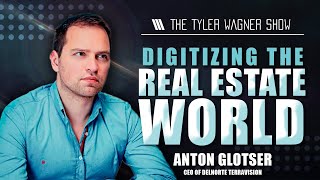
Anton Glatzer, CEO of Del Norte Holdings, uses government-certified NFTs to tokenize real estate as legally binding property deeds. His company has secured agreements with multiple governments to recognize these tokens as official titles, and is launching pilots of 30,000 to 100,000 properties across Central and South America, aiming for a million properties this year.
Chapters
All right everyone, welcome back to another episode! Today we have Anton Glatzer with us, so welcome to the show, man!
Uh, thank you, thank you!
Um, so yeah, I know you're, you're traveling right now, so this is kind of a cool episode. Um, if you can, uh, just start us off with a little bit more about you and what you do.
So yeah, my name is Anton Glatzer. I'm the CEO and founder of Del Norte Holdings. It is a company dedicated to tokenizing real estate. We focus on Latin America, but also North America as well, and The Caribbean.
Okay, gotcha. So how did, um, let me ask you this, like, before, uh, just to go back to the roots a little bit, what were you doing before this? And then what was it that like occurred that sparked you wanting to create this company?
Well, my, uh, background is mostly real estate, but I've also done many other businesses in the past, including oil and gas, movies, brewery I owned at one point. And so this was, uh, this came to pass back in 2017 when, uh, the first iterations of NFTs came to be. And I quickly realized that this technology is far better used in solving real-world problems like clear titles to real estate rather than ownership of art, you know, which is also important but not as widespread as real estate.
Got it, got it. And then what do you see, like, with security tokens in real estate? What is the major, I guess, opening right now? Like, what, what's the shift that's happening that the, like, opportunity has arisen, I guess, in this space?
So the industry itself is moving towards regulation and mass adoption, and I think lots of governments and businesses are trying to figure out how they can implement this technology in the near future to be able to utilize it in a way that is both practical, effective, and doesn't violate any of the regulations which are definitely coming. Um, and so what we have been able to do, to my knowledge, we are the only ones who have done this so far. We've been able to get governments to agree, uh, to certify our NFTs as actual deeds. And so when you mint and utilize the NFTs on our platform, that is an actual sale of the property. That is, it's recorded in the government offices and it's a final sale. It's no different than a traditional sale. It's just this one is automated completely and it uses blockchain to keep records.
Got it. Okay. So, and this is probably more of like a, I guess, crypto in general blockchain question is, so I've heard in different interviews, I'm gonna try to word this correctly. Essentially, so Bitcoin is considered property, and you can correct me after I say this on anything that's inaccurate because I personally don't know, but Bitcoin is considered property. But then all the other cryptos like Ethereum or any of them, they are unknowingly, or I guess they are technically securities without actually being, um, I guess, in alignment with the law. Is, is any of that accurate, what I just said?
Um, yes and no. I know a lot of people, and obviously the FCC also says, well, Bitcoin is not a security because it's sufficiently decentralized, meaning that less than, uh, 10% of it is controlled by any one single party. But in reality There is a wallet out there, we do know this for a fact, from a guy who had a lawsuit actually in Florida, I think it was last year or even this year, who claimed to be the original Satoshi Nakamoto and the creator of Bitcoin, and that wallet, while the guy doesn't have the access keys to that wallet, but it does have like a million Bitcoin in it, which is, you know, whatever it is, billions of dollars now. Yeah. Last year was even more, right? But, uh, that's not 10% of the Bitcoin market. That's— but it's still 20% of the Bitcoin market because only— no, there's only 21 million Bitcoins, and if you have a million of it, that means you control— one wallet controls 5% of all the Bitcoins. So, uh, again, it's the same. Realistically, there's not really any difference. And I know I'm sure people will argue with me all day long about this, but I don't see a difference between Ethereum and Bitcoin and, you know, any of the other coins, it's just aside from the stablecoins, obviously, but it's more like what are the tokenomics and who owns it? And a coin like Ethereum or any of these other coins like Near or Fantom or whatever, they're just newer and better versions of what Bitcoin originally was. Which is a new form of a new system for transactions, programmable money. Except Bitcoin has limited use case because it's not as fast as the new protocols, and it's, it's not as robust, and it doesn't have as, uh, the ability to, to program the smart contracts the way you can do it on other ones. Now, will it— there's forks of it that lets you do it, I'm sure, and I know they exist. So there's Bitcoin Cash, and then there's the traditional Bitcoin, and, you know, various other Bitcoin iterations. But it's an evolving technology that's very new. I mean, it's only like, what, 12 years old now, 13?
Yeah.
So, you know, we personally are built on Ethereum. We're actually moving to NEAR right now because we're We're signing a deal with them. Again, why are we moving from Ethereum to NEAR? Because NEAR is faster and cheaper than Ethereum. So, and Ethereum is more robust than Bitcoin. And maybe a year or two from now, another company will come make a new protocol that's gonna be better than all of them. We all know, I mean, we all know there's many that are competing for that spot to be the Ethereum killer.
Oh yeah, for sure. So, and then I want to— because I know security tokens is more what you do, so I want to talk about that. I'm just curious because this was really recent, I think. Do you— could you elaborate, or do you know anything about what happened with that stablecoin? It wasn't— it's something like Luna or something like—
yeah, Luna.
Yeah.
So I've been hearing the way their token— again, I'm not an expert on, on their thing, but the way their tokenomics was written is they basically guaranteed a return because they said that If you buy our stablecoin, you have to— you have to keep— if you buy the Luna coin, which is not the stablecoin— the stablecoin was the Terra, and the Terra was supposed to support the price of the Luna because it was backed by X amount of Bitcoins, and it was pegged to— I think it was pegged to the dollar. But it was based on the idea that people would— there would always be a demand for the Luna coin and people would keep buying it. And apparently what happened is somebody came in and I guess effectively shorted the coin by something like $100 million, which again, there's definitely whales out there who can do that. And that you know, created, uh, this, this vacuum in the coin, in the coin demand, and it crashed the market. And they went from their high point was, I think, $60 billion, uh, to now $3,000 last I checked. Uh, so it's effectively a 100% loss. They went from being worth $100 a coin to now one hundredth of a penny or something like that.
Wow. Yeah, I know. I just keep seeing it everywhere. Like a lot of people, you know, lost a lot of money on it or something. So that's crazy. Um, okay. So then with what you're doing though, just so I'm understanding too, I actually, and when me and you previously talked, I may have told you about this. Uh, I'm an investor in a group down here in Miami. They're called Security Token Group. And, um, among other things, I think kind of their core thing is if you were to think about, um, like CoinMarketCap, Cap, I think it's called, where they kind of aggregate like all the different crypto coins. That's what one of the things this company does is they aggregate all the security tokens and then you can kind of see like all the prices in one website. But regardless, for what you're doing with real estate, it's like, would it be like similar to like getting into like a syndication but you don't actually have to be?
No.
Okay, yeah, yeah.
So, so we're not— so, and this is a big distinction between what I'm doing and what, uh, as far as I know, every other company that is NFTing real estate is doing. So what everybody's doing is they're NFTing a property here and there, and they're saying, well, now that, uh, it's NFT'd, uh, you can own a fraction of this NFT, and then you are— you have claim to the income that is produced from this, uh, property. So it's almost— you can think of it almost like a timeshare, except instead of sharing time, you're sharing the value.
Yes.
What we're doing is actually very different. We're going to banks, we're going to businesses, we're going to governments. We're saying is we're going to, uh, create an NFT, and then you, using our technology— and we have patented technology that is a combination of hardware and software— that is, uh, the hardware is an, uh, uses an NCF signal, which is basically an internal internet, uh, that can only connect to one device at one time. It, it does, uh, it still can do, uh, multiple thousands of transactions per second, but it, uh, it is not connected to the internet or to the blockchain itself. And it, it runs the pro— the transactions in such a way that it, uh, certifies the deals, uh, before they go on the— on chain. Uh, it creates a certification And that certification, uh, just like in real life, you can, you can have multiple official versions of the same document, uh, whereas an NFT, you can only have one official version of the NFT, right? Uh, but what we do is we certify that NFT. And so those certifications, uh, in case of a deed, uh, your deed that you have in your possession for your house and the deed that is kept in the building department They're both official copies of the same deed. They're interchangeable. So in our case, these certifications of the NFT become interchangeable. So if one gets lost or stolen or whatever, you can just delete it and replace it. But the NFT itself is kept in a secure location, not on the blockchain, so it can't be edited or stolen. It has to have a consensus of the certificates before it can actually be changed. And the certificates are secure on their own, but like I said, in any case, even if it gets lost or stolen, they can be replaced. Yeah, and by themselves, they don't— they don't, uh, they won't give you the authority to create the consensus to do anything to edit the NFT. So if you— unlike, unlike a one of these sites that sells NFTs that gets occasionally hacked and people steal, you know, pictures of monkeys. In this case, if you steal the certificate of the NFT, it doesn't grant you possession of that house. It just grants you, uh, you just stole a bunch of code that has to have a consensus and gets and needs to be government stamped in order for the approval to, to happen.
Um, Okay, so it's literally in a sense like bulletproof from theft, like it cannot—
Yes, exactly. And we already passed European banking compliance, so we know this thing works and it already passed the sniff test. And so what we're— and what we have been able to get is we have gotten governments to say, yes, we will accept NFT as a valid form of document. So the NFT deed will equate to a paper deed, uh, and though— and thus transactions that are done on this NFT are then verified and certified by the government, and they become actual transactions. When you buy the NFT, you actually get to own the house.
Got it. So, um, yeah, see, I can— I do understand most of what you're saying.
I will tell you that it's not quite fractional ownership. No, no. And, and to give a— and to give an example of the scope of my work versus the scope of like the general industry, I, I believe, uh, again, uh, to my knowledge, I think less than 1,000 properties have been NFT'd in total between the entire industry that's NFTing houses. My pilot program is just one of my multiple pilot programs that we're doing. The smallest one is 30,000+ properties, and then the second biggest one is 100,000 properties. And, and then that's just the two smallest out of like the five that we're launching this, this year. Okay, so we're doing a million properties this year. The whole industry right now has done less than a thousand.
Got it. Okay, so, and maybe this is, um, well, no, nothing I think is a silly question. If you don't understand, you just don't understand. So for you, what is the business model? Like, how are you guys making money, uh, from this? Is it like an upfront fee, or is it like a transaction?
So we're both— we basically work in tandem with the governments, and we're kind of, uh, in a way, work as a— as an additional infrastructure piece to whatever they have now. So you always have the option to do your deal the traditional way, and now you have an option to do it our way through the NFT system, uh, on a separate platform that is validated and verified by the government, and you pay a convenience fee. And then whenever you do any kind of private transaction— so for example, a regular deed is just a piece of paper, but an NFT, you can add— let's say you have an NFT of a farm. Now you have government-verified proof of you owning this farm. And if your farm grows, uh, coffee, for instance, uh, you can add that data point to your NFT, uh, you can connect that data point to your supply chain. And now when the product is sold and it goes through the supply chain and adds up in the store or somebody's house or whatever, they can scan that QR code on the packet and it will show them this actually did come from Tyler Wagner's farm and this is validated by the government itself. This isn't just Tyler saying it, it's the government saying he actually owns the farm, the coffee did really come from it, and here's third-party validation of this transaction. And so this gives power to a lot of people. So all that data that happens now, whether it's how much water you're consuming or power, or let's say you have a power plant, how much power you're generating, this is data that already happens. So data you're already collecting anyways, but now you have the power to monetize the data yourself.
Got it. And then when you say— I'm just trying to equate it to something. I don't think this is exactly it, but just to kind of try to equate. So like, for instance, PayPal, right? When money flows into PayPal, you can transfer it to your bank account in 1 to 3 days for no fee, or you can transfer it instantly and they charge you $15 or something. So it's like a convenience fee. So it's not— it's obviously what you're doing is, I think, a little more complicated than that, but like, yeah, but you can think of it that way too.
Yeah, you can think of it that way. It's like Yeah, you know, you don't have to use us, but if you do, you get all these other benefits. And yeah, you pay a little bit of a convenience fee, but, but it's—
you don't have to wait, you know, a week for you.
Yeah, you can, but it's, but it's instant. It's, uh, peace of mind. And in the countries that we're doing it, in, in Central and South America and stuff, where up to 20% of transactions are fraudulent, and paperwork, ownership proof of ownership is horrible and banks lose millions of dollars annually on fraudulent mortgages and transactions and stuff, that we're solving a real problem. Because once it's— once it goes into this format, it can no longer be messed with, it can no longer be stolen, can no longer be edited without your knowledge. Uh, right now this is— there's no— for example, in USA we have something known as title insurance. So if somebody— if you buy a house and a year from that, from that purchase, some guy shows up at your door, says, well, my granddaddy used to own this house and here's my deed from 100 years ago and whatever, you know, the title insurers will come in and say, oh, you know what, we fucked up, we missed it, we're gonna have a payout. That doesn't happen south of the border, south of the American border, right? You buy a house in Mexico and somebody shows up, says they own the house you got a 10-year lawsuit potentially, and maybe you'll win, maybe you won't.
Oh, okay, okay.
So this prevents that.
I see. All right, dude, this is awesome. See, this is why I love doing this podcast, because I am actually— because, you know, me and you, like, we've been talking back and forth for, I don't know, maybe a while. Yeah, yeah, well, I'm just being honest, dude. Like, I just, like, I live in Miami. Trust me, I'm like— I've been in crypto since 2016. I still do not fully understand all this shit. Like, I just don't. So, and I think that's the case for most people. So, you know, we're all doing our best, but like now I'm actually, because of this, I'm starting to understand more. So what are the, um, what are the countries that, and maybe you kind of said it there, I just missed a little bit. Is it mostly the South American countries or basically not America? America could be a customer of yours, but like more other countries that have the highest fraud, that's who you're going after first because it's solving the biggest issues. Um, and would that be like South American countries, or is it like— where is it?
Yeah, so, so we're going after the ones where we have the biggest, uh, footprint. Yeah, yeah, biggest impact and also the most connections. Because remember, this isn't like you can just go to any government, say, hey, I want to do this, and they'll say, oh, we're so grateful that you're gonna solve a multitude of our problems. No, not least of which is the ability of foreigners to come in and invest with a peace of mind that whatever they buy, they're going to actually end up owning. Which again, this is what I was describing, that problem. You know, it's not so easy. I mean, it took me 4 years to get my first contract despite the fact that I have a lot better connections than most people in these countries. It's still quite challenging, but we are working in Central America, in El Salvador and Honduras. We're talking and launching in Like I said, a couple other countries. I don't want to name them yet because we haven't officially came out with the, with the news yet. Uh, but, uh, yeah, I am— we're hoping this year we'll have 5 pilot programs, uh, and maybe if everything goes well, a pilot program in the USA as well. USA, it's not as big of an impact, but The idea in America is that we're gonna shorten that transaction time from a month or two, what it normally takes to close, to hours. So you'll jump on a plane from LA to Miami or to New York, and you can look at, uh, as you know, our own application, which, uh, one of them works kind of like a Zillow, you know. You find a house you like, click, buy it, and by the time you land, you'll already own it. You can move into your house.
That's sick.
Okay, that's cool.
I like that. Um, that's fun because no lie, when I look at Zillow a lot, sometimes when I'm like bored or something, I'll just start like looking at nice houses. And if I had that capability to buy instantly, I probably would have a couple times. Right now, if I woke up, I don't know if I would have been happy that I did that, but like—
well, that's, that's, uh, that is not my problem to solve.
That's the problem with the old fashions, you know what I'm saying? Um, okay, cool. But, um, okay, so let me just kind of maybe kind of sign off with this is like, is there anything we didn't— because now I actually, I obviously, I'm sure there's more to it, but I do have a way better grasp and I actually feel like the audience is going to understand the, the problem that you are solving. Um, so, uh, is there anything that like we didn't cover that you would want to cover in this, um, for the audience to understand? And then also like where can people find to stay like in touch with all this? Because obviously this is going to be something that is evolving, you know, greatly over the next, uh, you know, so, so, um, we obviously have a website.
Um, we, we are launching a coin our own coin very soon. This coin will be a utility token that will be used to power our network, so it will be interchangeable with fiat currencies. And our unique system, we are actually more catered towards the traditional processing transactions, real estate transactions with traditional money rather than using crypto. We are able to effectively accept any ERC-20 token, which is anything Ethereum-based right now. And then in the— this year we will be able to expand to NEAR and accept any kind of NEAR token, which is— they're different than ERC-20. They're built on Rust, which is a different computer language than the one used for Ethereum. But anyway, we— our website for our coin is dtv.tech, and that's dtv.tech. And then our website for our suite of products and system is delnorte.space. As delnorte.space again. Yeah, and so we are looking to come out again. I can't really say which exchanges right now because we're in talks with a bunch of them, but it will be the top 5 or 10 of the largest exchanges where we'll be listed at day one, and then we'll be, as time goes on, we'll be listed on more and more exchanges, obviously. And again, the coin, the idea behind our coin is you'll be able to expedite transactions, but you'll also be able to, we are in negotiations with numerous banks. And so we want to be not just processing crypto, we are, like I said, our system can process crypto and fiat simultaneously. And so you'll be interchangeable to whatever local currency where we operate, and we will be operating in multiple countries day one. And hopefully by mid to late summer, we'll be up and running already. Got it.
This is awesome, man. Thanks for coming on and just thanks for explaining it, uh, because yeah, now I, now I understand.
So yeah, and then our, our token is DTV.
Perfect. And I guess, uh, real quick, when do you think that will— I know you can't say which ones yet, but is there a little bit of a timeline? Like, when do you think it'll be available? Maybe a rough one.
Um, I guess we're looking in the next 2 months, or 1 to 2 months actually. So very, very soon.
Oh, okay, great. That's sooner.
Yeah.
Okay, um, thank you again.
But you can, um, well, actually, no, legally I can't, uh, sell anything, so just check out dtv.tech. And DTV stands for Del Norte Television, and any— we can provide you with information about, uh, the coins and when they'll be publicly available.
More from Tyler


Catherine Nikkel : THE STORY EVERYONE HAS BUT HASN'T TOLD : The Tyler Wagner Show #1120



Scott Ritzheimer: Bring Predictable Success to your Organization | The Tyler Wagner Show #1115


Fred Moskowitz: A GUIDE TO GETTING STARTED WITH IN MORTGAGE NOTES | The Tyler Wagner Show #1113

Mark Podolsky: From Land Investor to Full Time Success How I Made $90,000 Cash in Real Estate


Mark Podolsky: How to achieve a 300% return on investment my foolproof strategy

Mark Podolsky: How to make passive income selling raw land the irresistible pricing strategy