Austin Netzley : FROM 6 TO 7 FIGURES | The Tyler Wagner Show #1090
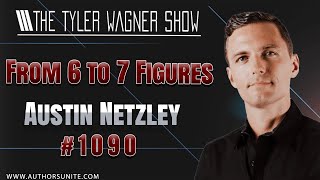
In this episode of The Tyler Wagner Show, host Tyler Wagner interviews entrepreneur Austin Netzley, who shares his evolution from an oil‑industry engineer and day‑trader to a bestselling author, book‑marketing agency founder, and CEO of 2X, a coaching firm that helps 6‑ and 7‑figure business owners scale. Austin explains how a self‑published book, From 6 to 7 Figures, launched his online presence, led to an agency (Epic Launch) that helped other authors market books, and eventually to a partnership that evolved into 2X. He discusses the stress of day‑trading, the importance of automating and mastering a skill before dabbling, and the mindset shift required to move from doing everything yourself to delegating, hiring, and leading. The conversation dives deep into his book‑writing process—heavy upfront outlining using mind‑maps and spreadsheets, rapid drafting, aggressive trimming, and using tools like the Hemingway app to keep language at a 2‑3rd‑grade reading level. Austin outlines the structure of his current coaching program, emphasizing accountability, one‑on‑one guidance, and transforming the CEO’s mindset as the primary lever for business growth. He also shares the concept behind his upcoming book, The Two‑Week Vacation Test, which teaches entrepreneurs to build businesses that can run without them, using a two‑week “vacation” as a health check. Throughout, Austin stresses the power of clear titles, emotional triggers, and simple, bite‑sized content to drive sales, and he recounts his personal mini‑retirement travel that refreshed his perspective. The episode ends with launch dates for his new book and links to his website.
Chapters
All right, everyone. Welcome back to another episode. Today we have Austin Netsley and welcome to the show, man.
Appreciate you, man. Uh, we've been looking forward to this for many months now. So, uh, let's talk about some books and some marketing and hopefully we get some good value today.
Yes.
Years, decades.
No, not decades. Um, but yeah, man, no, I'll let you start. Um, just tell us a little bit more about you and what you do.
Yeah, I'm an engineer turned investor turned author and entrepreneur, and now coach and guide entrepreneurs to help them scale. So we focus a lot on systems, operations, getting them free from the weeds so they can focus on what matters most. So I've got a couple books. In fact, I used to have a book marketing agency, and that was spurred on the back end of a book that I just did as a hobby, but I didn't have much of a platform and launched this book, and it like basically put me from an online business standpoint like on the map, at least in a small way, overnight. Like it just changed the game came for me from my online experience, and that led to a book marketing agency, which led to coaching entrepreneurs, which led to my company now, 2X, which is working with 6- and 7-figure entrepreneurs all over the globe. So, that's a quick little background. But again, books have been a huge piece of what we do. Oh, dude, this is wild.
Wait, I didn't know about the book marketing agency. So, tell me a little bit. I know that's not your main thing now, but obviously, I'm curious.
So, tell me. Yeah, yeah, yeah. So, again, I had this blog and podcast that was about money and the mindset, and my first business was day trading. So, I started I just did this thing to like give back. And I didn't know what I was going to do next, but I knew I was going to do something that was kind of contribution-focused. So, I started blogging, podcast. And by the time I interviewed 10 people, and you probably realize this on this show, it's like once you interview 10 people talking about their story, it's like they're doing the same general things, right? And from like a wealth and money standpoint, by the time I had the 10th interview, I was like, "They're following the same exact process to success." And then like I just like broke that down into a series of steps and wrote it into a book. Not very good at all. It's called Make Money Live Wealthy. You should check it out if you want, but it's not very good at all. And I know this is not a good marketing campaign, but it's like, it's not. But we've moved tens of thousands of that book. And as soon as we put it out there, we did a whole free strategy and then a low-cost 99 cents. And it moved a lot of Kindle books. And all of a sudden, it just went from me struggling to get any clients and things from an online standpoint. And I was already successful from a day trading standpoint, but I was struggling to get business business online. And then as soon as I had the book, everything changed. The PR started to come in, the clients started to come in, the traction from email list and everything started to come in. And I started to get hundreds of questions. How did you do this from like no platform? How did you do the self-publishing? How did you do it? By the time I got the hundreds question, I was like, all right, there's a business here of some kind. So I took on a couple clients, just 2 or 3 clients, and I was like, hey, I think I've got something here with our strategy and approach. Let me, uh, do it with you. In this, some type of deal. And if it works, then I'm going to start a business on it. And we launched a couple of those books. Both of them were smash hits. One of them went on to sell literally hundreds of thousands of copies. One of the, I think one of the most successful self-published books in the past 20 years, which is called From Six to Seven Figures with Peter Wu. And we've sold hundreds of thousands of that book, which is super cool. Cool. So he made over $1 million in royalties, which is very rare, let alone on the back end. So that was like validation of like, all right, we've got something, right? And then from there, I started a company called Epic Launch. So we would work with self-published nonfiction authors to help them launch and leverage their book to grow their brand and business on the back end. So we would launch, like do some type of Amazon launch and then promote a webinar or something on the back end to sell a course or whatever it was. So I did that for about 18 months or so, and then I didn't want to build an agency. So then I partnered with our biggest client at the time that we were running some marketing for. We became 50/50 partners in teaching entrepreneurs how to start and grow their online business. And then that led to, hey, the people that I really want to serve are those that already have traction that are, you know, at least 6 figures, if not 7 figures already. And that's what we do now. So it's gone, like my entrepreneurial journey has gone through all these evolutions, but my online journey was really spurred from my first book.
Dude, this is so crazy. Literally, our— and I— everybody that listens knows my story, so I will not bore everybody with it again, but it's very similar to yours where, like, launch a book, people started— like, does pretty well, people started asking me. I'm like, oh, there's a business here, let's start it, and then do that. And then now we have another company that helps people scale as well. So very weird.
Yeah, yeah, yeah, yeah, yeah.
Um, but, uh, I— there was one thing that I wanted to go back on. So you said you were day trading before?
Yeah, yeah, that was my first business. So I was an engineer in the oil industry and then I was in sales. So I was in this basically management development program and they put engineers in different roles and I was in sales in the field and it was very easy, frankly. So I was like, all right, either I'm gonna party a lot or I'm gonna go back and get my MBA or I'm gonna start a business. And I was like, I'm probably gonna start a business. And I started getting into day trading and then took it super seriously and built my own algorithm and automated and built that up. And that was my first business. I didn't have any employees or anything, so it didn't feel like a business, but that was my first thing. What's that?
And obviously I want— I definitely want to talk a lot about what you're currently doing, but the day trading stuff is like very interesting to me. Like, especially like, for example, uh, probably about 3 months ago I started to get into Forex, and I put in just a small amount because I don't know, I've heard great things, I've heard it's a scam, you know, you hear all these different things. Oh yeah, I put in $25K and basically like within a week the $25K went to $10K, and now it's at $45K.
Wow. Yeah, yeah, yeah.
This is, and luckily, you know, for, I'm just saying like for me, like $25K is not enough that I'm like losing sleep or anything. So that's why I did that. But like, you know, I can imagine it's for a lot of people, the day trading and Forex stuff, it's an emotional rollercoaster. Like you have to be mentally like stable or something like that.
Oh yeah. But, but, but dude, here's the thing. It was like, it was so stressful. And I grew up in a situation like we didn't have a ton of money. Like money was a stressor for my parents, you know? And for obviously for me as well. So, uh, I grew up with money on my mind every day, and it was even into my mid-20s. So I got into it and it was so stressful doing the day-to-day trading. I'm really mentally strong and tough, so I was able to do it, but it was still stressful. So then I was like, "All right, what if I automate this? What if I create my own algo and just like, it's basically the same things that I'm doing? I'm using the numbers as the guide here. So what if I automate it?" And even though I would just automate it and press an on and off button, an on button in the morning, an off button at the end of the day. Even though I still did that, it was still stressful. And it was too stressful that I was like, "All right, this is a tool to get me up to that first level of wealth, and then I'm done with it." And I went and traveled around the world for 18 months and just stopped everything. And that was the best decision I made. So it was awesome and it was still challenging. It's not an easy game. It's not an easy emotional game, that's for sure.
Okay, I'm glad that you said that because like I feel— and I, I don't know, I can't even think of like particular names, but I just feel in the industry, especially with like the algo that, that you built, like you hear a lot of times like, hey, like, you know, this thing guarantees this amount of returns, it's an algorithm, it always works. But even with an algorithm that's been tested, you're basically saying that sometimes it still doesn't work, right? Like, I mean, you don't—
oh yeah, any given day you could either lose money, make money. You have no idea, you have no control. Every once in a while, there's a crazy wrench that gets thrown in. The government does something, a crazy pandemic happens, whatever, a company goes under, a whole industry is under attack. You can't control any of that. And the thing, one of the biggest lessons I learned is nothing is super easy. And anytime you think it's going to be super easy, you should not do it. And you should have extra guardrails on. So, I started dabbling into it and then I got like really into it and I was like, "All right, I've been spending a lot of time on this and I'm not making any money." I'm like, "Either I'm going to stop doing this or I'm going to commit to mastery." Because if you're just there to play just a little bit, you're going to get your butt kicked probably. Right? Like there are pros out there. So it's like, what are you bringing to the table that these people that are like have Ivy League education that are working 68+ hours a week, What are you doing that they're not? They're going to take your money because it's not a zero-sum game. So I was like, all right, I'm going to go pro on this. And I stopped trading for 6 months and I just went and mastered the game. I read every book I could. I was testing, testing, testing, testing, testing, testing. I went truly pro in it. And then I started to get back into it. And then that's when almost every month I was up and up and not in a huge way, but enough to get out of debt, make some good money, and have some good success. But it was hard. So if people are just dabbling in anything, it's probably not going to work out. Uh, so if you like pick a few things that you go into, or even one thing, uh, in those things, like, go all in and go pro. But, uh, if you dabble, sometimes you can get hurt, you know?
Yeah, no, especially in that industry, for sure. That makes a lot of sense. Um, okay, so you do that, then you have the book marketing, and now you have 2x So let's talk about, cause isn't, um, the book that you already have, uh, that's already been out, that's called 2X, isn't it?
Uh, it's called From 6 to 7 Figures. Uh, so yeah.
Oh wait. Oh, I think it's the branding's the same. My brain was like, yeah, yeah, yeah, yeah.
The brand's the same. Um, so, so, uh, I came out with, uh, From 6 to 7 Figures, the first version, as soon as COVID happened, cause like we, I was already writing it. And as soon as that happened, I was like, all right, we gotta get this out there. We wanna, you know, like really kind of spike some, some urgency here. So released it. And it was okay. And then, uh, but we, and then we stopped marketing it and months later we're still having, you know, probably about on average about 6 figures in sales coming in, right? Uh, per month. Uh, and we weren't marketing it at all. And then another 6 months later, weren't marketing it one bit, still 6 figures every single month that was coming in from it. So we was like, all right, this is one of our better marketing channels and we're not doing anything with it. Why don't we actually do something with it? You know? So I went and updated the version. So the black covers, the version 2, which is much, much better in my opinion, because the first version I put together, I wrote the first version, I feel like in like 2 and a half weeks and then edited it over the next 2 weeks. So it was like, it was just about a month process, which is wildly fast. And this is pre-AI, right? But since I had the book marketing experience and had, you know, access to hundreds of books and whatever, it was just like, it was, is, is, I built a speed around it. So anyhow, put that first version together like really quickly and then edited and updated it a couple of years later. And then we re-released that like about a year ago. And that's still our top driver from business. We've tried all these different things from a marketing standpoint for 2X. And the best is people that read the book, they consume the book, they see and understand our process, they get bought in, they come in, see the success stories, and then they're ready to go. It's easy.
So 2 things on that. One, just to make sure, um, cuz I hate that I said the wrong title. The 2X is on the spine or the back, isn't it? Like 2X is the published.
Uh, yes, exactly. It is on the spine. I knew it was on there.
Okay, good. I was like, wait a second, I'm not crazy.
Okay.
Um, now when you say 6 figures a month from the book sale, like you're talking book sales, like what?
No, no, no, no. I'm talking, uh, program sales. Okay, good, good. Yeah, yeah. So, so we have a, we have a program on the backend that we're driving people to. So it goes from the book into you know, some free tools or whatever into our program.
Okay. Now those, um, to totally get, that makes more sense to me. If it was the other thing, I was gonna say, shit, that's really fucking good.
Yeah. No, no, I wish we were selling that many books, but no, we're, we're, we're, we're selling, you know, however many hundred.
Obviously still, still amazing. But so is that traffic, um, just cuz I think it would be helpful for the audience, like is a lot of that coming through Amazon or is it coming through like a, a free plus shipping funnel type thing or?
Yeah, we, we, we've tried several free plus shipping funnels and they never have worked out amazing for us. And we haven't like truly committed to it just yet. But, but we've tried that, but that hasn't been amazing. A lot has been through like the initial spike through like my email list and audience, but most of the ongoing stuff has been directly through Amazon and that works great. And we run a little bit of ads on Amazon. We'd like to run a lot more, but, but that works out pretty well in general. But most of it is happening organically on Amazon. The other thing though is, you know, it drives everything. It drives more PR, it drives referrals and word of mouth, it drives, you know, more stuff at in-person events and things. So there's an indirect impact of it as well.
Of course, of course. What was your, like, approach with writing the book like? Meaning, I feel like people kind of take two different approaches with it. One approach is they'll give some value, but they leave some out so that the person wants more. Or they'll kind of do like the Gary Vee thing where they just give everything away and it's almost overwhelming, not necessarily purposely, but it's like so much value that the person reads it and they can implement on their own. But if they have the budget, they kind of come to the conclusion like, okay, I get it, I really appreciate this, but I don't want to do this. I'm just going to hire this. Did you take approaches or have that in mind?
Um, definitely. Um, I wouldn't say we took one of those approaches. We're kind of in between because it is a lot of value. Like, we're not holding a lot of things back, and at the same time, it would be too overwhelming that they would stop reading if we talk about everything that they need from an operations standpoint. You know what I'm saying? So we're touching on the 80/20, and what I'm really trying to do is I showed them a couple things. A, at least from 6 to 7 figures, I'm showing them that there's a very strategic order to growth. I'm showing them that operational excellence is the key to long-term growth in like what they really want, which is freedom. And like you, travel, make money, grow, all that needs operational excellence and the product-market fit and everything. And third is that time is the constraint. And if they get free from the weeds, then they can again either grow to the next level or live the best life or whatever they want to do. So I'm trying to give them the 80/20 of what they need to do and shift their mindset. And at the same time, give them practical tools, but not in such a way that's overwhelming. So like there's big text throughout to make it easy. There's a lot of charts and visuals. There's tables at the end of each section. There's summaries at the end of each chapter, because I'm trying to make it as bite-sized and tangible and easy as possible. And the way that I wrote this is almost more like emails that you get instead of like a book. So there's not long paragraphs, there's not like, it's not overwhelming text. So it's pretty easy to digest and consume. So I don't know if that helps, but I was trying to shift their mindset, show them that there's a process, give them practical tools, but make it so easy and tangible that they could, you know, get some traction and momentum on their own and then be like, yeah, there's another level that they could go to with us. But there's, related to your topic, I used to have, with my book marketing company, we used to have a course that would teach people what we did for the book launches. So we had a done-for-you service that would do the book launch and had a course that broke it down in our like, whatever it was, 82-step process or something like that. And like intentionally I did that because I was like, either A, like we're going to give them a lot of value, or B, they're going to get overwhelmed and they're just going to hire us. And so many times they would just be like, this is way too much. I'm not doing this. How can I work with you? And, you know, we were charging substantially more for the done-for-you service that they would just move into that. So I think both are amazing strategies, but for the book, this has worked really well to have it be very bite-sized and tangible and move them to the next steps.
Got it. Yeah, no, that— it makes complete sense. It's kind of like with our book marketing stuff, I think a lot of people come to that conclusion too, where it's just like, okay, for Wall Street Journal example, it's like, okay, do you think you can get 5,000 sales in a week? Like It sounds kind of easy in some way, but like, you know, like, that's very— like, if you don't have an audience to somehow gather 5,000 people to all buy in the same week, that is very difficult. So the person kind of comes to conclude, like, okay, I could spend years building an audience and try to do this myself, or just pay you this fee and you can do it for me in a month, you know. So I don't know, I think that's kind of how the decision is made in that regard sometimes. So very similar. But, um, so from 6 to 7 figures, obviously I would imagine with all the companies you worked with, there's some commonalities there. Like, here, for good first question is like, what do you think keeps people at 6 figures? Because I think a lot of entrepreneurs do get stuck at like the $300 grand a year mark. So why is that? I guess I think that's a good start. Yeah.
Yeah. So, so people get stuck at different tranches, uh, for, for different reasons. And, and, and, well, it's all the same reason, but it's different details. So for instance, uh, as you move from one level of success to the next, your job as an entrepreneur, and as a result, your mindset has to shift. And shifting our mindset is so hard, especially when we get trained that that is what we're supposed to do to have that first level of success. So for instance, let's say you're starting out your business and you're just like, uh, you know, trying to figure out exactly which direction to go. You're going to take on any, basically any sales, any revenue that anybody will say yes. Right. and, and you train yourself that it's better if you do it yourself and that you're just going to scrap and claw and you're going to hustle and grind and you're going to get to that first level. Well, to get to the next level, we've got to stop that and start to see, hey, how can I get things done through other people? How can I delegate? How can I lead? How can I hire? Right? And that's a whole different skill set than getting those first initial sales and driving those initial results yourself. And then it's even harder As you get to the $1 to $3 million range and you're starting to have big decisions, big marketing initiatives, big growth levers, new products all be led by somebody else that's not you, that's another level of success. So things go from you doing everything to you not being— having the business be built around you, to you not having the business be required on you, required with you at all, right? And it's just like these different tranches a lot of businesses get stuck in. So we show you How to get out of that, how to get consistent growth over time. Yeah.
I don't know why I just had like, as you were talking, like imagery of like a caterpillar or whatever going into like a butterfly.
Yeah, yeah, yeah, yeah, yeah, yeah.
Working your way and then you just like detach completely and you let go. Yeah.
But the thing, the thing with entrepreneurship is though, there's no actual butterfly. There's no, like, it's, there's always another level to transform into. Like, there's always another level, you know, which is fun, I think. Like, it sucks at first, but it's like, no, it's like, if we're in this and we're signing up for this thing called entrepreneurship, like, lean into it and be— you got to be open to grow. You got to be open to transform. You got to be ready. And you can redesign yourself, you know, at any time. So that's cool.
I agree, man. That was actually— when I was younger, I read The 4-Hour Workweek, and that's kind of what got me to drop out of school and take the entrepreneurial route. And one of the things he talks about in there is like mini retirements, which is something like— I don't believe like mentally it would be healthy for me to ever fully retire. Like, I don't know what I would do with all that time, but it probably wouldn't be the best of things sometimes. And all that stuff.
Yeah, yeah, yeah.
It's like, just like you're saying, like, I actually prefer there to always be another level rather than like something of like, oh, I completed the game at 31. Like, okay, well, Holy shit, what the hell am I gonna do now?
Like, yeah, yeah, yeah.
No, I think it's, I think it's a good thing. And if somebody, and I think a lot of people, they fantasize about retiring by the time they get there and they actually sit with it for a couple months, it ain't what they thought it was gonna be. That's just my— Yeah. Yeah.
Yeah. Speaking of that, I, I took a little mini retirement, took 18 months and traveled around in my late twenties. And that was the best decision I ever, I ever made to, to, to take that. And I needed that time cuz I burnt myself out to like recharge and everything. And I had no idea what I was going to do next, but giving myself that space and time is something that I would recommend to everybody, man. Everybody that gets like really burnt out or isn't clear on what to do, I'm like, do the best thing that you can. If you can handle it financially, like take some time off and don't put any pressure on yourself and you'll figure it out and it'll be the best time of your life.
So I agree, man. Dude, I did something similar and traveling, I think is, it's one of the most like knowledgeable, like ways to gain knowledge.
Oh gosh. Yeah. Reading perspective.
Yeah, dude. Oh my God. Like, we went to Africa when I was like 19 or something like that, or 18, I can't remember. And it was just so life-changing. Like, everything just like in a second was put into perspective and it like changed everything for me. I was like, I am literally complaining in the United States when like I have everything functioning perfectly and these people in Africa just like don't have that yet, you know? Like, I was in— I did the Sahara Desert, the, um, Atlas Mountains, like all this, stayed in like with the camels overnight. It was just insane. But like, it really just put things in perspective, like gratitude. And also like, it's— if these people can be happy with what they have, which is less, if you will, and you could go deeper into that spiritually, but I just mean like physical things less. Yeah, I can be happy with what I have in the US. So I think perspective travel is key. Yeah. Oh, I had a really good question for you. I just lost it. Shit. It'll come back to me. I'll get it. Um, but, um, so yeah, I think, uh, where I was going with that is, so we were talking about travel. Let's go back to the 2X and if it comes back to me, I'll, I'll ask you. There's just so many similarities. So I'm, I'm getting excited mentally. Um, but okay. So with 2X, so that's the common— oh, that's, this is what it was. So, uh, you probably know him. Do you know Dan Martell?
Yeah, I just talked to, uh, messaging with him today.
Okay, perfect. He, um, he was actually, I guess you'd call it somewhat of one of my first mentors when I was like, uh, 19, 20, again, like after I dropped out of college. Um, and I just had him on the show recently. So I was just thinking, if you don't know him, you guys should connect because when you were talking about those levels, his book, Buy Back Your Time, uh, he had somewhat of like similar, uh, talking points. So regardless, you already know him, so that's fine. Um, So with 2X, so what do you like? So there's levels that you were talking about. Do you think like essentially you're having to— when you're training these people, you're having to actually train their mindset? Like, is that what you're—
oh gosh, yeah, that's the thing. Well, well, we don't tell them that. We don't tell them. Yeah, because it's a business coaching program and it's focused on growth, but because that's, that's what they want. But what they need is we're going to free up their time. We're going to give them amazing operations so that things aren't built and rely on them. And we're sure as heck going to shift them. We are going to transform who they are as a leader, what their mindset is, because that's really the starting spot. All the strategy, the model, the operational excellence, the scale strategies, like all of that is, is tactical compared to the mindset shift and stuff. Because if we can do that right, then making the decisions or executing or leading, or, uh, again, making the proper decisions is going to be so much easier. So that's really what we're doing is like, uh, everything that we do is hands-on one-on-one because people don't need a course in my opinion. Uh, like once, once, once you have some traction, like it's great to have course and information. Like I use that stuff starting out, but like once you already have some traction, then it's like, how can I achieve more in the fastest possible route that's ROI positive, right? And, uh, having somebody that's holding you accountable, challenging you, pushing you, seeing your blind spots, calling that out, and doing so in such a way that you pay a few thousand bucks for and you get that guidance, like, you can transform more in 6 months personally than you would in 3 years by yourself. And as a result, your business transforms in a big way. So that's one of the most important things we do is actually transform them as a CEO and leader.
Dude, I love that. I agree. Like, accountability, especially with like, in the book space, when I wrote my first book, I lived in this entrepreneur house. I think, I think, you know, some of the guys that I lived with actually, And either way, it was like 7 of us in this house. And what we would do is like— and we got it from The 4-Hour Workweek— is like each week we would have goals. And then if we didn't complete the goal by the end of the week, every Sunday we had a meeting and then we would have stakes, right? So it would meaning like, yeah, not like stakes, but like stakes as in like I have to pay you $50 or I have to do your laundry or do the dishes if I don't. Because when you're an entrepreneur, you don't have a boss that's like telling you what to do. So in the beginning, exactly, very hard to like do what you say you're going to do because nobody's holding you to it. But even if it's the smallest stake, I don't know if it was like an ego thing or whatever.
It is an ego thing, man. We're, we're egotistical, but I think it is not in a bad way. Like, we need— no, no, you know, yeah, if you can use the ego in a good—
in a way like that. Like, uh, to go a little deeper on this, I think this is interesting. Like, I've realized that with me, and I think I've heard Gary Vee say this too, like, I will let myself down sometimes. Like, I'm not— nobody's perfect, right? But like, I'll have like a schedule and I will not follow it sometimes if it's all just like beneficial to me. But if there's somebody else involved, like if somebody else is counting on me to do something, I will never drop the ball. Like, it's like I won't allow— so if you know that about yourself you can then set up your life so that like all your tasks are dependent on somebody else's like well-being in a sense. And then you never not do it, you know, like that's, I don't know. So, and, and I agree the ego thing, like I don't want to do my friend's laundry, you know?
Yeah, yeah, yeah, exactly. It's the smallest thing. I'm in this mastermind with a lot of like just like super, super successful people. And if we don't attend, then you have to pay $100 where everybody here has 8 or 9 figure businesses or something. It's like $100 means nothing to these people. People, right? But we don't want to— we don't want to do it. We don't want to do it because we got that accountability to each other. And it's like, so nobody misses. It's hilarious. That's awesome. Yeah, dude.
And they should like publicly like shame you or something.
Oh yeah. Oh yeah, yeah, yeah.
That's sick. Um, okay, so one, just, uh, due to who our audience is, I think it would be valuable, uh, and I want to hear about your next book then, but can you, uh, tell us a little bit more in detail of like the process of writing your first book and just kind of a behind-the-scenes look of maybe some things that you did that went well, some things you would have changed, just an overview of that project. And then I want to hear about—
Yeah, yeah. So from 6 to 7 figures, I mean, this is just my writing process. And again, from the book marketing experience and everything, we were more coming in for the book marketing agency once they already written the book or wrote the book. But still had exposure to there. But anyhow, what I do is I spend a good amount of time upfront on the outline. And like, that is for me, that's the 80/20. If you get that right and like really have it being flowing and clear and simple and again, nailing that, then for me, the writing is much, much easier. So I spend a couple of days on that and just like really kind of refining that. I start with a whiteboard, a mind map, and then I take it into a spreadsheet and I'm working it and I'm simplifying it and I'm making the flow good, getting a little bit of feedback on that. But that is the juice, in my opinion. And then from there, then I'll go in and start writing. And like I said, I wrote the first version of the book and it was, I don't know, 40,000 words that ended up. So I think I took it up to like 65,000 words in the first draft and then kind of trimmed it back down to about 40,000 words for the first book. But that was 2.5 weeks in the first version and then 2 weeks of editing back and forth with my editor. So again, 4.5 weeks total is really, really fast. Like it's really fast for a pretty high-quality book with that, especially with visuals and all these different things. So, but that would be the main thing that I would say is like the outline and really nailing that, that saves you so much time in the process. And then I updated the book 2 years later, and that was a similar process of like 2 weeks of editing and updating it. So it wasn't much to make it much better, but I just like trimmed the fat. And that's one of the biggest things as well is like build it up and get everything that you want to say in it and then cut it by, you know, 25 to 50% and just like have it be the least amount of words. And that's something I've learned about good writing is like you say only what needs to be said and it could even be cut out even more. But that kind of process works really well. It's like outline in heavy detail using a mind map and then I map it out in a spreadsheet because I'm a nerd like that. And then write the first version, then trim it back big time, getting some feedback throughout. But those are a couple of things.
Dude, I love that. And another one, and this is from— I think it's from the book on writing well that I took— is like, write as you speak, right?
Yeah.
When people are reading, if you want them to like, like feel or like hear your voice in their mind, then you have to write as you would speak. And I think a lot of first-time authors, they they actually tend to like overexplain and they like try to sound intelligent, like use long words.
Oh yeah.
Really, you write only what needs to be said and write as you would speak. Like those are probably the two best. And then did you hire an editor or did you edit yourself?
I hired an editor and I would definitely recommend that at least a proofreader, but a copy editor's pretty solid. There's different levels. It wasn't like a full-on editor. It was like middle. I forget what the names of it are.
No, I think it's like, it's proofread, copy, and developmental.
So you probably just copy.
Yeah.
Yeah. Copy and proofreader. Yeah. Copy and proofreader. And those are ideally separate people in my opinion. And that's worked out pretty well, but those are pretty low cost, especially nowadays.
Yeah, no, definitely.
But related to the simple language, the way that I have heard it is like, depending on the audience, but like the average audience is like ideal is like a grade 2 reading level. So there's some great tools out there that can show you based on the words that you're using, the sentence structure, the paragraph structure, like how complex is your writing. And there's a great tool that we use all the time called Hemingway app that we can take like an email or it's free, hemingwayapp.com. And you go and you put it in there and it'll show you what sentences are too long or what words are not needed or what the grade level is. And it's great. But like my book is probably— so it's designed for 6 and 7-figure business owners, which is a smart audience. But even so, it's probably a grade 2 or 3 language, which I think makes it really, really readable.
Yeah, I love that. I've heard of that app. I haven't used it. And then I've heard what you're talking about, but I've never really, I guess, used it myself. So literally your book is written in like, and I guess this is loosely, but in second and third grade reading level like that.
Yeah. Yeah. And, and you wouldn't read it and be like, oh, this is dumb. But you, but your, but, but your mind is not gonna use a ton of resources to go through it. And, and as I was sharing with you, I forget if it was before or after Like it's not written with super long paragraphs. It's not written to overwhelm. Like it's a pretty short, you know, thing. So like, for instance, this first line is like, when you're a kid, being a superhero is awesome. You put on the cape and being, it can be anyone you wanna be, but in your business, not so much. So that's 4 sentences and 2 paragraphs to start this opening line. It's not like, you know, a big—
And that reads well. Okay. I get what you mean. And because, yeah, I mean, one of the number one rules, right, in marketing is like, don't confuse the consumer, right?
Because it's like a confused prospect doesn't buy.
Yeah, there you go. That's, that's better said. Okay, got it. That's actually super valuable. So I think for everybody listening, check out that Hemingway app. And, and I like how you said— I guess I'm just curious because I'm just thinking like, say if it was a memoir, do you think that you would still want to have it in that second, third grade level?
Like, so every audience is a little bit different. Like, I guarantee if you do a quick Google search of like ideal reading level for, you know, this type of memoir, something would come back. Or just use ChatGPT and it'll tell you what the ideal is, you know. But again, we work with a really smart audience. Like, again, most of our clients now are above a million bucks in revenue. That even when we're writing emails, we're still looking for that second or third grade level. And we can, you can go up, you can like, some of them are fifth grade or seventh grade or whatever. And again, you wouldn't be able to tell, but it's just short punchy sentences. It's easy words. It's conversational. It's broken up in the right way. And that makes it really easy to consume. And that's what it's telling you.
Gotcha. Gotcha. Okay. What do you think?
Because you were saying like the book that, what was the first book called by Peter Vogue, I think, from 6 months to 6 figures or 6 months to 6 figures. Yeah.
Why do you think? Because I'll say like with us, right? Like I can just because of our email list and stuff, like I can get any book to succeed in the short term, but like you can never guarantee like long-term success, right? Because that has to do with the content. So is there something that you took away from that and maybe some other projects that have had similar success as to like Or like, I think like David Goggins, like, why did that book do so well? To me, it's like about the stories. Like, they're remarkable enough to spread. But so that one though, I'm just curious, like, why do you think it did so well?
A couple of things. The title, 6 Months to 6 Figures, nailed it. Like, it was absolutely spot on and very similar to The 4-Hour Workweek. Like, if you can nail the title and to some degree the subtitle, then that sets you up for some really good success. The second is you got to trigger. If you really want to get like the next level of traction, you've got to trigger something inside somebody. That could be trigger so much emotion from a love standpoint. It could trigger something from a motivational standpoint such as David Goggins, right? Like, yes, the stories and all that is huge, but the 80/20 is If you hear anything from David Goggins, you have something triggered inside you, like an emotional state of motivation, right? And the same thing with Peter, Peter from Six Months to Six Figures. He, when he speaks, he speaks with passion, with energy. He brings it and you get something triggered inside you. And his audiobook did substantially better than the physical and Kindle, even though we moved a ton of those books. It worked so well because, again, he was just really passionate. He was triggering something inside you. Grant Cardone, same thing. Some of them are pretty obvious, and you don't necessarily have to be anything that you're not, but that works really, really well. A good title and hook that's really clear, backed up by consistent marketing and triggering something emotionally inside you, again, no matter what that emotion is, like that, that type of formula works really well.
Got it. Okay, so what I'd like to tell us about the next book, or as much as you can share.
Yeah, the next book. I'm so excited. I just got the first ugly draft done and this is mind-blowing, I feel like. But I got a first ugly draft done. I don't know how many words I need to look at. It's probably like 45,000 words right now. I'll get it up to like 55,000 and then cut it back. But it's called The Two-Week Vacation Test. So, it's how to build your business that can run and thrive without you and how, if you ultimately take a 2-week vacation from your business, that will tell you how healthy your business is. So, so many entrepreneurs start in business for freedom, for money, for all this control of their own destiny, yet they ultimately consume themselves into something that they don't have any freedom, they're not making near the money, their business owns them, they don't own their business, yada, yada, right? So, we help teach people how to get free from the weeds, build a great business machine that can run and thrive without them, and this 2-week application test and kind of the process to build up towards that will help people get free from the weeds and be back in control of their time and of their business. So really excited about it. But I did the first version of that in 3 and a half days of writing. So 2 days of— and I'm not using AI, not using AI, and I'm using it a little bit for summaries and stuff now to like summarize things down for the end of the chapters. So I'll leverage it a little I leveraged it a little bit for the outline and some ideas there, but I did the same process, 2 days really kind of nailing the outline and getting comfortable and confident with that. And then I dove in 3 and a half days and, you know, got the first version. It's an ugly version. It won't be like really solid until like the third iteration, but like this whole book's gonna be done and like fully edited in like 3 weeks, you know, which is pretty crazy.
Dude, I love that, man. I think one of the lessons that I'm kind of taking from you is like, Instead of trying to balance all these things at once, you seem to just like, you pick something, you attack it, you finish it, and then you're on. Like, you know, the most people, what they'll do is write like 1 hour per day, right? So they'll book a few months or a few years even. But you're like, nah, I'm just gonna— and another big takeaway there for people listening is a lot of authors, first-time authors, they try to make the first draft like perfect. Yeah, that's not the creative process. It's just not how it's like the first draft sucks and that's fine, but just get it exactly like—
do not stop as you're writing the first draft. Like, do not edit, do not go back, do not press the backspace. Just keep going, you know, and just get it out, get those ideas out and then massage it, massage it, run through it a couple of times, get it to an editor, and then, you know, something good comes out of it.
Ultimately, it's so true, man. I always, I always say that, like, you just want to get— once that first draft's finished, you feel so much better and then you actually have something to work with.
Yeah.
I can't tell you, like, I always find this so funny. I'll hear authors and they're like, yeah, I wanna write this book, but I can't get started cuz like, I don't know what the title's gonna be yet. And they'll like literally spend months just like fixating or fantasizing about like, what is the title? And I'm like, yeah, actually here's how it works. If you just write the thing, the title will naturally come to you because you're actually doing the work. Yeah. Right now all you're doing is procrastinating, you know? So it's just funny, like the title doesn't have to be first. It's actually last sometimes.
Yeah. Yeah.
So, but yeah, man, dude, enjoyed the convo tremendously. I wanna leave it to you. If there's anything else that we didn't cover that you wanna share, let us know. Like if there is an estimate of when the next book's coming out and where people can stay in touch and stuff.
Well, the book will be out pretty here shortly depending on when's the, when will this be released?
We, we could wait, but I was gonna release it by next week. So like May.
Okay. The book is gonna be out June 2023. So, Be looking for it there. 2Weeks.co is our website, so you can definitely check out some of the resources and stuff there. From Six to Seven Figures is out on Amazon and stuff already, but mid-June, so we're looking at June 20th as the official launch date for the 2-Week Vacation Test. And I'm super stoked about this because I think it'll not be about business growth, which is usually what we talk about. It's more about the time freedom, and that's what people really want. If you can take back control of your time, that puts you in a powerful powerful position. So people are gonna have more fun, more fun in their business, more fun out of the business by implementing this. So I'm super stoked to share this book.
Yeah, man. Congrats, dude. And I think that that book is— I think it'll like make a lot of people that may— maybe the 6 to 7 figures, they're not coming in. I mean, they should, but I'm just saying the 2-week vacation will like really click. It'll be like, oh, I need systems. Like, I need to work with this.
Oh yeah.
I think it'll really help a lot of people, but, um, thank you again, brother.
Appreciate it. Absolutely. Great convo. Appreciate you.
More from Tyler


Catherine Nikkel : THE STORY EVERYONE HAS BUT HASN'T TOLD : The Tyler Wagner Show #1120



Scott Ritzheimer: Bring Predictable Success to your Organization | The Tyler Wagner Show #1115


Fred Moskowitz: A GUIDE TO GETTING STARTED WITH IN MORTGAGE NOTES | The Tyler Wagner Show #1113

Mark Podolsky: From Land Investor to Full Time Success How I Made $90,000 Cash in Real Estate


Mark Podolsky: How to achieve a 300% return on investment my foolproof strategy

Mark Podolsky: How to make passive income selling raw land the irresistible pricing strategy