B. Jeffrey Madoff: Making A Living With Your Ideas | The Tyler Wagner Show #1046
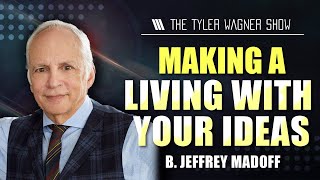
Jeffrey Madoff, founder of Madoff Productions and author of Creative Careers, talks about building a career from ideas. He produced the Victoria's Secret Super Bowl commercial, teaches at Parsons, and believes exposure to diverse experiences fuels creativity. The conversation covers how to actually make money from creative work, the role of dialogue and observation, and why he still believes in physical books.
Chapters
All right everyone, welcome back to another episode. Today we have Jeffrey Madoff with us. He is the founder and CEO of Madoff Productions, a best-selling author, adjunct professor at Parsons School for Design, and playwright. So welcome to the show, man.
Thank you for having me on, Tyler Wagner.
Of course, grateful to have you here. And as our audience knows, love having authors on. Um, so first question for you is, before— or wait, where do I want to start with this actually? What were you doing, like, where you're at now in your career, right? And when you were younger, before college or anything, did you think you would be anywhere that you're at now, or did you have a complete different picture in your mind when you were younger?
You know, I didn't really think about it.
Okay.
Uh, you know, my life has kind of unfolded, uh, and I would say that the driving principle is that I'm seduced by ideas. So I've always gone in the direction where something is appealing to me, that the ideas are seductive, that it's something that I can creatively and intellectually and emotionally grow from. And, but I never had a real plan. So like when I was doing a podcast to promote my book and so on, you know, what was the inciting incident? What started you off on your path? I said, birth. And that was the beginning. And then, you know, after I came out of my mom, who knew?
Uh, actually, okay, so that leads to, um, do you know of, uh, like Jordan Peterson and Sam Harris? Do you know?
I know who they are. Yeah.
Okay, okay. So, uh, one of their debates, they talk about, um, like, I believe— and if they hear this, please don't take this, uh, literally, I'm trying to use my memory here— but I think so, Jordan Peterson believes in free will, Sam Harris does not believe in free will, like everything's predestined. So what do you— do you have, uh, any take on that?
I, I know from experience now that I'm older that wills are not free. You have to pay a lawyer. So I think that, that there is no free will unless you happen to have a lawyer in the family and you can talk them into it.
I like that. That's actually the best answer you can give. So With your— I guess, so you kind of feel like with your life you didn't necessarily have a plan, but was it more so that you were like taking action and then you would, I suppose, like reflect on the action and then continue to move towards the things that you like the most? Is that kind of how you think it played out?
I mean, you know, kind of, yes. I mean, things would just sort of take on a life of their own. Uh, I want to go back to your previous question if I can. Oh yeah, debate. You know, because I had a double major in college in philosophy and psychology.
Oh, perfect.
So there were always these kinds of discussions, uh, and I took a class, I think it was my sophomore year, and the professor said, this is a course in basic epistemology. And I said to him, how do you know? Now epistemology is theory of knowledge.
Okay, I was going to ask that.
So that's, so that's the, you know, the whole questionnaire. So he thought that was a wise-ass answer, which it was, but I thought clever nonetheless. And so we were on the 6th floor of this building, Bascom Hall, University of Wisconsin in Madison. And the professor stood by the window and said, you may see this as the window, but I see that is the door. And you may see that as the door, but I see that as the window. Prove me wrong. Anybody prove me wrong? So I raised my hand. I said, yes. And I went over to the door and I said, I'm willing to exit this class by what I believe to be the door. And a criteria for belief is the willingness to act on that belief. So I'd like to see you leave this classroom through what you call the door.
Hmm, nice. Okay.
There was no way he was going to jump out the window, so he just got pissed at me. But the point being, I kind of feel that way when, you know, that kind of discussion about free will or determinism are you really going to settle anything? No. Is that an indication that, well, then maybe it is free will? Or is it part of determinism that you can't answer that question? And so I think it's sort of like, uh, I, I've— when I was a kid, I used to find those discussions, you know, interesting. Yeah. Uh, You know, it was kind of an intellectual gymnastic. Some might call it intellectual masturbation. And I believe in happy endings, by the way. But I just felt like at a certain point, I had maxed out my tolerance of endless Mobius conversations, you know, this Mobius loop of logic. So I retreated from those kinds of things because, you know, all these, uh, long before Jordan Peterson and Sam Harris, those discussions were being had. Now, it doesn't mean you don't keep searching, but, you know, and I'm not saying it's the case with them, but sometimes people just like hearing themselves talk.
100%. Yeah, I guess there really is no No way of knowing where I was, uh, where I was going to go then, where I actually still am going to go there because I'm just curious. Because you were saying with ideas, so like, I forget, I read this book called— I think it was called Big Magic or something— and she talks about how like ideas come from like a source. So, uh, me being someone who like can never quiet their mind, like my mind is always running and just the ideas never end, like Have you found that there is like something you can do to have your mind create more ideas, or is it random? You know, and that's kind of like a free will kind of question, right? Because like, meaning like, are you purposely trying to put yourself in a situation where you're having these ideas, or is it you're sitting at bay and they're just happening all the time?
Yeah. Uh, Are you high, Tyler Wagner?
No, no, I'm not. I read too much Jordan Peterson though, I would say.
I think that ideas come from— my belief is ideas come from exposing yourself to them. So the more influences, inspirations, things that you expose yourself to, whether you read books, go to movies, go to plays, Walk down the street taking pictures, have conversations with people you don't know and haven't met before, engaging in life, in other words, which is what I find to be the most fun, is engagement. And that's when I know that I'm on the path of something I like because I'm engaged and I enjoy it. And so the more those dots that you take in, and I'm calling these dots those different knowledge points that inspire you in some way or make you curious, because Curiosity is the fuel that drives you to ideas and things to do. And so the more curious you are, the more you take in, the more you take in, the more dots you have to connect so you can make these different constellations up in your brain happen. And I think that's where ideas come from, creativity comes from. And the more you expose yourself to, the more that you can, in a sense, fathom doing.
Yeah, it's almost like a blessing and a curse. Literally what you just said, I've said something very similar because with this podcast we've had about 2,000 guests now, and then with all the authors I've worked with, that's around 3,000. And I have like— it's almost interesting where it's like I can't remember a lot of the information like directly, but I have all these points in my head. So if somebody just asked me a random question, it's like it just fires off and I'm like, oh, I know this person who wrote a book about that that has the answer. So I'll connect. And that's like sitting at bay, but I don't have it at the forefront, if that makes sense. It's interesting.
Oh yeah, yeah. You know, there was this program, uh, about the brain that was done when I was a kid, and one of the things that— probably the only thing from that that stayed with me is that they filled up this big tabletop with mousetraps and ping pong balls on the mousetrap. And then the scientist threw another ping pong ball in that hit. And once one hit and that popped up in the air, another one hit, that popped up in the air. And all of a sudden, there's all— almost like popcorn, there's all this stuff going on. And I thought, well, that's kind of how my brain works. You know, once you trip an idea, and it starts ricocheting off of this and pinballing around and all of that. And that was such a cool illustration, I thought, of just the neural firings that happen with an idea. That it was just really— it was really great. And that image has stuck with me.
That's exactly how it is. Now, how do you quiet your mind? This is a personal question.
Um, you know, I don't know. When I can't fall asleep, uh, I will try, you know, if things are really ricocheting around, I just give into it and go write something or whatever. But otherwise, if I just really want to go to sleep, you know, I realize that eventually I'm going to fall asleep. You know, fortunately I don't suffer from insomnia, but there are times that I don't sleep well, and I'll try to think of mundane stuff and basically bore myself to sleep, or I will try to think of lists of things like, you know, can I name 25 guitar players and what groups they played in? Or what's a series of books that I've read? You know, whatever it is. Could be, you know, running through all the teachers' names I can remember from elementary school and what was then called junior high, now middle school. I mean, just whatever mundane shit that causes me to slow down That's what I do, and then I eventually will fall asleep.
It's kind of like that, um, what is like the 99 bottles of beer on the wall or whatever, or, or as they say, counting sheep.
I think that came from something, a very really mundane thing that you don't have to think much about.
Yes. So what, um, I feel it's, it's funny we kind of skipped over this, but it'd be good to, to at least know now. So what exactly is Madoff Productions?
Um, yeah, Madoff Productions is, uh, started off as film and now video production company where I do, uh, I've done commercials, documentaries, uh, what's now called branded content, and, you know, all kinds of things. If your audience is interested, they can go to madoffproductions.com and get an idea of the different kinds of film work that I did.
And is it, um, and I know they can go there, but is it, um, commercial? So can you name any, or is it all like NDAs with clients?
No, no, I did commercials for Victoria's Secret.
Okay.
For, you know, Ralph Lauren, for, uh, Mount Sinai Hospital.
Oh, I know. Yeah, I know Mount Sinai.
Yeah, yeah, there's one in Miami. Yeah, there's one in— and this was the the group a series of public service announcements I did for bladder cancer, which, you know, I've been fortunate that I've had an incredibly wide range of work, uh, because I never wanted to be slotted or pigeonholed. So I made money from fashion and beauty, you know, working with the clients that I did, but then other things would come in, like I did the 75th anniversary film for Radio City Music Hall. So my film was part of the Christmas Spectacular for 7 years. That was cool, you know, to see that. And working with the American Academy of Dramatic Arts, which was really cool. Or while Cornell sent me to Qatar to do a documentary about Education City, which was this huge initiative that they were doing. You know, that's another way to just stay curious because I'm always having to learn new things and research new things when I was doing a film, because in a way it's like writing an article or a book in terms of putting the story together. And I think if there's been a consistent in my life, and this is kind of weird that you were going there, our kids moved out in the past year. And so my wife's been going through and just sort of trying to cull all the, we look like an episode of Hoarders at home basically. You know, there's just so much stuff you accumulate over the years. Yeah. Well, I had my report cards from elementary school, which my mom had saved and sent, I don't know how many years ago. And I hadn't seen them for 30 years at least. And I was looking through, and the consistent thing, and I called it out to my wife, is, oh, look at this, they're always talking about my writing ability. And that was in second grade and third grade and fourth grade. I wrote a play that was done at school in sixth grade. And it's one of the things I ask my guests in class, if we would have known you when you were younger, would we see any indication of what you're doing now? And the consistent thing for me is I was greatly impacted by my grandfather, who was a great storyteller. And I always wanted to tell stories. I always loved reading comics. I always loved reading books. I always loved seeing movies. I always loved going to theater. And looking back, and we tend to organize things as we look back, you know, we don't really know going forward because you can't reflect on the future. You can only think about it, but you can't reflect on it. But looking back, there were those signposts along the way that it makes sense that I've written a book and written a play and that kind of thing, which is just kind of interesting connecting those dots. And I wouldn't have even thought of that last week. This literally happened in the past weekend when my wife asked me to go through this box of shit.
Well, I think that's actually so interesting because I was having this conversation maybe like a month ago where I think school— I think actually school, that should be kind of the primary thing, is like— and I'm not saying that when you're younger school should be like, hey, you know, 6th grade, you wrote a good paper, this is your path. I'm not suggesting that. But what I'm saying is When you're younger, I feel like a teacher's job should be less about like specifically like grading and, um, I guess giving rules and stuff, and more about observing the kids and being like, oh, interesting, like this one really likes writing, or this one is talking all the time, very outgoing, and more like jotting down that type of stuff. Because I just, just like yourself, like this podcast makes so much sense for me 'cause I was just always the most like talkative. People have always told me I have like gift of gab or whatever. And like, it took me a while to start this podcast, but like, it was very obvious when I was younger that like this would, not podcast per se, but you know, like something with people, right? And my major in college at first was accounting. And it's like, doesn't make any sense. Like if somebody would have observed and been like, Hey, this doesn't make any sense, right? But regardless, I don't know, I just think that would help schools become way more valuable if it was more about observing and less about trying to be like, hey, this is science class, you need to get an A. It's like, well, I don't know, maybe that person doesn't care about science. I don't know, some people—
yeah, I mean, but you don't know. I mean, in principle I agree with you, but when you're a kid and it's a very, very, very small sample that really adheres to an idea that they end up carrying out through their life. Uh, and so I think the essential thing is the observing is important, as you're saying, but it's also really important to expose people to ideas because that exposure, like I was saying before, the exposure is what's so important, you know. And how do you know what you're interested in if you haven't been exposed to it. I mean, one of the things in my class that is very fulfilling to me is there are many students that the class changed what their pursuit was. They thought they wanted to do this. They never even knew that that job existed. You could— they could get paid for doing that sort of thing. They never had any idea of that. And so I think being exposed to as much as possible And then that observation, which is, by the way, putting a lot on a teacher. Agreed. A lot. But I think that if you're talking about the method of teaching, and the teaching should be, I believe, dialogue, observation, as you said, but primarily exposure to a wide range of ideas and then talking about those things. Because I think it's essential to ask yourself, well, why do you like what you like? Or what are the things, especially if you had become an accountant, Tyler, and hated it, but were being paid well and making a good living, are you successful if you hate every day you go to work, even though you're making a lot of money? You know, so what is success for you? And what is fulfilling? And I think looking back to when you were a kid, what really engaged you? What could you do and you didn't totally lost track of time? Because you were so engaged in what that is. And I think those are critical questions to ask. And we usually don't task ourselves with asking those kinds of questions. And I think that those are questions better asked earlier than later in life. Because later in life you have other responsibilities. You may feel, you know, it's the old golden handcuffs. Well, I'd like to, but I know I'm going to replace that income, or I've always wanted to do that, but, you know, I can't really take that kind of a chance. And I think it's great to expose yourself to those other kinds of ideas and really learn what drives you.
I couldn't agree more. I think, I think a formula here is like curiosity, exposure, exposure, observation, and then repeat, right?
So dialogue.
Yeah, dialogue. Yeah.
Yes.
Like, and then from that dialogue, you learn from the previous three, and then you keep repeating. Because it's kind of that thing where, um, I've been asked before, um, like, how do you find your passion or something? And in my mind, it's, it's less about like sitting there and just thinking about like, what's my passion? And it's more about like you're saying, like massive exposure. So if you expose yourself to like 100 different career paths, like you will inevitably at least find ones that you like more than the others. You might not find like your core one, but like you'll know, okay, well, I like being with people rather than alone. Okay. Okay. Well, that cuts out like half of the potential careers, right? So exposure is absolutely key. Um, one question I just don't want to forget to ask. So when you, um, because a lot of our audience would probably be interested in this, so will you use Victoria's Secret, or we can use a different example if you want. It was just Miami Swim Week, so that's, that's, um, so say a client comes to you and they're like, I want to do this commercial, I want to sell this thing. What is the process you go through to create a successful commercial?
Well, there's no one thing, you know, because what starts off is initially, for instance, I'll give you a real-world example. Victoria's Secret wanted to do something around the Super Bowl. And they said, what can you do? And I said, well, What about, what if we had the models and you don't even really see who it is, but they're at a football game. And so you do all these really cool shots of passes being caught, jumping over tacklers, all this kind of a thing. And then at the end, there's a reveal. They take off their helmets, shake out their manes of hair, something you and I can't do. And, you know, That could be really cool. And so the person who I was working with said, oh, that's really cool. Do you think you can pull that off? I said, yeah, I can. Another person in the company said, that's ridiculous. They want to see girls in lingerie. I said, you want to see girls in lingerie. We're doing something actually different here. And the surprise is what's going to make this successful. It's a stupid idea. Anyhow, we did it. And what I did was, uh, in coming up with the idea and then kind of storyboarding it, which is a storyboard is like a comic strip, if you will, it sets up the different shots that you want to do. And when you're doing something like this, which is highly choreographed, I also had stunt people. So I— there's a professional women's football team in New Jersey So we did a casting call through them, and we did a casting call, uh, at Columbia University, NYU, for, uh, volleyball players because they would tend to be taller and leaner like the models, and we had to sort of match body types. So, uh, we set up an 8-foot platform and then a bunch of crash pads, and we'd throw a pass and you'd see somebody dive and catch the pass. It was really cool. And the idea ended up being tremendously successful. They took over all the screens at Times Square, these gigantic screens. So Super Bowl weekend, they kept running it on a loop and it was hugely successful. So that started off with a specific idea around the Super Bowl, talking about the idea, talking about how I could execute that idea. And of course you have to talk about budget and everything else. And we did, and it was really successful. So sometimes you have an idea, sometimes you have to come up with the idea. And as a production company, sometimes I'm presented storyboards from an ad agency, and it's like, well, how would you render this? What would you bring to it that's different? You know, how would you execute this commercial? What are your ideas when you see this? So there's always conversation. And collaboration. And, uh, and, you know, that collaboration and conversation is essential in almost not only all creative pursuits but also business pursuits. And in this case, it's trying to combine the two. It's a business pursuit, creating a commercial, but it's also a creative pursuit. How do we make something that people are going to want to watch and will remember?
100%, and like remark or tell their friends about. That's what I like most about that is, well, first I would definitely watch that commercial, but secondly, um, is the, uh, surprise element, right? So when helmets come off, I feel like that's something where, you know, even if it was when people were watching the game or not watching a game, I'm just picturing myself like with my buddies on the couch watching a game, that commercial comes on they take the helmets off and you just turn to your buddy and like laugh, or you just like share it. It's a shareable kind of—
yes.
Um, interesting. So what is, uh, what was the most— or two questions. So what was the most fun project you worked on? Could be commercial or any other creative pursuit. And then what was the most like successful commercial, um, that you had?
Uh, in terms of the most fun Honestly, the one I'm doing at the time, right? Yeah, you know, because I believe if you take on a job— and doing a commercial is a job, or doing a video is a job— you go all in on this. You try to make it as best you can. I don't know how to sort of make something less, uh, and I have fortunately shot all over the world and worked with some really good clients where I had established trust, like Victoria's Secret or like Ralph Lauren, where I got to do things, you know, and that was fun. And the fun is not just in the execution of the job, it's the people you're with. You can have a fun idea, but every day is miserable because of the people involved in it or the person who's running it or whatever. So I think the job that's the most fun is the one that gets done well where everyone has a good time doing it. And that to me is what makes it fun. It's the people that make it fun. Because you can have the coolest idea in the world, which can be hell to execute. And similarly, in terms of the most successful, I guess you have to ask the question, do you mean the most successful because it generated sales? Is it the most successful because people talked about it and it got seen everywhere? Right.
The sales one, I'm curious on that.
Uh, well, I don't know for positive, but I think that one of the things I did again for Victoria's Secret is we did this— they wanted to do a gift with purchase. And, uh, the interesting thing about the football one was we weren't selling anything. It was strictly image-driven. Where we did this thing with umbrellas. They said to me, we want to do a gift with purchase and we want to do a commercial around it. We haven't done that before. I said, okay. And I said, uh, so can you come up with something? That's what— what's the gift? And they said, it's an umbrella. And I said, uh, okay, yeah, I can come up with something. And they said, what? I said, well, give me a few minutes, you know, I don't know yet. Yeah. Well, this goes back to what we're talking about in terms of influences and things that create the dots in your brain. I had seen Hamilton the week before and loved the— how it was choreographed and all of that. And I had watched a Busby Berkeley movie. Busby Berkeley was, uh, an incredible filmmaker with MGM Studios in the '30s and '40s. He did these crazy kaleidoscopic overhead shots of like 50 women and, you know, their arms and their legs and what they were wearing would look like you were looking through a kaleidoscope. I mean, they were really cool. So I knew I couldn't do something quite like that, but on a much smaller scale, umbrellas are cool looking, so I can use the umbrella as a prop. I like the idea of using the sound. What do you think of when you think of rain, of an umbrella? You think of rain, you think of thunder, lightning. So that gives me an image for the lighting, see some lightning flashes, uh, you hear the sound of the rain and the thunder, and the umbrella had a wooden tip. And so I said to the musician I was working with, I want you to make all of the sounds from the practicals. In other words, things that are actually happening. So we'll record the umbrella tapping, and that's going to be the percussive track. And then the umbrella had a powerful spring, so when it opened, it made this popping sound. And so it was really a cool percussive track with the rain and all that. I had a great deal of fun doing it. I worked with the associate choreographer from Hamilton. She was fabulous to work with, really a nice woman, and and very talented. And we did this piece that was hugely successful. And the video got a lot of views. And I did a number of videos for Victoria's Secret that before videos routinely got millions and millions of views, we were getting millions and millions of views. And so that also drove sales because they targeted it in specific markets so they could track the sales. So I guess that's the one that led to a lot of sales.
That's awesome. Uh, this is kind of— it does connect. Um, are you familiar with Gary Vaynerchuk?
Yes.
Okay, so we had him on a couple years ago, and one of the things that, um, he, uh, was saying— so this wouldn't be for like one commercial, but I, I thought of this when you're talking about the noise that the umbrella makes and stuff— is if you notice now with his, uh, stuff, he has like this pop noise that he has, like, in the beginning of all of his videos. And his reason for it is because with, like, Alexa and stuff, his theory, or I guess, um, approach to it, is we are all essentially going to have our own, like, memorable noises as a brand, you know. So, like, consistently he has, like, a very specific, like, pop noise that happens when he starts his vlog and his other videos. So I thought that was really interesting. So I was just bringing it up because like, say if you were hired to do like a, um, instead of just one commercial, like multiple for like multiple years and like build a brand, that could be one of the things you think of is like a noise that people are like, oh, that noise means Victoria's Secret. It's kind of—
or it could be like a fart.
Yeah, yeah, or anything.
Yeah, yeah, I wouldn't use that for Victoria's Secret, but you know, I mean Look, you know, the interesting thing is you're saying that is what you're talking about is what happens with every movie, every TV show, and everything else is you create a unique theme, and that unique theme becomes the sound for that particular product or whatever. So, you know, when HBO, before a show starts, you'll see the logo and you hit ah, like that chorale thing. So You know, that's been done forever. You know, that, that was on radio. They used to do things like Maxwell House coffee would have the sound of coffee percolating. So, you know, there was always that kind of a thing. Yeah. And, you know, creating a unique soundtrack so you would have a theme. You know, I mean, one of my favorite parts of the James Bond movies— I love the James Bond theme. Oh yeah, it was just so cool. And I love the Mission: Impossible theme. Yeah, you know, and that, that's just cool. And so then the question is, can you narrow that down to a specific sound? I don't know about that, but theming sounds is, you know, something that you think about when you're doing a commercial, when you're doing a movie or whatever.
Yeah, no, it's funny, those two series, I always watch those with my dad. And the other one, have you seen like Austin Powers?
I saw the first one.
That's really all you need to say.
Another cool one, by the way, that's on the level of, uh, Mission: Impossible and James Bond, if you like those themes. Have you ever heard of, uh, the Peter Gunn theme?
No.
Well, Peter Gunn was a half-hour They tried to make it kind of like a film noir-ish detective program, starred an actor named Craig Stevens. Program was, uh, it was okay, not great, but the theme was outstanding, and it got remixed by many musicians, and it was originally written by an incredibly talented composer for TV and movies called Henry Mancini.
Got it.
So check out The Peter Gunn theme. It's really cool, really cool.
Awesome. Yeah, no, because I do love those two. Um, so another question I wanted to ask you is, with— how long have you been a professor for?
15 years.
Okay, so you, um— all right, so I have a lot of questions. I didn't realize. Okay, so what in the last 15 years— okay, and then we'll dial it in. So in the last 15 years like, what changes have you seen in like the college landscape? Like, I know it's like a big question, but I guess it's like with COVID and like everything and people more working remote, like, where do you see, I guess, college going in the long term? Like, more relevant, less relevant? Um, I guess that's a good place to start. And then I want to—
I have other questions, but, uh, yeah, I mean, that's a really big question because You know, we have not experienced something like COVID prior to this, you know, the, the flu that happened in 1917, most of those people are gone, right. So the impact that it had on not just college students, high school students, just on the process of learning, you know, was difficult. Plus, the isolation that people felt took an emotional toll that for some was quite great, a very profound emotional toll. And, you know, when I think back, you know, I'm older than you, you can think back on your high school and college years, the half— most of the fun was outside the classroom. And they didn't have that opportunity. And so the bonding with friends and all of that I think took a toll that we still don't really know how that's impacted us. Uh, so, you know, the certain things that hold true throughout is that there is, uh, always a core group of students who are highly engaged, highly motivated, and, and contribute really well. Then there are those who could, but they're reluctant to speak up. Interestingly, and I talked to some other faculty members too, the students— it was kind of weird— students were more apt to speak up on Zoom because I guess they didn't feel the same kind of social pressure as when they were in person. Yeah, but teaching is a form of performance. Having a live audience, there's also an energy there that not only happens between the teacher and student, it happens among the students when you all laugh at something together, or, you know, when it poses a question and people are raising their hands and they can't really see who's doing what if it's on Zoom. And so I think not only school, but also working remotely or working from an office. We are social beings. And, you know, I think that the novelty of working at home for a lot of people has worn off already. And I think it's also different, you know, when they were writing those articles initially, it was around about people who were in their mid to late 20s. Maybe not married, maybe didn't have kids. So they maybe didn't feel as compelled to want to get out of the house. And they liked the idea that they could sleep in and do things on their own schedule. There's some people work best that way. And just like you were talking about, the teachers should observe the students. Good employers, good managers should observe their workers. How does that person work the best. Not everybody works the best from 9 to 5. Not everybody works the best in a crowd. And so I think that, you know, I'm going broader than your question, but I think that we don't yet know the toll and/or benefits from— because we're still going through this.
Yeah, for sure. No, that makes sense. What are— with, uh, over the 15 years of your teaching, have you noticed any, like, commonalities of students that like struggle the most and then excel the most? Like besides obviously the obvious of like, you know, if you do your work and study, then you'll— but meaning more, I guess the question is like with students that are trying to like really find their path, because that's kind of what college is meant for, right? It's kind of like this interim between like childhood and then adulthood, and it's like here you got 4 plus years to like at least try to figure out your first step into the real world. So is there any commonalities you notice of students that like do really well and then students that don't?
You know, I've thought about that a lot and thought back on my own college years, and I think that, you know, the, the simple bromide that people are people there are those that are engaged and ambitious. There are those that it takes more to bring them out. And what I try to do all the time, and it's easy on Zoom because I can see your name on the screen. And so I can say, Tyler, you know, I'd like to know, what do you think of that? And I don't wait for people to raise their hand. I want to get them involved and engaged in the discussion. And so that's fun for me to do, and it makes the classroom better. The more people are contributing their ideas and their points of view, the more engaged the whole class is, and that's really good. I don't know that the essence of a college student has changed. I think that, again, the emotional toll when you're entering a world of uncertainty But, you know, when you leave school, you're always entering a world of uncertainty. Now, the stakes seem to be higher than others. But when I think back to when I was in high school and early college, and when I was coming of age, President Kennedy was assassinated, Martin Luther King was assassinated, Malcolm X was assassinated, Bobby Kennedy was assassinated. Detroit was burning, the Bronx was burning, Chicago was burning, Los Angeles was burning. It was horrible. And it was really hard times. Now, you know, unless you're my age, you may not have a memory of, wow, shit got pretty heavy and bad then too, because it seems like— and there wasn't, by the way, a 24/7 news cycle. And that's another thing. So you weren't— the level of repetition that we're hearing these things, I don't think we know what that does to us either yet. But I don't think it's good.
No, you know.
And so I think that there's a lot of those things that temper our views and what they are. And, you know, I forget what the statistic is, but there's so much more information that is thrown at us within a year's time that used to be essentially a lifetime of info. And we can't process that stuff. You know, we just haven't evolved to that point of being able to process. What we do know is that we're very polarized. And we're better off when we're not. But we are. We know that with the internet, you can find your own truth. And there is no such thing as alternative facts. There's only facts. But if you lack trust in institutions, uh, if you just speak to people who agree with you and you stay in that kind of siloed echo chamber, the divide becomes wider and wider, where I believe we actually share much more in common than we have different. But those differences have become such points of contention that they seem near impossible to overcome.
Yeah, I agree 100%. The extremes are the loudest, right? So they seem bigger than they are, but in reality, we are— we have way more in common than not. Um, so one of the last things I want to touch on and dive deeper in is, is your book. So what, um, what actually sparked, uh, like, why did you write the book?
The reason I wrote the book was, uh, So many people said to me, you know, your class is great, but you've got a very small audience of students, but these are ideas that ought to be shared. I believe ideas, knowledge ought to be shared. So I thought, what's a good way to do that? And I thought a good way to do that is do a book. And I wanted to make the book true to the class experience. In a sense that there's my narrative and my career, but embedded in that are examples from the many really great guests that I have had. So there's no— it's not like everything is in agreement. You can hear this point of view here, an opposing point of view there, and then you decide what makes the most sense to you. And each chapter has a kind of workbook where you answer questions. And what a benefit that I, I was hoping people would do that. But a benefit that ended up happening as a result of that is that students or adults who bought the book, I got a number of emails where they were saying, I kept a separate journal of the answers to the questions so I could refer back to it when I finished the book. It's like I had this whole journal of my thoughts on whether I should be an entrepreneur, whether I should, you know, because there's nothing the matter For instance, you know, that your work finances your hobbies and you get your fulfillment from your hobbies or from your friends or your family or whatever. There's no one way to do any of this stuff.
Yeah.
And, you know, colleges were started to create good employees.
I know.
And that was the point of it. You know, there's a lot of mythology around being an entrepreneur. And the thing that most people don't realize about being an entrepreneur is it's hard. It's tough to be an entrepreneur. And if you sign up for the entrepreneurial life, and I say that, you know, I'm an entrepreneur when people ask why, because I'm unemployable. So I had to start my own businesses. And, you know, but the entrepreneurial lifestyle is one that there's so much mythology about. At this point. And it's held by many in such regard because they don't know what they're talking about. And most people aren't cut out to be entrepreneurs. It's the ups and downs financially, the ups and downs emotionally, the tolls it can take on you, the tolls it can take on the relationships that you have and all that are all things to be considered, you know, when you embark on an entrepreneurial career. But, and all of that kind of thing is addressed in the book. So it's a lot of questions. It's not a how-to in the sense of do step 1 through 10 and you'll be successful. It's a how to ask yourself the right questions and how to really examine your decisions and try to make the best decisions that suit you the best and do the best for you.
Yeah, I love what you said there because it's something I heard Similar, Tony Robbins says like you settle for your standards. And when I say standard, I'm not using it in a way in this context of like one's better or not as good. What I mean though is you said unemployable and people will ask me like about the entrepreneurship or like I work out every day, things like that. And it's not even hard for me to do these things. It's actually that I literally can't, Like, if I don't work out in the morning, my day just sucks. Like, for some reason, I'm just like programmed like that. So it's not actually that much effort to do. It's not really an option. And the same thing was becoming an entrepreneur and dropping out of college. I realized very early on that, like, being at a desk with a suit and a tie— like, I hate ties, first of all. I don't know why, I just do. But regardless, like, just I can't do it. Like, it's not possible, um, for me to be in that type of environment. So like, doing this was inevitable. And so it's interesting when you flip it like that. It's almost like, so you expose yourself and then you start to realize what are the things that actually feel somewhat effortless. And that might be a kind of a point that you realize like, oh, maybe that's a path I should take because I just spent Like podcasting, I could do this for 10 hours a day and I'm lit up the whole day. This doesn't feel like work to me, you know? But like on paper, people would classify this as, oh, you did a podcast, like that was work.
Well, I don't think it's, I don't think it's effortless. True.
Yeah. Not completely. Yes.
Yeah. It's that you're fully engaged and enjoy what you're doing. So it doesn't make any difference how long it takes. What's hard is when it feels like it requires effort that you don't want to put into it because you just don't give a shit.
Yeah.
Or, you know, but when you're doing something that you really enjoy, then it seems effortless because you're engaged with what you're doing. And that doesn't mean you don't work hard, you know. Doing the play that I'm doing is a ton of work, all of which I love. So I don't think about it as work. And, you know, there's that old question which I think is valid, is would you do what you're doing if you weren't being paid? Do you like it well enough, or is the only reason you're doing it because you're being paid? And again, you know, that's not necessarily a bad thing. There are practical concerns that people have, you know. So I think that, that effortless, uh, I think more it's more that it feels easy because you love doing it.
Yeah, 100% agreed. And that's one of the ways to easily measure that is like, when you're doing it, are you looking at the clock the whole time, or are you realizing that the sun is now coming down and you didn't even notice that?
Or, you know, yeah, it's like, I kind of can't believe 3 hours passed or 10 hours passed or whatever. Yes.
Um, so because a lot of our listeners, they're either authors or people that want to be authors, what was that, um, like whole process, uh, for you like, meaning, um, finding a publisher and also the writing of the book? Like, how did you, uh, what was that creative process like for you to finish it?
Well, the first place it started was I realized that writing the pitch for a book, the treatment, is, you know, way different than writing the book. So I actually met somebody quite by accident that she— that's what she does. She's a ghostwriter. She writes the books, but she also writes the proposals. Oh, great. So, so, uh, she's— I realized when I saw— I asked to see some treatments and I realized, uh, oh, this is nothing like I would write. And she said, you're gonna hate the treatment because it's all hyperbolic bullshit because it's how they're going to market and sell the book. So that's what a treatment is. Why should the publisher buy this book? Because they want to buy books that sell, you know. So why will this sell? So in the case of my book, there's a number of high-profile people interviewed. So the hope is, like, Daymond John, who's also a friend, posted about my book. Tim Ferriss posted about my book. That gives you good PR, if you will. And, uh, again, it has nothing to do with what the contents of the book are. And the publishers want to know, well, you've got Daymond John in there, he's got a big megaphone, will he give you an endorsement? Will Tim Ferriss give you an endorsement? You know, it's that sort of a thing. So I hired somebody to write the proposal because I knew that I didn't know how to do it and that doing it would exhaust me and bore me about the whole process. And I wanted to write a book that had some real life to it. And that's where I would be best putting my energy. And you can find people at all different price ranges to do it, but it's a good thing to do. So I hired Jody Lipper, who was fantastic, who did it. And I wrote the book. And I wanted to write the book. And I know how to write. But I also know that I need a good editor. I need an editor who could keep the path flowing. You become blind to your own work at a certain point. So you need somebody who can say, well, you know, you said this 3 pages ago, or you said essentially the same thing 3— you know, we become blind to it. You can't judge your own stuff. Other people have to get eyes on it and give you comments, knowledgeable people. Need to do that. And so when I, uh, when we sold the book to Hachette, I hired a good editor, and it was great because I learned from her. She kept it really on the beam and kept the book focused. And, uh, so it was, it was a very good collaboration. And I ended up with a book that I'm proud of. And, you know, I don't have a problem saying, I think, you know, to the right person, I think this book would be of real value to you. I think it's got a lot of really valuable ideas, thanks to the guests that I have and all that. I'm proud of what I did. And, but that's the process. First is a proposal to sell it. And then when you get that, when you get the book sold, And I would say don't write the whole book and try to sell a finished book. You sell from that proposal or treatment. And then working with a good editor when you're writing the book so that it's not repetitive, it's not boring, it doesn't meander. And you need to ask yourself— and I think this is true in every creative field— ask the question, is this essential? And anything that's not essential, cut it out. And my years as a film editor really taught me just how to be ruthless in terms of— because I write with velocity and the stuff that I edit has got a speed to it. And so you want to sort of shed all the ballast and you just want to keep the things going that propel things forward. So to ask yourself, is this essential? Whether you're talking about a sentence, a paragraph, or even a chapter is critical to doing good creative work. And that's true if you're painting, if you're doing a play, if it's a piece of music. What you take out and what you leave in is critical to the creative process.
I love everything you just said. I agree with all of it. People don't realize like how if there's just like an editor, like how much an editor can transform a book, like it's wild. Um, just helps a lot. And then what you said too, where, um, it's kind of the art, and from my opinion, when I wrote my book and just seeing a lot of our clients go through it, is you want to get everything out of your head and it's like a jumbled mess, and then you organize, and then essentially you chip away everything that doesn't need to be there, and then you're left with the book. And I think where most people mess up is they actually view it as something that's not a creative process and more of an orderly process. And they try to figure out the title, the introduction, and they like try to actually write the first draft as if it's going to be the book. And it's not. That's not how it happens. It's way messier and way more creative than that. So yeah, I don't know. I think exactly how you said it is exactly how I think it should be done.
I give you a— what I think is kind of a cool real-world example. Yeah, because people tend to, uh, fall in love with their own stuff. And, you know, as this phrase goes, you have to learn to kill your babies. And so when we did the first table read of my play, there's a scene where Lloyd Price, who's the main character— Lloyd's in the Rock and Roll Hall of Fame and an amazing, amazing person. That's a whole other podcast. About him and the story behind him, which is incredible. So there's this scene that happens in Australia and he gets high for the first time and it's really funny and the actors are reading it and they're cracking up. And, you know, as the author, I'm thinking, oh, that's great. You know, those punches are landing. But something was off. And we take a break after the scene. And I mean, there was a lot of laughter. And so I spoke with the director, Sheldon Alps, who's great. And I said, Sheldon, what did you think of the Australia scene? And he said, well, it's an interesting story. And it's funny, you heard everybody laughing, but is it essential? And I said, what do you mean, is it essential? What does that mean? He said, does it either reveal more about the character or move the plot forward? I said, no. He said, then it's not essential. And boom, There went 7 pages. Damn. And he's right. And that has become— I had never articulated it that way, but that's become my mantra. And it's made me a better writer as a result. Yeah.
And to go even deeper, I think that's a lot of times people when they write, they'll like try to actually lengthen things and use bigger words to try to make it sound smarter or something, when really the best way is to be as short almost and to the point as you can. Right. And kind of knock away those things. And what's your thought on this? And curious with how your book was written too, with it is like when people ask me, especially nonfiction, like business books, they'll be like, how much of it should be tactical and how much of it should be story. And my response is always like, I think it should really be like 95% story with like tactics, like, or like, or values sprinkled in. And I like the way you said your book set up like action steps, like at the end of each chapter, like journal. So like, what are your, what are your thoughts on that? Like, do you think story above all, or in some cases, like tactic before story, if that makes You see what I'm trying to ask?
I do. And I don't see them as two separate things.
Okay.
Yeah. So let's take a really simple story. You know, you take the Three Little Pigs. Okay. So there was a tactical approach to ward off the wolf, right? You know, pardon?
Beautiful example, I say. Go ahead.
Sorry. You know, and well, I think because, and again, by the way, I'm using a story to explain a tactic. And the Three Little Pigs, you know, one builds a house out of hay, the other one builds it out of I don't remember what, and the other one builds it out of bricks, which is the one that stands up to it. So there were three different kinds of things that were done. And if you look at stories of that, or like Goldilocks, where this is too cold, this is too hot, this is just right, these are all tactical choices. So I think that, you know, a James Bond movie is all great story with the tactics of how do they defeat the bad guy who's going to take over the world. So I think that good stories and tactics are hand in glove. So if you're writing a nonfiction book about business and you can illustrate it with a good story, and so it becomes tactical because otherwise it's dry and boring. You're not writing an instruction manual. You know, you're trying to engage people and you engage them with story. And if you are effective in your writing, those strategies, those tactics are embedded in it. That makes sense?
It does, 100%.
Yeah.
I think because the opposite, or not the opposite, but that I had always separated them because in my mind, like if it's only tactic, that's boring. And then if it's only story, that's not boring, but then there's no necessarily actionable step. But essentially what you're saying, in fact, in most cases, I'd say if you focus on story, inevitably tactic is within the story.
Exactly, exactly. And that's why I use children's book examples. You know, what was Hansel and Gretel's tactic for finding their way home? Leaving breadcrumbs, right? You know, I mean, that was their tactic. So all good stories involve tactics because all good stories, there's some kind of a moral to the story, there's some kind of resolution to the story. Well, how did you get there? There were various tactics involved in, in getting there. So I, I, I always think it's really important to ask So what do you mean by tactics? You know, and, and again, I don't see it as an either or. I think that it is an and, and it's very hand in glove because you can write the most concise instruction manual and bore the shit out of everybody who picks it up. You know, or you can tell a good story that has the tactics embedded in the story and you've engaged people. And that engagement, you know, it's like the old story about a guy says that he has a donkey and the donkey will do whatever he wants it to do. And the guy says, yeah, it'll do whatever you want because they're stubborn. You can get it to do whatever you want. And the guy says, yeah. He says, well, show me. And the guy picks up a 2x4 and whacks the donkey in the head with it. He said, well, what'd you do that for? He said, well, first you have to get its attention. So all the strategies in the world fall apart if people don't engage with those strategies because it bores them. So I think story is the way that you can explain and educate about tactics and keep your audience involved. Yeah.
Then there's so many different attention grabbing things. But, um, so I want to— last question for you before I ask you where people can stay in contact with you is, what would you say, uh, for your book Creative Careers, like, what is— what are like, um, or what is the biggest thing that people are going to get out of reading it?
Tremendous pleasure, gratification, and a feeling that they can accomplish whatever they would like whenever they would like. They will have more fulfilling sex than they've ever had, make more money than they ever imagined they would make, and their life will be better on every single level. So if they buy the book, those are just some of the treats that are awaiting them by the time they get to the end.
Hey, I couldn't have said it better. I'm sold.
I will say on a serious note, One of the things that I do think is really important, and as an entrepreneur, I suspect you might agree, is one of the most important character traits to have if you're embarking on a creative career or just in dealing with life, because it can throw you some wild punches that you don't expect, is having perseverance. You have to be able to persevere and you have to be able to adapt. And if you don't have those character traits, you're in for a world of hurt as you pursue things. You know, so I think that that part is really important.
Oh yeah, I couldn't agree with entrepreneurship. You'll somehow, you'll have some of the highest highs ever and then some of the absolute lowest lows and the ability to adapt I mean, 100%. I actually think about that a lot with the publishing space. Like, you know, I don't think books will ever go away completely, but they're definitely going to change, like the format of books and how we even— it's already changed kind of with audiobooks and ebooks and stuff. But like, I think about 20 years from now, like, what will a book— like, what will a book be like 20 years from now?
You know, like, I think it'll be like what you're— what you read now. The interesting thing is, is that actual books way outsell ebooks and audiobooks.
Yeah. There's something like sentimental or something about it. Like I do it. I don't think a physical book, well, who knows? I think like people right now that are under 20 years old, I don't think have a lot of respect for physical books. I'm not trying to generalize or box people right now, but I just think that like, I appreciate like a nice physical book, right?
And oh yeah, I, I mean, I, I do, I, I do too. I, I love books. You know, my office is floor to ceiling. One of the things I always wanted was floor-to-ceiling bookshelves with like a library ladder.
Yeah, I want that too.
And I, and I had that, and it was, it was, it was really great. And I think, you know, there's something This gets into a whole other, other topic, Tyler. So I don't know if you want to go there, but there, there is some—
just know, I'll just say this for everybody watching, it's getting dark here and my light went out in this room, so you might not see me in about 10 minutes. That's the only thing I've been thinking about.
Yeah, I've noticed as you've gotten grainier and grainier, thinking, my God, what's happening to Tyler? People want physical things, and the ephemera of a download— okay, so, you know, when I was coming of age, record albums, okay, an actual album was really cool. And so when a new album came out, you know, when a new Beatles album came out, when a new Hendrix album came out, that was a social event, and you had a physical thing. Well, now it's you click a link and you download something. And you're listening with earbuds. You're not getting 10 friends together to listen to a new album. And so there's also that social isolation that happens. And it's more fun to enjoy things with other people. And so I think that books— Here's my book. It's a physical thing. It's a thing I own this. It's not— I didn't download it to my tablet. You know, now, by the way, I do read ebooks, but mainly those I want to cut and paste when I'm interviewing an author. Otherwise, you know, physical books, I just like physical books. And it's not just a function of age. Physical book sales have been going up now for years, which is really interesting. Similarly, the largest selling category in music now, the largest growing by percentage, is vinyl. Oh, wow. So, you know, it's still a small part of the business, but it's been growing exponentially for the last 10 years. People want things. And I think that that's really important. And I think that, you know, We don't own links. You know, we own stuff, physical stuff, and we like that. And nothing to me seems more creepy than the notion of the metaverse where you have your own avatar and it's like watching WALL-E. You know, if you ever saw that, which was great. You know, it's like you want to engage with the world in some kind of a fantasy thing online. With an avatar that is you, and you call that being social?
Oh, I agree.
You know, it's kind of fucked up.
I agree.
You know, so I think that those— so I think to answer your question about books, they're not going to go away because that, you know, the big disruption in books was not ebooks, it was Amazon. And Amazon was a big disruption because they sold them for cheaper and they delivered them to your house right away. And that was the big disruption in books and that eliminated lots of independent booksellers, knocked some other big sellers out of business. And I think that that's unfortunate, but you notice that there is a return by people younger than you who want that physical album, who want a physical book, who, you know, because there's an ownership that comes along with that that makes it unique as opposed to downloading it from the internet.
I, hey, I love, I'm going to clip that because that makes, I feel very much more comfortable about my publishing company into the future is what I'll say. That's awesome. Because yeah, that's— I just kept thinking about that. I'm just like, it would be sad. That's actually what I always came— my conclusion with it was, I was like, it would be sad if books went away. Like, that would be crazy. Like, the world would be not as good, you know?
Oh, I agree. And I like knowing— I like knowing that I've read this much, you know, and I've got that much left. You know, I like the physical nature of it. And I think that that is cool. I like the feeling of paper. I mean, I like that stuff. Now, again, if it was just me saying that, then it's like the older guy saying that. But when you look at the trends in sales of these things, you realize that the physical elements like actual books, the sales are going way up. Now, that doesn't necessarily mean, by the way, that people read the books, whether they download them or buy them. I had a big lesson that I learned some years ago, which is I feel good buying a book and have a full intention of reading it. And then it's just in a stack and I haven't read it yet. I'm still buying more books. So I, because it somehow made me feel smarter that I was just buying that book I wanted to read. And so I stopped buying books until I only had a couple left that were unread, and then I would allow myself to buy more. So I may have, you know, 200 in my cart, but, uh, you know, I'm not buying more until I read the ones I have.
100%.
I— when I—
it was The 4-Hour Workweek, that first book, I bought like 20 books after I read that. I just went like on a rampage, and then I realized, I was like, all right, dude, you haven't— you've read like one of these.
Yes. Just relax.
Um, but no, I actually have a friend who does that with audiobooks. He like— I'm not even kidding, he probably— he has thousands in his library, so I don't even know how many a week. Let's just say like, I don't know, 10 a week or something. And he'll just— he, he will finish some of them, but a lot of them he'll just listen to like the first 10, 20 minutes, and then he moves to the next one, and then the next one, and then the next one. And then I don't know, sometimes he comes back around and finishes one, but He, um, that's just how he likes to do it, is he just, I guess, likes little pieces of a book at a time, and then he just kind of goes all around. But, um, so yeah, let me, uh, because I am starting to become a ghost now.
This should have been the Halloween podcast.
I know, and I wish. So that light out there is working, but this one's not. Um, so Last question for you is where can people, like website and social media, where can they stay in contact and grab your book?
Well, my book Creative Careers: Making a Living with Your Ideas is available at all fine booksellers. You know, so you can buy it on Amazon. And if you feel it merits it, leave a positive 5-star review because then hopefully more people will buy it. And that's my bald-faced plug for the day. You can connect with me on LinkedIn, same name, be Jeffrey Madoff. And I post things from my class and quotes from my guests and so on that you might find enjoyable. You can also check out @acreativecareer, the symbol, on Instagram where it has quotes from my class. And, uh, matoffproductions.com where you can see my video work, and @matoffproductions on Instagram. And then finally, one other thing I do for the sheer enjoyment of it is I walk a lot, and I walk every day, and I take pictures because New York is like this ever-changing banquet of smells and sights and everything else. And so Jeff @jeff_madoff are black and white pictures I take every day in New York of just New York City life. And I just love doing it because it keeps my visual chops going and it's just fun. And so if you're curious about New York or you like photography or black and white photography, you can check that out.
That's awesome, man. Thank you again for coming on. And, um, yeah, man, just really appreciate it.
Well, I appreciate it. It's a lot of fun, Tyler. I enjoyed it thoroughly. Thank you very much.
More from Tyler


Catherine Nikkel : THE STORY EVERYONE HAS BUT HASN'T TOLD : The Tyler Wagner Show #1120



Scott Ritzheimer: Bring Predictable Success to your Organization | The Tyler Wagner Show #1115


Fred Moskowitz: A GUIDE TO GETTING STARTED WITH IN MORTGAGE NOTES | The Tyler Wagner Show #1113

Mark Podolsky: From Land Investor to Full Time Success How I Made $90,000 Cash in Real Estate


Mark Podolsky: How to achieve a 300% return on investment my foolproof strategy

Mark Podolsky: How to make passive income selling raw land the irresistible pricing strategy