Brian Keating: The Twisted Universe | The Tyler Wagner Show #1048
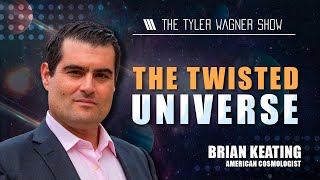
In this episode of The Tyler Wagner Show, host Tyler Wagner interviews cosmologist Dr. Brian Keating, a UC San Diego professor and science communicator. Keating introduces himself, explains his work ranging from observational cosmology to teaching, and describes astrophysics in plain language. He announces a meteorite giveaway for his mailing‑list subscribers. The conversation moves to his early fascination with telescopes, the historical lineage from Galileo to modern cosmology, and his perspective on the multiverse, emphasizing that it is a speculative framework lacking direct evidence. Keating distinguishes between belief and evidence, using gravity as an example, and discusses the simulation hypothesis, its philosophical overlap with religion, and the difficulty of falsifying it. He then details his three books, the varied publishing routes (traditional, service, self‑publish), and his audiobook project that records public‑domain scientific classics (e.g., Galileo’s Dialogue) through his company Big Bang Productions, including rights acquisition and future AI‑driven “artificial Galileo” ideas. Keating shares insights on the scientific method, the importance of falsification, and the role of collaboration and networking in the podcasting and author community. He closes by promoting his mailing list, social media, and upcoming talks, reiterating the meteorite giveaway and his commitment to making science accessible.
Chapters
All right, everyone, welcome back to another episode. Super excited for this one. Today we have Brian Keating with us. So welcome to the show, man.
Yeah, it's great to be with you. I like, like, listen to your podcast and follow you online. It's great to finally be there talking live.
Yes, man. Thank you. So, yeah, to start us off, well, before I ask the first question, can you just tell us a little bit more about you and what you do?
Yeah. So I am an— I'm a cosmologist, so I work on hair and nails. And it looks like you could use a little help with both, Tyler Wagner Wagner.
Oh, he's already drilling me.
I'm sorry. I can't. I can't help it.
I like it. Well, the nail right there.
Young and handsome, man. Yeah. No, no worries. So I'm a cosmologist, so I study the origin of the universe. The evolution of the universe. I apply experimental techniques to measure things like distant galaxies, stars, planets, even asteroids and meteoroids and things like that. So from the biggest scales in the universe to the smallest scales. I've been at UC San Diego as a professor for— this is my 18th year here, and most of my time I'm teaching in one way or another, either it's, it's, it's via my students, undergraduates, PhD students, or I am teaching via my YouTube channel, Dr. Brian Keating, or try to do a lot of exposés on physics from the perspective of someone who's actually looking through telescopes, not someone who's waxing philosophical about wormholes and black holes and other kind of holes. I don't know, but the whole notion of what is possible to learn without as much hype as typically gets applied. That's what I do for on a daily basis.
Got it. Okay. Um, and what's funny is you may have answered it somewhat in there, but this stuff is so over my head that I'm still gonna ask. So how would you describe, like, what is astrophysics? And then I have another question I want to ask, but what's astrophysics?
Yeah, so astrophysics is the study of the stars— astro— using the principles and techniques of physics. So using, uh, telescopes, using computers, using, uh, the human brain, which is a type of computer, an infinitely complex computer, uh, in some ways, and applying those tools to understand the origin of the universe, the biggest thing that there possibly is. Perhaps, are there multiple universes? That's another question we think about a lot. All the way from the biggest scales down to the smallest scales. And that actually reminds me, for your viewing audience and your fans on Instagram and wherever else, I want to send you all who are listening out there in the Tyler Wagner Authors United and the universe of authors, I want to send you a meteorite. So this is actually a fragment of an asteroid that blew apart, was formed first of all 4 billion years ago in our region of the galaxy and orbited around, eventually crashed into Earth, we think about 6,000 years ago and landed in Argentina. And it's made of highly magnetized and magnetic materials, semi-exotic materials, and it's actually from space. And I have the authenticity certificate to just prove to you out there if you should doubt my veracity. So to do that, I can only send it since I'm a humble professor at a public university, University. So I can only send it to the US only. But if you go to my mailing list, briankeating.com/list, you can enter in your address. You can join my mailing list if you're not in the country. But, but if you are, I'll send you— if you're one of the first 100 people to do this and, and also follow me on Instagram, which is Dr. Brian Keating, I'll send out a meteorite. And I'll send you one too, Tyler Wagner.
All right, I was gonna say that. And that was actually my question. Is there a limit? So the limit, it's the first 100?
It's the first 100. Yeah, you have a huge audience and millions of people follow you. So yeah, kind of try to make it random.
But, uh, but yeah, hopefully, hopefully I might even, uh, I'm not even kidding, for all the listeners, I'm just letting you know, I might pull a little fagazy fagazy here because I might have all my family message you first to make sure that we get— we're gonna piece together this whole thing and have the whole thing. I have a big family. So all right, guys, I won't do it. That's awesome. I mean, my brother, I'm gonna I want to make sure he's the first. Oh yeah, yeah, yeah. Regardless of the size. So, okay, so what I want to ask next is what were you, when you were, and this is kind of typically my first question, but I always like to find like what's the root of things. So before you were doing any of this stuff, astrophysics, like when you were younger, did you see yourself doing any of this or is it completely different than how you saw life?
You know, I always say I never thought I would be doing it any more than I thought I'd be you know, an ice cream taster or a wizard or, you know, something like that. You know, it's like I do it for free. I would, you know, I'm a public, you know, employee, so maybe it's as close to free as possible. Not like those private Ivy League school professors that I work with. But the point being that it's a job that I, you know, that I love so much that I did do it, you know, as a kid with a tiny little telescope. Like if you're listening, I'm holding up one of my first telescopes, just a tiny little, you know, $20 telescope that allowed me allowed me to see the same things that people like Galileo, Isaac Newton, and other people had seen in the exact same way that they saw it. So what really is interesting about astronomy, unlike other branches of science, you know, including studying the brain or studying the microscopic subatomic particles, is that you can actually feel the visceral experience of the very first people who saw the very same things that you're seeing through a small telescope. In other words, when you look up with a telescope and you look at the moon, you'll see the exact same craters that Galileo saw. You'll see the rings of Saturn that he saw. You'll see the moons of Jupiter that he discovered. And they were kind of my first tutors, these authors going back, you know, to the, you know, 1600s and having these long dead people have a conversation with me throughout history. Felt like I was along with them for the very first time. And you can't do that with, you know, unless you happen to have a Large Hadron Collider in your basement, you know, which I'm doubting. You know, you don't even have a meteorite. I doubt you have a particle collider in your bedroom.
I don't even know what that is.
Yeah, we'll do a follow-up podcast. We'll get you one of those for the next one listener. I'll send out a particle accelerator. But you can't do that. You can't experience, you know, what does it feel like to discover penicillin for them? It's very difficult to do that. On the other hand, you can see all these phenomena even from New York City, even from the East Coast, Miami, wherever you're listening to this, you can see it and feel it. And that's the important thing. And so getting connected to these wonderful authors, these thinkers, and realizing that they are human beings. They're not these— they're not aliens. They're not otherworldly supercomputers. They're human beings. They have human emotions. And you can feel those same emotions, even if you can't reduplicate those same equations or the same experiments.
Got it. So you mentioned one thing earlier too, is, uh, I think you said duplicate universes. So when I, um, I think it's come up probably multiple times actually on, uh, I listen to a lot of Rogan, and he— do you believe in the thing where, and maybe this is what you meant when you say multiple universes, but where there's like other— there's multiple of us Right, so it's like there's 100 Tylers in other universes. Does that make sense?
Yeah, well, yeah, you're shortchanging it. Yeah, it's way more than that. Yeah, so that's the theory of the multiverse, which is really a continuation of what is known as the Copernican principle. So Nicholas Copernicus was a Polish scientist in the 1400s and 1500s, and he came up with this idea that the Earth is not the center of the universe, which many people had conjectured to be the case since antiquity, that the Earth is the heaviest thing and everything falls towards the heavier center of things, and therefore the Earth being the heaviest thing, everything falls towards it, so it must be in the center. And this was just, you know, thought of by Aristotle and other geniuses, but never tested, which is kind of amazing. They just assumed that this was true, but they never went out and verified it experimentally, observationally, astronomically. So once that was postulated, then it fell to people like Galileo, my superhero. And what he did is he tried to collect evidence using a telescope, using a similar kind of thing as this little, you know, one dreams is to have Keating brand telescopes, you know, I can do merch and stuff, you know, someday, maybe we'll do it, we'll do a collab on Instagram, but I am in, man.
That's easy.
So the conjecture was that, you know, the Earth is just a planet. And the Earth not only is just a planet, but the Sun is just a star. And this was heretical back in 1600. In fact, Giordano Bruno famously conjectured that every single star was a Sun like the Earth, like the Earth's Sun, the star that seemed to orbit around the earth. And that was, that was heretical. So he was actually burned at the stake for that in 1600. But then later, Galileo came up with some what he thought was proof that the earth was in motion. And not only was it in motion, it was orbiting around the sun. It took hundreds of years or more to prove, and then he got into trouble with the Catholic Church. As I recount my first book, Losing the Nobel Prize, and it wasn't really that surprising that people would then take this notion that we're not the only planet, we're not the only star, uh, the Milky Way galaxy is not the only galaxy. Why could there not be other universes that contain all those other objects in some other form? And in fact, once you admit that there could be one, it's very difficult to say there couldn't be an infinite number. That's why I said, when you said there's 100 Tylers, you know, there's not only like 100 Tyler— there's 100 Tylers that host a podcast called Into the Impossible, there's 1,000 Bryans that host Authors Unite, you know. So every possibility plays out in this scenario called the multiverse. Now you have to ask, is that scientific? And what are the reasons why people think there could be multiple universes, of which ours is but an infinitesimal speck according to these thinkers? And actually, that is the branch of science, of physics, of cosmology that I am most interested in and most participating of. And, and that is the search for the origin of the universe. Was it a singular event? Was it multiple events? Are there multiple universes? That's what my research focuses on, no pun intended.
Wow. Okay, so what are your thoughts on that?
No, um, yeah, usually it says someone say, I got a simple question, you know, can you explain the multiverse? Yeah, I mean, it's, it's basically, it's a consequence. It's not really a scientific theory, you know, like people ask me, do you believe in the multiverse? Or do you believe in global warming? You know, I don't like say I believe in things. Like I say, you know, here's like this, if you're watching, you know, you'll see this, it's a crystal ball. I see I'm upside down in it and then I can get reflected back and forth. Anyway, this is my crystal ball, I look into it. But if I drop my crystal ball and I catch it, I don't say like, I believe in gravity. No, I have evidence for gravity. I have evidence for astronomical processes that blew up a star that created an iron-nickel-cobalt-turbium meteorite fragment that 100 of your listeners will get. Um, etc., etc. So I have evidence for those processes, but the multiverse is very flexible. It accommodates an infinite possibility, um, uh, contingent possibility. So there's no one particular measurement which will inscrutably reveal every aspect of the multiverse as solidly as we have evidence for evolution, global climate change, and the theory of gravity. So it's a different type of science and it almost borders on religion. It really, and you know, I, you know, you don't ask, people normally don't ask, I happen to be religious, I'm Jewish in my case. Um, I don't sit there and say like, I have evidence and proof of God, cuz if I had proof of God, then why is there more than one religion? Why is there more than one God? Why is there, and I, you know, so I don't debate things that are a matter of almost like taste, right? You can't do, I happen not to like fish either, which my kids always tease me about. Always wanna sneak in like some tuna. Into my veggie rolls or whatever. But I can detect, I can detect like 1 milligram of tuna, you know, from like a mile. I just hate it. But you can't— there's nothing you can do to convince me of that. Like, I should really like tuna. No, I always say, Tyler, by the way, you know, if you like fish, people always say like, why don't you like fish? And I say, what's the highest compliment that you can pay to someone's fish? You say it doesn't taste like fish, right? It's got chips, it's got that batter. It's— I just skip the middleman, Tyler. I go straight to the I don't eat the fish. But anyway, the whole point is Religion asks you to accept stuff on faith, and that's fine. It doesn't ask you for proof or evidence. I know that some of your listeners will probably say, oh no, there's proof that Jesus Christ died for my sins or whatever. We can talk about that some other time. But from a scientific, dispositive, evidentiary-based thing that would hold up in a court of law, so to speak, that's the reason that you get credit for having faith. Not that you don't get credit for believing in gravity, right? You're an idiot if you don't believe in gravity. So you get credit for believing in Jesus or believing in Moses, whatever you want. Um, if you believe in God, right? So that's— you have to believe in it. You don't have necessary physical scientific evidence for it. You can have arguments for it, and I've debated people on both sides, religious and non-religious, about that. But anyway, the point is we don't have any physical evidence of the multiverse yet. That doesn't mean we'll never have physical evidence of the multiverse. That doesn't mean that we'll never encounter some, uh, some properties of our universe that give us circumstantial evidence that the multiverse exists. And that again is exactly the research that I'm invested in.
All right, so, uh, next question is, um, because there's two and I don't know which one— well, first there's an article, and I'm assuming based on what you just said it's more of, uh, just a headline. I didn't read the full article, but it says, I don't believe in gravity, exclamation point. So what's up with that, man? Because you just said you did.
No, no, so I said I don't have to believe I have in gravity. I have evidence for gravity.
Okay, gotcha, gotcha. Yeah, I'm not listening well enough. That's what's happening. Got it. I see where you're going. Okay, fair enough. Um, and now, oh, what was the next question? Now don't do this to me. Uh-oh. So, um, the idea of like simulation. So what are your thoughts on that?
Oh yeah, so that's really fascinating. That, that term, the simulation hypothesis, is generally credited to a British scientist by the name of Nick Bostrom, uh, and he's actually going to be a guest on my podcast Into the Impossible. I've interviewed 13 Nobel Prize winners, a couple of billionaires, many, many authors. Almost everybody's an author. But I like to give back, and I really appreciate what you do, Tyler, because you're basically paying stuff back and forward at the same time. I only like paying people back because I became a scientist because of great science writers from Isaac Asimov, Carl Sagan, people like just all these great— Einstein and Galileo. And those are the reasons I became a— So my small part is, as you may you know, you don't make that much money writing a popular science book. And so when the COVID-19 pandemic hit, I became very interested in paying back authors whose, you know, book tours were canceled basically. And so I started my podcast in 2020 and about 200 authors in those 2 years, so cranking them out. But anyway, getting back to simulation hypothesis, one of the authors is a man by the name of Dr. Nick Bostrom, and he has this book called "Superintelligence." which the basic philosophy is this, and I'm going to ask him about this, so you'll have to tune in. But the philosophy is that if you take the progress that humans have made in computing, building computers, building semiconductors, now building superconducting quantum computers, etc., and you just have a mild extrapolation of any amount that you like, it could be a thousandth of a percent per century. That they're going to get that. Now, they happen to be improving by a factor of 2, you know, so, so, you know, 100% improvement every year or every 2 years. So that's way faster than what I just said. But the beauty of what's called exponential growth is that over long enough time scales, uh, anything is possible as long as you don't violate basic laws of physics like conservation of energy, um, you know, uh, and so forth. So The postulate is that just as we're growing 50% per year or 100% per year, these computers could be growing in some other civilization or they may have already happened. In other words, history could be very, very long and we essentially are living in a simulation that somebody else created. The reason they were able to do that is that they got a start a million years ago before us. Just like my kids play a lot of Minecraft and Fortnite and stuff like that, and I like to like play with flight simulators and do stuff like that. Those are really rudimentary, uh, but, but given a million years, even at a thousandth of a percent per year improvement, there's a lot of percent in that, uh, in that improvement. So given enough time, you'll have super intelligence. You'll have a computer that can simulate every single event, every single— this is the, this is the theory. I mean, I have some objections to it, but I just want to out on what the concept is. And so eventually you'll be able to basically reproduce reality. And if you reproduce reality, for— there may be people or entities or an intelligence that would want to simulate the past or simulate, you know, things that are much, much simpler than it, uh, like SimCity or something. So we'd basically be like a video game or Matrix, an apparition within the incredibly advanced supercomputer of the year 1 million. This is the theory, and that suggests that we are essentially avatars in a digital or simulated environment. Because our inputs, our sensory inputs, at some level reduce to physical phenomena, in other words, you and I are talking over the internet. The internet is composed of a lot of wires and antennas and and computers and so forth. And, uh, but eventually— what do you want to turn on? Uh-oh, so that's my— I have a digital assistant here. Uh, computer, stop. So I change its name from A-L-E-X-A. That's actually funny things that I can say, like, uh, computer, turn on the plug. Here we go. All right, so turn on the plug. Anyway, um, the point being that any sort of— and I should change the waking up word, actually. This is good because, because I say the word computer a lot, so maybe, yeah, I'll change this to something, you know, Tyler, come on, turn off the lights.
Dude, if you do, I'll make my day.
So yeah, but eventually, after these, um, electronic impulses traverse the country— you're on the East Coast, right? So they go across the country, and, uh, then they get transduced and converted into analog signals, and you hear stuff and you see light. Well, those just get picked up by receptors in our brain, and there's no way to disentangle that we could be simulations from right now. The proverbial brain in a jar, or maybe even not a brain. So these are the kind of conjectures that Nick and his colleagues and collaborators have conjectured. And it's my job as an experimentalist to kind of poke at it and not prove him right. I mean, that's a fallacy that I'm often confronted with. People are like, well, what do you want to discover? You know, what are you hoping to find? Yeah, I mean, I'd be lying if I said, oh, I'm hoping to find nothing. But when you start to think about what you want to be true, it really compromises your behavior as a scientist. I'm just as guilty of that as anybody else. But the bottom line is what I should be doing if I'm a good scientist is looking for ways that he could be proven wrong, not right. That's a misconception. Most people think science is about proving things right, but really it's about proving other ideas wrong. Then what you're left with is closer approximation to quote unquote, the truth.
Wow. Yo, that's so interesting because I— okay, I didn't know that, but that just was a great comparison to like writing a book actually, right? So what I always tell people, and I'm curious about your process on writing books then, but before we even go there, I do want to know what some of your objections are then. But real quick though, just to make a point, is with a book, the process that I always explain to people is you want to get it all out of your head, right? So the first draft is just like a complete mess. And then you take away all the stuff that's unnecessary and then you're left with the book. So it's kind of similar with, I guess, a scientific thing. I don't know the correct words, but meaning like you have this big idea with all these maybe other ideas surrounding it and then you poke at it and remove all the stuff that you can maybe prove or believe is inaccurate. And then you're left with the most potential accurate thing.
Yeah, I think there's a lot of truth to that. So to answer the second question first, and then the first question I'll never answer under any— no, I'm just kidding, I'll answer the writing process such as it is, although, you know, thankfully I'm on hiatus for a little bit. I've written 3 books in 4 years and, you know, started a production company for audiobooks and videos and stuff. But yeah, the notion of science can proceed in many different ways. So have you ever heard of the Scientific method, maybe we're in high school, they said, here's the scientific method, you know, so it starts, collect materials, you know, and then, you know, look, I have a hypothesis, and you know, that I've never done that, okay, newsflash, never like, let me, let me collect some materials and then go to the laboratory and then I'll have a hypothesis. No, usually what happens in science is that you find a discrepancy between what is already known, uh, believed to be true, and what what further improvements in technology or in theory, modeling, etc., now seem to suggest. So give an example. So for thousands of years, they thought the Earth was flat. People collected some evidence for its non-being flat, its sphericity, and that was then overturned, this notion that it was flat. Now it turns out that the Earth is not nearly as perfect a sphere as my crystal ball here. It's actually because the Earth has been rotating for billions of years after condensed and cooled out of this primordial soup, some of which I will send to people that go to briankeating.com/list, that it actually bulges at the equator a little bit, a little bit like a hula hoop or a football, if you like, or some shape that's a little hard to describe called a spheroid. Now, that's also not accurate, 100% accurate. In other words, the sphere is a much better improvement over it being flat. You can actually go and measure its non-flatness. On the surface of the Earth, and you could measure it from space. What's much harder is to measure the deviation from being a perfect sphere, but it can be done. Um, similarly, the, the notion that the Earth is, uh, the center of the solar system, it was very difficult to disprove. And once it was disproven, it was realized, well, no, the Sun is the center of the solar system. Actually, they thought the Sun was the center of the universe, but that wasn't true. Um, and then they thought the Sun is the center of our solar system. Turns out that's not exactly true either. The center of the sun is not the center of the solar system. It's actually a little bit farther away from it. So you can keep going, and then each time we did that, we learned something new, either about matter or about the force that we call gravity, for example, where we learned about our position in the galaxy. Then we learned how the galaxy is moving. So all these things would never have occurred if we didn't believe that previous generations were wrong. And so my podcast is called the Into the Impossible podcast because that's one of the greats, Sir Arthur C. Clarke, who is a great writer and scientist. And I try to emulate in some ways. He wasn't perfect. But anyway, he had this law that stated— you've probably heard it— any sufficiently advanced technology is indistinguishable from magic. That's a quote, you know, that we like to hear. Sometimes Elon Musk inverts it and says any sufficiently advanced magic is indistinguishable from technology. But he had another quote, um, that, that, uh, for every expert there's an equal and opposite expert. And some have actually said science is the belief in the ignorance of experts. In other words, not the knowledge of experts, but the ignorance. That if you just said— this guy Aristotle, who thought the sun was not this, you know, center of the solar system, that the Earth was— if you just said, well, he's pretty smart, I mean, he came up with all the philosophy, you know, he came up these laws of logic. He discovered that whales are mammals. You know, this is a great guy, but he was like totally wrong when it came to physics. But if we said, oh, he's very smart, we should just trust him, we'd never have the laws of Galileo. And then if we thought Galileo was infallible and perfect, we'd never have Isaac Newton. And if we had Isaac Newton, we'd never have, uh, we'd never have Einstein. And we never had Einstein, we'd never have Keating. Now I'm just kidding, I'm not putting myself in this. All right, I will, I will, if you insist, if you insist. But the point is, you know, you would have to have a little bit of what we call chutzpah. You know, you have to have a little bit of arrogance, but I call it humble arrogance. You have to like know that you're completely fallible, you're likely to be wrong because you're doing super hard stuff that no one was able to do before you, but you have to have a little swagger. You know, if you're just like, oh, I'm terrible, I'll never be Einstein, I shouldn't even start, you'll never start. There's a lot of impetus to, you know, remain stationary in the universe, uh, even though that's not the correct law of physics. So that's a long-winded way of describing, you know, science and what we're trying to do with things like the simulation hypothesis. So you might ask, well, how could you falsify— how could you prove the simulation hypothesis is wrong? Well, it would be like some kind of glitch in the matrix if it's, if it's a complete— as I said, We have to convert these digital signals from Zoom to analog audio signals. Now, those analog audio signals are not quantized. In other words, we have a digital-to-analog converter that then changes the sound into what seems like sound waves, but it's actually discrete little levels of amplification. Now, what if that was true, but everywhere we look, in other words, we look at the sunlight, and it wouldn't be like a perfect spectrum. We look really closely and there's like, oh no, there's only like some number of finite number of photons coming to hit your eye. That'd be kind of weird because we don't think there's any physical process that can do that. And then we'd start to notice things like, well, if someone's not observing a tree falling in the woods, or the simulation didn't think I was going out to the forest to listen, but I put some, you know, transistor there, amplifier there, that's analog and it didn't recreate it perfectly. Oh, now I discovered I'm being simulated. It's like The Truman Show, or, you know, the light bulb falls from the sky. So you're basically looking, uh, for glitches in the simulation. Now I've described very simplistic ones that obviously a super intelligent being would realize, but there are certain things that you could force the comp— the force the simulator into spending an infinite amount of energy, which doesn't really exist, to replicate. And that would be very hard to, to figure out. But at the ultimate level, what interests me, because it's, it's currently not falsifiable— in other words, I can't prove it wrong today, uh, we have hunches that it might be wrong, but it might be right, um, that because of that you have to believe or not believe in it. Like I said, we don't have evidence for it. So then it kind of goes into notions of theology and religion, right? Because let's say you have a simulation, and let's say you're running a simulation in your house And you get attached to it. I don't know. I mean, I had like early computers in the '80s and '90s, like Commodore 64, and I used to have really good— I was good at programming, but I didn't have enough money to buy a tape drive. So back then you had to have like record a program on a piece of magnetic tape, which probably you don't even remember. But, but we had— it wasn't even a disk back then. It was so expensive to even think— so you had tape and you could— so I couldn't turn off my computer. Because if I turn off my computer, the memory would get erased every time you turn on and off the computer. So my older brother would come in sometimes and just like turn off the power, you know, just to piss me off, uh, as brothers or older brothers are willing to do. And, um, but, but, you know, if you didn't have this, you know, infinite budget as the civilization that's simulating us, then you might be, you know, the jig might be up. So right now I, I think that there, there is a kind of a parallel structure between the simulation hypothesis, the multiverse, and religion. Because when I created this program, the last thing I wanted to do is turn it off, right? So there were like— imagine if there were like beings in there that could feel pain. Um, would I have the right morally, ethically, to turn off the simulation or causing it pain if I could avoid it? So that's the same kind of questions that you think about theodicy you know, the existence of evil in a world that's good, or good in the world that's evil. Where do those come from? So it is more interesting in my mind from the way it makes us think about our notion of philosophy and religion than actually as a scientific hypothesis.
Got it. It's so interesting. I was thinking there's gonna be a lot of good clips from this episode. So, okay, so a lot of our— just based on the business that I run, I've been doing it about 11 years now— a lot of our listeners are authors or want to be authors.
So I definitely—
I know you just slightly hinted at it, but at some point I would love to hear more about your audiobook thing because some of our listeners might be interested in that. But yeah, or do you want to start with that? And then I want to hear about your 3 books in the process. But what is the audiobook thing? Might as well.
So, um, going back to like, uh, my, my kind of early formative years as a scientist, as a, as just a kid getting interested in astronomy, getting my first telescope, And that was my encounter with books and with the great minds of history. And one of the greatest minds is Galileo. And Galileo did more for the scientific method and physics in general, and obviously with astronomy as well, than basically any other scientist just by sheer number of discoveries. And that's because he basically had this first mover advantage where he was writing the first books ever about these phenomena because he had invented the technology. Or improved the technology so much it gave him a factor of 10x on his nearest competition. So, and that was a telescope. He didn't invent it, but he improved it 10 times over what it was, literally what it was before. So he had this huge advantage and he used it and he capitalized on it and he made all these low-hanging fruit discoveries that people were just flabbergasted by. So I encountered him as a 12-year-old, 13-year-old, and I just want to be like him, and I talk about in my first book, "Losing the Nobel Prize," I talk about how I wanted to replicate everything except how he was tortured, you know, and imprisoned for the last years of his life for preaching, you know, sort of a doctrine that was antithetical to what the Catholic Church at that time was believed to espouse. It turns out he wasn't tortured, but anyway, let's just say that he had a not so wonderful retirement. You know, the last 9 years were pretty tough. Tough. So I realized that what was happening was that he was communicating with me, you know, from beyond the grave with his written works. And, and yet, even as a kid, I couldn't really— he's such beautiful language. He is almost like a poet. He's one of the best writers, not just science writers, in history, in my opinion. But, and so later in life, I really couldn't absorb as much as he had written. He wrote millions of words. And so his most famous book is called The Dialogue. It's actually the full title is called The Dialogue on Two Chief World Systems. And about 2 years ago, I was doing a video for this organization called Prager University, which does, which does a lot of like short videos, but they have this thing called a book club where Michael Knowles, who's a very conservative guy, but he, but he actually likes to read interesting books. And so he asked me 'Would you like to do a reading of Galileo's dialogue for the first ever science discussion?' Now, most of their audience are Christian conservatives and so forth. And as a Jewish guy and a scientist, I was like, 'Well, they don't get to hear about science very often, so let me take this opportunity to teach them a little bit about how scientists think.' And because I had already become a world-renowned podcaster and famous— I'm just joking. Everything I was doing was audio, you know, was like this. And it's addictive, as you know, to do podcasts, right? Especially when you have these brilliant people that come on that are kind of like your co-host, and all you have to do is read their books. And that's not such a small thing. So I had 100 books, you know, I want to read. And I was like, okay, well, let me just listen, you know, I'm not having Galileo on my show, but I have to instead investigate him like he was a guest almost. So I was like, I'll just download the audiobook. Book doesn't exist. So it didn't exist. And I was like, oh man, now I gotta read 430 pages. So I said, you know what, I love this guy so much. And he's done so much. And it'd be a shame if the world never had this. The dialogue is actually like a play. It's like 3 people talking over— it's a trialogue over 3 days or 4 days in Venice, discussing the nature of reality, just like you and I are doing. Except, you know, this was really at a time when nothing was understood, and it was a dangerous time to be discussing some of these ideas. And so I got the rights to the translation. Turns out it's owned by my— the University of California, which really doesn't have anything to do with where I am at UC San Diego. But nevertheless, I had through friends of friends got in touch with the rights holders and got the translation. Now, anyone can translate and read an audiobook by anyone who's been dead as long as he has been dead. But the translator, Stillman Drake, still was not— he wasn't alive, but he has a very active estate, you know. He only died, you know, maybe 20 years ago or something. So, uh, I couldn't just use his, his translation without permission. I don't think that would be intellectually honest either. So got the rights. I owe, you know, uh, a 12% per year royalty on the massive profits that are, you know, paying for my, my current Lamborghini and my down payment on my future Lamborghini. Uh, so anyway, uh, I haven't, I haven't recouped the, uh, the cost of producing this, but I realized I had to like a little production company. So I did. It's called Big Bang Productions. And my goal is to actually translate, uh, all these great— not translate, but to record in audio form these books by Galileo, by Darwin, by Albert Einstein, because they're so old, they're in the public domain, but people don't have— there's no audiobooks for them. So it's a great opportunity, um, and no one else did it. And so I did it with two other physicists. Both of them are Italians. And another guy who won the Nobel Prize, and another guy who should win the Nobel Prize, and the woman who is the director of the Large Hadron Collider's home institution, and we made it really kind of like dramatic reading of this wonderful book. And then I further took the opportunity, I said, "Well, now I've got all his words in digitized form," which didn't exist either. In other words, even the, you know, the e-book form didn't exist. So now I have that, and there are a lot of what are called artificial intelligence engines that you can like basically upload text to and then it will try to predict how you might write. So it will take like my book and it will write something in my voice, for example, but now I could, my figurative voice, but now I can actually do it with my literal voice and I could do it with all the writings of Galileo, something like GPT-3. And so I'm exploring the possibility of taking that and making like artificial Galileo, and then you could query him because I'm a good teacher. I think I'm a good teacher, but I'm not as good as he was, and he's not alive anymore. Now imagine every single person has an app like, I want to ask Galileo like about the simulation. I mean, imagine that. You don't need Brian Keating on Authors United. You just need Galileo. You need this app. So that's my goal is to eventually go there. And in the meantime, I'm also doing things As you might know, these books are so old there aren't many first editions of them that still exist. It's not like today where they print off a million of them, you know, for a popular author. But instead, you know, so now I've explored making— I've actually made the first NFTs ever from some of the hand-drawn images that he had in his books. And, you know, I'm using those to eventually want to generate enough interest so that we can buy for the university that I work for, you know, we could buy and donate like a first edition copy, which is like probably $100,000. And then everybody who contributes and owns a piece of the NFT could then interact with it in some form or another. We have scholarship, we'd have research on the document, kind of like people want to do a few months ago with buying the Constitution or something like that. So I have grandiose goals for it, but it all stemmed from the fact that it was, an itch that wasn't being scratched by anybody. No one had ever made this audiobook. So that was my— that's my third book. It's audio only. But, you know, there's download PDFs and stuff like that for the images. But, but yeah, it's on my website, briankeating.com/dialogue. And yeah, I'm really just having a lot of fun with it. It's, it's been, it's been a great experience. And then recording, you know, took, took a couple of months for me and my 3 other colleagues, 4 other colleagues to record and And now that it's done, understand the process of publication. I've got the logistics kind of ironed out. I've got a great editor on the East Coast who proof listened to it and edited it. And it's so much easier than it probably was 5 years ago even. For sure.
What was it like recording it? Was it ever frustrating at all?
I mean, it was. There's a lot of what they call pickups. I mean, I didn't read the audiobooks for either one of my first 2 written books, except for the— I did the intro and the outro and one chapter of my second book, which is called Think Like a Nobel Prize Winner. It's kind of a self-help book for, you know, people in science and engineering and technology, but anybody who collaborates and competes, because, you know, it's— there's no such thing as, like, you could be a car salesman in Tulsa, Oklahoma, and you're competing, but you might also be collaborating with somebody in the showroom floor, the mechanics, or whatever. So So I wrote it from that perspective. How do people at the highest levels of human imagination, of consciousness, of computing, of physics, of astronomy— how do they work with others, work independently? What are their workflows, their habits, their tactics, etc., to produce, you know, by definition, because they've won the Nobel Prize, you know, the highest accolade-worthy material? And so I did read the intro and the outro for that. But yeah, this was much more involved because there were so many other readers and just getting the rights. And it's like a script more than it was just like when I narrated my book, this, the intro and outro for Think Like a Nobel Prize Winner, you know, it was just like a linear thing. I just read. I don't have to like pause here and then, oh, my friend Carlo Rovelli, who's a world-famous author, you know, oh, now he's going to, you know, that was mentally taxing. But again, my editor, Nathan Roxburgh and Tim Bader, they just did an amazing job, like, color coding out all my parts, and they're— it just, it was great. And so now I have this wonderful template to make the great books of science popularization come to life, and I hope to do more of that when I recover.
Yeah, man.
So that—
and then what was— so I guess the third book is, it's different enough. So for the first two though, what was like, what was your writing process for those?
Yeah, the first one was kind of unique. So the first thing I should say for any author is you should only write a book if you can't not write a book. In other words, if you have some story, you know, that's worthy of telling. Like, I had done things like I did a TED Talk and I had done, you know, talks other places. And everyone always said, oh, you should write a book. You're so good at explaining things. And, you know, I think I'm okay at doing that. I think I'm a good lecturer and a teacher. I love giving talks. I love, you know, being in person and so forth. But I'd never felt like, Oh, well, I had a story that only I could tell, not like Neil deGrasse Tyson could also tell it. And, you know, he doesn't have a job as a professor and he doesn't have young kids running around and so forth. So I felt like, you know, for me to do this means I'm going to say no to a lot of other things, including sometimes my students and sometimes my kids and sometimes my wife. And so you should really only do it if you have to do it. In other words, if you're a party to a story or if you have an angle or if you have some insights into some phenomenon, and it could be, you know, in my case, it's science phenomena, and not do it for money, because I mean, I got paid way below minimum wage for my first one. The advance was not great. And the second one, I used what's called a self-publishing, but with author input, and that's called Lion's Crest Publishing. They publish like David Goggins' book. And so I worked with an editor, and she and I would talk, and she would transcribe. My interviews and my commentary on my interviews from the podcast with these 9 men who had won the Nobel Prize. So the second book is like the self-help book, Think Like a Nobel Prize Winner. And that involves the distillation of all these podcasts that I had the honor of doing. And I felt like it would be bad, you know, because I love podcasts, but I never go— do you ever go back and like listen to a podcast? I mean, your audience will go back to this one many, many times, I'm sure, but it's pretty rare I go back and listen to like, oh, what was episode 47?
Like, you know, not the ones I— they're so long. But like Rogan or Lex, I mean, 3 hours, I can't do it twice.
Yeah, I told Lex, like, I— when I did the Lex Fridman podcast, which I love, and I love Lex, and we've become kind of friendly, I was just like, this, you know, I might not even listen to this whole— like, it's so hard. My interview is 4 hours long, and I looked yesterday, it's got 1.2 million views, which means that just the views, not the audio— and he's more popular on audio, I think So that's like 8 million, probably 8 million hours people have listened to me and Lex drawn on for it. And it's awesome. I mean, I love it. I've gotten so many, and I wouldn't know you, right, if I didn't do it. And I'm hoping to go back later this year for a part 2. But again, that's kind of like a thing like, oh, people are like, oh, you should go on Rogan. I'm like, all right, it would be great. But I also feel like after this podcast, once you go to Rogan, where do you go after that? You're not going to go on Rogan every week. So I've started thinking like, well, maybe I can make my own Rogan, you know, for my own podcast. And just like, then I just go on my own podcast. Like, I don't need to go on other people's podcasts as much, although I do like it because it's honestly, it gives me a chance to just talk about my work and that's fun and my ideas. But so yeah, the process, the second book was much easier in some ways. On the other hand, it was a lot more work because it was many, many hours of reading and preparation, interviews and and I work really hard on the podcast. And so I'd already done the legwork and I just thought it was a shame if I didn't do that. But notice what I'm doing. And then my first book is very different. That was like sitting my ass in a chair typing for 4 hours before I taught. You know, I had little kids running around. I was about to have another kid and, you know, just really trying to cram it all in before my daughter was born. And, you know, that, that just was addictive because I had experienced this event where I had come close, my team had come close to actually winning the Nobel Prize, which is my dream since I was a kid, and then snatched away by the jaws of defeat. And what that felt like. It's a memoir of a young scientist trying to unravel the mysteries of the universe, grappling with death and loss of his father, in this my case, suicide of my close mentor, my teacher, and, um, and the struggles of competition and collaboration that went into trying to unravel if there is a multiverse, and that's really what the essence of my science goes to. So that was— that came out of me easier, and I was 100% solo. I mean, I had copy editors, and that's traditionally published. That was with Norton. There's a big firm in the— in New York City, and, you know, they're— they're slower also. It took 2 years from the contract, the initial agent, you know. I didn't need an agent for my second book, and for my third book, I'm the— I'm the publisher, so I'm on the hook for everything, including paying out royalties to my co-narrators and to the rights holders and to, you know, paying for illustrations and stuff. So, um, they're very different models. Self-published. Yeah.
What are your thoughts actually overall? Um, so I'll just say, like, um, Lion Crest, actually we do a lot of work with them. We actually just, um, Javon, the CEO of Scribe, we just did a launch for his book like a couple weeks ago actually. Oh, okay. Yeah, so like I'm very familiar with them them. But like, I'm just curious on your overall thoughts of— you've actually done like 3 different models, right? Because, um, I guess Scribe is— I guess you'd call like a service publisher, but they're still managing it all for you. So you've done traditional, service, and then self. So what, what— I guess, what do you like best, or pros and cons?
I think I like— I, I, you know, I can't say either one, and any of them is better than the other. There, there is a, there is a thrill in Oh, I have an agent and then the agent sold the book and then there's a bidding war, you know, between, you know, and it didn't, that actually didn't happen. I mean, I had like 20, my agent submitted the first book to 20 publishers and only Norton actually gave an advance, which, you know, they hopefully are happy with because I think it sold pretty well. And, but, you know, you'll never know because it's hidden behind, you know, the Madison Avenue, all the apparatus. But I love those people and I talk to them and I would use them again. I'd use my agent again. But the process is, you know, as they say, sclerotic. It takes so long. And for something that was like quick and I really wanted to get it out and I'm listening to other podcasters like my very good friend James Altucher, who wrote the foreword to my second book along with a Nobel Prize winner. So he's got that in common with, with, with me and being close to Nobel greatness. You know, there— I think that he's, he's basically got the right idea, at least for somebody like me. You know, you should, you should basically just sequentially go through. So I've got, you know, I've done self-published, you know, submission, publish, whatever the technical name is they use, and then a traditional publisher. And he's like, well, just, you know, just keep doing that cycle again. It works, you know. So, um, and I think in doing that, I could respond very flexibly if, like, I already have 2 or 3 or 4 new Nobel Prize winners for the next volume of Think Like a Nobel Prize Winner. My goal is every, you know, 18 months to replicate that as these self-help books come out and these people get older and, you know, you just want to capture their wisdom while they're still available. And then the, as I said, the audiobook market is a blue ocean because nobody's doing like Darwin, you know, it's always Neil Gaiman, you know, whatever. But they're not doing the classics anymore. And I think like people in science at least, and there aren't that many great, like Isaac Newton, I wouldn't do, because he's got— he's just like impenetrable writing. And he wrote like cryptograms so that people couldn't copy it. It was like insane to think about. But Darwin's a beautiful writer. Uh, there are people like Maxwell. And so taking these great books that are off, um, whatever they call it, they're in the public record. Some of them, if they're in English, then you don't even need the transcript. And then sitting down with some really good physicists and people that care about science, or biologists, or whoever, so they can add their parenthetical things. I think that's a good model for my publishing company to keep going with audiobooks. And, you know, and then so I'll just see, but I'm definitely open to it. I've got some ideas for a few different new books coming up, but I think, well, certainly I've got ideas for the self-publishing audiobook, the Think Like a Nobel Prize Winner. I would just keep using Lion Crest if they're available, and then the traditional publisher, I have 2 main ideas I'm kicking around, but there's so— it's so much work, as you know, to sit down and write a book. And, you know, right now I really, you know, published, like I said, 3 books in 4 years, and that's a lot. I would say a good, a good stand, like a pattern for me would be maybe a book every 2 years in this model. And, um, you know, that way you enjoy it, because that's the thing. I don't want to ever have to, like, I have to do it to make money or something.
For sure, man. That's awesome. You have altitude. I remember It's so crazy to think because he was kind of at the beginning of my journey. He probably does not know who I am, but when I was like 19, 19, 20— I'm 30 now, so about 10 years ago— I went to a conference called Mastermind Talks.
I don't know.
Yeah, I've heard of it. And yeah, I was actually a, um, why can't I think of that word? Sorry. It's like, uh, when you like do something for free, uh, for someone.
I like intern. Intern.
Yeah, yeah. I was like an intern. I actually lived up, uh, Jason Gaynor for about 6 months in Canada. Interning under him. So I went to that first event. I remember when James spoke, it was— I just thought he was incredible, dude. You know, Tim Ferriss, there was other amazing speakers too, but James is, um, I mean, I don't even know how to describe— I just think he's amazing.
Like, oh yeah, he's, he's very creative, he's very vulnerable, he's very honest. Yeah, I met him at the TED Talk that I gave here in San Diego. He was the closing speaker. And, and then for years I was like, oh, I got to get on a show. But he wouldn't like answer my emails and stuff because he likes— he's got like 300,000 unread emails. So if you've ever sent him an email, don't expect a reply. But then finally I got in touch with a guy by the name of Jordan Harbinger, and I got coupled to him because of a guy who runs a podcast called Man Talk. This whole chain of events, this one podcast which actually got trashed and I had to redo it. And then I got in touch with Jordan, and then Jordan couldn't do the podcast. For 2 years and finally did it. And then I only like to ask each person maybe for one favor. I don't like, you know, people— can you introduce me to Lex Fridman? I'm like, can you introduce me to Joe Rogan? Yeah. I mean, I don't like this transactional kind of stuff. So, so— but I did tell Jordan, I was like, Jordan, you know, the only thing I want from you is an intro to James. And he actually been in touch with him because we did this TED Talk, put me in touch. Then I went on James's show and then years, you know, we've done 6 episodes of his podcast. He's been on my show 2 or 3 times. And, uh, it's just great. The podcast community, author community is really good. And, uh, you know, I really just hope to continue it. It's fun to go on other people's shows and just talk about yourself, right? We're all narcissists at some level.
100%. No, but it is addicting, like you said though too, like, because I've done almost like, I think I'm almost at like 2,000 episodes now. Now the first like 1,000 were much shorter. Yeah. Regardless, I just find it, I do it mostly to learn, man. I love it.
So, oh yeah. So now after me, can I ask you who's your dream Guess.
Um, I mean, honestly, it would probably be Joe or Lex. I mean, because I— Joe, Lex, or Tim Ferriss. I listen to those three the most, so probably be— and actually, I Instagram— and I'm not asking you for an introduction, to be fair, but I'm just saying this— I did post, uh, me watching one of Lex's. I think it was with— I can't remember who it was with. He reposted it, and then I messaged him, asked him to be on. He left me on read. So, and I was like, you know what, I'll wait, I'll get there at some point.
I have his phone number and he leaves those unread sometimes too.
Yeah, no, but at least he saw it. So I'll take it. We're getting close. Um, but so I know you have to go soon, but I want to leave the floor to you. Um, uh, anything else you want to share? And then also, um, where people can stay in contact and all that.
Yeah. I mean, I'm trying to, you know, emulate stuff that you're doing on the Instagram. It's, it's, it's hard to— there's no like category for like Twitter or Instagram for like professors and scientists and stuff like that. And I feel like, you know, that, that's kind of a little bit of a lacuna in their policies that they, you know, I'm a public, you know, I'm a real person and, you know, whatever. But they, they don't make it super easy. So yeah, I mean, I'm trying to, you know, kind of up my game there just because, as you know, it's, it's harder to almost publicize that you're doing this great content, um, versus, you know, versus having people you know, come on the show and do it, which is also a lot of work. So it's really saying, yeah, the main way I'm trying to communicate now is through my mailing list, which is briankeating.com/list. And like I said, you can get a meteorite. So here's what it will look like if you're one of the first 100 lucky people, 99 lucky people after Tyler Wagner.
Me and my brother.
You and your brother got to get some space schmutz. So this is actually this old fragment of something that hit the Earth. Earth thousands of years ago, but is actually billions of years old and is made up of the same materials, you know, poetically, that flow in our bodies. This is the same mineral. It has iron in it. Iron's in the hemoglobin molecule that flows in our blood that allows us to breathe and metabolize oxygen. So if you join the mailing list, you will get a sample if you're among the first 100 people and you live in the U.S. I'm sorry, I haven't been— I'm trying to figure— I'm going to England in the— in next year. I'm going to take samples over there to give out and giving a talk at a very famous place called the Royal Institution, which is in London, which is where, you know, Einstein— not Einstein, Einstein did speak there, but it was people like Isaac Newton and others were founding members of. So I'm really looking forward to that. I'll bring some swag for your listeners over there if they're, if they're around. I'll publicize that. And yeah, just Twitter and LinkedIn. I'm Dr. Brian Keating.
Perfect, man.
Thanks again for coming My pleasure, my friend. Thank you.
More from Tyler


Catherine Nikkel : THE STORY EVERYONE HAS BUT HASN'T TOLD : The Tyler Wagner Show #1120



Scott Ritzheimer: Bring Predictable Success to your Organization | The Tyler Wagner Show #1115


Fred Moskowitz: A GUIDE TO GETTING STARTED WITH IN MORTGAGE NOTES | The Tyler Wagner Show #1113

Mark Podolsky: From Land Investor to Full Time Success How I Made $90,000 Cash in Real Estate


Mark Podolsky: How to achieve a 300% return on investment my foolproof strategy

Mark Podolsky: How to make passive income selling raw land the irresistible pricing strategy