Brian Moses: Comedian and Creator of Roast Battle | The Tyler Wagner Show #1054
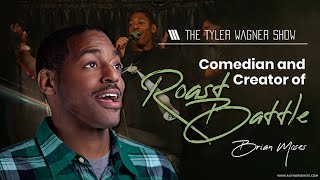
In this episode of The Tyler Wagner Show, comedian Brian Moses discusses his journey from a varied sales career into stand‑up comedy, describing how he entered the San Diego comedy scene through open‑mic nights and treated comedy like a "college" where persistence matters. He contrasts the size and dynamics of comedy markets in Los Angeles, San Diego, and other cities, noting that most people only see one comedy show in their lifetime. Moses explains the challenges of bombing, the role of improv as a supportive training ground, and the mental resilience required for stand‑up. The conversation then shifts to the creation and evolution of Roast Battle, which began as a response to a lost open‑mic slot in 2012‑13, grew into a weekly verbal‑boxing format with judges, and later expanded into multiple regional chapters (Chicago, New York, Austin, Bay Area, Tokyo, etc.) and televised seasons on Comedy Central/Paramount+. Moses outlines his ambition to turn Roast Battle into a sport‑like league with eight city teams, a subscription model, live‑streaming, and potential partnerships with betting platforms such as Better, DraftKings, and FanDuel. He shares contact information (verbalviolence.com) and promotes related podcasts and the Roast Battle YouTube channel. Throughout, he references other comedians (Seinfeld, Bobby Lee, Bill Burr, Sarah Silverman, Jeff Ross) and discusses the importance of authenticity, truth in roasts, and the addictive nature of making audiences laugh.
Chapters
All right everyone, welcome back to another episode. Uh, today we have Brian Moses with us. He is a comedian and he is the creator of Roast Battle. So welcome to the show, man.
Thanks for having me, Tyler.
Of course, man. From the other side, from the Pacific. I won't, I won't give exact—
where are you in that, in the, where the hurricanes happen?
Yes, that is it. Um, on the East Side. Um, so what I want to— I want to start off with, and it's kind of a typical place to start, but I'm always just curious, before comedy, what were you doing? And then what led you to comedy? Because— and I watch a lot of Rogan, watch a lot of different comedians. Um, it's such a tough industry. So I think— well, okay, that's another question. But so let's start with the first one. What were you doing before, and what led you to comedy?
What was I doing before stand-up comedy? Before stand-up comedy, I was in sales. So I was selling anything, right? So these were like college years of between 18 and 22. Cause I think I started right out of, well, I guess that would be the quintessential time you start, you know, after your career would be at 22, right? So at 22, I think I started comedy. So for like those first like 4 years out of high school, I'm kind of toiling around just doing, I'm selling gym memberships and selling cell phones and doing like, you know, I'm in a kiosk, I'm on a campus, you know, a college campus selling cell phones, or I'm at LA Fitness or a Bally Total Fitness selling a gym membership. So anything that I could sell, I would. Vacuums at one point, I was selling cars, I was selling everything. That's awesome. I was selling like scholarships, I think like college scholarships at one point. Like online college scholarships, yeah.
Wait, how do you, how does that work? You sell them to get the government to give them money or the college? Depends on what—
It was something, it was like right when that online, Internet craze started happening. So they were trying to get like graduates or like postgraduates in there. Yeah, that was basically— it was just like, hey, you know, you can get your, you know, you can go and get your, uh, your master's over here and then it won't cost you anything.
Ah, okay, got it, got it. So it seems to me that you knew at a young age at least that you were going to be doing something with like people, like you weren't going to be like an accountant or something, obviously.
Yeah, honestly, I wanted to be a lobbyist. I mean, like when I was going to like junior college, it was like the whole thing was I'm going to go to school and probably become like a history teacher or something weird, you know, just because you never know what you want to do when you go to college, right? Unless you actually know what you want to do. So you're sitting there with a general education. So at that point, I think I was like, I'm probably just going to be a teacher somewhere, or maybe like, you know, I'll do some paralegal and maybe end up with like a law degree, hopefully, if I, you know, if I get the degree first, like in history or something. Yeah. And then I got into English because I was like, oh, I'm getting into writing. And I got into stand-up comedy a little bit. And then I was— and then I did this government class and I was like, oh, I'm going to be a lobbyist. That's the move, right? Fuck the employer. Lobbyists is where all the parties are at. And then I took this sexual psychology class with these two cats who happened to be Jewish. And it turns out that a lot of people in the Jewish community and culture happen to know what stand-up comedy is. And then they were like— we had a lot of fun together, and we did a lot of sketches for this sexual psychology class. And they were like— 'Hey man, you should do standup comedy.' And I'd always thought about it, but I came from like a small town, so I didn't know, I didn't know any like standup clubs. And then I moved to San Diego, I was at this, you know, this JUCO. And then I was like, 'Sure, I'll check it out.' And then I checked it out.
That's the story.
Got it.
No, that's awesome, man. And then did you, and maybe it was kind of easy for you, which would be rare, but did you know how hard it would be before you got into it? Or was it in fact easy for you?
I treated it like going to college, right? Like say you're like, you're going to, Like, say you're an athlete and you're going to, like, you're picking a school to go to before you go to your profession, which is like maybe you're a soccer player, a basketball player, a hockey player, or whatever. So have you. So I treated it as that. I was like, all right, I'm gonna be this like artist, you know? And there's a lot of open mics around San Diego. There was like, there was a bunch of, there was like one comedy club at that time. So I treated it like, all right, I'll just treat this as like my college. So I'll treat this as the comedy college kind of a thing. So I knew there would be, it was a marathon, not a sprint kind of a thing.
Got it. Yeah, I wish I knew because before moving here I actually lived in Encinitas for 6 years. I don't— are you familiar with that area? Oh yeah, yeah, dude, I lived there for 6 years before here and I'm not kidding, I don't think I went to one comedy show because I just didn't know it was there.
I didn't— don't think about it. Yeah, that place is paradise, you know, thinking like, yeah, I'm looking at cliffs. Good point.
Yeah, I guess I didn't seek it out. But, but is it in— I know in LA, right, because The Comedy Store or whatever, but And I've never been, I just heard about it on Rogan's show and stuff, but is it bigger in San Diego than LA or pretty equal?
The scene is bigger in LA. The club itself, I would say like, 'cause it's a, well, here's the thing. I think in places like New York and Los Angeles, there's a lot more comedy clubs just 'cause there's a lot more people doing those arts, like performing arts. When you go to places like San Diego, San Francisco, Anywhere outside of Los Angeles or New York, really, they're like the second tier or third tier markets for the arts. So there's just more, there's just more people doing it in these two cities, which makes it a little harder. It makes people more jaded because everybody's tried stand-up comedy in Los Angeles who's probably coming to see you, right? For the most part. In San Diego, it's like, there's not a big scene. So when people are going, it's like, that's probably the last, the first and last time they're ever gonna go to a comedy club, right? Unless they're just like, they get the bug and they're like, you know what, this is our thing, we're doing this. But that's really rare. So, I mean, I think there's a study that even says that, I think the average couple or the average person sees like maybe one comedy show in their lifetime, if that.
Wow, dude, that's so, that's too low. That's crazy. 'Cause I, so in Miami, the scene is actually pretty good. Like I don't, it's probably not as good as there. And obviously Austin is gonna be nuts soon and it already is, right? I think like Kill Tony, His is probably— he's been doing that for a while. Um, but regardless, it's something I think it should be like a monthly thing at least, dude. Like, it's, it's something, dude. I think it's amazing. I love it. Um, I'm terrified.
How often do you go? How often do you go to the stand-up show?
So I go— what was my last one? Okay, my last big one, uh, was Seinfeld, and that was, um, in Hollywood, Florida at the Hard Rock. The like guitar thing.
Um, and he's working at Hard Rock actually. Yeah.
Oh really? Okay. So dude, have you seen him live before? Obviously I'm sure you've seen—
yeah, he was, he was in town last week actually. I didn't see him then, but he is, uh, the last time he was in town he did the Comedy Store and yeah, I saw him then. I mean, he's amazing. He really is, dude.
Yeah, that was, um, he was different. Like meaning in a sense of I've never— it was almost like every line was the punchline. It It was so like, yeah, like I, I, since I want to correctly say how it was, like every sentence was funny. It was really strange. Like, meaning like there was no buildup. It was like hit, hit.
Didn't waste any words.
Yeah, dude, it was insane. Yeah, it didn't waste any words. It was nuts. But what I'm used to, there's actually a place here and the website, I think it's miamicomedy.com and I forget his name, but some guy down here runs it. And it's more for like people starting out. And so it's called the Red Bar. And then you go and you do like 3 to 5 minutes. So I go there like once, I'd say once a month is fair. And you know, it's hit or miss. Like some people really are not funny at all. And then some are funny and I can relate. And that's why I wanted to ask you this next question is like, were you a natural on stage at first? Like, were you nervous at first or not really? Yeah.
I think everybody's nervous at first. It's crazy if you're not nervous. That means you're some kind of like—
Gotta be a little—
sociopath. You're a psycho. You know, these are strangers.
Like, I agree, I know, but I feel like— well, no, Seinfeld, I mean, he's been doing it for decades, but like, I wonder what his first show was like. Like, that would be interesting to watch.
It would be interesting to watch. I mean, like, gosh, there's— remember Eliza Schlesinger? She's, uh, she's got a few Netflix specials out there, but she's a big name comic. Um, but her uncles, I remember when she was kind of coming up and I was working at the La Jolla Comedy Store in San Diego, and she was she was on Last Comic Standing, and she was kind of going around all the clubs in like Southern California, and she'd bring her uncles around, and they were telling like all the door guys there, "I remember Seinfeld when he was first coming up, we used to tell him, 'You're terrible, Jerry!'" That kind of thing. It was the funniest thing. Eliza's uncles were like a couple of the funniest guys you'd ever meet. Yeah, it was like, it was that, but I remember like even like hearing an interview or something like that where Seinfeld would say like, Yeah, it's just, you just work and work. Like you start as a toddler, like, you know, he treated, he treated standup almost like it's like growing up, you know, like your first 5 years, you're, you know, you're infant to a toddler, you know, next to 5, 10, you're kind of like your formative years. And then you like get to your teenage years and you're kind of molding your craft. And then by the time you're in your 20s and your 30s and your 40s, you're just kind of like, you should be knocking it out of the park.
Wow, dude. That's actually an incredible way to describe it. And it's so crazy to think like, dude, that's so long-term. That's a forever—
I didn't think about it like that.
Wow. That's because in most things, like sales for instance, right? Like, and you were doing a lot of different things, but let's just say, I mean, there's sales as a whole, but then if you were to have stuck with a company, like one company for 5 years selling one thing, you'd probably do 6 figures within the first 3 to 5 years, right? Like you— so I'm just saying, compared to comedy, things are way quicker of a growth curve, I guess. So that's interesting.
Yeah, it's like timing angles with— because it's show business, you know what I mean? It's about your look, it's about, you know, how they can market you, you know what I mean? For the most part, as a stand-up, you're just trying to figure out who you are and what your voice is, right? Especially as a performer on stage in front of all these people, you know, you have to— you have to impress upon these people or even create a synergy with these people that you are funny and we're having a good time here. Um, yeah, and when you're marketing yourself for show business, it's a different kind of a lane. With stand-up It's always going to be there. So you're always going to be doing it in essence. So you kind of have to keep that mentality of, well, I don't make it doing this. I'm not going to make it in the first 3 to 5 years because that's, that's show business. That's just how you're— that's how you sell your market yourself. Not so much as like your craft of like, you like, if you're working out, like if I'm a bodybuilder, there's probably so much I have, like so much time I have where I can't like, you know, show off anymore. But if you're just working out just to live, just to exercise, you know, I need it for, you know, just because I love it. That's what it is. Like basketball. Like, I'm not playing basketball to make money. I'm just doing it to stay— to exercise. I just love playing the game. Yeah, what stand-up is like, it's essentially— that's what the marathon is, is you're doing this because you love it, not so much because you're going to be making money in those 3 to 5 years. Gotcha. Hopefully you do.
Yeah, no, no, of course. And that actually was kind of similar, I think. Like, um, I'm sure you're familiar with Bobby Lee, I would imagine. Yeah, so I, I, I watch Tiger Belly too. Like, I think that's, that's a good podcast. And, um, either way, like, he kind of says, like, and I think he just turned like 50 or whatever, but he started a while ago, and I know he like did well for a while, but, you know, well, but he— I think he said just recently, like a few years ago is when things really started to take off. And before that, he actually at one point, I think like 5, 10 years ago, was thinking about like giving up on it completely because it just I think he just had like a downturn or something. So regardless, it just proves your point that like, you know, he's 50 and now it's like everything's there, but it took like 20 years or whatever.
Dude, look at Marin. I mean, like it's ebb and flows, man. It really is. I mean, that's just what it is. It's like when you're young and hot, they all wanna sell you, right? I mean, like Marin was young and hot in his 20s, Bobby young and hot in his 20s. And like you hit your 30s a little bit, they kind of forget about you, you know? And then like the podcasting started taking off. So like you see Bobby kind of start bubbling back up, Bill Burr, Didn't really go anywhere. He just kind of became more successful. And then Bobby Lee's, you know, because he's back in the zeitgeist now, you know, after the Mad TV and all, it's like this podcast really brings him back into everybody's, you know, mainframe for sure.
Yeah. Good point. So the podcast is probably, and I think he's actually said that is that's part, if not a majority part of the reason the opportunities are flowing because he's built an audience that's actually his now. Um, so yeah. So when you, uh, and I know, These are questions that comedians normally get. I just, I'm curious on the stories around them is like, so if at first you were nervous and then I'm sure you bombed, you know, at least a few times, maybe you still do occasionally.
I don't know. Still bombing. Still bombing. Still bombing.
That's so wild. Um, so have you though, you're, you're used to that now though? I would like in some regard.
I'll say this, it's like, it's like falling on, if you ever like skateboard or like do something like, uh, it's like doing a trick and you're like, ah, I know how to do that kind of a thing. And then you don't nail it, you know? Yeah. Trying and trying it. I mean, that's stand-up. It's like, you're gonna have nights you're just gonna kill, and you know, and at this point in my career, I know how to kill. Yeah. But it's not being addicted to killing. I think there was a comic named Katie Totara who told me that, and I think he had heard that from a comic, I think it was Bill Burr actually told him that, was you can't really be addicted to killing because you can't grow that way. If you just stay in one act, you know, that you're not putting on TV or on an album, and you're just doing this one act the whole time, I mean, sure, you can do that act your whole life, I mean, Jay Leno does that, like, this way he's put an album or special. He's like, you can do that material the rest of his life. Yeah, because nobody's gonna hear it unless you see him live. But guys who are like constantly putting stuff out and then they keep doing that same material, it's like, what's the point of that? How are you going to grow? It's not just me being an artist, just— it's just in this craft, how are we going to respect you, you know? So for sure, you have to— you have to bomb. You have to get comfortable being uncomfortable, you know? You have to get uncomfortable with the silence. You have to get uncomfortable with people being uncomfortable. You have to be comfortable with it not going well. And it sucks. It sucks when it happens. It's going to hurt. It's going to be scraping your knee. It's going to be breaking an ankle. It's going to feel like getting punched in the face.
Yeah, dude, it's so true.
It doesn't feel good.
Yeah, yeah, because I feel all that's obviously accurate. And it's like, just going back to Kill Tony, because each week it's like a new minute that people will go up. And I've seen from— I've maybe watched, I don't know, like 20 episodes of that. I know there's way more, but I've watched like 20, and I've seen the same people. And some weeks they'll go up and their minute is flawless, it just kills. And then 2 weeks later they come up and Tony just looks and is like, what the fuck happened? Like, you were amazing. But it's because they're trying out a completely new minute, and that's kind of the name of the game, is like you— the only way for you to actually know if it's going to land— it's one thing to tell a few friends, but you got to go to the club and have like, I don't know, 50 people there or something at least to really know if this is going to be a thing. And so you literally have to bomb to know what is working, right?
Yeah, you have to get in the batting cage. You got to get a percentage, you know what I mean? You know, it's like, it's— you got to take those swings. You got to pitch.
It's just such a wild thing to take those swings at though. Like, people are not accustomed to that type of, um, failure, I guess, because it's not really a failure. But what I'm saying is, like, to be in front of that many people and then watch them all— like, you say something and you think it's gonna land, and then they all just go, yeah, every time.
I'm telling you, Ty, every time it feels like that. You're like, oh man, I know this is gonna kill. Like, you're like, wait, it may even have killed 30 minutes prior in another room, and it won't kill in this room. That's what's so great about— that's what's so great about comedy, because it's so subjective. It's not, you know, sometimes it can be universally objective, like, you know, like somebody getting kicked in the nuts, that's universally objectively funny, right? Yeah. We're talking about, you know, like an abortion, right? You know, falling out of the nuts that just got kicked, that may not— that's more subjective, right?
Yeah, yeah. No, you're right. That's so interesting because I had not thought about that. You're right, it's like So that kind of probably fucks with your head a little bit, meaning like you could go to one club and you're like, I think this is gonna land, and then it doesn't. But then you're like, you know what, I really believe in this one, let me go to a different club, and then it lands at that one like amazingly. So you literally have two different, uh, case studies. One was a complete fail and the other was a complete success. Yeah, at that point, what do you do? You just take it to more and you need a bigger case study essentially to know No, you just—
I mean, there's a good film on this. It's Steve Byrne. It's called 13 or Bust. He does 13 sets in one night in New York. He does this like 2006, 2005 or something. And yeah, he documented it all. And you can see, you can see like he's doing the same material. Some of it's expanding, some jokes aren't. But you can just see like some crowds dig it, some crowds don't. And that's the game. I mean, there's like, there's weeks I'll go I'm killing with the same stuff like 3 weeks in a row. And then there's like that one week where it's just like every single show, you're just like, this was killing literally like 24 hours ago. What's going on?
That's so crazy.
Yeah.
I just can't imagine. Like, I feel like my brain already— I'd say my main thing is like marketing and my brain never turns off about it because marketing is limitless, right? Like you can always do more marketing and there's a limitless amount of ways to do it. So same thing with this is like, if I were to do 10 shows and 7 of them killed with the same material and 3 didn't, I feel like I'd be tossing and turning all night and like trying to count.
That's what you do, dude.
I don't know I can handle it.
I'm not exactly— what you do, I think you're in sales, man.
I know, I don't know if I'm built for it because, dude, I, I had, um, I had actually Akash on, uh, if you— he does—
yeah, yeah, yeah.
So I had him on maybe a couple weeks ago and I was telling him like, I, at that Red Bar, I did try one open mic and it was a bomb, like it was bad. But I tried, I did an improv class before that and it turned out like improv I was actually very good at, like just naturally in the moment funny, I guess. But then when I tried to calculate my funniness, complete failure. Very different mechanism of being funny, I suppose. So either way, I wanted to try again, but I just You know, I don't know. It was just fucked up, honestly.
Yeah. Improv is great because improv is so supportive. It's built in to be supportive because you need the implication of being supportive and people having a good time because that's going to spark more ideas in your brain to throw with people because it's improv, right? Whereas stand-up, it's just you, bro. You're the army of one out there. So your improv is basically, all right, if I do some crowd work and this guy's not going to work with me, well then improv's done there. I got to go back into my stand-up.
You know what I mean?
Yeah. It's a different muscle. And it's a, it's a hard tool, man. That's why a lot of actors, musicians, improvers, they always say that stand-up's like the hardest because it is just you, not versus the crowd, but it's you trying to create synergy within the crowd, you know, not impress upon what you think is funny, but to like just suggest, and then hopefully you guys all agree that it's funny.
Yeah, dude, that— so do you ever, um, well, I'm assuming you do, so this leads into the next thing. So tell, tell us a little bit more about Roast Battle.
Yeah. Um, but I will tell you, the first couple times I think I was doing stand-up, yeah, it was, it was great. It was like, I think I was nervous and I was like, oh, I got this. And it was that one time I wasn't nervous, it was when I bombed. It was like, I was like, first time I think I ever went up the first on the show, like going up first. And it was just, dude, I had never felt that feeling of just like saying something that kills and then it's just like— but that first bomb is like, that's like, that's like your dick not working. You know what I mean? Or like, if you're a girl, you're not getting wet. You're just like, dude, I don't know what— this normally doesn't happen. Normally I'm knocking this out, you know what I mean? But yeah, that one time you're like, oh. And they— yeah. And nobody wants to feel that way. The audience doesn't want to— the audience doesn't want to not like it. You don't want to feel that way. So it's just awkward for everybody. Good point.
You're right. The audience doesn't want that either because it is awkward for everybody. Yeah.
Nobody wants to feel cringy. It's just like, oh, yeah.
Yeah. I think there's a balance. Like, I know Rogan says he like— I think he smokes a cigarette before he gets and maybe takes— I don't know if this is exact routine, but that's where I think I, I should have had maybe a couple tequila shots or something just to like ease the— because I went in there like sober and like not— I mean, whatever.
It's just not bad. Your energy's a little more on tilt sober. I remember my first couple times I wasn't sober, but looking back at it, um, it does mess with the rhythm a little bit, the drinking, right? Like you'll say something and then you may say it a little slower, and like, and timing's everything sometimes, so I mean, I wouldn't— I would not suggest it, and I wouldn't suggest it. I think it's just to each his own. But yeah, yeah, being sober is like, dude, your, your brain is just like taking everything in. And, and I think when you're drinking a little bit, you're like, all right, if this doesn't work out, I can just throw up on people.
That is— well, yeah, that's what it is, right? Because yeah, when you're drinking there, that it just turns off that part of your brain where you're like, I I don't, you know, I don't really give a fuck if this even works out at all, actually.
Exactly, yeah.
Oh, really?
Everyone goes, well, yeah, it's stupid. Rosebell comes from, it comes from, it comes from the open mic culture. So I was working at The Comedy Store here in Hollywood, 2012-ish, and I think they had gotten rid of, there was two open mics they had, one on Sunday, one on Monday, and they just got rid of the Sunday mic. 'Cause they wanted to make more money or something like that. So a lot, so I had just started coming up in LA, right? And a lot of the guys I was coming up with, they were gonna lose spots and they were gonna start coming to the store. And that's where I was most of the time. I was like, well, I don't wanna lose, you know, this culture of like, you know, all these guys I'm coming up with, I wanna keep that. I'm gonna keep an open mic here. So how do I do that? So then the only time that was open was a Tuesday. 'Cause they're just dead nights. Tuesdays were dead nights, notorious in LA for like open mics, just because there's so many other shows going on because there's so many comics that were in town, right? Weekends, everybody's going out of town. All your big names are going out of town. They're bringing their features with them. For the most part, LA is not like a dead place on the weekends, but it's all the big stars aren't really here. Um, but then they're here during the week. You're Monday, Tuesday, Wednesday, Thursday, for the most part through Wednesday, they're here. Wednesday's more dead. Tuesday's a little more lively. Monday is like everybody's sleeping. Right. But then they have the open mic, the comedy show on Mondays. So I was like, all right, cool. I'll try Tuesday. So Tuesday I had this mic with, uh, this girl. I was, uh, I was living— yeah, I was living at her place, whatever. Like, I was couch surfing, living at her place, and I was like, yo, we should start this mic, right? Because she's got a picture in town. And then we had it, and then, uh, we had fucked up because we had gotten a fight with the promoter who had the time slot before us. So the booker at the time, Adam Egeth, who's now in Austin with Joe Rogan, he was like, all right, you guys can't have this mic anymore, you guys fucked it up, you know, the moneymaker before you guys is pissed off, and yada yada. So we got rid of it and then, uh, I kept asking for it, kept asking for it, kept asking for it. So around like the beginning of 2013, I got it back. And then, uh, and then I was trying to make it not boring because I mean, like if you go to open mic, like you'd be like, you're talking about that Red Bar one. Yeah. Boring. They suck. Nobody wants to be there because it's everybody's trying new material and it may be good and may not be for the most part. You're only gonna see 2 good guys or maybe 1 good girl or whoever knows how many people you're gonna see. Right. Um, but it's, it's a long time. It's like a 4-hour event. And I was like, you know, I want everybody to stay in the fucking room because I know I had to stay in the room the whole time, just, you know, yada, yada, yada. So I was like, all right, I'll make sure everybody stays in here and I'll make sure it's like people they like who are doing time that they like, like open mic heroes. I'll make sure those guys got a lot of time. Yeah. And, uh, that was working. People were coming in, it started becoming a busy mic. Um, and people were staying in the room, which is great. So it built, it built more of a camaraderie. It built a little bit of community. And guys were really bombing all the time when they're going up, like trying new material. So it became like an actual room and real supportive, kind of like the improv shit. But then there was just one night where an employee who was drunk and one of the new comics, an open mic comic at the time, he was going up and then this drunk employee was like, yo, he's not 21. What's he doing in here? And we were like, what? He's been coming for like 6 months. Oh shit. And then the other kid was just like, oh man, what the fuck? Why you diming me out? Kind of a thing. And he's like, I'll beat your ass. And we were like, yo, all right, why don't you guys like, you know, like start by, you know, start fighting right now kind of a thing. Then I, you know, cooler heads prevailed and I was like, yo, I just got this room back, they just put cameras in here, like I can't, I can't lose this mic again kind of a thing. Like I'll, you know, be known as like this mic that's always here and then always pops up every 6 months. So then, uh, so then I was like, all right, how about this, when you turn 21, Kenny— his name's Kenny Lyon— I was like you guys come back and you talk shit to Josh and we'll score it like a boxing match kind of a thing, right? You guys are like, like he has a roast battle kind of a thing.
Yeah.
And then, uh, and then yeah, Kenny turned 21, I think like end of July or something like that. And then he came back a couple weeks later and then he battled Josh. It was awful. And then everybody saw it and we're like, yo, I could do that. And then every Tuesday from that July on in 2013, we've been doing it.
Damn, dude, that's sick. So you guys, so, so basically how it's set up is you, there's 2 people up there and then it's scored like a boxing match and then they just roast the shit out of each other.
I mean, basically it's a verbal boxing match with 2 guys. They basically, they pick each other, you know what I mean? Yeah. Friends or the foes, whatever they are, they go against each other and then there's 3 judges or supposed to be 3 judges. They score it basically. And then whoever gets the most votes wins.
Dude, that is awesome. Um, That's the thing. I've seen, I've seen like roasts obviously online. What is it like the big one, like Comedy Central? I've seen some of those where it's, you know, like Donald Trump or something like that. Like, so I feel you gotta be a particular type of person to really handle that stuff and like remove, 'cause what's crazy about roasting that I think is, yes, it is a joke, but any roast is partly true, right? So like, if you think about Trump, like when he got roasted, a lot of it was about like, you know, his hair, maybe facebeard, being read or whatever, just, but there's always, actually maybe I don't wanna say it's always, but it seems like most of the time in a joke, there is at least a piece of truth.
No, I mean like, no, I think Shakespeare says that.
Oh really? I didn't know that.
The truth is too often be said in jest, something like that. I think like, don't quote me on the quote, but that's where the quote is.
Yeah, so that's why I just think, yeah, to be like, to, to be a roaster, 'cause it's one thing to roast someone else that I don't wanna say it's easy, but it's like less, I mean, it's not about you. So you can just say fucked up things about somebody else and still go to bed at night. But then if they're saying about you, I would cycle through and be like, yeah, a little bit of that was actually true. And everybody laughed at it. I should maybe look at that. It's a little fucked up.
Sarah Silverman is known for roasting. She's a good friend, just like Jeff is, wrong?
Yeah. Oh yeah, Jeff.
She would say that. She's like, it takes about a month or two to like, to like shake that stuff off.
So how many, um, when you do it, it's, it's not always new people. So like, how— or is it always?
I mean, for the most part, it's usually— no, I mean, we've been doing it 9 years. It's not all new people now. I mean, but there's a new class that's coming in now. But when there's, there's stars, there's like, there's guys who come back and do it, are really good at it, you know.
Yeah.
And you don't— and I think that's the great thing that keeps me coming back every week is if there are guys that I know and love and seen before I'm gonna hear new jokes about them from somebody, right? Even though they're like battling for the 8th time against this person or the first time against this person, I get to hear a new joke that they had to think of about this person. So it's pretty incredible because you can see like the depth that people will go to like to get a joke out of somebody, dude.
It is. Yeah. And I would imagine, because that's where with the improv, that's what got me hooked. Because I, and I understand completely— I, well, I shouldn't say completely, but as a comedian, I can understand how it would become very addicting in a good way. Um, like having— it's just like, it feels incredible to have a crowd laugh based on something that you did or said. Even if it's a little— even if you're joking about yourself a little, if it's something that like you came up with and then ever— it just kills. That feeling is— there's not many better feelings than that feeling.
So yeah, it's like cooking something, it's like playing music, people really love it. I mean, like, this— that's the arts, man. I mean, that's really what it is. It's like you're creating this thing from within yourself and then everybody likes it objectively to you at that point, there's no drug that can replicate that, dude.
There isn't. I know, I was literally just thinking that, like, because I— yeah, and I know it's so minor in comparison, but I just mean in the improv there was a— I remember a few key moments because we would do like shows for like friends and family, kind of. You're probably— so it would only be like 20, 30 people, nothing crazy, but Yeah, but okay, yeah, so, so decent amount, but I would do something and then they would all think it was funny. And I remember that just like rush. And there is— I mean, I like drinking, I've tried my share of other things, but there's nothing like that, you know, nothing like that, man. And it's healthy, right?
I mean, it's not— it's still an addiction. I mean, because then you're chasing that now. Like, I'm still doing this for 15 years, I'm still chasing that. Like, oh man, I hope they like this tonight, we'll get that hit tonight, that laughter. Yeah.
It's still an addiction. True. Yeah, that is definitely true. So, um, so you got Roast Battle. Like, what else? Or I mean, like, what's kind of— is the end goal to like take this all the way, that as far as you can?
Or what? Roast Battle? I mean, Roast Battle started as like a side project, you know. I was just doing with like Jeff Ross and the community, the LA community, who was just into roasting each other, you know, consensual. Yeah, yeah.
Um, no, I know it's comedy as a whole. I meant, yeah.
Oh, comedy as a whole?
Yeah.
I mean, I take it project by project, just because it is such a major genre. It is the show business industry that I'm in, I guess. So what I want to do is I want to create a really, really dope special, I guess, next. I had a small sketch show on Comedy Central. I would love to have another sketch show. With Rose Battle in particular, though, we'd love to just make this like an actual sport, you know? We want this to be like spelling bee, you know, we want, we want this to be like the NHL, MLB, NBA, you know, NFL. We want this to be like a gambling-backed sports betting app back, you know, sport, you know what I mean? Like an actual league. Like we got Miami, we got LA, we got Austin, we got London, we got Tokyo. So we have, we have an 8-team league, 8-team league now. And these guys like sometimes they'll battle each other. We're working on getting an event right now, like trying to like do monthly, you know, with the live stream platform and of course handling Better. So we'll see.
But that's what I was just gonna say, because I just invested in Better because they're, they, they're based down here in Miami. So yeah, I know those guys. And I was literally just thinking, I'm like, once you have that all set up— I don't know if they're only sports, but I would— meaning like, I— but I would imagine, because I think the whole idea of it Just, this shows how bad of an investor I am because I don't fully understand. But, um, I, uh, think though it's like anything basically, but it's like micro. So for what you're trying to do, it would be perfect to be on Better, I think.
Pretty sure. Let me know. I mean, I'm talking to Bravada, I'm talking to FanDuel, I'm talking to DraftKings, you know. I mean, like DraftKings just, uh, put up money for, uh, they sponsor a frisbee golf league, a disc golf league. So I mean, yeah. There's money out there for these things. So Better, I mean, I've read about those cats. Uh, I don't know too much about them. There's not a lot about them, but yeah, let me know, like, offline. Like, yeah, I'd love to talk about it.
All right, no, that sounds good. Yeah, and they're— I mean, they're a little bit younger. Um, but yeah, we'll talk about it then. That could be interesting. Um, so gotcha. Okay, dude, that sounds like a lot of fun. And let me ask you this, because I don't know these roast battles, or maybe it's just not at that— because you say you're talking, uh, to do monthly subscription. Are you, um, is it like on YouTube, these roast battles?
Because yeah, so there's, so there's Roast Battle Chicago. They have full episodes on YouTube, uh, Roast Battle Chicago, I think it's their YouTube channel. Um, yeah, there's a Roast Battle New York, Roast Battle Austin, a Roast Battle Bay Area, Roast Battle Tokyo, Roast Battle—
all right, I'm gonna watch these.
Yeah, there's a bunch of UK, um, so there's a bunch. And I know that, uh, here in the States on television, on linear, we did 3 seasons here in the States called Jeff Ross Presents Roast Battle on Comedy Central, which is now Paramount Plus, I think it's on. And then overseas in the UK, we did 4 seasons and a Christmas special. So I think that was on Amazon Prime at one point. And now they do them all over, like, and anything that's like by Comedy International, like Comedy Central International, they're doing them. So there's a couple seasons on Germany, there's a couple seasons in Spain, there's a couple seasons in Uh, Norway? I don't know, it's crazy. There's so many of them now, dude. That's nice.
Yeah, it's so great because, as I'm sure you're more aware than like most, being like a creative like you are, like there's so many people publishing stuff on YouTube. Like even, you know, like I even just mentioned, like, uh, obviously Rogan went to Spotify, but like Kill Tony, Tiger— like it's hard to actually watch, it actually makes me— it makes me somewhat depressed thinking like, to imagine being a consumer and then like, shoot. And I obviously love my show, but just imagining like all the other shows out there, right? And then to choose mine over all those is like kind of wild for me to— like, you know, you have to like— you have to like try out Rogan and be like, okay, like, and that's like 3 hours. You only got 21. So it's really— I'm just saying it's interesting because I want to search, but like in my YouTube algorithm or whatever, I haven't seen it on there. So I thought you were only doing it privately in LA. So that's awesome, dude. I'm gonna look that up. Yeah, I don't know anyone that would not find that funny, dude, to just watch two people rip each other apart. Like, that sounds like a fucking—
it is consensual. I think they can like say that more. Like, this is— this isn't bullying, this is consensual act. These guys are going at it, I mean, they wanted to. You know, we have— and everybody's open season, man, from people with physical disabilities to mental disabilities to, I mean, everything. I would get people from who are trans to cerebral palsy to HIV positive to monkeypox. We do it all. That's freaking awesome.
Um, well, yeah, man, no, thank you for coming on. I want to leave the floor to you and just if there's anything that we didn't cover that you want to share, please do. And then, uh, let us know like where to find you, like website or, or anything else where people can stay in contact.
Yeah, just, uh, I mean, honestly, it's just, uh, verbalviolence.com, B-E-R-B-A-L-V-I-O-L-E-N-C-E, uh, just because that's where all the, all the podcasts you can get on there are. Roast Radio podcast, uh, our Roast Battle Weekly podcast, Roast Battle League Weekly podcast, those are all on there, I want to say. Uh, or the Roast Battle YouTube channel has everything we have also. Um, but mainly that's it, man. Yeah, I'm just trying to get this Roast Battle League up and running because I think That's going to be the thing that's going to make us millionaires, Tyler, you know. I mean, the rest of the league, you know, it's going to make us billionaires.
So let's do it, we'll have a shit-talking tournament, a whole whatever, March Madness. So I'm fucking in, dude, honestly. Thank you again for coming on, man. I appreciate it.
You're the man, dude. Thank you.
More from Tyler


Catherine Nikkel : THE STORY EVERYONE HAS BUT HASN'T TOLD : The Tyler Wagner Show #1120



Scott Ritzheimer: Bring Predictable Success to your Organization | The Tyler Wagner Show #1115


Fred Moskowitz: A GUIDE TO GETTING STARTED WITH IN MORTGAGE NOTES | The Tyler Wagner Show #1113

Mark Podolsky: From Land Investor to Full Time Success How I Made $90,000 Cash in Real Estate


Mark Podolsky: How to achieve a 300% return on investment my foolproof strategy

Mark Podolsky: How to make passive income selling raw land the irresistible pricing strategy