Bryan Clayton: YOUR GREEN PAL | The Tyler Wagner #1103
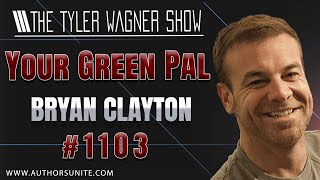
In this interview, Tyler Wagner talks with Bryan Clayton, CEO and co‑founder of GreenPal, a DoorDash‑style marketplace that connects homeowners with lawn‑care professionals. Clayton recounts his entrepreneurial journey, starting with mowing lawns in high school, growing a landscaping business to 150 employees and $10 million in revenue before selling it in 2013. He explains how the pain points he observed—homeowners struggling to find reliable lawn‑care and providers lacking efficient customer acquisition—led to the creation of GreenPal, a platform that charges a 5‑20 % transaction fee to service providers. The conversation covers the severe cash‑flow challenges during the 2008 financial crisis, the lessons learned from rebuilding, and the shift from selling a service to selling a solution tied to metrics like occupancy rates for commercial properties. Clayton details GreenPal’s growth tactics: heavy reliance on word‑of‑mouth, a PR‑led SEO strategy involving daily outreach to journalists, local earned media, and organic search dominance; experiments with local Facebook groups and community‑owned groups; and the decision to stay bootstrapped rather than hire agencies. They discuss potential international expansion (e.g., Canada) and the regulatory hurdles involved. Looking ahead, Clayton envisions GreenPal becoming a household verb akin to Uber or Airbnb, aiming for a million weekly users within five years. He also shares founder habits such as “walking the store” – regularly using the product themselves to uncover friction. The interview ends with contact information for GreenPal.
Chapters
All right everyone, welcome back to another episode. Today we have Brian Klain with us, so welcome to the show, man.
Tyler, it's great to be here. Thanks for having me on.
Thanks for joining us. And if you can just start us off a little bit more about you and what you got going on.
Yeah, I'm CEO and co-founder of a company called GreenPal. GreenPal is an app and marketplace, works like DoorDash or Instacart or Uber, but for lawn care services. So if you own or rent a home and you need to get somebody to mow the yard, rather than calling all over the place, you just download GreenPal, pop your address in, you'll get a few quotes, and you can hire somebody to come take care of it for you. And GreenPal is a 10-year overnight success. My two co-founders and I have been at this for a little over a decade, and now we're nationwide in the United States, around 300,000 people using the app to get lawn mowing done.
It's amazing, dude. It's so sick. I love this business. Normally I start with a different question, but I'm just curious, do you have any plans of going international with this?
Possibly. Possibly. We've toyed with the notion of this going right into Canada because we're already in Seattle, we're already in Buffalo and like right across the border. But these international, like these invisible lines between us are very real. And so everything from just how, you know, regulations around how the businesses operate to banking, to moving money around is all different. We will at some point, but we still have quite a bit of white space to go in the United States in terms of saturation.
Got it. Got it. And then what is the, like, what's the business model? Like, I guess, I guess the question, not to be so direct, but it's like, how do you guys make money? Is it like a piece of the interaction or what does that look like?
Yeah, it truly is a marketplace. So we take a small transactional fee anywhere between 5 to 20% of the cost of the service. And the vendor pays that, uh, the pros pay that in order to offer their services and operate their business on top of the platform.
Makes sense, right? Because I mean, they wouldn't, they wouldn't have gotten the business otherwise, most likely, right? Because they were found on the platform. So that makes complete sense. Um, and then what were you doing? Uh, let's start a little, let's go back a little bit. What, uh, before this, what were you doing? And then what actually led you to this idea and then deciding to start the company with your co-founder?
Yeah, it, uh, it happened very naturally. I actually ran a landscaping business. I started mowing grass in high school as a way to make extra cash and stuck with that little by little, year over year, kept, kept growing it until it grew into a real company, a real business, eventually growing that to about 150 people, $10 million a year in sales. And then it was acquired, uh, by a national company in 2013. So after that, took some time off and quite frankly, went through like a learning phase about myself, learned that I was wired to want to be in the game. I needed a project. I needed some sort of mission to be a part of. I felt very discontent not having that anymore. And so I had the idea for GreenPal because I saw every day running that landscaping business just how challenging it was for homeowners to get this simple chore done and how hard it is for a landscaping business to operate, to get new customers, to get paid, to keep everything scheduled and organized. And so I knew a platform would exist. I was fairly certain that somebody would build it and I thought, well, why couldn't I build it? And it was kind of naivete as an asset. I didn't really understand how challenging it was going to be, but got in the game, started working on it little by little. And here we are 10 years in, we have something that's working and it was really challenging in the early years, but I'm glad we stuck it out.
Yeah, it's so awesome. Congratulations, man. That is literally like, to me, that is just like the most beautiful entrepreneurial story I've ever Like you're doing lawn mowing in high school, you're making some good money for, you know, 16, 17-year-old, and then you turn into 150 employees. Somebody acquires it. I know I'm just repeating what you said, but I'm just like looking at the trajectory.
It's—
and I'm sure— well, let me ask you this though, because the way you describe that, it looks— and I'm not saying you did this purposely, but it seems as though it literally was just like this. What were— were there any times with like the business with 150 employees where you almost like gave up on the business or like some serious downtimes, or was it like kind of a very clear upward trend?
It's, uh, very, very much so highs and lows. Uh, there, there were many, many hard years. The, I never, um, considered giving up in the first business or the second one. I think because in the first business and in the, my second company, I'd always made a decision that no matter what, I was just going to be working my butt off on my best idea. And, and so I, I'm not terribly creative. I've had 2 good ideas in 22 years. And so I just spent 15 years on the first one and now 10, 12 years on the second one. And so that kind of went to my advantage that I just stuck something out. But in the first and second company, there was many, many ups and downs, particularly in the, in the first company. I was ramping it up, growing, scaling. And then the 2008 financial crisis hit. And in many ways that was a much harder crisis for small businesses than COVID was. Yeah, sure. I think COVID probably decimated like travel and restaurants to a much larger degree. But if like you were running a construction company or a real estate company, or in my case, a landscaping company, it was like somebody went to the water faucet and just turned it off, or they went to the light switch and flicked it off. Like it was, There was no business to be had. Nobody was spending money. Subway was offering $4.99 footlongs. It was like the end of days. And so, and so until Subway starts offering $4.99, $5 footlongs again, we're doing okay. We've been in worse, we've been in worse, worse situations. And so trying to navigate a business where, where my payroll was like $220 grand a week through that, where it was just the business went off a cliff, was really hard. one, one month, one week I couldn't make payroll. I, I, I, uh, I went into, when it was dry, I remember, I remember very clear driving into the office. I know payroll's due and I got like 17 grand in the bank. And so I know that there's a lot of people that are gonna get paid that day. And so I had to, I had to like navigate through that, really take the business back down to the studs and rebuild it all over again. So that was really challenging.
Wow. Yeah, man. See that? It's, I mean, and I feel like that's, so that's like very common though. It's always, I I actually, in a recent podcast I just had, I was talking about that where it's like even the biggest companies in the world, right? You think of Apple on the outside, it's like you see the logo, it's all clean, the phone's amazing. It just, it looks super sleek and everything's perfect. But if you really think about the inner workings of it, you know, there's all these engineers making prototypes, things are breaking, maybe sometimes the thing's like exploding, you know, you don't know. Like, and that's the reality of behind the scenes that most people don't think about it. It's, it's never fully just like this. Um, so how did you, I, I guess, how did you get out of that hole? Or was it because things got back to normal, I guess, after a year or so?
Or no. And that was the other thing. Uh, that crisis set in for years. I mean, it was 8, 9, 10, 11, 12, where, where it was just It was like a melancholy if you were, if you had anything to do with home improvement, home services, construction, real estate, anything where people had to take money out of their pocket to, you know, in the middle class to, to do anything around the house. Nobody was spending any money. And, uh, and so no, it was very, very hard. And, and, and the way we got through it is we kind of had to, we kind of had to go backwards. And then, and then rebuild the business and then move forwards. And, and that's really hard to do because, you know, you're accustomed to growing and running a business of a certain size and, you know, contracting really sucks and laying people off sucks and it's just not fun. And, but, but I had no choice. I, I, you know, I was just, it was just gonna, I was just gonna stick it out. Yeah. And, and, uh, you know, it was because I went through that. It's funny, every crisis I've ever gone through in, in business, 3 or 4 or 5 years later, I was always glad it happened in a weird way because that was a thing that caused me to level up as a founder, caused me to make a better business. And it was because I went through that, that I was able to then get the business acquired because it was a lot much more tight, well-operating machine, much leaner. And, uh, had I not gone through that crisis, I may not have been able to sell that company.
So let me ask, how did you get, and I'm curious about both businesses, but let's start with your first one. So you're, how were you getting so many clients with your first business to get to the level of 150 employees? Like, what type of marketing were you doing?
Yeah, it, uh, it hit me, I guess, year 3 or 4 that I wasn't in the lawn care business at all. I wasn't in the landscaping business at all. I was in the sales business. That a lot of times you look at well-run companies and, and does the best product or service always win? Not really. It's the best marketed, the best distributed product that usually wins. McDonald's is a great example. And so I figured, I figured that I had to, I had to get the table stakes right. We had to develop a system to deliver services reliably, reliably and consistently, and, and, and in a, in a way that was a little bit better than our competitors, but that wasn't going to be enough that I was going to have to then plow all of my time into honing and tuning a sales process for us to identify people who needed our services. And so these were commercial clients, so apartments, office parks, airports, things like that. And then develop a sales process to, to connect what we did with, with what they needed and, and to get out of the business of selling grass cutting and get into the business of how do we sell a solution that helps them get where they're trying to go. And, and so one way we did that You know, you, you, for example, apartment complexes, um, we did a bunch of those. We, and, and these were $30,000, $40,000, $50,000, sometimes $100,000 a year contracts. And wow. Yeah. We would go to an apartment and we, and normally the value proposition for a vendor would be, hey, when does the contract come up? We want to quote it cuz we want to try to save you some money. And everybody is just like trying to cut each other's throat and it's just a race to the bottom. Well, we would change that conversation and we would say, hey, when's the contract come up for renewal? And they would say, oh, it comes up in October. Okay, cool. What's your occupancy rate now in March? And they would say, why do you ask? And which we would say, well, because we participate in the Tennessee Apartment Association and they say that the average here is 93%. And, and then, and they would say, and they would say, well, no, we're at 87%. And then, and then we would say, well, what if we could deliver a plan, uh, with landscaping enhancements and maintenance to move you up a couple points? And, and we believe, and, and we've done this for some other, we've done this for some other communities here in town, and, and we could improve the, the color of the grass, the thickness of the grass. We could install this type of floral display at the model home. We could install this type of seasonal color at the entrance to drive people in. We could quite frankly take the property's appearance from a B to an A over the course of a year or two. And we're not going to be the cheapest way you can get your grass cut, but we're going to help you move up. What would it mean if we could move you up 2 or 3 points in occupancy? And that would change the whole conversation. And it took us 5 or 6 years to figure that out, to tune that, to hone that. But that's how we, how we sold Sold business and kept business.
That is incredible, dude. So, so much of the time it's about like packaging and like just the, it's not like necessarily what it is that you're doing, but it's how you're portraying what it is, right? Like I, I can almost guarantee, and I mean, you know better than me, but I don't think there was any other lawn care providers selling it like that. Like there just wasn't.
Probably not. And at the end of the day, we were all selling the same thing because if the grass grows 3 feet tall and it looks like crap, people are going to move out, occupancy is going to go down. Yeah, but, but connecting that with a metric that made sense to them and was important to them and was part of where they were trying to go, it's why they showed up to work every day, and connecting what we did with where they were trying to go was, was how we went from $1 million to $5 million to $10 million in revenue.
It's amazing. Um, And then, so what about for your current business? What, what, uh, so, and I guess obviously for your current business at this point, it is probably word of mouth, uh, a lot, but like to get it those first, let's just say to get the first 1,000, 10,000 users, how, how are you able to accomplish that?
A lot of it is word of mouth. Uh, and, and, and, and word of mouth, you just have to have a really good product that, that solves people's problems. And yeah, sure. There's ways to measure it maybe and to juice it, but at the end of the day, it all, it all boils down to. Do you have a 10x product that does better than anything, any other solution? And do people want to tell other people about it? You know, I don't know about you, but whenever I save a little bit of money or I experience something that's like magic, I'll tell my friends about it. I want to brag about it because I feel smart. And so that's where we try to position GreenPal. But that ain't enough. That's certainly not enough when you're getting started. You have to have some sort of product channel fit. You have to have some kind of way to, to get that product into the hands of people that need it. And we experimented with everything, you know. The, the sales process I just outlined for building my first company ain't gonna work for selling $35 lawn mowers. It's like, it's a very, uh, that works for selling, uh, you know, 5 and 6-figure and sometimes 7-figure contracts, but If you're trying to sell a basic lawn mower, you can't, you can't do that type of hand-to-hand combat. In the early days we did, and that's how we got our first 100 people. But then we would always ask them, well, how do you normally find a lawn mowing service? And they would say, well, I'd ask friends and family for recommendations, and then I would hire somebody and they would ghost me or flake on me. And then I would just go to Google out of desperation and, and type lawn mowing near me, and I would find somebody that way. And so we kept hearing that over and over again and we thought, well, maybe, maybe we need to try to compete in Google organic search. And then we were confronted with the reality of that's really hard. It's not easy to like show up in these rankings. And there's a lot, a lot of work that goes into it. And I was like, damn, all the work we just put into building this platform out, building the mobile apps, building the website, recruiting people to use it. That was the easy part. The hard part, the hard part is, is, is the distribution is, is competing in, in, in whatever marketing channel you choose to go all in on. And, and that's what we did. We went all in on carpeting the internet with our content, earning traffic that way, raising our domain authority to where half of the people that, that come to find out about Green Powder just find out through a Google search. Their grass is 3 feet tall, lawn care service Lincoln, Nebraska, or whatever town you live in. And, and we pop up as an option.
Got it. You know, an idea that, I mean, at this point you guys are already crushing it, but it's my mind. I help a lot of businesses scale and my company similar revenues as your— I don't know what your GreenPal is at, but as your first one. So regardless, the reason I bring that up is the way that I would actually grow this is I think in like local Facebook groups.
Mm-hmm.
So, you know, like you could reach out to lawn care providers in say like a small town and there's a Facebook group for that town, have them sign up and then have them, like you could even pay 'em, pay 'em like $50, $100 to then share on the Facebook group that like, hey, if you want our lawn care service, now you can find me at Green Pal.
Figuring out a way to incentivize that.
Yeah. And dude, I think because these local Facebook groups. Especially small town. Doylestown is actually where I grew up. It's a small town an hour north of Philly. I see the engagement in there. I know that if this was posted, you'd probably get like 300, 400, or 500 signups just from that. Like, I— so that's a great idea, but I would do that.
That's a great idea. I was listening to a podcast with a guy who built a platform that connected roommates, and he was talking about something similar. He said they developed the groups. So they were— they, they had like 4 markets, and so they would develop a Facebook group in, in St. Louis, and, and over like the course of 3 or 4 years, they would attract 30 or 40 or 50,000 people into the group that they moderated and kind of owned. And then they would kind of— every time somebody asked about a roommate situation, or they would just post in there, and they controlled that. And I mean, what a way to to jumpstart a business. I mean, that's hustle. So I love that idea.
That's next level thinking because I was thinking of going in existing groups, but that's like another 2 layers deep. That's awesome.
Yeah. Anybody listening to this who's like, oh, I can't get my business going. I can't, you know, I can't figure out how to get customers and nobody wants to use my app or whatever. Like, think about that level of hustle because I mean, that takes years. But once you get that established, it's just free traffic.
Well, totally. And I think, you know, cuz the money, and I'm sure you probably had other things, but the money that you made on your first business, you were actually able to approach this and, you know, you probably pay a consultant or an agency to help you with that Google search stuff. A lot of like new entrepreneurs, they don't have budget to like get first page of Google. So these are like tactics where, like you were saying, there's—
Anybody can do.
Yeah. There's no excuse, man. Like if you can't— Like any, if you don't wanna do it yourself, you can hire a virtual assistant to just like reach out to these Facebook groups. Like you could reach out to 100 a day. Like it's not, there's no excuse. Yeah, there just isn't. So, and, but you know, there's easier ways and then there's more labor-driven ways. Right. So, and both, and actually I would say if you can do both, why not grow faster?
Yeah.
So, okay. So that's where you're at now. I did see on your website though, I wanted to ask, was any, Did you notice like an impact from the media attention that you got? And did you actually go after, because like right on the homepage it says, as seen on, you're in like a lot of these major media outlets. Did you proactively try to get on them or did they find you? Is first question. Second is, did you notice like a trackable growth, like impact from being on any of them?
Yeah, just curious. Yeah. So, so it's a really good question. So earned PR and local earned media is is really integral to our SEO strategy. So I guess you could say we run a PR-led SEO strategy. And so when you say PR-led, that means we reach out to journalists, we try to pitch them on stories, pitch them on ideas, or pitch them on a launch and get them to cover it. And that's what my co-founder has done for a decade. He has literally reached out to 100 journalists a day for 10 years. And his goal is to get one hit a week. And it's really a hard way to grind it out, but you have to do that if you want to rank well, if you want to build an organic search strategy, because you need the authority around your domain. You need, yeah, you need authoritative entities talking about what it is you do. You know, honestly, it's great that we got mentioned in the New York Times, and it's great that the Harvard Business Journal mentioned me in an article, but we get more signups from like being mentioned in the Chattanooga Riverboat Times than we do being in USA Today. So it's really the local earned media is our bread and butter, but it's both. We want that domain authority around the top-level domain and then we want local cities and towns talking about us. And that really is part of our organic search strategy. So that's a big part of it. And so If you're listening to this, you say, well, I need to do that. And it's like, yes, you do. But, but be prepared to go the long haul, be prepared to grind it out. It's kind of funny. Uh, in the early, in the early days, my co-founder, he would fly to these places. Uh, this was before COVID And so every journalist would say, hey, well, yeah, sure. Fly out and we'll cover you and we'll do a story in the yard. And so he would fly to. To Belleville, Illinois, and he would fly there and he would line up a vendor and line up a homeowner and they would do a story in the yard. And he did this hundreds of times. And it worked. It got traffic, it got signups, it got domain authority. And then this is, we've been bootstrapped the whole way. So I'm a penny pincher and I'm looking at the credit card statement and I'm like, Gene, um, I noticed you're staying at like the Holiday Inn Express, and I know it's not like a 5-star hotel, but can we knock it down a notch? Because like $125 for the hotel, I mean, I know there's hotels in Belleville that are probably $90. And I said, why do you always stay at the Holiday Inn Express? And he said, he said, uh, because they, they have a free pancake machine that makes hot pancakes in the morning. And you don't, you don't, he said, you don't get to interrupt that. And, and so I, my, my point is, is until you like love the taste of hot pancakes from, from like the Holiday Inn Express, don't, don't try to do this strategy cuz that's the level of grit it's gonna take.
Dude, you know what? It's just so similar, man. Like we, um, for my, uh, book business, we actually, we literally do like 15, 20,000 reachouts a day. I, I wanna exp— I wanna talk to you about this because I just think like the way that you've grown is similar to the way we have in some ways. And I think for the audience, this is helpful to realize the amount of volume that it actually takes because most people will be like, oh, I reached out to 5 podcasts or 5 reporters. I gotta know. And dude, 100 a day for 10 years. Like that, that is what it takes, man.
He wants to get one hit a week.
And that's one.
If he gets one hit a week, he's crushing it.
It's like point— I don't even— I'm bad at math, but that's like 0.05% or something.
This ain't, this ain't spam either. This is like, hey, you know, I saw the article you, you wrote in the Tampa Bay Times about when is the best time of year to fertilize your lawn. We're developing a similar story, but around like, you know, how to care for St. Augustine grass. Would you mind if I send it over? You can take a look at it like it's in. It's like it's not spray and pray. It's sniper and it's 100 of those a day is what he does.
Dude, you know what I wonder? Because I'll admit it, even live on this, we actually, so ours is definitely targeted, but it's not that detailed, right? So just to give an example, right? We're known for our book marketing abilities. Like there's a lot of book publishers out there. I'm not here saying we're better or worse on that side, but marketing, we're known to be the best in the industry. So our first idea was like, okay, even though we're kind of competitors, if we connect with every book publisher, they'll refer us their authors to do that. So we basically, like, I just had my team of VAs type in book publisher into LinkedIn, Google, and we just found, like, I think it was like 100,000 of them, something like that. And we reached out to all of them with the same message. Hey, their name. I think there might be ways we can collaborate. And that's all it said. And then we would get a ton of responses saying, Hey, like, what did you have in mind? I'm open to collaboration. Tell me more. And then we would go deeper, book a call, explain the commission. So, but I'm wondering now that you just said that though, I'm like, I'm wondering if, you know, the volume's off.
Do both. Go wide and deep.
You know, it's got, that's what it's gotta be, man.
Do both.
Yeah, it should be. It has to be both because I'm wondering if we went back and reached out to the book publishers that didn't respond with a longer email that was You could tell that we did our research and we could like point out some things.
Absolutely. You, you maybe you identify the top 50 and you're just relentlessly personal with them. I was listening to a, a podcast the other day. Uh, one of my favorite podcasts, this guy who called the, the 20 Minute VC and, and he got Marc Benioff on his podcast, who is the CEO and founder of salesforce.com. And he was talking about, he's like, I have, I have emailed this guy like 175 times over the last 8 years and he finally said yes. So, so it's like, so it's like go wide and deep, like, you know, identify who your top 50 are and just never give up on any of them.
I love it. No, that, that's, that's the solution. So I guess I, I, I got it. Uh, that's what it is, is discover who your top are, never give up, but then also do volume to keep things moving. So I love it, man. And so does your, your co-founder does this to this day?
Like to this day? That's all he does. And it's because it's, it's, it's like, well, you would say, well, well, uh, out there's certain things you can't outsource. Um, there's certain things you can't, you can't, uh, hire an agency for. There's, and now a lot of things you do need to, and you need to leverage that. But we have tried like hell to hire a PR agency, $10,000 a month. Crickets. Uh, you know, okay, well maybe we need to spend some more money. 20 grand a month, one shitty hit. And it's like, it's like, man, we're better off, we're better off just doing this ourselves and making it a core competency of what it is we do. It's, it was, it's always been that important that like, like half of the bandwidth of the team, of the founding team, is going to getting earned media. Because journalists don't want to hear— they want to hear from the founder, they want to hear, they want to hear from the decision maker, they want to hear somebody who has the the knowledge and the scars. And then when you show up, it needs— it better be like— you got to be in person a lot of times. Yeah, it's really hard to delegate that unless you're at super, super scale. It's hard. You know, we're still, you know, we've gotten maybe through the first 5 levels of the video game, but we're still very much in this kind of grow-up phase.
Yeah.
You know, and so we still do it, still do it ourselves.
Have you done any paid media or do you see value in that or just earned media?
Just curious. We've experimented with everything and we cannot get the same ROI in terms of inputs and outputs as far as developing our own content, develop and reaching out to journalists, asking them to cover it. Um, and, and, and, and adding value to, to stories where we can, we participate a lot on, on, uh, Help a Reporter Out, Hey Row, and, uh, pitch probably 20 stories a day on that. And, and so we, you know, so, okay, let's say whatever the value of doing that is in time and effort is, if it's $10,000 a month, if it's $30,000 a month, okay, now let's just put that on Facebook ads and then let's see over the course of a year which one is better. And, and we've never been able to beat the current configuration of what we're doing.
Gotcha. I was going to— oh, I just lost it. I was going to ask you something that was going to go off that. But regardless, what is with GreenPal, where you're at now? And I know we talked about potential international, but do you have like a clear vision of like, I guess you'd like the end goal? And I know what's funny, what you said earlier, I totally vibed with that. You're the type of person that wants to be in the game. And I think that that's what's funny is a lot of times people think, oh, that entrepreneur, they sold their business, $10, $20 mil, now they're just going to chill. But somebody who actually builds a business like that, they didn't do it to chill. You know what I mean? Like, right? Like, they like it. So either way, I'm just curious, like, do you guys have a, you know, 5, 10 year? And it's so hard with technology to even think that far. But do you have that kind of vision for this, or? Absolutely.
We, in 5 years or less, we want to be at a million people using this thing on a weekly basis and really further into the kind of lexicon of the English language, you know, like DoorDash, Instacart, Uber, Airbnb. These are verbs like, hey, did you guys stay in a hotel or did you stay in an Airbnb? Or nouns, did you Did you, you know, are you gonna Uber to the airport or are you gonna go in a crappy taxi? And we want to be, hey, your grass is 4 feet tall. You should just like get a GreenPal to do it. And until we're in that kind of default way that you just do this because it's easier, faster, cheaper, smoother, more convenient, then we're not done. We got a long way to go. We're doing well, but it's still day one.
Got it. Got it. Well, dude, I don't, this is incredible story. It's, it's so. I just, I absolutely love the business. I really do. It's so cool. I get, I want to leave the floor to you. If there's anything we didn't cover that you want to share, please do. And let people know, like social media, website, and how they can stay in touch with you.
Yeah, sure. So, well, thanks for having me on, Tyler. I've enjoyed this. I guess my one thing is top of mind is something that actually I just heard yesterday that I loved. And I was listening to one of the books about Amazon's founding and Jeff Bezos and incredible story. And one of the things that he talks about is you have to walk your store. And like for years the management team in Amazon would get these weird emails from Jeff at like weird hours at like 5:00 AM on a Sunday morning or or 5 a.m. on a Saturday morning because that's when he would walk the store, meaning he would, he would just be pittering around on Amazon somewhere buying some stuff or whatever and like seeing things that he wanted fixed. And he still does this. And, and, and he and I think he got it probably from Sam Walton because that's what Sam Walton did. He would, he would just show up at some store anywhere and he would walk it. And as founders, we lose sight of that where we don't do business with ourselves. We don't, we don't use our own product anymore. We have, we haven't gone through the signup process. We haven't like, we haven't secret shopped our own business, called into the front office and seeing what a customer goes through. And so we don't, we don't metaphorically walk our own store anymore. And so I think that's some, something simple that doesn't matter what stage of the game you're at, what business you're in. You can make time to once a week, once every 2 weeks, at least once a month to walk your store and to use your own product, sign up for your own product. And I guarantee you, you will always find something that needs to be fixed, something you didn't know about, something that you should dedicate resources to.
Dude, I love that. And actually, another podcast I had that it was a big learning thing for me. It's like whether it's daily, weekly, monthly, I guess more the better. Step back and like really look at everything that's going on. You know, a lot of times we get so caught up in the weeds that We don't realize, yeah, we're so in it. And if we could step back, yes, you lose the hour of stepping back, but you gain, you know, a year by adjusting a system.
Exactly.
You know, so you gotta do that more often. I, I, it's funny cuz I, I think I need to just put it in my calendar like once a month or something repeating. Yeah. Cuz I always, you get so busy, you forget it.
Yep.
Um, so either way, man, thank, uh, did you, I didn't hear it. Did you mention the website and your services?
Yeah. Yeah. Uh, greenpal.com. You get free quotes, uh, if you, if you're in the lawn mowing business. Sign up as a vendor. And then anybody wants to hit me up, Instagram is the best place to find me, Brian M. Clayton. Just drop me a DM there.
Perfect, man. Thanks for coming on. I appreciate it.
Thanks, Tyler. I enjoyed it.
More from Tyler


Catherine Nikkel : THE STORY EVERYONE HAS BUT HASN'T TOLD : The Tyler Wagner Show #1120



Scott Ritzheimer: Bring Predictable Success to your Organization | The Tyler Wagner Show #1115


Fred Moskowitz: A GUIDE TO GETTING STARTED WITH IN MORTGAGE NOTES | The Tyler Wagner Show #1113

Mark Podolsky: From Land Investor to Full Time Success How I Made $90,000 Cash in Real Estate


Mark Podolsky: How to achieve a 300% return on investment my foolproof strategy

Mark Podolsky: How to make passive income selling raw land the irresistible pricing strategy