C.K. Chin: The Art Of Running A Successful Restaurant | The Tyler Wagner Show #1055
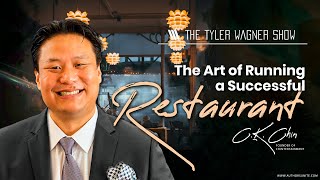
In this episode of The Tyler Wagner Show, host Tyler Wagner interviews Austin restaurateur and entrepreneur C.K. Chin. Chin recounts his unconventional path—from a teenage kitchen job and a brief stint studying veterinary medicine to elementary education—before landing in hospitality, a move that initially shocked his immigrant family. He explains how his definition of success is rooted in creating and seeing a concept through rather than monetary gain, describing moments of personal fulfillment when a restaurant’s first service felt complete. The conversation delves into Chin’s marketing philosophy, emphasizing word‑of‑mouth, soft‑opening rehearsals, and an abundance mindset that favors community collaboration over competition. He shares the operational details of his three concepts—Swift’s Attic (shared‑plates), Wu Chow (farm‑to‑table Chinese), and a 6‑seat omakase sushi bar—highlighting how each reflects his values of quality, authenticity, and experiential dining. Staffing shortages, the importance of honest customer feedback, and the psychological weight of negative reviews are discussed, as is Chin’s broader view of hospitality as a service that shapes pivotal life moments. The interview closes with Chin’s social‑media handles and a call for deeper, longer‑form conversations in a fast‑paced digital age.
Chapters
All right everyone, welcome back to another episode. Today I have CK Chin with us. Uh, he's an Austin restaurateur, entrepreneur, friendly neighborhood giant Asian. So welcome to the show, man.
That question was tough already, but you start off with the bangers. I don't know what my title is, but, uh, you know, had to get a little creative with that.
No, I love it, man. Um, so yeah, I always like to— I always like to start these because I'm always curious of like people's root. So what, before the restaurants and everything, and maybe it was when you were a lot younger, like a kid or not that young, but what were you doing before the restaurants? And did you think at all when you were a kid that you would be working with restaurants?
0.0% that I'd be in restaurants. Ironically, my first job was at a restaurant. There was this little Chinese restaurant in Houston that hired me under the table at 14. You know, paid me just cash under the table of $4 an hour. And, but, you know, it wasn't, you know, it never really became a career goal. I wanted to be a vet actually for years. And that even got me all the way to going to college to go for it. And then in college, I switched over to education, elementary education. I love working with kids and I love to, you know, have this, this, need to impact the future and the belief that that's, you know, there is to be, you know, forgive the cliché, that, you know, they are our future and that they needed this kind of work. And then in the middle of all that, as I was kind of working to put myself through college, the hospitality industry just kind of came about. So yeah, absolutely not. I've loved food. My family is very food-oriented. I've said that You know, we mourned over food, we celebrated with food, we, you know, gathered, everything was all about food. It's very much part of our culture and my family's kind of culture, but it was never even an idea that I was gonna make it to a restaurant. Matter of fact, my first time I actually started running a restaurant, it was a very, it was a nicer restaurant too, I was a manager of one. You know, my family was kind of terrified. You know, they were like, man, it's like this kid went through college to, you know, went from being, to med school, to a teacher, now he's working at a restaurant. Like, what in the world? And it's like this immigrant family's nightmare that I was going to be working back in the kitchens again. Their image of it all was a very similar story where a lot of, you know, immigrant families that have come through and then the job that they got was in the back of the kitchen, you know, picking green beans at the restaurant, you know, kind of thing when, you know, there's no other work to be had. And I think that it took them a while to kind of recognized that this was a, was a viable career and something that I really loved and enjoyed. So, um, but I think they got there. It took, it took a few days, it took a decade, but I think they got there eventually.
Yeah, but no, there's studies, it normally does actually. Uh, I think there's been studies like normally people that like kind of go their own path, if you will, it takes like 7 to 10 years if you stick to it, which most people don't because they, you know, they give up way sooner. But 7 to 10, I forget where I learned that from, but I, once I learned it, it kind of stuck with me Because I remember my, like, first success— I would, like, say successful year was like 6 years into my business. Yeah, it's pretty close. And then, but 7 to 10 seems to be the range. So you found, like, after 10 years in the restaurant business, like, things— or 7, or say—
well, that— this is more of like, I, you know, my definition of success varies, you know. I think I'm very different in that, you know. I think that it wasn't a monetary success thing, it was a— it was an idea of seeing something to fruition. There's parts of me, I mean, I think that is— it benefits me to have this personality. It's like, you know, I started doing basic, you know, self-taught graphic design work when I was running this nightclub back in college. And I just still remember how rewarding it felt for even like a club flyer that I taught myself on Photoshop how to make, went to print, you know, and I paid for it. It wasn't like I got published, but there's something very intrinsically motivated for me to see something kind of see through. And I think that that was even in and of itself, you know, before we made our single first dollar, you know, sitting in plans with blueprints and watching sheetrock go up, and then all of a sudden that transforming into a restaurant that all of a sudden we were able to serve our first meal out of, you know, if the place burned down the day after, I probably would have been fine, you know. And not, not to, you know, like I said, without being hyperbolic like that, but it was just something that just existing that I still remember that there's this one moment after our first big service and everybody shut down and we're all by ourselves and everyone left and I just sat in the dark in one of the restaurants listening to the music playing, you know, and I just felt— it felt really like complete. Like, I was like, you know what? It's like, we're good, we're done, you know? Like, I'm good. Everything after this is great. Like, I'm, you know, I'm set. So the 10 years I was referring to is more of my family recognizing that this was a career. I remember You know, after I had opened my second restaurant already, my mom was still sending me job applications, like sending me things from like monster.com, you know, and stuff like that. That was like, hey, I don't know if you saw that Apple's moving into Austin, they are hiring, you know, maybe you should look there, you know. So it was only a while, it took a while for them to finally come in and, you know, start seeing that, you know, the recognition of some level of within the community or people coming in and somebody on the plane that she was sitting next to saying Hey, there's this new restaurant opened up, but they're like, oh, that's my son's restaurant. And for her to realize that, that this was a career and not, you know, a job, you know.
Yeah, 100%, man. No, that makes sense. It's interesting where— because I— that's like, uh, I forget who was saying that too. Um, I had a comedian on, his name's Akash. Um, he's been on, and it's, it seems it's particular cultures that like they want like doctor, lawyer, or whatever. And if you're not like one of those things, then the parents just think like the house is falling down, you know, or something like that. Is that kind of—
yeah, 1000— no, 1000%. But I think that is a very common kind of immigrant story. There is, you know, there is a period of time when— I think it's a very unique, uniquely modern thought process of having a career that you loved. You know, and I think that, that I think prior to that, you picked jobs or careers that were consistent, stable, you know, income that was kind of that, that, that there was no real concern that it would, you know, leave you in a situation where it could possibly even fail or, or, you know, just maximizing that opportunity. And so, you know, as much as the irony of it all is, especially in Asian culture, there's a huge focus on cultural things. You know, you talk about Asian families, a lot of times kids were forced to go through piano lessons and, you know, whatever language your home, your family home language was to learn that part of your culture, very much about tradition and everything. And then what it comes down to is, you know, if I told my family that I wanted to be a musician, they'd be like, what are you talking about? Like, you can play music, but this is not a job. Like, that is, being a musician is not guaranteed a job. Where it's funny, one of my projects is, um, called the Hope Outdoor Gallery. Um, Hope, it started out as a, um, you know, wonderful program by my partner Andy Skull, who has grown into this kind of art collective in Austin. And one of the things we talk about is there's an educational component that we want to make sure that There is a very, and just like any other career, there is a roadmap on how you become successful, how you can make a living as an artist. It's not a lightning strike, especially now. I mean, there was at one point in time, I think there's a lot more concern, meaning if you don't get radio play, it's game over. Or, you know, if you're an artist and you don't get put into a gallery, like what in the world, you're just gonna be busking on the street at all times. But nowadays, you know, with social media and you can, the way that you can do things and the way that people consume art, there is, there is a right way and a wrong way to do it, you know what I mean? There's not only one right way to do it, but there is a way that I think that you could convince the modern, the, the 21st century parent that if your child has an innate talent or love for the arts and would like to use that, do that for a living, that there is a way for it to happen. There is a way for that to go. You know what I mean? So, and I just don't think that that was available to our parents, you know, especially, especially immigrant family. I think you came here and they're like, all right, pick up this book, which jobs are guaranteed you money. You know what? There's no homeless lawyers. There's no homeless doctors and there's no homeless engineers. So pick one of them, go do it. It's a respectable career. You're helping people. Sometimes, you know, whatever you want to say, but you're going to make a career, you're going to be able to do it, you'll be able to support your family. Um, I think that if there was some way to prove to them that, that any of these other jobs has that level of success rate, then they'd be fine with it, you know. Um, I said that— it's funny, every, every person I've spoken to that are, that are in this, the hospitality or creative careers, uh, from, from an immigrant family, particularly Asian immigrant, there's a moment where you have to like sit down and have almost a coming out of the closet situation where you'd have to tell your parents that, hey, Mom, you know, sit down, I'm not going to be a doctor. You know, what in the world? Terrible, you know, this is the most horrible thing. And we all dreaded that conversation. But those of us who had it and were able to prove to our parents that this is what we love, you know, our parents still They want our happiness. They want what's best for us too. I mean, I'd like to believe that. So they get there. It takes longer. It gets there. But I know my share of, you know, miserable doctors that went through because they just saw that path all the way through and didn't want to be there, you know. And so I don't know, it takes a lot of, um, takes a lot of gumption to sit there and stand up to your parents, especially in something like this, you know, when they do just want the best for you. But I don't know, for me it was just I had no other option. I know, I'm sorry, it didn't seem like there's another option for me. This is what I wanted to do for sure.
No, you made a lot of great points there. So it's like, I feel like you kind of knew that earlier than I probably did. Like, when I could— that's why I always put success in quotes, right? Because it is like different for everyone. And for me, it took me kind of— it took me first like making money to then realize that you kind of end up, and I'm sure you've experienced this too, where it's like, you kind of end up hitting a limit with money. Like, look, it's always cool to have more money, but what I mean is you end up hitting like a limit where you're like, this is kind of weird. Like, more money is definitely not going to increase my happiness in any way, shape, or form. Like, once all your basic needs are met, and I would argue maybe a little bit above that, like your needs are met, and then you could take like a vacation let's just say once, and this would be a lot, but let's just say once every 2 months, right? If you're like really having fun, you know, like that, um, you know, that would be considered. But I had to first make the money to then realize that the money didn't change me that much. And I was like, wow, I didn't expect this. Like, I thought, I thought, especially living down in Miami, the yachts and everything, because I've experienced like all that stuff Dude, after you go on a yacht like 3 times, there's fuck— the 4th time fucking is not even that fun.
Like, it's not. Yeah, well, it's empty if it doesn't have— if it's not tied into something that actually means something to you, you know? I think that I never made any decisions based off of money. I just never did, you know, much to my family's dismay. You know, it's not a motivating factor for me. It really isn't. I used to joke about having 4 Scump philosophy about money. There's a scene, I loved it, where, you know, he gets the letter from Lieutenant Dan that he invested in a fruit company, remember Apple? And he said that, hey, I don't have to worry about money anymore. And then he goes, good, one less thing, you know? And that, and that was, that's always been it. I just, it's never been, I've never thought about that. Now granted, I'm speaking from a very biased position. I don't know what it's like to have a billion dollars. I don't know what it's like to go and buy, you know, buy up an island or something like that, or, you know, do that. I would love— I would hope and believe there's a part of me that says that I would make some difference in this world. You know, I feel like there's a part of me that I hope and I wish that if I ever come across the opportunity to have that level of access, that I could find a creative and impactful way that that can be more, you know, to benefit more people than just beyond my initial circle. You know, there's— it just doesn't— it just seems crazy to me every once in a while when you read a statistic that says in order to solve X problems, it'd only be $100 million. And I'm like, I can't believe that somebody hasn't done that yet. You know, I remember thinking about when, what's his face, Bloomberg was running for president. Yeah, they talk about how he spent $500 million on his campaign or whatever, you know, and I'm just like, I wonder, had he just gone to Flint, Michigan and fix their water situation, it would have cost them $100 million maybe or something like that. I mean, the amount of news coverage that would have gotten just been like, hey, Why'd you do it? Well, I want to get started to— I want to be president. I want to go ahead and get started. So I went ahead and started fixing this country the way I thought it should be instead of spending it on ads. I felt like he would be interviewed by everybody in the world to do that. And then if he just went to like 10 major cities and just said, here, I'm going to give $50 million to the school district or whatever it is and start fixing the things that he felt that needed to be fixed, I felt like people would still talk about that. All day, more so than any of these dumb ads that he ran or any sort of these social media campaigns that were garbage. And, you know, and not to say that that's the end-all be-all, but if that was your goal and he just burned that money in a way, you know, and I just felt like when I hear about these problems that could be solved and then they're like, yeah, but I mean, what are you gonna do, put $10 million? And I just feel like, I'm like, man, you know what? I know people that have spent that on frivolous things. You know, I've got friends of mine that have a $10 million second home, you know what I mean? And I'm kind of like, well, you know, maybe that's something to do. And again, so I can't speak to me and say that I can— that says that that money, I'm not going to be happier with that, you know what I mean? But I'd like to believe that there— you're right, there is a moment where— and, you know, and to a certain extent I would say that I've gotten close. I'm still right now, if I got some sort of debilitating disease or a massive, you know, some chaotic tragedy, you know, COVID was close when I was like worried that the entire restaurant industry was just gonna collapse and we're not fully back yet, you know? But yeah, I mean, there is, it's not like somebody who has generational wealth that you're just like, yeah, you kind of have to be an asshole to spend all of this money. But I don't worry where my next meal is going to be and I remember being in a situation where I had to do that. I don't worry how I'm going to pay a bill, you know, because that's— at least I've gotten to that point and then that's something that I have a lot of peace with, you know, and I count that very much as success.
I agree! Dude, you're like one of my favorite people to interview because there's some people when you interview them, they don't like elaborate at all. That's like one scene you give— no, and I appreciate like because It makes me see every angle. Like, there was a few things there that you said. Uh, one thing that caught my attention is, um, uh, one of my, uh, friends, his name is Joey Coleman. He wrote this book called Never Lose a Customer Again. And what it's about— and it made me think when you were giving the, uh, political example— I'm blanking on his name. I'm, I'm on Eastern time, so it's a little late.
Yeah.
Uh, the political person that you're saying Bloomberg, I think. So, like, instead of— it would be so interesting, and that's what this book is about— is instead of all the marketing spend that businesses, politicians all spend, what if they use that money to actually fix the problems and create a better— in a business, create a better product or service? And his argument is actually that customer experience is your best form of marketing.
Right? Absolutely! Absolutely! I mean, it's hilarious to me when I see— I mean, new marketing methods always are fascinating to me because there is a way for things, especially the virility of things, like— it cracks me up and it actually warms my heart. I don't know if you've seen this little kid that's the "It's Corn" kid on TikTok?
I don't think so.
Little kid that just— little kid that they interviewed, he's just enamored with corn and he just loves corn and it went viral, got millions of views and he's just— this, this just purest, most innocent, you know, just, I love corn because corn's awesome, you know. And, uh, and then some dude turned it into a song and they loved it. I'll send it to you after this. Yeah, please do. I want to see. But, but, uh, Chipotle picked them up and used them in an ad about— with corn on TikTok or whatever it is. And I was like, man, I hope he got paid for that. I mean, I hope he didn't get— I don't hope he didn't get taken advantage of and they gave him like free Chipotle for a month or something like that. I hope they— I hope, I hope he got paid but at the end of it all, we are getting very, very in tune with our bullshit radar is very tuned in. Our advertising radar is very, very tuned in. The younger generation, my son's even better, you know, recognizing what— and he's 10 years old and he can sit there and go, oh, that's, that's, you know, that's something he's— that that person sponsored, you know what I mean? And, and so these type of things, it cracks me up. Like, it cracks me up that there's still websites that have like pop-ups. You know, like there's not one time that, you mean, there's literally the, there's programming out there to fix this and you're still advertising on it. You know what I mean? Like this idea that these kind of more archaic forms of marketing, uh, yeah, I used to explain it back in the day, not, not to say anything, obviously, um, I love print media in, in its own right, but in the form of marketing and advertising, I remember somebody on a magazine asked me to come run an ad. For one of the restaurants, you know, and it was like $1,500, you know, and I was like, I don't know what the conversion rate is on this magazine, even though maybe 1,000 eyeballs will get on, you know, 1,000 eyeballs will get onto it a month or whatever it is. I don't know when's the last time I looked at an ad in a magazine that it really swayed my decision to go to a restaurant nearly as much as one friend or even a stranger calling and go try that place. And so for me, I was like, hey, if I had $1,500 to spend on marketing, I would much rather— I was like, I should just stand outside and hand the first 300 people $5 bill and just say, go upstairs and go try out our food on me. You know what I mean? Or something like that. I mean, it's just like, I mean, the conversion rate is just really low. I mean, it makes sense for like real estate, you know, somebody's looking and sees couple houses that you're selling or whatever it is, and all you got to do is close one, and that's a cost of acquisition to get that one thing. But in our hospitality industry, I mean, word of mouth is the way to go. Like, it's way better. We have a huge culture of that in our restaurants, which is just saying, if you like, if you came into one of the restaurants and had a great time and really enjoyed yourself, the server— our servers are hopefully trained to say You know what, man, if you guys are still hungry, I know you were deciding between this and the green beans and eggplant and like, we can go ahead and set that green beans out for you because I really think that you should, you shouldn't leave here without having that, you know? And that to me is like, that's the root of hospitality. That's me growing up, right? My family will feed you until you die. Like it's just continually trying to provide service and feed you and to really let you enjoy it and understanding that Not everybody's on the same budget. So if you're making a decision based off of that, well, maybe we can help you and send that gift out, or even, even better, just because it'll— we know that this will take it over the top for you to have this experience. And you guys are our target. This is the people that we want to come back, and we just make you feel very welcome in that way. And that's always been our focus, way more so than let's run a billboard so that, you know, some random person will come by and check it out because they saw a picture or something.
This is like blowing my mind. I'm being honest because it seems so simple, but I'm not kidding. Like, most people— we actually think a lot alike in these things, and I have not met many people that actually like do think like this. And what I mean by that is like, when I think about my business, like, we— so you're in the restaurant business. So we, we help people like become authors and like, uh, hit the bestseller charts, right? So that's like our core. So I've been doing it for 12 years since I was 19. And how I started it is I did it myself and then I helped a few friends for free. I, I lost money, right? I ate the expense, whatever. They got the same result. They gave me a video testimonial. I had like 10 testimonials after that because I helped a decent amount. And then I made a website with the 10 testimonials and then I just started to reach out, right? And this is where I wonder how this would work with the restaurant business. It might Not exactly, but what I started to do then is reach out to people that had a large group of my clientele, right? So like a book publisher, although we offer the same things, they normally don't offer marketing, but we do. So instead of trying to find how we're competitive, I found a way that no matter, even if they offer the same shit, that we could refer to each other. So as a restaurant, exactly what you're saying is like, okay, instead of buying a billboard, why don't I just give some people— like when you open up in Austin, just have one night where it's fucking free, you know, whatever. Eat whatever that costs. Maybe it's 10, 20 grand. I know that's not a little amount of money, but let's just say whatever it is. And all you invite all the people in Austin to come, as you know, as much as you can. And then they all come, they all take pictures, they all have an amazing experience. Next thing you know, tomorrow your place is filled with paying customers.
And I'll tell you, that is— that's the kind of root of abundance mindset, right? Versus scarcity mindset. Like, it's just— to me, it is like, I mean, you hit it right on the nose. I mean, when we do what we call soft opening, right?
Oh, okay.
What a soft opening for us is, you know, opening up without major— without a lot of hoopla before you grand opening. And I call the rehearsal, right? You're finally opening up the doors, we're serving real customers, but you're still learning. We don't know what we don't know yet. We don't know, you know, what's going on. And what we did was we actually served We did a couple friends and family, which was completely free to invite people into, you know, our friends to kind of, you know, as a thank you to our investors and to our family that supported us and so on and so forth. But then we did a 50% off soft opening to the general public, starting with friends and acquaintances for like 2 weeks, you know, because 2 things. Number 1, what I realized is when you give something, someone something for free, you don't get real honest feedback. Um, people feel bad, feel bad about telling you your food isn't as good or the experience isn't as good if it was free. They kind of feel like—
makes sense—
I don't have a right to complain. Uh, whereas even if they pay 50%, they, uh, they feel like they could say, hey, you know what, I paid $10 for that steak, I wouldn't pay $20, you know, or whatever. Yeah. Um, or the steak was overcooked a little bit. I mean, it's $10, no big deal. But they felt like you kind of earned the right to criticize, you know?
Yeah.
And which was what we wanted. You know, we always say, hey, you know, protect our wallet, not our feelings, you know? And then the second part of that is to recognize that we are in rehearsal mode. You know, when people walk in through that door, if you say that you're open, they don't care that your server is only has only saw the menu yesterday, their expectation is the way it's supposed to be. You know, we are blessed enough to where when we opened a restaurant, we had enough clout that people were expecting it and waiting for it to come out, you know? But imagine like, you know, the example I gave my employees were, you know, imagine if you went to a concert of a band that you've been really dying to go see, you've been waiting all year, you know, 3 months to go see this band, you show up and they strike the first chord and then they go, "Wait, wait, stop!" Guys, you know, that out of tune, start over again, you know. And it'd be like, what are you talking about? They're like, yeah, well, we haven't did sound check, we're just trying to— and you're like, yo, like, this is, this is messing up my experience, right? This is like, you know, you're, you're really kind of taking away the magic. Where the opposite, ironically, is if they— if a band that you loved was saying, hey, you pay half price, you can come watch us rehearse, you know, we might Why am I paying to go do that? Recognizing that's a totally different thing. And so we realized that that really got, got us to get the reps in that we needed, you know, with the real honest reps of, of people that we love coming through. They got benefit because they're getting it at a discount. We got benefit because we were able to give, uh, you know, if we messed up and fell on our face, it wasn't as— the sting wasn't as bad because they, they got 50% off their meal. You know, it covered our costs, you know, to operate that. And so we were like, we're going to run this soft open until we're ready because that 50%, you're kind of at breakeven, you know?
Yeah.
And we can run this indefinitely. Now granted, we're not making money, but we're not losing it either. And so we're able to do that. So I totally agree with you, man. I've said this the other day too, is we just had this exact conversation about scarcity, abundance mindset. And that's like, The— like, I came up in a time when I was bartending that our owners of our bars were like, you cannot go work for a competing bar. The idea was that everybody in your field are competing with each other, and I just don't have that mentality. I, I'm, I'm— like I said, my number one question I get is, where should we go tomorrow? For people that came in from out of town, where should we go eat? I had a great experience here, where should we go? That's the number one question that every server, every hostess, every bar manager asks. And of course, I'm going to send it to somebody that I want to support. So we are all a community in Austin, you know, whether the restaurants that we all are friends with, that we all came up with, like, we send each other business all the time. And because we're not in competition with each other, like, I'm like, yo, these guys came in bachelor party, had a blast, you know, had great food, great drinks, loved, tipped well. I mean, I sent them your way, they're gonna be there Friday, it's gonna be dope, you know. And it's like, we all win. Like, why— where is this idea that you got to gatekeep these customers as if they're not going to go find another restaurant themselves?
100%, dude, that is amazing. Okay, so that is how it would work right now. I, I've been to Austin a few times, but I don't obviously know like you know how it functions fully in that way. But I would say this, if you don't already, which you probably do already know most, but in Austin, if you don't know all the restaurants— well, let's just— you probably don't know all of them, but you know, yeah.
Um, yeah.
And my method of marketing literally would be this: I would have somebody from your team— not that I'm not trying to give unsolicited, but you're already doing it.
Yeah, yeah, yeah. No, no, I love it.
This is what I would do. Is I would have someone from my team, or maybe I'd do it myself actually, probably, um, depending on how much time you have. And I would go to literally every restaurant in all of Austin, and I would just be like, hey, I would like to like learn more about what you have going on here, try it out. Obviously you'd be eating a lot of different meals. You don't have to eat every one, but it's my best if you did try it. And then you basically be like, look, this is my restaurant, all I'd like to do is like, we both live in the community. When people come to me, and it has to be honest, right? So you're not just doing— but if you truly like the restaurant, they truly like yours, you build that up. And you're the only one, by the way, that's doing this. So here's what happens is you do that, because I did this in the book industry, it's insane. So then what happens is every restaurant in Austin is referring to you because you're the only one that walked to all their doors. And then refer to them. But obviously, to be transparent, you can't refer to all of them because like, right, it would be impossible. But I'm just saying, your business, if you did that, would probably grow even more. But you— I don't— are you like fully booked already?
Yeah, I mean, luckily we're doing, we're doing okay. Uh, we're doing pretty good. Our, our staffing is, is probably the, the biggest problem right now, just finding, finding More workers. I don't know what you said. So before I said find more workers, there was a— that reminds me of this parable that I remember hearing about, and, uh, my mother— my parents taught me about this. My mother— well, maybe it might have been my grandfather, actually. But there's this kind of Dante's Inferno situation where this guy was able to go visit hell, right? And he went down and they showed him there's this giant table and tables covered in amazing food, everything that you could possibly think of, delicious everything. And everyone's sitting around the table and they all have 6-foot-long chopsticks. Chopsticks are like 6 feet long. And they were sitting there and then they were able to— you can grab the food, but you can't eat. They couldn't. Reach their mouth, right? That's the torture, right? You can access it, but you can't actually consume it. And then he thought, you know, wow, this is absolutely horrible, and so on and so forth. And then as it goes, he gets a chance to go visit heaven. And he goes up there, and to his surprise, the exact same scenario— amazing food on the table, sitting around, and 6-foot-long chopsticks. But he noticed that in that situation, they were feeding each other. They were grabbing the food and then just feeding each other. And so what the— you know, the moral of it, I guess, is obviously it's like, well, there's 10 people around this table and if you're watching out for yourself and you're not able to get for yourself, there's 10 people who just failed. They're not able to do anything. But if you're watching out for each other, now granted, yes, you're watching out for 9 people, but you got 9 people feeding you. So at any given time, you've got a lot of people watching your back. You know what I mean? And so it was a, it's a, it's a similar thing. And I will say one thing, the caveat to all of this is you got to believe in your product and you have to have a good product.
I was thinking the same thing, 100%.
You know, that, that's the, that's the tough part. I think the hardest part is that we, you know, I've been in scenarios, I have a small, you know, I still have a small hospitality consulting business now, um, where I do, you know, hospitality consulting. I help people generally try not to be restaurant rescue, meaning, you know, somebody's kind of failing, but I, you know, I try to, you know, efficient and work on pro operations for people. And if your product, if your product is trash, then there's nothing I can do. You can only, you're only just basically just tricking people. You can trick people. I can get, we can get people into your restaurant for their one time, but they're never going to come back if your product is trash. So what you're talking about when you're saying, hey, I showed this amount of success and I did it for free and you know, whatever that— all of that is still contingent on the, the product working, right? We're not snake oil salespeople, meaning, hey, come in and, you know, that's what always cracks me up every time. Every once in a while, and I'll get like a bad review, or somebody will not enjoy their meal, which it happens. It doesn't happen as much as, you know, thankfully, but it does. And, and then the people that get so furious about it, as if I wanted that to happen, like I was tricking you and you got an overcooked steak and then they go home and write about it rather than telling us so that we could take it off your bill. I would never charge you for something you didn't like, ever! Even if you just didn't like it! It's wild to me that you think that I'm in the back like going Mr. Burns style just like, "Ah! I sold another shitty steak!" You know, this is— "Oh my God! I got this money for this dude! I tricked him out of his money!" I'm like, "Yo!" No, absolutely not. If you didn't enjoy it, by no means would I want you to pay for it. By no means is that this idea. So it's a fascinating mentality when, when people are like, I didn't want to raise a ruckus, or I didn't want to complain, or, or this restaurant sucks. I'm like, communicate to people. We've got literally every manager— no, I can't say that. The job of a good manager, a good operator, is there to mitigate these situations. We're going to do our best to make sure that what we're trying to do is great. I don't know, I don't know a single restaurant owner that tries to make their money by swindling people. So if you have a legitimate— now granted, sometimes they don't care about the product, and maybe that's a volume-based thing, right? They have fast food scenario where like, yo, it is a volume game. We serve 100 burgers, as long as 75% of them are good, we're winning. You know, whereas a nicer restaurant, you're trying to aim for 99.9%. But, you know, I'm not— I just never understood that thought process that, that we were out here trying to trying to trick you out of your money. It's like the product. I want the product to be good. If you didn't enjoy it, give us that feedback. And then eventually you get that feedback enough. I've got to sit here and say, you know what? I really liked it. That's how I cooked it. But guess the rest of the world doesn't like it that way. So either I take it off the menu or I make adjustments or, you know, whatever. But this idea that you, you know, that we're, you know, not willing to bend or, you know, accommodate those people, it just cracks me up.
Well, I think I can, um, I think I can actually speak to that a little bit. But real first, uh, first thing is I totally agree. I was literally thinking that is like the caveat to all this. And I would potentially say that maybe it's why most people don't think of the type of marketing that we're talking about is because they, they indeed do not believe in their own product, right? So it's such a crazy thought to have a business where you're like you don't believe in it enough to scream from the mountaintops about it, you know what I mean? Like that, if anybody listening has that, you should really reflect on that and like sit back and change things immediately. Because just like you said, yeah, I can, I can fill— I mean, I've never— I can imagine though, even just going outside, I could fill a restaurant once. I mean, that just by going outside and being like, hey, you want to go here tonight? Like in Miami, enough people on the street. I mean, If I get 1 out of 10 saying yes, I could fill a restaurant, you know? So that's not hard. But what's hard is getting them to come back again. Now, the one thing I think there's actually been psychology, like, studies on this is that people amplify, or they don't mean to, but inevitably the negative is like amplified in our mind.
Yeah.
So that might be why that occurs is like the person is so emotional in that state that like they came to your restaurant and for whatever fucking reason, you know, one of the steaks were indeed overcooked, right? Happens. But to them, they were expecting to be a part of that 99.99%, but they were a part of the one. And then instead of coming to you, they are so pissed that they literally do— they, they get out their phone right there. Because I've actually like— it's weird, I've seen people Trying to think of dinners that I've— because I, I'm more the type of person that would be like, like what you're saying. It's just like, hey, I just want to be honest. Like, and I would have like 2 bites of the steak, and if I didn't like it, I would just be like, dude, I'm about to pay like $300, $400 for this dinner. That's like typical Miami prices. And I, I'm, I would tell them, I'm like, dude, I want another wagyu, you know? Yeah, I'm not paying fucking $200 for this if I don't like it. Yeah, but I would say bad review though. I would just talk to them, you know, like that.
Well, that's, that's where it is. That's what I mean is I You know, I understand. Well, I'll tell you what, there's also a weird thing that has happened, I think, of this. I don't know how to say it. It's like the confrontation of it is awkward and people don't necessarily like that, you know? Bad news, bad, you know, bad experiences do travel faster. You know, you think about this 10 times faster, I think, is what the study was talking about. It's you had a great meal, you might tell one one person. We had a bad meal, you're going to tell 10 people, you'll tell everybody, you'll tell people that that was terrible. And as a warning, you know, I think that that's inherent in our psychology and our evolution to say, you know, hey, not necessarily go out there and say, hey, that berry on that tree, you know, was delicious. It's more of like, hey, don't eat that one, you'll die. And then you tell everybody about that. There's got to be some sort of— there's got to be some sort of evolutionary benefit to that. But I think for me at least, it is this, you know, I think it's also a genuine, it's a genuine failure on a lot of people hospitality also that if you don't feel like that, that's fallen on deaf ears, right? Customer service is such a difficult thing. That's why I feel like it should be mandatory for everyone to work in customer service. So whereas your job is contingent on another person, other humans, you know, uh, interaction. Because, you know, there's literally— it's funny, I talk about how like after COVID and after the lockdown, like people, some of these people come out, came out feral. Like they just forgot how to interact with people, you know? And, and, and, and the internet has not helped that, right? I mean, like we talk about, there's a, there's something to be said. I think I actually talked about this with Joe, where it's like when you say something mean to someone to their face, there's a fear of getting punched in the face. There's a fear of them having this expression on their face that you know that you hurt their feelings or whatever it is, and that doesn't happen on the internet. And you know, I said, all you got to do is go read reviews on free shit. Go read reviews on free apps, you know, or YouTube videos, and you're like, this person spent their time, their effort, good or bad, high or low, whatever, and you consume this for free and you feel that necessary to just shit on them. Hey, this app that's free, that took this person a year to program— you can't program, you're not a programmer, 90% of these people aren't— and go, ah, it doesn't do what I wanted to do. I wish to— wish this was brighter, and I wish this— I don't like the font. 'One star.' You know what I'm just like, bro, like it just kind of, it just kills me that like, that's all you got to see to figure out about literally the, like the state of the world that we're in is that people, you know, like to feel that there's an empowerment thing. I think that, that feels, that feels somewhere, somewhere feels good to some, some of this kind of situation rather than, like I said, that even coming from a position of, I want to help you. You know, it just feels awkward because I think that we're so used to this criticism instead of this idea of, hey, you know, maybe it's just me, but you know, I did order the steak, you know, medium rare. You know, this is a little bit more like well done and, you know, if possible, I love it recooked. If not, then, you know, just take it off my bill and, you know, better luck next time, you know? But like you said, I think you hit it on the nose. You know, it's a special— and I say this all the time with the restaurant. It's a special occasion to a lot of people. You don't know what that person is. It might be a first date. It might be a last date. It might be a breakup. It might be a celebration or something like that. And you hold all of that in the palm of your hand, quite literally. You know, I remember I was part of a couple. I've been a part of a number of proposals, you know, and I remember one of the ones was this guy did it through with a fortune cookie. Cookie at Asian restaurant. And you know, I have an Asian restaurant, and this is where their first date was, and it's fortune cookie. And then one of them had the proposal in it. And I mean, I must have like quadruple checked to make sure which pocket to— like, if I messed it up and gave the wrong one to the wrong— I mean, what an amount of pressure, for sure, to a random stranger at a restaurant. I didn't know this couple, you know. Yeah, but man, I mean, tell me that that meal was just a meal. No, that's a very— that is a pivotal moment in someone's life, you know? And I just remember, I was like, yeah, see, like, I can tell these servers, I'm like, yo, man, if you're on off that day and you mess up that meal or that cook didn't cook that food right, and this is their favorite restaurant and they just really had all this weighing on this night being perfect and you had to do it and you messed it up, like, there's a lot of weight there. And I think that that's where, to me, You know, there we need to— we also as a hospitality industry need to take it more seriously. Like, even though we are just serving food, but there is something more to it, you know, I think also. So that's good to know.
Without a doubt, dude, you explain things better than— like, I'm not kidding, like anyone. It's so strange because we haven't met before, so I'm just— I'm not used to it. It's all— it's awesome. Um, so I wanted to ask you too Um, because we— it's funny, uh, because we just, uh, haven't talked about it yet, but can you tell us a little bit more about your restaurants and what type of food that you serve?
Yeah, for sure. Um, how are we doing on time? I know that we're—
yeah, I got another like 5-10 minutes I can do just to—
um, you know, so we have two— I have two restaurants, or actually there's a third one that just opened up. The first restaurant that I helped open, and I haven't— I, I move on from the operations for the first two restaurants. First one was called Swift's Attic and It is a kind of small plates, shared plates kind of concept. So this one, we are actually having our 10-year anniversary this year. So we've been open for 10 years, which is kind of wild. But when we first came on, this idea of kind of shared plates was relatively new, particularly in Austin. I think that probably in Miami or New York, a larger place, the tapas kind of theme had been around. Austin didn't have it too much. It kind of came out— we jokingly, the chefs and I and my partner and and we all kind of called it like the FUBU of restaurants, like a place that we would like to go. I mean, that's how I like to eat. I'm a very shared plates kind of person. This is very Eastern, you know what I mean? Like when you go to eat at an Asian restaurant, food hits the middle of the table and then everybody shares. Like, I think it's pretty uniquely modern, almost American, for you to have your serving of everything on your plate. And then nobody else is allowed to touch it. You know what I mean? Like, I have my baked potato, you have your baked potato. And it just never— it didn't make any sense to me. I look at it, I go, I don't need a whole baked potato. Like, I'm one of those people that if you, me, and my wife and your wife, we all went to go eat, it'd be like, all right, well, I'm gonna get the baked potato, you should get the mac and cheese, and I'll give you some of my potato. I'll give you some of my— you know what I mean? I'm gonna take that, and then we can all get— and so that's how we like to eat. And that's kind of the concept of that restaurant was a very shared experience. So rather than 4 entrees that we would all share with 2 appetizers that we would share or eat, not share, we'd get 6, 7 plates and then we'd all have a couple of bites of everything. You know, the next one is called Wu Chow, which was named after my grandmother. I was raised, my father wasn't really in the picture. My family, my mother's family is the Wu family. My grandmother, who fed me and took care of me. My grandfather also raised me along with my mother, who's, you know, the most important woman in my life. Her, my sister too. Now with my wife too. But she— so we named it after her, and it's a farm-to-table Chinese restaurant. It was just one of those things where Chinese food, a lot of ethnic food, was very much kind of for a neighborhood and that kind of put it at a certain price bracket, right? It needed to be a certain way. And a lot of that time is very, very approachable and kind of— and you're limited. So what you end up doing is you're serving it in order for it to hit the $7 mark. You had to use this level of ingredient, you know, and I was just saying, well, you know, why can't we do it the other way? Why can't we say, you know, if we used farm, you know, farm-to-table type philosophy, right? If we use local small farm, organic, free-range chicken instead of commodity chicken, like, how good would this food be if we did this general— this eggplant dish rather than using, um, you know, the, the basic big box, you know, rest of produce that we got it from a local farm? Like how much better would it be and how much better would we feel about us supporting our kind of community? And so that's kind of how that one came about and, you know, and came to a lot of a great response because I think generally a lot of people who are very familiar with or what they experienced of Chinese food was a lot of this kind of Chinese takeout best time stuff. But whereas especially, you know, someone myself who grew up in a very, very Chinese upbringing, you know, there's great banquet halls and we've had amazing kind of finer dining Chinese food that a lot of people have not experienced unless you live in a place like Miami or New York or California that have these larger populations. But Austin, Texas proper, we just didn't have that much. Um, and then the most recent one, my business partner Sain, Chef Sain and I opened up a, um, with also another one of my business partners Paul, we opened up a little 6-seat omakase sushi restaurant in a speakeasy behind a bookshelf in one of my other, one of the other venues that I'm a part of. And that came out of COVID that came out of pandemic of saying that there's this need for a smaller, more intimate type of things. We're not maybe not really wanting to be in a room full of 500 people anymore or this type of crowdedness. And we had seen this uprising of these little small pop-up experiences that have done very well and You know, and I was just like, you know what I love? And this is the abundance mindset coming. We have a 6-seat restaurant. I'm in competition with nobody. If you're worried about my 6 seats, you got bigger problems. You could open up a sushi bar right next to me and I wouldn't be worried about you. We only have 6 seats. So, I mean, we book out within a few seconds every month for the entire month because there's only 6 seats. I mean, in one, you know, somebody messaged me on DM, me on the, on Instagram about it. They're like, oh my God, I've been trying to get reservations for months. Why is it so difficult? And I can get reservations for the best sushi restaurant in town, Uchi. And, you know, and how, and how could I blah, blah, blah. And I was like, you do realize in one night they do more covers than we do an entire month. Like, that's why. I mean, we're literally only 6 seats. And, and so this is, it's a fun experiment because You kind of take away this worry that we're gonna fill up. We don't have to fill up, and we also have this flexibility of we're only serving 6 people, so we can really have some fun with the ingredients. It's a chef's dream because it used to be, hey, like you said, if I went to my other restaurant, uh, and they tried to serve wagyu, it's like, oh man, I'm about to buy $5,000 wagyu. I sure hope I sell it before it goes bad. But this one, I'm like, I gotta buy 8 ounces of wagyu, and it's a set menu, so I know I'm going to sell it because it's going to these people regardless if they ordered it or not. And so it's really, really fun. And that's the newest one. And that's— we're about 6 months in.
How long is that experience, the 6-seat? Like, is it like a 2, 3-hour?
It's a 2-hour. It's a 2-hour. We try. Yeah, maximum 2 hours. I mean, not maximum. I mean, you can stay and drink and we have a— it's— we're definitely don't take ourselves as seriously as some of the other places. It's a— it's very much based off of Chef Sainz's travels. He spent 2 years early on, you know, kind of in the middle of his career, right before the pandemic, just traveling the world, tasting other people's food and his experience. So it's not, I would not, I would say that there are a few bites that are very traditional edomae sushi, but then very much like they've got one of my favorite bites that he's serving currently. I can't guarantee when you listen to this, whoever's listening to this, that's still gonna be here for another couple months, but You know, we've got like a Japanese scallop, some Hokkaido scallops, but with a Peruvian salsa verde that he learned from when he was hiking Machu Picchu, right? That's not traditional Japanese at all, but it still is reminiscent because it has a similar kind of sashimi feel to it, but the flavors are just all out of this world. And so that's probably one of my favorite bites in the whole place. And so, you know, we have a lot of fun, like we have a We were— it's really the personality-wise, the reason he and I actually got in business together was because we matched in that way. We had a Star Wars-themed night on May the 4th, and we had, uh, you know, uh, another night where we do call Sushi with Strangers, where the 6 seats, you're only allowed to book 1 seat. So just make sure that every 6— all 6 people didn't know each other. So we're trying to create this conversation piece where everyone can kind of learn and talk to each other and and do that kind of stuff. So this is all stuff that I think that I wouldn't risk at a normal— at one of my regular restaurants, but this one, I mean, we're just having a blast. You know, we're doing something in September for first responders and stuff like that. So it's just— it's really been a dream coming from more of a grind where we're like, hey, we need to fill up, we need to do 1,000 covers this week, you know, for us to, to be where we need to be. And did this one be like, oh, we don't have to worry about that, we got 6 people cool. We're good to go, dude.
That's all. So you might actually know because I think he started in Austin, and embarrassingly, I'm blanking on his name, uh, but it was because I was actually looking it up because I forgot. I had reached out to him as well to be on the podcast. So I'm a big foodie, so that just— you know, I probably— I didn't tell you that, but I, um, so I went to his place, and it's similar to what you were saying. I think he, he books— he was on Rogan too. I think it started Ah, dude, yeah. So I went to his— he opened a spot in Miami. It's in a house.
Yes, yes, yes.
It has like— it's like 10 seats maybe, like I want to say.
Yeah, Philip's fantastic. And, and, you know, and, and to be fair, you know, he, he had a similar story, you know. He has— and congratulations to him, shout out— his, his place in Montecito and California have got Michelin stars, you know. And, and he, he does an incredible experience. But that's exactly my point. While the experiences are similar, we're definitely not the same and we are— and I support him blindly because like I said, I can't— he's got a waiting list of, you know, 1,000 people too. I've got a waiting list of 1,000 people. So, you know, anybody that comes and enjoys my— our experience and goes, hey, where should we go tomorrow? It's like, or where should we go next? I'll be like, yo, go try Sushi Bar, you know, go try sushi— sushi— well, Sushi Bar ATX is now a different company now, but his is called Sushi by Scratch, Sushi from Scratch.
Oh yeah, yes!
Um, and, uh, and, and, you know, and, and so it's like one of those things where it's really great to be able to again support each other in this way because that's just, it's just so much less stress and there's, you're not in competition with anybody, there's no anger anywhere, it's just like, it's, it's just great, you know? It's like same thing, it's like the podcast world, it's like this idea, it's like why are you gatekeeping? You know, it's like, it's like this idea that like the Joe could give a shit that, that anybody else went on anybody else's podcast once you got on his, vice versa, you know? I mean, nobody, like, it doesn't, whatever. And so, but yeah, it's, it's a, it's, it's a cool experiment. It's, it's, it's a lot of fun. And, and it's something like I said, and, and there's probably 6 or 7 of them in Austin now. And I hope there's 30 by the end of the— by the end of next year, because— because the people having those type of experience begets more people who like that experience, right? If it gets to the point, like I said, you know, it will saturate at one point. We probably couldn't sustain 10,000 of them, you know, but, but at one point in time, the more people that eat and enjoy that experience, and it's a once a month or once every 3-month type experience that they just work through the rotation. It's going to take them a year to try all of them, but great, you know, because we're on that rotation, right? So you went to Sushi by Scratch, then over there, and now you're coming over to us, and then the next week we're going over to Otoko, and the next week we're going over there. It's like, like, I don't know, I, you know, I don't know if they all feel that way. I hope they do. If they don't You know, that's not on me, it's on them. But for me, I'm like, yo, every time they always ask me, hey, what do you think about this place? What do you think about this? Yo, go try it, man.
Let me know.
See what you think.
So I'm very curious. So because as you were talking, once you told me your Chinese restaurant, the farm-to-table, I was cycling and I've been like, that's one of the things I love of Miami. There's so many different restaurants. It's amazing. I go to new ones all the time. And I was cycling through my head, like you were saying, like takeout Chinese growing up, that was like kind of, I'd say it was probably like a weekly thing, like one night of the week we'd get pizza, one night of the week that we would just get Chinese takeout and like sesame chicken, fried rice. Like, so I, and I was trying to think, I can't even picture what that is like. And I'm very curious. I will— I'm gonna come to Austin to try, and obviously I know the 6th person, I probably won't be able to get there that quickly. But the other— my question to you is, in Miami, do you know of a Chinese restaurant that is like what you're—
you're— um, I don't. I haven't been to Miami a lot. I mean, I can probably do a little research for you. You know, I know, um, you know, a place in, in Philly, there's a couple really high-end ones. Han Dynasty up there in Philly is wonderful. Um, you know, I know that the, you know, crustacean group and stuff out of LA is, is great. You know, they're good friends of mine. And, um, you know, I think it's funny, the irony of the whole thing is when I go to Houston now, there's been even a couple of new ones that opened up in Houston are similar. I still go to these hole-in-the-wall, who-knows-what-kind-of-mystery-meat-I'm-eating type places, but It's good. That's whatever it is. It's good. What are you gonna do? It's good, you know? And so, like I said, I think my mentality isn't that we are the end-all be-all in the way— that's the way everything should be done. I saw a market that felt like there was room for us, for people who cared about this. You know, I remember we got some feedback early on from a lot of students that were like, well, you know, this is good food, but man, who's paying? you know, $18 for kung pao chicken, right? And I'm like, well, someone who cares that they're eating organic chicken versus— yeah, maybe you're not our target, you know? Maybe if you're okay with eating— and don't get me wrong, I'm okay with eating, you know, a Jack in the Box chicken sandwich— yeah, well, then maybe Tumble 22, you know, this kind of nicer chef-driven Nashville chicken place that we go, that we love, in town. Maybe that's not your market. Maybe that's not, you know, maybe it's not worth it for you. It's a value-based, and you set the value. So maybe a meal is never worth $20 to you, you know? Same thing with sushi. Like, if you're okay with H-E-B grocery store sushi for $12, like, yeah, $125 omakase, 2-hour-long meal seems outlandishly crazy to you. But, you know, for a lot of people, they're like, yeah, I spend that at a normal high-end sushi restaurant, so let's try it out, you know? So it's not, it's not for everybody. We don't pretend to be. But I do feel like it is in the city that needed this to be filled. And there's a lot of that type of cuisine. You know, I traveled pretty far to go try Nigerian food. Because there's this one little place in the strip mall that had Nigerian food. I went, tried it, I loved it, it was wonderful. But I don't have anything to compare it with. I don't know if it's good, I don't know if it's bad. I've never been to Nigeria, and I've, you know, I've got Nigerian friends that I've tried their food and I thought it was great. So, you know, there's a lot of foods that are, that are still kind of underserved in our community. But, you know, we're young in the food game in Austin. You know, when I got here, there was probably not enough room in the market for this type of Chinese restaurant. But with advancements and with 1,000 people moving here a week. Yeah, it creates this opportunity and I think it's been, it's been great to see that. Yeah.
So dude, well, I just want to say this and you don't need any validation from me and this actually, it's for some reason it's weird to say but I think you're like a beautiful person, dude. That's what comes to mind.
Like, I mean that.
I don't know, I mean, thank you, man, because the way that you just speak is like you— I think you like really, you're well thought out on, on your stuff. So thank you, it's, it's very nice to hear. Um, and just like seems very good-hearted, just intentions are— everything seems— I think your parents did a great job.
Thank you, man.
But, uh, what I want to do, uh, to leave it to you is if there's anything we didn't cover, please share it. And then where can people stay in touch, like socials, restaurant, anything? Anything you want to share with them?
Yeah, my social is, you know, I'm fairly active on social media. Everything I'm on is @CKChin, spelled out S-E-E-K-Y-C-H-I-N. Everything, you know, Instagram, the Twitter. I'm on TikTok, but I have yet to make anything on there. It's really more of a mindless scrolling place, but I know that eventually might have to happen. I'm dreading it. Maybe my son will do it. No, I mean, you know, I think I love what you're doing, man. I think that this conversation, these kind of longer format conversations, you know, even though it's only 45 minutes or whatever, I think that this is a lost art form. I don't think people do this as much. You know, I think that texting and emailing and stuff and these real fast kind of bite-sized things have taken over our world. And I think that sitting down and having these conversations, whether you are on a podcast or not, You know, I would encourage that for people. You know, I think that, you know, I would say that if you have friends that you've been friends with a long time and y'all talk, text all the time, you know, pick up the phone and call them. You'd be surprised to grab a coffee. You'd be surprised at what you won't know about them and what you've learned and stuff. And especially after this fucking crazy 2 years, 3 years, junior year of COVID right now that we're going into. You know, how wonderful it would be to connect with people again in this way. And so I really appreciate you just reaching out to a random stranger. It means a lot and you know, it's great and I'm glad I was able to have this conversation with you and be glad to do it again sometime!
Awesome, man! Thank you again for coming on. I appreciate it!
Yeah! And I'll let you know if I ever write a book!
More from Tyler


Catherine Nikkel : THE STORY EVERYONE HAS BUT HASN'T TOLD : The Tyler Wagner Show #1120



Scott Ritzheimer: Bring Predictable Success to your Organization | The Tyler Wagner Show #1115


Fred Moskowitz: A GUIDE TO GETTING STARTED WITH IN MORTGAGE NOTES | The Tyler Wagner Show #1113

Mark Podolsky: From Land Investor to Full Time Success How I Made $90,000 Cash in Real Estate


Mark Podolsky: How to achieve a 300% return on investment my foolproof strategy

Mark Podolsky: How to make passive income selling raw land the irresistible pricing strategy