Candice Horbacz: Wife, Mom, & Podcaster | The Tyler Wagner Show #1033
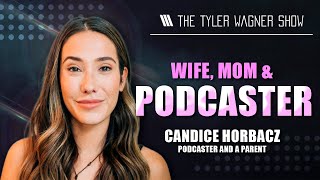
In this episode of The Tyler Wagner Show, host Tyler Wagner interviews Candice Horbacz, a former adult‑entertainment performer who has transitioned into podcasting, entrepreneurship, and family life. Candice explains how she entered the adult industry through glamour modeling, progressed to contract work, and eventually left mainstream studios to start her own production company. She recounts both high points—such as landing a lucrative contract with Fleshlight and using that success to launch her own company—and low points, including a coercive director on a Bang Bros set that led to her speaking out publicly and being fired. Candice describes the motivation behind her podcast "Chatty with Candice," how she selects guests, and her view that the show is a platform for learning and contribution rather than revenue. She details her entrepreneurial portfolio: two American‑style pubs called "Might As Well" in Wilmington and Chapel Hill, a creator‑diversification agency for adult‑industry talent, and past restaurant ventures. The conversation shifts to personal philosophy, where Candice emphasizes "raising vibrations" through contribution, gratitude, and mindful habits. She shares her reading preferences—non‑fiction focused on self‑improvement, psychology, and recent titles like Limitless and The Hunter‑Gatherer’s Guide to the 21st Century—and her wellness routines involving circuit training, weightlifting, journaling, occasional meditation, and time spent with her horse. Candice talks about her marriage to her former boss, their 11‑year partnership, and being a mother to a toddler, describing motherhood as her favorite role. She outlines future goals, including possibly opening a dream restaurant, expanding the podcast with carefully chosen guests, and continuing to balance family and work. Contact information is provided via her websites chattingwithcandice.com and evasthings.com.
Chapters
All right everyone, welcome back to another episode. Today we have Candice Hoar back with us, so welcome to the show.
Thank you for having me.
Of course, grateful to have you on. So if you can just start us off, a little bit more about you and what you do.
So a lot of things. I never really know how to answer that question. But I guess what I'm working on right now is a podcast, entrepreneur, and I guess more widely known as an adult entertainer.
Got it. So let's start. Well, first, actually, how did you get into podcasting? Because podcasting is like my favorite thing to do. I'm almost 2,000 episodes deep. So it's pretty crazy.
That's wild. Yeah, that is some serious consistency. I think I was a little bit late to the podcast game. Like by the time I signed up, you know, a year ago, everyone had a podcast, especially because no one had anything else to do. So like, I'm just going to record myself and see what happens once I post it. I don't know, it was something I had always entertained, but I just didn't have the confidence to start. And I think with a lot of time and a lot of boredom. I was like, well, I have no other projects I can really start right now because it's like during the middle of the pandemic. So I just bought some equipment and started and it kind of took off. So yeah, I'm loving it so far. But yeah, 2,000 episodes, that's insane.
Yeah. Well, no, I saw you're at like 50, right?
Yeah, yeah, yeah. I've got a long way to go.
Yeah, no, no, but it's not about the amount though. But this is the one thing that happened to me when I started podcasting is it was one thing that I thought to myself, when I'm 80, I can see myself still enjoying this. Obviously then I think it'll be like virtual reality at that point, but still. So can you see yourself like long-term doing the podcast?
Oh yeah, for sure. I mean, right now it's just like a fun little passion project. I like getting to talk to people and meet different authors and thought leaders and all of that kind of thing. So it's a good excuse to make sure that I keep up with my reading and I continuously keep learning. And I don't get a little, get dull or anything like that. 'Cause right now it's not generating any revenue. Like you have to do some serious, serious numbers for it to make a dent. So yeah, right now it's just something I enjoy doing.
[Speaker] Yeah, for sure. I think it's more about the conversations and the relationships. It's kind of like, it's like indirect revenue, I think. Like when I trace back to 2,000 episodes, I can't say like, oh, this episode made me this much money, but the relationships that have been built inadvertently have definitely helped, I'd say.
For sure. And then I also think, at least for me, it's almost like a form of contribution too. Like, I have pretty large platforms and I don't want to be someone that's constantly asking for things like, you know, subscribe here, pay for this, constantly selling. So it's like a way of introducing people that I think are important or having important conversations and like giving that information to them to digest for free.
100%. And have you ever— do you have any books out, or have you thought about it? Do I?
No, no, I've not written anything yet. It's something I'm entertaining, but it's a long way out.
Okay, got it, got it. So I do want to talk about books because I'm an avid reader, and that was the first thing I noticed when you turned on your camera. I was like, you got the library. So before we get there though, I like to kind of start the show off from the beginning, not the absolute beginning, Um, but say like middle school, high school, middle school, high school, did you see yourself anywhere where you are now or was your like vision or path completely different that you thought you would be doing?
Oh man, honestly, it's pretty darn close. And I know that's going to sound crazy to a lot of people. Oh really? Yeah, it's pretty close.
Okay.
So my mom, she did some Playboy modeling when she was younger. I always loved like Carmen Electra and Pamela Anderson, and those were like the babes when I was growing up. And I wanted to go to the mansion and meet Hef, which I got to do a few years back, and that was awesome. I don't know, like, that's— I always— I would— this is going to sound ridiculous, but when I was little, I would practice like making autographs. And it was like, I'm gonna need this one day. And by no means am I like super famous. Do you know what I mean? Like I'm not, but I always wanted to be a public figure. I mean, that was probably for a lot of reasons, but yeah, it all kind of worked out for me. So very lucky.
That is so cool. So you actually middle school, high school kind of saw it. So with meeting Hugh Hefner, what was that? Is there any like story there or?
It wasn't as exciting, I think, as everyone's going to think. I mean, he was obviously a lot older. It was at the tail end of his life, but there was girls everywhere naturally and photo shoots happening. And there were rabbits the size of pretty much my German Shepherd running around and all of these exotic animals. And it was really beautiful. But for me, that was just such like a holy cow, I'm here moment because I'd always seen it on TV or in the magazines or seen the girls that like lived there on their TV show. So I was like, man, this is happening. I get to enter this world that most people kind of just view on the outside. So that was really exciting.
Yeah, I want to see big rabbits. I don't think I've ever seen big rabbits.
Yeah, it was great. I'm an animal lover. So I was like, this might be the best part.
Yeah, it sounds sick. Like a rabbit the size of a kangaroo or something. Yeah.
Like, I didn't know they got that big.
Yeah, a lot of carrots to get that big. So, okay, so then what was your first career then, like modeling, adult industry, or like how did it get to that? And then are you still in that or have you transitioned out of it too?
So I start, yeah, I started just doing glamor shots. So, you know, I didn't even show anything, like it was all implied. And then it started to kind of escalate from there 'cause I was like getting bored and I wanted, I really wanted to be making those movies. I wanted to be a contract girl and be doing, you know, like the pirates movies. Those kinds of things. So I reached out to a couple companies when I was ready. This is a few years in of just kind of dipping my toe in. And I was like, I like, do you audition? How does this, how does this work? I don't really know. And I submitted a couple photos. They flew me to Miami and the rest is history. I, I, what I've been out of the mainstream industry now for probably around 4 or 5 years. But I still have my own production company that I shoot for myself. And it's like very tame compared to what I was doing back when I I was shooting the big movies.
Got it. Got it. What I think is so interesting is like, I feel like a lot of people from the outside, they view that industry as like, oh, you kind of like fall into it or something. Like it's not the favorable thing to do. But in fact, when I look at it from the outside, and that's why I'm curious what your thoughts are, is it seems actually pretty courageous to be in that industry. I don't think I'm comfortable with having my sex, you know what I mean?
Yeah.
But I don't think there's anything wrong with it either. So it's like, what was your overall experience, I guess, is the question in the industry.
Like, so I think it's important to know that both, both can exist at the same time, right? Like you can have women that get in and it was very conscientious and it was a business decision and they were happy, willing participants, um, that made the best of it and like that's what they wanted. And then there obviously is the darker side, which is some women fall into it because they don't have any other options, and they might have like a really bad experience within the industry, right? It's, it's so dependent on so many circumstances and who you work for and who you work with and all of that, and your state of mind going in. Um, mine was fortunately really awesome for the most part. Like, I think it's like any other job where you have your ups and downs, and there's opportunity for you to be, um, taken advantage of in any industry, right? And that no one is exempt from that. So I've had my share of that. But yeah, overall it was, it was really amazing. And I guess I'm really fortunate, you know, 100%.
So maybe you have to leave names out, but best story, worst story? Yeah.
Oh man, that's a hard one. I would say my best story would be Getting— so when I first started doing like more of the, um, intense scenes, I immediately got contracted, which is what I wanted. Um, so when I got the contract, I was super excited. I got a deal with Fleshlight, which is like the number one selling male sex toy that there is out there. So that was kind of like— that is the epitome of success in the industry because that's forever money. Like, you get the royalties off of that, and royalties don't really exist in the adult world, so it's some sense of job security or income income security. So that was really awesome. Um, and then also I would say like leaving and getting fired from that contract is probably also a highlight because it forced me to start my own production company and see what I was really worth and what I, what would really make me happy in that industry, which was, you know, being my own boss. Um, so those are probably the two best ones. Worst ones. Oh boy. I would say one always sticks out, um, more than any of the others and it It was for this company down in Miami. It was for Bang Bros and it was like one particular director, but I don't remember his name. The company's not bad 'cause that's the problem too is you have these giant companies and then all of these directors are independent contractors. So depending on whose set you're on, it could be a great day or it could be a really shit day, right? And it's not necessarily the company's fault. I mean, they're responsible for who they contract obviously, but the energy is totally dependent on that director. Um, so this director, he— I had just started, I was only doing like very softcore film, um, at the time, so very, very green. And we probably drive an hour out towards the Everglades, middle of nowhere. Um, we had to shoot at night. There was— it was a huge set, so there was probably 50 people. And he started trying to like kind of bully girls into doing stuff that they didn't want to, that was like very, um What's the word? Sorry, I'm like giving up caffeine so my words are escaping me.
Oh no, I tried that. I know.
It's not great.
It didn't work for me.
But basically just like very derogatory and embarrassing to the females and he had requested me to do some crazy act that I'm not gonna even say but it just was totally out of bounds and I just said no. And he's like, what do you mean no? And it's like, I'm not doing that. That's ridiculous. I don't want that on the internet. I'm not comfortable. He's like, well, if you don't do that, no one here gets paid. And then there was girls crying because they really needed the rent money. And I'm like, I'm so sorry, but I can't do this. And I went to call my agent and he's like, you can't have your phone. I was like, you are out of your mind if you don't think I'm going to make a phone call and like let everyone know what's happening. So it ended up being like a 2-hour production hold. They ended up working around it. I was destroying his vision according to him. Um, but they ended up— I ended up winning the argument. And every— I think it was great because there were some women that left that set saying like, you know, she's such a diva, blah blah blah, she did this on set. And that reputation lasted the entirety of my career. But then there were some women that saw that and they said, whoa, I have a choice and I can say no and it doesn't matter and I don't need to worry about anyone else and I don't need to let anyone pressure me to do something that I'm not comfortable with. I have that autonomy. So for me, that was like the really, the big win of that set.
Yeah, that's pretty crazy that he tried to do it like that. Like that's putting you in a pretty crazy situation.
'Cause they're hoping, right? They're hoping like that you've already spent that money or, you know, your rent is due or you don't want all the pressure of everyone else not getting paid because of you and blaming you. Like they know what they're doing, unlike the bad ones when they do that. So it's just— It wasn't going to work with me.
Got it. Got it. And then it was one of your highlights, but unless you don't want to share it, like, why did you get fired? I'm curious.
So it goes back to having autonomy, and that's something that's very important to me. And I— my wishes just weren't being respected as far as like dos and don'ts and what I was comfortable with, and my boundaries just kept getting crossed. And we had signed another contract girl and I saw her just getting like railroaded. Like they were just totally taking advantage of her and she was so sweet and she didn't want to say anything. Um, she also had an agent that wasn't very accepting of rocking any boats, right? He, he represented only easy yes girls. So she was kind of put in a position. So I took to Twitter and I was basically saying like, this is all that the company is doing to me. Like they're flying me halfway across the world and then having people on my no list show up. Like that kind of stuff that was just like very not okay and crossing a lot of lines. So after I tweeted that, they're like, you're fired. And obviously that's a wrongful termination, but what are you going to do, right? You're going to— that's not going to go anywhere. So I got blacklisted for a really long time. I was terrified. It's like my career is over, blah, blah, blah. But again, it was one of the best things that happened to me because it forced me to be self-reliant. Huh.
Okay. So that seems to be the most common negative part of puts you in these weird situations to try to almost like get more at or like cross your boundaries, essentially.
Yeah, because they think, you know, they have this idea and that's what the scene is going to be and you're supposed to just be happy to be there. And that's not always the case for sure.
Yeah. Well, and I'm sure they tell you before and then they just try to go further once you're halfway across the world, which is like really just a weird situation. So then you start your own production company and then what was like the, the, the next thing, part of that transition of like the entrepreneurial start? Like what? So you have the podcast and then what, what else do you have?
So we have a couple of restaurants that we've had for, I don't even know now, like probably 10 years or something like that. So those are still doing well, knock on wood, especially considering the last last year and a half. We had, we just started an agency actually. So it's like helping any kind of creator really, but specifically in the adult space and helping them diversify. So not being reliant on just a website or just shooting for companies. So helping them find whatever their passion is, whether it's a podcast, a YouTube, starting a skincare line, what have you, just trying to help spark that, that, that passion and like think of themselves more holistically instead of just this famous person or just the sexual object and help them create significant revenue on that end.
Got it. You know, as you just said that, I almost now think of like adult entertainment and like sports figures kind of similar, right? Like they build up this brand in this specific avenue, but at the end of the day, it can only last like so long. So, but the brand is still there, so it's like you might as well leverage it in other avenues.
Exactly.
Wow, that's new. I think you're on to something there. That's true.
Yeah.
Um, okay, so then I'm like an avid reader. I'm a book guy. So, um, what's like— what was the first book you read that then led you to want to continue like reading more? Oh, I see a Tim Ferriss book back there too.
Oh yeah, there's a few of those.
Nice.
Yeah, he's an interesting guy. Honestly, I didn't have a lot of friends growing up. I moved around a ton. I got picked on a ton. So that was kind of the thing that I did was read. And I would say I initially really loved history books that I just loved kind of going back in time and being able to relive people's stories. Um, and then now, I mean, I'm— I don't have a ton of time, so I'm like very, uh, particular with what I read. So almost everything I read is some kind of like either self-improvement, spirituality, psychology, something like that. Like there's a— it's, um, all nonfiction. Um, so the most recent one I just finished was Limitless because I just had Jim Kwik on the podcast. So I was like, I have to read his book, obviously, and be like a good host, which was— it's highly recommended. And then I just got The Hunter-Gatherer's Guide to the 21st Century, which I'm super excited about because that took a while to come in and everyone's buzzing about it.
Yeah, that's awesome. How was the— so you've done 50 interviews. Well, no, that's not a fair— I was gonna say, who's your favorite? But that's not a fair question.
No, it's hard, right? And especially because so many of them are over Zoom and it's like, I wish that we could do these in person because so much of it is that energetic exchange that you have and it's just not the same. Like Zoom is a great alternative, but you're never going to be like sitting across the table from somebody. So like I feel like I'm at a disadvantage with that. But I would say like my top ones would probably be, I love Dr. Debra Soh. Her and I are actually friends now because of the podcast. So she's just absolutely wonderful. I love her. Gad Saad, I think is the most hysterical guy. I just, I love his Twitter and I love his energy, and I think he's doing really important work, and his book is amazing. Um, I mean, they're all— all my guests are great. It's hard, you know, you don't want to like pick my favorites, but some of the conversations just are just like— and my Jim one was like that. We had a really strict time limit because he's— his schedule is insane, um, and I was lucky to get him at all. But I was like, man, we could have just kept going because we were just in flow, which was awesome.
I know, I love those. Like when I— when I watch Joe Rogan, and I think that's what you're saying too with the in-person I think I'm like, I think I could do 3-hour interviews sometimes. Like, oh, if you get the right person, yeah, yeah, yeah, you can definitely get it going. Um, so I, and I forgot to ask, I wanted to ask like what type of restaurants are they?
Um, they're like pubs, so American food, burgers, pizza, wings, that kind of stuff.
Okay, are they in North Carolina or—
yep, both of them. Gotcha.
What are they called?
Uh, Might As Well.
Oh, cool. Okay, I'll have to try it out next time. Are they all like in one?
Well, one's in Wilmington and then the other one's in Chapel Hill.
Okay, gotcha. Um, I just wanted to be careful. I didn't know if you cared. Obviously it's not your exact address, but I just didn't want to say where you live.
So, okay, someone who's determined enough, you know what I mean? Nothing's gonna stop them.
Um, okay, gotcha. And then, so I saw too on your, um, I believe it was on your Instagram or it's your main website, but so you have wife, mom, podcaster, and then raising vibrations. So I want to like kind of ask you, we've already talked about the podcast, but as far as like raising vibrations goes, for that to be in your title, obviously it's like significant to you. So do you feel like that's kind of one of your like purposes in life in a sense, to like just help others or like raise their vibrations? Are you typically happy? Person?
For sure. Yeah, I think, I, I think we're all so fluid, right? Like, we are constantly reacting with the outside world and the inside world and just trying to hopefully be a better version every minute, every day, right? And just constantly growing and evolving. But I think, um, when you have such a significant platform that— and I see this a lot, and you see both sides of it You see the people that look at it like with an obligation of contribution and they're like, I'm not just here to take, like I have a bigger mission and I wanna give back in some way, whatever it is. And you have the other side, which is, nope, this is just gonna be a cash cow and I'm just gonna put stuff out there and I'm just gonna monetize it. For me, that one doesn't feel right to me. It just feels off balance. And I don't think that you can be truly happy if you don't have some level of contribution in your life. And it doesn't have to be at scale, right? It could be buying a cup of coffee for someone that's behind you in line. Um, it could be helping someone with the gro— their groceries, like these little acts of just giving back. And I think that that is how you live a more abundant life. And I think the more that you give is also, it directly reflects how much you're going to receive. So I think so many people grip onto these things so tightly because they don't want to lose it, but Someone gave me the analogy of like grabbing onto sand and you can grab a handful of sand and squeeze it, but it's just going to slip through your fingers where if you just loosely cup it, right, you're going to be able to hold on to it more securely. So just trying to live that way and then just be— it's just influencing through action, I guess, right? Like not saying this is the way to live, this is the way to think. That's never good. And everyone's so different, but it's just being the example. You know what I mean?
100%. Yeah. I feel like this is kind of out there, though, but I feel like everything in a sense is a little bit paradoxical. So it's meaning like if you want control, you actually have to let go to get the control. Because like you're saying with the sand thing, like the more you try to grab tight on everything, the less you have a grip on it. It's kind of interesting. But have you heard of Jordan Peterson before?
Of course. Yeah.
Okay. I thought so. So yeah, I was gonna say, I think you'd like him because that's where it kind of transitioned for me. Whereas like in the beginning of my business, it was just, it was all about just how much can I grow this thing? And then I was very unfulfilled as it continued to grow. And then just through his work, I listened to hundreds of hours of his lectures, read both his books, and just like meaning and fulfillment, just like you're saying, even if it's like on a small scale or on a bigger scale, That is what balances it out. And I think that's why even people, if they run like billion-dollar companies, if it's all for them, you can actually be— sounds crazy, but you can be a depressed billionaire. It's actually—
well, yeah, Tom Bilyeu always says that. He's like, if you think that fame and fortune are going to solve all of your problems, then why do so many millionaires and billionaires commit suicide, right? Like, money is not going to solve the problems inside your head or, you know, outside in, in your environment, because so much of that is a reflection of what's going on inside of you, right? So if constantly all of your talk is negative and you're on all of these negative loops and you're ruminating, then how do you expect your outside world to be any better, right? You're just going to keep attracting that and you're going to keep seeing it too. So it's also when you, you know, when you go to get a car, it's your reticular activating system. If you go get a a white Jetta, all of a sudden every car on the road is a white Jetta because that's just the loop that you're in. So if you do that and you're like, you know, I'm a piece of shit or, you know, I'm not good enough, I don't have enough likes, whatever. Like all that negativity is just going to show up in your day-to-day life.
Yeah, you're so right on that. I remember when my mom got a Jeep like years ago, I swear to God, everybody had a Jeep.
Yeah. You're like, damn it, there's another one.
And they do that. I don't know if you know this about Jeeps, but they do the wave thing. Yeah, so it got weird. Like, everybody bought a Jeep after that, or they were already there and I didn't realize it.
I tried to start a Tesla wave, which is like, because you have the autopilot, so you do both hands.
Oh dude, yo, I hope this helps that wave.
Right now it's just me and one other guy in town.
Hey, that's how it starts. That's good.
Yeah.
Um, that is so good though. That you should tweet that at Elon.
I don't, I don't think that they can, um, promote it though because then it's like not safe driving because you're technically supposed to still have your hands on the wheel even on auto drive.
But true. Okay, that's fair.
I still support it.
Yeah, I think there's something there. I think Elon would think, at the very least, he would like, he wouldn't promote it, but he would say like, hey, this is funny or something. It's funny, that's for sure. Um, so yeah, I wanted to talk about too, um, before I get into the wife and mom stuff, is because you do— you had said that you are like a very happy person. What is your like typical, like, I guess rituals look like? Like, how do you maintain that?
Oh boy. Um, I am not the best at meditating. I go through seasons of it almost. So there'll be, you know, weeks or even months where I'm on it, and then I'll just fall off. And the same goes with journaling, but it's always having something in that loop, right? So like having— whether you're doing your gratitude journal or you're meditating and just trying to be mindful, um, even just taking the moments throughout the day to appreciate like the very small things. Like if your kid does something really adorable, or they come to give you a hug, or, um, your husband does something nice for you. So just like taking account of those throughout the day so you can just appreciate those and not fall into the, the mindset of like pointing out of everything that wrong that day. Um, I think what you eat and moving is huge. So if I go a couple days without working out, I notice that like I just feel tighter and more angst cuz I do tend to like lean on the anxiety side of things if I don't eat well and move. Um, so I do like circuit training, weight training, kind of like 4 or 5 days a week. I also have a horse, which helps a ton. So just like being out in nature and just having the energy of the animals is really big for me. I think doing things that you love is huge, right? It's not anything else outside that's making you miserable. I think it's not, not spending enough time doing things that you enjoy. So reading, cooking, listening to me, listening to music, going for walks, that kind of a thing. So just finding time for yourself, I think, is really important. Yeah. And then, and back to contribution, you know, giving back.
Yeah, I think so. Everything you just said there, that's what's interesting is I, I hope the world moves in that direction, especially with media. Like, I feel— so somebody goes to a doctor and says they're depressed, then they'll like get a pill or something. But in fact, the question, in my opinion, should just be like the first two things you started with, like how often are you moving and what's your nutrition look like? If you can just tweak those two to start, because I would say I'm a happy guy, but if I don't work out for three days in a row I'm not that happy anymore. So it's just like, yeah, you start to lose your spark. Yeah, it's direct correlation. So it's just sometimes it's the simplest of things, and it's not to say that it's simple. I think it's habitual, right? If you, if you've been doing it for years, I feel like the momentum, it's easier. But if you take like a month off of working out, obviously getting back into that is pretty difficult. So what's the story? How did you meet your husband? And what's the love story here?
He was my boss. I was a bartender. Yeah. That's cool.
Okay.
Yeah. And then, yeah, we just, I don't know, it just happened. We just started dating and very quickly got, I was just like, this is my person.
Gotcha. Okay. And was that like how long? Is it recent or?
Oh, no, no, we've been together. This is gonna sound so bad. Um, 11 years. Yeah, 11 years. I remember if it was 11 or 12.
Oh, no, that's fair. Yeah. Anything over 10, you gotta think about that.
Yeah, yeah, yeah.
Okay, so you're a bartender, and then he was your boss. Gotcha. And then you— how many kids do you have?
One.
Okay, so what's it like being a mother?
It's the best thing I've ever done. Yeah, best thing I've ever done. I'm so lucky. I mean, I get to work from home. I make my own schedule. You know, I podcast, you know, here and there downstairs. So they're like right above me while I'm podcasting. So I get to spend a very unusual amount of time with my family. And I think it's so important, especially in the beginning, because that baby stage and then that like just that little kid stage goes by so fast. I already can't believe he's gonna be 2 soon. So yeah, I kind of have like the dream set up for myself, you know what I mean? Like I still get to work and have that sense of fulfillment and accomplishment, but I'm also like kind of a stay-at-home mom at the same time. So it's really awesome.
Yeah, no, that's perfect balance. Do you think you'll have more kids or you're not sure?
Yeah, the plan is to have like 1 more. We've entertained like maybe doing 3, But right now we're at like 2 is the goal.
Okay. Yeah. That's the agreement. And then 3 is maybe the cherry on top.
3 is like maybe. I say 3 and my husband's like, nope, nope, nope.
Oh really?
2 is good. He's like, we're not going to get outnumbered. That's a bad idea.
Oh yeah. Good point.
I never thought about that.
Yeah. You don't want to be outnumbered.
Okay.
And I know that you briefly mentioned it, but I did notice on your Instagram, is like cooking a big part of your life?
Yeah, I love cooking. I love food. I love wine. Like all of like 2019 before I got pregnant was our crazy travel year. We actually made it a goal to hit as many Michelin restaurants as we could. So we were traveling all over and going to these insane restaurants. Some of them actually ended up being friends with some of the chefs and it was just, it was so cool. It would It's to me, that's my love language is it's food, right? It's just, it's hosting somebody and it's wanting to take care of them and it's preparing something with love. And then if you're traveling, you get to experience different cultures that way. So I'm super into food.
Okay. So did you make it down to Miami at all for the Michelin restaurants?
That's why I actually, I was there for South Beach Food and Wine Festival and I got to meet Morimoto, which I love him. So that was He's like a highlight for me. I just think he's amazing.
Yeah, very cool. Okay. And then I guess what I'd like to— one of the last questions I want to ask you is, where do you see things like going for your future? Like, what are you most focused on? Is it the podcast, the restaurants, or any like new things that are on the horizon?
So I really, really, really had this dream restaurant I wanted to start, but then after 2019, I just I don't know if I think that's wise right now just because you never know what's going to happen. And that just might be more of a headache than it's worth. But that's still like in the back of my mind is something I might want to do is just like a fun artistic passion project. But right now I would say it's the podcast, it's being a mom and kind of just focusing on those two things. I was trying to update the podcast every week and being like super diligent about scheduling and then I started finding myself like searching for guests and being like, well, I don't have anyone for this week and then kind of getting to this desperate place and I'm like, well, I don't want to have anyone on that I'm not super curious to talk to and super excited to talk to. So I'm going to just update as I find really cool people and we can align our schedules and kind of take that Hardcore History Dan, what's his name? Dan Carlton, Carl. Oh man.
Oh, I know the podcast you're talking about.
Yeah, yeah, yeah. And just upload when I upload and it's going to be an awesome episode because it's someone I actually want to talk to.
Yeah, I like that model better because I'll tell you, like, from my experience of doing it, like the first 1,000 episodes, not to say that I did like having everyone on. So just to be clear, anybody, but like I got in the beginning, I was, I was just kind of saying yes to anyone because I'm sure this is happening to you too already.
Yeah.
It's like as your podcast grows and you have some big people on, that I get pitched like 50 to 100 people a week now from all these agencies. But now I'm just much more selective. And I actually think your ratings will go up if like, because if somebody likes all your episodes, it's like less is more rather than if you, like you were saying, you upload one and then the vibe isn't right, then I feel like your avid listeners, you could start to lose them because there's not consistency there.
Right, exactly.
Yeah, I just say if I could go back, I'd probably do it more like how you're already doing it. So, um, so cool. So yeah, uh, last question for you. If there's anything that you want to share that we didn't cover, please do. And then, uh, where can people stay in contact with you, like social media, website, podcast? Where can they find all that?
Um, so you can either go to chattingwithcandace.com or you can go to evasthings.com. Both have a bunch of different, like, social medias, websites, podcasts, all of that good stuff. Yeah, then you can check out the podcast Chatty with Candice anywhere that you listen to podcasts.
Perfect. Thanks again for coming on the show.
Of course. Thanks for having me.
More from Tyler


Catherine Nikkel : THE STORY EVERYONE HAS BUT HASN'T TOLD : The Tyler Wagner Show #1120



Scott Ritzheimer: Bring Predictable Success to your Organization | The Tyler Wagner Show #1115


Fred Moskowitz: A GUIDE TO GETTING STARTED WITH IN MORTGAGE NOTES | The Tyler Wagner Show #1113

Mark Podolsky: From Land Investor to Full Time Success How I Made $90,000 Cash in Real Estate


Mark Podolsky: How to achieve a 300% return on investment my foolproof strategy

Mark Podolsky: How to make passive income selling raw land the irresistible pricing strategy