Carol Tice: HOW TO HIRE A BOOK GHOSTWRITER | The Tyler Wagner Show #1104
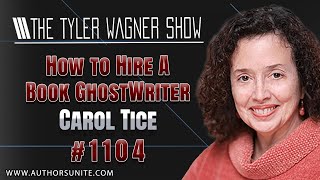
In this episode of The Tyler Wagner Show, host Tyler Wagner interviews professional book ghostwriter Carol Tice. Carol shares her career journey—from songwriting and journalism to full‑time ghostwriting after selling her freelance‑writer platform in 2021. She explains the ghostwriting market, fee ranges ($5K‑$250K), and why visibility and platform matter more than traditional publishing deals. The conversation dives deep into how authors should hire a ghostwriter: the essential pre‑meeting questions, the importance of a clear book outline, assessing voice fit, and staging projects with affordable entry points (e.g., outline‑only contracts). Carol describes her process for capturing an author’s voice through deep listening, ventriloquism, and structuring ideas into a cohesive “sweater‑knit” narrative. She discusses pricing models (flat‑rate vs hourly), timeline risks, and why she prefers time‑bound projects over open‑ended ones. The interview also covers publishing realities—traditional publishers often care only about audience size, and self‑publishing can be more profitable when the author controls the platform. Carol cites successful case studies, such as the bestseller "Retirement Money Secrets," and a failed client who wanted an academic white paper. She offers practical tips for both authors and ghostwriters, emphasizes the need for mutual enthusiasm, and promotes her free ebook "How to Hire a Book Ghostwriter" along with her LinkedIn and website for further contact.
Chapters
All right, everyone, welcome back to another episode. Today we have Carol Tice with us. So welcome to the show.
Thanks for having me.
Of course. Thanks for coming on. So first thing, if you can just tell us a little bit more about you and what you do.
Sure. I am a book ghostwriter. I have been ghostwriting books full time since I sold a business, an online business I built back in '21. I've been a freelance writer for a long, long time. I've written for Forbes, Entrepreneur. I write— I generally write business books, though I just wrote my first memoir. And I have a new little ebook called How to Hire a Book Ghostwriter that walks through— I just, I created it because I had the sense that, you know, you're working with a lot of first-time authors, they've never done this before, and there, there's a lot of sort of questions around how does this How does this come together? How do we do a collaboration together? And so it just kind of answers all the, it poses all the basic questions I ask in a first meeting so that you're, you know what they are. So it's not like a surprise when you get to, you know, let's take a meeting and see if we're a fit. You know what I'm gonna talk about.
That is, okay. I definitely wanna dive deep into the book content of your latest book because I think you actually found a very big pain point there in the market. Like there are, And especially as you know, like ghostwriting fees can range pretty widely. So it's super important that somebody knows how to do that because, you know, sometimes people are spending anywhere, $50K, sometimes even $250K, like depending on the ghostwriter, it can get up there. So before we go there though, my first question is when you were, let's say like middle school, high school, did you envision yourself doing this? That, like, what you're doing now, or ghostwriting, or anything of that nature, or something completely different?
I envisioned myself writing, but the kind of writing was songwriting. I started out in songwriting. I played bands in LA in the '80s, and, um, so I was a starving songwriter playing in clubs and not loving hanging around smoky clubs till 2 AM. Relying on band members who might show up at the gig or possibly take psychedelic mushrooms and the overnight party bus to Vegas instead of showing up. And, you know, and then the LA Weekly, the alternative press, had an essay contest, and I entered it, and they gave me $200 as one of the winning essays. And I like never looked back. I was like, I found a kind of writing people pay And I have control. I write it. There's my name. You know, I go down to the mini mart on Thursday and pick up that paper and there it is. And, you know, ended up learning about journalism through UCLA Extension and just kind of learning it mostly on the job. I had 12 years as a staff writer at two publications, and it's all kind of rolled from there. And yeah, that's all.
So, okay. So it started as a— do you still write songs at all or you kind of put— okay. Gotcha. So then you completely—
I love music. I do music. I enjoy music, but it's not the kind of writing that I do anymore.
Got it. And how many, how many books have you, I guess, written yourself under your name? And then how many have you ghostwritten? Maybe you don't know the exact number of ghostwritten.
Yeah, that's a good question. It's— I have two traditional print book titles, both of which I was approached to write by those publishers just from my visibility on Entrepreneur and on Forbes. And then I wrote about 14 ebooks for the business that I built and sold, which was a platform that helps freelance writers earn more. That's still out there under new ownership. And, uh, I I think I've ghostwritten, it's like 8 titles. It's hard to keep track cuz they haven't all come out, you know?
Got it.
Um, sort of the most frustrating part of being a, a ghost is you have no control over the backend.
Yes. Yes. I can imagine.
When or if it comes out.
Um, so, okay. There's a couple different things. So what was the, what was the first book that you wrote? That, that you wrote?
Uh, the first traditional print book. Book that I did was, uh, How They Started. It was— it's a book of like 30, uh, business startup stories. Like, how did Jamba Juice start? How did Spanx start? And that was a lot of fun. I had a lot of fun on that.
So did you actually— did you like interview the founders and stuff, or like research?
In some cases I was able to get to founders, and in other cases we were building it in other creative ways if they wouldn't talk to us off speeches they'd given, previous reporting, all kinds of YouTube videos we found, you know, all kinds of research was done. And that, that first book was actually started as a ghostwriting offer. And this has happened to me multiple times, that people start out, we want you to ghostwrite this, but because of my visibility as a business reporter, they would end up offering me a byline and deciding they wanted the byline. They thought that that was helpful to them. So it took a while for me to be like, don't give me a byline, I'm actually trying to be a ghostwriter now. I have enough bylines and, you know, this is the niche I want to be in.
So I'm actually— I'm very curious about this just because a lot of people, and, and nowadays I guess I think all the options are good, whether it's self-published, hybrid, or traditional, they all have their pros and cons, I guess. Sure. So it, it depends what's best for you, but for the people that do want traditional, I guess, so you have visibility on, I think you said Entrepreneur in Forbes, I guess, was it, do you think the visibility was the core reason the traditional publisher reached out to you? Or like, oh yeah, that core. Okay. Like visibility, 100%. Like that was, yeah, they, they read, they were reading me. Yeah.
Yeah.
Yeah.
Okay.
Because I think that's what's interesting is for, And it's good for people to hear because a lot of people, you know, everybody believes their own book is amazing and then they try to go to a traditional publisher and most people don't get deals. And I think it comes down to the fact that visibility is actually the number one reason people get deals. The actual book content is secondary, which may—
Well, in both of these cases, they were approaching me with a concept they wanted written. So it wasn't me bringing them the concept. So sort of a different scenario. But I wanna say, as someone who's, you know, been down the traditional publishing road, that if you're thinking that what you will get is that they will market the heck out of your book, I really have heartbreakingly bad news for you, unless you are J.K. Rowling. Particularly on the nonfiction sort of business book side of things, what they wanna know is how big is your audience and how will you be promoting this book? Um, they do, they'll do a couple of things, you know, but it's, it's so minimal. I, I think people have real illusions that way, and it's really heartbreaking. It was heartbreaking to me to see how, how yesteryear their marketing ideas even were. They had, they, I was like, what's your marketing list? It had zero blogs on it.
So just to say, well, no, with all the phone calls that I do, I hear it over and over again where, you know, even, you know, people want to get a deal, then they get a deal, everything runs through and then they're still disappointed in the end because they were, they had all these high expectations. And then the realization is the publisher published the book, but they didn't really do anything else. Right. So that's, and that's why I think having a platform is the number one thing. But to actually be approached, I mean, because most people are approaching the publishers, that's like an incredible, you know, like you're, I don't know about you, but that's kind of why I did it.
It was like, okay, this has fallen in my lap. It's the topic I love. I love writing about startups and entrepreneurship. And the second book was on a similar type of vein. And, um, I wanted that gravitas of having— saying you've done a traditional print title. But yeah, after two of them, I was ready to self-publish and keep all the money, you know.
Yeah, that's a whole other thing. It's—
yeah, because I did have a platform, the one that I sold. I, uh, Amazon was actually not a huge part of my sales strategy. I was mostly selling on my own my— they were on Amazon, but I wasn't like all in. I wasn't in KDP, you know. I was mostly selling it on my own site and keeping the money. And if you can build a platform and do that, I recommend it because you will make so much more money.
So did you, um— I'm curious on the technical side of that actually, because for people to know, so if you sell it through your site and then it gets fulfilled, did you— you partnered with like a fulfillment center then, like outside of Amazon and stuff?
So like, I didn't do physical print, it was all digital.
Oh, okay. Gotcha.
It was, it was only eBooks.
Okay. Got it.
That made it easy.
And then before we get into the content of your new book, and you can say the name of the website or not, it's up to you, but the one that you sold, I'm just curious, like what was the, I guess, value prop or how did you create the site to help writers earn more?
Well, I started with a blog. It was basically a blog-based business, which is Make a Living Writing. And I started feeling out the community about how I could help them because I was just getting a million emails, you know, oh my God, I have a client meeting tomorrow, I don't know what to say. And I knew I could not be the free 24/7 individual one-on-one Dear Abby of the entire freelancing, freelance writing universe. And I was like, well, how can we make this so that my time is compensated and that I can help many people? And the answer to that is paid community, where I can answer once in a forum where hundreds of people can see that answer and, you know, just create courses. So it was courses, community, and coaching, uh, all going on.
So perfect setup. Yeah, it makes sense.
Yeah.
Um, okay, got it.
And then you, um, and then you ended up selling it basically after a decade of that. I was officially done helping thousands of, of my children, to caring super much about all of their success, and I was ready to just go back to writing. Um, you know, I, I'm A lot of, I know a lot of coaches get into it cuz they don't wanna do it anymore and they just wanna coach other people. But that was never me. I always loved writing and I never stopped freelance writing the whole time, which is possibly why I was burnt out. Yeah. Because I, I always felt like when you stop doing it, your, your advice goes out of date and you don't know what's going on in the marketplace anymore. And I always felt like I, I don't know, I like writing. I, I still did it. So that's how I was. I was thrilled to go back to this and really focus on ghostwriting. I've loved, loved what I've been doing since '21.
No, that's awesome that you love the craft. And it's definitely true if you don't have a pulse on things, because even like book marketing, like if you think like 10 years ago, it is so different now. Like it's— yeah, I was actually having a conversation with a guy who he just sold like a big business and he had wrote a book 10 years ago and now he's coming out with another one, but he hasn't been involved in publishing for 10 years. And his first question was like, hey man, so like, how do we— I want to get New York Times and I'm going to be self-publishing. And I was like, well, that's the first problem right there.
Yeah, probably not gonna happen.
Um, things have changed a little bit. Um, and I don't— you know, 10 years ago I was very early in publishing, but I would imagine maybe it was easier then or something. Something was different.
Well, I feel like now there's just a lot of places that will not look at self-published books, and some that will. You know, there's kind of a divider there, but there's also the whole world where traditional print publishers are trolling what is being a self-publishing hit and picking it up. So, you know, to me, doing a strong self-published title, if you've got a platform to sell it, you can end up with a print imprint that lifts it higher, you know, and we've seen that happen. Yeah, they're, they're trolling what, what's happening. You know, in the self-publishing world.
We've actually had that happen a few times where we've done like WSJ bestseller campaigns for people, and then months later they'll get picked up by a traditional publisher.
Yeah. And because you've proven you have the audience. Yeah.
And it's funny because one of them was published under us and the author was like, Tyler, I'm really sorry. Like, are you okay if I change and go? And I was like, dude, if it's best for you, go do it. It's fine. Like, I don't, you know, it's fine.
I think you're okay saying that your platform launched someone to it, to that. Yeah, yeah, yeah.
But I just mean because it had our branding on it. So she felt bad that she would then remove that. And I was just like, yeah, it would be nice to still have it on there. But, you know, if it's best for you to, you know, get a different publisher, I'm totally cool with it. But so remind me, what was the title of the new book again? Just so—
How to Hire a Book Ghostwriter.
That's okay. That's what I thought.
So the book, I actually just yesterday ripped it apart and created a second edition. And updated it. So it's fresh off the digital press.
How, if you were to give a percentage, how different do you think the second edition and first edition is? Like 50%?
It's decently different. I really went through and rewrote it. And you know how it is when you're a writer. I'm like, well, I could do this more concisely. I should add a page about this. So the big add is that I added those. So the book is 10 Questions I'm Going to Ask You, First-Time Author. About how we will work together. What stage is your book at? What's your audience? What's your goal? What are we doing here? You know, and how will we build the book together? You got a stack of speeches, or I'm gonna call you once a week and we're gonna talk, you know, how are we doing this? And, you know, what's your passion here? I wanna hear about the topic. And because if it— I'm not excited about it, I'm not gonna do it. I don't care how much money you'd offer me, but this is 6 months of my life. And we're going to be talking all the time, I may be writing, you know, 40, 50, 60,000 words of something. I've got to love— I've got to think it's fresh and valuable. And I want it out in the world. And, you know, I'm going to be kind of your biggest cheerleader. I'm loving it. I want it to happen. You know, if I'm not at that level of enthusiasm, I'm kind of not in.
Really interesting, actually, to hear, because That makes— I actually never really realized that side of things. So as a ghostwriter, you are— it's not really just about getting a lot of, like, growing a business or getting a lot— like, you actually really do have to be bought into that person's book, right?
Well, I do. Maybe some other ghosts want to write about something that they think is just a boring slog, but they're just going to do it for the dough. Thankfully, I'm not in a position where I have to do that. And I— the other thing is that as a ghost, I make this career happen by being associated with successful projects. So if you tell it to me and I think this is going nowhere, it's like I'm gonna slave on it for 6 months and it's gonna come out and I'm not gonna get recommendations. It's not gonna be an Amazon bestseller. You know, it's not gonna do anything that helps me find— bring more clients to me. So it's kind of a dead end for me. And yeah, so I'd rather look for something that I think, wow, this has really got potential. Like, um, a book I just ghosted, and I think he's okay with me saying this, uh, that came out this summer that had a nice, uh, bestseller run on there, uh, Retirement Money Secrets. It's about a type of retirement investing that almost no one does or knows about. It's a really contrarian way to invest in the stock market. And, you know, he told it to me and I was like, okay, that's something actually different that adds something new out there. You know, there's not a lot out there like this, and like, this has a shot. People care about retirement investing. And sure enough, he literally like went on a vacation. He hasn't done any book marketing. I want to kill him. But, uh, but it's— it like hit several bestseller categories without him basically doing anything. You know, so I wanna have an instinct that it's got that kind of potential, that it's something that's the world needs that's interesting and unique, you know?
Yeah. And for you to enjoy the work, it, it kind of, it has to be that way. And just so you know too, I mean, that is another, I think that's, I, cuz we market so many books, I'm always trying to figure out like, why do books succeed in the long term? And I think one of the reasons is if it perks curiosity, like I am actually interested in reading that book because of the way that you presented it.
Right.
I know a contrarian way of investing in the stock market to retire. It really makes you curious. What is it? You know, and I want to ask you what it is, but I think you should just tell me.
Get the book.
Yeah. What's the title of the book again?
Retirement Money Secrets.
Retirement.
That was one of two books I had come out this summer that hit some bestsellers, but that was the most the biggest win I've had so far. And once he gets back from his safari, I'm gonna sit him down and try and get him to focus on book marketing, because I think he could drive it a long way. And, you know, that's good for him and for me. But yeah, I mean, I'm glad you said the thing about it has to be enjoyable and fun. I don't know about you, but at this point in my life, I'm here on earth to meet interesting people, spend time learning interesting things. And we are going to be spending a lot of time together in this relationship usually. And I, if it's, if it doesn't seem like it's going to fill me with joy, yeah, I'm, yeah, I'm Marie Kondoing that. If it does not spark joy, it's not. I, people, I think if you've never written a full-length book, you have no idea that the hundreds of hours of time that are going to go into this, And yeah, it has to be something that, you know, when you're writing long form, this is a long slog. And we have to, we have to be able to go on that whole journey all the way to the end of a finished book. Because the other thing is, I don't want train wrecks. I don't want things where we kind of get started and we kind of have some ideas and, but it kind of peters out at halfway. And this is why I like to start if someone does not have a rock solid book outline where I look at it and go, yeah, okay, this is ready to go. We do an outline project first. That's also an affordable way to start working with a ghost if you are exploring it and you're not sure. And, you know, it's like, I'm not expecting people to just— hi, you don't know me, give me 40 grand to write a book. You know, we can start with a smaller project where we kind of get to know each other, sort of the dating phase. And we get a sense of whether we like hanging out and we both have a passion for this and a shared vision of where this book is going.
Because that's a great tip for ghostwriters.
If not, you know, we got a problem.
I think that's a, well, it's a great tip for both sides of the equation, but for ghostwriters, because, you know, look, it is, it's hard to sell something at that level, right? $40K, $50K or more. So it's like, hey, maybe just start out like $2,500, couple hour sessions and you get an outline. If we like each other, we continue. If not, worst case scenario, you get, you have an outline for your book. And you can go, you know, so that's kind of an easy way to just get the engagement started. I, I like that idea.
Yeah, and to make sure just that we share a vision of where it's going, we're kind of on the same train going down the same track together. Um, because yeah, I want to see that this is a project we can complete. We will have a done manuscript at the end of it. It's not going to kind of die somewhere in the middle because we don't really understand it. And I feel like That's one of the big things that book ghosts bring to the table that a lot of people don't understand is book structure. People have great ideas in their heads. A lot of, you know, consultants and CEOs and founders that I talk with have a lot of great ideas, but it's sort of a mishmash in your brain. You know, it's not necessarily organized in a way that a reader could unpack and benefit from it. And that is my job, is to take that blob of ideas of all your life experiences, all the companies you bought and sold, or all the amazing things you overcame in your life, or whatever it is, and structure it in a way that the reader is going to come on this journey all the way to the end. And there's kind of only a half dozen different ways to do that, where our brains have read lots of books in that format. And we're trained to kind of— we kind of get it. And the reader kind of comes along with you. And because if you want to just sort of put random anecdotes, you know, unless, unless you're a celebrity who can kind of just do whatever and people will read it because you're famous, um, you know, you have a problem. And the other thing is that I'm looking for the kind of author who really wants their book read, is a personal preference of mine. And there are two types. Some people just want to be able to say, I'm an author, look, book, and they don't care if anybody opens it up and reads it. And that's fine if you want to do that, and you know, you feel like you've left a legacy, you've told those family stories or whatever it is you wanted, great. But that's not my bag. Yeah, I want books that, that people— I'm here to engineer books so that they are a compelling read all the way through because they have important ideas that need to get out and inspire people and help people. You know, that's my deal.
Yeah, no, for sure. And so let's actually go through the, the process, right? So, and you know, I, I, we should leave some curiosity so we don't have to go through every 10 questions. But I, I maybe from like a macro view, I think it would be like, cuz our audience is a lot of people that some of them are already authors, business owners, but then a lot of them are aspiring authors. So I think, if like, what is the best, like ideal scenario from like start to, it's kind of a big question, but from start to finish, somebody who wants to work with a ghost, What does that look like? So kind of like your whole book is what I'm asking you.
Well, I mean, there's not one answer to that, I want to say, because I've started with people where it's just like a ball of blob in their head. And I've started with people who hand me an outline and I'm like, oh, ready to go. Okay, let's write a book. You know, it doesn't always happen in the same way. I wrote one book where I talked to the author for 1 hour. And then worked with his marketing department. We were actually rewriting and substantially updating an existing book they had done like 15 years ago. It was very dated and needed a lot of changes and additions, and it really needed to be kind of totally redone. And I got a sense of his voice from that one conversation, and I went and wrote a book. And, you know, so there's more than one way to build it, but My mentor Claudia Suzanne, who until recently I think ran the only university-accredited course in how to be— how to learn to be a ghostwriter out of Cal State Long Beach, taught me that the first question is, tell me about your book. And, you know, I don't assume anything about what state it's in, what is it, why is it, you know, just tell me about it. Start talking about your book. 'Cause that's how I hear the passion and the ideas that are in there. And whether there's a focus to it, you know. And if you're having trouble focusing it, what I say is, you know, think of the drunk cocktail party thing. You're at a, you know, everyone's had a lot to drink, you're at a party and you're like, I'm writing a book. And they're like, oh, what's it about? What do you say? Can you come up with kind of a one or two liner of like, what's the book? Um, because if you can't, you, you probably need to think some more. Because like I say, I, I don't want to come into it at sort of a nascent proto stage where you kind of don't really know what it is yet. It's kind of not time to hire me yet. You don't have enough of a vision of what is this, you know, what are we doing?
What are the qualities that you have seen over all the books you've— and just from being in the industry for as long as you have, like What do you think makes like a great book? And then a secondary question would be like, what are the mistakes that you see authors make a lot more on the writing side, right? Like, and an example just to preface this is like, let's just use David Goggins, right? So I'm sure you've seen his book Can't Hurt Me, and he just came out with the second one. I— his book, yes, it's, it's like memoir, I guess you could say. It's, it's like mostly story-based and it's very like vulnerable, authentic, has crazy stories in it. And I think that that's where, for me personally, I think that's where most authors fall short is they're not willing to tell the kind of dirty details of things, but that's what people want to read. You know, like that's actually what we want to read. So I'm just curious over your time, like, have you noticed any trends of like, and then came to a conclusion, oh, that's why this book won or like did so well.
You know, I think it's, I think it's partly a factor of an idea meeting a moment. It's partly timing. And that's why one of my questions is, why is this the book we're writing now? What is it about now? Yeah, that means this book is the book you should do. Because a lot of people have potentially more than one book idea in them, you know, to do. And yeah, so what is happening in the culture? In society, in politics, in the world today that makes us need this book now? Is, I think if you have a case about that, and I just started a project that has a very strong case exactly like that, why now is the moment to tell this story about this program and why it's the answer to all of our problems. And if we would just do this, you know, nationally, everything would be great. So it has a very strong "this is the moment" for it. I'm actually writing a memoir right now, which also is a "this is the moment" because it's someone who survived the Iranian Revolution. And now, you know, it's sort of happening again right now. So there's a very now-ness to telling that story in this moment. You know, in general, I, in general, beyond the "do you have a like this moment needs this book," I'm looking for uniqueness. There's something unique to what you learned, what you have to say, what the system you're teaching people that isn't already something we've seen 100 times. It's something fresh. And, you know, there's always a need for new ideas. Yeah, you know, that to me, we have an endless craving for, you know, what is a new approach to, you know, I actually knew James Clear way back way, like, 3 ideas before.
Yeah, way back in the day, years ago.
Yeah, yeah, uh, back when he was doing like bodybuilding blogs and like way back. And, um, you know, he finally centered on the thing we all— that has like this universal audience— productivity. We all just need to be more efficient and productive. And, you know, and he came up with this very sort of fresh scientist, sciency kind of approach you know, data, very data-grounded approach. And wow.
Well, you know, I really just bought that because I'm down in Colombia, South America right now. I just bought that book for 4 different people down here in Spanish. That book is everywhere.
It's a juggernaut. Yeah. I mean, you can't— I can't guarantee you that, you know, you're going to meet the moment in quite the way he did. But, you know, but you want to have a sense that there's potential like that for it to kind of catch fire in what people are talking about, what's going on in the world today, you know?
No, I love that. And because it's actually, it's very similar to the media in general, right? Like when you're pitching reporters or like, or yeah, I guess it'd be reporters or anybody to get on blogs, TV, anything. What you mostly, it's not just what you like, what your content's about, but it's like, why is this meaningful for me to have you on the show today? Right.
People forget that the word news contains the word new.
Yes, we do.
Reporters are wondering, do you have something new to say? Oh my God, I want you to tell me your new idea. Yeah. People really forget that we need freshness. We need something, something unique. And that people continually crave the new. You know, we always want a fresh idea. So that in itself sometimes can be enough of a why.
Do you have any, just curious throughout your whole career, do you have any stories of, and you don't have to name their name, but of like when it's something like did not work out, right? Like you engaged, you did ghostwrite, you were ghostwriting, and then the person just completely dropped out and didn't finish.
I actually have a really funny story.
Oh, great.
All right. Early on, when I was finding people through a platform for the— for freelance finding writers, I got a guy who hired me, and I liked his idea, and we started to get into his idea, and it got weirder and weirder until he— it finally came out that— so we talked about the shared vision. It turned out that we like We really didn't have a shared vision because the secret he had not shared while hiring me was that he really wanted to write a 200-page academic white paper that 6 key academics would hopefully read, and then his ideas would spread from there. So as an increasingly proud college dropout, this is actually— is obviously not the assignment for me. I have made my whole bones taking those kinds of academic ideas and turning them into plain English a broad audience can understand. So this is totally the wrong direction for me, but as I talked with him, what came out was that he had never read anything I had written. So big tip to everybody, go read some stuff that the ghostwriter has done, both under their own byline, and if you can, some samples they've ghostwritten, so you can see the difference in voice. That's right. That when they ghost, it doesn't sound like them. It's saying, you know, I'm writing a memoir in the voice of a 13-year-old in Iran in 1978. You know, it doesn't sound like me talking. It doesn't sound like my business books. And that, so that you see they're, they're doing that ventriloquism of it really sounds like that person and that time and the way they talk, you know.
How do you do that? Because I think that's the hardest part for a ghostwriter. Like, I can't, I really do think like we just, humans are all alike in some ways, but we're also very different. Like, I can never imagine myself writing somebody else's memoir. Like, that would be so difficult. So do you have like any methods of kind of like, obviously you interview them, you gather all the knowledge, but how do you get yourself in that space to essentially kind of become them as you're writing? Because that would be—
Well, first it's a deep listening, a deep listening exercise. You have to, you have to hear someone on a level that most people aren't listening. For. I'm a lit— you know, and just as someone who's been playing with words nonstop since I was 14, to the exclusion of almost all else, I am— I'm like immersed in language in a way that a first-time author who hasn't just spent their life cranking out stuff every single week of their lives is not, you know. I'm listening to, you know, the tell— I was taught when you talk to people in aviation, they talk about aircraft and they don't talk about a plane. You know, there's all of these little tells that make up their unique speech patterns and the way they frame issues and think of things. And I am listening for those things. Those, you know, you call your dad dad, or you call him baba, or you call him, you know, you call your mother mamá, or, you know, and I don't, you know, I'm listening for all those differences, all those, all the uniqueness to how you conceptualize your ideas. And then I'm sitting very quietly and getting into, like, trying to just sort of have that all floating around me, like in a word cloud in my mind, you know. And, and I'm looking at my notes, I'm looking at exactly what you said. And whenever possible, I'm trying to put just exactly what you said straight into the book. That's the biggest win is like, if I can just slightly polish what you said and just sort of pop it in there, it's not usually that easy. But anytime I can catch a sentence, a phrase, and just direct deposit it, I'm gonna do it because the more it authentically sounds like you, the better this is gonna feel for you.
You know, I forget the book I read it in. I, I think it actually might have been the book on writing well, I think it's called. But in one of these books, or it was some famous author, he said basically like, write as you speak. Like that, that was his like biggest advice. He's just like, if I give any advice, just, you know, cuz a lot of people, I think when they go to write, they, they'll like try to sound smart or they'll like try to add fluff and make it all. And he's like, just write as you would speak. It's as simple as that.
Well, luckily I've had all of the fancying it up, trying to sound academically, you know, knowledge, you know, learned or something beaten out of me in 12 years of having to file 3 stories a week. So I don't have that problem so much. I'm more on the other end of, yeah, how conversational and accessible and authentic can it be? Most of the books I'm writing, we are trying to make complex ideas accessible to a wide number of people. And actually, with Retirement Money Secrets, I kept having to go back to him and be like, simple, What if they don't know what market value is? What if they don't know what that phrase you just spit out is? You know, what, how can we describe it for so anyone could understand it? So a lot of times I'm breaking things down to get them to where people can understand them, but it's always coming back to how you talk, how, how do you explain things? Um, because that's the basis of it.
That's probably a big part of it because when you're an expert on something, everything seems obvious. So to him, this investing model is just like, well, you just, you know, look at the market value and you do this and that and you're there. But in reality—
and I'm like, wait a minute.
Yeah, yeah. Like, you need to understand it too, right? As the ghostwriter, obviously. So if it's not clicking for you, it's not going to click for the reader. So it has to be simplified. Yeah.
Two things you just said are important. One is, yeah, a lot of people are looking for a ghost who already knows all about their thing. And I want to say that that's not always the best idea. I like to feel like the reason I hit it off with this author on investing was that I felt like I was the audience, and I feel like that's an ideal, ideal space for the ghost to be in. I was like, I'm looking to retire, I want to invest money, I don't know about this system, and I want to learn all about it. So I'm a stand-in for that ignorant person who doesn't yet know any of these concepts And we actually did that one as a business fable where we created a couple who don't know it yet and they go, they meet with him and talk to him. And that's how I got him to speak plain English was with that construct. So this is my job is to go, okay, you have this material and these are the struggles of getting this material to the audience you want. And my job is to figure out, well, what is the structure and the format of this that will make that happen? And how, how can I build this so that every chapter interlocks with the next one and you really, really need it? I call it the sweater knit approach. There shouldn't be any dropped stitches. There shouldn't be a hole in the sweater where I can go, oh, well, I've lost interest here. Nothing here. You know, I don't know. Ah, this chapter doesn't relate to that chapter. I don't understand what's happened. My job is to knit everything you said together so that the reader can come on the whole journey, you know. So that's the part I'm like, kind of working on. That's where the, the craft really comes into it, is that, okay, you got all these stories, but how can I, how can I juxtapose them so that one sort of sheds light on the other one, you know, in a— it may make the other one have more resonance and meaning. And, you know, that's the kind of stuff that I think is hard to do on your own. You know too much stuff about your story or your thing that you're trying to tell people about. And also, you may not even— you make assumptions about what people will know because it's inside your brain, but they don't know it. And it's up to me to pull all that stuff out. But wait, how did you get there? How did you sign up for the military? How did it work? Where did you go? You know, you just think you were there, you would know the room in your head, you are in the room inside the mosque where you signed up for this, you know, but I don't know. That's how it happens. So the thing I found doing my first memoir, this one that I'm talking about, is that the part of, part of my job is to help you remember things you've forgotten, that you haven't even thought about. But we need, we need them for the story. And it's hard to do that with yourself. That I think that's the kind of thing where if you have any sort of legacy of trauma, at any level that you experienced, that there's stuff that you are going to need someone to kind of bring it out of you. Because you put it away, you locked it in a closet, and, and it's not going to make it into the book without someone kind of helping walk you through that and sitting with you while you cry and, and helping you get there. That, that was a really big learning for this author who tried to do it himself. He came to me after trying to do it himself and taking a class and, you know, going through all of that and realizing that, that he needed help. And yeah, we would go round one and I would be like, do you remember this? You event that happened? No, I, I didn't know anything about that. And he'll come back next week and go, oh my God, I remembered something about that now because you poked me about that, you know? Yeah. Yeah.
So one of the biggest things you said there that I think is awesome is that it's actually one of the biggest objections on ghostwriting we get a lot of times is that the person, and I always think this is kind of wild actually, right? So the person is like, hey, I want my ghostwriter to be an expert in my field. But it's like they're a writer. Like, how could they be an expert? Just as an example, and I'm not saying this author did this, but how could the person be an expert on retirement savings when they've been working on being a writer their whole life? So, the idea that you're going to find somebody who is an expert in real estate to write you an amazing real estate book is just very unlikely, I think.
It's a long shot. Yeah. But also, the problem is they have also drunk the Kool-Aid. I mean, if you are writing a real estate book for an audience of realtors, maybe it's going to work. But if you're writing it for consumers who buy houses, or, you know, people who buy commercial property or something, it— they've drunk your same Kool-Aid. So maybe you're still talking over people's heads. I actually had someone approach me about a memoir where she wanted to find someone who had also, like her, been a woman who served on a Navy ship early in when that was a thing, when that was just starting to be possible. And I was like, I think that is a bad idea. Because they will also be completely steeped in Navy culture and not pull out of you, but like, how did that work? What, you know, so what would the process be when once you said this, you know, once this happened to you, how, what was your recourse? You know, like, yeah, I think, I think it's good that the ghostwriter have a a background in, have a familiarity and an interest in your topic. You know, I'm not, I don't think I should be writing a book about a topic that just does not interest me, you know, at all. I'm just like, okay, whatever, we'll write it, you know, it just won't be lively.
Yeah. Because if they are an expert, if they're an expert in it, like you were saying, the problem with that is like breaking it down so that the average person can understand it. Average, just meaning not expert in that thing. Is probably not going to happen because if two experts are writing it, they're not going to see the holes.
Yeah, that's the possible problem there. Yeah.
Yeah. All right. That's a huge thing actually there.
Yeah.
Because I'm telling you, there's so many people that come through our site and they're like, hey, I'm looking for this specific expert on this topic that can write a book for me. And I'm like, I mean, I can try to find them, but I don't know.
Like, you know, like my, my basic response is there's the internet and give me a day and a half and I'll be your expert. Expert in it. Yeah, you know, I can learn. I enjoy learning new things, and I'm happy to go on that journey and come ready to ask the right questions, knowing enough to at least know what to ask you and to build it for you. But the other thing is, there's two kinds of book ghostwriting collaborations. One is, oh my God, I need a book for a conference. I'm in a keynote in a year. And we need to start on this now. And I can see I'm never going to write it myself. It's— there is no way. I'm going 1,000 miles an hour, you know, I'm on a plane every week. And so we need the writing on this done 6 months from now. And there's people who are like, well, I've always wanted to write my memoir, and I'd like to work with you, and I don't know how long it'll take, and I have no particular endpoint. It's sort of open-ended how long it can be. Now, I know ghostwriters who love that open-ended thing. And they would like to charge you an hourly rate for the next 5 years while you all play at slowly putting together the memoir, and it's going to cost a lot of money over time. And also, it's just like, there's no telling if it grows up to be a memoir. I just say, I just think that the longer the timeframe goes, the more likely it starts to trainwreck. You— doubts start to creep in about, oh, who am I to write a book? You know, like, things happen in your life. I had one guy I was working on a book rewrite, and his dad got sick, and like, I literally never heard from him again. You know, things happen in life. So I personally am focused on the people who have a time frame and they need the book soon, because I'm very results-oriented and I want books out in the world doing things. So that's my style. I also like to bid a flat rate and have people know what it's gonna cost and not just sort of milk them along. I don't know. Yeah, I feel uncomfortable with that. Some people do not.
No, no, we're the same way. I agree.
Yeah, I want it to happen.
So, so here's what I want to do. And I think if you ever have books in the future, we'll definitely have you on again. I'm sure you will. So just before we head off, leave us— if there's anything we didn't cover, please share. But then also let people know where they can get the book, social medias, like how can people stay in contact with you?
Sure. It's easy to find me on LinkedIn. I think if you search on LinkedIn for a book ghostwriter, I'll probably come right up because it's in my URL. But I'm Carol Tice on there. And I have a large network, you may find we're second-degree connections, won't surprise me. You can get the book in my LinkedIn profile in the featured section or at my website, caroltice.com. If you want to like download a copy, it's free, no opt-in, take it away. Read it. Hope you benefit from it. Um, I, I just really felt like there's such a gap out there of people. I think a lot of people are afraid to take a meeting because they just feel like they just don't know what, what this is about. And I just kind of wanted to demystify the process. Yeah, tell you what to expect, you know. Here are the things I need to know for us to go, okay, let's write a book together, you know.
That's actually really cool too. Now I just thought of that. I think like a lot of ghostwriters may end up using your book as like a kind of guiding, uh, thing, right?
Like, you're free to do so.
That's awesome. Um, well, great. Well, thanks for coming on. Really enjoyed it, and we'll definitely have you on again when you have your, uh, next book come out— ghostwritten or your own, whatever it is.
Have you on. Will do. Happy to, happy to come on back. Thanks a lot, Tyler Wagner Wagner.
More from Tyler


Catherine Nikkel : THE STORY EVERYONE HAS BUT HASN'T TOLD : The Tyler Wagner Show #1120



Scott Ritzheimer: Bring Predictable Success to your Organization | The Tyler Wagner Show #1115


Fred Moskowitz: A GUIDE TO GETTING STARTED WITH IN MORTGAGE NOTES | The Tyler Wagner Show #1113

Mark Podolsky: From Land Investor to Full Time Success How I Made $90,000 Cash in Real Estate


Mark Podolsky: How to achieve a 300% return on investment my foolproof strategy

Mark Podolsky: How to make passive income selling raw land the irresistible pricing strategy