Charlie Walker: Human-Powered Expeditions | The Tyler Wagner Show #1047
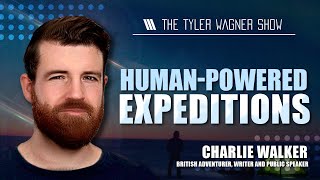
Adventure travel writer Charlie Walker spent 4.5 years cycling 43,000 miles across Europe, Asia, and Africa. He survived a near-death blizzard on the Tibetan Plateau and a month-long detention in Russia's Far East on charges of illegal journalism. Walker shares stories from Papua New Guinea and explains how physically demanding travel became his life's work.
Chapters
All right everyone, welcome back to another episode. Today we have Charlie Walker with us, so welcome to the show, man.
Oh, thanks very much, thanks for having me here.
Of course, grateful to have you on. Uh, I'm super excited for this one. Um, so just to kick us off, can you tell us a little bit more about you and what you do?
Sure. I'm an adventurer or an adventure travel writer, I suppose. So I spent the last 12 or 13 years heading off to various interesting, weird, wild, and wonderful parts of the world, often by quite sort of physically challenging means. So I'll travel by foot or horse or canoe or kayak or bicycle or ski, whatever, really. Then I come back and I write about it and I give speeches about it. And that's me.
It's amazing, man. Um, so what, uh, what were you doing like before this? Like, what was the moment that led you to, to do this? Because it seems like it, it was something like kind of like a big jump. Like, it's not a normal career path, I guess you'd say. So, so yeah, what was it like for you before, uh, this?
Um, well, I came out of university studying English literature and, um, did a postgrad in journalism. And I did a brief stint on a paper here in the UK, but it was during that period of time that I decided to head off on some sort of large journey, which is something I'd wanted to do for quite a few years. I think I'd always been in some sense, both consciously and to some extent subconsciously building up to like an epic journey. So when I was 22, nearly 23, I set off on a bicycle, nothing special, an old bicycle I bought secondhand from the UK. And I spent the following 4.5 years cycling about 43,000 miles across Europe, Asia, and Africa. And that long journey just gave me such a kind of breadth of experiences and just further stoked my curiosity. So when I came back, I didn't find myself working too long in a job that I didn't care for before I started turning what I now do into my career.
Awesome. Okay, so, so many questions with that. Okay, so on this first journey, was there any— was there ever moments where you, like, things got so rough or tough that you wanted to quit? And if so, what were some of those, like, worst moments? And then we'll go to the, to the better moments.
Um, yeah, I mean, more, more of those than I can count, really. Um, I guess the first particularly low period, um, was about 6 6 or 7 months in, um, when I was crossing the Tibetan Plateau in midwinter. And, uh, the temperatures were, yeah, they were down to the -30s, uh, Celsius. I, I don't know what that is, but -40 is where the two meet. So getting down to around about that kind of level, um, and I wasn't particularly well equipped. I didn't have the right kind of gloves, the right kind of boots, the right kind of sleeping bag, you know. I was, I was just wearing lots and lots of sort of basic thin layers and There were a number of occasions where I was cold and fed up to the point of, no, I'm over this. I want to get out of here. I got lost in a blizzard one time where I became genuinely convinced over the course of a couple of— well, an hour or so that I was going to die until I lucked out and stumbled upon some shelter. So yeah, the places where I most wanted to quit were usually the places where it was physically or mentally hardest. And that was often in the middle of nowhere. So be it up in the Tibetan mountains in midwinter or in the Saharan desert in summer, or in jungle during the monsoon. And usually those places were the places where it was actually just logistically impossible to quit, because I'd have to keep going for some time just to get to a point from where I could get out of there, where I could extract should I still choose to. And of course, every time you hit your lowest ebb, a day or so later, you realize that it's not all as bad as it was, and hopefully you start to rebound.
No, that's all. So when, um, that moment before you found the shelter, was— were you like hallucinating or anything, or was it kind of like— were you up for days trying to get out of the situation, or did you end up coming across it kind of quick? You were just freezing your ass off, basically?
Yeah, more or less the, the last— the latter. Um, I, I was just up heading towards a pass, um, up to about 5-ish thousand meters, so I guess that would be 15,000, 16,000 feet, and a blizzard just picked up incredibly quickly. And within about 20 minutes, the wind was too strong to kind of try putting up my tent. If I'd taken it out, it would've been probably ripped away from me or just shredded. It wasn't like a strong, you know, storm tent. It was a basic one-man kind of lightweight tent. Actually, I think when I got it, it was the lightest tent in the world at well under a kilogram. So it was not up to, you know, essentially Arctic blizzard conditions. that I lost the road, the, the kind of track that I was following buried over. And this was really remote. There, there were a vehicle, uh, would pass maybe every day or two or three. Sometimes there'd be several days where I wouldn't see anyone. Um, and before I really knew what was happening, I, I was just lost trudging through shin-deep snow, pushing my bike with no idea, no idea what direction I was going in. And the, the sensation was just slowly creeping back from my fingertips and my feet were getting more and more numb and the wind chill was just pushing the, the, the the, you know, the, the, the feeling, the temperature much, much lower. And I, I had nowhere to shelter. I couldn't put my tent up. I didn't have a phone. If I did, it wouldn't have worked up there anyway. And so I was just fairly convinced I was going to die. Um, oh my God.
Yeah, that's wild. Okay. Um, well, how about this other— because I know this is the one clip, I think, from Rogan that went pretty viral on YouTube, is you were in like a Russian jail or something for a month or something like that. Is that, is that what it— so yeah, what happened there?
Yeah, that was earlier this year. Um, okay. Yeah, yeah, I've, I've been through the Russian judicial system, uh, a few times now, um, but not for a few years until recently. But I went out to Far East Russia, to Siberia, an area called Yakutia, and I flew in just 3 days before the invasion of Ukraine and Obviously, the world changed at that point, but I was distant enough from Ukraine or even Moscow to feel like it was all right. There's probably scope for me to carry on doing what I was doing. I was as close to Alaska or Vancouver as I was to Kiev or Ukraine. So I carried on with this hike, and the plan was to hike a few hundred miles along the surfaces of frozen rivers. Up to the north coast, to the Arctic coast, and then fly out from there, from a little port city, port town. And for 2 months, that's what I did. I spent 2 months walking along the rivers and along the frozen Arctic Ocean up at the north, along the coast. And I had a great experience. I met lots of interesting people. I learned a lot about the area, the culture, the local indigenous peoples. But throughout the journey, there was this sort of looming presence that only grew of the authorities. They knew I was there. They weren't particularly present in the area. These were maybe once a week or less, I would pass through a small village with 300 people or so and no police. But the police were getting reports about where I was and I knew I was being tracked. And on arrival in Tixi, the port town at the end of my journey after 600 miles of hiking. They arrested me and took me to court under the charge of conducting journalism while traveling on a tourist visa and photographing military sites and asking provocative questions about Ukraine. Now, I wasn't there as a journalist. I certainly wasn't photographing military sites. I was there as a travel writer to learn about Well, to have an experience, for one. I wanted to, I suppose, pit myself against the elements. I was camping in temperatures down to almost -50 degrees Celsius. Um, and I wanted to learn about the people, the area, the history, the culture. I wasn't there with any sort of political agenda or any current affairs focus, but of course, as soon as the invasion happened, everyone I met— and I would go days without meeting people, but Every time I did meet someone, pretty much the first or one of the first questions they would ask is, "What do you think about the special operation?" as it's termed in Russia, the war that isn't deemed a war. So I did have plenty of conversations about Ukraine, and I usually tried my best to be as diplomatic as possible. When they asked my opinion, I would say, "Oh, I don't know a great deal about it. I know there are different stories on the news here and on the news at home, and I don't know what to believe." Everyone was, of course, curious to know what the outsider, what the foreigner knew or thought, because they were aware that there are these different narratives. What they believed, I think, varied quite a lot on a case-by-case basis, regardless of whether or not they would actually speak out about that. So, I was put through to court. The police came to the apartment I'd rented just for a few days and said, "Well, you need to come down to the police station for registration." And so I went on down, and very slowly over the course of a couple hours, it became clear that I wasn't allowed to leave, and this was more than just registration. And then they gave me these allegations, and, um, many— the process, Russian police process, is all really boring and thorough and bureaucratic. And after about 5 hours, they finally took me to court, which convened at 9:30 PM. So obviously it was rushed through. They didn't, they didn't offer me a lawyer or anything. Um, there was a translator, but this was a kindly English teacher, a local mother, who by the end of 5 hours was fed up and no longer had any desire to be there. So she was understandably not that into it and was partially translating things. So the judge would give a long— read off a paragraph of legal text, and she would give me half a dozen words as a translation. At the end of that trial, they found me guilty of the aforementioned charges. But this is an administrative trial or an administrative offense. So they're not trying me criminally. They're just saying that I broke the terms of my visa and I had to pay a small fine, about $80 US, and would be deported and can't come back to Russia for 5 years. But they led me to believe that they would fly me back down to the regional capital from where I would book a flight and leave the country. My initial homeward flight had been canceled because it was with a Russian airline and the UK had banned all Russian airlines from operating in British airspace and British airports. So I went back to the apartment and they dropped— well, they dropped me off back at the apartment, but then about 20 minutes they came back and said, right, pack all your things up. And they watched me pack everything up, and they drove me back to the police station, and then fingerprinted me and put me in a cell for the night. Which didn't— I mean, it wasn't pleasant. I was in a concrete cell with the light on through the night, and it was minus, you know, 28 degrees outside, and it was a bit warmer than that inside. But, you know, it wasn't terrible. I was fine. And I still thought, "This is just part of their process." And the next day, they took me to the airport. We got on a flight, me and a bailiff, a uniformed bailiff, sort of guard escorting me. Flew me down to Yakutsk, the regional capital, which is where I'd flown into in the first place. And quite quickly, I realized that it wasn't going to be quite as straightforward because they handed me over to another armed— sorry, uniformed bailiff who took me to a detention center, and I was locked up. And I ended up spending 4 weeks there, never quite knowing when they would release me. They said, yeah, we'll deport you eventually, but We don't know when, it takes a while. But the longer I was there, the more chance it felt there would be that they would retry me. The 3 offenses that they hooked me with, journalism, asking about Ukraine, and photographing military sites, well, the final one, it could be reframed as espionage. They never produced any photos to back up this assertion. But Tiksi, where I finished the journey, has for the last 5 or so years been one of the hubs of Russia's northern defense strategy. So not in the town itself, outside the town near to the airport, there is a sort of military base where they've got surface-to-air missiles. And I wasn't aware of this at the time, I've learned this subsequently, but it used to be a classified area and they declassified it just last year. So I don't really know why they did that at this crucial juncture, given that they're investing many, many billions of rubles into the military infrastructure of this point. But the other two things, the journalism accusation and the asking questions about Ukraine, very much made out that I was a journalist looking to spread lies or fake news about the situation in Ukraine, which the Russian government, the Kremlin, has a very particular line or narrative of propaganda. So anyone straying from that can fall foul of a law they introduced just in March after I arrived in the country which has a sentence of up to 15 years for exactly that, for sort of publishing or spreading quote-unquote fake news that strays from their line of propaganda. So every day of that month, I was there thinking, you know, any minute now, they're going to just take me back to court. I lodged and I managed to hire a local lawyer to lodge an appeal, but my appeal was immediately rejected. And after one week, they dragged me on state TV. Yeah, without warning, I just was summoned to the cell door, had to put my hands through the hatch. They cuffed me, marched me downstairs, put me down, plunked me down on a chair in a room in front of a rolling camera with a light shining at me and a microphone thrust in my face. And then a local journalist started just asking me questions which were either fed to them by the police or they'd just been given the police report for what I was supposedly guilty of and said, "Why are you doing this? Why do you hate Russia? What do you think about Ukraine? Why did you photograph military sites?" So it really felt like they were paving the way or preparing the court of public opinion for a subsequent trial. And it would've been very convenient for Russia to have another British citizen in a prison somewhere that could be used as a trade somewhere further down the line, potentially for a Russian POW from Ukraine. So actually, they did eventually, after a month, release me and I was able to get back home. But with hindsight, I'm amazed they did that. And if you take their own sort of, if you judge them by their own standards, they were kind of dumb to do that, frankly. I think I got really, truly lucky. That they were. Yeah. And I think being quite so far from Moscow and from Ukraine probably did pay work in my favor in that sense.
Wow, man, that would have been— I'm assuming when you were like you were saying is you didn't know exactly what was going to happen, but you had thoughts of what could happen. So I'm assuming those 30 days were like terrifying. I would imagine. Were you pretty scared? Like, knowing that 15 years could— I mean, even if that was in the US, 15 years in prison is 15 years. I don't know. That's nuts, man.
Yeah, I mean, it was— excuse me— it wasn't hard time, if that makes sense. I wasn't surrounded by criminals. I was for 2 weeks sharing a cell with 2 other men, foreigners awaiting deportation, and then for 2 weeks after that by myself. So I wasn't with a general criminal population. There wasn't the chance of violence. The guards, although they would sort of shout, "You're a spy," at me, and they were pretty unpleasant and sort of, I guess, in their own, probably to themselves, funny way, were trying to be intimidating. But I wasn't allowed outside. I was in the cell around the clock. Meals were just put through a hatch. There were two cameras in the ceiling. The lights were on at night. So it was just quite— it wasn't awful, but it just— the sort of the atmosphere of menace was there exacerbate the concerns I had about potentially being, you know, put through a more serious trial and put into a more, you know, more punishing part of the penal system.
Got it. And then you said too, and it's up to you, you want to go into detail on them, but you said you've been in trouble, whether it was your fault or not necessarily, but prior times with Russia too. So is it just kind of like a thing in Russia, or is this like an ongoing thing in other places?
If you are— if you go to Russia and go to off-the-beaten-track places, by which I don't necessarily mean just a village, uh, 100 kilometers away from Moscow where you won't so usually get a tourist, but I mean the remote places, the vast tracts, the mountains, the sort of the tundra, um, they don't like foreigners being in these places. And Russia Since perestroika, Russia slowly liberalized throughout the '90s and probably reached its sort of zenith of liberalization early in this century. And yeah, Putin came in at the start of the century, and as soon as he kind of fought off some of his opposition and started to clamp down and seize power, he slowly started turning the clock back with regards to what liberties could be taken in Russia, I suppose. And That's massively accelerated this year to the point where the freedoms, political, personal, et cetera, in Russia are back to pre-Perestroika, back to the Soviet times. But even 5 years ago, for instance, in 2017, I spent about 6 months in Russia skiing for about 3 months down the Ural Mountains and then kayaking for, uh, for another couple of months or so, um, down a river, um, uh, through Siberia. On this journey, myself and the partner I did that expedition with, the expedition partner, we got in trouble in the Ural Mountains. They arrested us, uh, on arrival in some small town for resupply. This is up in the Arctic, just a lot further west than where I was this year. And this time they we had business visas because back then the longest tourist visa you could get was 30 days and we needed much longer. And back then they took us to court for committing tourism while on a business visa. So you can never, you can never win, really. Now they get 90-day— now, well, briefly, they were giving 90-day tourist visas. So I was able to get there this year with a tourist visa and thinking that I had the right type of visa, although it turns out that they said I should have had a journalist visa. Although if I had a journalist— if I'd gone there with a journalist visa this year, I'm sure they would have found a reason to lock me up anyway. Um, so they took me to court that time. And then another time was frankly my fault. I was in Georgia and I completely accidentally, unknowingly strayed across the border. I crossed a river, a shallow river, it was only 10-20 centimeters deep. I crossed the river and accidentally crossed into a tiny little corner of South Ossetia, which is a sort of breakaway republic, much like the Donbas or Donetsk and Lugansk have become in Eastern Ukraine. South Ossetia was annexed by Russia in 2008, '07, I forget which, 2008, I think, in a short 5-day war in which Russia seized 2 parts of Georgia. And it was a very bloody conflict. Villages were burned out, but in 5 days it was taken. Accidentally crossed into a tiny little corner, a little sort of promontory of land, a little finger that I just crossed the corner of. And the minute I crossed the river, I was arrested and then put through the court system there. I also got arrested by speedboats while kayaking down this river because the river briefly formed the border of Russia and Kazakhstan. And although I stayed— the river was 400 or 500 yards wide by this point— and although I stayed right up against the Russian border, that was deemed to be a border infraction. And so they didn't take me to court that time. They just sort of put me through their system and gave me a fine. So you get a slap wrist for doing anything unusual in Russia, and they've got enough rules in place and the will to find a way to get you on one of those laws that they always will find a way. And once you go to court, the— I think it's something like 99 point something, 99.3 or whatever percent of cases that go to trial in Russia end in a guilty verdict. So once you go to court, it's a foregone conclusion.
Committing tourism, that is— I didn't even know that was possible. That's all I've been doing.
I've been doing that all my life. I just didn't know it was a crime.
Yeah, you should be— you should have many life terms, man. Um, that's, that's wild. Um, so I think one of the things I read when I was doing some research on you is you like to find like, like kind of off the beaten path communities, like the smaller communities. So you don't necessarily go to the touristy spots when you visit these places, but you like to find— I don't want to say like the real people, but like, you know, the people that are in the small communities of that area. Um, so a couple questions on that is what were some of the most like— what were some of the biggest culture shocks? Like what areas and like maybe some stories of like what occurred when you did that?
I suppose from a culture shock perspective, a couple of years ago I was back out in Papua New Guinea, which is a fascinating country in the middle of an election at the moment. So things are going especially wild because the levels of violence and corruption and political violence and political corruption are very, very high. But I was out there doing a bit of research into policing in some of the remote areas of the Highlands. The previous year, I'd been on a hike through a very remote area of the Highlands that had taken me something like a 10-day walk to get there from the nearest road, perhaps a little longer. And that had included crossing an unbridged river of quite sort of punchy rapids. So, it's not easy to get to this place. There is a small grass airstrip in this community, but when I was crossing the river, river, I met these guys down by the river who warned me that— because I'd been kayaking down the river a little bit, I had an inflatable packraft— and they warned me, get off the river at this point and head back into the mountains because just around the corner, the river funnels into a sort of cliff-walled canyon and the entire river then goes underwater— underground, sorry— for the best part of a mile. I've later seen this on satellite maps, the whole river just disappears. For a mile in the middle of the jungle in the mountains. And had I gone around that corner, then I probably would've got swept into that. And I shouldn't think I'd be here talking to you today, Tyler. But these guys, I spent the night in these guys' sort of camp on the side of the river. And it wasn't their village, it was an encampment where they go to pan for gold. Because about 100 miles upstream, near the source of this river, there is a huge gold mine. Used to be an internationally owned gold mine, I believe. Now I think it's state owned. But all the tailings, or es, All the waste from the mine is just dumped in the river, which has caused huge environmental harm. But along with that, little bits of gold dust, little specks, wash their way down, and people go down and pan for gold, you know, with sort of sieves, essentially, much like they would in the Yukon in 1870 or something. But these guys said that they were building a bridge to cross the river. And I saw laid out in the jungle this very impressive vine bridge that was all built, ready to string across the river. And another group on the other side would sort of catch the— I think they were planning to fire a very thin thread with an arrow across the river, and then with that thread, they could pull across a slightly thicker string and then a slightly thicker vine until eventually they had something strong enough to haul this whole great hanging vine bridge across the river. And I said, "Well, great that you're building a bridge. You know, that'll probably open up a lot of, you know, trade or communication with the tribe on the other side." And they said, "Oh, we actually used to have a bridge, but it got cut down in some fighting recently." And I asked what had happened and they said, "Oh, a month ago, we got into a fight with the people on the other side. Someone stole someone's pig." Pigs are almost the currency in the Highlands. They're the ultimate status symbol. They're how you settle disputes and buy brides and all sorts. They're rarely eaten. They're too valuable. Only people in the big cities where the pigs get taken to market usually seem to be able to eat pigs except on ceremonies. Anyway, in the fighting, one of the guys I was talking to said, yeah, there was a fighting, there was a bad man there, and I cut off his hand just with a machete. He made this sort of chop gesture, and I thought, oh, well, you know, that's quite intense. And I left the next day, and I carried on walking, and I got to this little village up about a 12-hour walk away up in the mountains. And I spent the night sleeping in the policeman's station, this hut really. And there was one policeman covering a huge swathe of jungle with villages scattered amongst it. And he's got this impossible job of trying to police this totally wild area with no infrastructure, no one else to help him. And he's— the only way he can get around is by walking. And he can't be— he can't have a weapon because if he does, it'll just get stolen straight away. So he's just got a bush knife, a machete, like everyone else has. And those are used just for clearing paths as you walk down these footpaths through the jungle, the rainforest. So he told me, He said to me, "Oh, you came up from the river. I was down there last month." I said, "Oh, right, what happened?" He said, "Oh, well, there was this fight and I had to go down and chop down the bridge because the two guys, two sides of the river, were fighting." He said, "Someone cut off someone's hand, so I'm looking for that man." And I was in this slightly awkward position. I said, "I don't really know anything about that." And I didn't want to interfere. It wasn't my place. But that left this idea in my head that there must be other policemen out there in the Highlands in similarly difficult situations. So about a year later, I went back. Just before COVID broke. And I went to this district where there was one policeman covering an area with about 80,000 people, and he's the only one. And there is— it's not as remote. There is some infrastructure. There are roads. He had a vehicle. He couldn't— he wasn't armed because every time he had been issued a gun from the sort of local, you know, a few towns away, the local department, it had been stolen straight away. And he took me to his his patch, his station. And we had to pay a bribe at a checkpoint on the way. And this was just tribal men with AKs and bare feet, with their impromptu roadblock they had made, that the policeman has to pay a bribe to get into his patch. So that should give some sense of the lawlessness. But this took a long way around to bring it back to your question. This policeman, Namba is his name, he showed me his incident report book, his logbook. And I've never seen anything quite like it. You know, I turned to a random page and it said something like, Monday, October 12th, uh, girl gang raped by 5 men in the coffee gardens, uh, search underway for 3 of the 5 men. Tuesday, man, uh, beheads son with axe, brackets, suspected cannibal. Wednesday, uh, man beats wife almost to death claims— actually, I don't think that was in this village, but I saw somewhere someone had nearly beaten their wife to death and then claimed that she was a sorceress or a witch doctor and had forced him to do it, or someone else had bewitched him. It was just these crazy incidents, and they were all condensed into just 1 or 2 weeks in this book. And every single day, something appalling happened, and this guy was largely helpless to do anything about it. So the way that most justice is meted out out there is through tribal courts. So the village elders will gather, and and they've had a kind of, you know, one day of training from the government years earlier to sort of give it the veneer, I suppose, of a legitimate judicial system. And they sit down and they sort of, in their own tribal village justice way, they hear all sides of the argument and a decision is made. But it's just based on who's more compelling or convincing, or it's run, I suppose, like a court. People come and give witness or whatever, but it is, in public with everyone, court of public opinion, and then a verdict is given, and there are no punishments. There's no corporal punishment, and people aren't locked up. They just have to negotiate. Oh, killed that man's daughters. And so he says that he will settle for 130 pigs as a price to settle the blood feud, essentially. So yeah, Papua New Guinea has been one of the more fascinating and eye-opening places that I've been with regards to relatively unique, remote-ish cultures.
Yeah, that sounds like it, man. That is wild. Um, I'm speechless on that. Yeah, that's crazy. Um, so what is, uh, just curious, uh, like, what, what's your family like? Like, like mom, dad, like, uh, significant— like, what do they think about that? Like, was your mom scared before you went on your first adventure? Like, what's that whole scenario like?
Um, I think— I mean, I'm one of 4 children, um, which probably has probably made things easier for parents because there's other children. If I was the only child, then I suppose there's arguably more socially or emotionally invested in this one individual. But when I first went away, I'm sure both my parents were extremely worried, but I was away for such a long time, for 4 years more than, um, and I'd been on— I'd been backpacking beforehand, so they've got used to me going away for a few months at a time. Um, I don't think it was that worrying, particularly like not consistently at least. However, over the years I've gone away and then come back and they've either heard me talk about or they've read in my books or articles about times that things have got pretty hairy, and so that probably hasn't helped. But simultaneously, Dad's no longer around, but Mum has, I think, over the last few years better at sort of putting it out of mind while I'm away and accepting that this is what I do and that I am myself getting better at taking calculated risks and hopefully getting a bit more sensible. Um, things did nearly, you know, go a bit bad earlier this year in Russia, although while they were— while I was in the prison, my mum wasn't entirely in the loop. Um, she knew I wasn't exactly free, but we let her know that I had I think we— when I say we, I had very little access to my phone. So my partner, my girlfriend, um, allowed her to believe that I was, uh, in a sort of a government hotel and didn't have access to my phone but would be heading home soon, something like that. Um, so yeah, from a family dynamic, I probably do cause quite a lot of stress, but I, I try to mitigate it as best I can.
And are your, um, so I don't know if you said 3 brothers or just 3 siblings, but are your other 3 siblings, are they anything like you? Or like, have they ever gone on any of these trips with you?
No, we're all completely different. Uh, my brother works in finance in Hong Kong. My sister is a cellist in Scotland. Uh, my little sister is a travel agent. She lives close to me in London, but she works in a slightly, slightly higher-end type travel, um, not so much the kind of, um, rough adventure thing that I do.
And then what about, um, so, so that was before, um, well, I don't know how long you've been with your girlfriend, but with your girlfriend, does she have any interest in going with you, or is she just kind of like, oh, this is kind of like, uh, par for the course of being with Charlie, like I gotta let him go for, uh, 6 months to a year here and there?
Well, she makes documentaries, and that's taken her to Iraq and Syria and, you know, all sorts of interesting places. So it's not just me doing this sort of thing. We have discussed perhaps making a documentary together at some point, but have not got around to it yet. So who knows? Maybe in the future.
That would be cool.
All right.
So, okay, that's like a perfect match then. Um, I don't know why, I'm just curious, how did you guys— not, not to make this a romantic podcast, but how did you guys meet? I'm just curious.
Uh, we met through a friend, um, and just started rock climbing together. We do quite a lot of that. Um, and, uh, yeah, there's a, it's a fairly straightforward story.
Okay, gotcha, gotcha. Yeah, I didn't know if it was something like she was at a documentary and then you were traveling and then you were like, oh my God, did you see all the people with the pigs down there?
No, we just met in London, I'm afraid.
Um, so then, uh, my— actually, I want to ask you about your books now. So my main background, um, is actually helping people with books and stuff. So I'm curious, like, and a lot of our listeners are authors or people that want to be authors, so what is your process? So like, you'll go on an adventure, you'll come back, and then do you have like a kind of writing process, or what does that look like from start to finish for for each? You have two books, right?
Yeah, I've written just two so far. I'm just starting work on my, on my third. Um, for me, both have been a little bit different. The first one, I, I sort of tinkered with the first few chapters for quite a while over the course of a few years. Um, it was the first book. I was struggling to find time to get down and do it, but then I, um, managed to arrange six weeks where I had nothing else, and I thought I'll get out of the country. I went Kenya, stayed with a friend in Nairobi, and just put my head down and wrote every day, every weekday, just like a working day from 9 till 5 or 8 till 5, I think. And by the end of 6 weeks, I had a first draft, which I then just started finessing, just running through it again and again. With the second book, it was slightly different because I wasn't able to find some huge chunk of time to go away. So I took 2 weeks. I went to Greece and managed to sort of cheekily use, borrow someone's room for a couple of weeks and got about perhaps 30,000, 40,000 words under my belt. And first draft, I think, just get it down, just write, write, write, write, write, and you can shape it, you can finesse later. A lot of people talk about writers block, and I don't think I've experienced that. But I also think fiction and nonfiction are quite different. So far, I've been writing books that are nonfiction, and they're writing first-person narrative where the events have happened, the story's there. I've just got to find a hopefully engaging and gripping way to relate it. So you can get something down if the chapter you've worked on for the last couple of days, um, isn't perfect, you can rewrite or you can reshape it, remold it later. But the best thing, I think, is just to get something down. Um, you know, sculpture— you start with some huge block of marble and you just chisel. Yeah, if you're sculpting a duck, um, or whittling a duck, you want to whittle away everything that doesn't look like a duck. And I'm sure you've got the image in your head of what you want this you want this book or this writing project to be, but you've got to give yourself some huge chunk of marble or lump of clay from which to, you know, slowly form the shape that you want. So I think being quite unfussy about your first draft is really key. And I found with regards to making nice prose, it helps to read your book out loud to yourself once you've— when you're working on a chapter, go through each page and read it out loud and see how it sounds, how the flow, the rhythm of it sounds when read out loud. Because although that won't necessarily be a huge— well, I think when we read books, we do have essentially our head reading out those words. And if it's clunky, if it's too staccato, if it's hard to get through a sentence, or if the rhythm, the shape of the sentence kind of leads you up to a point and then suddenly doesn't, you know, you want to have those fluent cadences, those rhythms. But also more so if the book is going to go out on audiobook, and I think that my books have been probably listened to on audiobook roughly as much as they have been read in paperback or hardback. So it's a good process to really whittle it down and make sure it sounds good as well as reads well.
For sure. Yeah, I think I'm blanking on his name right now, which is embarrassing, but it's one of the most famous writers out there. But he says you should basically write as you speak, right? And, and I think you're right. There is kind of that voice in your head when you read. And also after I— the advice you gave, I think is perfect because the first draft, you just want to get it out of your head. It can be a mess. Doesn't really matter. Just get everything out of your head. And then you can organize from there. And then when you read it, something that you may have thought sounded good, uh, that you were writing, when you read out loud sounds very abnormal sometimes. So it's like a very important process. Um, and then did you have— like, I didn't, uh, see, I just didn't check, but did you have like a publisher, uh, or did you self-publish these?
Uh, my first two books I self-published. The next one I'll be going through a publisher. Um, I think it's quite competitive to get a first book out there in the travel sphere. More so, I'd been in discussion with a publisher, but they were adamant that I made this 4-year journey one book. And I strongly felt that such a huge amount of my life in which so much had happened, I didn't want to be one kind of medium to long book. I wanted to be two books that aren't excruciatingly long. So I took a bit of a leap of faith on that and just got going and got it out there. And I'm really glad I did. Um, but there's, there's definitely different ways to do it, and I'm interested and looking forward to trying it the, the more traditional route this time around, for sure.
So then on your first two, did you have an editor for those?
Um, I, I self-edited. I, uh, I got a proofreader for each one to give it a once-over. Um, I am fairly decent at editing text copy. Um, it's harder to have a sort of plot editor, you know, looking at the more— the narrative shape of things. And that's, I suppose, with hindsight, one thing that it would have been better to have. But, uh, you can get a bit bogged down and there's costs involved, so I decided to back myself. And I'm sure if I gave those books another pass over now, I'm— I could make plenty of improvements, as could other people. But I'm pretty happy with them.
Yeah, no, gotcha. That's awesome. Yeah, I think that exactly how you've done it, I think, is amazing because now, I mean, look, you've gotten some big exposure. The first two books have done well. So now a traditional publisher for your third book, now is the time when they would actually like be very interested, right? Like it's one thing, obviously your story is incredible, but if you can prove to a traditional publisher that you've already had success with two books, I mean, that whatever deal you end up getting is going to be better. Than not having the success of the previous two books. So I think whether you meant to do it or not, I think it's kind of perfectly panned out for you. So that's awesome! So yeah, man, I want to kind of leave it to you if there's anything else you want to share that we didn't. I mean, I know you have probably, you know, stories we could talk for multiple days on. We could do this in a Russian area for a month straight or something. But yeah, I want to leave it to you for that. And then also, where can people stay in touch? Like website, books, social the floor is yours.
Sure, well, um, there's nothing sort of particularly pressing that I'm desperate to get out there into the world, so, um, happy to answer any further questions. But the, uh, places to find what I'm doing are, um, my handle on Instagram and Twitter is @cwexplore, Charlie Walker Explore, CW. Um, and I'm also on Facebook, the same, CW Explore. My website is cwexplore.com. My books can be found on my website, on Amazon, on Audible, on Kindle. So check them out. And Instagram is probably the place where I'm most active. I post most with upcoming projects. So that's probably the first port of call.
Perfect, man. Thank you again for coming on. I appreciate it.
My pleasure. Thanks for having me.
More from Tyler


Catherine Nikkel : THE STORY EVERYONE HAS BUT HASN'T TOLD : The Tyler Wagner Show #1120



Scott Ritzheimer: Bring Predictable Success to your Organization | The Tyler Wagner Show #1115


Fred Moskowitz: A GUIDE TO GETTING STARTED WITH IN MORTGAGE NOTES | The Tyler Wagner Show #1113

Mark Podolsky: From Land Investor to Full Time Success How I Made $90,000 Cash in Real Estate


Mark Podolsky: How to achieve a 300% return on investment my foolproof strategy

Mark Podolsky: How to make passive income selling raw land the irresistible pricing strategy